
Native Americans Cultural Groups Eastern Woodlands Southeastern Plains

- Slides: 15
Native Americans Cultural Groups Eastern Woodlands, Southeastern, Plains, Southwestern, and Pacific Northwestern
Major Native American Cultural Groupings • • • Eastern Woodlands Southeastern Plains Southwestern Pacific Northwestern
Words You’ll Need to Know • tribe-a group of families bound together under a single leadership, share a common culture • league-an organization that people form which unites them for a particular purpose • culture-way of living • cultural region-an area in which people with similar cultures live
Eastern Woodlands
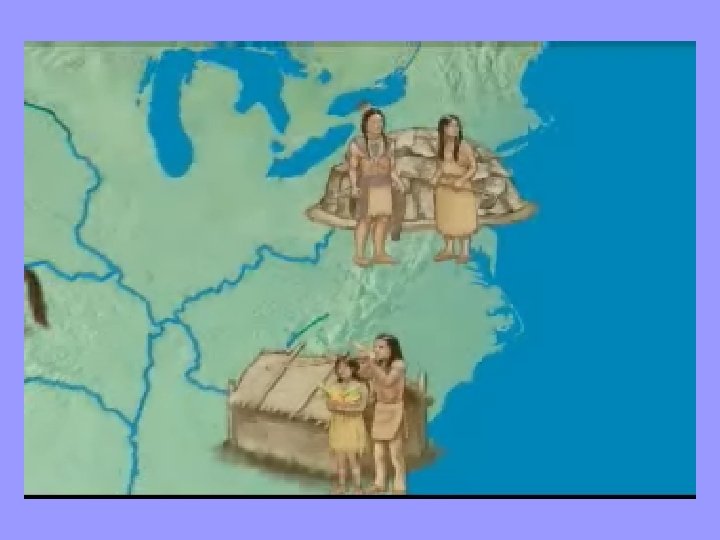
Example of Eastern Woodlands The Iroquois lived in the Eastern Woodlands cultural region. Five Iroquois tribes came together to form the Iroquois League. (later six) Iroquois people used their surrounding resources of the Eastern Woodlands to meet their needs.
Eastern Woodlands Everyday Life • Way of life: hunting and farming • Hunted animals that were plentiful in the area – deer, bear, elk, and beaver – used traps • Fished in lakes, rivers, and streams • Grew crops – corn, beans, squash, tobacco • Used the woodlands for food and clothing
Eastern Woodlands Everyday Life • Traveling – by canoes for water – used snowshoes over snow – by foot mostly • moccasins-like slipper made of animal skin • Animal Skins – used to make clothing
Eastern Woodlands Physical Environment • Thick forests • Used the woodlands for food and clothing • Many carved tree wood into bowls, tools, and utensils • Some made bark or grass baskets for gathering and storage • Cleared part of the woodlands to make room for fields of crops • Made birch wood canoes
Eastern Woodlands Physical Environment • Lived in longhouses • Some tribes lived in birch-bark wigwams and some built dome-roof houses • Gathered the sap for maple syrup (attached birchbark containers to maple trees) • Paddled through waterways to fish • Gathered berries and nuts – knew which ones were safe and delicious
Eastern Woodlands Culture • Based on hunting and farming • Felt deep connection to animals, trees, and other resources around them (Ex. Hunter/deer connection) • Gave thanks for their crops • Iroquois wampum belt • Sang and danced to the rhythms of rattles and drums – ex. rattles made of turtle shells
Eastern Woodlands Culture • Believed that the trees, clouds, rivers, and other natural surroundings had spirits living within them • Respected nature • Took just what they needed and no more…healthy balance
Eastern Woodlands Governing • Native American tribes joined together and formed the Iroquois League [about 1580] – Seneca, Cayuga, Onondaga, Oneida, and Mohawk (later Tuscarora) • Sent 50 representatives, all men, to a Great Council – made decisions for the whole league – *Cool Fact* The older women of the tribes chose these men. (could also remove them)
The Iroquois Today • About 50, 000 Iroquois today – many live on reservations* in New York state (*land set aside by the U. S. government for Native Americans) • 50 members still form its Great Council • League members have become skilled builders of city skyscrapers – mainly from the Mohawk tribe