
Native American Societies Before European Contact Theme Geography
Native American Societies Before European Contact Theme: Geography and the Environment
Learning Objective Unit 1. B Explain how and why various native populations in the period before European contact interacted with the natural environment in North America.
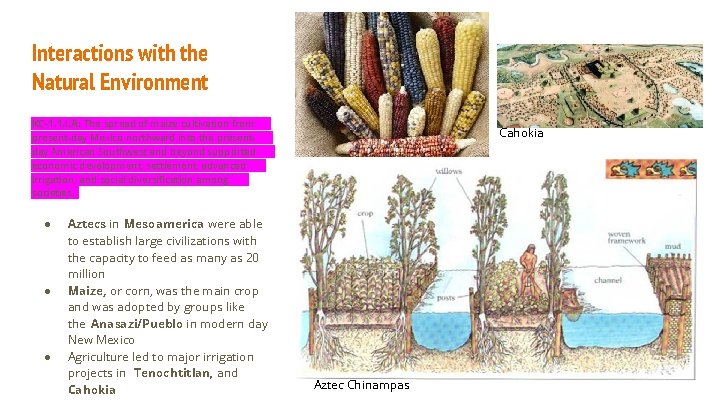
Interactions with the Natural Environment KC-1. 1. I. A: The spread of maize cultivation from present-day Mexico northward into the presentday American Southwest and beyond supported economic development, settlement, advanced irrigation, and social diversification among societies. ● ● ● Aztecs in Mesoamerica were able to establish large civilizations with the capacity to feed as many as 20 million Maize, or corn, was the main crop and was adopted by groups like the Anasazi/Pueblo in modern day New Mexico Agriculture led to major irrigation projects in Tenochtitlan, and Cahokia Aztec Chinampas
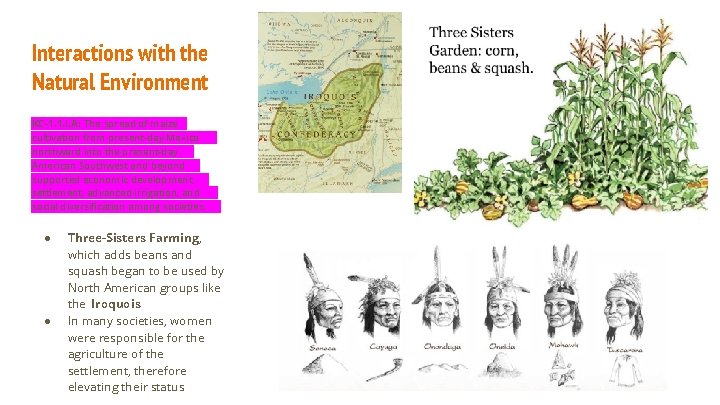
Interactions with the Natural Environment KC-1. 1. I. A: The spread of maize cultivation from present-day Mexico northward into the present-day American Southwest and beyond supported economic development, settlement, advanced irrigation, and social diversification among societies. ● ● Three-Sisters Farming, which adds beans and squash began to be used by North American groups like the Iroquois In many societies, women were responsible for the agriculture of the settlement, therefore elevating their status
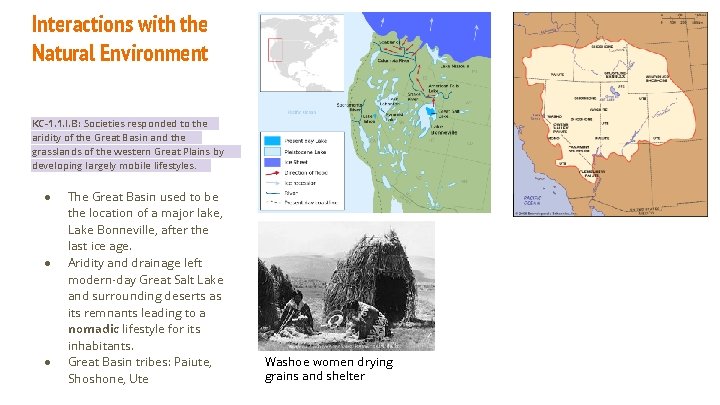
Interactions with the Natural Environment KC-1. 1. I. B: Societies responded to the aridity of the Great Basin and the grasslands of the western Great Plains by developing largely mobile lifestyles. ● ● ● The Great Basin used to be the location of a major lake, Lake Bonneville, after the last ice age. Aridity and drainage left modern-day Great Salt Lake and surrounding deserts as its remnants leading to a nomadic lifestyle for its inhabitants. Great Basin tribes: Paiute, Shoshone, Ute Washoe women drying grains and shelter
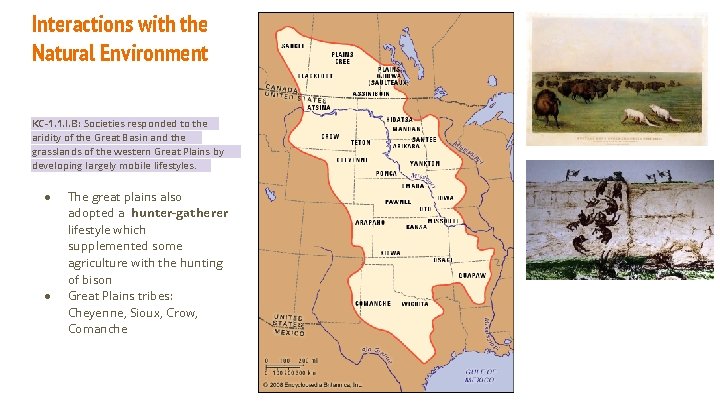
Interactions with the Natural Environment KC-1. 1. I. B: Societies responded to the aridity of the Great Basin and the grasslands of the western Great Plains by developing largely mobile lifestyles. ● ● The great plains also adopted a hunter-gatherer lifestyle which supplemented some agriculture with the hunting of bison Great Plains tribes: Cheyenne, Sioux, Crow, Comanche
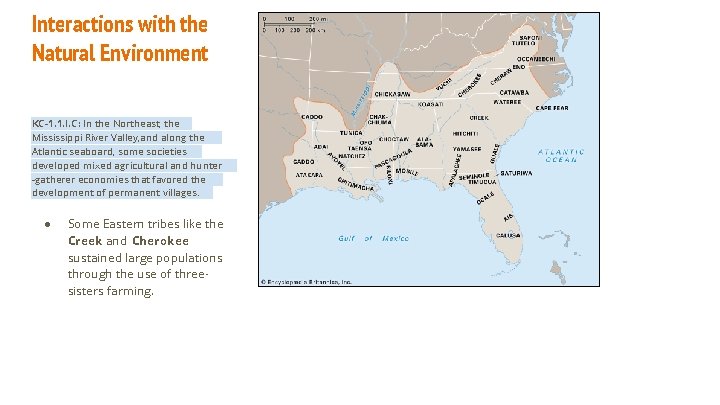
Interactions with the Natural Environment KC-1. 1. I. C: In the Northeast, the Mississippi River Valley, and along the Atlantic seaboard, some societies developed mixed agricultural and hunter -gatherer economies that favored the development of permanent villages. ● Some Eastern tribes like the Creek and Cherokee sustained large populations through the use of threesisters farming.
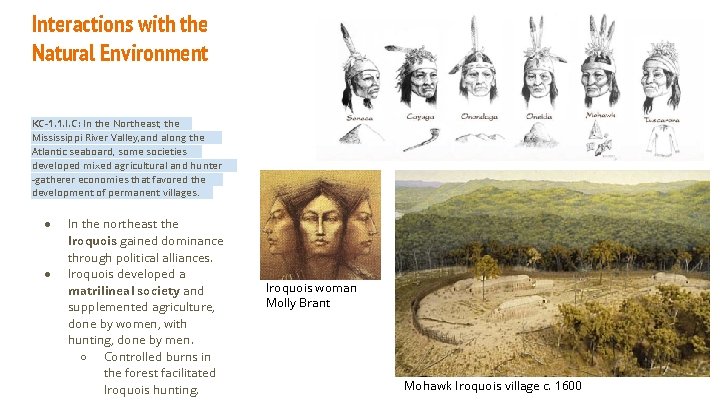
Interactions with the Natural Environment KC-1. 1. I. C: In the Northeast, the Mississippi River Valley, and along the Atlantic seaboard, some societies developed mixed agricultural and hunter -gatherer economies that favored the development of permanent villages. ● ● In the northeast the Iroquois gained dominance through political alliances. Iroquois developed a matrilineal society and supplemented agriculture, done by women, with hunting, done by men. ○ Controlled burns in the forest facilitated Iroquois hunting. Iroquois woman Molly Brant Mohawk Iroquois village c. 1600
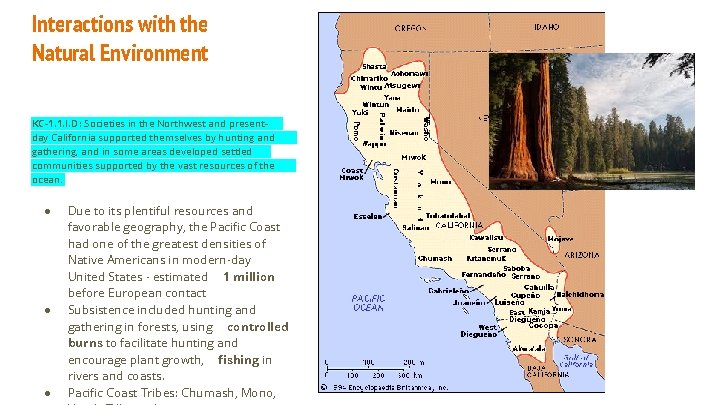
Interactions with the Natural Environment KC-1. 1. I. D: Societies in the Northwest and presentday California supported themselves by hunting and gathering, and in some areas developed settled communities supported by the vast resources of the ocean. ● ● ● Due to its plentiful resources and favorable geography, the Pacific Coast had one of the greatest densities of Native Americans in modern-day United States - estimated 1 million before European contact Subsistence included hunting and gathering in forests, using controlled burns to facilitate hunting and encourage plant growth, fishing in rivers and coasts. Pacific Coast Tribes: Chumash, Mono,
1. 3 European Exploration in the Americas Theme: America in the World
Learning Objective Unit 1. C Explain the causes of exploration and conquest of the New World by various European nations.
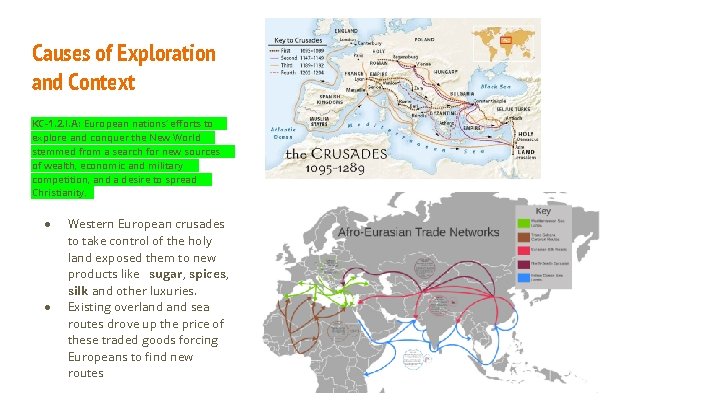
Causes of Exploration and Context KC-1. 2. I. A: European nations’ efforts to explore and conquer the New World stemmed from a search for new sources of wealth, economic and military competition, and a desire to spread Christianity. ● ● Western European crusades to take control of the holy land exposed them to new products like sugar, spices, silk and other luxuries. Existing overland sea routes drove up the price of these traded goods forcing Europeans to find new routes
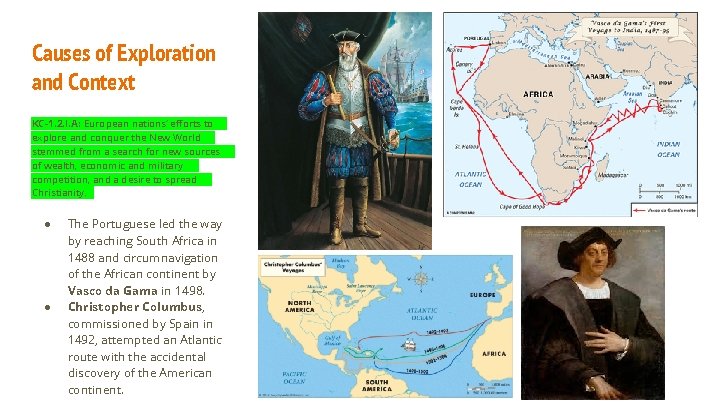
Causes of Exploration and Context KC-1. 2. I. A: European nations’ efforts to explore and conquer the New World stemmed from a search for new sources of wealth, economic and military competition, and a desire to spread Christianity. ● ● The Portuguese led the way by reaching South Africa in 1488 and circumnavigation of the African continent by Vasco da Gama in 1498. Christopher Columbus, commissioned by Spain in 1492, attempted an Atlantic route with the accidental discovery of the American continent.
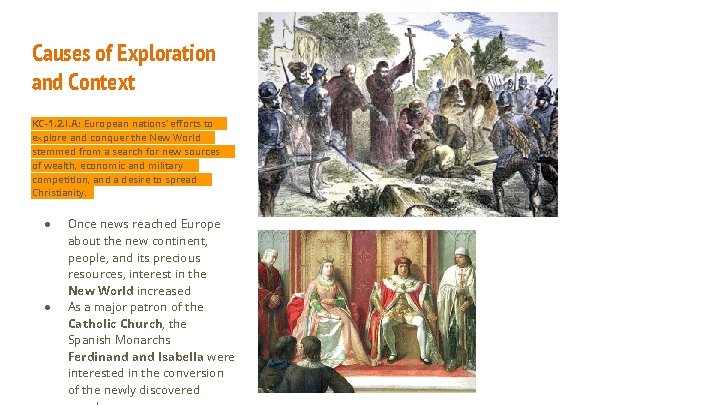
Causes of Exploration and Context KC-1. 2. I. A: European nations’ efforts to explore and conquer the New World stemmed from a search for new sources of wealth, economic and military competition, and a desire to spread Christianity. ● ● Once news reached Europe about the new continent, people, and its precious resources, interest in the New World increased As a major patron of the Catholic Church, the Spanish Monarchs Ferdinand Isabella were interested in the conversion of the newly discovered
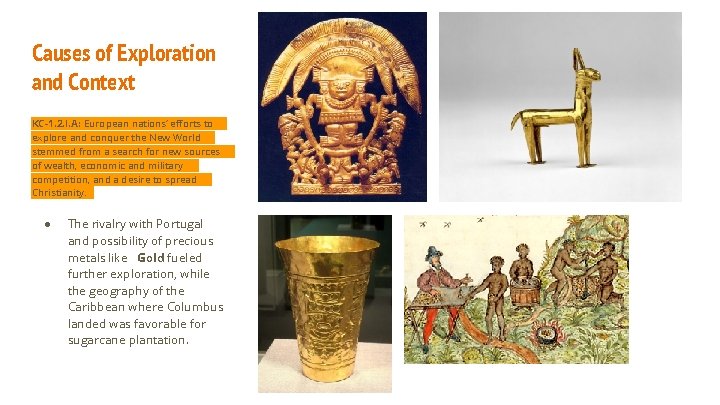
Causes of Exploration and Context KC-1. 2. I. A: European nations’ efforts to explore and conquer the New World stemmed from a search for new sources of wealth, economic and military competition, and a desire to spread Christianity. ● The rivalry with Portugal and possibility of precious metals like Gold fueled further exploration, while the geography of the Caribbean where Columbus landed was favorable for sugarcane plantation.
Quick Recap ● The importance of maize agriculture and its effect on native societies ● Characteristics of Great Basin and Great Plains societies ● Characteristics of Atlantic Coast and Pacific Coast societies ● Motivations of European explorers
- Slides: 16