
Native American Resistance to Colonial Expansion Ex of
- Slides: 10
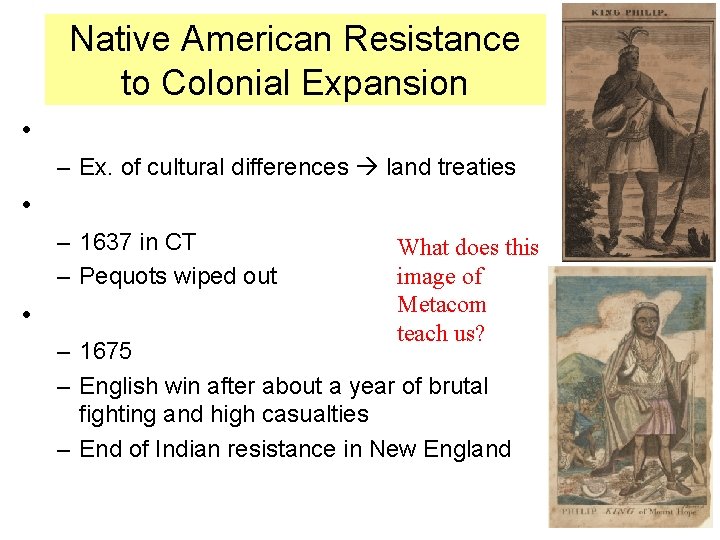
Native American Resistance to Colonial Expansion • – Ex. of cultural differences land treaties • – 1637 in CT – Pequots wiped out • What does this image of Metacom teach us? – 1675 – English win after about a year of brutal fighting and high casualties – End of Indian resistance in New England
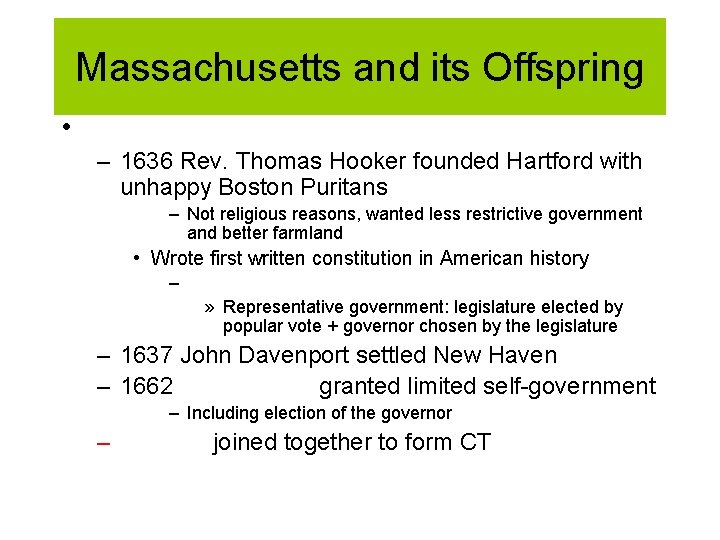
Massachusetts and its Offspring • – 1636 Rev. Thomas Hooker founded Hartford with unhappy Boston Puritans – Not religious reasons, wanted less restrictive government and better farmland • Wrote first written constitution in American history – » Representative government: legislature elected by popular vote + governor chosen by the legislature – 1637 John Davenport settled New Haven – 1662 granted limited self-government – Including election of the governor – joined together to form CT
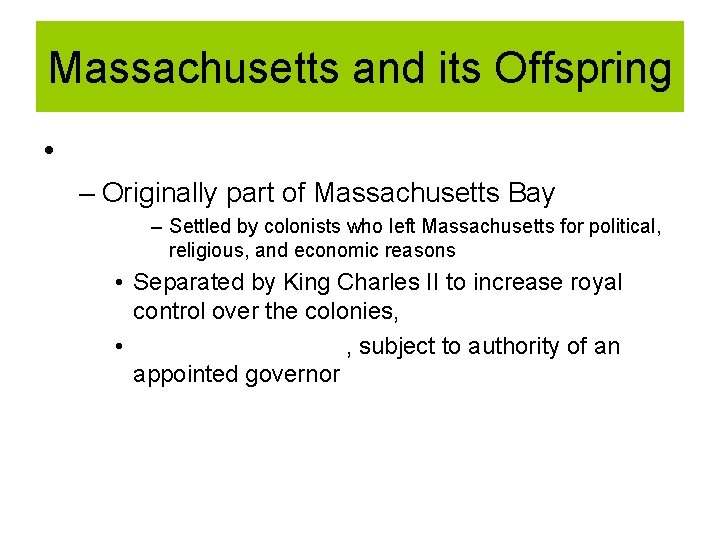
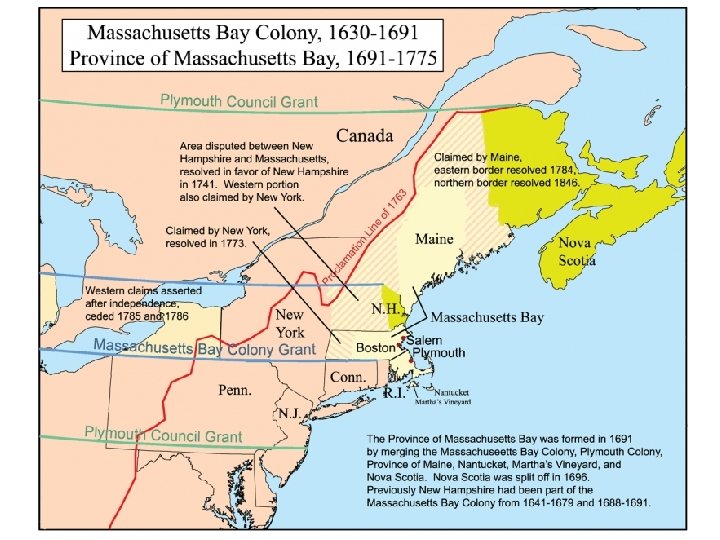
Massachusetts and its Offspring • – Originally part of Massachusetts Bay – Settled by colonists who left Massachusetts for political, religious, and economic reasons • Separated by King Charles II to increase royal control over the colonies, • , subject to authority of an appointed governor
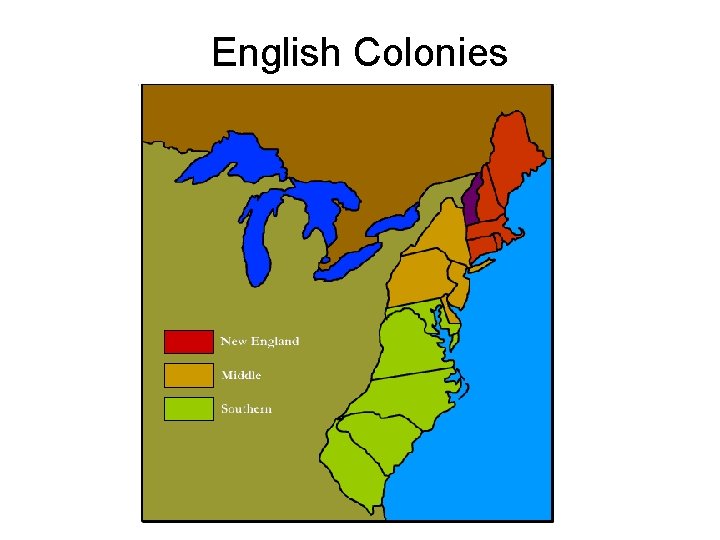
English Colonies
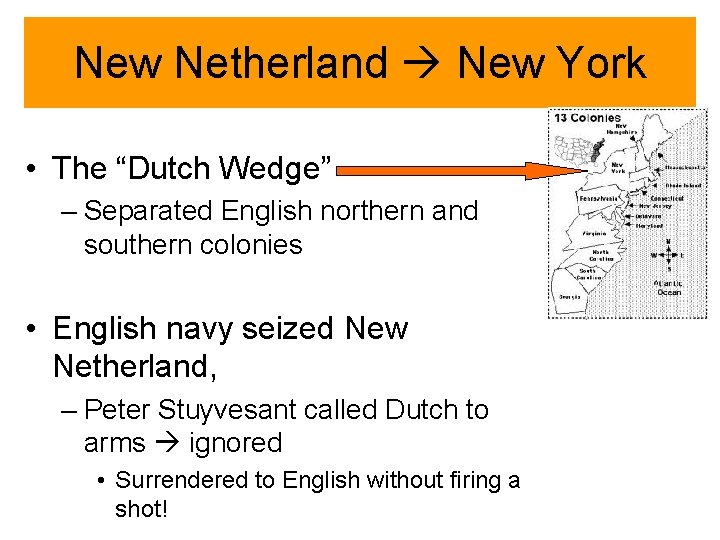
New Netherland New York • The “Dutch Wedge” – Separated English northern and southern colonies • English navy seized New Netherland, – Peter Stuyvesant called Dutch to arms ignored • Surrendered to English without firing a shot!
Pennsylvania & “The Friends” • PA – Charter was payment to William Penn for money owed by Charles II – Refuge for (Society of Friends) “Holy Experiment” – City of brotherly love Philadelphia – A Thriving Colony
Proprietary Maryland • Granted to Lord Baltimore – Haven for fellow – • Religious freedom (1649)
Proprietary Colonies • 1663 granted land to supporters North & South Carolina • 1732 James Oglethorpe granted land Georgia
Early Carolina Society • South Carolina – Originally based on trading furs and food to West Indies, by mid 1700 s large rice-growing plantations resembled the economy and culture of the West Indies • North Carolina, – Officially created in 1712 – Small self-sufficient tobacco farms, less slavery due to less hospitable conditions for plantations – Became refuge for religious dissenters and poor whites • Rhode Island of the South – Democratic views and autonomy from British control by 1800 s • Impact of West Indies on Carolinas – West Indies (esp Barbados) developed plantation system based around sugar production – Increasingly relied on mainland British America for food – Small farmers were crowded out and many moved to Carolinas (with slaves)