
Native American Culture By Megan Dull October 11
Native American Culture By: Megan Dull October 11, 2014 Introduction to Nursing
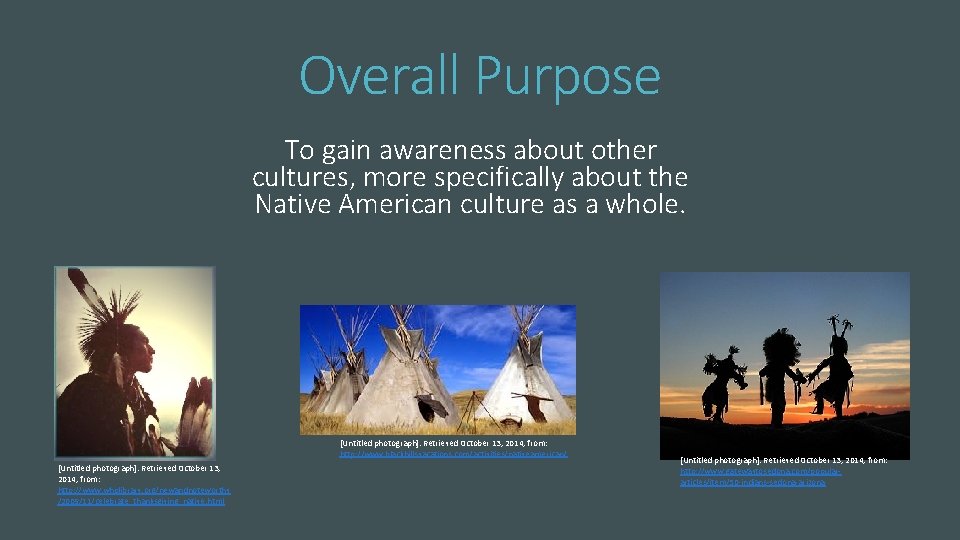
Overall Purpose To gain awareness about other cultures, more specifically about the Native American culture as a whole. [Untitled photograph]. Retrieved October 13, 2014, from: http: //www. blackhillsvacations. com/activities/nativeamerican/ [Untitled photograph]. Retrieved October 13, 2014, from: http: //www. whplibrary. org/newandnoteworthy /2009/11/celebrate_thanksgiving_native. html [Untitled photograph]. Retrieved October 13, 2014, from: http: //www. gatewaytosedona. com/populararticles/item/50 -indians-sedona-arizona
Objectives After reviewing this presentation the readers will be able to: Ø Identify the symbols and language of the Native American culture. Ø Define the values and beliefs of the Native American culture. Ø Compare the norms of the Native American culture to ones own culture. Ø Identify the materials and technology that were present in the Native American culture. Ø Identify specifics in regards to the care Native Americans expect.
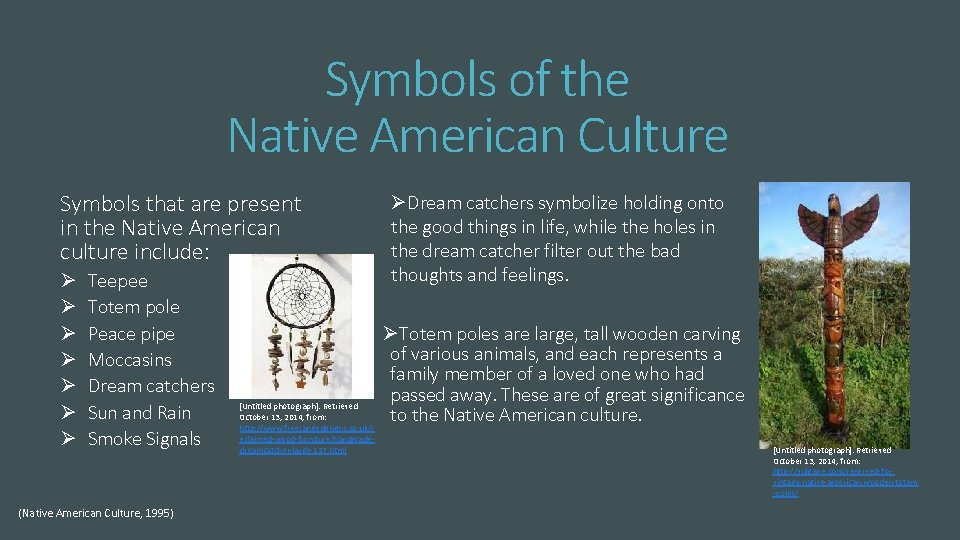
Symbols of the Native American Culture Symbols that are present in the Native American culture include: Ø Ø Ø Ø Teepee Totem pole Peace pipe Moccasins Dream catchers Sun and Rain Smoke Signals (Native American Culture, 1995) [Untitled photograph]. Retrieved October 13, 2014, from: http: //www. freerangedesigns. co. uk/r eclaimed-wood-furniture/handmadedreamcatcher-large-127. html ØDream catchers symbolize holding onto the good things in life, while the holes in the dream catcher filter out the bad thoughts and feelings. ØTotem poles are large, tall wooden carving of various animals, and each represents a family member of a loved one who had passed away. These are of great significance to the Native American culture. [Untitled photograph]. Retrieved October 13, 2014, from: http: //vulgaire. com/reserved-forvintage-native-american-wooden-totem -poles/
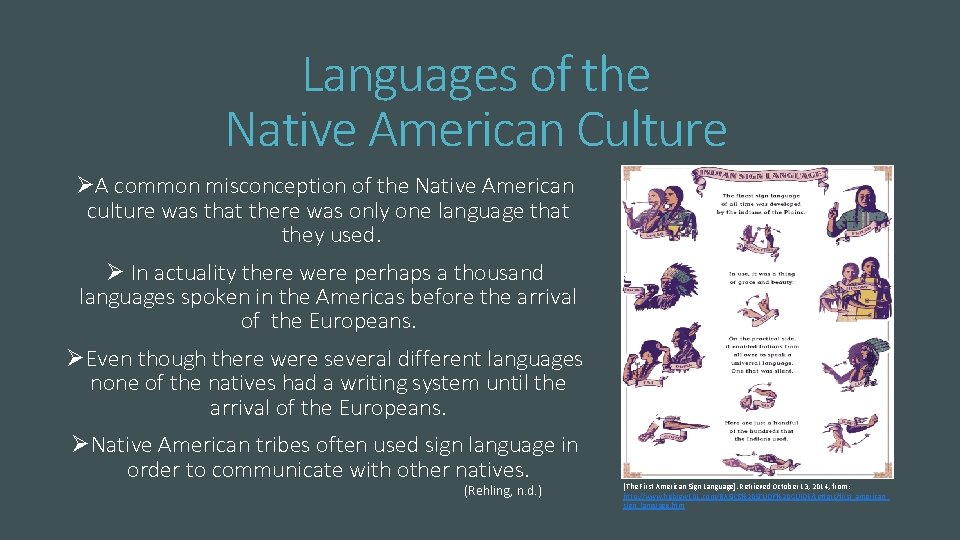
Languages of the Native American Culture ØA common misconception of the Native American culture was that there was only one language that they used. Ø In actuality there were perhaps a thousand languages spoken in the Americas before the arrival of the Europeans. ØEven though there were several different languages none of the natives had a writing system until the arrival of the Europeans. ØNative American tribes often used sign language in order to communicate with other natives. (Rehling, n. d. ) [The First American Sign Language]. Retrieved October 13, 2014, from: http: //www. hebrew 101. com/BASICS%20 STUDY%20 GUIDE/Letters/first_american_ sign_language. htm
![Languages of the Native American Culture [Indigenous Language Families of North America]. Retrieved October](http://slidetodoc.com/presentation_image_h2/ba2230cd844c404639b2f7ce93d6f221/image-6.jpg "Languages of the Native American Culture [Indigenous Language Families of North America]. Retrieved October")
Languages of the Native American Culture [Indigenous Language Families of North America]. Retrieved October 13, 2014, from: http: //www. cogsci. indiana. edu/farg/rehling/native. Am/ling. html
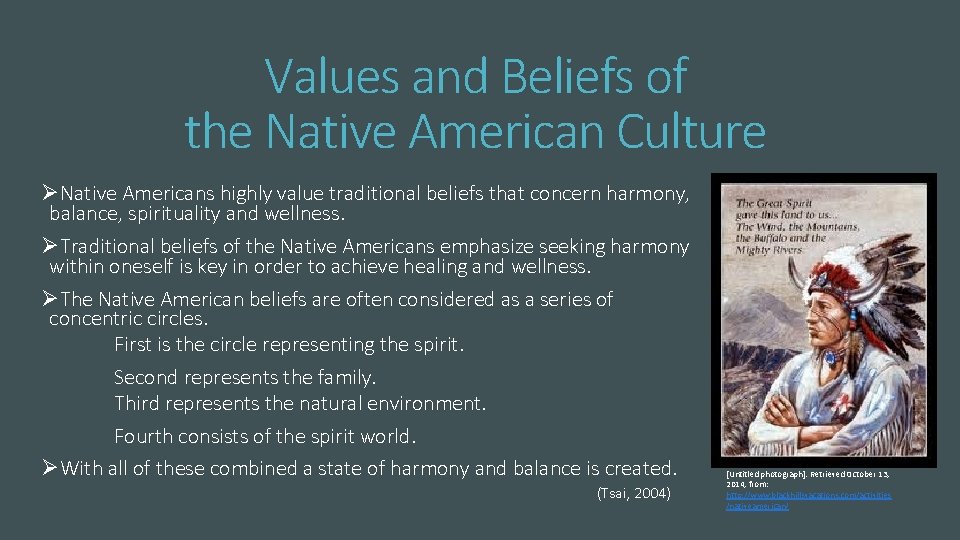
Values and Beliefs of the Native American Culture ØNative Americans highly value traditional beliefs that concern harmony, balance, spirituality and wellness. ØTraditional beliefs of the Native Americans emphasize seeking harmony within oneself is key in order to achieve healing and wellness. ØThe Native American beliefs are often considered as a series of concentric circles. First is the circle representing the spirit. Second represents the family. Third represents the natural environment. Fourth consists of the spirit world. ØWith all of these combined a state of harmony and balance is created. (Tsai, 2004) [Untitled photograph]. Retrieved October 13, 2014, from: http: //www. blackhillsvacations. com/activities /nativeamerican/
Norms of the Native American Culture ØFamily structure often varies from tribe to tribe among the Native American culture. Navajo tribes are matriarchial societies where as others are patriarchial. ØFamily practices are very diverse however they all revolve around a set of core values and beliefs. ØMost of the Native American families are extended and they often include mothers, fathers, grandparents, aunts, uncles, and cousins. ØMany of their traditions include feast day celebrations which include dance, vibrant attire, and sacred rituals. (Tasi, 2004)
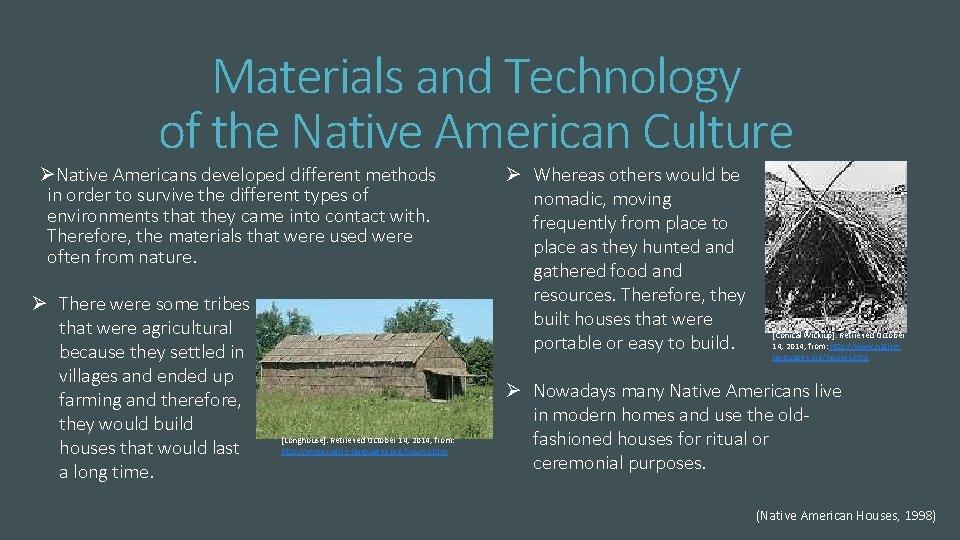
Materials and Technology of the Native American Culture ØNative Americans developed different methods in order to survive the different types of environments that they came into contact with. Therefore, the materials that were used were often from nature. Ø There were some tribes that were agricultural because they settled in villages and ended up farming and therefore, they would build houses that would last a long time. [Longhouse]. Retrieved October 14, 2014, from: http: //www. native-languages. org/houses. htm Ø Whereas others would be nomadic, moving frequently from place to place as they hunted and gathered food and resources. Therefore, they built houses that were portable or easy to build. [Conical Wickiup]. Retrieved October 14, 2014, from: http: //www. nativelanguages. org/houses. htm Ø Nowadays many Native Americans live in modern homes and use the oldfashioned houses for ritual or ceremonial purposes. (Native American Houses, 1998)
Healing Practices of the Native American Culture ØOften times Native Americans consult a traditional healer first to diagnose or remove the cause of disease and then consult a physician to cure the symptoms. ØWhen illness is perceived, a hand trembler or star gazer may be asked to diagnose the cause. This is done preforming a simple ritual in order to “see” or “hear” the cause of the illness. Ø“Blessing way” chants may also be preformed as a way to prevent illness, maintain health, and attract the forces of beauty and harmony. ØHealing ceremonies should be preformed 4 times in order to ensure the removal of the cause of illness. Healing ceremonies are forbidden during the summer months, therefore there can be long periods between diagnosis and cure. (Hendrix, n. d. )
Summary of Native American views in regards to Nursing ØKey concepts to remember in regards to Native Americans: 1. Make the patient feel welcome- Show respect to patients elders. 2. Use eye contact judiciously- Prolong eye contact can be a sign of disrespect. 3. Respect silence- They may need time to translate what they heard. 4. Speak plainly- Use a soft and concerned voice. 5. Understand tribal diagnosis- Patient may be unfamiliar with techniques used. 6. Accommodate tribal healing 7. Think carefully about family care 8. Involve the extended family 9. Accept a difference sense of time- Usually are present oriented. 10. Give and expect generosity- Doing things for others is highly regarded. (Culture-Sensitive Care, 2000)
Questions? Any questions just comment on the discussion board and I will get back to you!
References Keys to a Good Professional Relationship with American Indian Patients. (2000, January 1). Retrieved from http: //www. diversityresources. com/health/indian. html Hendrix, L. (n. d. ). Spirituality and Healing. Retrieved October 11, 2014, from http: //web. stanford. edu/group/ethnoger/americanindian. html Native American Culture. (1995, January 1). Retrieved October 10, 2014, from http: //indians. org/articles/native-american-culture. html Native American Houses. (1998, January 1). Retrieved October 10, 2014, from http: //www. nativelanguages. org/houses. htm Rehling, J. (n. d. ). Native American Languages. Retrieved October 10, 2014, from http: //www. cogsci. indiana. edu/farg/rehling/native. Am/ling. html Tsai, G. , & Alanis, L. (2004, June 1). Native American Family Practices, Beliefs, and Traditions. Retrieved October 10, 2014, from http: //www. nasponline. org/publications/cq/cq 328 native. aspx
- Slides: 13