
Native American College and Career Success This textbook

Native American College and Career Success
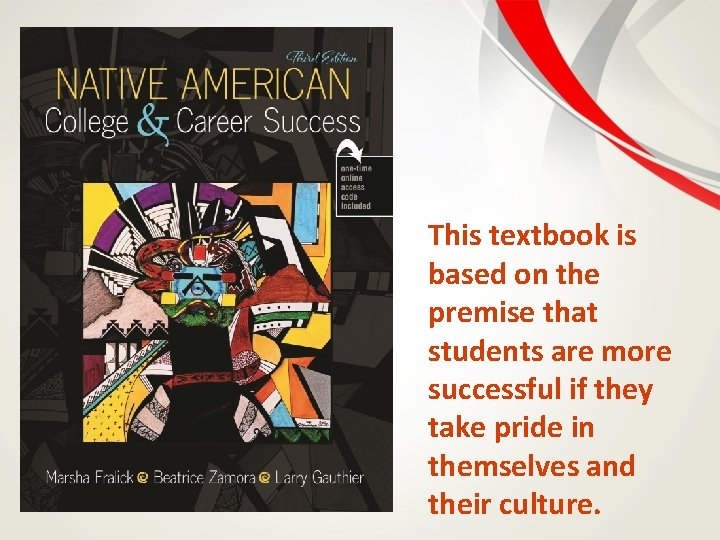
This textbook is based on the premise that students are more successful if they take pride in themselves and their culture.
Chapter 1 THE SPIRIT ESSENCE OF ALL WE DO: CULTURAL IDENTITY AND SUCCESS
Spirit Essence Most Native peoples believe that there is a spirit essence in all things that we do and in all things in nature. Remembering your spirit essence will help you to connect to your past and your present. This focus will allow you to honor your family and community while also honoring your college education.
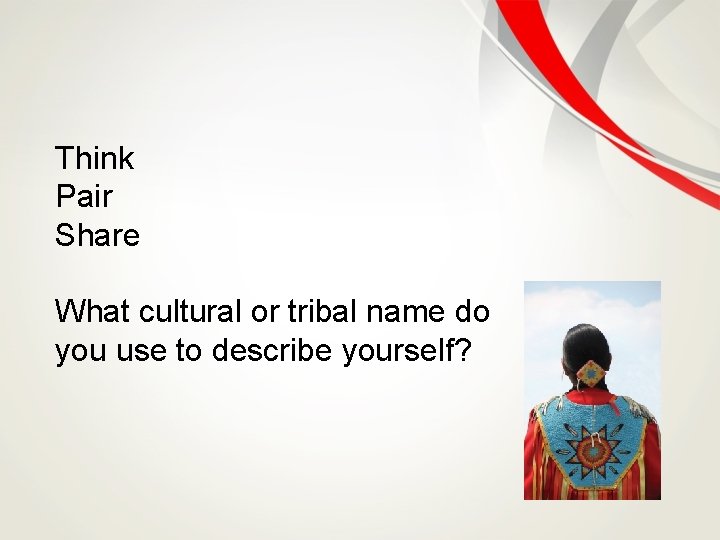
Think Pair Share What cultural or tribal name do you use to describe yourself?

Native students need to improve their college graduation rates.

One Minute Paper For one minute, write about this question: What can you do to improve your chances of graduating from college? After one minute, underline your best idea. Share your best idea with other students in this class.
Unfortunate History Early education and boarding schools tried to eliminate Native culture and language. The goal was assimilation into the dominant culture. This resulted in cultural disintegration and loss of identity resulting in lower educational achievement.
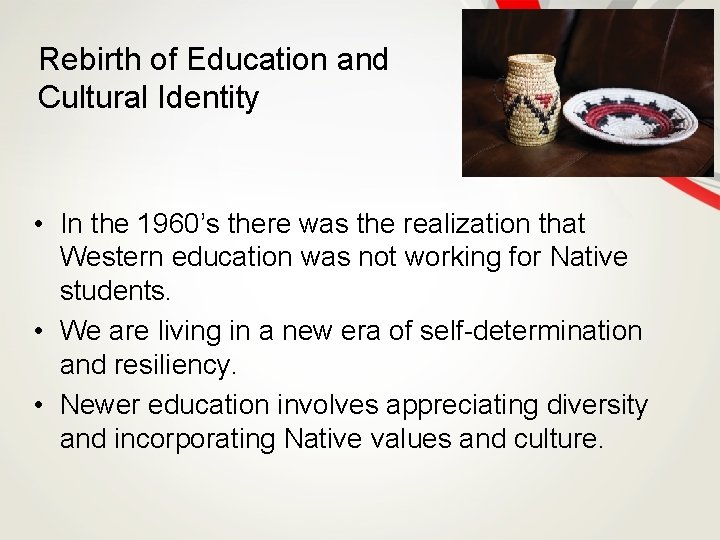
Rebirth of Education and Cultural Identity • In the 1960’s there was the realization that Western education was not working for Native students. • We are living in a new era of self-determination and resiliency. • Newer education involves appreciating diversity and incorporating Native values and culture.

The Importance of Family and Home Family and home are valued. Gain support from your family
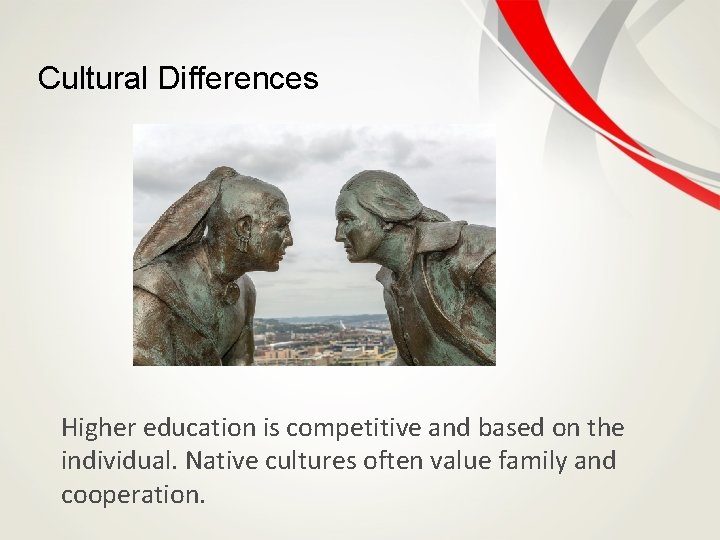
Cultural Differences Higher education is competitive and based on the individual. Native cultures often value family and cooperation.
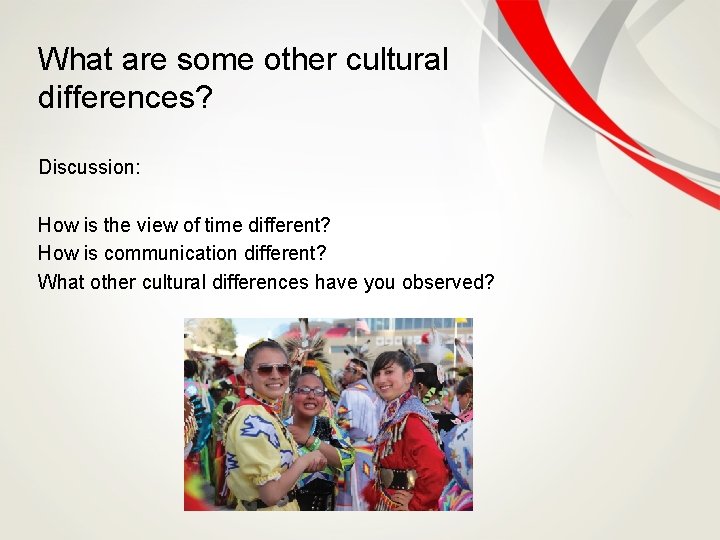
What are some other cultural differences? Discussion: How is the view of time different? How is communication different? What other cultural differences have you observed?
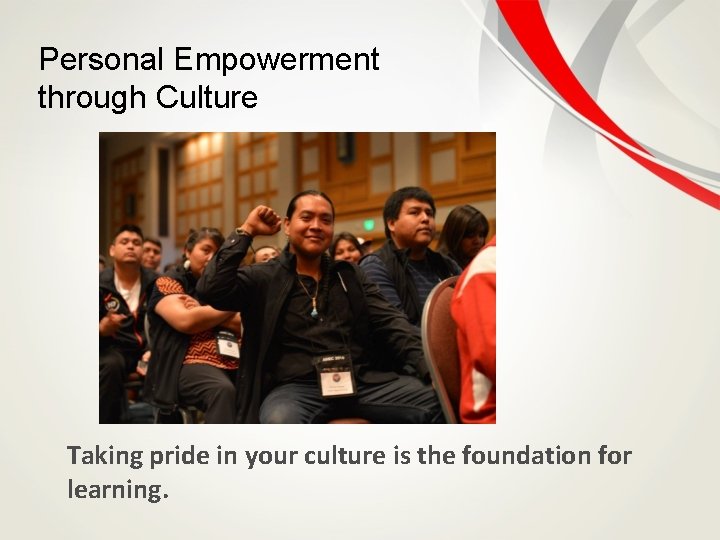
Personal Empowerment through Culture Taking pride in your culture is the foundation for learning.
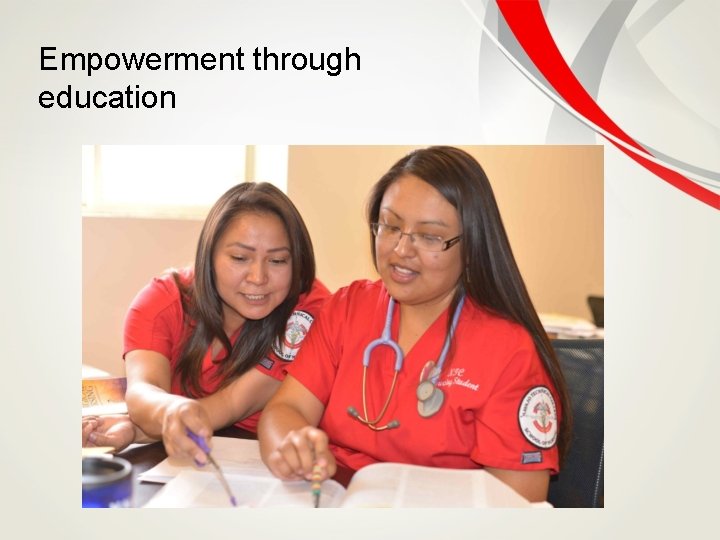
Empowerment through education

Some Native Beliefs • Understanding of the natural world – Knowledge of plants and animals. – Knowledge of astronomy and complex astronomical cycles

Value Systems • Some Native Values (Cree, Dakota, Blackfoot, Ojibwa) – Respect – Obedience – Humility • These values represented by the three center poles of their home or teepee.
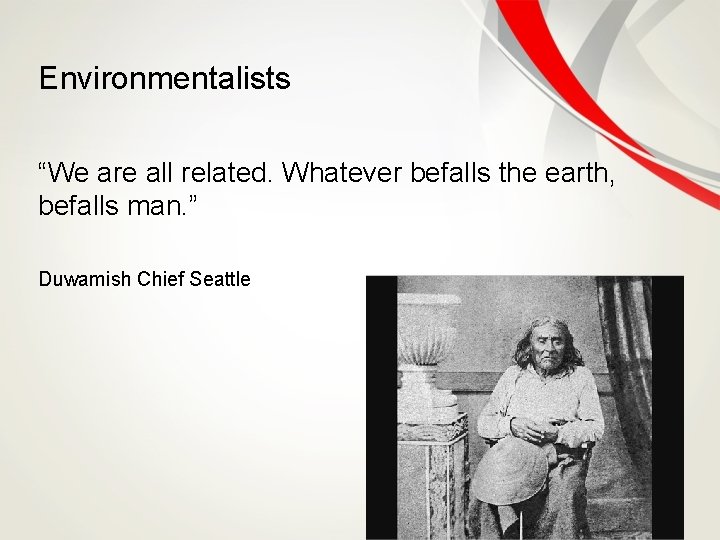
Environmentalists “We are all related. Whatever befalls the earth, befalls man. ” Duwamish Chief Seattle
Think Pair Share What other values are important in your culture?
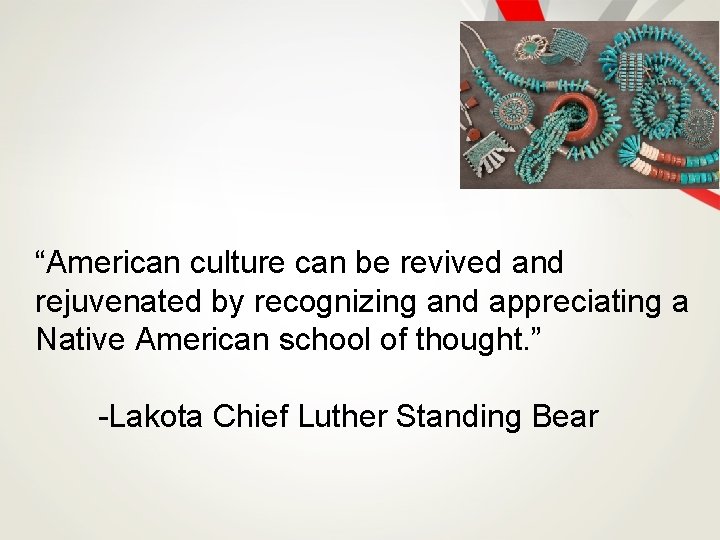
“American culture can be revived and rejuvenated by recognizing and appreciating a Native American school of thought. ” -Lakota Chief Luther Standing Bear

Cree Prophecy When all the trees have been cut down, when all the animals have been hunted, when all the waters are polluted, when all the air is unsafe to breathe, only then will you discover that you can’t eat money. Video: You Can’t Eat Money
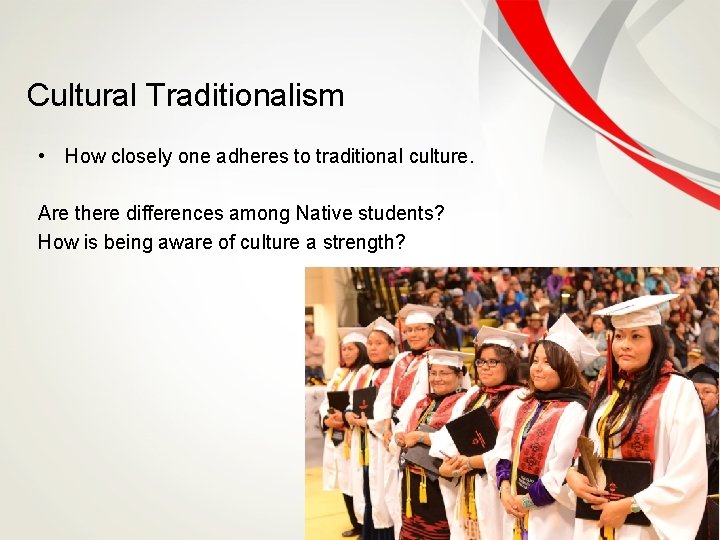
Cultural Traditionalism • How closely one adheres to traditional culture. Are there differences among Native students? How is being aware of culture a strength?
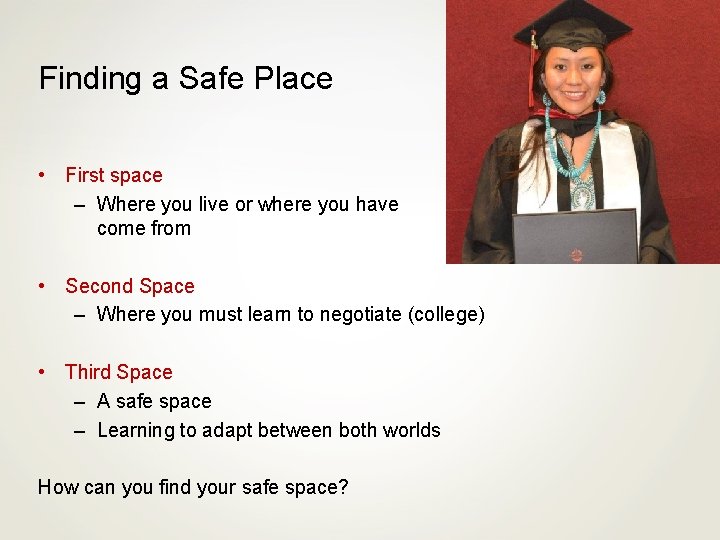
Finding a Safe Place • First space – Where you live or where you have come from • Second Space – Where you must learn to negotiate (college) • Third Space – A safe space – Learning to adapt between both worlds How can you find your safe space?
Health and Well-Being Good health has four components: Spiritual Emotional Physical Mental
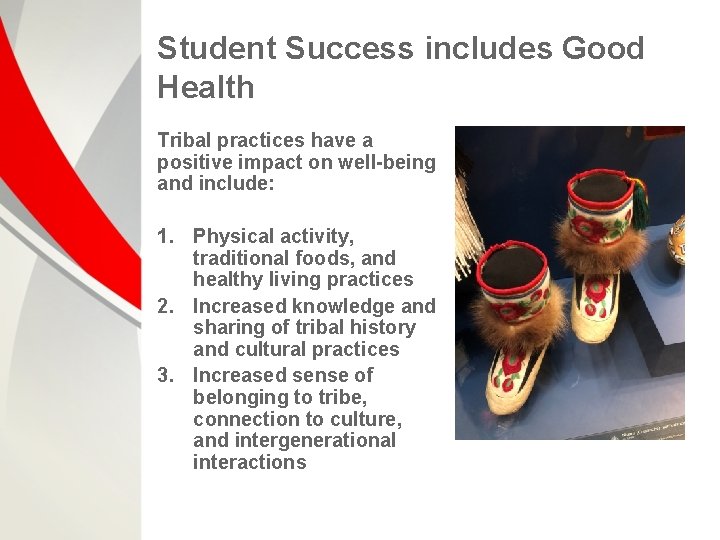
Student Success includes Good Health Tribal practices have a positive impact on well-being and include: 1. Physical activity, traditional foods, and healthy living practices 2. Increased knowledge and sharing of tribal history and cultural practices 3. Increased sense of belonging to tribe, connection to culture, and intergenerational interactions
Successful Learning from the Native Perspective Engage all the senses including visual, auditory, touch, movement, smell, and taste Build on your experience. How does the material you are learning relate to your personal experience? Every human being has a desire to succeed. Invest your time in learning and build on your success. Think about how you can use your education in both the traditional and modern world.
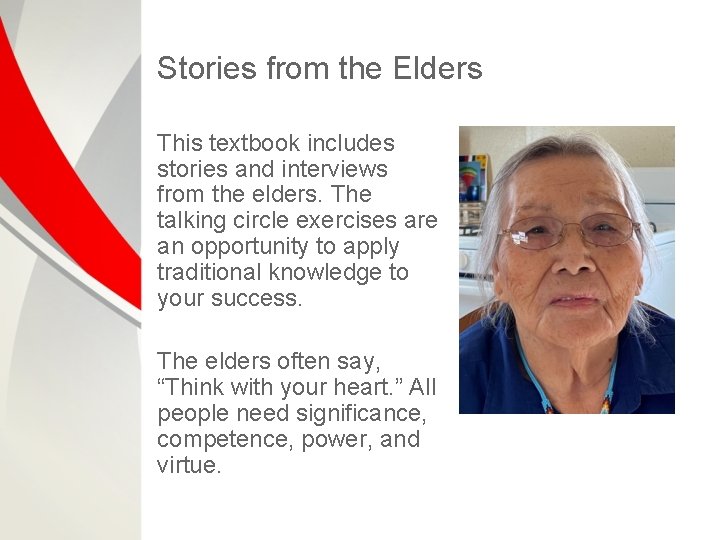
Stories from the Elders This textbook includes stories and interviews from the elders. The talking circle exercises are an opportunity to apply traditional knowledge to your success. The elders often say, “Think with your heart. ” All people need significance, competence, power, and virtue.
Stories from the Elders: Wesakechak and Crane How does this story relate to your success in college and in life?
- Slides: 27