
Nations India Pakistan Bangladesh Sri Lanka Thailand Myanmar
Nations: • India, Pakistan, Bangladesh, Sri Lanka, Thailand, Myanmar (Burma) Laos, Cambodia, Vietnam, Malaysia, Philippines, Indonesia, and Singapore. • Mainland South Asia a. k. a. the Subcontinent. (Size and mountains).
Mountains: • Himalayas (Mt. Everest 29, 028 feet) –Impassable until recent years. • Khyber Pass –Avenue for migrants and invasion. • Deccan Plateau
Rivers and Climate: South Asia • Indus / Ganges • Excellent for farming. • Monsoons from the north. • Floods or droughts. • Grow wheat and rice in appropriate areas.

• Irrawaddy River and Chao Phraya River • Mekong River in Laos, Cambodia, and Vietnam. • Tropical zone suitable for growing rice, sugarcane, coffee, lumber and rubber. • Monsoons bring 100 inches of rain.
• Agrarian (3000 - 1500 BC) civilizations supported urban centers. –Introduced a system of writing. • Aryans (1500 - 500 BC) introduced Sanskrit and Hinduism.
• Polytheistic religion. • Reincarnation • Karma is the force generated by actions or deeds. • Dharma: rules or religious duties Hindu must exercise.
Social Structure: • The Caste System • Social groups into which one is born. • Hundreds of castes. • Highest are the Brahmans, lowest are the untouchables.
• Determined occupation, wealth, and status. • Indian constitution bans discrimination.
• Founder Siddhartha Guatama. • All forms of human suffering were born out of materialistic desires. • Give up worldly desires, people achieve Nirvana.
• Incorporates Karma and Dharma. • Became a major force in Southeast Asia, China, Japan, and Korea.
• 8 th century, Islam introduced to South Asia. • Dominant religion in Pakistan and Bangladesh. • Muslim invaders slaughtered 100, 000 s of Hindus. • Religious differences created conflict.
• Muslims worship only one God; Hindus worship many. • Muslims eat all meats other than pork; Hindus are vegetarian, refuse to eat beef, and regard the cow as sacred. • Muslims believe in social equality, Hindus developed the caste system.
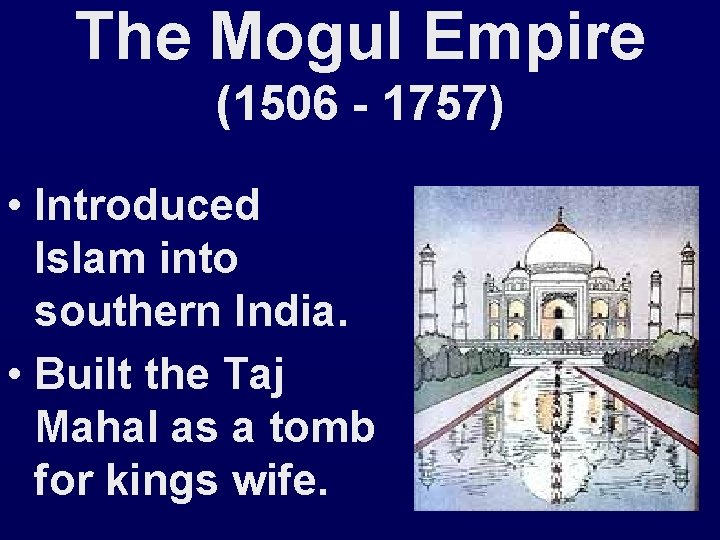
The Mogul Empire (1506 - 1757) • Introduced Islam into southern India. • Built the Taj Mahal as a tomb for kings wife.
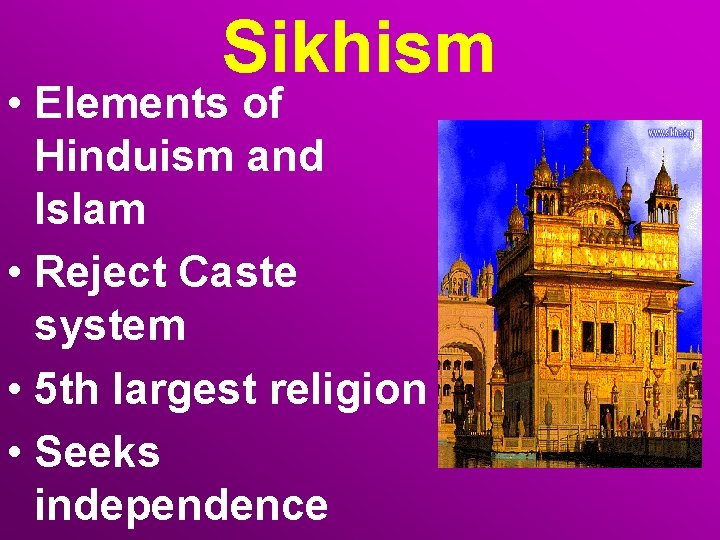
Sikhism • Elements of Hinduism and Islam • Reject Caste system • 5 th largest religion • Seeks independence
Southeast Asia Civilizations: • Traveling monks and merchants brought three religions. • Chinese brought Confucianism.
The British in India: • British East India Company. • Sepoy Mutiny (1857) • British government controlled India after. • British adopt a policy of divide and conquer.
Changes Resulting From British Imperialism: • Railroads. • Irrigation systems • Schools • Medication and sanitation • Indians as soldiers
Indian Nationalism: • Resent British rule. • Western values taught (democracy, self-determination) • Indian National Congress (Hindus) and Ghandi. • Muslim League (Mohammed Ali Jinnah)
Mohandis Ghandi: • Mahatma - “Great One”. • Used non-violent means of protest. • Civil disobedience: refusal to obey the laws one felt unjust.
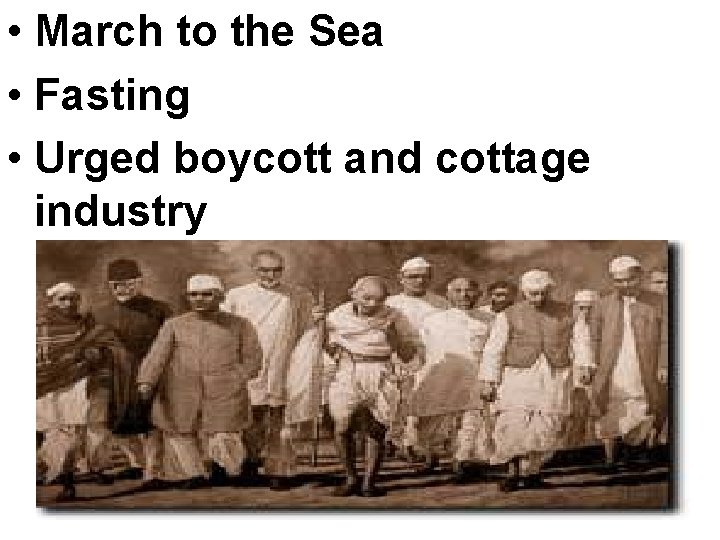
• March to the Sea • Fasting • Urged boycott and cottage industry
Indian Independence (1947) • World War II. • Halt protests during war for independence after the war. • Violence between Muslims and Hindus.
• Hindu fanatic assassinated Ghandi. • Sub-continent divided into three parts, India, East and west Pakistan.
Problems of Indian Independence: • India adopted parliamentary democracy. Nehru was the first prime minister. • Policy of non - alignment. • Religious and cultural differences.
• Forced migrations. • Both India and Pakistan claimed Kashmir. • Sikh minority want autonomy from India. Assassinated Indira Ghandi.
• Indian population 900 million. • Limited resources. • Supports birth control and voluntary sterilization. • Urbanization loses touch with traditions. • Weakening of arranged marriages and caste system.
India’s Economy: • Partially socialistic. • Green revolution in agriculture. • Dependence on foreign capital.
• France wanted to reestablish colonies in Indochina. . • Ho Chi Minh lead a guerrilla war against France. • Lose at the battle of Dien Bien Phu, French withdrew. • Anti - communist government controlled the south.
Miscellaneous: • War in Vietnam • Cambodian Genocide (1975) • Vietnamese invasion of Cambodia. • 1991, UN arranged agreement between Cambodian government and Khmer Rouge.
- Slides: 37