
Nationalism Nationalism Nationalism is the belief that peoples
Nationalism
Nationalism ■ Nationalism is the belief that people’s greatest loyalty should not be to a king or an empire but to a nation of people who share a common culture and history ■ One of the most powerful ideas of the 1800 s. – Influence spread throughout Europe and the Americas – Upset balance of power established at Congress of Vienna (1815)
■ Fed the desire of most groups to be free of the rule of empires and govern themselves in their traditional lands ■ Fueled by efforts to build nation-states ■ Authoritarian rulers began to use nationalist feelings to build nation-states in areas where they remained firmly in control.
■ Conservative – usually wealthy property owners and nobility. They argued for protecting the traditional monarchies of Europe ■ Liberal – mostly middle-class business leaders and merchants. They wanted to give more power to elected parliaments, but only the educated and landowners would vote. ■ Radical – favored drastic change to extend democracy to all people. They believed that government should practice the ideals of the Enlightenment– liberty, equality and brotherhood.
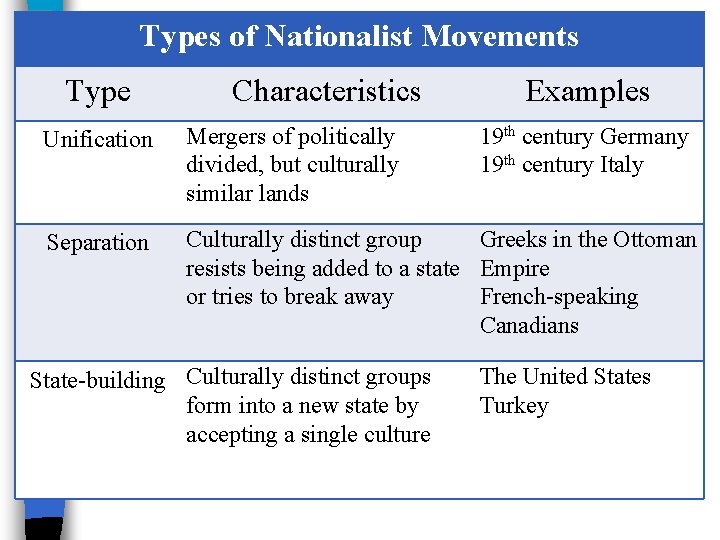
Types of Nationalist Movements Type Characteristics Examples Unification Mergers of politically divided, but culturally similar lands Separation Culturally distinct group Greeks in the Ottoman resists being added to a state Empire or tries to break away French-speaking Canadians State-building Culturally distinct groups form into a new state by accepting a single culture 19 th century Germany 19 th century Italy The United States Turkey
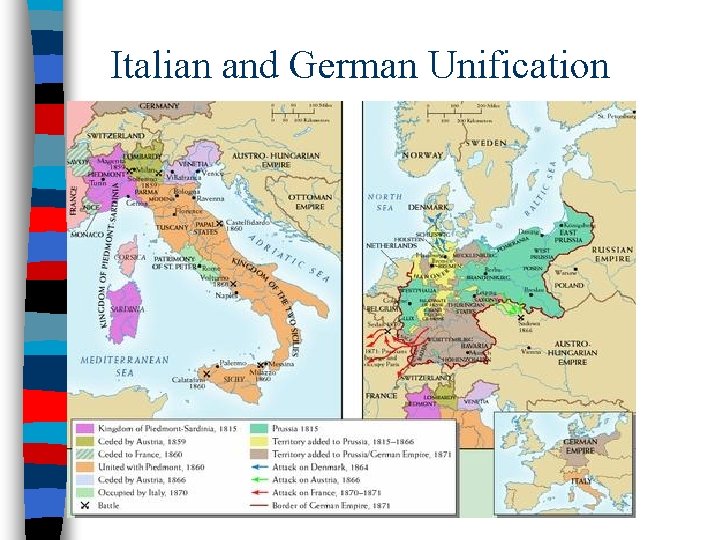
Italian and German Unification
Growing Nationalism ■ 1815 - modern Italy did not exist – Italian Peninsula divided into a number of independent states with cultural and economic differences
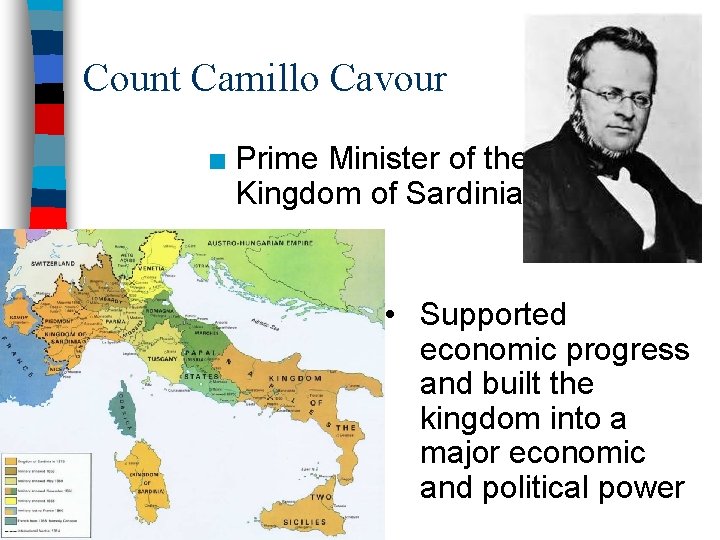
Count Camillo Cavour ■ Prime Minister of the Kingdom of Sardinia • Supported economic progress and built the kingdom into a major economic and political power
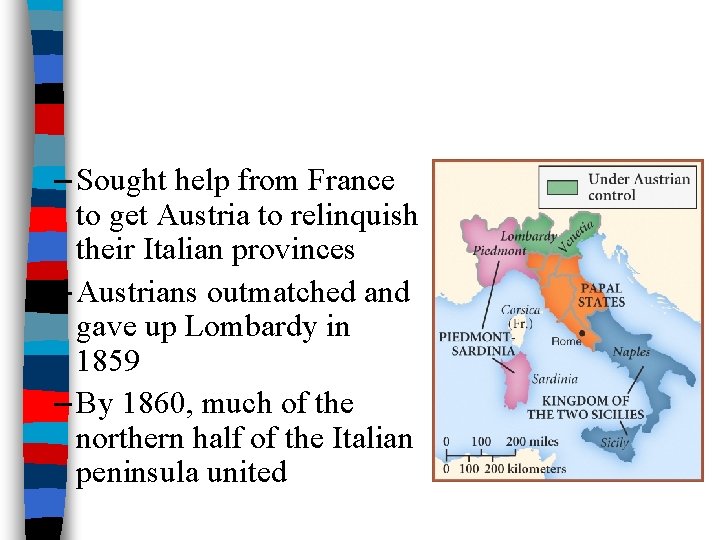
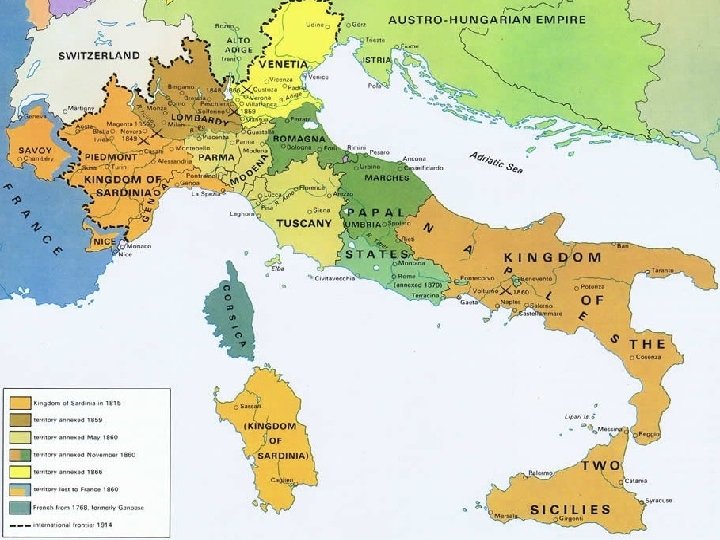
– Sought help from France to get Austria to relinquish their Italian provinces – Austrians outmatched and gave up Lombardy in 1859 – By 1860, much of the northern half of the Italian peninsula united
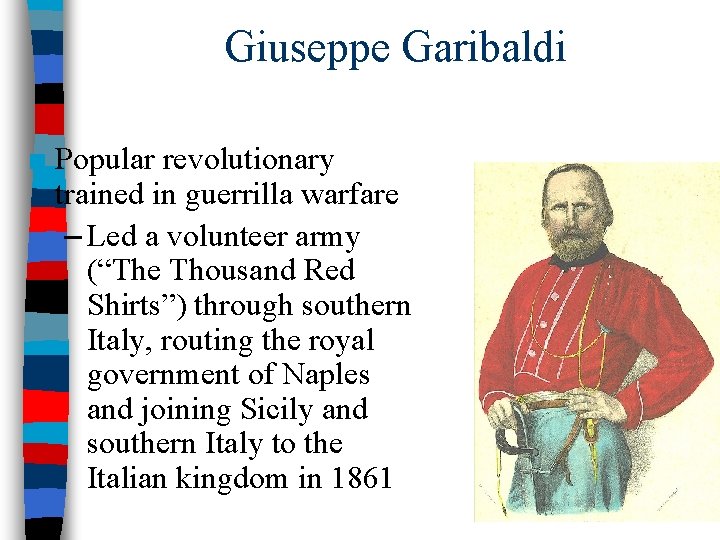
Giuseppe Garibaldi ■ Popular revolutionary trained in guerrilla warfare – Led a volunteer army (“The Thousand Red Shirts”) through southern Italy, routing the royal government of Naples and joining Sicily and southern Italy to the Italian kingdom in 1861
Problems with Italian Unification ■ Profound cultural and economic divisions separate the south and the north ■ “National culture” tilted heavily in favor of the north
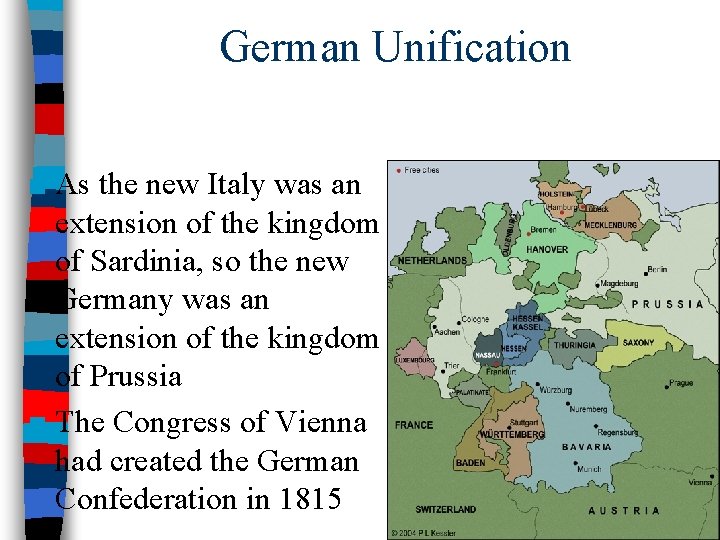
German Unification ■ As the new Italy was an extension of the kingdom of Sardinia, so the new Germany was an extension of the kingdom of Prussia ■ The Congress of Vienna had created the German Confederation in 1815
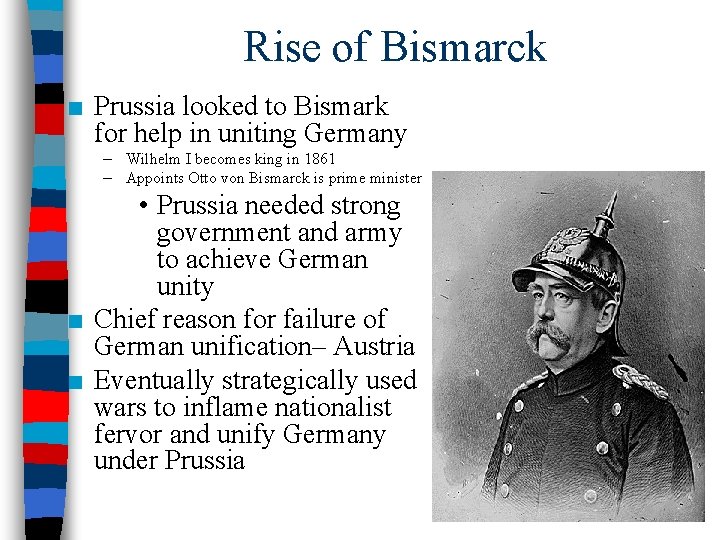
Rise of Bismarck ■ Prussia looked to Bismark for help in uniting Germany – Wilhelm I becomes king in 1861 – Appoints Otto von Bismarck is prime minister • Prussia needed strong government and army to achieve German unity ■ Chief reason for failure of German unification– Austria ■ Eventually strategically used wars to inflame nationalist fervor and unify Germany under Prussia
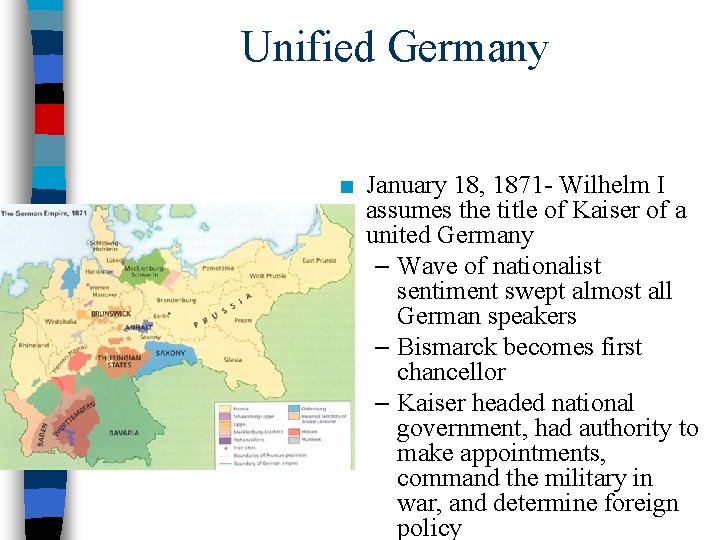
Unified Germany ■ January 18, 1871 - Wilhelm I assumes the title of Kaiser of a united Germany – Wave of nationalist sentiment swept almost all German speakers – Bismarck becomes first chancellor – Kaiser headed national government, had authority to make appointments, command the military in war, and determine foreign policy
■ Essential Question: –What was the impact of western imperialism on Japan? ■ Warm Up Question:
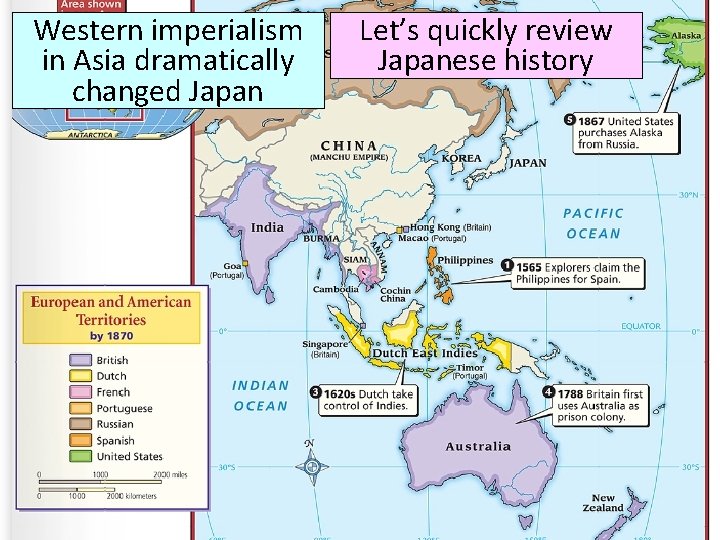
Western imperialism in Asia dramatically changed Japan Let’s quickly review Japanese history
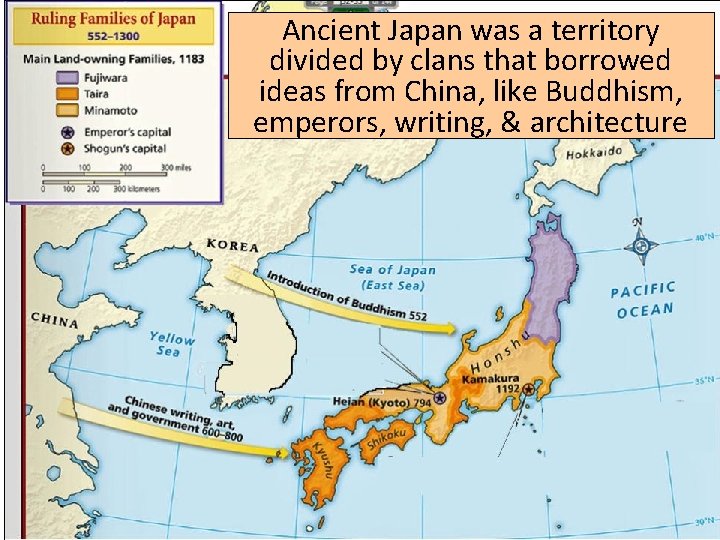
■ Text Ancient Japan was a territory Title divided by clans that borrowed ideas from China, like Buddhism, emperors, writing, & architecture
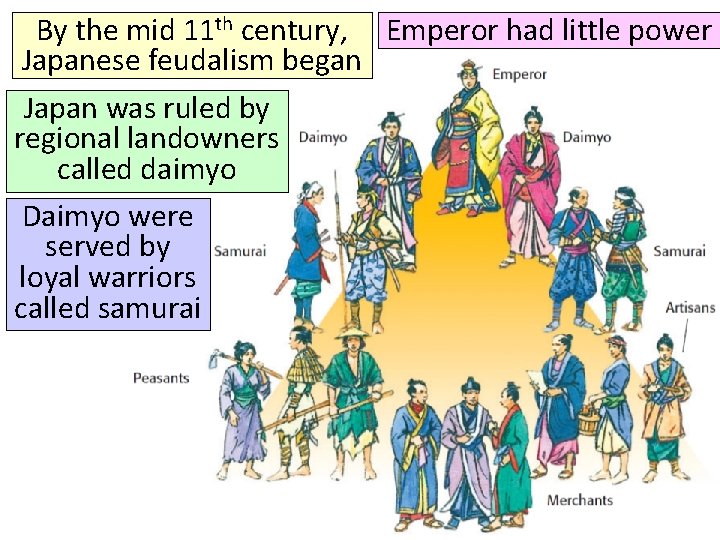
By the mid 11 th century, Emperor had little power Japanese feudalism began Japan was ruled by regional landowners called daimyo Daimyo were served by loyal warriors called samurai
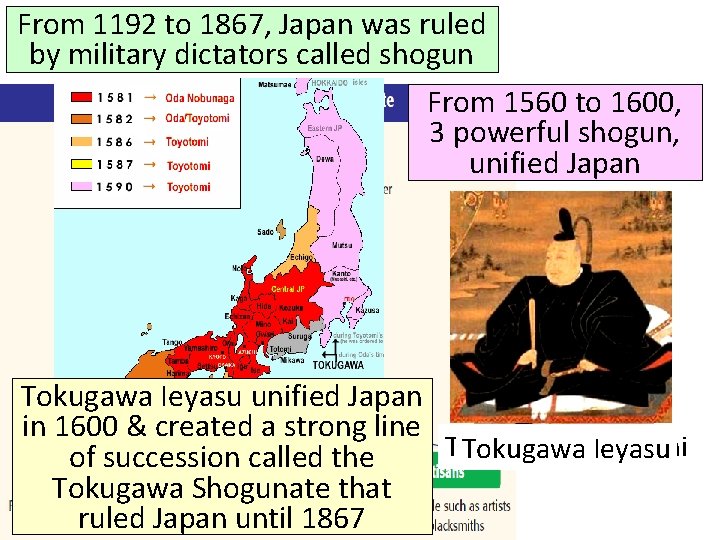
From 1192 to 1867, Japan was ruled by military dictators called shogun From 1560 to 1600, 3 powerful shogun, unified Japan Tokugawa Ieyasu unified Japan in 1600 & created a strong line Toyotomi Hideyoshi Tokugawa Oda Nobunaga Ieyasu of succession called the Tokugawa Shogunate that ruled Japan until 1867
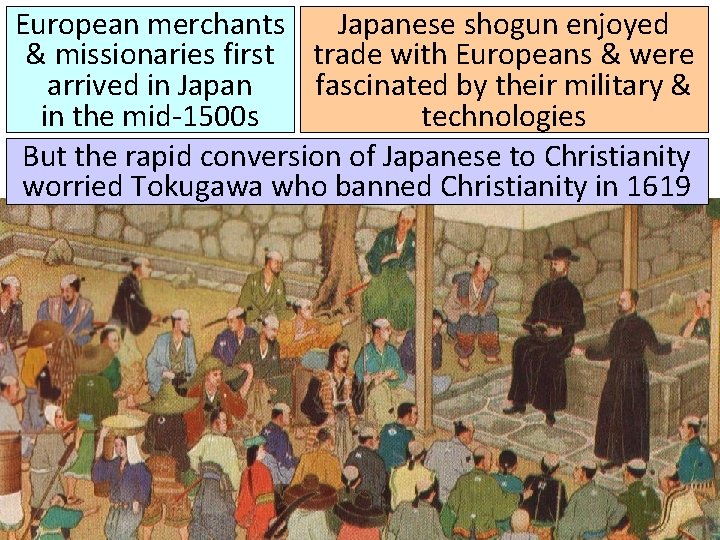
European merchants Japanese shogun enjoyed & missionaries first trade with Europeans & were arrived in Japan fascinated by their military & in the mid-1500 s technologies But the rapid conversion of Japanese to Christianity worried Tokugawa who banned Christianity in 1619
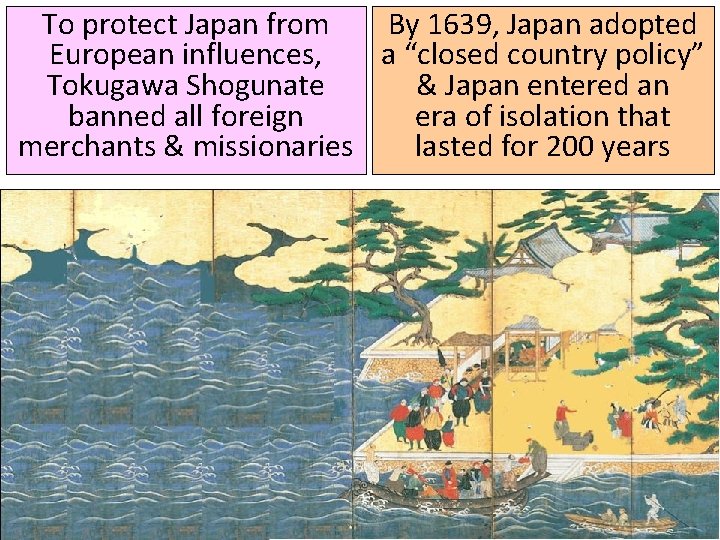
To protect Japan from By 1639, Japan adopted European influences, a “closed country policy” Tokugawa Shogunate & Japan entered an banned all foreign era of isolation that merchants & missionaries lasted for 200 years
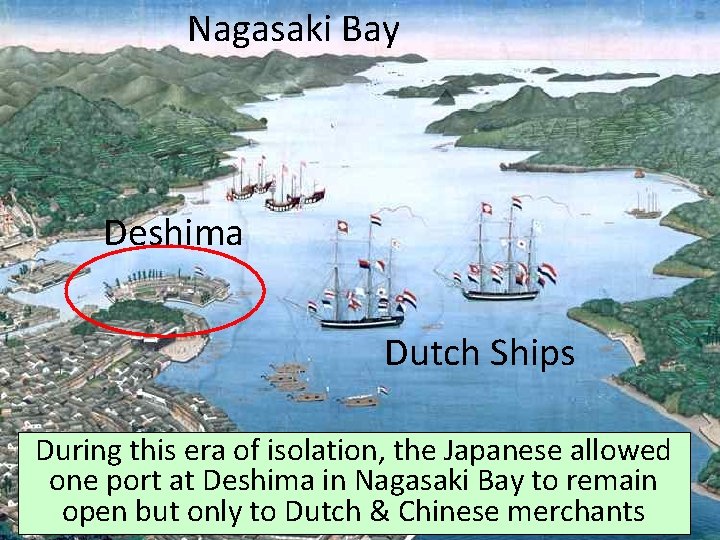
Nagasaki Bay Deshima Dutch Ships During this era of isolation, the Japanese allowed one port at Deshima in Nagasaki Bay to remain open but only to Dutch & Chinese merchants
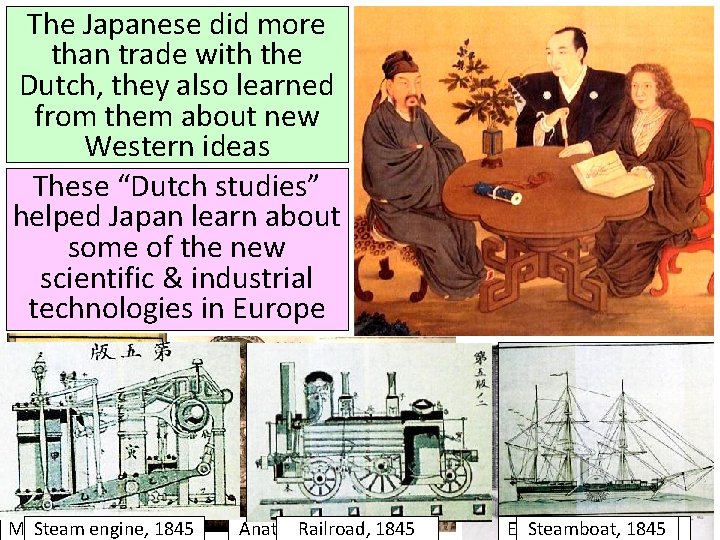
The Japanese did more than trade with the Dutch, they also learned from them about new Western ideas These “Dutch studies” helped Japan learn about some of the new scientific & industrial technologies in Europe Microscope, Steam engine, 17871845 Anatomy Railroad, book, 1774 1845 Electric Steamboat, battery, 1845 1840
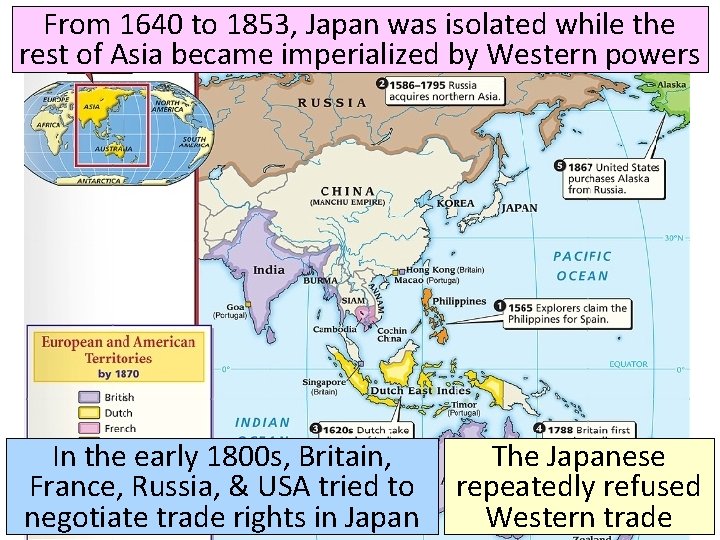
From 1640 to 1853, Japan was isolated while the Title by Western powers rest of Asia became imperialized In the early 1800 s, Britain, France, Russia, & USA tried to negotiate trade rights in Japan The Japanese repeatedly refused Western trade
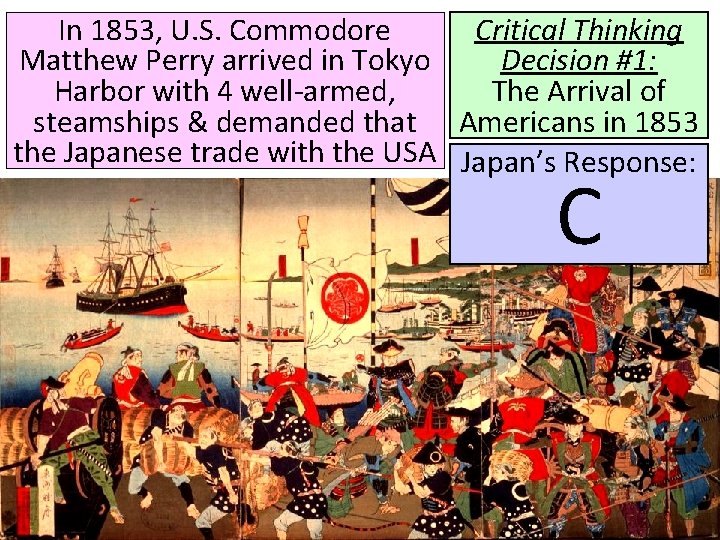
In 1853, U. S. Commodore Critical Thinking Matthew Perry arrived in Tokyo Decision #1: Harbor with 4 well-armed, The Arrival of steamships & demanded that Americans in 1853 the Japanese trade with the USA Japan’s Response: C
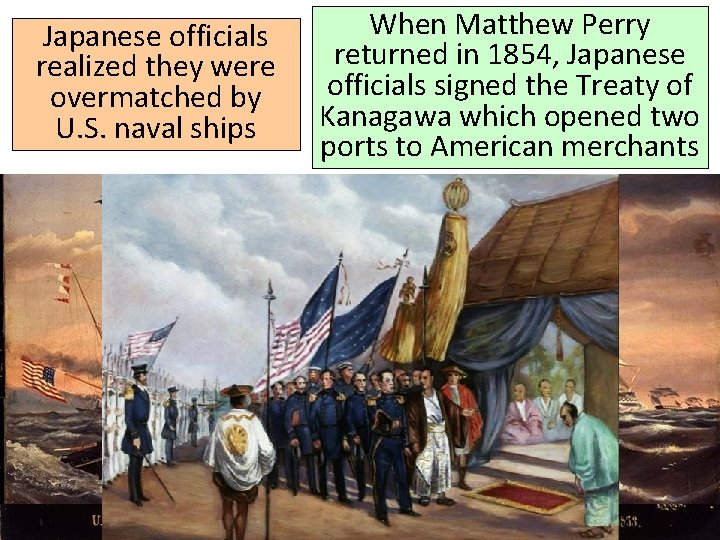
Japanese officials realized they were overmatched by U. S. naval ships When Matthew Perry returned in 1854, Japanese officials signed the Treaty of Kanagawa which opened two ports to American merchants
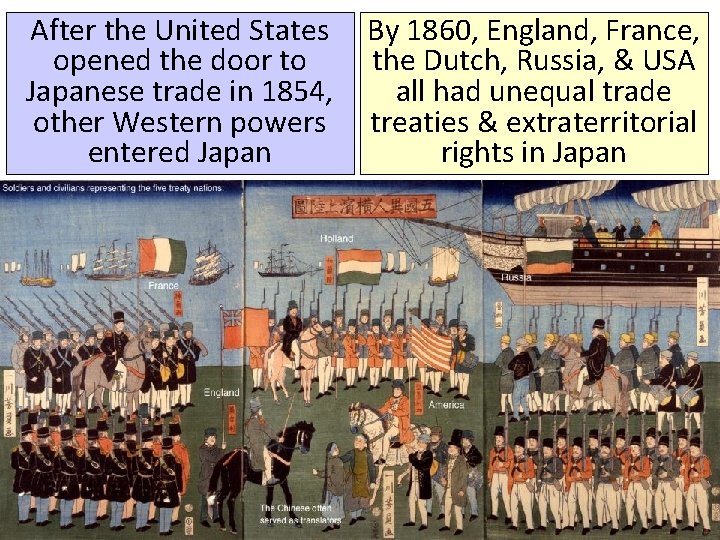
After the United States opened the door to Japanese trade in 1854, other Western powers entered Japan By 1860, England, France, the Dutch, Russia, & USA all had unequal trade treaties & extraterritorial rights in Japan
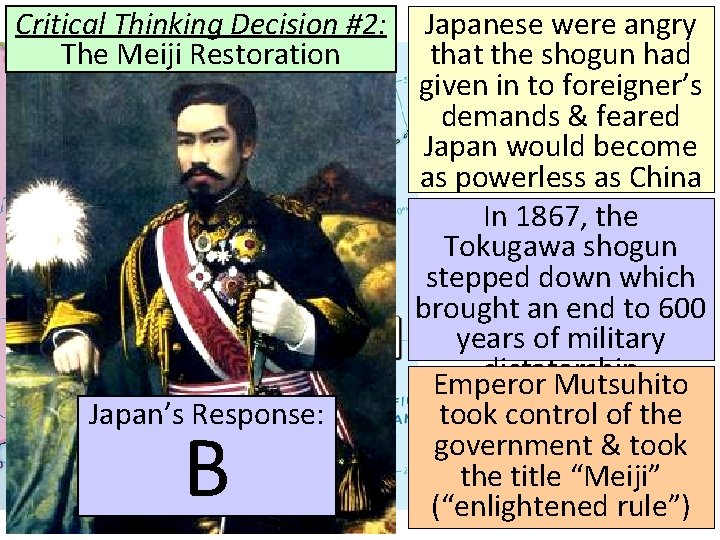
Critical Thinking Decision #2: The Meiji Restoration ■ Text Japan’s Response: B Japanese were angry that the shogun had given in to foreigner’s demands & feared Japan would become as powerless as China In 1867, the Tokugawa shogun stepped down which brought an end to 600 years of military dictatorship Emperor Mutsuhito took control of the government & took the title “Meiji” (“enlightened rule”)
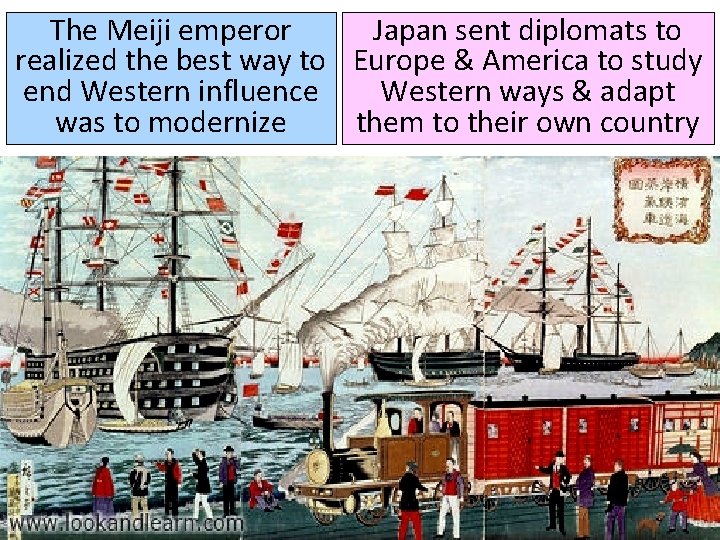
The Meiji emperor Japan sent diplomats to realized the best way to Europe & America to study end Western influence Western ways & adapt was to modernize them to their own country
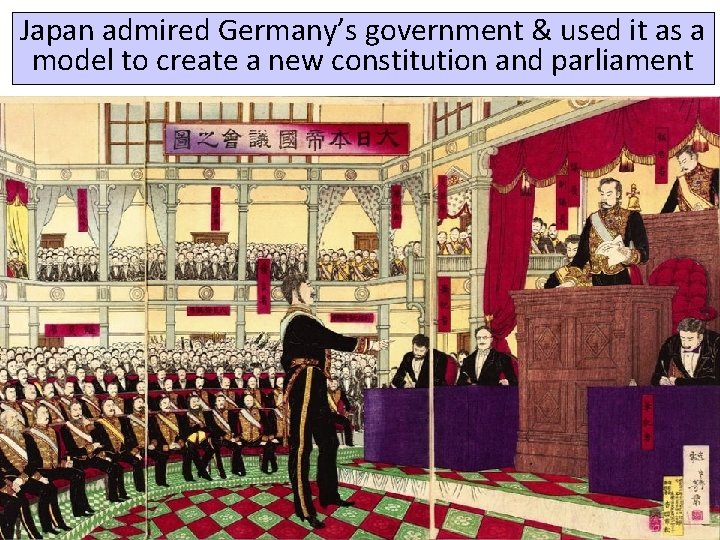
Japan admired Germany’s government & used it as a model to create a new constitution and parliament
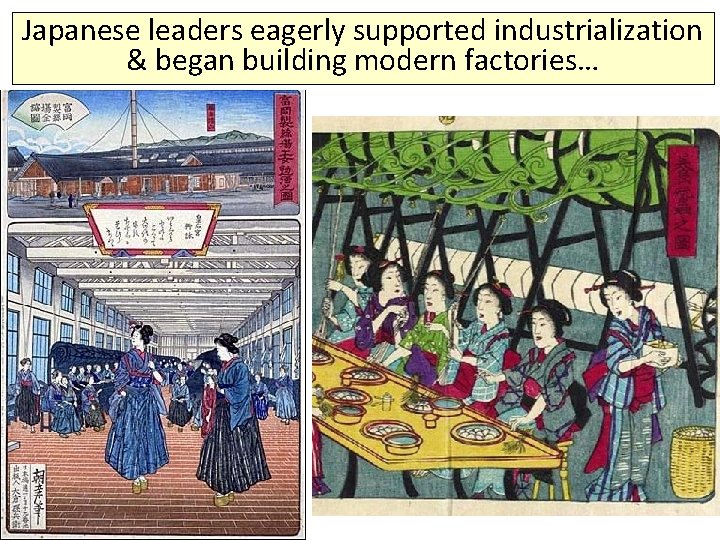
Japanese leaders eagerly supported industrialization & began building modern factories…
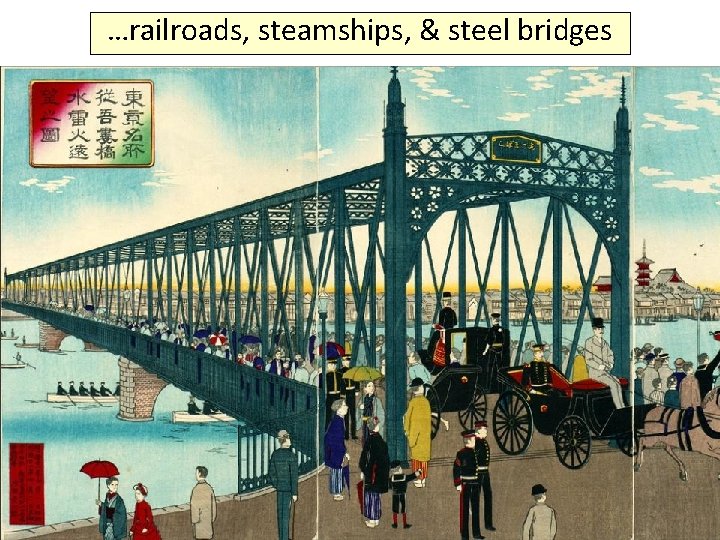
…railroads, steamships, & steel bridges Title
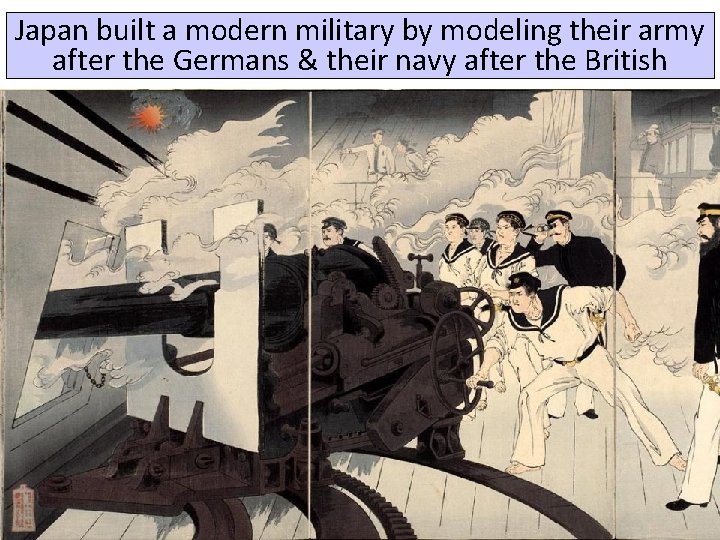
Japan built a modern military by modeling their army after the Germans & their navy after the British
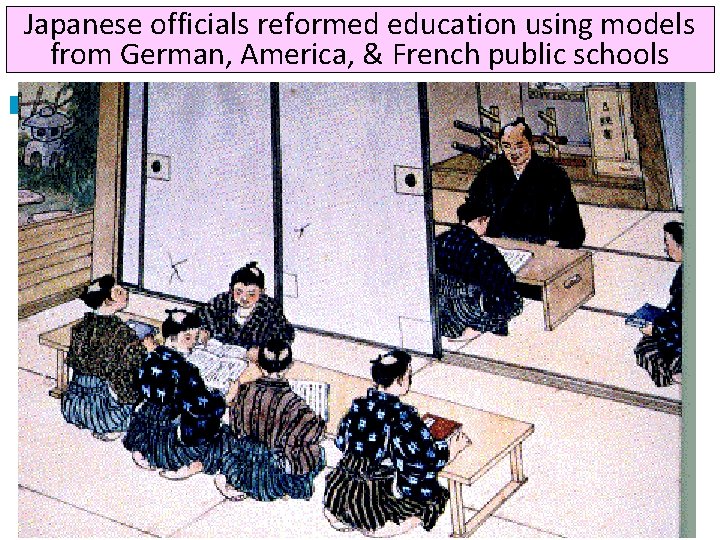
Japanese officials reformed education using models Title from German, America, & French public schools ■ Text
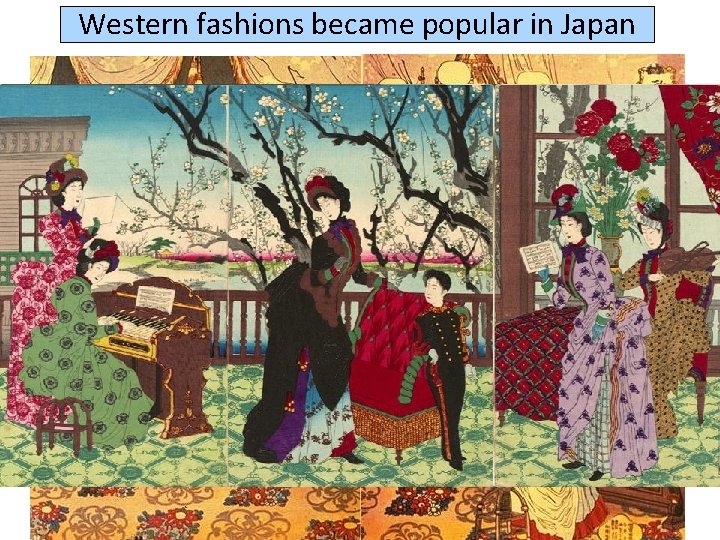
Western fashions became popular in Japan
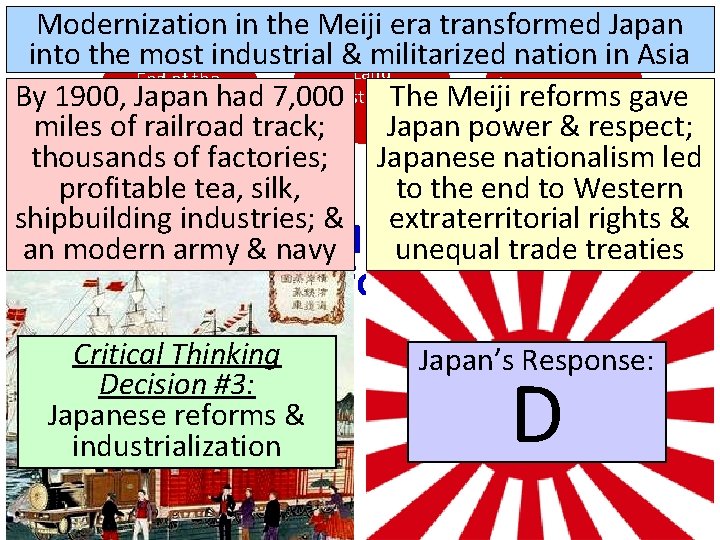
Modernization in the Meiji era transformed Japan into the most industrial &Land militarized. Public nation in Asia schools End of the (Germany, USA, Redistribution By 1900, feudal Japan had 7, 000 The Meiji reforms system & France) gave miles of railroad track; Japan power & respect; thousands of factories; Japanese nationalism led profitable tea, silk, to the end to Western Modernize shipbuilding industries; & extraterritorial rights & banking system the Army an modern army & navy. Meiji unequal trade(Germany) treaties Reforms Written Constitution (Germany) Critical Thinking Decision #3: Japanese reforms & Human Rights industrialization & Religious Freedom Build a Japan’s Response: D Modern Navy (Britain) Emperor Worship Intensified
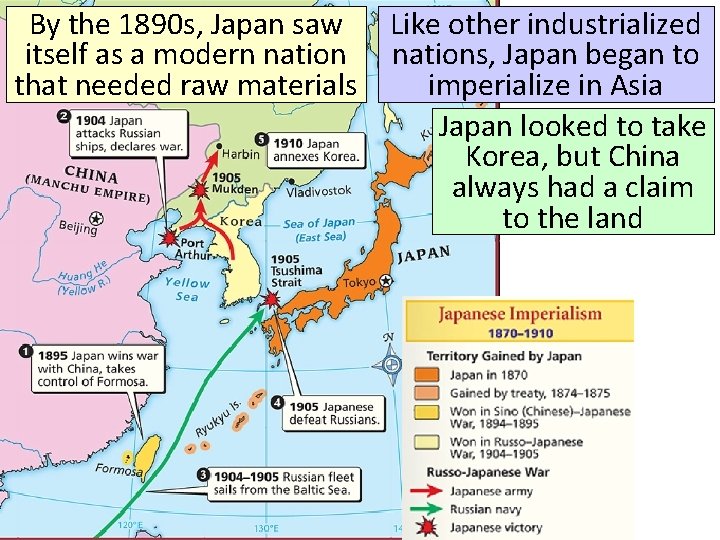
By the 1890 s, Japan saw itself as a modern nation that needed raw materials Like other industrialized nations, Japan began to imperialize in Asia Japan looked to take Korea, but China always had a claim to the land
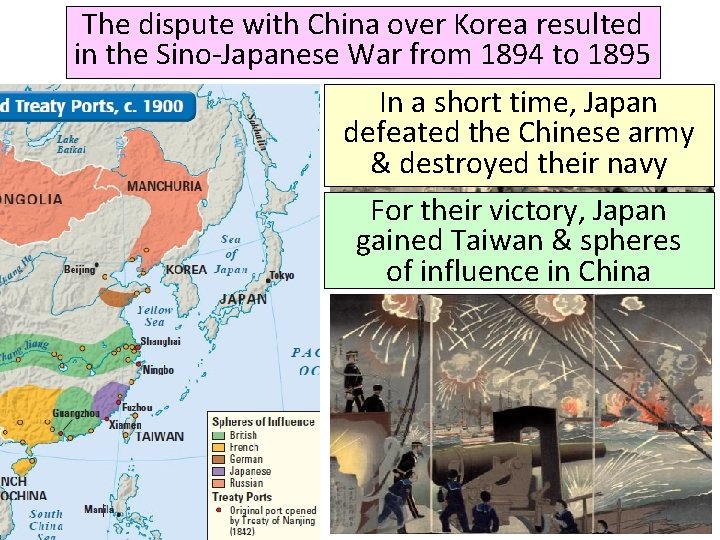
The dispute with China over Korea resulted in the Sino-Japanese War from 1894 to 1895 In a short time, Japan defeated the Chinese army & destroyed their navy For their victory, Japan gained Taiwan & spheres of influence in China
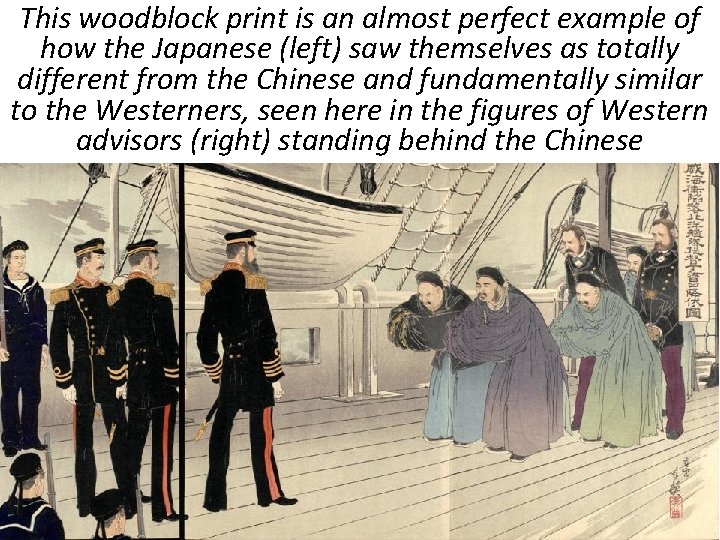
This woodblock print is an almost perfect example of how the Japanese (left)Title saw themselves as totally different from the Chinese and fundamentally similar ■ to Text the Westerners, seen here in the figures of Western advisors (right) standing behind the Chinese
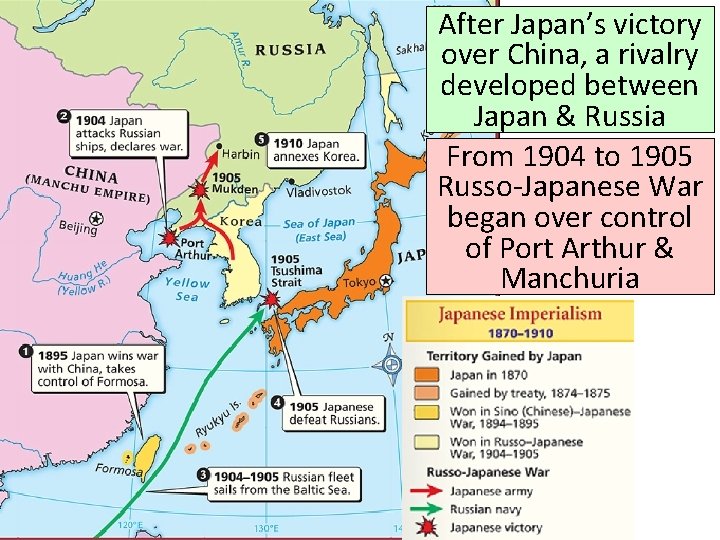
After Japan’s victory over China, a rivalry developed between Japan & Russia From 1904 to 1905 Russo-Japanese War began over control of Port Arthur & Manchuria
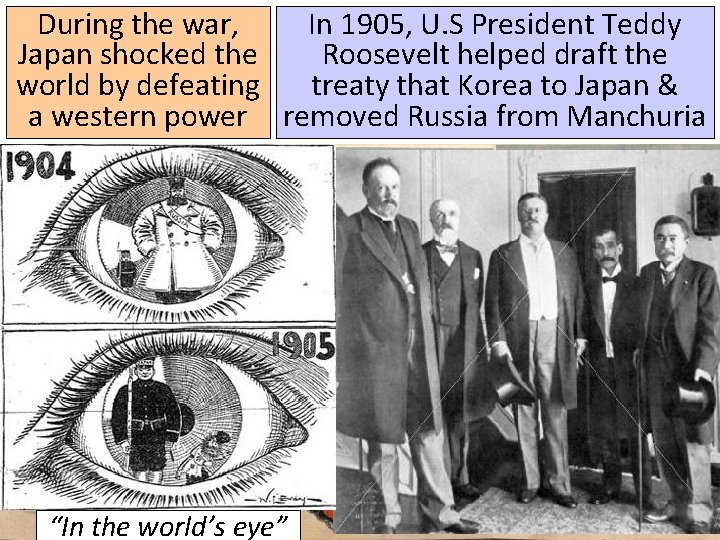
During the war, In 1905, U. S President Teddy Japan shocked the Roosevelt helped draft the world by defeating treaty that Korea to Japan & a western power removed Russia from Manchuria “In the world’s eye”
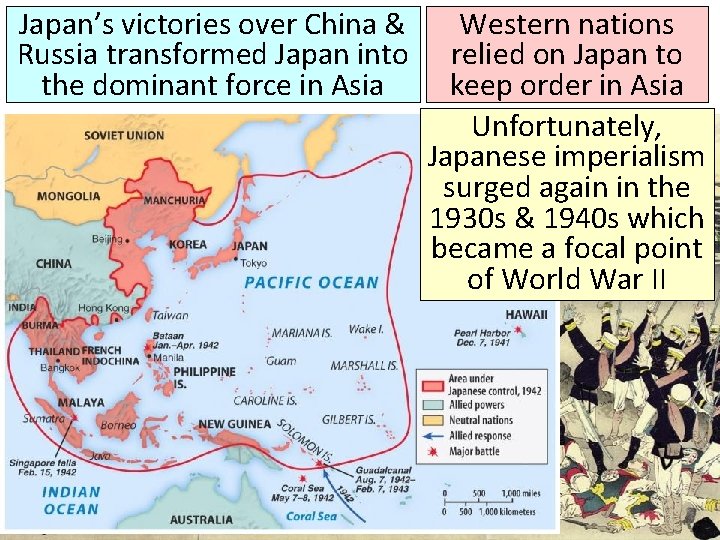
Japan’s victories over China & Title Russia transformed Japan into the dominant force in Asia Western nations relied on Japan to keep order in Asia Unfortunately, Japanese imperialism surged again in the 1930 s & 1940 s which became a focal point of World War II
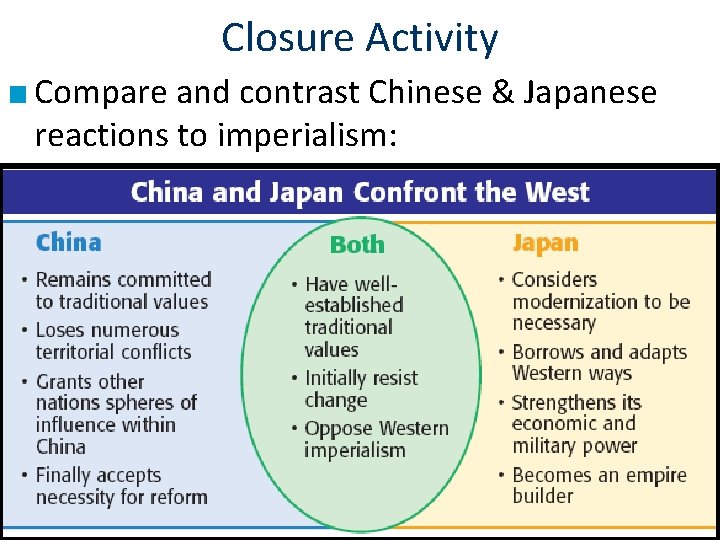
Closure Activity ■ Compare and contrast Chinese & Japanese reactions to imperialism: – How were each impacted by the arrival of Europeans? – How did each respond to imperialism? – Why was Japan’s reaction to imperialism more “successful” than China’s?
- Slides: 44