
Nationalism and Unification Italy AustriaHungary Russia and China
- Slides: 26
Nationalism and Unification Italy, Austria-Hungary, Russia and China
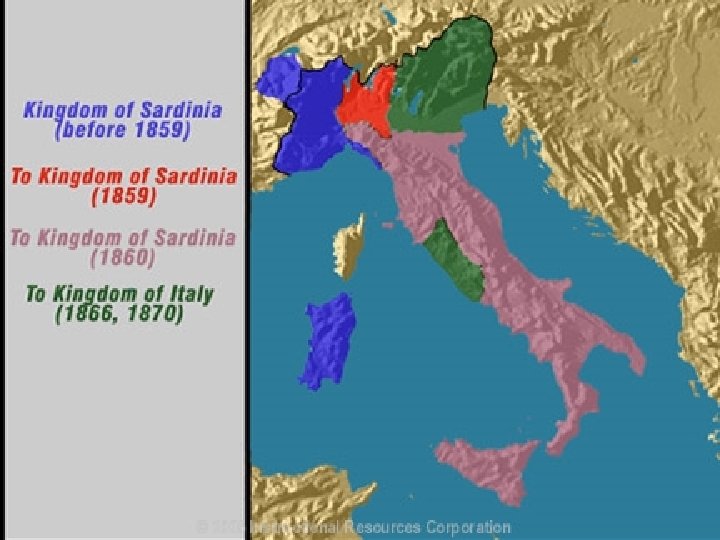
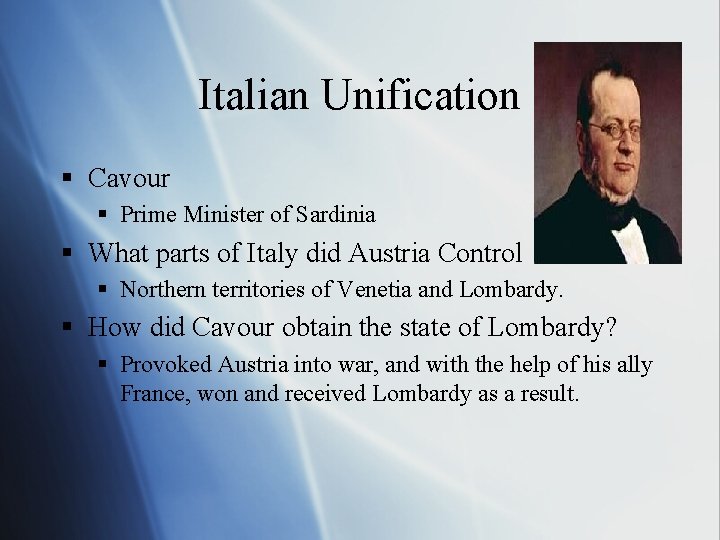
Italian Unification § Cavour § Prime Minister of Sardinia § What parts of Italy did Austria Control § Northern territories of Venetia and Lombardy. § How did Cavour obtain the state of Lombardy? § Provoked Austria into war, and with the help of his ally France, won and received Lombardy as a result.
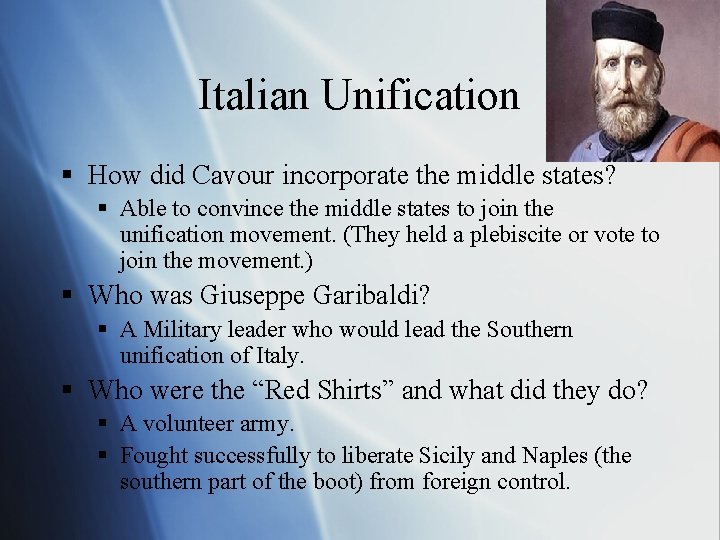
Italian Unification § How did Cavour incorporate the middle states? § Able to convince the middle states to join the unification movement. (They held a plebiscite or vote to join the movement. ) § Who was Giuseppe Garibaldi? § A Military leader who would lead the Southern unification of Italy. § Who were the “Red Shirts” and what did they do? § A volunteer army. § Fought successfully to liberate Sicily and Naples (the southern part of the boot) from foreign control.
Italian Unification § What did Cavour have to convince Garibaldi to do? § To join his unification movement. § How did Cavour obtain Venetia? § Italy became allies with Prussia against Austria. Prussia fought a quick war against Austria (the Austro-Prussian War) and they won. Italy was rewarded for loyalty to Prussia. They received Venetia.
Italian Unification § How did Italy fit a final piece (Rome) into its puzzle? § Papal states of Rome stocked with French troops. § Prussia fought a major war against France. § France was losing this war they could not afford to keep their troops in Rome so they called them home. § Italians moved in. It was 1870 Unification was complete.
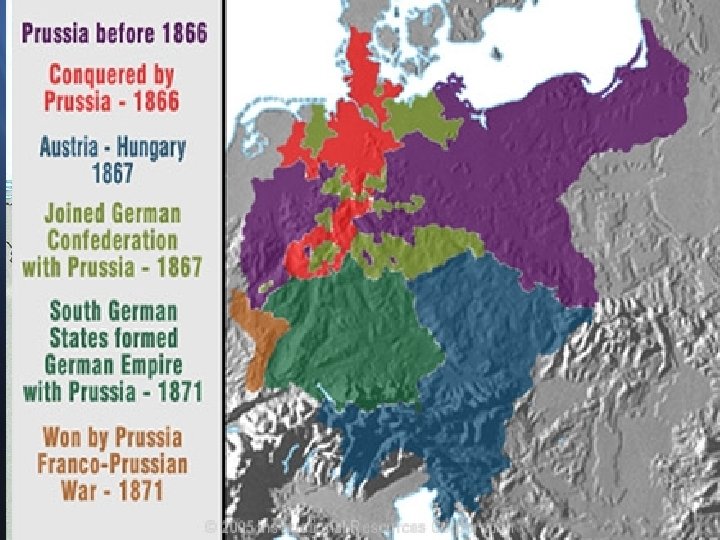
Italian Unification § How did the German unification movement impact Italian Unification? § Prussia did much of actual fighting against Italy’s enemies. § The last two territories that Italy needed to complete their unification came courtesy of the Austro-Prussian and Franco-Prussian Wars. § Could Italy have unified without Prussia? § Probably not at that time. § Why/Why not? § Italy wasn’t powerful enough to take on and win wars against Austria or France without help from allies.
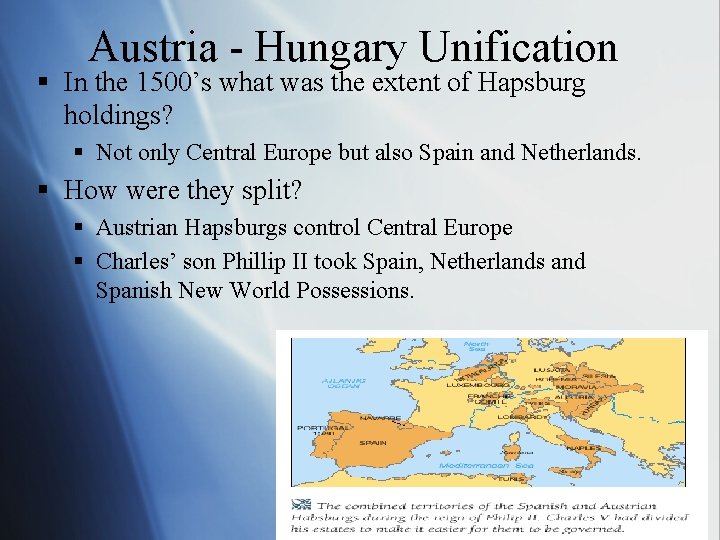
Austria - Hungary Unification § In the 1500’s what was the extent of Hapsburg holdings? § Not only Central Europe but also Spain and Netherlands. § How were they split? § Austrian Hapsburgs control Central Europe § Charles’ son Phillip II took Spain, Netherlands and Spanish New World Possessions.
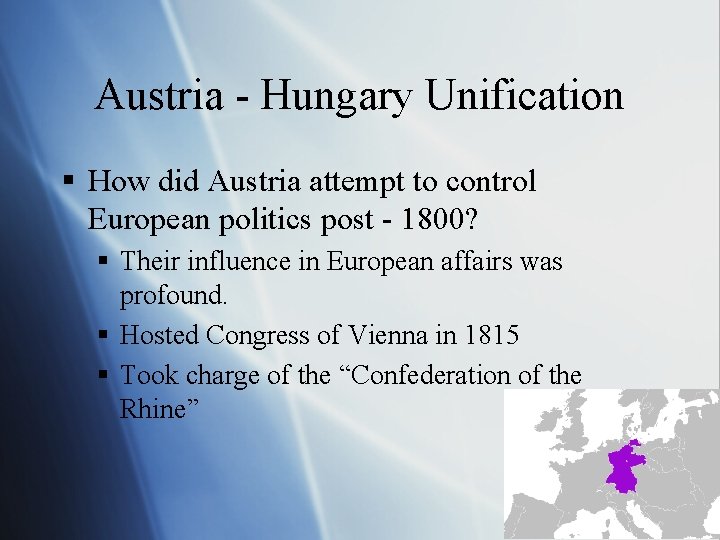
Austria - Hungary Unification § How did Austria attempt to control European politics post - 1800? § Their influence in European affairs was profound. § Hosted Congress of Vienna in 1815 § Took charge of the “Confederation of the Rhine”
Austria - Hungary Unification § What was Austria’s 19 th century fate? § Austria’s power in Europe decreased in the 1800’s. § Falling behind economically as they were largely industrialized § Plagued by the nationalist uprisings of their minority groups.
Austria - Hungary Unification § What was the ethnic problem in Austria? § They ruled over more than a DOZEN different ethnic groups. § Each group had its own culture, history and language § These groups became increasingly vocal about their desire for self-government.
Austria - Hungary Unification § What happened in 1848 in Austria? § Austria faced a series of significant uprisings within its Empire. § Demonstrations for democratic reforms in the capital city of Vienna, Austria.
Austria - Hungary Unification § What did Austria agree to in 1867? Why did they agree to this? § The largest ethnic group (Magyars) who were Hungarians. § 1867 Emperor Franz Joseph agreed to the Hungarian Compromise of 1867 § Created the Dual Monarchy of Austria and Hungary
Austria - Hungary Unification § What was the extent of the Compromise? § Emperor would continue to rule from Vienna § A second capital city was created in Budapest (Hungary) to rule Eastern part of Empire. § Second Parliament was created § Hungarians or Magyars were granted enormous ruling power. § Austria became Austria-Hungary (Flag now had eagle with two heads)
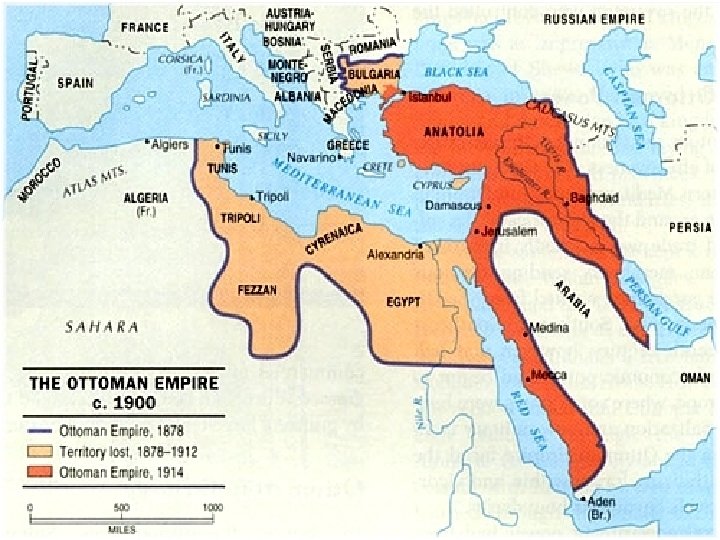
Ottoman Empire
Russia § What was the PERCEPTION of Russia in the 18 th and 19 th Centuries? § Because Russia was large and populous, people (incorrectly) assumed that it was militarily powerful.
Russia § What was the economic condition of Russia in the 19 th Century? § § § Not Industrialized Until 1861 still had serfs! Economy was mostly agricultural Small Middle Class Very Small Upper Class Most population serfs or peasant farmers.
Russia § Describe Alexander II’s motivations for freeing the serfs. § He genuinely wanted to strengthen the bond between the Russian people and the monarchy. § He hoped that the move would establish a surplus of labor to be employed in urban factories. § http: //www. youtube. com/watch? v=r. XPP 1 j 1 yahg § Take notes on Alexander II and Alexander III to help on your test!
Russia § What were the results? § Did not happen § Most serfs remained on the land they had worked for centuries § No movement into cities
Russia § Why didn’t economic and political reforms occur in Russia? § § § Small middle class Powerful landowning aristocracy Little change Alexander II was assassinated His son Alexander III cracked down hard on any reforms in Russia.
Russia § What was the ethnic make-up of Russia? § Like the Austrian and Ottoman Empires § Had a large number of Ethnic minorities § Poles, Fins, Ukrainians, Slavs and a large Jewish Population.
Russia § What was RUSSIFICATION? § Campaign in which the government attempted to force all minorities to adopt : § The Russian language § The Russian customs § Supposed to be a nationalistic and unifying ploy § DID IT WORK? § No § People resisted and became more committed to maintaining their own culture!
Russia § What were pogroms? § Murderous raids on Jewish communities. § What were the results of these? § Many Jews emigrated to the United States during this time. § http: //www. youtube. com/watch? v=8 PFQ 7 Th_r. As
Russia § What caused the Russo-Japanese War of 1905? § The war was a result of the imperialistic clash of Russia and Japan in Korea.
Russia § What was the result of the war? § Russia was defeated by the thoroughly modern Japan in 1905. § This was a terrible embarrassment for Russia, and signaled the rise of a powerful Asian state.