
National Water and Climate Center Soil Climate Analysis
- Slides: 22
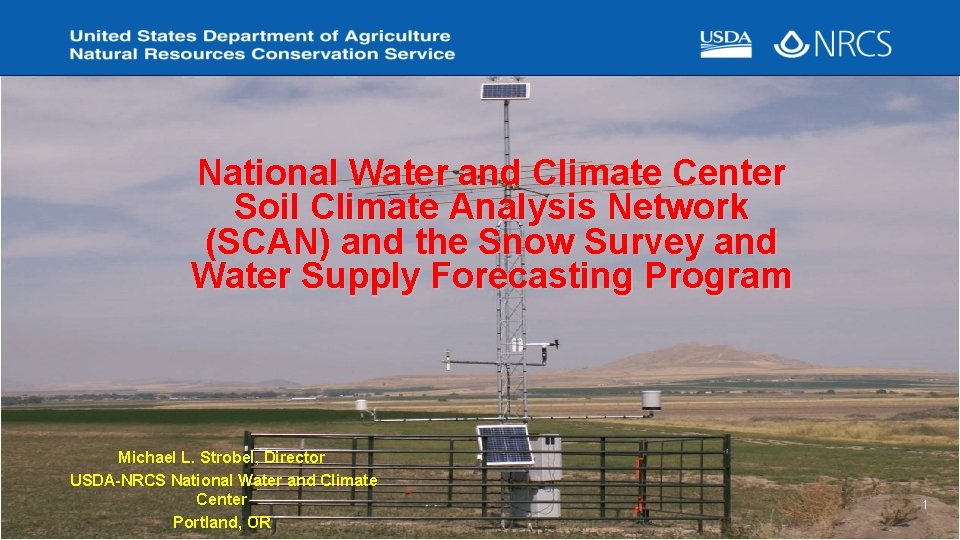
National Water and Climate Center Soil Climate Analysis Network (SCAN) and the Snow Survey and Water Supply Forecasting Program Michael L. Strobel, Director USDA-NRCS National Water and Climate Center Portland, OR 1
What is SCAN? SCAN is a comprehensive, nationwide soil moisture and climate information system designed to provide data to support natural resource assessments and conservation activities. SCAN has provided mission support by providing data for drought mitigation, timing irrigation activities, and soil taxonomic classification. SCAN data have also been used in climate change research activities. 2
The SCAN system is administered by NRCS through the National Water and Climate Center (NWCC), in cooperation with the NRCS National Soil Survey Center. The system focuses on agricultural areas of the United States, monitoring and disseminating soil temperature and soil moisture content at several depths, air temperature, relative humidity, solar radiation, wind, precipitation, barometric pressure, and more. 3
• SCAN originated as a pilot project with a few sites in 1991 to quantify soil moisture and soil temperature regimes for taxonomic classification of soils. • The number of sites has grown as additional sites have been installed at the request of partners or customers. Presently, there are 222 sites. 4
• The annual operating and maintenance cost is approximately $5, 000 per site. • Installation costs are approximately $30, 000 for stations in the conterminous United States (CONUS); Hawaii, Alaska and Caribbean stations are potentially more expensive. • All estimates are in fiscal year (FY) 2020 dollars and do not include inflation. 5
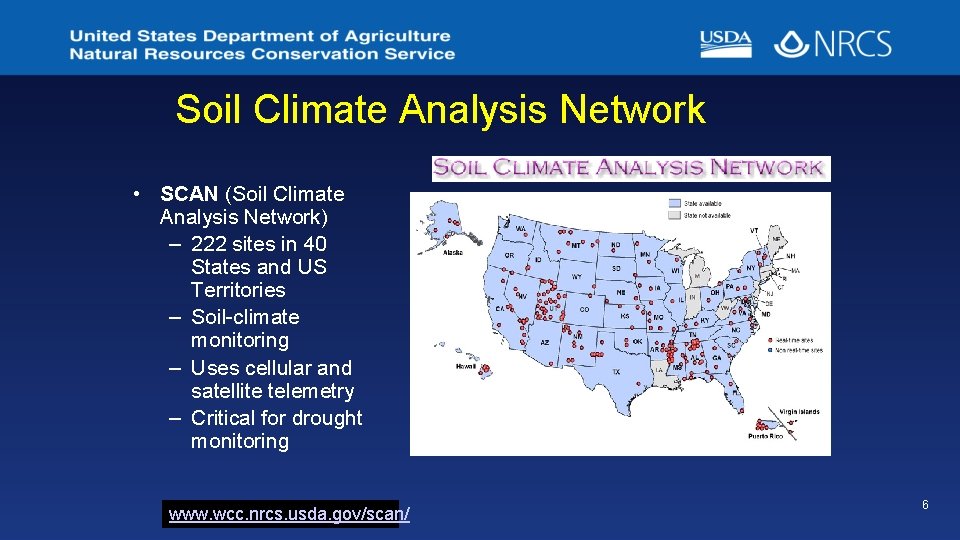
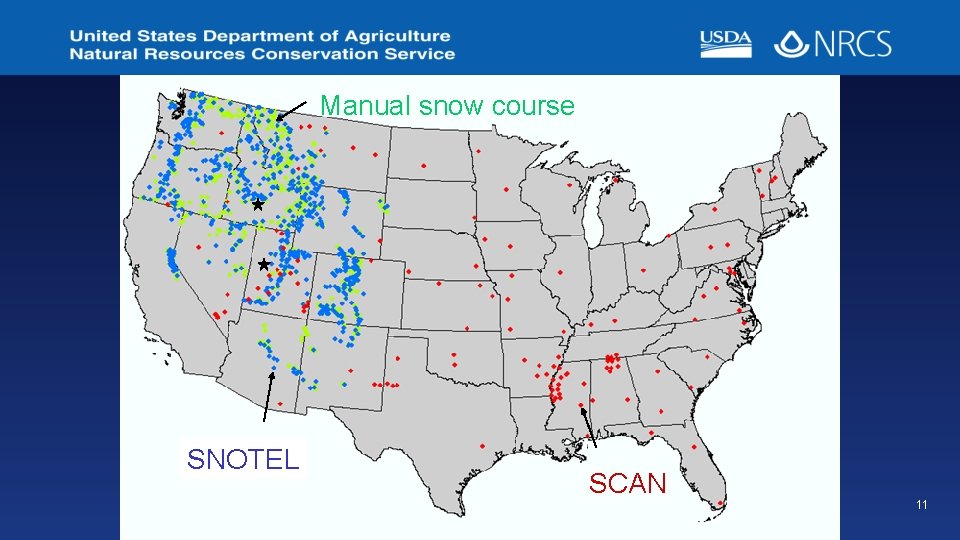
Soil Climate Analysis Network • SCAN (Soil Climate Analysis Network) – 222 sites in 40 States and US Territories – Soil-climate monitoring – Uses cellular and satellite telemetry – Critical for drought monitoring www. wcc. nrcs. usda. gov/scan/ 6
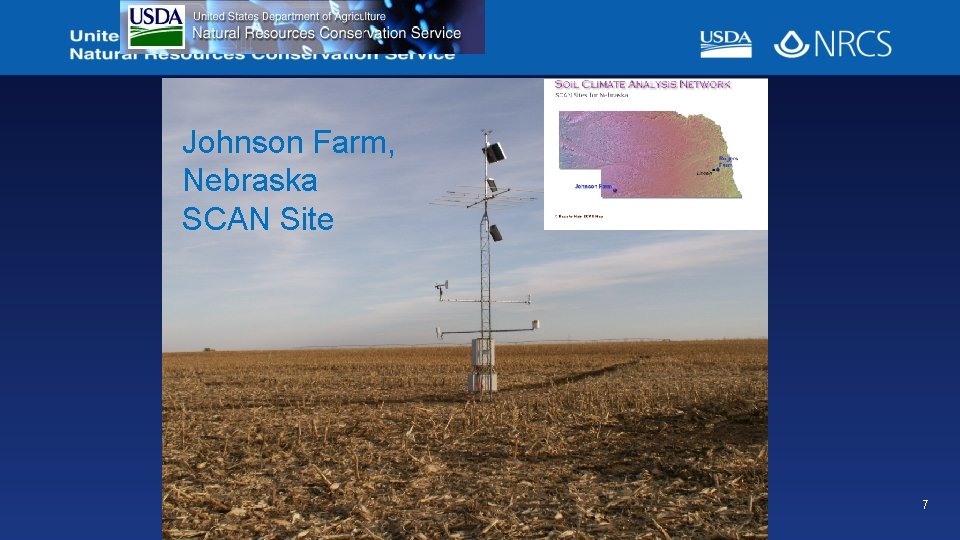
Johnson Farm, Nebraska SCAN Site 7
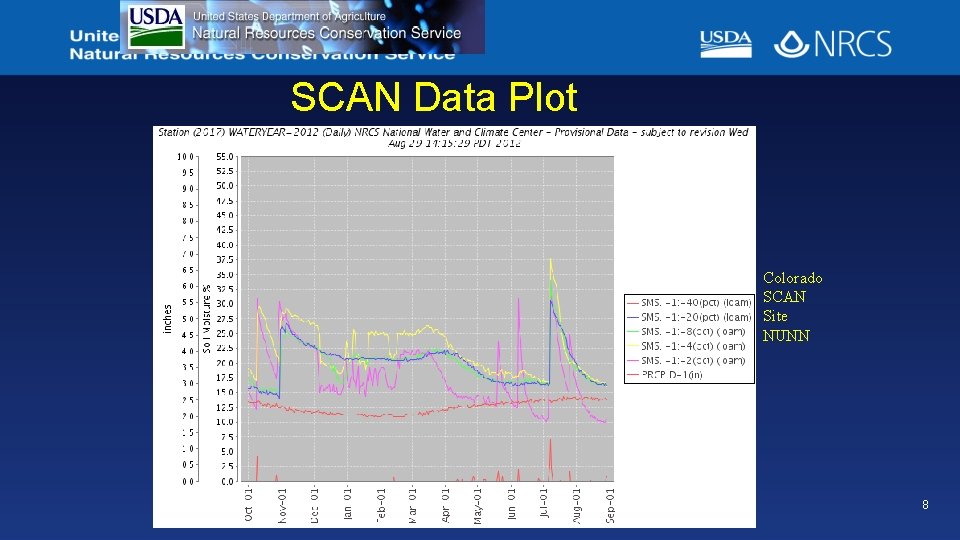
SCAN Data Plot Colorado SCAN Site NUNN 8
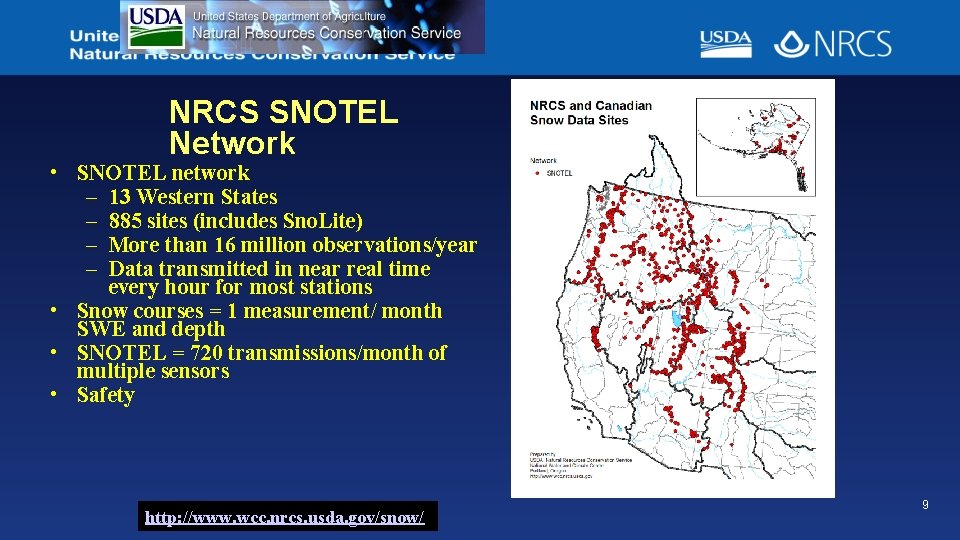
NRCS SNOTEL Network • SNOTEL network – 13 Western States – 885 sites (includes Sno. Lite) – More than 16 million observations/year – Data transmitted in near real time every hour for most stations • Snow courses = 1 measurement/ month SWE and depth • SNOTEL = 720 transmissions/month of multiple sensors • Safety http: //www. wcc. nrcs. usda. gov/snow/ 9
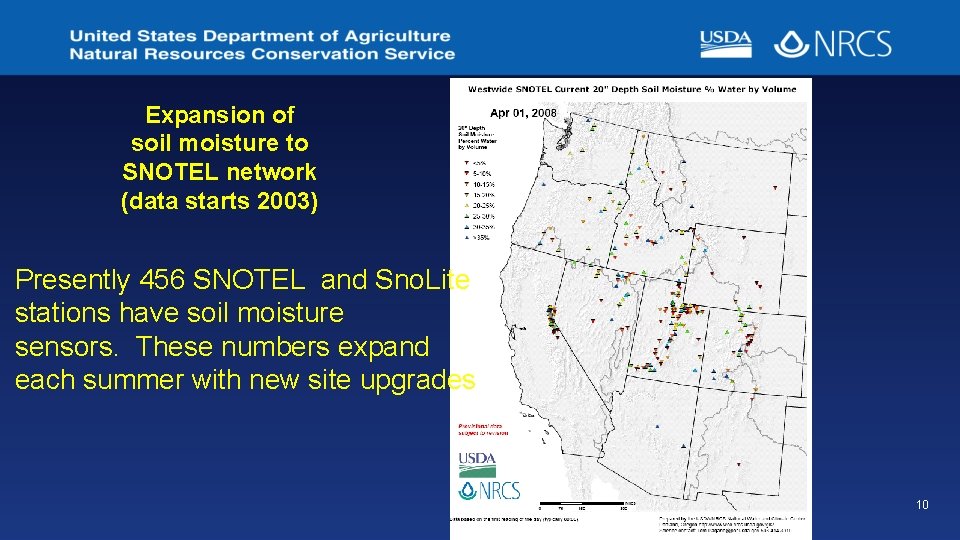
Expansion of soil moisture to SNOTEL network (data starts 2003) Presently 456 SNOTEL and Sno. Lite stations have soil moisture sensors. These numbers expand each summer with new site upgrades 10
Manual snow course SNOTEL SCAN 11
Siting Criteria • • All stations should be located on Federal, State, county, or university lands. This will ensure long-term use of the land for monitoring purposes. All stations should be located in non-irrigated areas. First consideration be given to “Benchmark” soils. Consideration must be given to ensure that all Major Land Resource Areas are represented in a given climatic region. The station must represent an agricultural area. Pasture, range, timber, and cropped areas must be considered first. When selecting a suitable location, some consideration of station security must be included. The first stations to be installed should be located in areas that are susceptible to drought. Slide 12
Guidance on Soil Climate Analysis Network (SCAN) Station Investment • NRCS will continue to provide funds for operation and maintenance of existing sites installed by NRCS until the equipment has exceeded its useful life or appropriate allowance holders and analysts determine the site is no longer essential to maintaining the network. • Where a written agreement exists, NRCS will continue to provide funds for operation and maintenance of SCAN sites established prior to FY 2010 by partners. 13
Investment Decisions Regarding SCAN Stations • Approval for new SCAN stations installed with NRCS funds will be made on a case-by-case basis in conjunction with specific agency initiatives by the director of the NWCC or his or her representative. • No agreements may be entered into whereby NRCS agrees to operate and maintain SCAN stations installed by other entities unless proven NRCS installation procedures have been followed and future funding is provided by the outside entity for maintenance at least 10 years into the future (costs 14
External Requests for New SCAN Stations • New site installations require an agreement between NRCS and the requesting entity that includes provisions for funding the site for a minimum of 10 years. If, at the end of 10 years, the agreement is not renewed, the station will be discontinued unless internal funding becomes available. 15
• All external requests for new SCAN sites must be directed to the State Conservationist or director of the Pacific Islands or Caribbean Area. • Only State Conservationists and directors of the Pacific Islands and Caribbean Areas are authorized to negotiate and enter into agreements for installations of new SCAN sites. • of new SCAN sites must be in accordance with the nationwide network design and the agreement approved in coordination with the NWCC director. 16
• Operation and maintenance (O&M) and data management and analysis will be provided by NWCC personnel or trained individuals in each State. • It is the responsibility of the State Conservationist or director of the Pacific Islands or Caribbean Area to negotiate support of the NWCC personnel with the NWCC director. • As appropriate, funds for assistance provided by NWCC personnel will be transferred from the State to the NWCC. 17
Negotiating External Agreements for Installation and Support (Operation and Maintenance of SCAN sites) • The entity requesting a new SCAN site must be willing and able to provide funding to cover all of the following: • (1) The entire cost of installation of the SCAN station— currently estimated at $30, 000 in FY 2020 dollars for a single site (within the CONUS; others may be more expensive, depending on accessibility) 18
• (2) The entire cost of O&M of the SCAN station for a period of not less than 10 years—currently estimated at $5, 000 in FY 2020 dollars per year per site (within the CONUS; others may be more expensive, depending on accessibility) • (3) The estimated cost of data management and analysis (quality control) of the data collected from the new SCAN site for a period of not less than 10 years— currently estimated at $850 in FY 2020 dollars per year per site. 19
Additional Guidance • State conservationists, directors of the Pacific Islands and Caribbean Areas, and other appropriate officials are encouraged to work with their clients to help them identify and make best use the data provided by SCAN site instrumentation for resource management. 20
Questions? 22