
National STEM summit ONLINE WEBINAR TOPIC Engineering designs
National STEM summit ONLINE WEBINAR TOPIC: Engineering designs, Instrumentations and Materials Research. Presented by: Physicist Henry kenechukwu nwatu
Introduction If you take a moment to observe your surrounding, you will see an example of technological creativity. The physical objects you see, whether they are telephones, automobiles, bicycles or electrical appliances, all came into being through the creative application of science and technology. This everyday invention did not miraculously appear but originated in the minds of humans and also took time to develop. Engineering is the creative process of turning abstract ideas into physical representation (Products and Systems). What distinguishes Engineers from painters, poets, sculptors is that they apply their creative energies to producing products and systems that meet human needs. This creative act is what is called Engineering Design.
Engineering Design Some engineering design are classified as invention-devices or systems that did not exist before; or are improvements over existing ones. Sometimes a design is the result of someone trying to perform a task more quickly or efficiently. Design activity occurs over a period of time and requires a step-bystep methodology.
We described engineers as problem solvers. What distinguishes design from other types of problem solving is the nature of both problem and solution. Design problems are open ended, which means they have more than one correct solution. The solution to a design problem is a system that possesses a specified properties. Design problems are usually more vaguely defined than analysis problems. Suppose you asked to determine the maximum height of a tennis ball given an initial velocity and release height. This is an analysis problem because it has only one answer. If you change the problem statement to read; “Design a device to launch a tennis ball to a height of 100 meters”, this analysis becomes a design problem. Now , the solution to the design problem becomes a system having a specified properties ( able to launch a tennis ball to height of 100 meters), where as the solution to the analysis problem consisted of the properties of a given system ( i. e. the height of the tennis ball). The solution to this design problem is therefore open ended, since there are many devices that launch a tennis ball to a given height. Recall that the original problem has a single solution: the maximum height of the tennis ball is determined from the specified initial condition.
Solving design problem is often an iterative process: As the solution to a design problem evolves, you find yourself continually refining the design. While implementing a solution to a design problem, you discovered that the solution you ‘ve developed is unsafe, too expensive or will not work. You then “go back to drawing board” and modify the solution until it meets your requirement. For example, the Wright brothers’ the airplane did not fly perfectly the first time. They began a program of building an airplane by first conducting test with kites and then gliders. Before attempting a powered plane, they solve the essential problem of controlling airplane’s motion in rising , descending and turning. They didn’t construct a powered plane until after making more than 700 successful gliders flights. Design activity is therefore cyclic or iterative in nature whereas analysis problem is primarily sequential.
A good solution requires a methodology or a process. There are probably as many design processes as there are engineers. Therefore, this webinar does not present a rigid “cookbook” approach to design but presents a general applications of five-step problem-solving methodology associated with design process. Design Process Since the design problem are usually defined more vaguely and have a multiple of correct answers, the process may require backtracking and iteration. Solving a design problem is a contingent process and the solution is subject to unforeseen complications and changes as it develops.
Until the Wright brothers actually built and tested their early gliders, they did not know the problems and difficulties they would face controlling a powered plane. So, the basic five-steps usually adopted in design problem-solving are; Ø Define the problem. Ø Gather necessary information about the problem. Ø Generate multiple solution. Ø Analyze and select a solution. Ø Test and implement the solution.
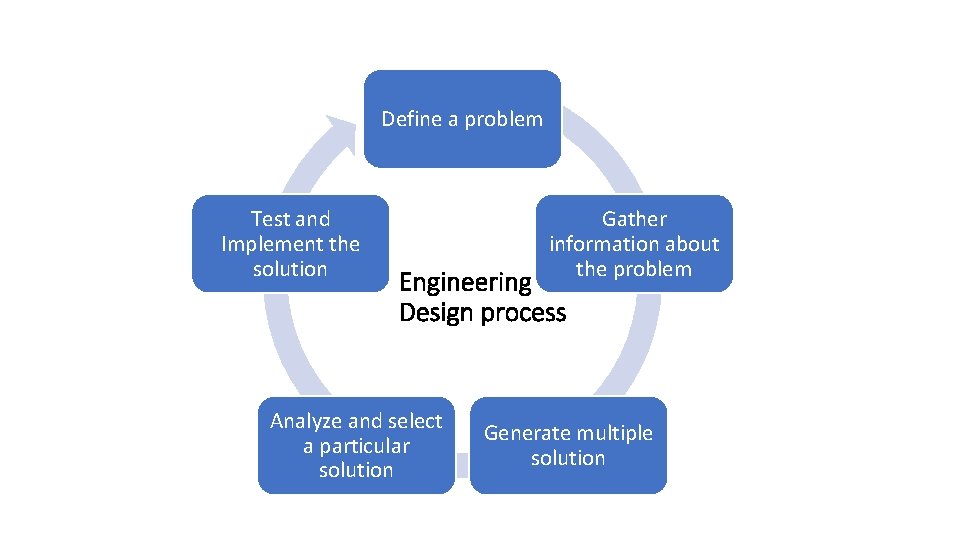
Define a problem Test and Implement the solution Gather information about the problem Engineering Design process Analyze and select a particular solution Generate multiple solution
It is pertinent that the designers of products and systems, at all time should note that invention-devices must at all times go through what we called graceful degradation before failure. However, It is the responsibility of a quality assurance professional to ensure that such inventions meet the requirements.
Instrumentation Engineering What is Instrumentation Engineering? It is that branch of engineering that specializes on the principles and operations of measuring instruments that are used in fields of design, configuration of automated systems in electrical, pneumatic systems etc. Instrumentation engineers typically work for industries with automated process with the goal of improving productivity, reliability, safety, optimization and stability. They are responsible for integrating the sensors with recorders, transmitters, display or control systems. They may design or specify installation, wiring or signal guidelines. They may also be responsible for calibration, testing and maintenance of the system.
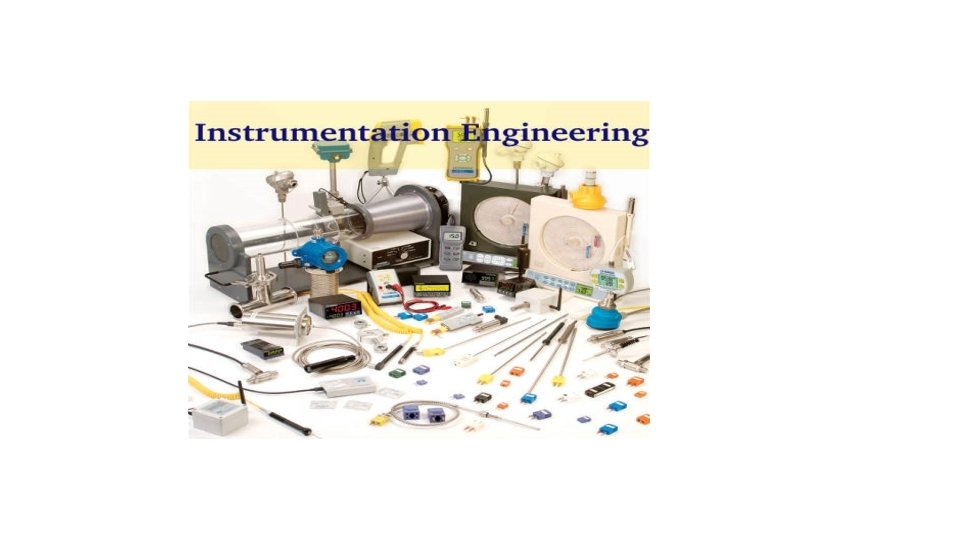
Scope for instrumentation engineers Instrumentation engineers may design devices like dynamometers for measuring, torque, blood glucose monitors, aircraft sensors and smoke detectors. They may develop electrocardiograph equipment and computed tomography scanners or work on security systems.
Material Science and Engineering A material is defined as a substance (most often a solid, but other condensed phases can be included) that is intended to be used for certain applications. There a myriad of materials around us—they can be found in anything from buildings to spacecraft. Materials can generally be further divided into two classes: crystalline and noncrystalline. The traditional examples of materials are; Metals, Semiconductors, Ceramics and Polymers. New and advanced materials that are being developed include; nanomaterials, biomaterials and energy materials. The basis of materials science involves studying the structure of materials, and relating them to their properties. Once a materials scientist knows about this structure-property correlation, they can then go on to study the relative performance of a material in a given application. The major determinants of the structure of a material and thus of its properties are its constituent chemical elements and the way in which it has been processed into its final form. These characteristics, taken together and related through the laws of thermodynamics and kinetics, govern a material's microstructure, and thus its properties.
STRUCTU RE Structure is one of the most important components of the field of materials science. Materials science examines the structure of materials from the atomic scale, all the way up to the macro scale. Characterization is the way materials scientists examine the structure of a material. This involves methods such as diffraction with X-rays, electrons, or neutrons, and various forms of spectroscopy and chemical analysis; chromatography, thermal analysis, electron microscope analysis, etc. Atomic Structure This deals with the atoms of the materials, and how they are arranged to give molecules, crystals, etc. Much of the electrical, magnetic and chemical properties of materials arise from this level of structure. The length scales involved are in angstroms(Å). The chemical bonding and atomic arrangement (crystallography) are fundamental to studying the properties and behavior of any material.
Bonding To obtain a full understanding of material structure and how it relates to its’ properties, the materials scientist must study how the different atoms, ions and molecules are arranged and bonded to each other. This usually involves the study and use of quantum chemistry, quantum physics and solid-state physics are also involved in the study of bonding and structure. Quantum chemistry, also called molecular quantum mechanics, is a branch of chemistry focused on the application of quantum mechanics in physical models and experiments of chemical systems. Understanding electronic structure and molecular dynamics using the Schrödinger equations are central topics in quantum chemistry. Quantum physics, it's the physics that explains how everything works: the best description we have of the nature of the particles that make up matter and the forces with which they interact.
Solid-state physics is the study of rigid matter, or solids, through methods such as quantum mechanics, crystallography, electromagnetism, and metallurgy. Chemical bonding as we know is a lasting attraction between atoms, ions and molecules that enables the formation of a chemical compound. Bond may also result from the electrostatic force of attraction between oppositely charged ions as in ionic bonding; OR through sharing of electrons as in covalent bonding.
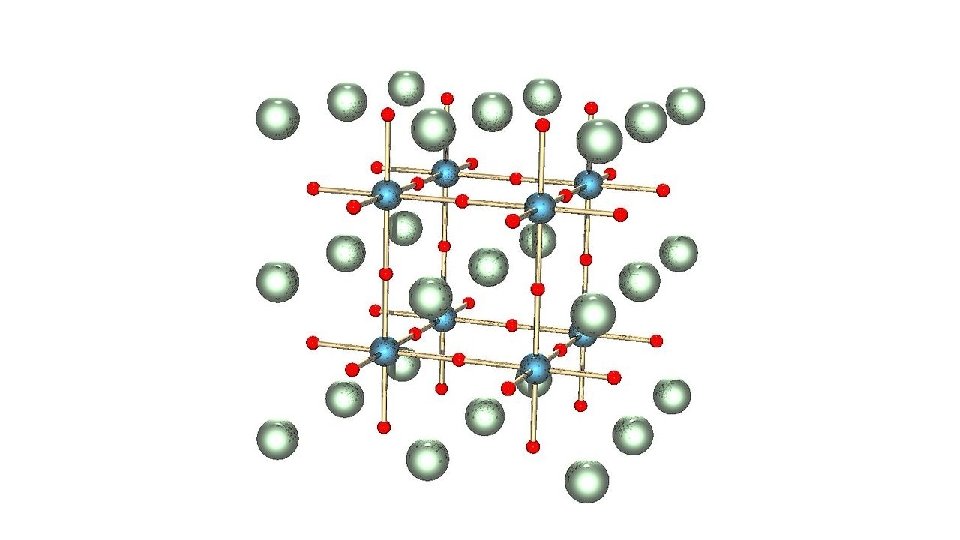
CRYSTALLOGRAPH Y Crystallography is the experimental science of determining the arrangement of atoms in crystalline solids. It is used by scientist to characterize different materials. In single crystal, the effect of crystalline arrangement of atoms is often easy to see microscopically, because natural shapes of crystals reflect their atomic structure. Thanks
- Slides: 18