
National Security Decision Making Structure Pre1947 Structure President
- Slides: 51
National Security Decision Making Structure
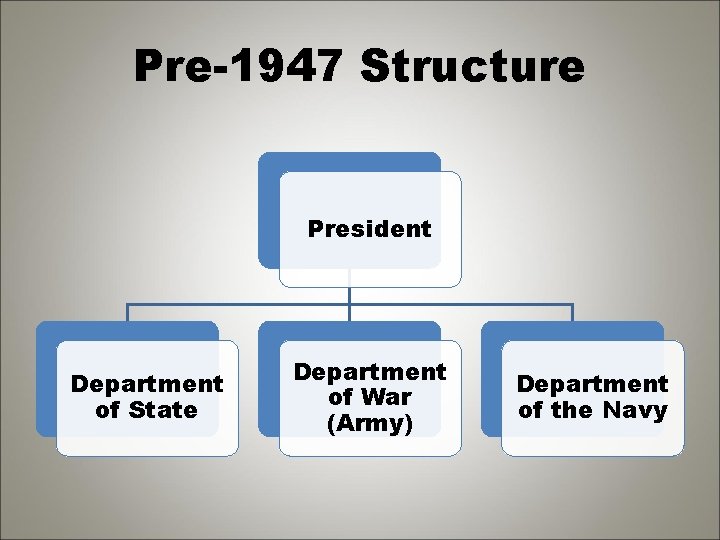
Pre-1947 Structure President Department of State Department of War (Army) Department of the Navy
National Security Act of 1947 • • • Department of Defense US Air Force Joint Chiefs of Staff Central Intelligence Agency National Security Council
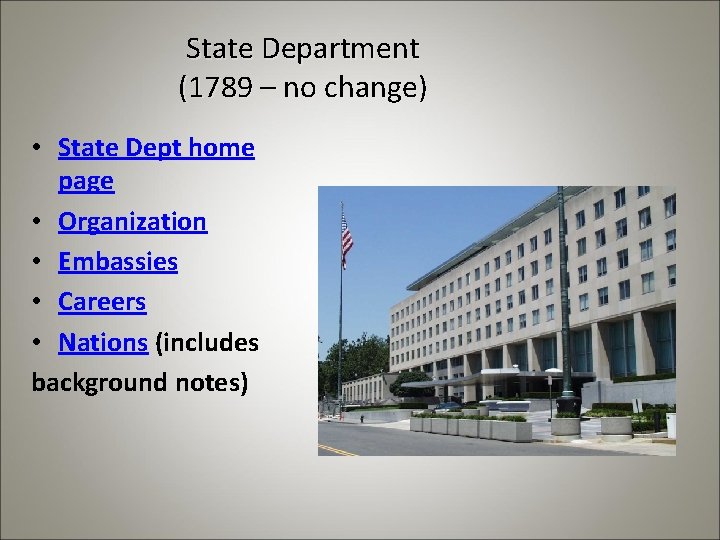
State Department (1789 – no change) • State Dept home page • Organization • Embassies • Careers • Nations (includes background notes)
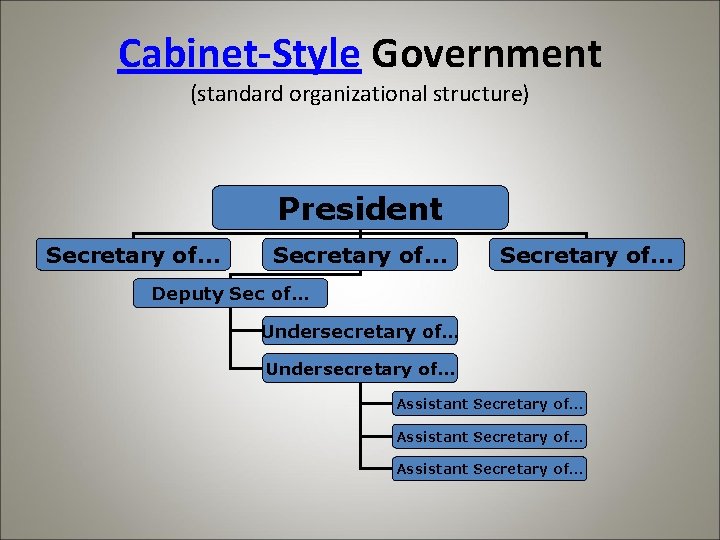
Cabinet-Style Government (standard organizational structure) President Secretary of… Deputy Sec of… Undersecretary of… Assistant Secretary of…
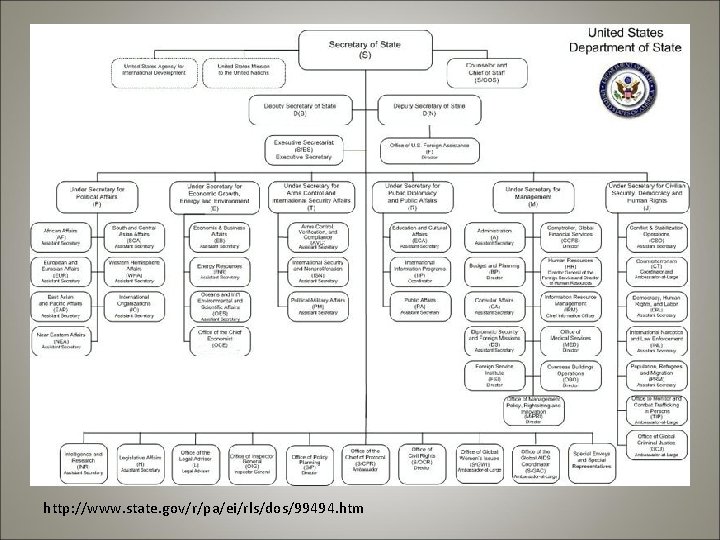
http: //www. state. gov/r/pa/ei/rls/dos/99494. htm
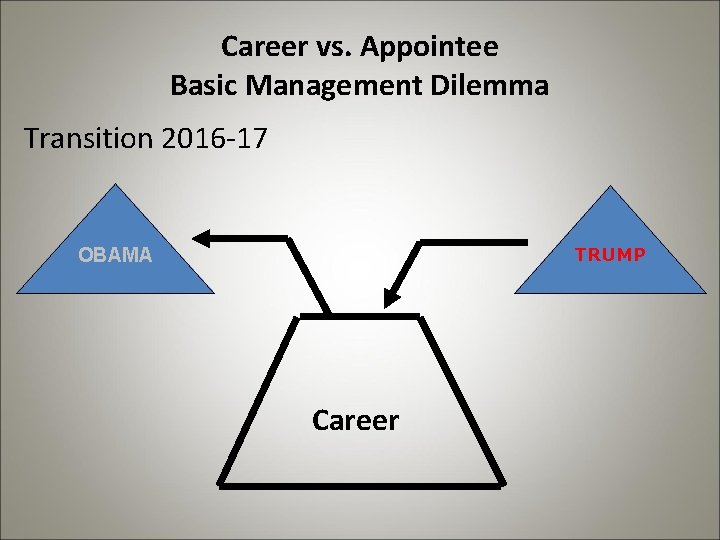
Career vs. Appointee Basic Management Dilemma Transition 2016 -17 TRUMP OBAMA Career
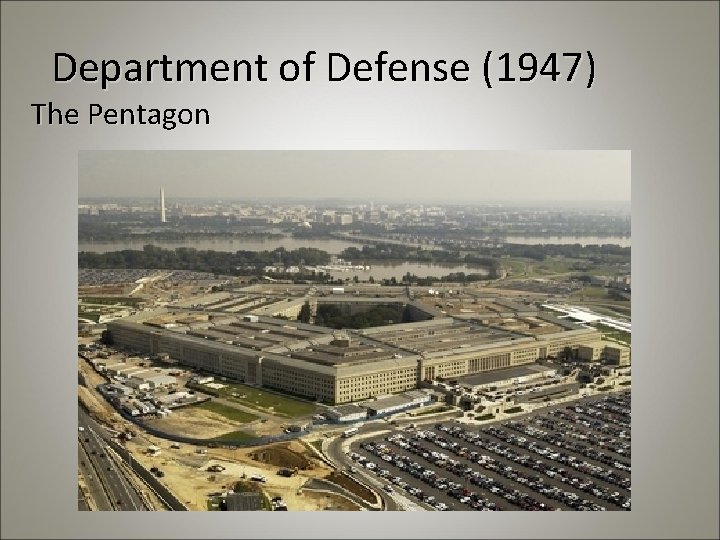
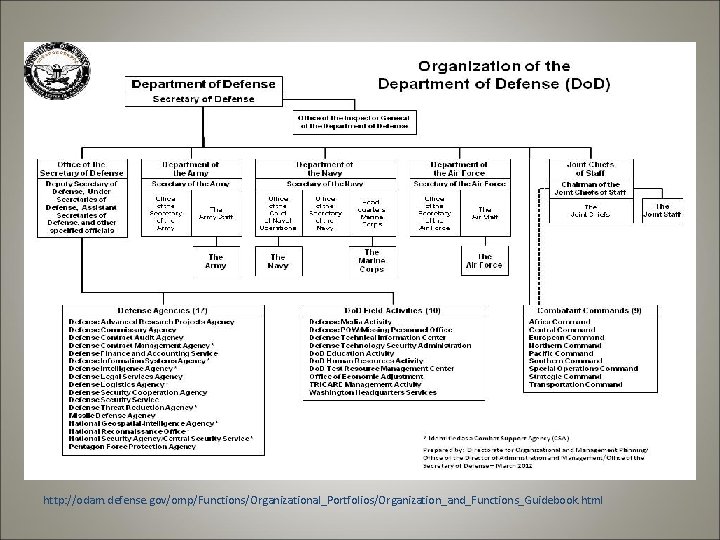
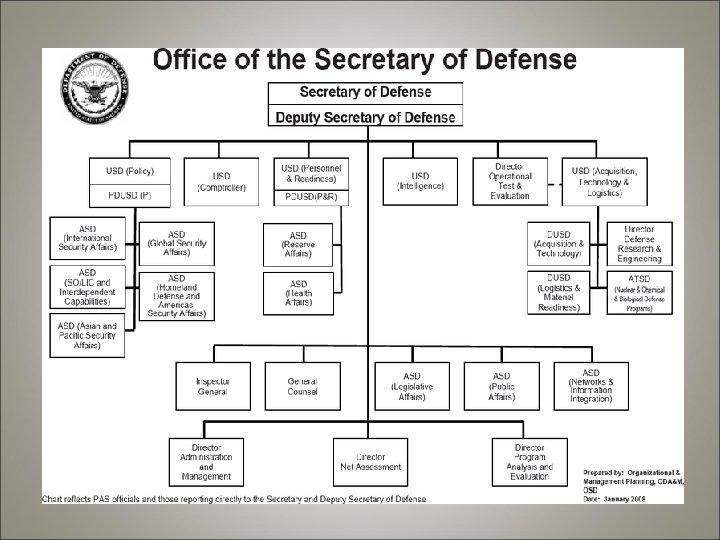
Department of Defense (1947) The Pentagon
http: //odam. defense. gov/omp/Functions/Organizational_Portfolios/Organization_and_Functions_Guidebook. html
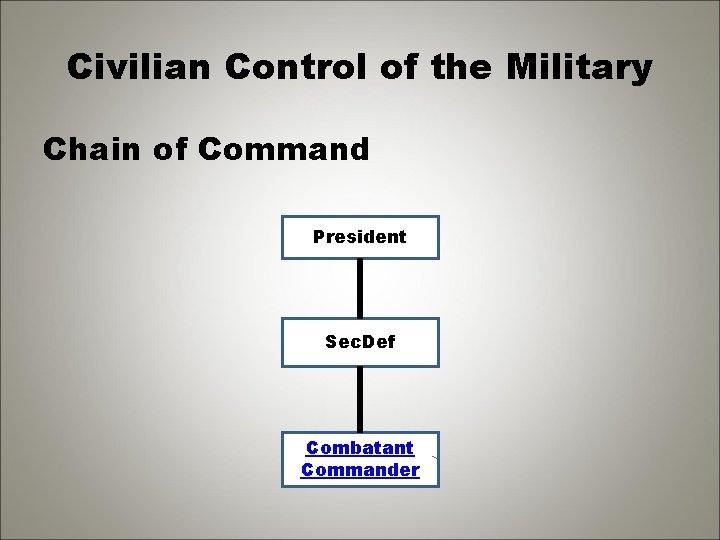
Civilian Control of the Military Chain of Command President Sec. Def Combatant Commander
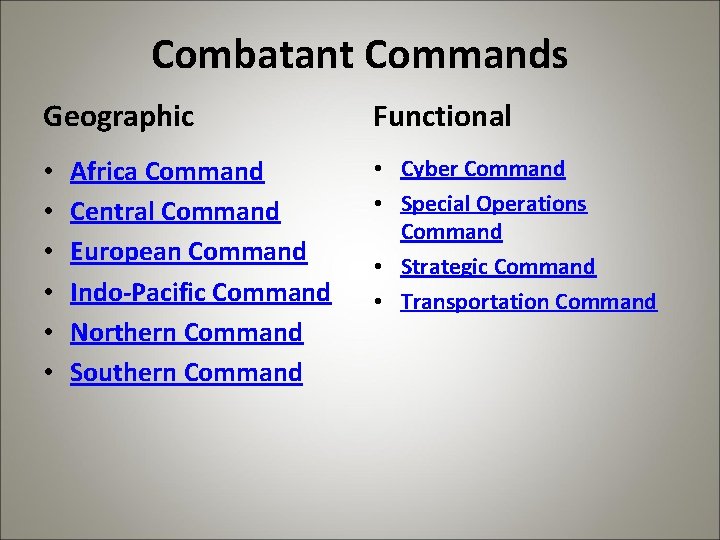
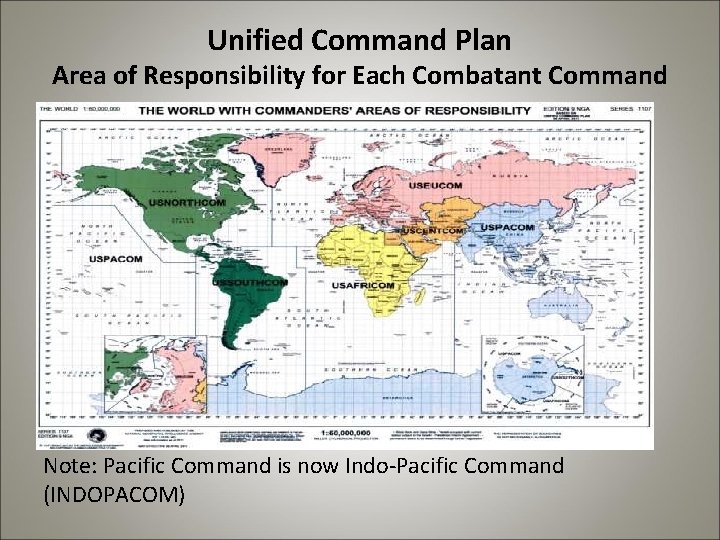
Combatant Commands Geographic • • • Africa Command Central Command European Command Indo-Pacific Command Northern Command Southern Command Functional • Cyber Command • Special Operations Command • Strategic Command • Transportation Command
Unified Command Plan Area of Responsibility for Each Combatant Command Note: Pacific Command is now Indo-Pacific Command (INDOPACOM)
Do. D Structure • • Do. D Organization The Department of Defense The Office of the Secretary of Defense Joint Chiefs of Staff – JCS Structure • United States Army • United States Navy – Navy Structure • United States Marine Corps • United States Air Force • Unified Command Plan – CRS Report on Unified Command Plan • Defense Intelligence Agency • National Security Agency (NSA) • Defense Science Board publications
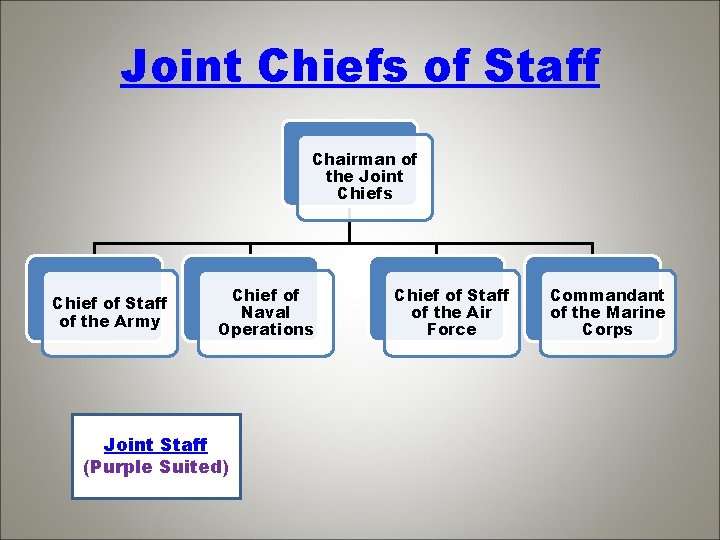
Joint Chiefs of Staff Chairman of the Joint Chiefs Chief of Staff of the Army Chief of Naval Operations Joint Staff (Purple Suited) Chief of Staff of the Air Force Commandant of the Marine Corps
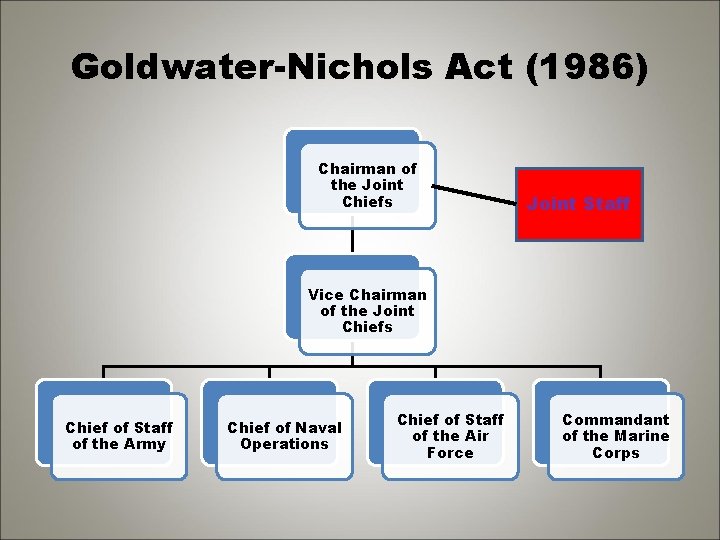
Goldwater-Nichols Act (1986) Chairman of the Joint Chiefs Joint Staff Vice Chairman of the Joint Chiefs Chief of Staff of the Army Chief of Naval Operations Chief of Staff of the Air Force Commandant of the Marine Corps
Central Intelligence Agency (1947)
Intelligence Failures 1998 -2003 Intelligence Reform and Terrorist Prevention Act of 2004
DNI Mission Centers • Cyber Threat Intelligence Integration Center (CTIIC) • National Counterproliferation Center (NCPC) • National Counterintelligence and Security Center (NCSC) • National Counterterrorism Center (NCTC)
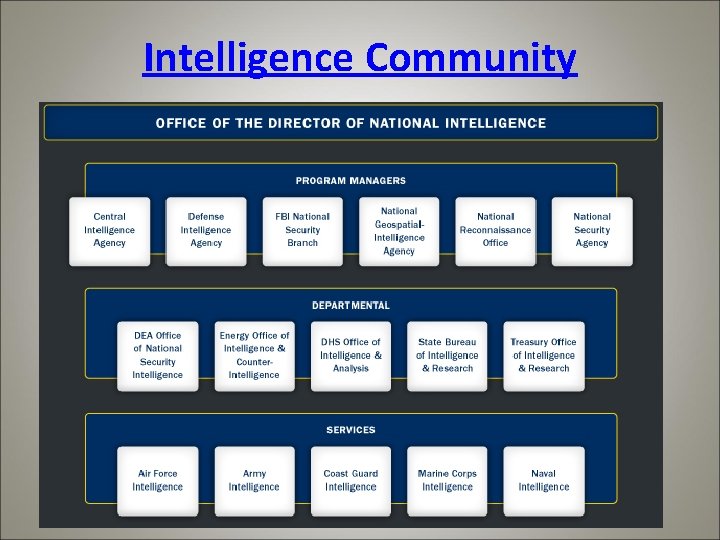
Intelligence Community
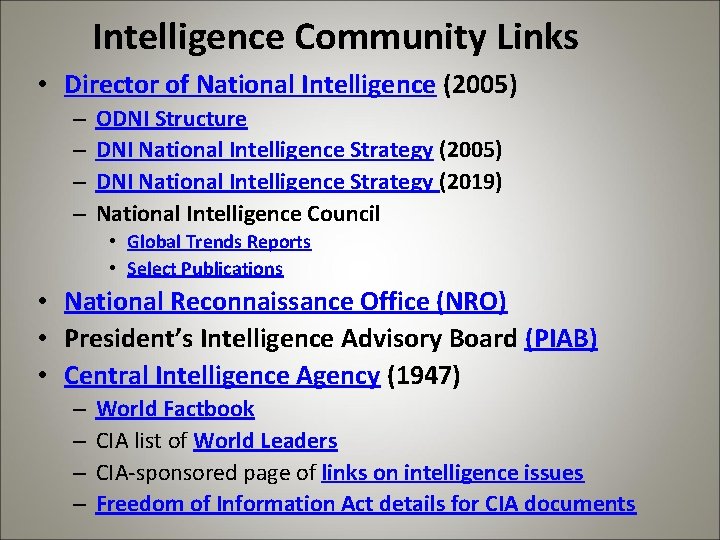
Intelligence Community Links • Director of National Intelligence (2005) – – ODNI Structure DNI National Intelligence Strategy (2005) DNI National Intelligence Strategy (2019) National Intelligence Council • Global Trends Reports • Select Publications • National Reconnaissance Office (NRO) • President’s Intelligence Advisory Board (PIAB) • Central Intelligence Agency (1947) – – World Factbook CIA list of World Leaders CIA-sponsored page of links on intelligence issues Freedom of Information Act details for CIA documents
Department of Homeland Security 2003 • Secretary of Homeland Security • Structure
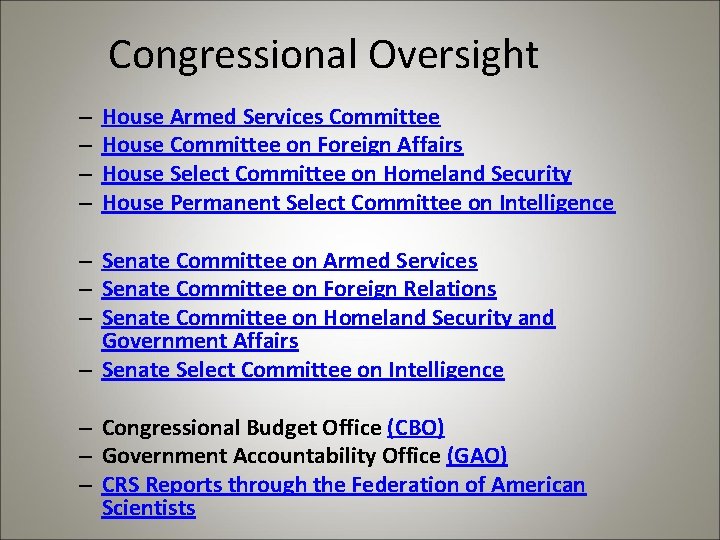
Congressional Oversight – – House Armed Services Committee House Committee on Foreign Affairs House Select Committee on Homeland Security House Permanent Select Committee on Intelligence – Senate Committee on Armed Services – Senate Committee on Foreign Relations – Senate Committee on Homeland Security and Government Affairs – Senate Select Committee on Intelligence – Congressional Budget Office (CBO) – Government Accountability Office (GAO) – CRS Reports through the Federation of American Scientists
Decision Making Goal: Coordination among agencies/departments Not so easy….
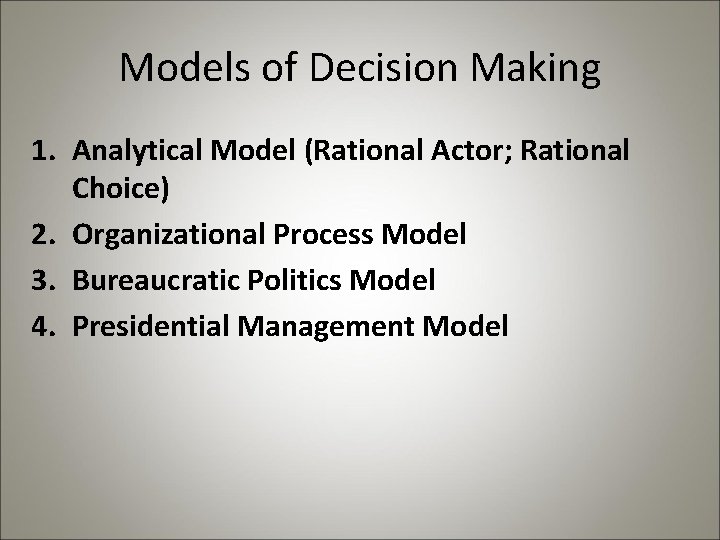
Models of Decision Making 1. Analytical Model (Rational Actor; Rational Choice) 2. Organizational Process Model 3. Bureaucratic Politics Model 4. Presidential Management Model
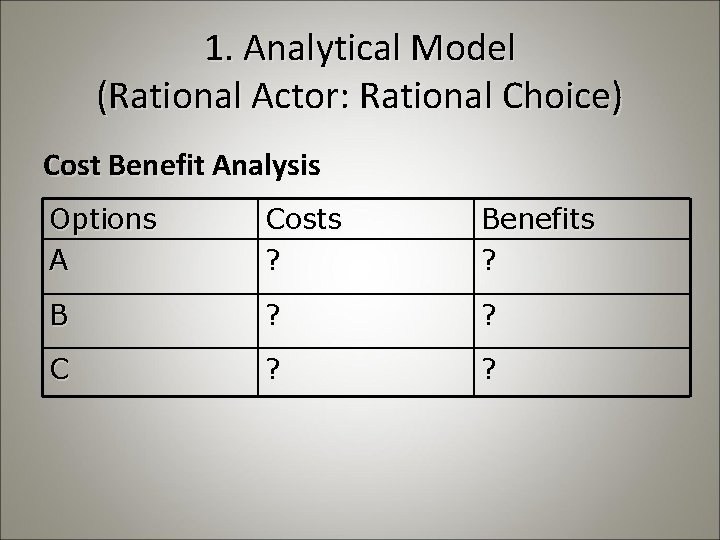
1. Analytical Model (Rational Actor: Rational Choice) Cost Benefit Analysis Options A Costs ? Benefits ? B ? ? C ? ?
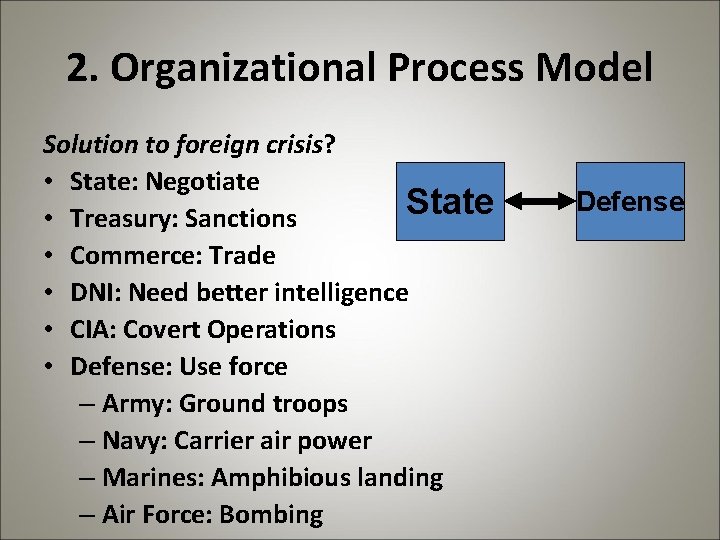
2. Organizational Process Model Solution to foreign crisis? • State: Negotiate State • Treasury: Sanctions • Commerce: Trade • DNI: Need better intelligence • CIA: Covert Operations • Defense: Use force – Army: Ground troops – Navy: Carrier air power – Marines: Amphibious landing – Air Force: Bombing Defense
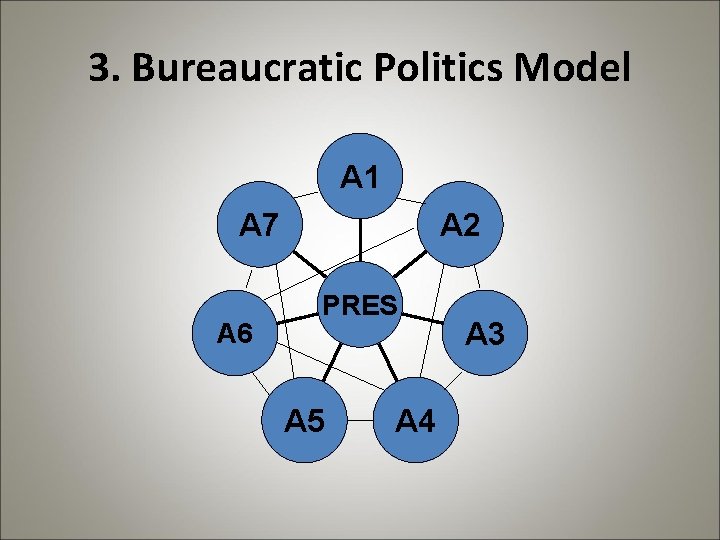
3. Bureaucratic Politics Model A 1 A 7 A 6 A 2 PRES A 5 A 4 A 3
4. Presidential Management Model • What Structures, if any, are used in decision making? • Who is actually making the decision? • Who does the president trust the most?
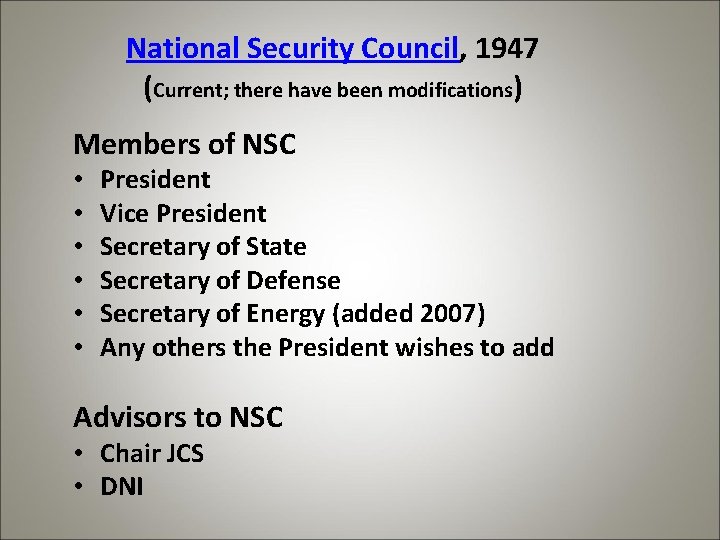
National Security Council, 1947 (Current; there have been modifications) Members of NSC • • • President Vice President Secretary of State Secretary of Defense Secretary of Energy (added 2007) Any others the President wishes to add Advisors to NSC • Chair JCS • DNI
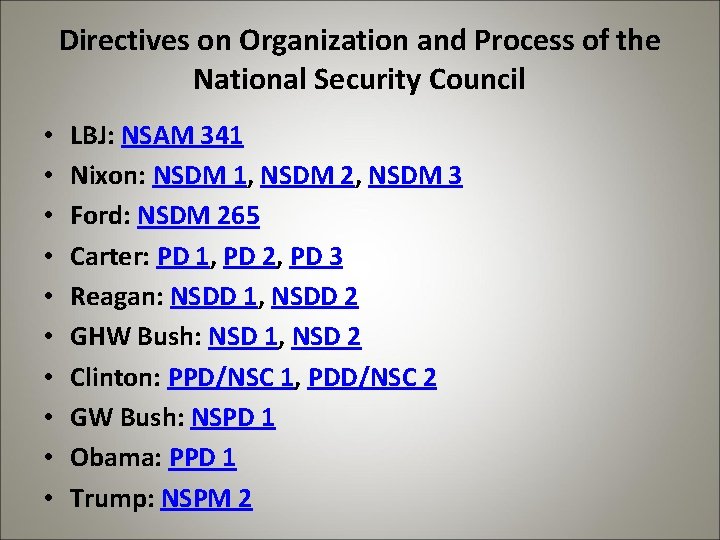
Directives on Organization and Process of the National Security Council • • • LBJ: NSAM 341 Nixon: NSDM 1, NSDM 2, NSDM 3 Ford: NSDM 265 Carter: PD 1, PD 2, PD 3 Reagan: NSDD 1, NSDD 2 GHW Bush: NSD 1, NSD 2 Clinton: PPD/NSC 1, PDD/NSC 2 GW Bush: NSPD 1 Obama: PPD 1 Trump: NSPM 2
Evolution of NSC Staff • NSC Staff as President’s personal foreign policy staff • Professionals • National Security Adviser as the President’s number one adviser • Began with JFK
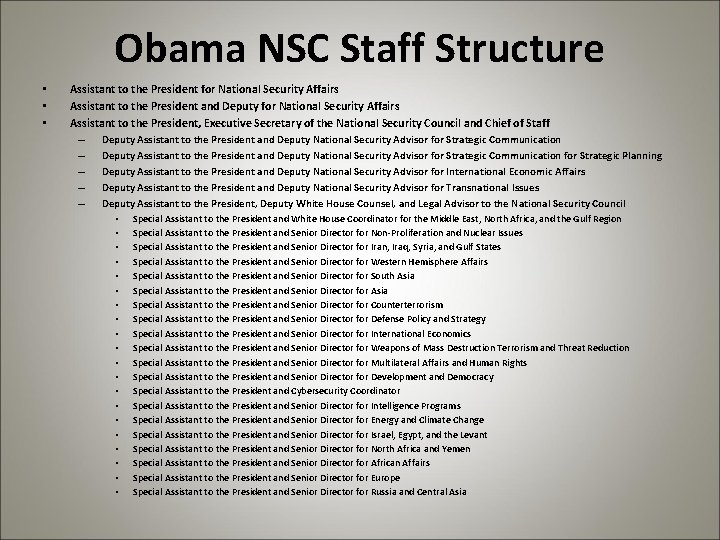
Obama NSC Staff Structure • • • Assistant to the President for National Security Affairs Assistant to the President and Deputy for National Security Affairs Assistant to the President, Executive Secretary of the National Security Council and Chief of Staff – Deputy Assistant to the President and Deputy National Security Advisor for Strategic Communication for Strategic Planning – Deputy Assistant to the President and Deputy National Security Advisor for International Economic Affairs – Deputy Assistant to the President and Deputy National Security Advisor for Transnational Issues – Deputy Assistant to the President, Deputy White House Counsel, and Legal Advisor to the National Security Council • • • • • Special Assistant to the President and White House Coordinator for the Middle East, North Africa, and the Gulf Region Special Assistant to the President and Senior Director for Non-Proliferation and Nuclear Issues Special Assistant to the President and Senior Director for Iran, Iraq, Syria, and Gulf States Special Assistant to the President and Senior Director for Western Hemisphere Affairs Special Assistant to the President and Senior Director for South Asia Special Assistant to the President and Senior Director for Counterterrorism Special Assistant to the President and Senior Director for Defense Policy and Strategy Special Assistant to the President and Senior Director for International Economics Special Assistant to the President and Senior Director for Weapons of Mass Destruction Terrorism and Threat Reduction Special Assistant to the President and Senior Director for Multilateral Affairs and Human Rights Special Assistant to the President and Senior Director for Development and Democracy Special Assistant to the President and Cybersecurity Coordinator Special Assistant to the President and Senior Director for Intelligence Programs Special Assistant to the President and Senior Director for Energy and Climate Change Special Assistant to the President and Senior Director for Israel, Egypt, and the Levant Special Assistant to the President and Senior Director for North Africa and Yemen Special Assistant to the President and Senior Director for African Affairs Special Assistant to the President and Senior Director for Europe Special Assistant to the President and Senior Director for Russia and Central Asia
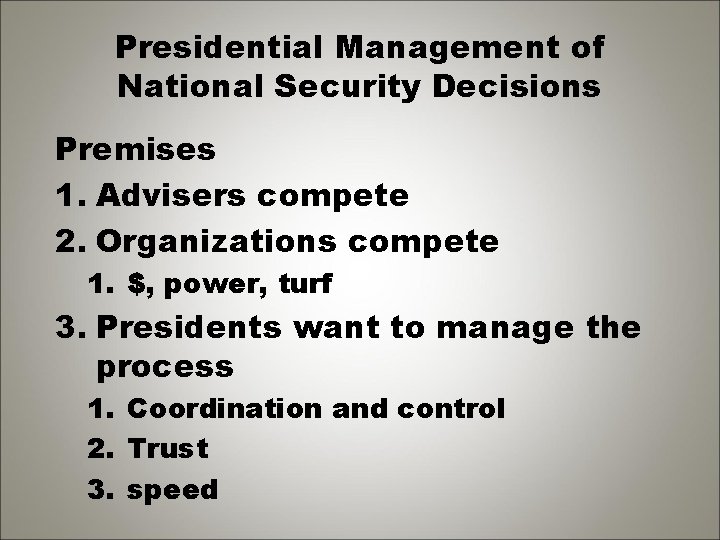
Presidential Management of National Security Decisions Premises 1. Advisers compete 2. Organizations compete 1. $, power, turf 3. Presidents want to manage the process 1. Coordination and control 2. Trust 3. speed
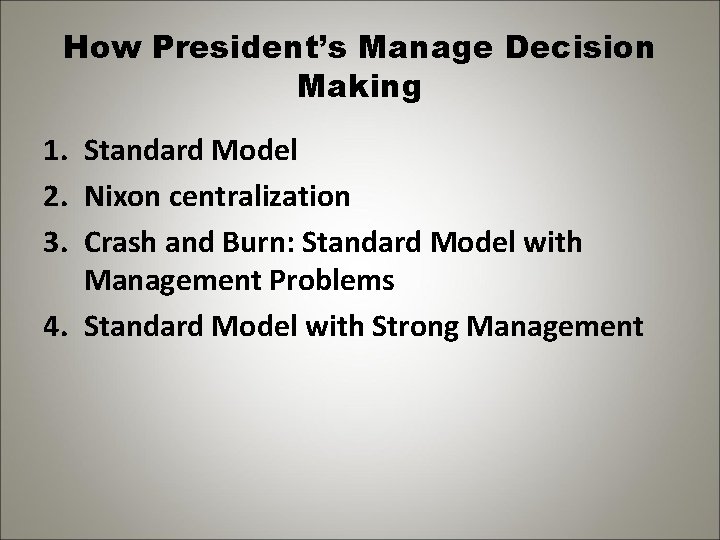
How President’s Manage Decision Making 1. Standard Model 2. Nixon centralization 3. Crash and Burn: Standard Model with Management Problems 4. Standard Model with Strong Management
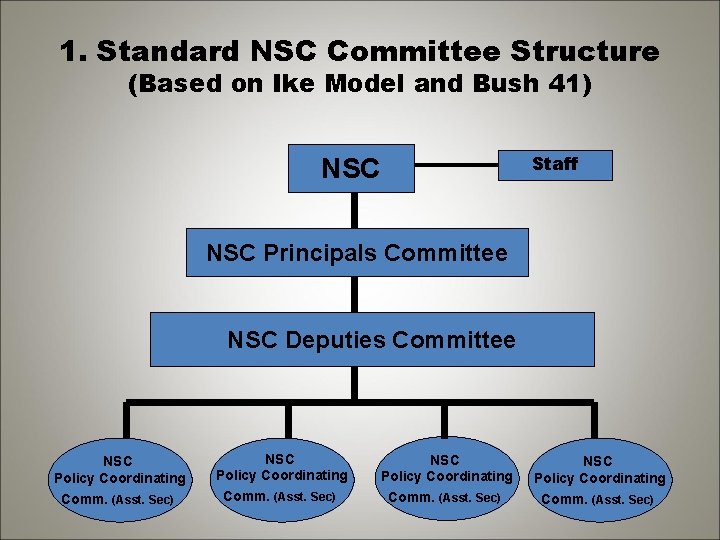
1. Standard NSC Committee Structure (Based on Ike Model and Bush 41) Staff NSC Principals Committee NSC Deputies Committee NSC Policy Coordinating Comm. (Asst. Sec)
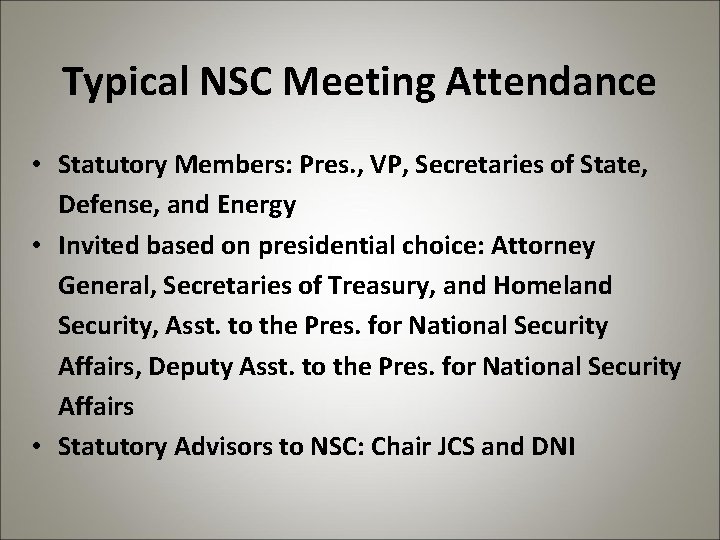
Typical NSC Meeting Attendance • Statutory Members: Pres. , VP, Secretaries of State, Defense, and Energy • Invited based on presidential choice: Attorney General, Secretaries of Treasury, and Homeland Security, Asst. to the Pres. for National Security Affairs, Deputy Asst. to the Pres. for National Security Affairs • Statutory Advisors to NSC: Chair JCS and DNI
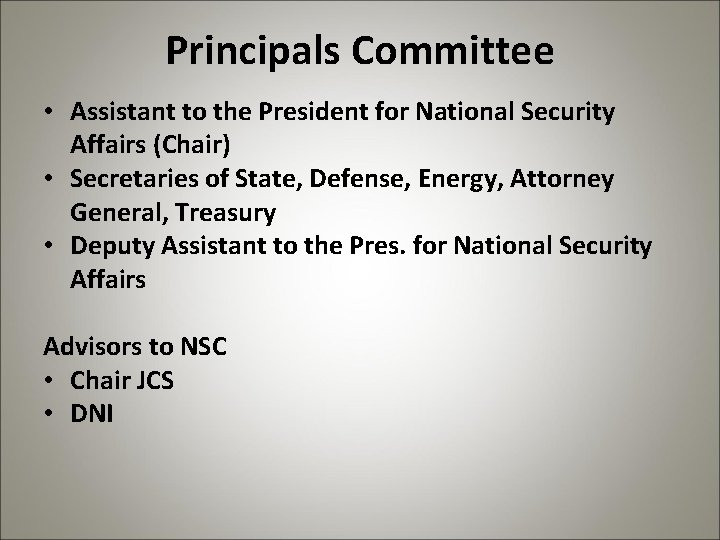
Principals Committee • Assistant to the President for National Security Affairs (Chair) • Secretaries of State, Defense, Energy, Attorney General, Treasury • Deputy Assistant to the Pres. for National Security Affairs Advisors to NSC • Chair JCS • DNI
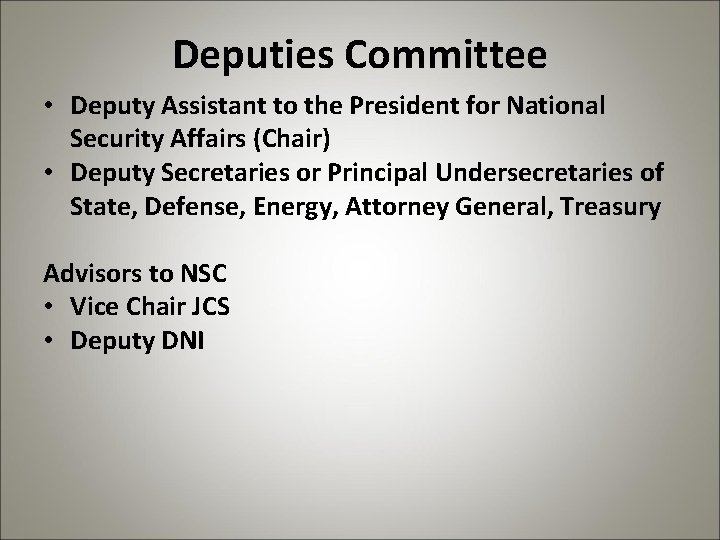
Deputies Committee • Deputy Assistant to the President for National Security Affairs (Chair) • Deputy Secretaries or Principal Undersecretaries of State, Defense, Energy, Attorney General, Treasury Advisors to NSC • Vice Chair JCS • Deputy DNI
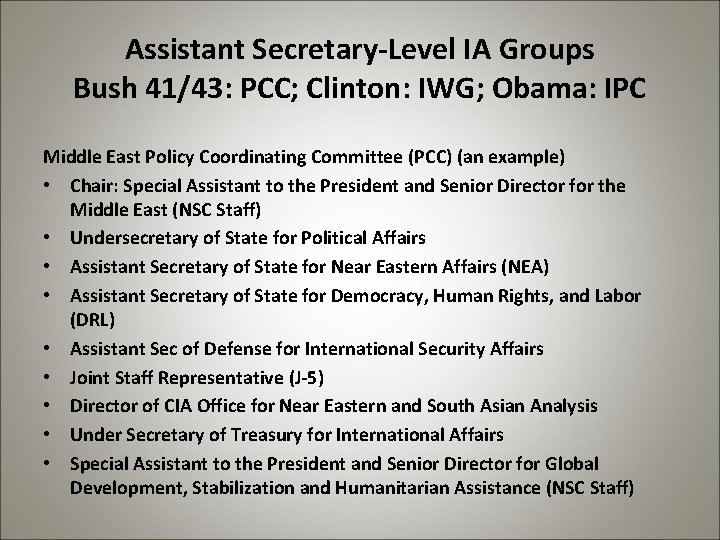
Assistant Secretary-Level IA Groups Bush 41/43: PCC; Clinton: IWG; Obama: IPC Middle East Policy Coordinating Committee (PCC) (an example) • Chair: Special Assistant to the President and Senior Director for the Middle East (NSC Staff) • Undersecretary of State for Political Affairs • Assistant Secretary of State for Near Eastern Affairs (NEA) • Assistant Secretary of State for Democracy, Human Rights, and Labor (DRL) • Assistant Sec of Defense for International Security Affairs • Joint Staff Representative (J-5) • Director of CIA Office for Near Eastern and South Asian Analysis • Under Secretary of Treasury for International Affairs • Special Assistant to the President and Senior Director for Global Development, Stabilization and Humanitarian Assistance (NSC Staff)
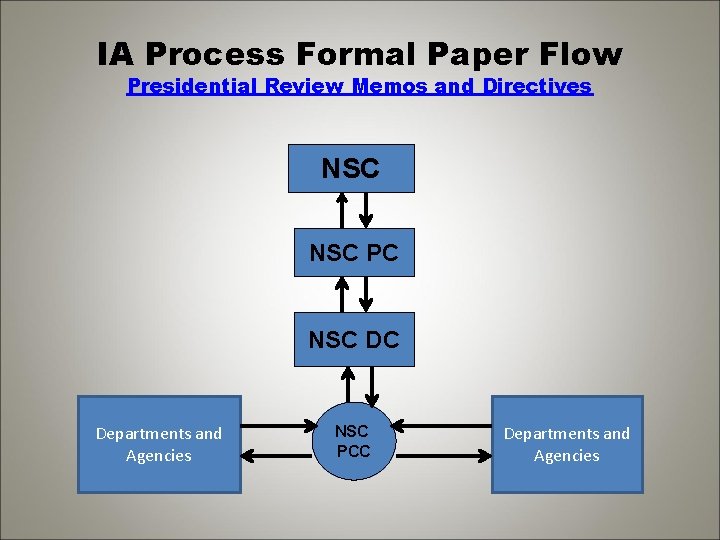
IA Process Formal Paper Flow Presidential Review Memos and Directives NSC PC NSC DC Departments and Agencies NSC PCC Departments and Agencies
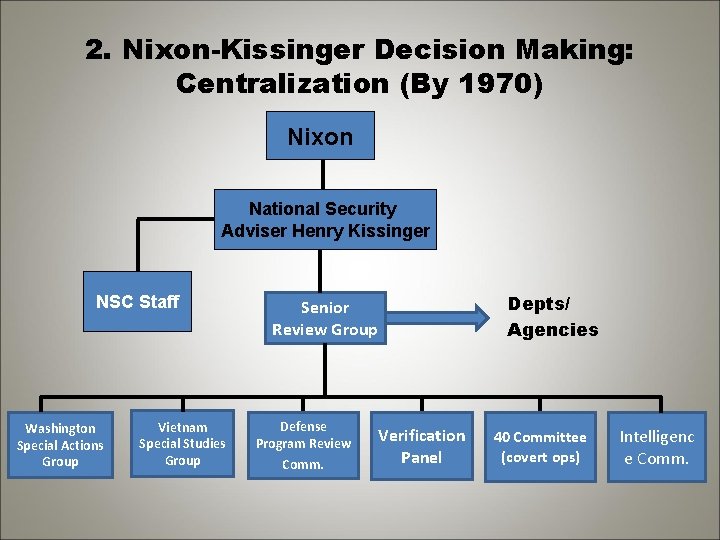
2. Nixon-Kissinger Decision Making: Centralization (By 1970) Nixon National Security Adviser Henry Kissinger NSC Staff Washington Special Actions Group Vietnam Special Studies Group Depts/ Agencies Senior Review Group Defense Program Review Comm. Verification Panel 40 Committee (covert ops) Intelligenc e Comm.
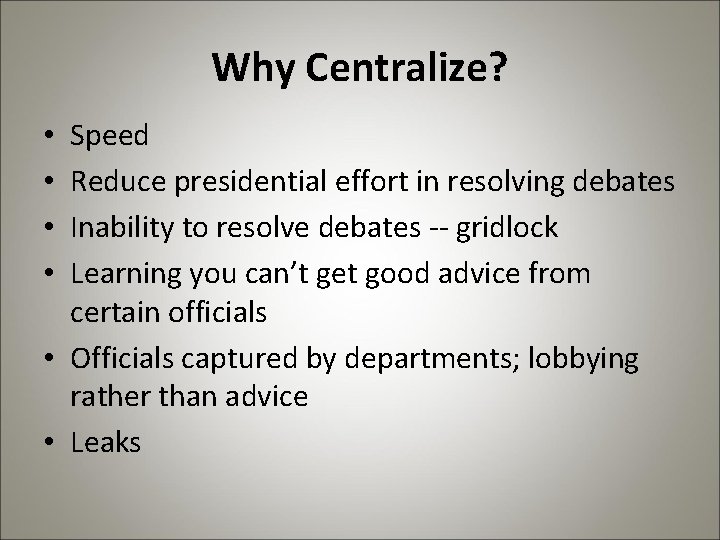
Why Centralize? Speed Reduce presidential effort in resolving debates Inability to resolve debates -- gridlock Learning you can’t get good advice from certain officials • Officials captured by departments; lobbying rather than advice • Leaks • •
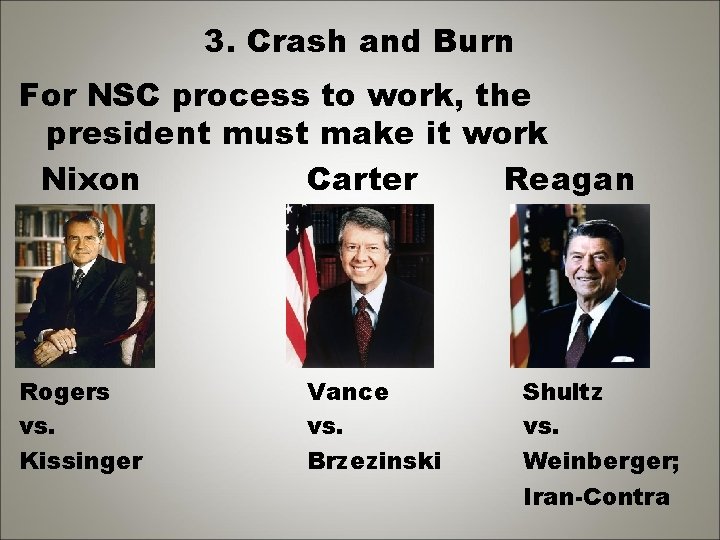
3. Crash and Burn For NSC process to work, the president must make it work Nixon Carter Reagan Rogers vs. Kissinger Vance vs. Brzezinski Shultz vs. Weinberger; Iran-Contra
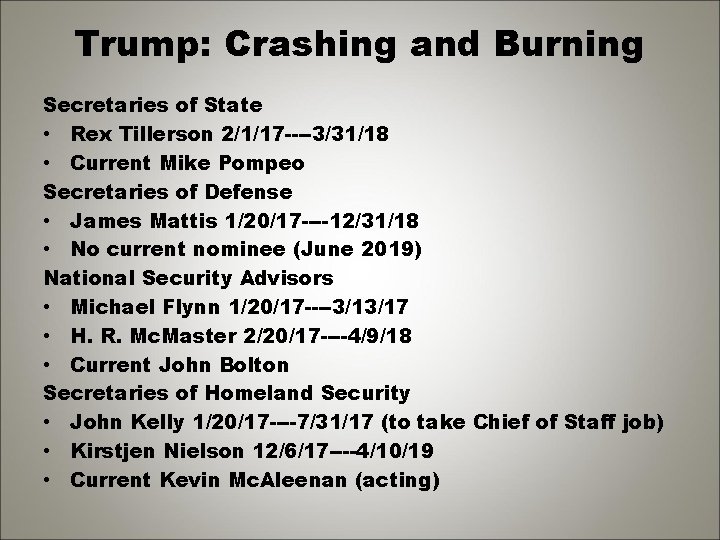
Trump: Crashing and Burning Secretaries of State • Rex Tillerson 2/1/17 ----3/31/18 • Current Mike Pompeo Secretaries of Defense • James Mattis 1/20/17 ----12/31/18 • No current nominee (June 2019) National Security Advisors • Michael Flynn 1/20/17 ----3/13/17 • H. R. Mc. Master 2/20/17 ----4/9/18 • Current John Bolton Secretaries of Homeland Security • John Kelly 1/20/17 ----7/31/17 (to take Chief of Staff job) • Kirstjen Nielson 12/6/17 ----4/10/19 • Current Kevin Mc. Aleenan (acting)
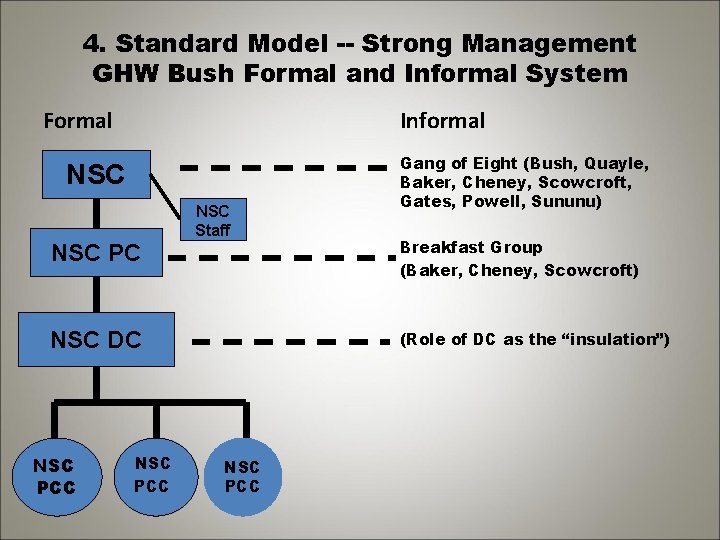
4. Standard Model -- Strong Management GHW Bush Formal and Informal System Formal Informal NSC PC NSC Staff NSC DC NSC PCC Gang of Eight (Bush, Quayle, Baker, Cheney, Scowcroft, Gates, Powell, Sununu) Breakfast Group (Baker, Cheney, Scowcroft) (Role of DC as the “insulation”) NSC PCC
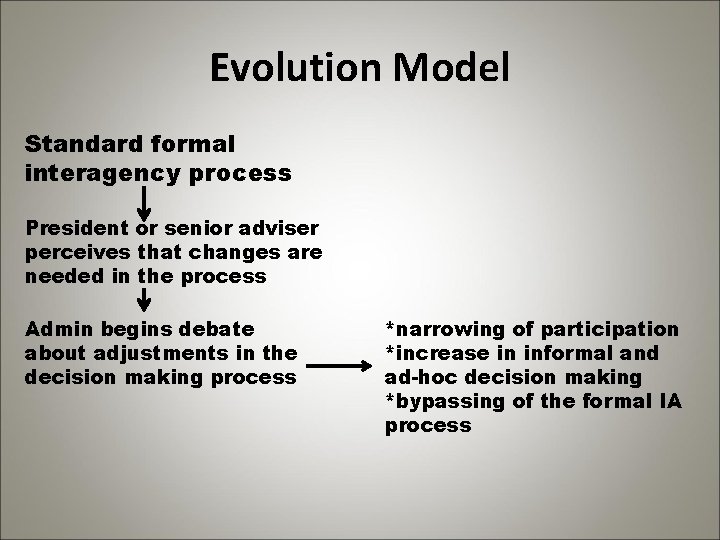
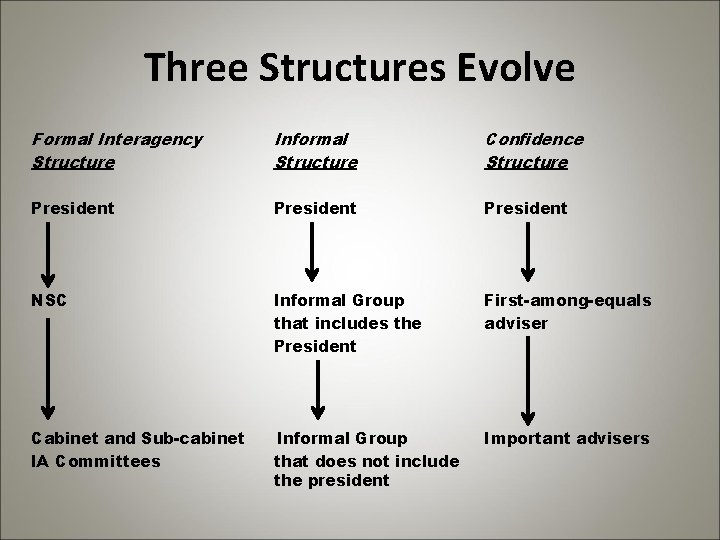
Evolution Model Standard formal interagency process President or senior adviser perceives that changes are needed in the process Admin begins debate about adjustments in the decision making process *narrowing of participation *increase in informal and ad-hoc decision making *bypassing of the formal IA process
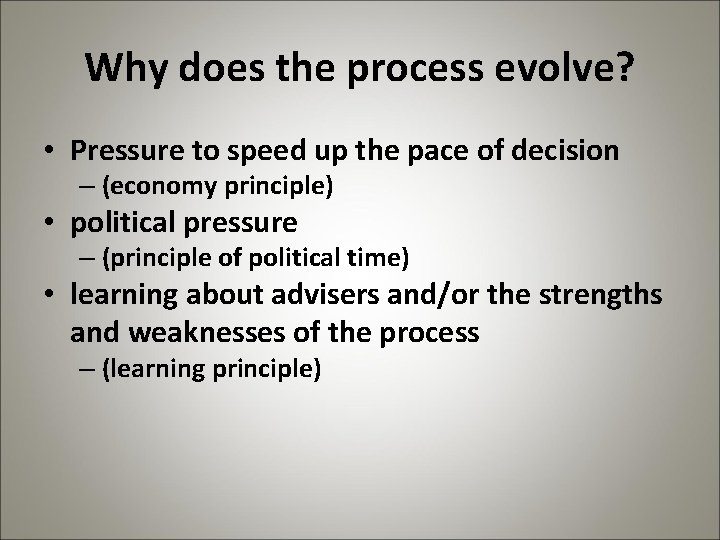
Why does the process evolve? • Pressure to speed up the pace of decision – (economy principle) • political pressure – (principle of political time) • learning about advisers and/or the strengths and weaknesses of the process – (learning principle)
Three Structures Evolve Formal Interagency Structure Informal Structure Confidence Structure President Informal Group that includes the President First-among-equals adviser Informal Group that does not include the president Important advisers NSC Cabinet and Sub-cabinet IA Committees
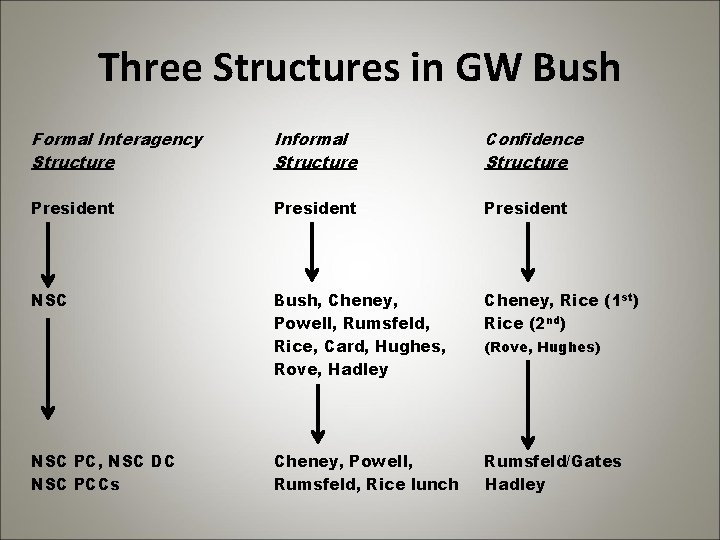
Three Structures in GW Bush Formal Interagency Structure Informal Structure Confidence Structure President Bush, Cheney, Powell, Rumsfeld, Rice, Card, Hughes, Rove, Hadley Cheney, Rice (1 st) Rice (2 nd) Cheney, Powell, Rumsfeld, Rice lunch Rumsfeld/Gates Hadley NSC (Rove, Hughes) NSC PC, NSC DC NSC PCCs
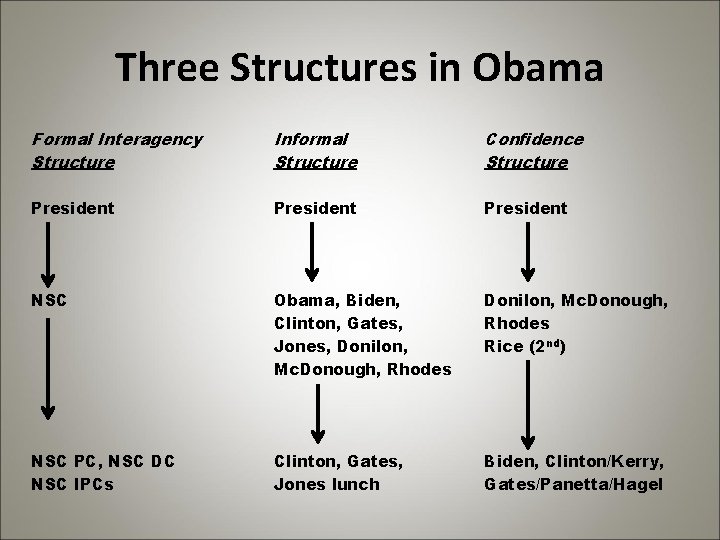
Three Structures in Obama Formal Interagency Structure Informal Structure Confidence Structure President Obama, Biden, Clinton, Gates, Jones, Donilon, Mc. Donough, Rhodes Rice (2 nd) Clinton, Gates, Jones lunch Biden, Clinton/Kerry, Gates/Panetta/Hagel NSC PC, NSC DC NSC IPCs