
National Research Center for Career and Technical Education
- Slides: 14
National Research Center for Career and Technical Education Career Education at the Postsecondary Level: Beginning Post-Secondary Student Outcomes 2004 -2009. Pradeep Kotamraju, Ph. D. Deputy Director Oscar Aliaga Ph. D. Program Director Emily Dickinson Graduate Assistant 2012 NACTEI Annual Conference Portland Oregon May 17, 2012 The work reported herein was supported under the National Research Center for Career and Technical Education, PR/Award (No. VO 51 A 070003) as administered by the Office of Vocational and Adult Education, U. S. Department of Education. However, the contents do not necessarily represent the positions or policies of the Office of Vocational and Adult Education or the U. S. Department of Education and you should not assume endorsement by the Federal Government.
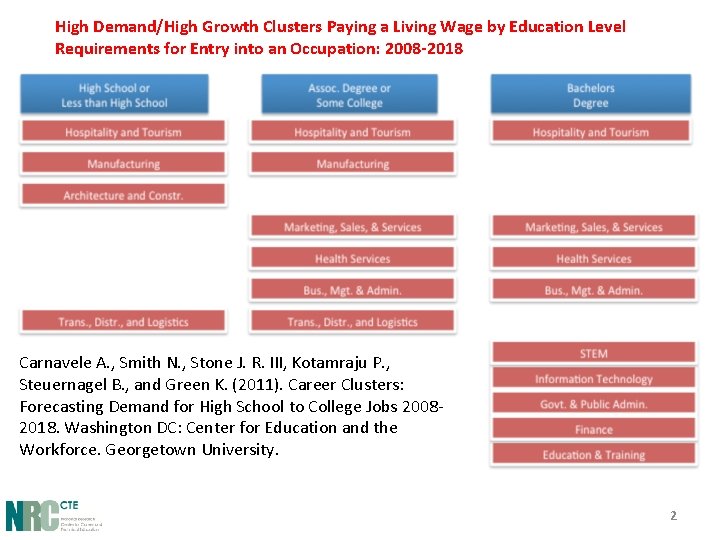
High Demand/High Growth Clusters Paying a Living Wage by Education Level Requirements for Entry into an Occupation: 2008 -2018 Carnavele A. , Smith N. , Stone J. R. III, Kotamraju P. , Steuernagel B. , and Green K. (2011). Career Clusters: Forecasting Demand for High School to College Jobs 20082018. Washington DC: Center for Education and the Workforce. Georgetown University. 2
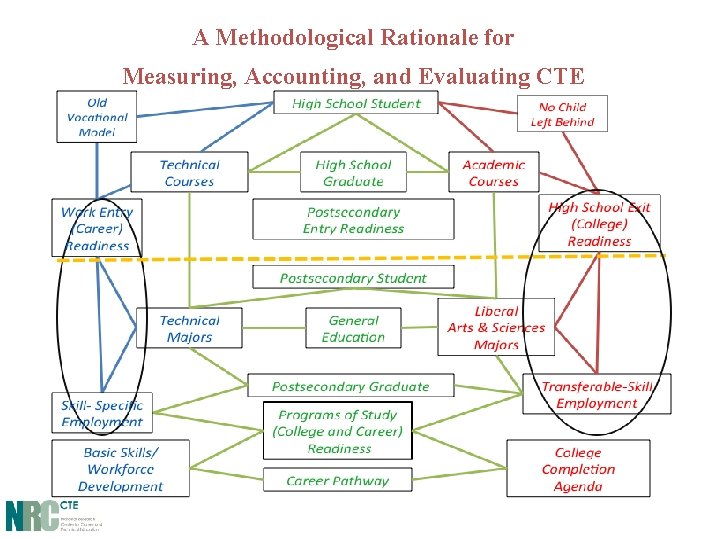
A Methodological Rationale for Measuring, Accounting, and Evaluating CTE
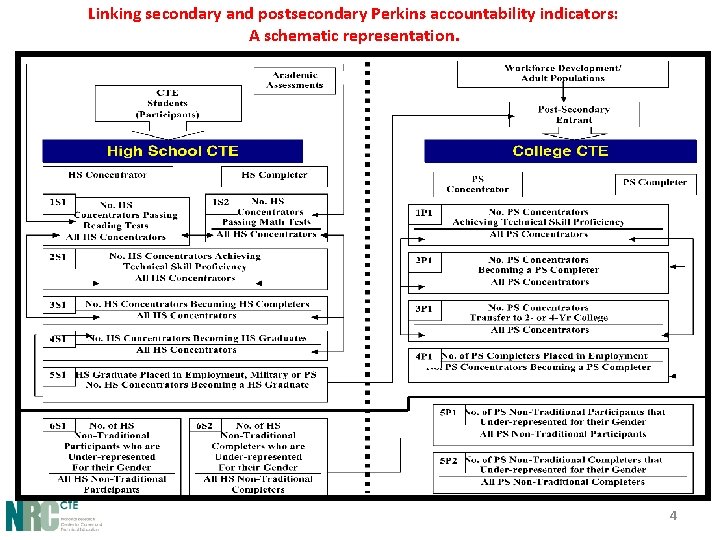
Linking secondary and postsecondary Perkins accountability indicators: A schematic representation. 4
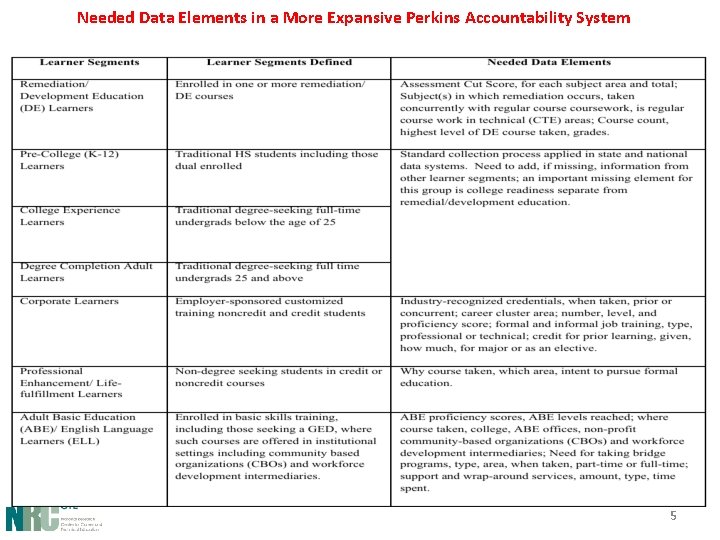
Needed Data Elements in a More Expansive Perkins Accountability System 5
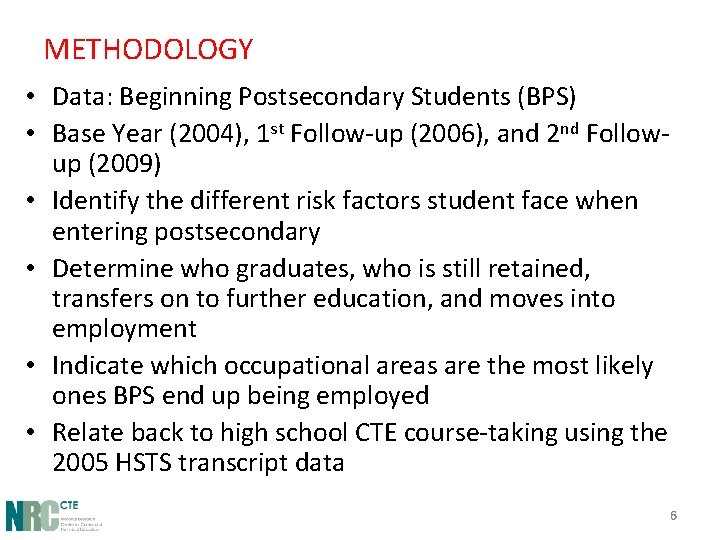
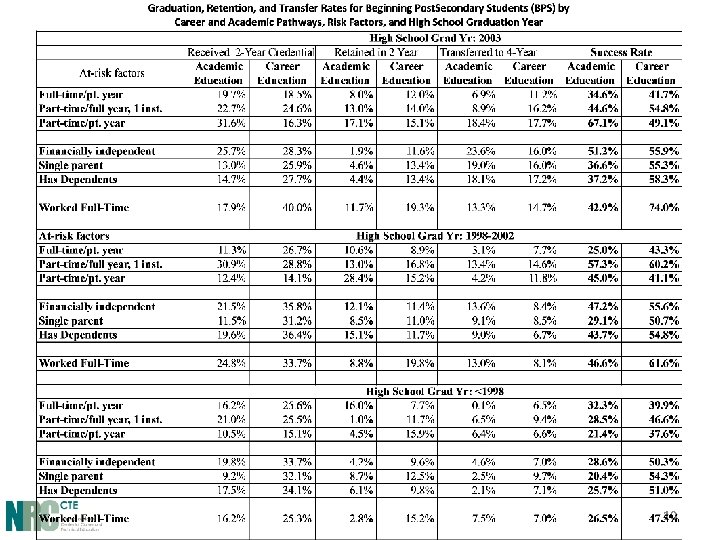
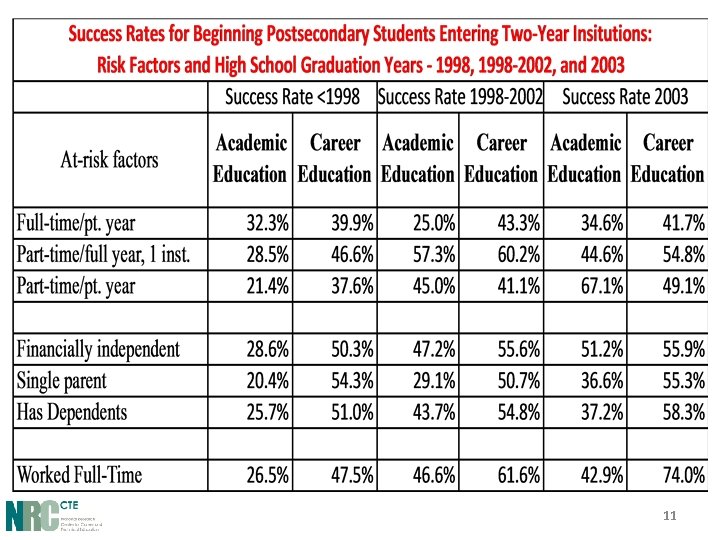
METHODOLOGY • Data: Beginning Postsecondary Students (BPS) • Base Year (2004), 1 st Follow-up (2006), and 2 nd Followup (2009) • Identify the different risk factors student face when entering postsecondary • Determine who graduates, who is still retained, transfers on to further education, and moves into employment • Indicate which occupational areas are the most likely ones BPS end up being employed • Relate back to high school CTE course-taking using the 2005 HSTS transcript data 6
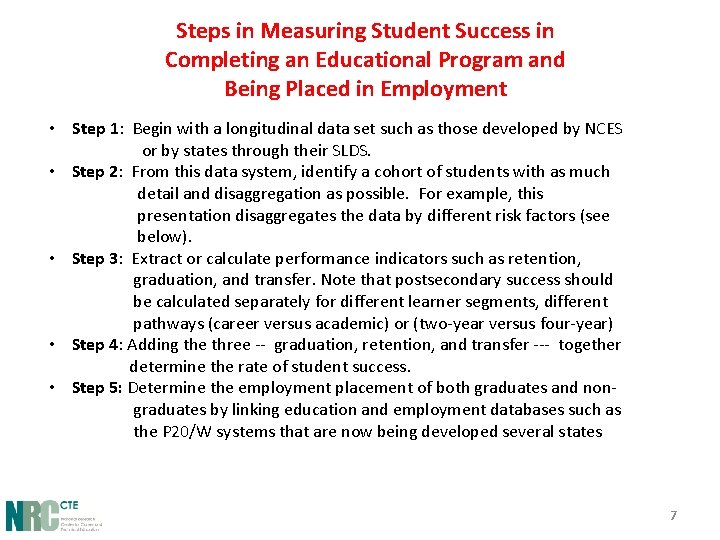
Steps in Measuring Student Success in Completing an Educational Program and Being Placed in Employment • Step 1: Begin with a longitudinal data set such as those developed by NCES or by states through their SLDS. • Step 2: From this data system, identify a cohort of students with as much detail and disaggregation as possible. For example, this presentation disaggregates the data by different risk factors (see below). • Step 3: Extract or calculate performance indicators such as retention, graduation, and transfer. Note that postsecondary success should be calculated separately for different learner segments, different pathways (career versus academic) or (two-year versus four-year) • Step 4: Adding the three -- graduation, retention, and transfer --- together determine the rate of student success. • Step 5: Determine the employment placement of both graduates and non- graduates by linking education and employment databases such as the P 20/W systems that are now being developed several states 7
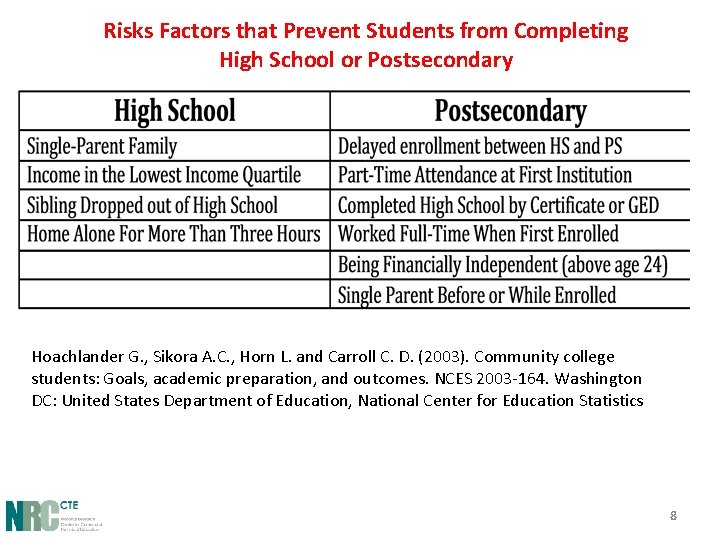
Risks Factors that Prevent Students from Completing High School or Postsecondary Hoachlander G. , Sikora A. C. , Horn L. and Carroll C. D. (2003). Community college students: Goals, academic preparation, and outcomes. NCES 2003 -164. Washington DC: United States Department of Education, National Center for Education Statistics 8
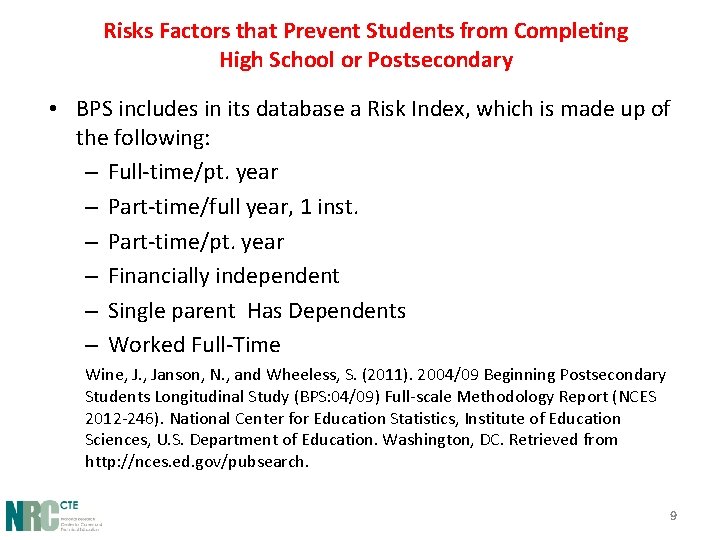
Risks Factors that Prevent Students from Completing High School or Postsecondary • BPS includes in its database a Risk Index, which is made up of the following: – Full-time/pt. year – Part-time/full year, 1 inst. – Part-time/pt. year – Financially independent – Single parent Has Dependents – Worked Full-Time Wine, J. , Janson, N. , and Wheeless, S. (2011). 2004/09 Beginning Postsecondary Students Longitudinal Study (BPS: 04/09) Full-scale Methodology Report (NCES 2012 -246). National Center for Education Statistics, Institute of Education Sciences, U. S. Department of Education. Washington, DC. Retrieved from http: //nces. ed. gov/pubsearch. 9
10
11
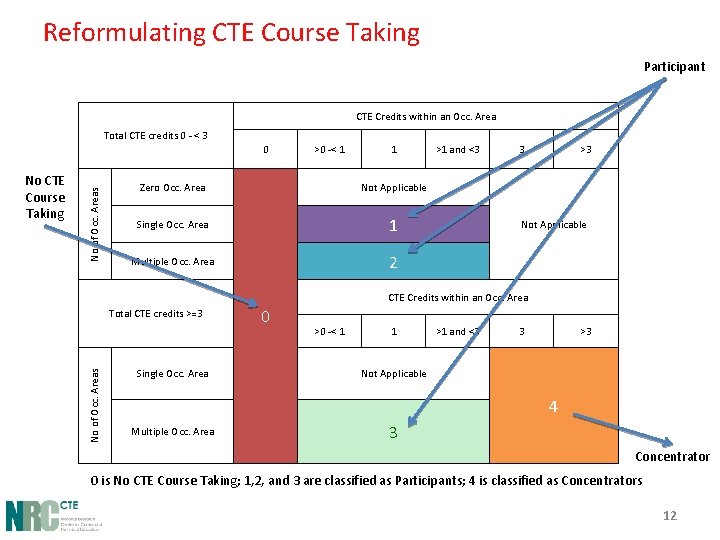
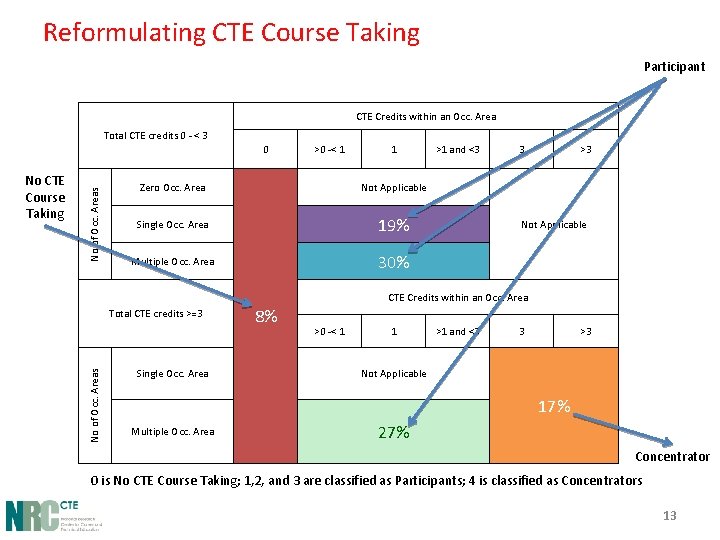
Reformulating CTE Course Taking Participant CTE Credits within an Occ. Area Total CTE credits 0 - < 3 >0 -< 1 1 Zero Occ. Area Not Applicable Single Occ. Area 1 Multiple Occ. Area 2 >1 and <3 3 >3 Not Applicable CTE Credits within an Occ. Area Total CTE credits >=3 No of Occ. Areas No CTE Course Taking No of Occ. Areas 0 Single Occ. Area 0 >0 -< 1 1 >1 and <3 3 >3 Not Applicable 4 Multiple Occ. Area 3 Concentrator 0 is No CTE Course Taking; 1, 2, and 3 are classified as Participants; 4 is classified as Concentrators 12
Reformulating CTE Course Taking Participant CTE Credits within an Occ. Area Total CTE credits 0 - < 3 >0 -< 1 1 Zero Occ. Area Not Applicable Single Occ. Area 19% Multiple Occ. Area 30% >1 and <3 3 >3 Not Applicable CTE Credits within an Occ. Area Total CTE credits >=3 No of Occ. Areas No CTE Course Taking No of Occ. Areas 0 Single Occ. Area 8% >0 -< 1 1 >1 and <3 3 >3 Not Applicable 17% Multiple Occ. Area 27% Concentrator 0 is No CTE Course Taking; 1, 2, and 3 are classified as Participants; 4 is classified as Concentrators 13
14