
National Programmes Dr Nishant Verma Assistant Professor Department

- Slides: 51
National Programmes Dr Nishant Verma Assistant Professor Department of Pediatrics King George’s Medical University
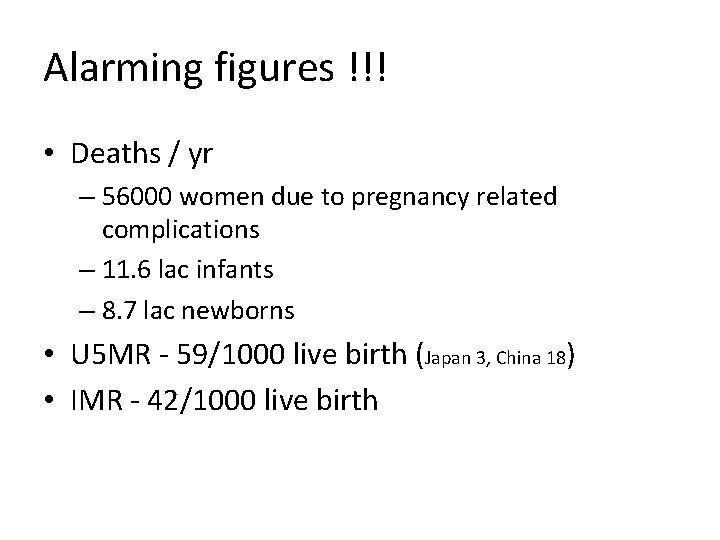
Alarming figures !!! • Deaths / yr – 56000 women due to pregnancy related complications – 11. 6 lac infants – 8. 7 lac newborns • U 5 MR - 59/1000 live birth (Japan 3, China 18) • IMR - 42/1000 live birth
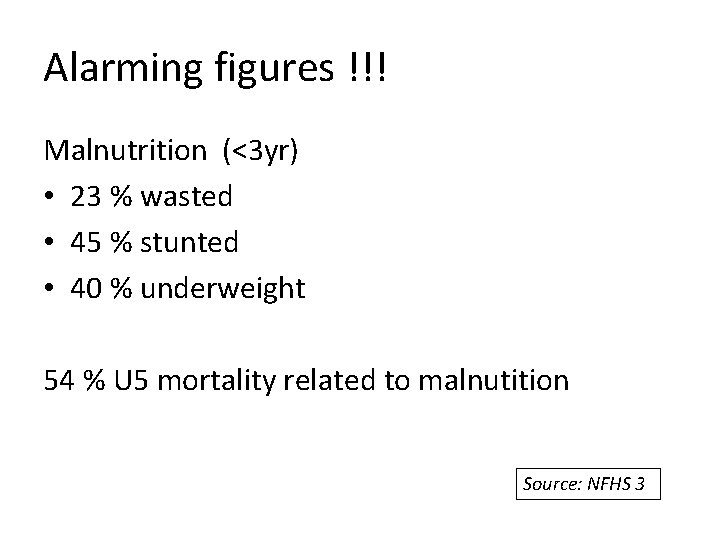
Alarming figures !!! Malnutrition (<3 yr) • 23 % wasted • 45 % stunted • 40 % underweight 54 % U 5 mortality related to malnutition Source: NFHS 3
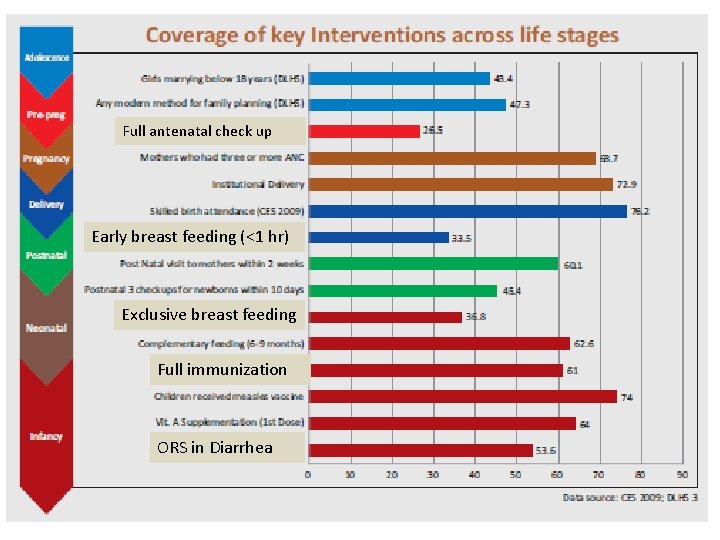
Full antenatal check up Early breast feeding (<1 hr) Exclusive breast feeding Full immunization ORS in Diarrhea
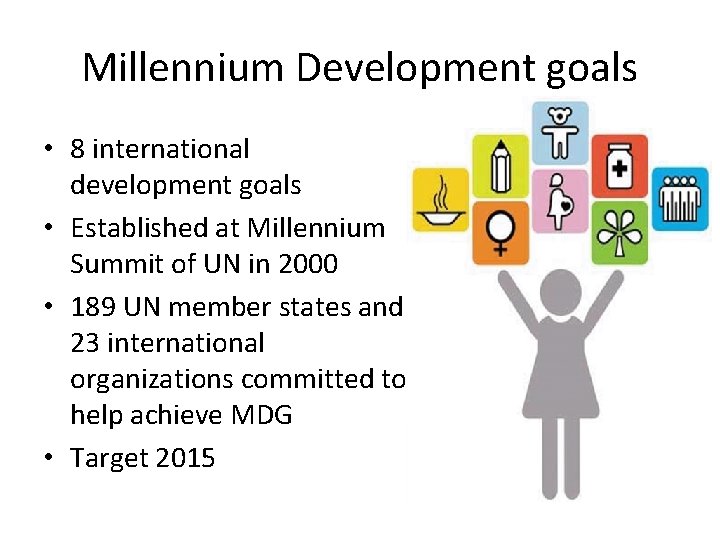
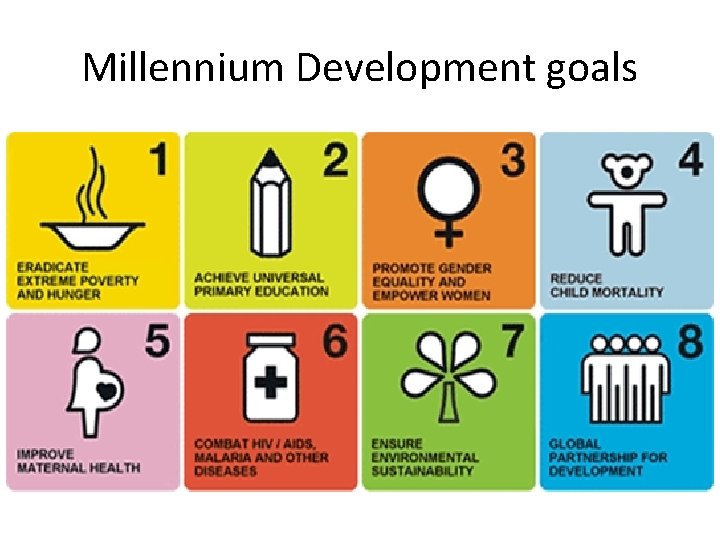
Millennium Development goals • 8 international development goals • Established at Millennium Summit of UN in 2000 • 189 UN member states and 23 international organizations committed to help achieve MDG • Target 2015
Millennium Development goals
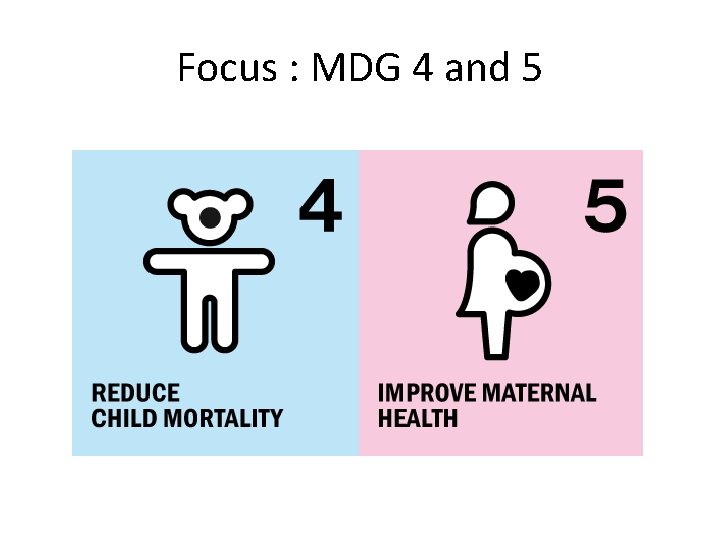
Focus : MDG 4 and 5
Aim of National Health Programmes • • • Improve health of country Healthy mother = Healthy child Better pregnancy care Better newborn care Eliminate vaccine preventable diseases Target malnutrition Education Healthy adolescents Population control
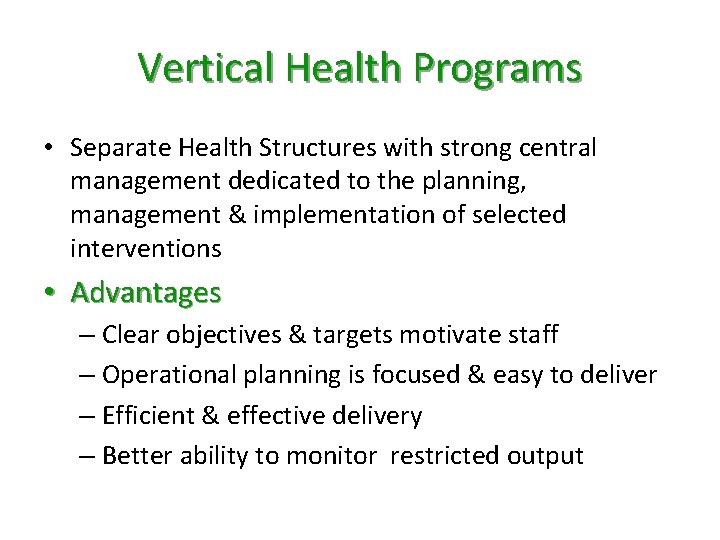
Vertical Health Programs • Separate Health Structures with strong central management dedicated to the planning, management & implementation of selected interventions • Advantages – Clear objectives & targets motivate staff – Operational planning is focused & easy to deliver – Efficient & effective delivery – Better ability to monitor restricted output
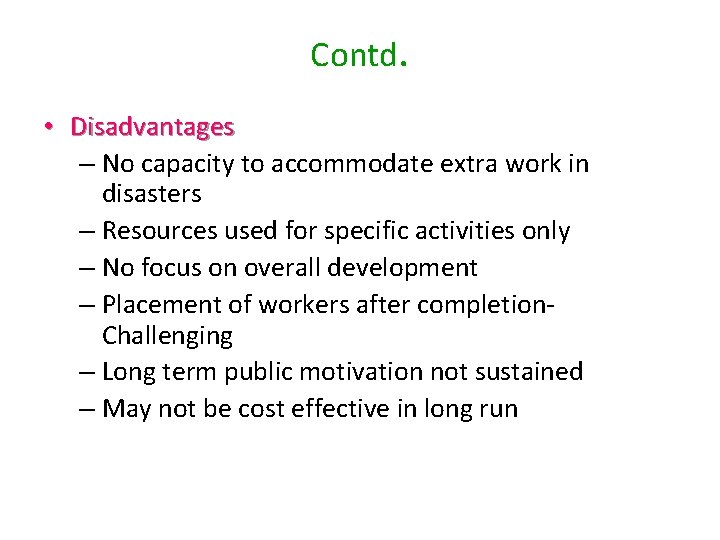
Contd. • Disadvantages – No capacity to accommodate extra work in disasters – Resources used for specific activities only – No focus on overall development – Placement of workers after completion. Challenging – Long term public motivation not sustained – May not be cost effective in long run
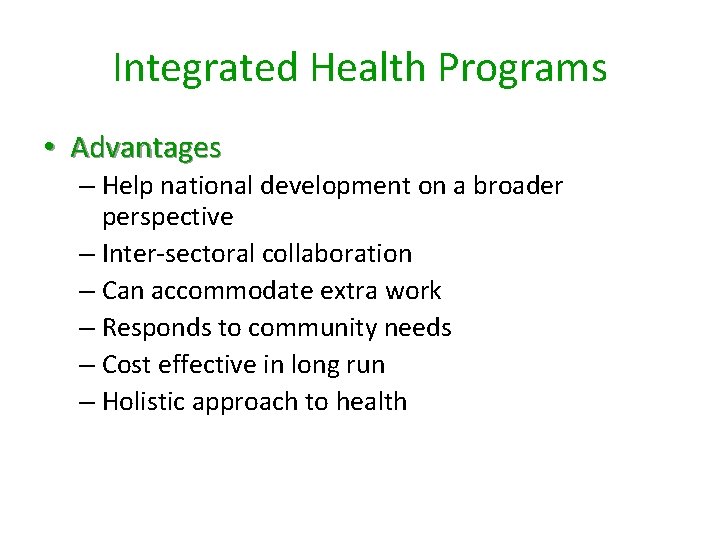
Integrated Health Programs • Advantages – Help national development on a broader perspective – Inter-sectoral collaboration – Can accommodate extra work – Responds to community needs – Cost effective in long run – Holistic approach to health
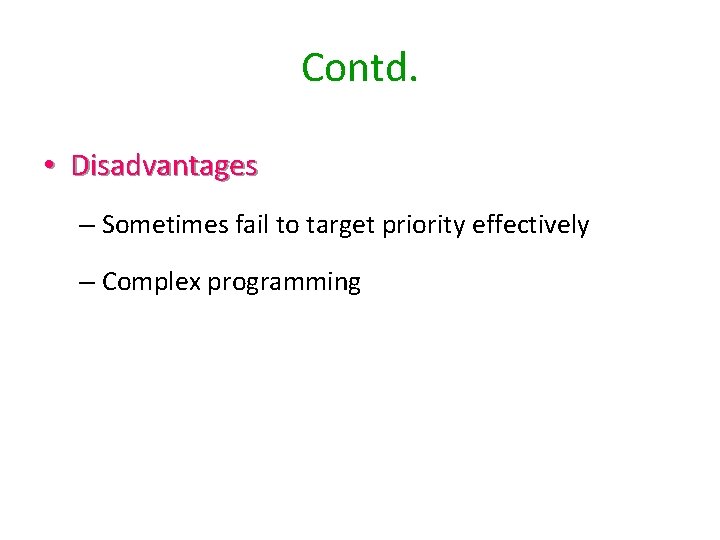
Contd. • Disadvantages – Sometimes fail to target priority effectively – Complex programming
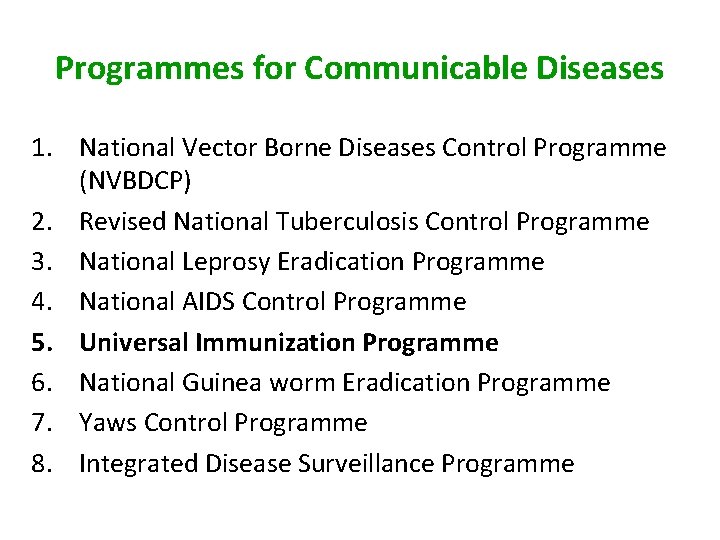
Programmes for Communicable Diseases 1. National Vector Borne Diseases Control Programme (NVBDCP) 2. Revised National Tuberculosis Control Programme 3. National Leprosy Eradication Programme 4. National AIDS Control Programme 5. Universal Immunization Programme 6. National Guinea worm Eradication Programme 7. Yaws Control Programme 8. Integrated Disease Surveillance Programme
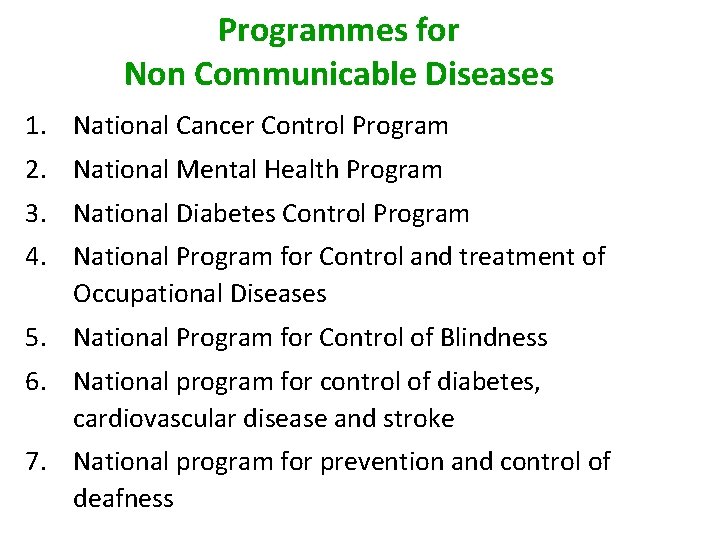
Programmes for Non Communicable Diseases 1. National Cancer Control Program 2. National Mental Health Program 3. National Diabetes Control Program 4. National Program for Control and treatment of Occupational Diseases 5. National Program for Control of Blindness 6. National program for control of diabetes, cardiovascular disease and stroke 7. National program for prevention and control of deafness
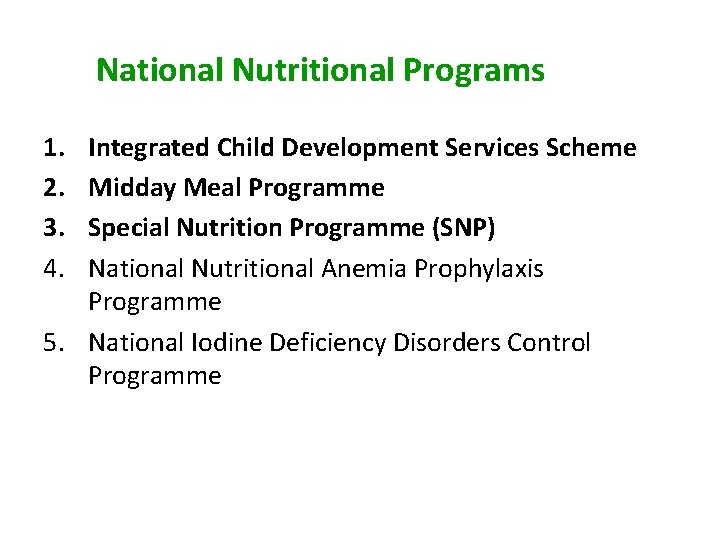
National Nutritional Programs 1. 2. 3. 4. Integrated Child Development Services Scheme Midday Meal Programme Special Nutrition Programme (SNP) National Nutritional Anemia Prophylaxis Programme 5. National Iodine Deficiency Disorders Control Programme
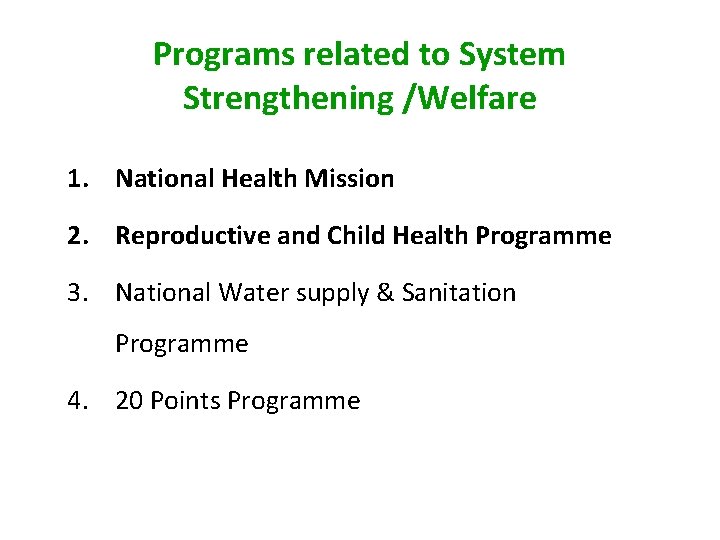
Programs related to System Strengthening /Welfare 1. National Health Mission 2. Reproductive and Child Health Programme 3. National Water supply & Sanitation Programme 4. 20 Points Programme
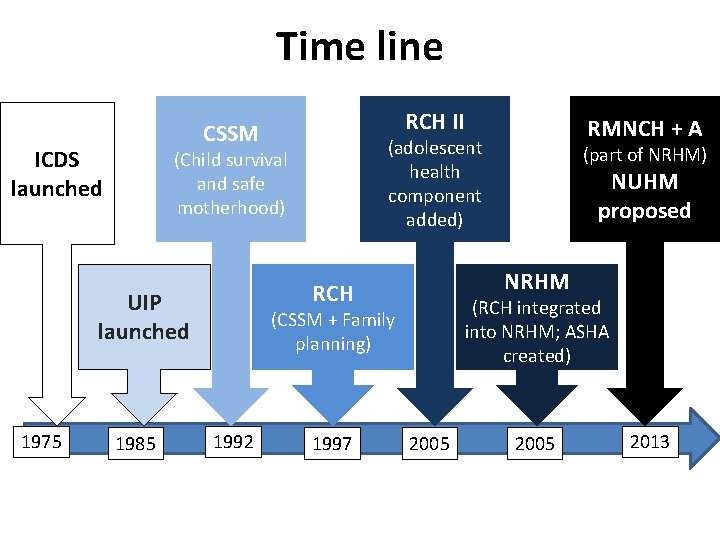
Time line ICDS launched 1985 NUHM proposed (RCH integrated into NRHM; ASHA created) (CSSM + Family planning) 1997 (part of NRHM) NRHM RCH 1992 RMNCH + A (adolescent health component added) (Child survival and safe motherhood) UIP launched 1975 RCH II CSSM 2005 2013
ICDS • Launched on 2 nd October 1975 • Objectives: – To improve nutritional and health status of children in 0 -6 yr age group – To lay the foundation for proper psychological, physical and social development of children • Services provided at Anganwadi Centre • Grass root worker for ICDS: Anganwadi worker
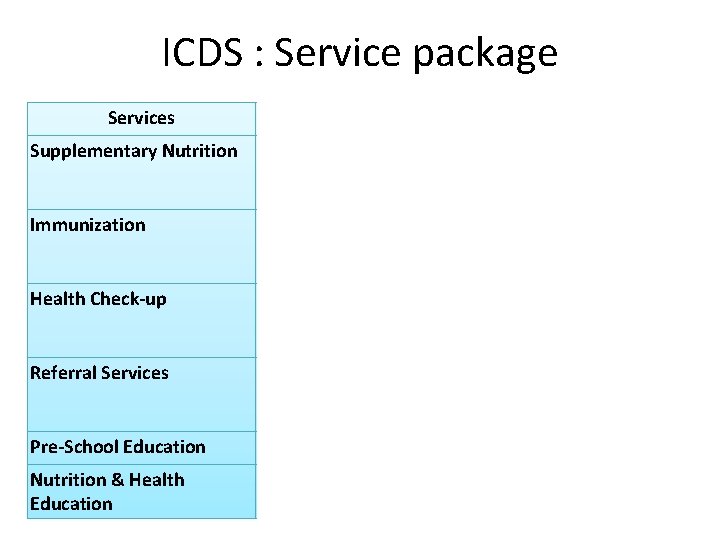
ICDS : Service package Services Target Group Service Provided by Supplementary Nutrition Children below 6 years: Anganwadi Worker Pregnant & Lactating Mother Anganwadi Helper (P&LM) Immunization Children below 6 years: ANM/MO Pregnant & Lactating Mother (P&LM) Health Check-up Children below 6 years: ANM/MO/AWW Pregnant & Lactating Mother (P&LM) Referral Services Children below 6 years: AWW/ANM/MO Pregnant & Lactating Mother (P&LM) Pre-School Education Children 3 -6 years AWW Nutrition & Health Education Women (15 -45 years) AWW/ANM/MO and
National Health Mission • NRHM + NUHM • Vision of NHM “Attainment of Universal Access to Equitable, Affordable and Quality health care services, accountable and responsive to people’s needs, with effective inter-sectoral convergent action to address the wider social determinants of health” Source : Framework for Implementation National health mission. Ministry of health and family welfare Government of India 2012 -2017
Core values of NHM • �Safeguard the health of poor, vulnerable and disadvantaged • Strengthen public health systems as a basis for universal access • Build environment of trust between people and providers of health services • Empower community to become active participants in the process of attainment of highest possible levels of health • Institutionalize transparency and accountability • Improve efficiency to optimize use of available resources
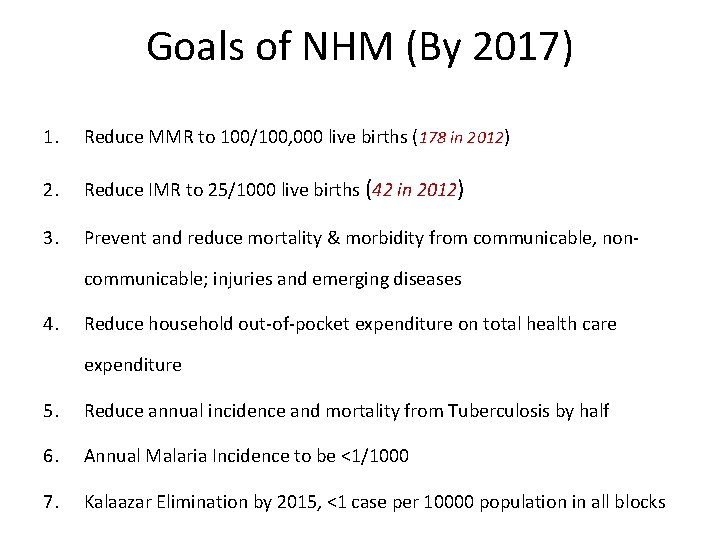
Goals of NHM (By 2017) 1. Reduce MMR to 100/100, 000 live births (178 in 2012) 2. Reduce IMR to 25/1000 live births (42 in 2012) 3. Prevent and reduce mortality & morbidity from communicable, non- communicable; injuries and emerging diseases 4. Reduce household out-of-pocket expenditure on total health care expenditure 5. Reduce annual incidence and mortality from Tuberculosis by half 6. Annual Malaria Incidence to be <1/1000 7. Kalaazar Elimination by 2015, <1 case per 10000 population in all blocks
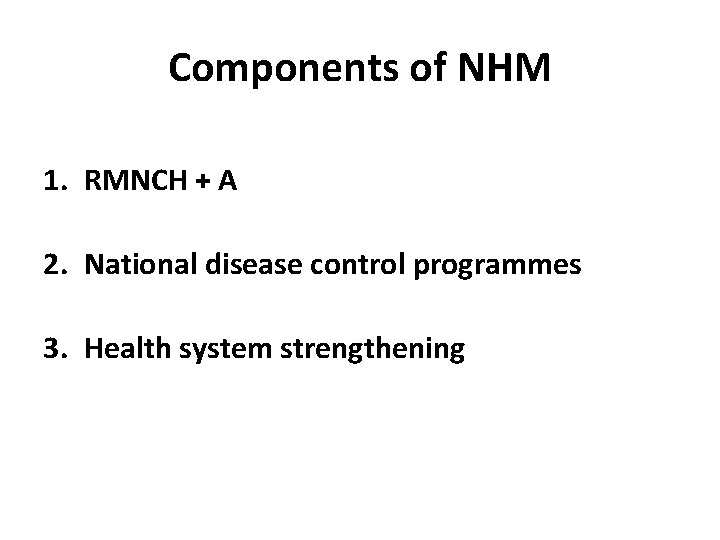
Components of NHM 1. RMNCH + A 2. National disease control programmes 3. Health system strengthening
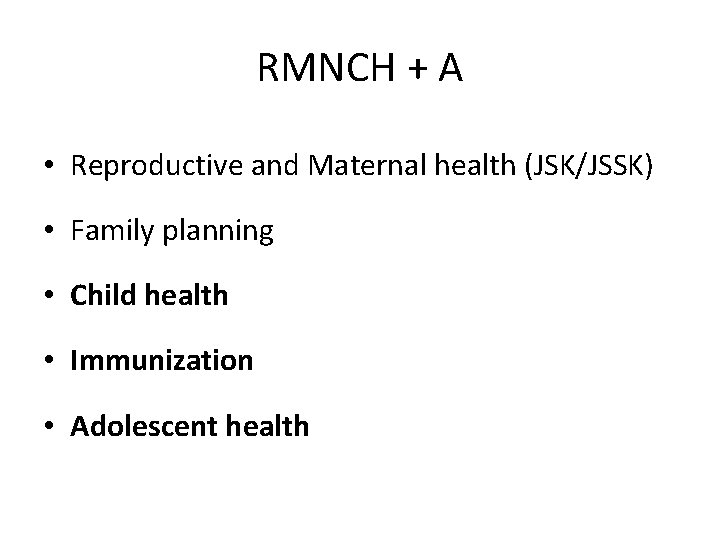
RMNCH + A • Reproductive and Maternal health (JSK/JSSK) • Family planning • Child health • Immunization • Adolescent health
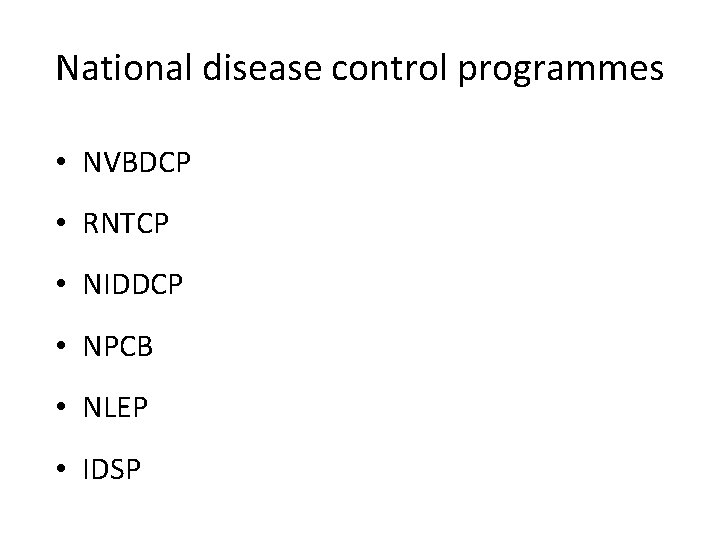
National disease control programmes • NVBDCP • RNTCP • NIDDCP • NPCB • NLEP • IDSP
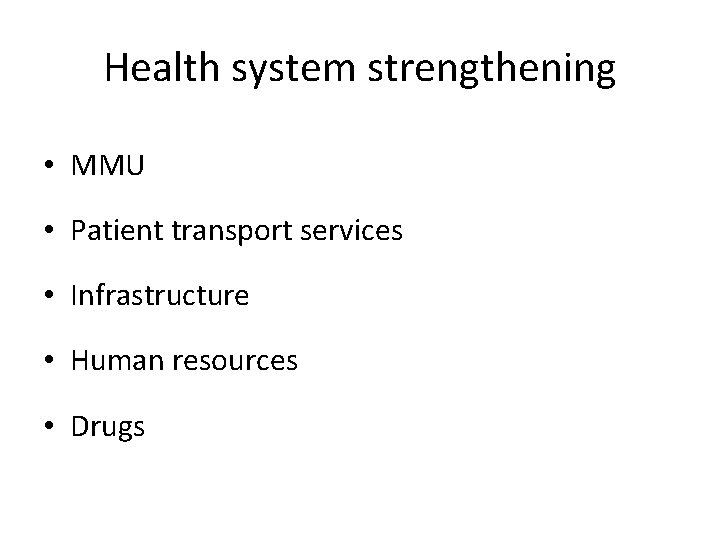
Health system strengthening • MMU • Patient transport services • Infrastructure • Human resources • Drugs
Child Health under NHM • The Reproductive and Child Health programme (RCH) II under the NHM integrates interventions that promote child health and addresses factors contributing to IMR and U 5 MR
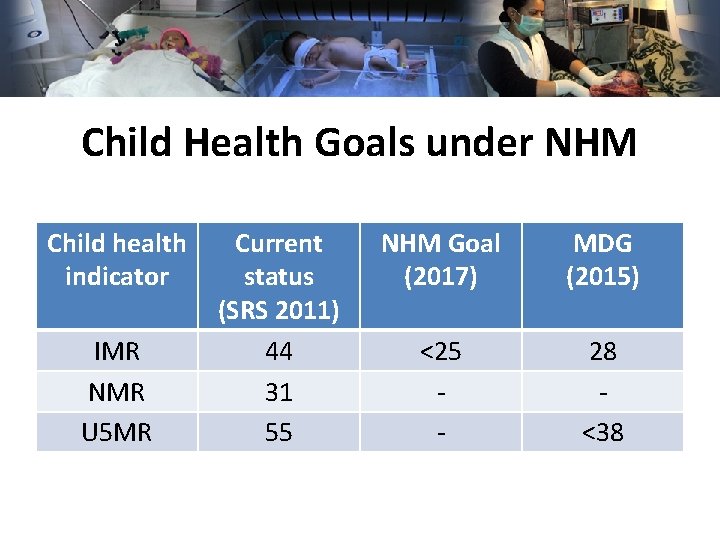
Child Health Goals under NHM Child health indicator IMR NMR U 5 MR Current status (SRS 2011) 44 31 55 NHM Goal (2017) MDG (2015) <25 - 28 <38
Thrust areas under child health program of NHM Thrust Area 1 : Neonatal Health • Essential new born care (at every ‘delivery’ at time of birth) • Facility based sick newborn care (at FRUs & District Hospitals) • Home Based Newborn Care Thrust Area 2 : Nutrition • Promotion of optimal Infant and Young Child Feeding Practices • Micronutrient supplementation (Vitamin A, Iron Folic Acid) • Management of children with severe acute malnutrition
Thrust areas under child health program of NHM Thrust Area 3: Management of Common Childhood illnesses • Management of Childhood Diarrhoeal Diseases & Acute Respiratory Infections Thrust Area 4: Immunisation • Intensification of Routine Immunisation • Eliminating Measles and Japanese Encephalitis related deaths • Polio Eradication
Schemes for child health under NHM • Facility Based Newborn and Child Care (FBNC) • Janani Shishu Suraksha Karyakram (JSSK) • Facility Based Integrated Management of Neonatal and Childhood Illness (F- IMNCI) • Integrated Management of Neonatal & Childhood Illnesses (IMNCI) • Home Based New Born Care (HBNC) • Navjat Shishu Suraksha Karyakram (NSSK) • Infant and Young Child Feeding • Nutritional Rehabilitation Centres (NRC) • Reduction in morbidity and mortality due to Acute Respiratory Infections and Diarrhoeal Diseases • Supplementation with micronutrients • Rashtriya Bal Swasthya Karyakram (RBSK)
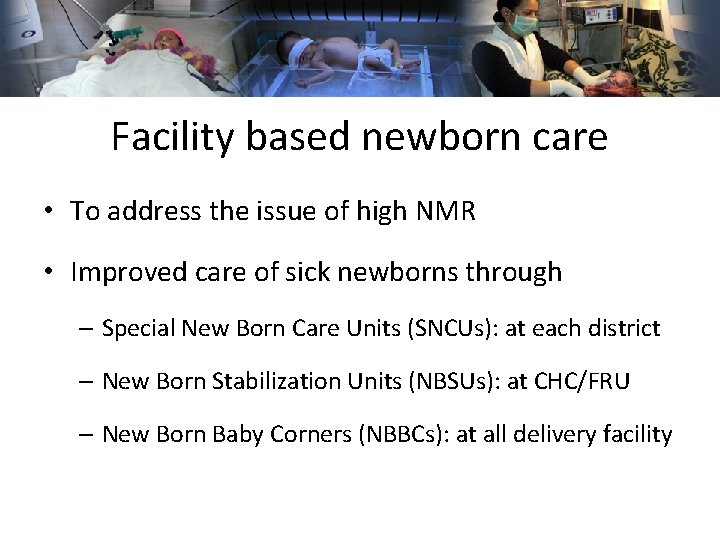
Facility based newborn care • To address the issue of high NMR • Improved care of sick newborns through – Special New Born Care Units (SNCUs): at each district – New Born Stabilization Units (NBSUs): at CHC/FRU – New Born Baby Corners (NBBCs): at all delivery facility
JSSK • Launched in June 2011 • Provisions for pregnant women and sick newborn Free treatment Free drugs and consumables Free diagnostics & Diet Free provision of blood Free transport from home to health institutions, or between facilities in case of referral – Free drop back from institutions to home – Exemption from all kinds of user charges. – – –
Home based newborn care • ASHA to make visits to all newborns according to specified schedule up to 42 days of life • Duties – Recording of weight of newborn, – Ensuring BCG , 1 st dose of OPV and DPT vaccination, – Ensuring Both the mother and the newborn are safe till 42 days of delivery, – Ensuring registration of birth has been done • ASHA to be paid incentive of Rs 250 for 5 visits
Navjat Shishu Suraksha Karyakram (NSSK) • Aimed to train health personnel in basic newborn care and resuscitation • Has been launched to address care at birth issues – Prevention of Hypothermia – Prevention of Infection – Early initiation of Breast feeding – Basic Newborn Resuscitation • Training is for 2 days
Infant and Young child feeding • Infant and Young Child Feeding is the single most preventive intervention for child survival. It advocates the following: – Early initiation (within one hour of birth) and exclusive breast feeding till 6 months – Timely complementary feeding after 6 months with continued breast feeding till 2 yrs
Nutritional Rehabilitation Centres • Being set up in health facilities for inpatient management of SAM • Counselling of mothers for proper feeding and once they are on the road to recovery, they are sent back home with regular follow up
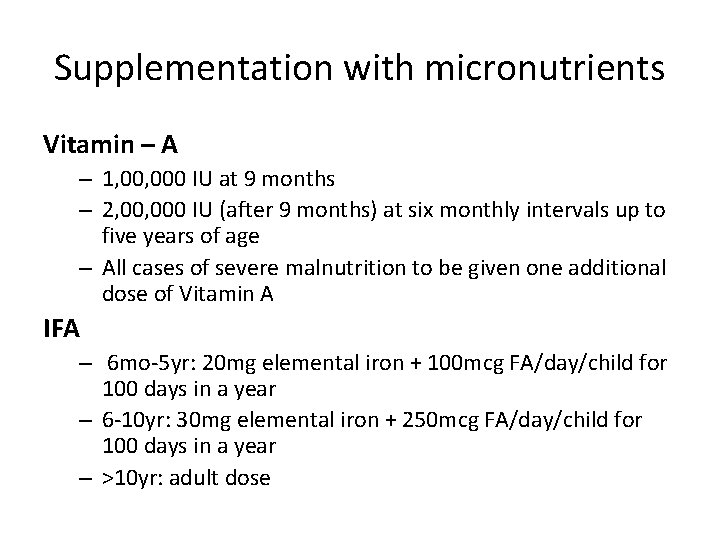
Supplementation with micronutrients Vitamin – A – 1, 000 IU at 9 months – 2, 000 IU (after 9 months) at six monthly intervals up to five years of age – All cases of severe malnutrition to be given one additional dose of Vitamin A IFA – 6 mo-5 yr: 20 mg elemental iron + 100 mcg FA/day/child for 100 days in a year – 6 -10 yr: 30 mg elemental iron + 250 mcg FA/day/child for 100 days in a year – >10 yr: adult dose
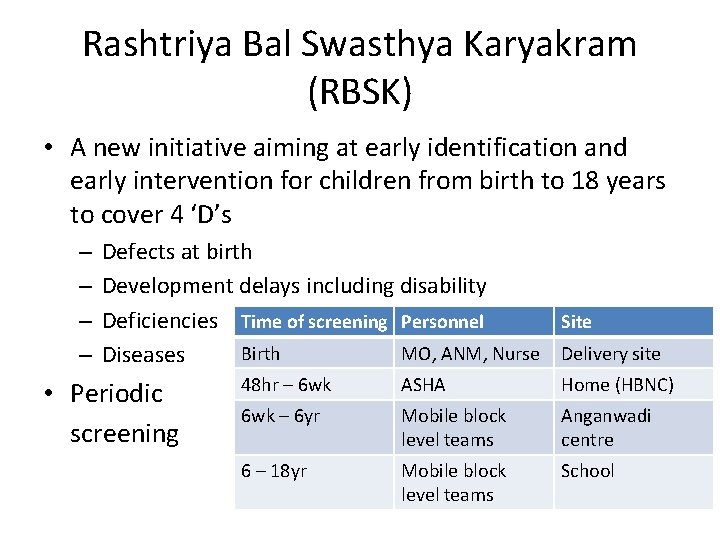
Rashtriya Bal Swasthya Karyakram (RBSK) • A new initiative aiming at early identification and early intervention for children from birth to 18 years to cover 4 ‘D’s – – Defects at birth Development delays including disability Deficiencies Time of screening Personnel Site Birth MO, ANM, Nurse Delivery site Diseases • Periodic screening 48 hr – 6 wk ASHA Home (HBNC) 6 wk – 6 yr Mobile block level teams Anganwadi centre 6 – 18 yr Mobile block level teams School
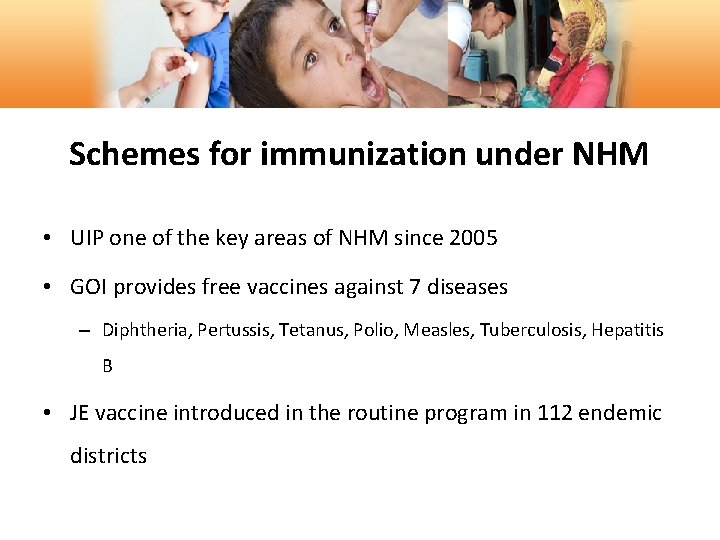
Schemes for immunization under NHM • UIP one of the key areas of NHM since 2005 • GOI provides free vaccines against 7 diseases – Diphtheria, Pertussis, Tetanus, Polio, Measles, Tuberculosis, Hepatitis B • JE vaccine introduced in the routine program in 112 endemic districts
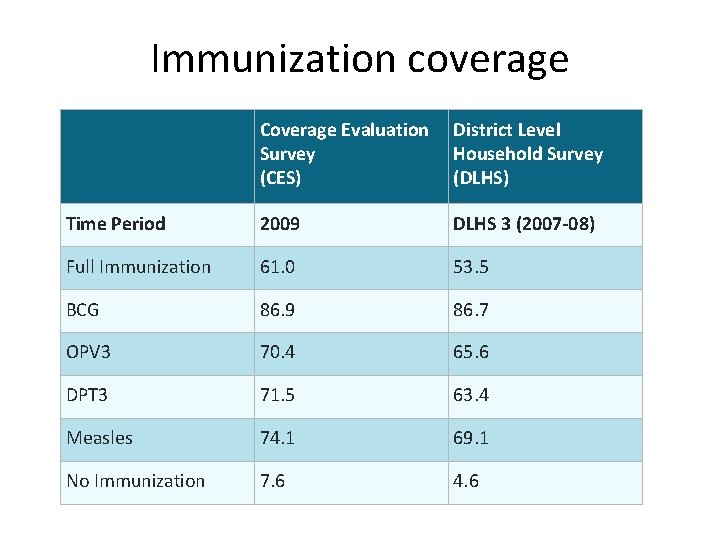
Immunization coverage Coverage Evaluation Survey (CES) District Level Household Survey (DLHS) Time Period 2009 DLHS 3 (2007 -08) Full Immunization 61. 0 53. 5 BCG 86. 9 86. 7 OPV 3 70. 4 65. 6 DPT 3 71. 5 63. 4 Measles 74. 1 69. 1 No Immunization 7. 6 4. 6
Schemes for adolescents health under NHM • Adolescent reproductive and sexual health (ARSH) • Menstrual Hygiene scheme (MHS) • School health program (SHP) • Weekly iron and folic acid supplementation (WIFS) • Rashtriya Kishor Swasthya Karyakram (RKSK)
Adolescent reproductive and sexual health (ARSH) • Range of sexual and reproductive health services to be provided to adolescents • Adolescent clinics – Counseling services, routine check-ups are provided on fixed days and fixed time to adolescents • ARSH training – health functionaries made sensitive towards health needs of adolescents through a systematic training of 5 d for ANM and 3 d for MO through State Institute of Health and Family Welfare • ARSH helpline – tele-counseling centre
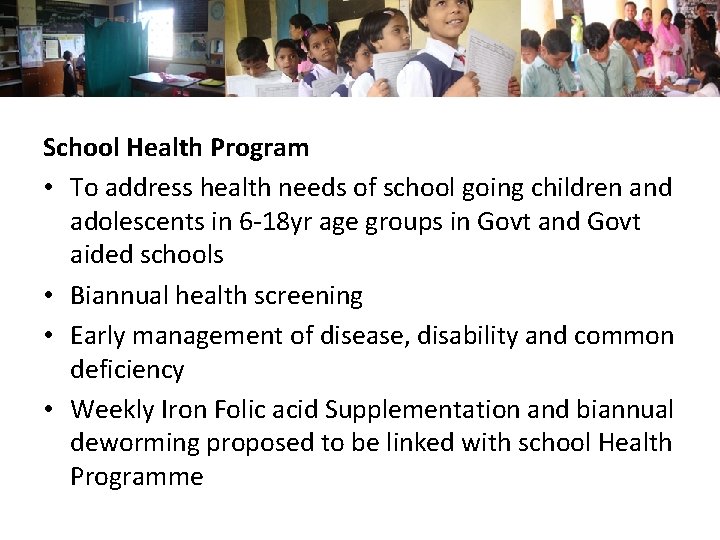
School Health Program • To address health needs of school going children and adolescents in 6 -18 yr age groups in Govt and Govt aided schools • Biannual health screening • Early management of disease, disability and common deficiency • Weekly Iron Folic acid Supplementation and biannual deworming proposed to be linked with school Health Programme
Weekly iron and folic acid supplementation (WIFS) • Intervention – weekly supervised administration of 100 mg elemental Iron and 500 ug Folic Acid – biannual deworming • Target population – school going adolescent girls and boys (at Govt/Govt. aided and municipal school) – out of school adolescent girls (at anganwadi kendra)
Rashtriya Kishor Swasthya Karyakram (RKSK) • Recently launched to address adolescent health needs and concerns • Apart from sexual and reproductive health, it also includes nutrition, injuries and violence (including gender based violence), non-communicable diseases, mental health and substance misuse • Shift from clinic based approach to promotion and prevention and reaching adolescents in their own environment, such as in schools and communities
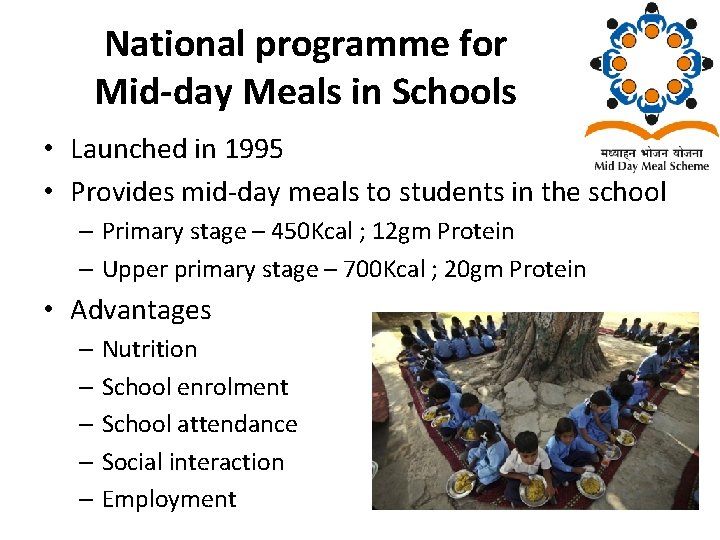
National programme for Mid-day Meals in Schools • Launched in 1995 • Provides mid-day meals to students in the school – Primary stage – 450 Kcal ; 12 gm Protein – Upper primary stage – 700 Kcal ; 20 gm Protein • Advantages – Nutrition – School enrolment – School attendance – Social interaction – Employment
THANK YOU