
National Policy on Bio Fuels Basic Definition biodiesel

National Policy on Bio. Fuels
Basic Definition • ‘biodiesel’: a methyl or ethyl ester of fatty acids produced from non-edible vegetable oils, acid oil, used cooking oil or animal fat and bio-oil; • ‘bioethanol’: ethanol produced from biomass such as sugar containing materials, like sugar cane, sugar beet, sweet sorghum etc
• ‘Bio-CNG’: Purified form of bio-Gas whose composition & energy potential is similar to that of fossil based natural gas and is produced from agricultural residues, animal dung, food waste, MSW and Sewage water
Advance Biofuels • Fuels which are produced from lignocellulosic feedstocks (i. e. agricultural and forestry residues, e. g. rice & wheat straw/corn cobs & stover/bagasse, woody biomass) non-food crops (i. e. grasses, algae), or industrial waste and residue streams
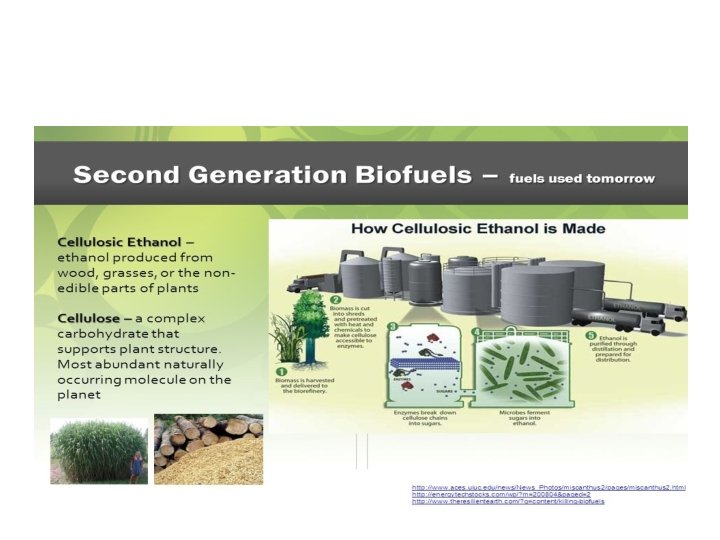
Why Advance Biofuels • having low CO 2 emission or high GHG reduction and do not compete with food crops for land use. • Fuels such as Second Generation (2 G) Ethanol, Drop-in fuels, algae based 3 G biofuels, bio-CNG, bio-methanol, Di Methyl Ether (DME) derived from bio-methanol, biohydrogen, drop in fuels with MSW as the source / feedstock material will qualify as “Advanced Biofuels
The energy strategy of country velectrification of all census villages by 2019, 24 x 7 electricity & v 175 GW of renewable energy capacity by 2022, vreduction in energy emissions intensity by 33%- 35% by 2030 and v share of non-fossil fuel based capacity in the electricity mix is aimed at above 40% by 2030
Government Intervention • Over the last decade, Government has undertaken multiple interventions to promote biofuels in the Country through structured programmes like Ethanol Blended Petrol Programme, National Biodiesel Mission, Biodiesel Blending Programme
National Policy on Biofuels 2018 THE VISION AND GOALS The Goal of the Policy is to enable availability of biofuels in the market thereby increasing its blending percentage. An indicative target of 20% blending of ethanol in petrol and 5% blending of biodiesel in diesel is proposed by 2030
(a) reinforcing ongoing ethanol/biodiesel supplies through increasing domestic production (b) setting up Second Generation (2 G) bio refineries (c) development of new feedstock for biofuels (d) development of new technologies for conversion to biofuels. (e) creating suitable environment for biofuels and its integration with the main fuels
Increased Biofuel Production Pricing of Biofuels At present, the price of first generation molasses based ethanol for EBP Programme is being determined by the Government based on the recommendation of a Committee constituted for this purpose. • For procurement of biodiesel for blending in diesel, the price is being determined by OMCs. • The Government will continue to incentivise first generation biofuels by administered prices or market determined prices
• Blending biodiesel in diesel through Biodiesel Blending Programme exploring multiple feedstocks including straight vegetable oil in stationery, low RPM engines • Focus on drop-in fuels produced from MSW, industrial wastes, biomass etc. • Focus on advanced biofuels including bio. CNG, bio-methanol, DME, bio-hydrogen, biojet fuel etc.
Multiple Feedstocks • However, the present policy of Ethanol Blended Petrol (EBP) Programme allows bioethanol to be procured from non-food feed stock like C molasses biodiesel coming for the blending programme is presently being manufactured from imported sources like palm stearin.
• Policy will allow production of ethanol from B Molasses as well as directly from sugarcane juice. • The policy will also allow production of ethanol from damaged food grains like wheat, broken rice etc. which are unfit for human consumption.
• During an agriculture crop year when there is projected over supply of food grains as anticipated by the Ministry of Agriculture & Farmers Welfare • the policy will allow conversion of these surplus quantities of food grains to ethanol, based on the approval of National Biofuel Coordination Committee proposed under this Policy
• Similarly, biodiesel can be produced from any edible/non edible oil.
RUCO • The consumption of Used Cooking Oil(UCO) poses adverse health effects • Total Polar Compounds(TPC) are formed on repeated frying. • The toxicity of these compounds is associated with several diseases such as hypertension, atherosclerosis, Alzheimer’s disease, liver diseases
• In order to safeguard consumer health, FSSAI has fixed a limit for Total Polar Compounds at 25 percent beyond which the vegetable oil shall not be used. • Repurpose Used Cooking Oil (RUCO) is an ecosystem that will enable the collection and conversion of UCO to biodiesel. (FSSAI)
Advance biofuels • Second Generation (2 G) Ethanol production through Molasses route has limitations and its competitive usage in Potable liquor & Chemical industries leaves little scope to enhance its availability for EBP Programme in a big way.
• The policy states that “a viability gap funding scheme for 2 G ethanol bio refineries of Rs. 5, 000 crore in 6 years in addition to additional tax incentives, higher purchase price as compared to 1 G biofuels
Problem • (production of 2 G) - which is untested and has not taken off commercially internationally • Why can we not exercise the option of 1 G, which is a tried and tested mechanism and is available
• So far, there’s an investment of 10, 000 crore to set up 12 2 G biorefineries across 11 States. • Apart from laying the foundation stone of one biorefinery in Bathinda, Punjab, nothing more has developed on this front
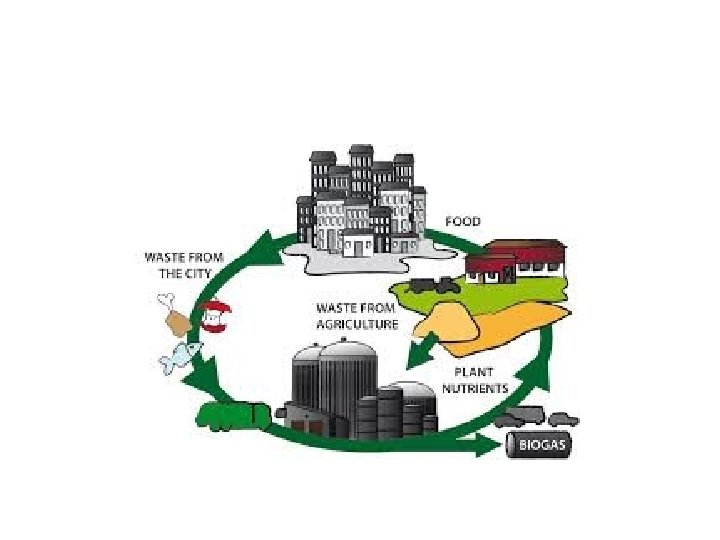
About Bio Gas • Bio-gas is produced naturally through a process of anaerobic decomposition from waste / bio-mass sources like agriculture residue, cattle dung, sugarcane press mud, municipal solid waste, sewage treatment plant waste, etc.
• After purification, it is compressed and called CBG, which has pure methane content of over 95%. • Compressed Bio-Gas is exactly similar to the commercially available natural gas in its composition and energy potential
With calorific value (~52, 000 KJ/kg) and other properties similar to CNG, Compressed Bio. Gas can be used as an alternative, renewable automotive fuel
SATAT Initative • Titled SATAT, the initiative is aimed at providing a Sustainable Alternative Towards Affordable Transportation as a developmental effort that would benefit both vehicle-users as well as farmers and entrepreneurs
• keen to set up 5000 CBG plants in next 5 years, and for this purpose, production offtake guarantee is being given for such plants.
• Besides the potential to boost availability of more affordable transport fuels, better use of agricultural residue, cattle dung and municipal solid waste, the CBG plants will provide an additional revenue source to farmers, and 75, 000 direct job opportunities and lakhs of indirect jobs

GOBAR DHAN
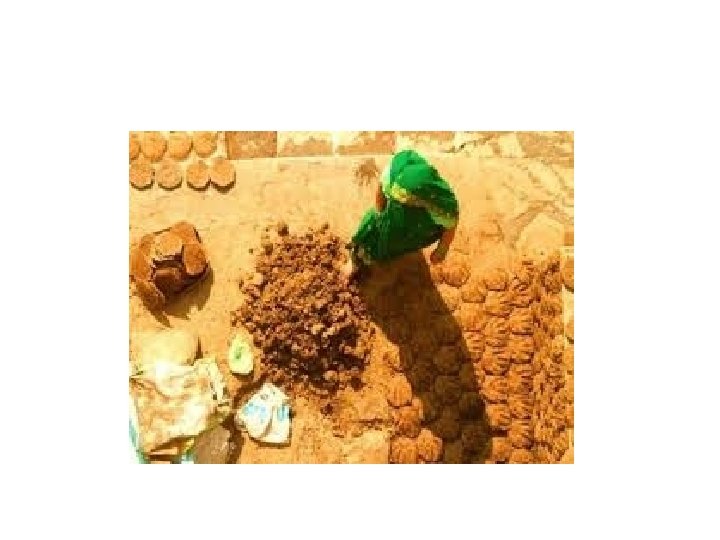
• In an effort to make the villages open defecation free and improve the lives of villagers, the Finance Minister in his budget speech in Feb 2018 announced the launch of Galvanizing Organic Bio-Agro Resources Dhan (GOBAR-DHAN) scheme.
• Currently cattle dung and a portion of agricultural waste is used as cooking fuel. However, WHO estimates about 5 lakh deaths in India alone due to indoor air pollution caused by unclean cooking fuel. • Women and children suffer the most, as they spend large amounts of their time near indoor cooking hearth.
OBJECTIVE • The objective of the scheme is to increase rural income, rural jobs and to keep villages clean through solid waste management. • The scheme is intended to manage and convert cattle dung and solid waste in farms to compost, bio-slurry, bio-gas and bio-CNG
• The programme will be implemented using SLWM funding pattern of SBM-G Guidelines. • Only those Gram Panchayats which have not availed SLWM funds under SBM(G) are eligible to receive the financial assistance under GOBAR-Dhan scheme, subject to the limits of guidelines

New current affairs
• Dehradun-based CSIR-Indian Institute of Petroleum (IIP) manufactured 330 kg of biofuel especially for Monday’s 40 -odd-minute Dehradun-Delhi flight • burnt a mix of 75% traditional aviation turbine fuel (ATF) and 25% oil extracted from the Jatropha plant, sourced from nearly 500 farmer families in Chhattisgarh
• Biofuel blends for jet engines can also be prepared using biomass, animal fat, vegetable oil, agricultural waste, and natural gas. • The bio-oil concentration can rise to 50%, beyond which, however, the combustibility of the fuel can be impacted • three to four nations are using biojet fuel”.

Pls Check – International Civil Aviation Organization International Air Transport Association global market-based measure Un Specialized Agency ?
BIOFUTURE PLATFORM SE 4 ALL REN 21 IRENA IEA Mission Innovation Clean Energy Ministerial World Business Council for Sustainable Development • below 50 • •
- Slides: 40