
National Monitoring Training for State Workforce Agencies THE
- Slides: 29
National Monitoring Training for State Workforce Agencies THE IMPORTANCE OF COLLABORATION AND COMMUNICATION Employment and Training Administration
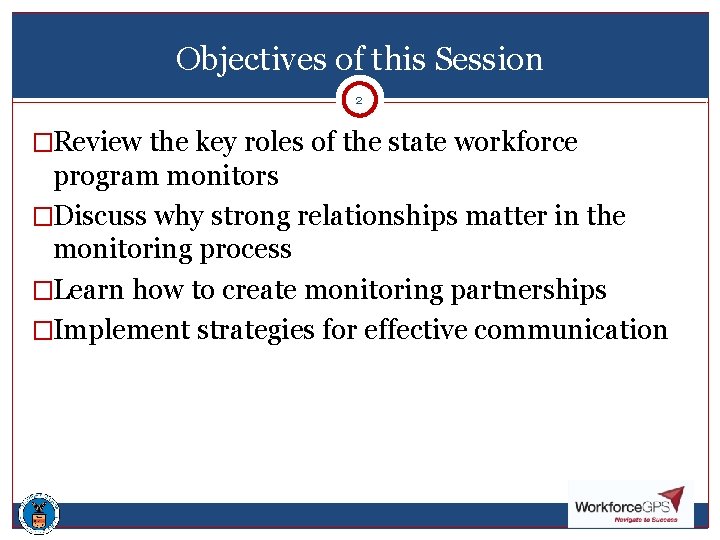
Objectives of this Session 2 �Review the key roles of the state workforce program monitors �Discuss why strong relationships matter in the monitoring process �Learn how to create monitoring partnerships �Implement strategies for effective communication
Today’s Presenter 3 Jeffrey Gabriel USDOL/ETA Region 2 Executive Assistant to the Regional Administrator Gabriel. jeffrey@dol. gov
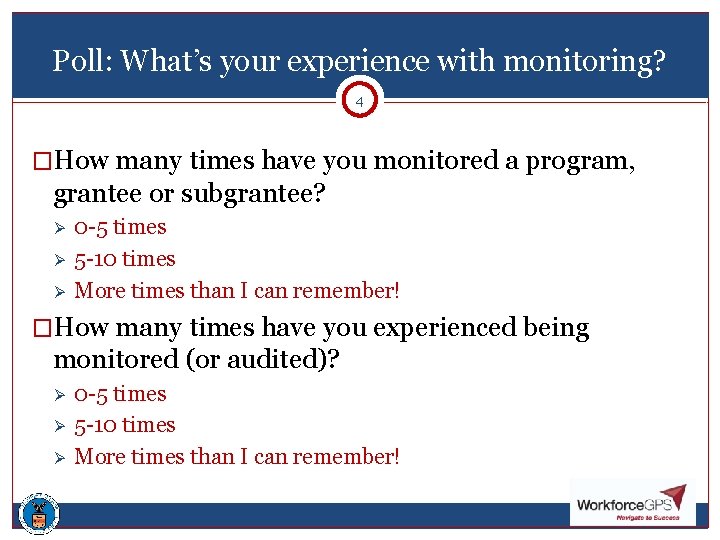
Poll: What’s your experience with monitoring? 4 �How many times have you monitored a program, grantee or subgrantee? Ø Ø Ø 0 -5 times 5 -10 times More times than I can remember! �How many times have you experienced being monitored (or audited)? Ø Ø Ø 0 -5 times 5 -10 times More times than I can remember!
Roles of the State Workforce Agency Grant Monitor 5
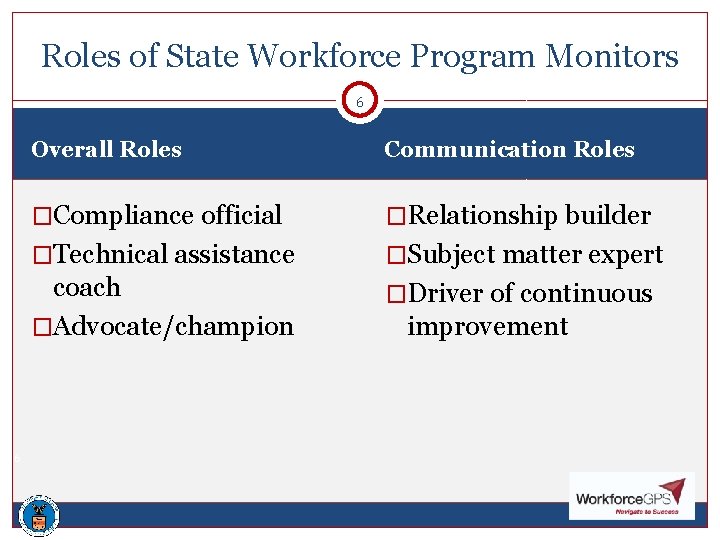
Roles of State Workforce Program Monitors 6 6 Overall Roles Communication Roles �Compliance official �Relationship builder �Technical assistance �Subject matter expert coach �Advocate/champion �Driver of continuous improvement
Why Relationships Matter in the Monitoring Process 7 7
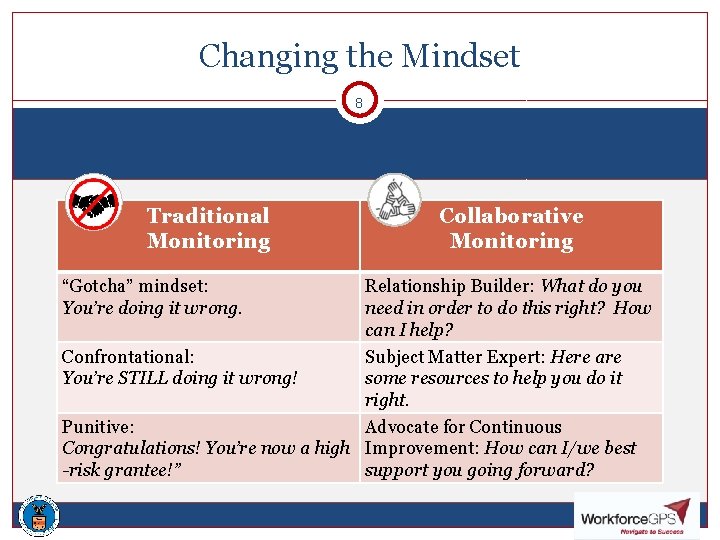
Changing the Mindset 8 8 Traditional Monitoring Collaborative Monitoring “Gotcha” mindset: You’re doing it wrong. Relationship Builder: What do you need in order to do this right? How can I help? Confrontational: You’re STILL doing it wrong! Subject Matter Expert: Here are some resources to help you do it right. Punitive: Advocate for Continuous Congratulations! You’re now a high Improvement: How can I/we best -risk grantee!” support you going forward?
Collaborative Relationships 99 �Organizations and people in collaborative relationships share common goals and mutually benefit from working together. �Collaboration is critical to success. �Communicate that we are all working together to ensure our customers are receiving meaningful services that result in in-demand, livable wage employment as outlined in regulations and operating guidance.
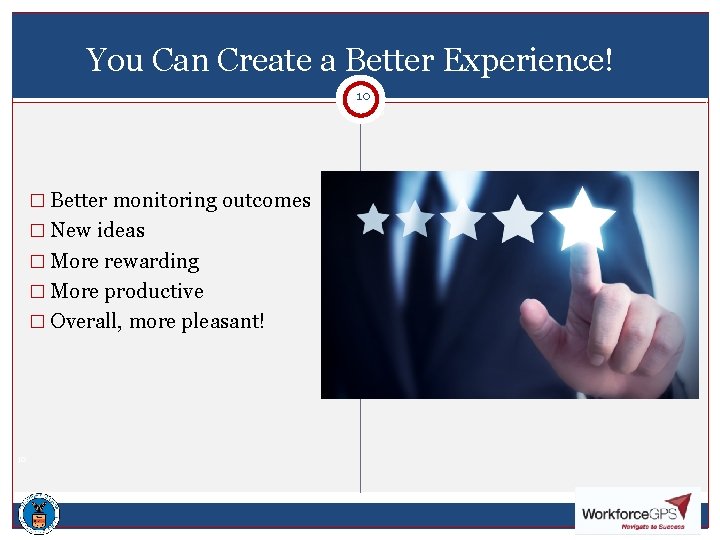
You Can Create a Better Experience! 10 101010 � Better monitoring outcomes � New ideas � More rewarding � More productive � Overall, more pleasant! 10 10
How to Build Better Relationships 11 11
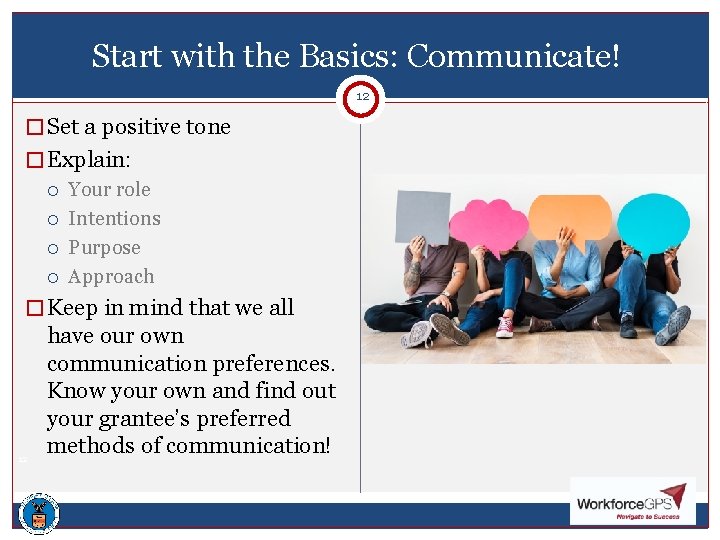
Start with the Basics: Communicate! 12 � Set a positive tone � Explain: Your role Intentions Purpose Approach � Keep in mind that we all 12 have our own communication preferences. Know your own and find out your grantee’s preferred methods of communication!
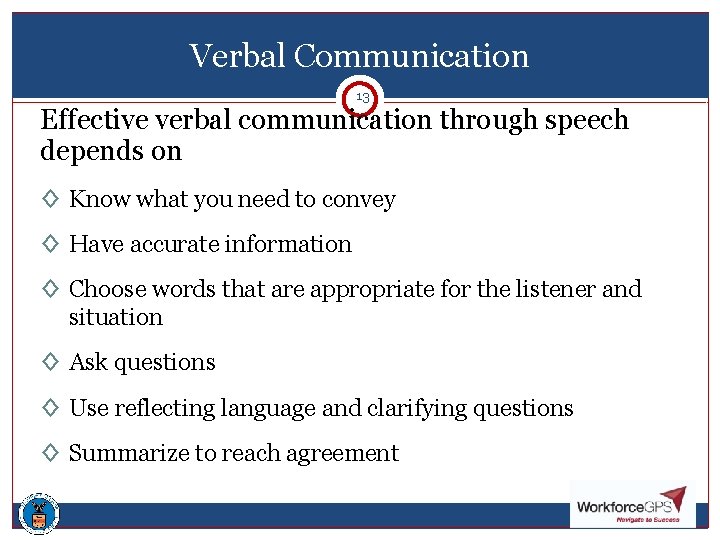
Verbal Communication 1313 Effective verbal communication through speech depends on ◊ Know what you need to convey ◊ Have accurate information ◊ Choose words that are appropriate for the listener and situation ◊ Ask questions ◊ Use reflecting language and clarifying questions ◊ Summarize to reach agreement
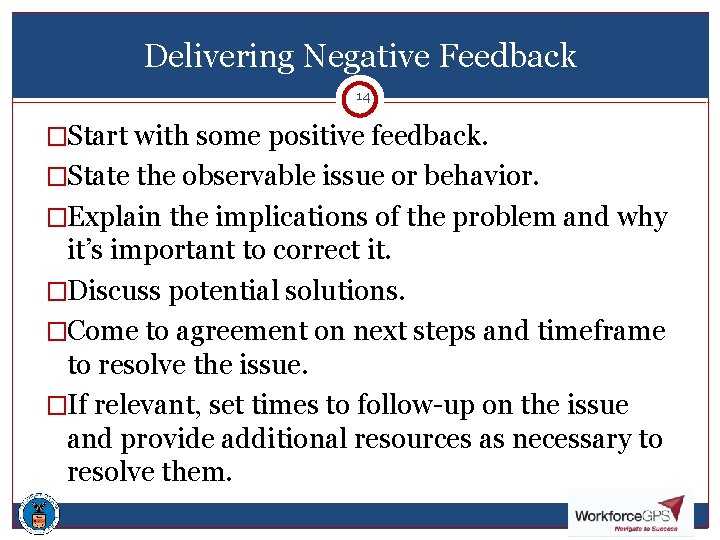
Delivering Negative Feedback 14 1114 �Start with some positive feedback. �State the observable issue or behavior. �Explain the implications of the problem and why it’s important to correct it. �Discuss potential solutions. �Come to agreement on next steps and timeframe to resolve the issue. �If relevant, set times to follow-up on the issue and provide additional resources as necessary to resolve them.
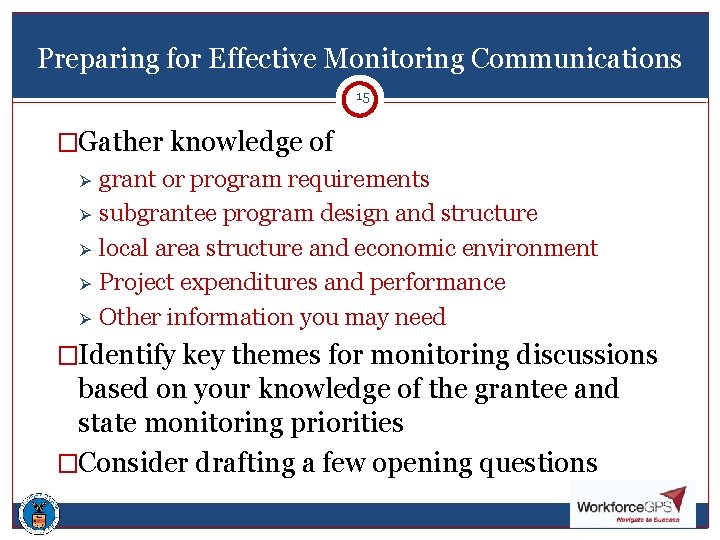
Preparing for Effective Monitoring Communications 1515 �Gather knowledge of Ø grant or program requirements Ø subgrantee program design and structure Ø local area structure and economic environment Ø Project expenditures and performance Ø Other information you may need �Identify key themes for monitoring discussions based on your knowledge of the grantee and state monitoring priorities �Consider drafting a few opening questions
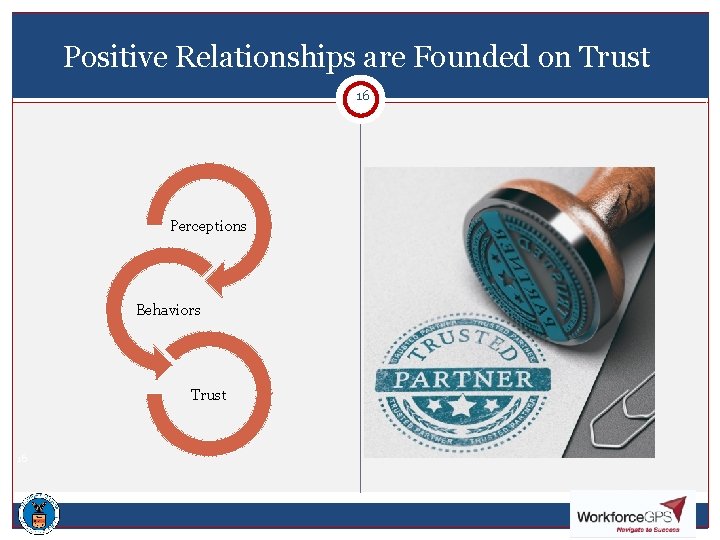
Positive Relationships are Founded on Trust 16 Perceptions Behaviors Trust 16
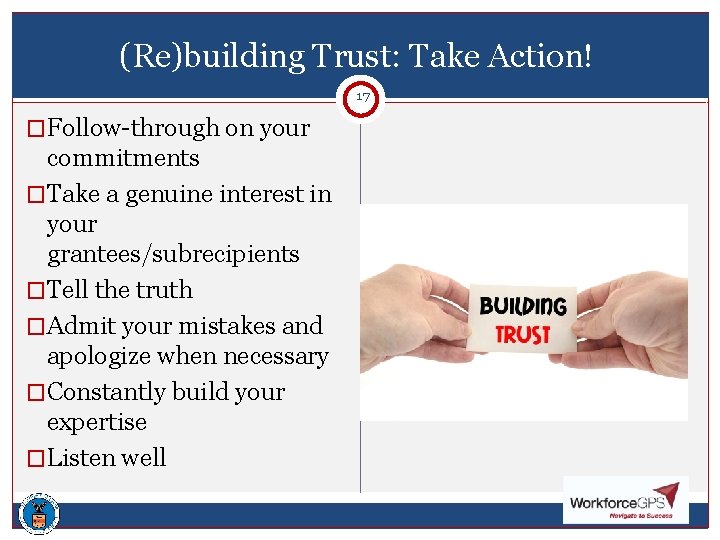
(Re)building Trust: Take Action! 1717 �Follow-through on your commitments �Take a genuine interest in your grantees/subrecipients �Tell the truth �Admit your mistakes and apologize when necessary �Constantly build your expertise �Listen well
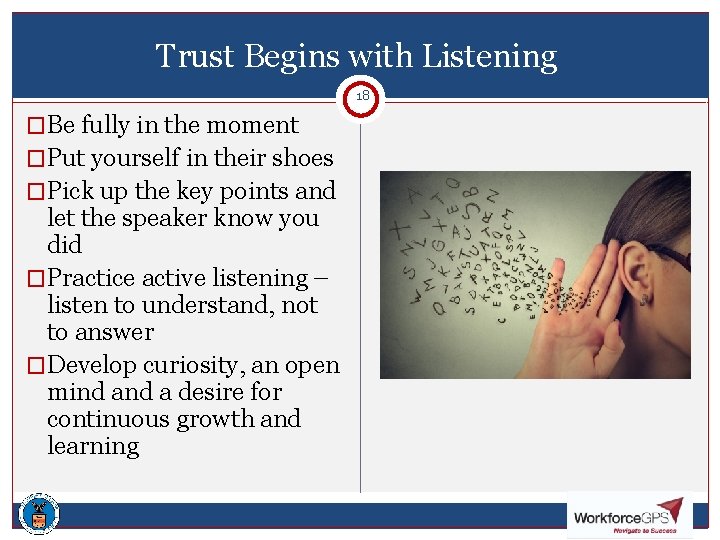
Trust Begins with Listening 1818 �Be fully in the moment �Put yourself in their shoes �Pick up the key points and let the speaker know you did �Practice active listening – listen to understand, not to answer �Develop curiosity, an open mind a desire for continuous growth and learning
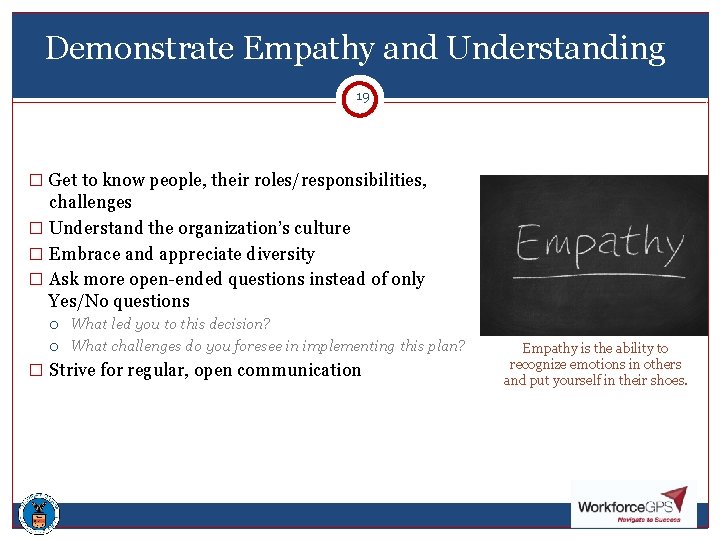
Demonstrate Empathy and Understanding 1919 � Get to know people, their roles/responsibilities, challenges � Understand the organization’s culture � Embrace and appreciate diversity � Ask more open-ended questions instead of only Yes/No questions What led you to this decision? What challenges do you foresee in implementing this plan? � Strive for regular, open communication Empathy is the ability to recognize emotions in others and put yourself in their shoes.
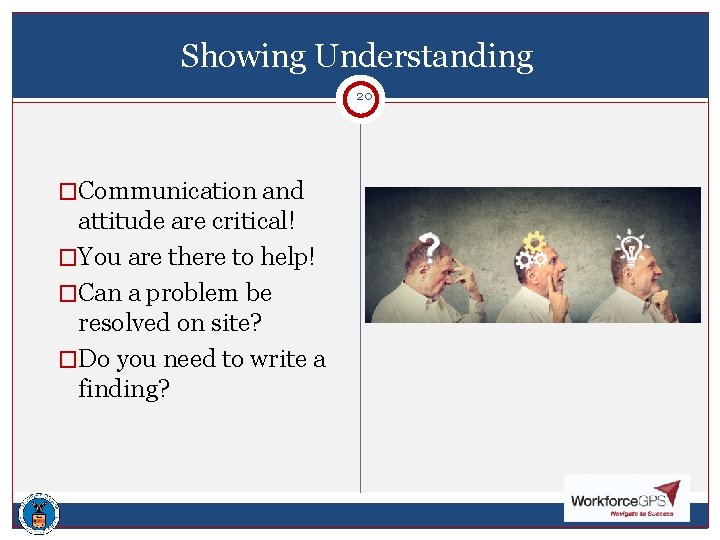
Showing Understanding 20 20 �Communication and attitude are critical! �You are there to help! �Can a problem be resolved on site? �Do you need to write a finding?
What Can You Do? 2121 �Work on “people”/ “soft” skills including Emotional Intelligence �Identify relationship needs �Schedule time �Be appreciative �Be positive
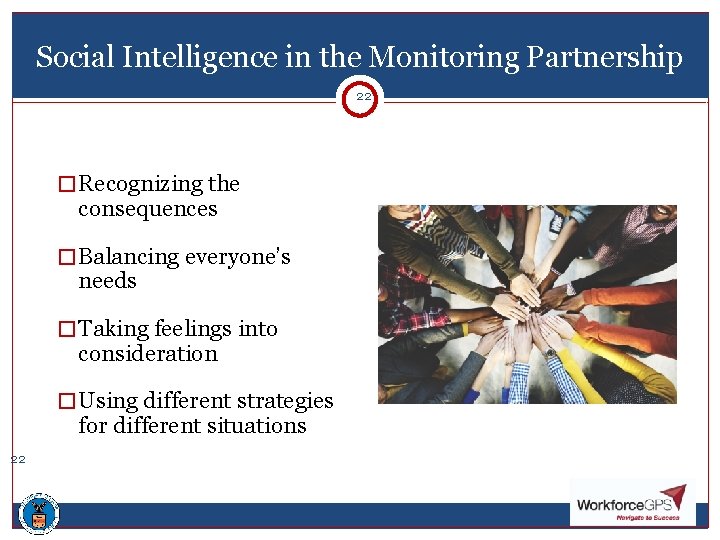
Social Intelligence in the Monitoring Partnership 22 � Recognizing the consequences � Balancing everyone’s needs � Taking feelings into consideration � Using different strategies for different situations 22
Remember to Ask Open-Ended Questions 23 23 �Encourage a two-way conversation �Lead to follow-up questions �Show that the questioner: Ø Ø Ø Wants to learn Has an open mind Is knowledgeable
Closed Questions 24 24 �Result in a Yes or No answer �Are helpful for gathering details understanding the source of an issue or success �Can halt a conversation
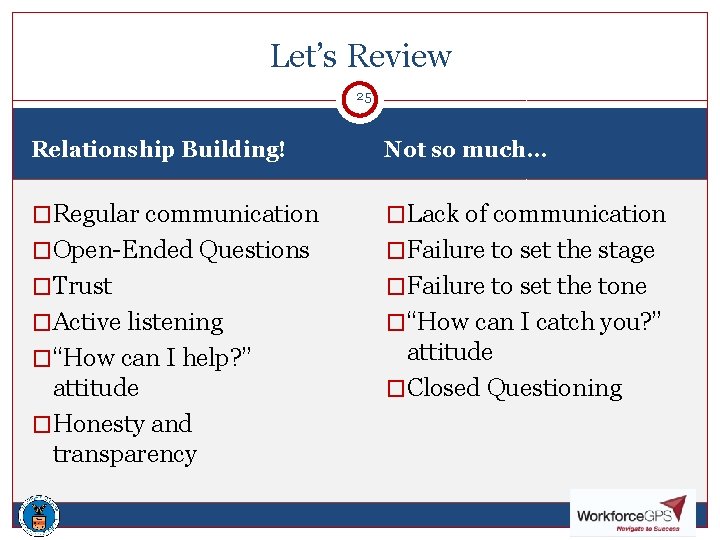
Let’s Review 25 25 Relationship Building! Not so much… �Regular communication �Lack of communication �Open-Ended Questions �Failure to set the stage �Trust �Failure to set the tone �Active listening �“How can I catch you? ” �“How can I help? ” attitude �Closed Questioning attitude �Honesty and transparency
26
27
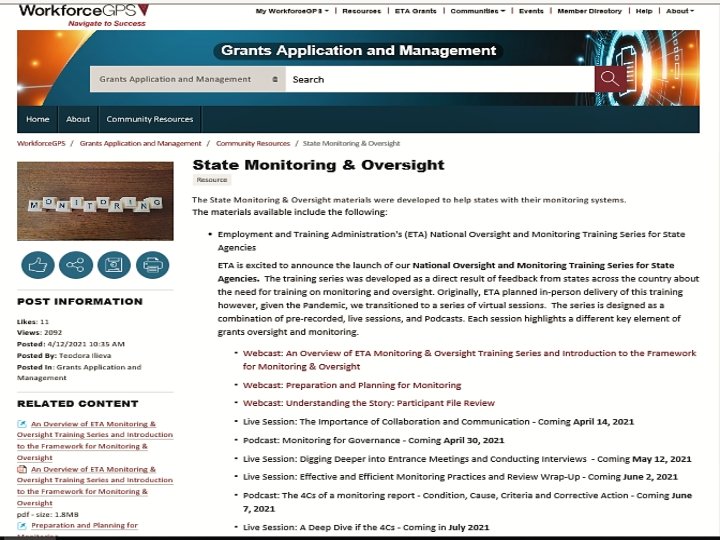
28 _ _ https: //grantsapplicationandmanagement. workforceg ps. org/resources/2019/05/22/03/19/State_Monitorin g_Oversight _
Thank You! 29