
National Library of the Philippines Programs and Services
National Library of the Philippines’ Programs and Services Dolores D. Carungui Chief Librarian, Reference Division National Library of the Philippines
Statistics of Blindness in the Philippines • In 1995, there was almost half a million people who are blind (RBI) • On March 26, 2014 it was estimated to rise to 2. 4 million (http: //www. philstar. com)
National Policies • Republic Act 7277 (passed in 1992) An Act Providing for the Rehabilitation, Self-Development and Self-reliance of Disabled Person and their Integration into the Mainstream of Society.
National Policies • Republic Act 7277 (approved in 1992) Section 4 (g) Auxiliary Aids and Services (2) Effective methods of delivering materials to persons with visual impairments.
• Republic Act (RA) 9442 (passed in 2008) Amendment of RA 7277 which provides provision of ducational assistance to PWDs and that includes accessible resources for them.
• Republic Act (RA) 10372 (passed in 2013) Amendment of RA 8293, “IP Code of the Philippines”, Section 184 Reproduction of materials for the fair use of blind and those with print disabilities.

National Library of the Philippines
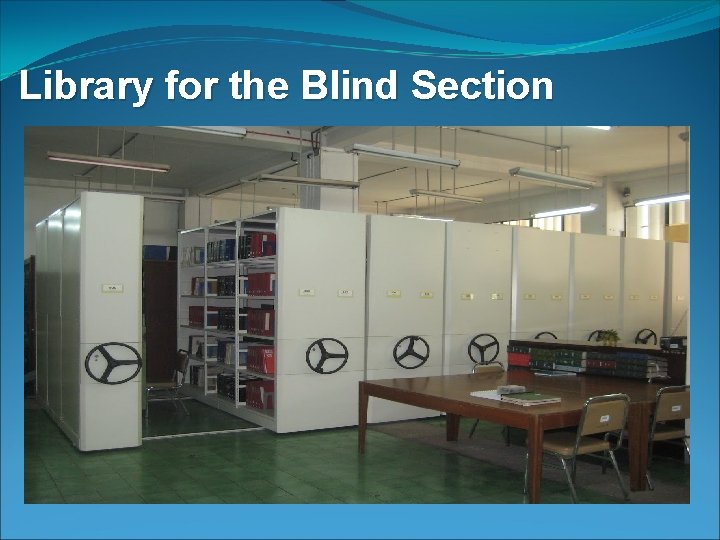
Library for the Blind Section
Services 1) Free use of computers (with screen readers) 2) Reproduction of materials • Embossing • Recording • Audio book reproduction
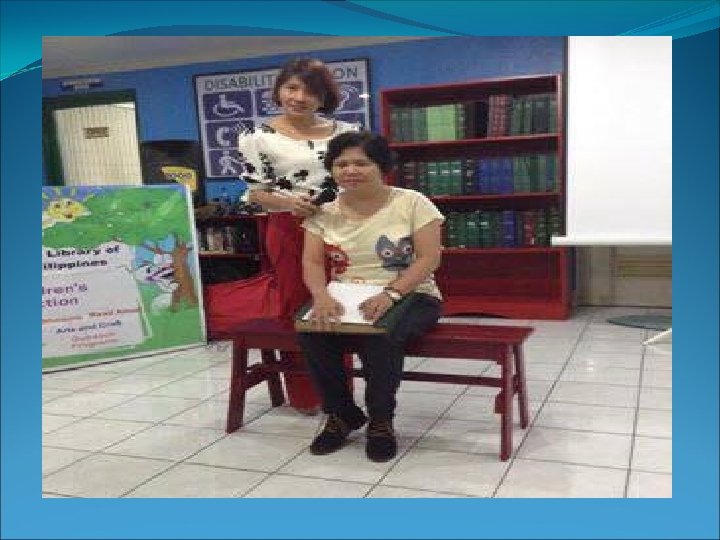
Services 3 )Circulation of collections 4) Provision of assistive devices 5) Braille storytelling
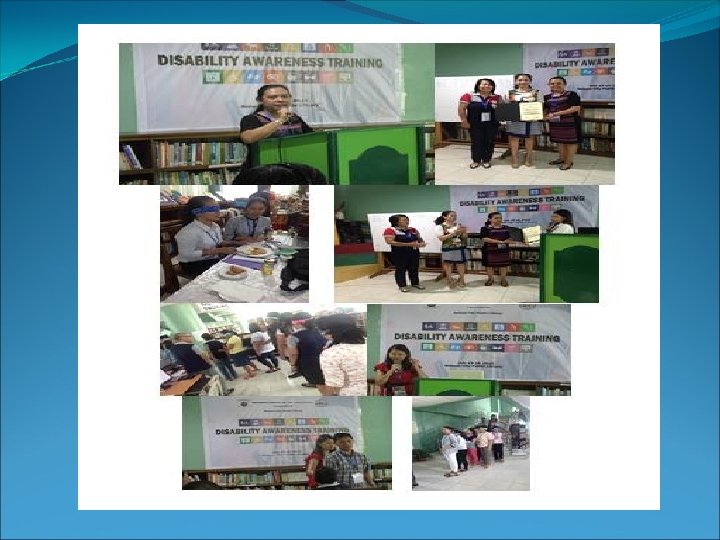
Programs 1) Capacity building programs • Disability Awareness Training • Participation in Continuing Education programs in line with inclusive services • Continuous workshops and trainings on assistive technology
Programs 2) Disability Awareness Campaign • Participate and conduct related activities: August 1 – White Cane Safety Day December 3 – International Day of PWDs in the Philippines
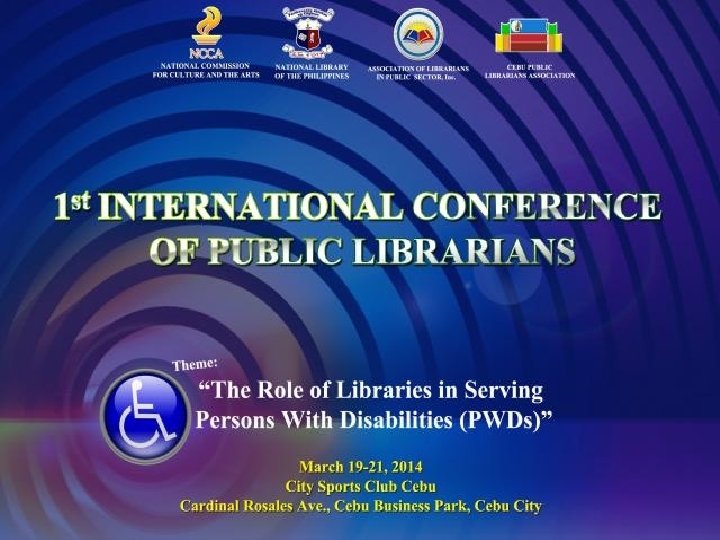
Programs Conduct conferences focusing on PWDs programs and services
Programs Proposed the Development /Establishment of Disability Resource and Development Center (DRDC) at NLP
Programs DRDC To serve as information center for accessible resources To serve as training center To establish a prototype DRDC in the country as basis for Regional DRDCs in the countryside
Challenges 1) Library for the Blind at NLP is the only existing library for the blind in the Philippines 2) Lack of available and accessible resources especially local publications
Challenges 3) Lack of skilled manpower 4) Lack of local distributors of assistive devices/equipment
Challenges 5) Lack of appreciation/recognition from the government and other stakeholders on what public libraries can do to educate blind and those persons with print disabilities (and other PWDs).
Opportunities 1) NLP has the mandate to develop public library system for the country in the interest of blind and other persons with print disabilities.
2) NLP had developed partnerships/connections with related organizations: Local National Council on Disability Affairs Resources for the Blind Philippine School for the Blind
International Ulverscroft Foundation Assistive Technology Development Org. 3) NLP opened its procurement for accessible resources and assistive devices to foreign distributors 4) Librarians are dedicated and trainable
5) NLP had started cascading its programs and services to its affiliated public libraries in the country which to date is around 1, 388.
Conclusion The growing population of blind and persons with print disabilities will increase the demand of accessible resources, programs and services in libraries.
We, as information service providers should continue our efforts in developing systems to address challenges, and this gathering of experts which is a great opportunity to gain new ideas is one of the best efforts.
Maraming Salamat po! (Thank you very much!)
- Slides: 29