
NATIONAL LANDCARE WEBINAR Regenerating Australias Soil Health PART
NATIONAL LANDCARE WEBINAR “Regenerating Australia’s Soil Health ” PART 1 - Healthy Soils Why is this important, what is the science telling us & a view from on the ground Mike Grundy
Components of healthy soils and the outcomes required? Mike Grundy May 2013 SUSTAINABLE AGRICULTURE FLAGSHIP
Soil health A healthy soil is able to provide the full set of services that is within its nature to provide
Soil services – some obvious, some hidden Produce biomass and food Store and provide water, nutrients and support Filter pollutants Store and cycle carbon Habitat for a teeming biodiversity Biodiscovery of new drugs and treatments Moderate climate Store our history. . . and some remarkable and unique soil ecosystem patterns: the heaths on poor sandy soils, the extensive natural grasslands on cracking clay soils, the rainforests on deep red volcanic soils, the wildflowers on WA’s ironstone gravel soils

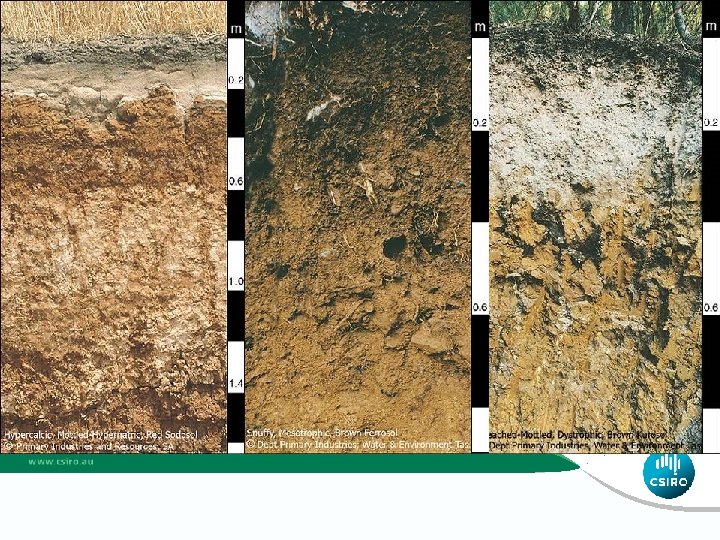
Soils are diverse – a healthy soil may be a challenging soil! Soils ain’t soils: There are many types and capacities So health means different things in different places
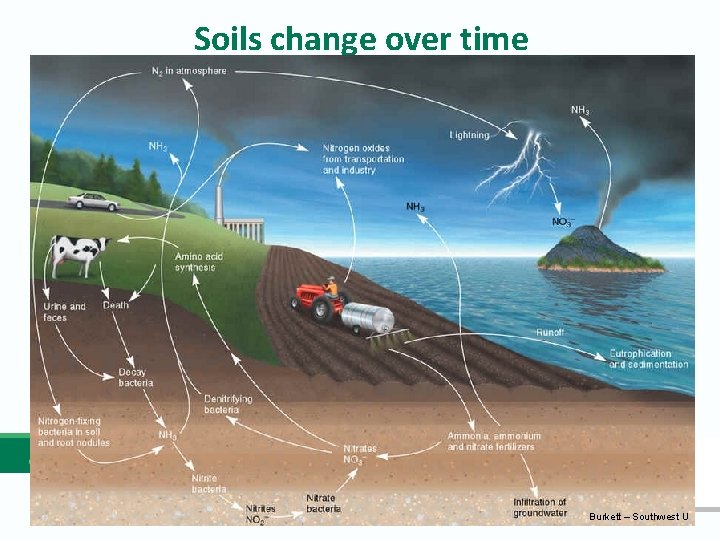
Soils change over time Burkett – Southwest U
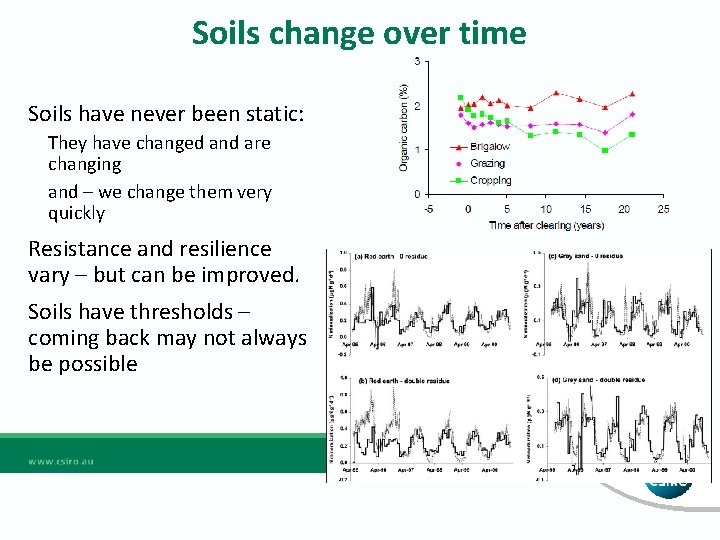
Soils change over time Soils have never been static: They have changed and are changing and – we change them very quickly Resistance and resilience vary – but can be improved. Soils have thresholds – coming back may not always be possible
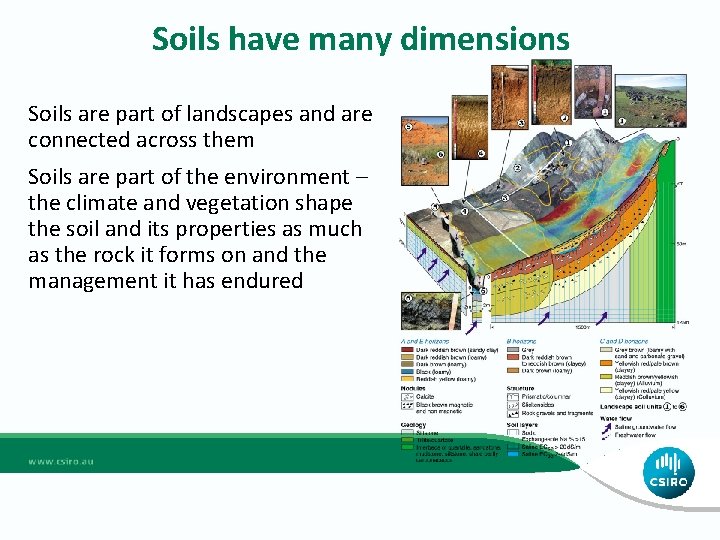
Soils have many dimensions Soils are part of landscapes and are connected across them Soils are part of the environment – the climate and vegetation shape the soil and its properties as much as the rock it forms on and the management it has endured
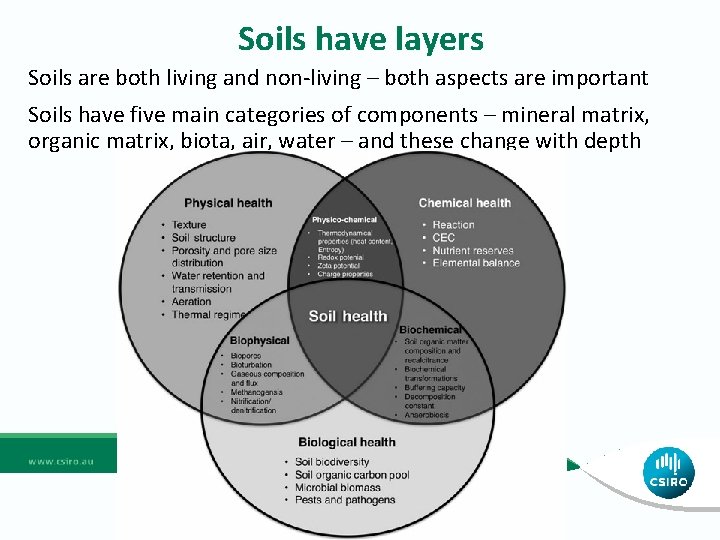
Soils have layers Soils are both living and non-living – both aspects are important Soils have five main categories of components – mineral matrix, organic matrix, biota, air, water – and these change with depth
The three main soil health activities 1. prevent and/or repair land degradation 2. maintain the original / inherent qualities 3. improve for food and fibre production needs

Some aspects of soil health management Manage to prevent damage – and to improve resilience Know your resource – the baseline and the change Whatever you do – do it efficiently Replace what you remove Walk softly on the earth Manage the dimensions – depth, breadth and time Manage the water
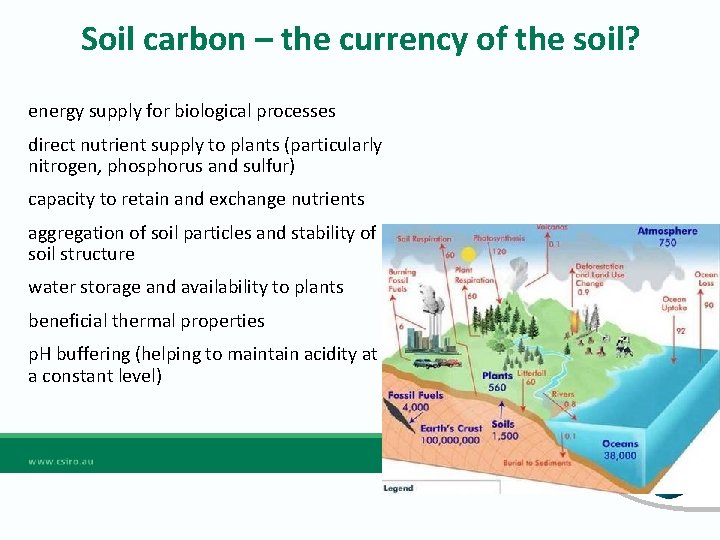
Soil carbon – the currency of the soil? energy supply for biological processes direct nutrient supply to plants (particularly nitrogen, phosphorus and sulfur) capacity to retain and exchange nutrients aggregation of soil particles and stability of soil structure water storage and availability to plants beneficial thermal properties p. H buffering (helping to maintain acidity at a constant level)

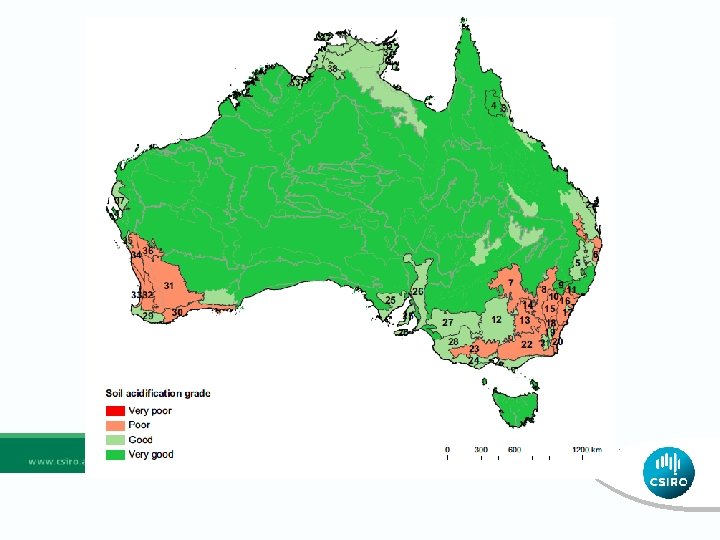
Soil acidification – a threat to soil health Manage where: agricultural practices increase soil acidity (e. g. use of high-analysis nitrogen fertilisers, large rates of product removal) the soil has a low capacity to buffer the decrease in p. H (e. g. infertile, lighttextured soils) the soil already has a low p. H.
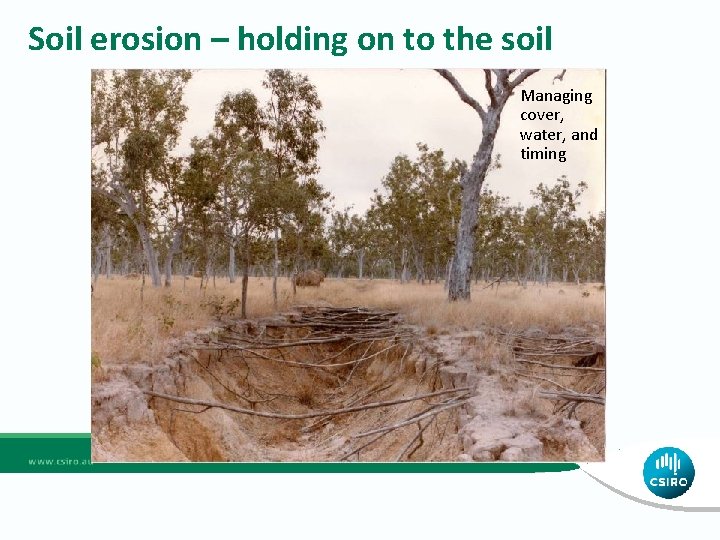
Soil erosion – holding on to the soil Managing cover, water, and timing
Soil physical condition: Build resilience with soil carbon Reduce tillage and compaction Soil nutrient status: Focus on balance – eg. the strange case of the nation’s P story (too much in the south and too little in the north) Soil biology: The live part of soil – working constantly on biological transformation Beneficial and challenging components Vital – but difficult to measure and characterise – and much to learn Concentrate on the conserving the surface, the organic matter levels
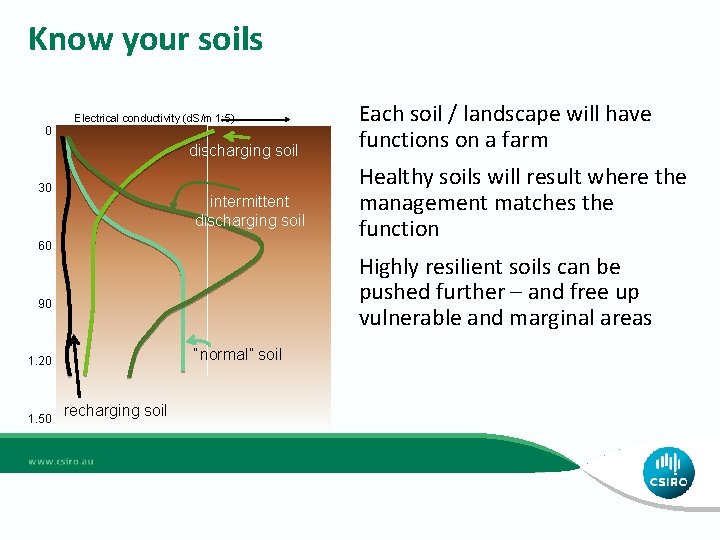
Know your soils 0 Electrical conductivity (d. S/m 1: 5) discharging soil 30 intermittent discharging soil 60 Healthy soils will result where the management matches the function Highly resilient soils can be pushed further – and free up vulnerable and marginal areas 90 “normal” soil 1. 20 1. 50 Each soil / landscape will have functions on a farm recharging soil
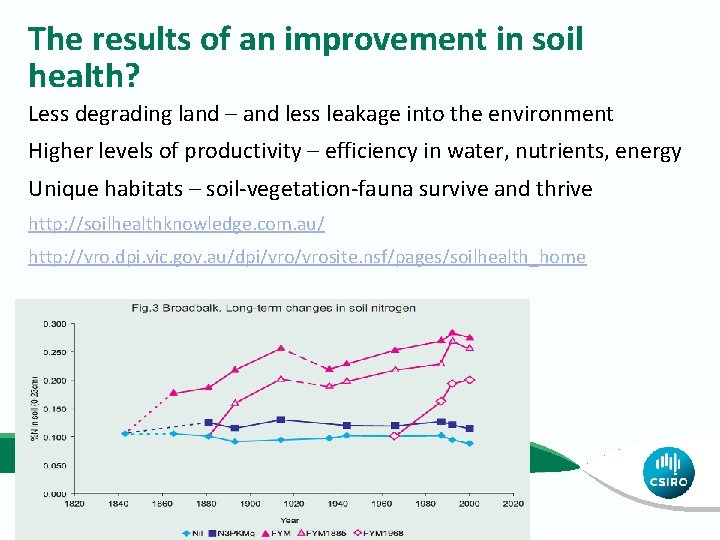
The results of an improvement in soil health? Less degrading land – and less leakage into the environment Higher levels of productivity – efficiency in water, nutrients, energy Unique habitats – soil-vegetation-fauna survive and thrive http: //soilhealthknowledge. com. au/ http: //vro. dpi. vic. gov. au/dpi/vrosite. nsf/pages/soilhealth_home
- Slides: 21