
National Institutes of Health National Institute on Drug
- Slides: 17
National Institutes of Health National Institute on Drug Abuse Intramural Research Program Presented by: Dr. Linda Porrino National Advisory Council Representative, NIDA May 16, 2007
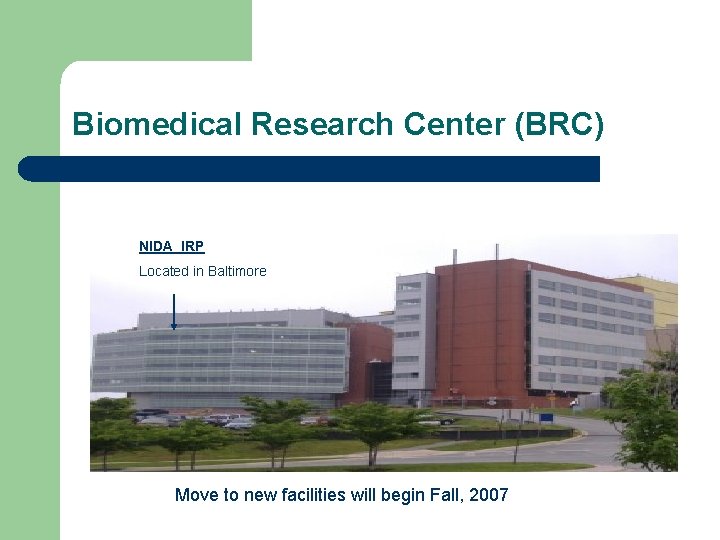
Biomedical Research Center (BRC) NIDA IRP Located in Baltimore Move to new facilities will begin Fall, 2007
Board of Scientific Directors (BSC) Reviews (Previous and Future)
Previous BSC Reviews l January 11, 2007 – – – Eliot Gardner, Ph. D. , Chief, Neuropsychopharmacology Section, Chemical Biology Research Branch Elliott Stein, Ph. D. , Chief, Neuroimaging Research Branch Yihong Yang, Ph. D. , Chief, Physics Units, Neuroimaging Research Branch (Tenure Track) l May 4 & 5, 2006 – – Roy Wise, Ph. D. , Chief, Behavioral Neuroscience Research Branch Yavin Shaham, Ph. D. , Chief, Neurobiology of Relapse Section, Behavioral Neuroscience Research Branch Charles Schindler, Ph. D. , Preclinical Pharmacology Section, Behavioral Neuroscience Research Branch Eric Moolchan, M. D. , Director, Teen Tobacco Addiction Research Clinic, Clinical Pharmacology and Therapeutics Research Branch
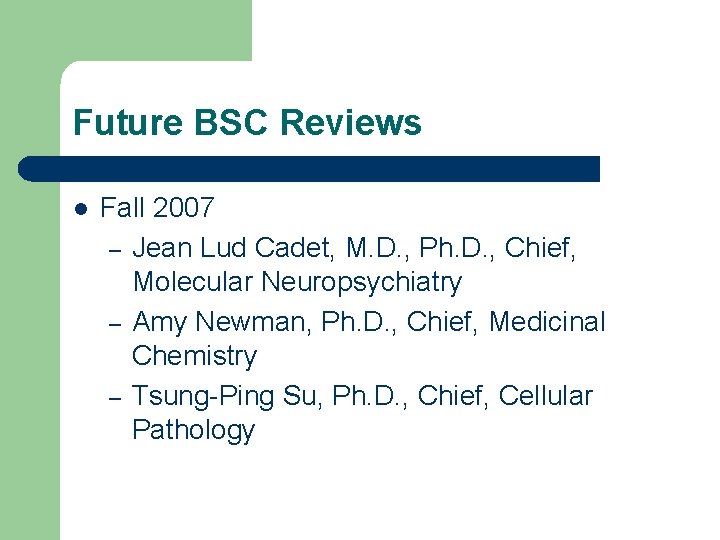
Future BSC Reviews l Fall 2007 – Jean Lud Cadet, M. D. , Ph. D. , Chief, Molecular Neuropsychiatry – Amy Newman, Ph. D. , Chief, Medicinal Chemistry – Tsung-Ping Su, Ph. D. , Chief, Cellular Pathology
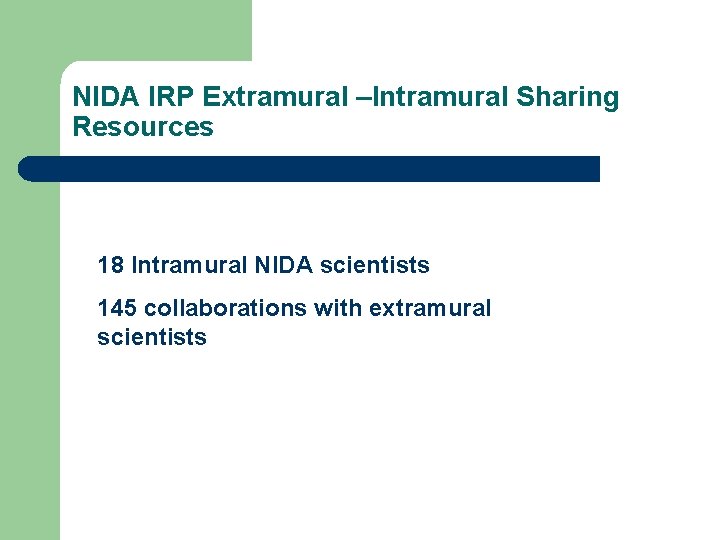
NIDA IRP Extramural –Intramural Sharing Resources 18 Intramural NIDA scientists 145 collaborations with extramural scientists
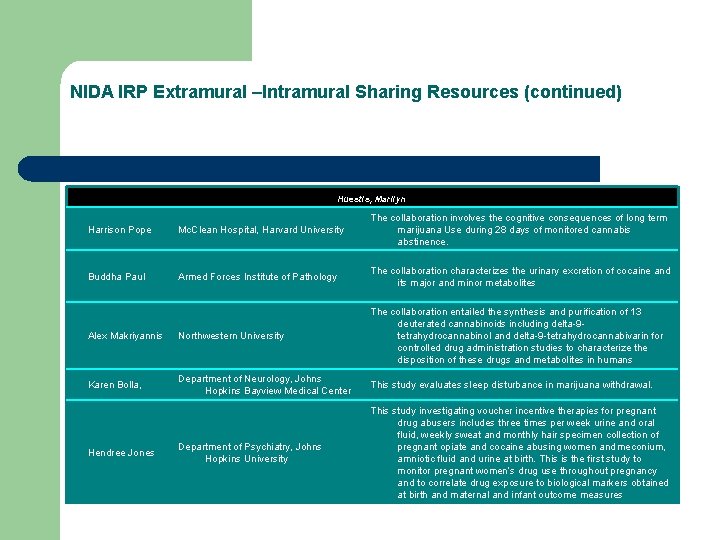
NIDA IRP Extramural –Intramural Sharing Resources (continued) Huestis, Marilyn Harrison Pope Mc. Clean Hospital, Harvard University The collaboration involves the cognitive consequences of long term marijuana Use during 28 days of monitored cannabis abstinence. Buddha Paul Armed Forces Institute of Pathology The collaboration characterizes the urinary excretion of cocaine and its major and minor metabolites Alex Makriyannis Northwestern University The collaboration entailed the synthesis and purification of 13 deuterated cannabinoids including delta-9 tetrahydrocannabinol and delta-9 -tetrahydrocannabivarin for controlled drug administration studies to characterize the disposition of these drugs and metabolites in humans Karen Bolla, Department of Neurology, Johns Hopkins Bayview Medical Center This study evaluates sleep disturbance in marijuana withdrawal. Department of Psychiatry, Johns Hopkins University This study investigating voucher incentive therapies for pregnant drug abusers includes three times per week urine and oral fluid, weekly sweat and monthly hair specimen collection of pregnant opiate and cocaine abusing women and meconium, amniotic fluid and urine at birth. This is the first study to monitor pregnant women’s drug use throughout pregnancy and to correlate drug exposure to biological markers obtained at birth and maternal and infant outcome measures Hendree Jones
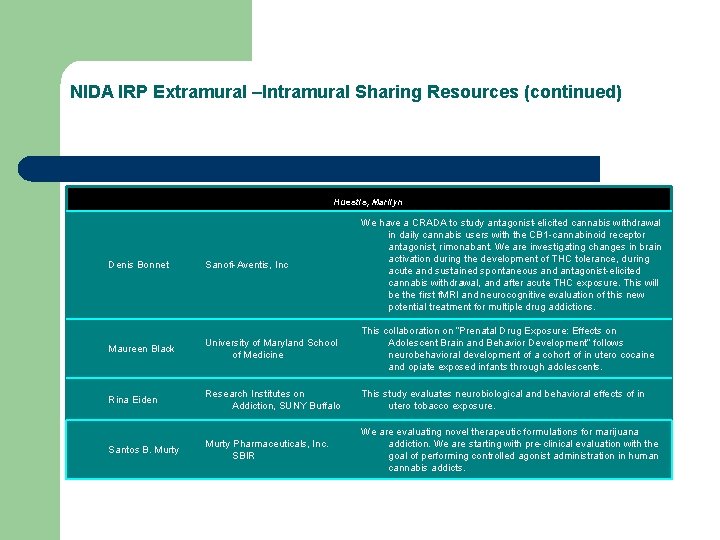
NIDA IRP Extramural –Intramural Sharing Resources (continued) Huestis, Marilyn Denis Bonnet Sanofi-Aventis, Inc We have a CRADA to study antagonist-elicited cannabis withdrawal in daily cannabis users with the CB 1 -cannabinoid receptor antagonist, rimonabant. We are investigating changes in brain activation during the development of THC tolerance, during acute and sustained spontaneous and antagonist-elicited cannabis withdrawal, and after acute THC exposure. This will be the first f. MRI and neurocognitive evaluation of this new potential treatment for multiple drug addictions. Maureen Black University of Maryland School of Medicine This collaboration on “Prenatal Drug Exposure: Effects on Adolescent Brain and Behavior Development” follows neurobehavioral development of a cohort of in utero cocaine and opiate exposed infants through adolescents. Rina Eiden Research Institutes on Addiction, SUNY Buffalo This study evaluates neurobiological and behavioral effects of in utero tobacco exposure. Santos B. Murty Pharmaceuticals, Inc. SBIR We are evaluating novel therapeutic formulations for marijuana addiction. We are starting with pre-clinical evaluation with the goal of performing controlled agonist administration in human cannabis addicts.
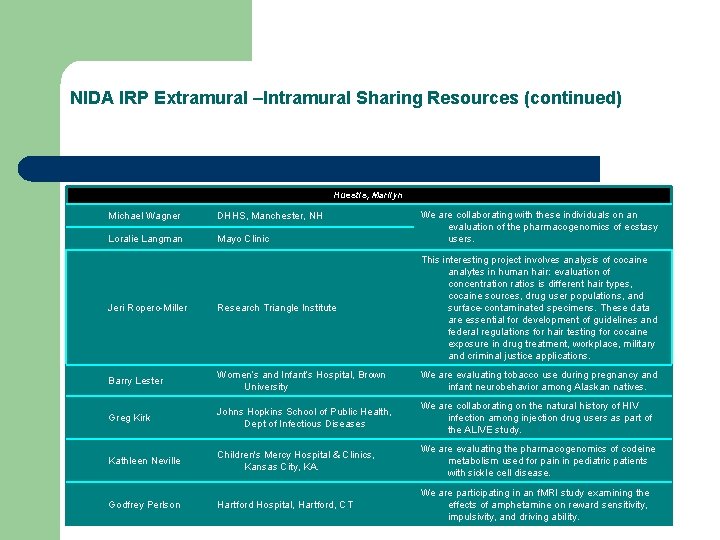
NIDA IRP Extramural –Intramural Sharing Resources (continued) Huestis, Marilyn Michael Wagner DHHS, Manchester, NH Loralie Langman Mayo Clinic We are collaborating with these individuals on an evaluation of the pharmacogenomics of ecstasy users. Jeri Ropero-Miller Research Triangle Institute This interesting project involves analysis of cocaine analytes in human hair: evaluation of concentration ratios is different hair types, cocaine sources, drug user populations, and surface-contaminated specimens. These data are essential for development of guidelines and federal regulations for hair testing for cocaine exposure in drug treatment, workplace, military and criminal justice applications. Barry Lester Women’s and Infant’s Hospital, Brown University We are evaluating tobacco use during pregnancy and infant neurobehavior among Alaskan natives. Greg Kirk Johns Hopkins School of Public Health, Dept of Infectious Diseases We are collaborating on the natural history of HIV infection among injection drug users as part of the ALIVE study. Kathleen Neville Children's Mercy Hospital & Clinics, Kansas City, KA. We are evaluating the pharmacogenomics of codeine metabolism used for pain in pediatric patients with sickle cell disease. Godfrey Perlson Hartford Hospital, Hartford, CT We are participating in an f. MRI study examining the effects of amphetamine on reward sensitivity, impulsivity, and driving ability.
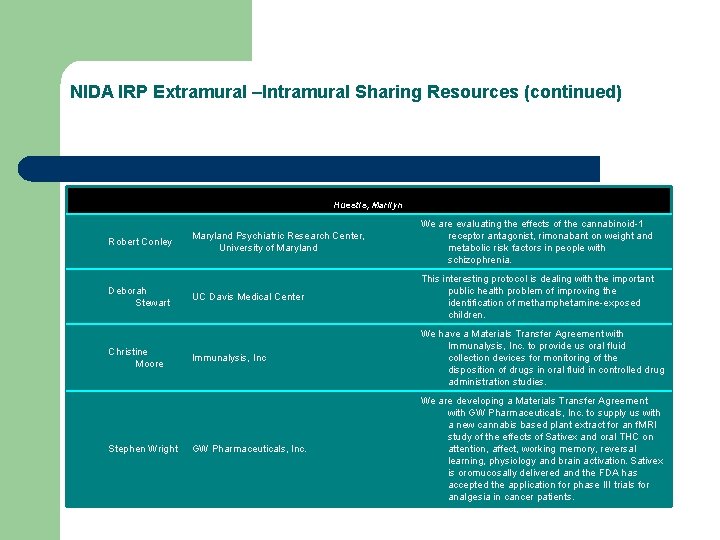
NIDA IRP Extramural –Intramural Sharing Resources (continued) Huestis, Marilyn Robert Conley Deborah Stewart Christine Moore Stephen Wright Maryland Psychiatric Research Center, University of Maryland We are evaluating the effects of the cannabinoid-1 receptor antagonist, rimonabant on weight and metabolic risk factors in people with schizophrenia. UC Davis Medical Center This interesting protocol is dealing with the important public health problem of improving the identification of methamphetamine-exposed children. Immunalysis, Inc We have a Materials Transfer Agreement with Immunalysis, Inc. to provide us oral fluid collection devices for monitoring of the disposition of drugs in oral fluid in controlled drug administration studies. GW Pharmaceuticals, Inc. We are developing a Materials Transfer Agreement with GW Pharmaceuticals, Inc. to supply us with a new cannabis based plant extract for an f. MRI study of the effects of Sativex and oral THC on attention, affect, working memory, reversal learning, physiology and brain activation. Sativex is oromucosally delivered and the FDA has accepted the application for phase III trials for analgesia in cancer patients.
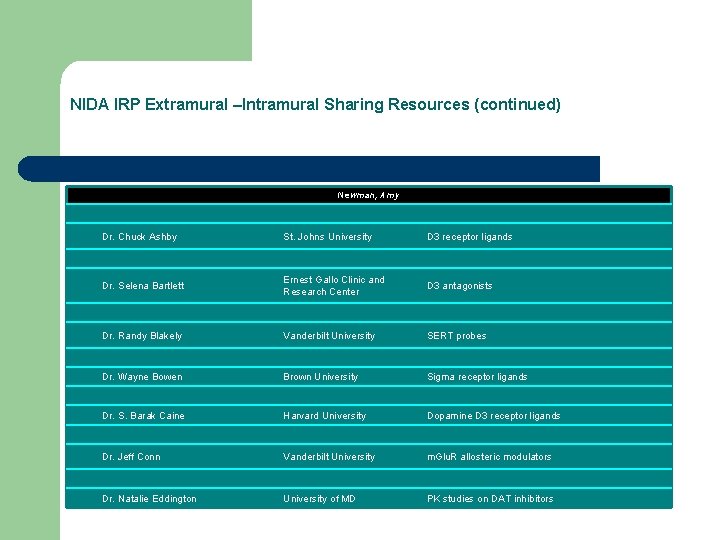
NIDA IRP Extramural –Intramural Sharing Resources (continued) Newman, Amy Dr. Chuck Ashby St. Johns University D 3 receptor ligands Dr. Selena Bartlett Ernest Gallo Clinic and Research Center D 3 antagonists Dr. Randy Blakely Vanderbilt University SERT probes Dr. Wayne Bowen Brown University Sigma receptor ligands Dr. S. Barak Caine Harvard University Dopamine D 3 receptor ligands Dr. Jeff Conn Vanderbilt University m. Glu. R allosteric modulators Dr. Natalie Eddington University of MD PK studies on DAT inhibitors
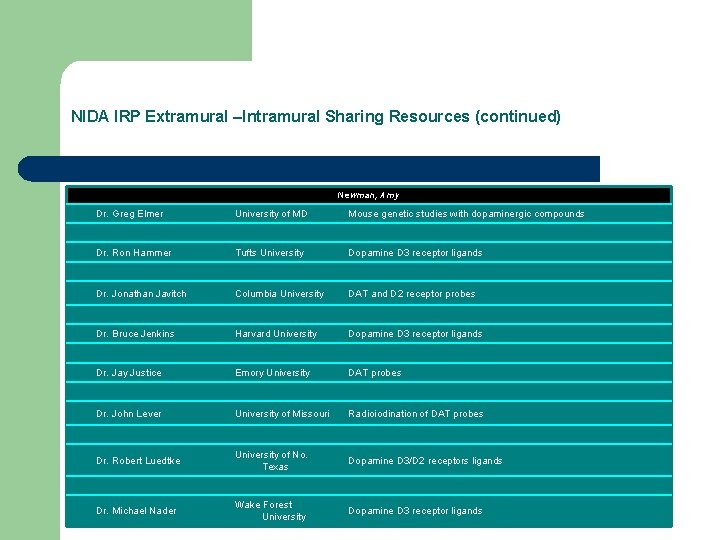
NIDA IRP Extramural –Intramural Sharing Resources (continued) Newman, Amy Dr. Greg Elmer University of MD Mouse genetic studies with dopaminergic compounds Dr. Ron Hammer Tufts University Dopamine D 3 receptor ligands Dr. Jonathan Javitch Columbia University DAT and D 2 receptor probes Dr. Bruce Jenkins Harvard University Dopamine D 3 receptor ligands Dr. Jay Justice Emory University DAT probes Dr. John Lever University of Missouri Radioiodination of DAT probes Dr. Robert Luedtke University of No. Texas Dopamine D 3/D 2 receptors ligands Dr. Michael Nader Wake Forest University Dopamine D 3 receptor ligands
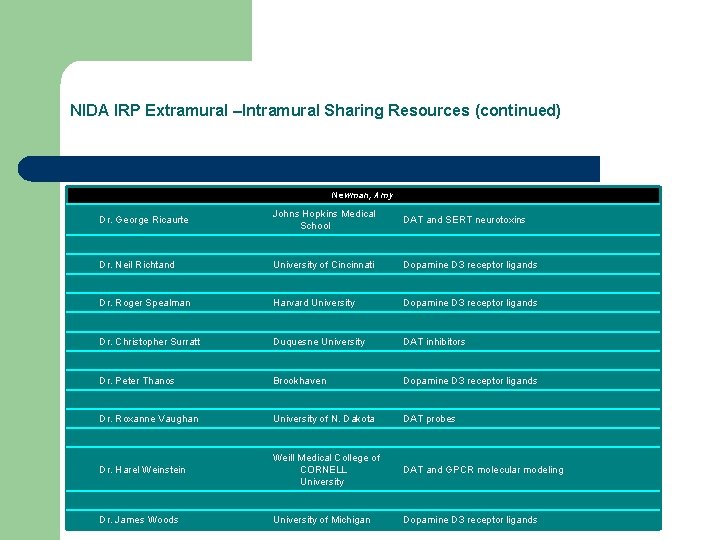
NIDA IRP Extramural –Intramural Sharing Resources (continued) Newman, Amy Dr. George Ricaurte Johns Hopkins Medical School DAT and SERT neurotoxins Dr. Neil Richtand University of Cincinnati Dopamine D 3 receptor ligands Dr. Roger Spealman Harvard University Dopamine D 3 receptor ligands Dr. Christopher Surratt Duquesne University DAT inhibitors Dr. Peter Thanos Brookhaven Dopamine D 3 receptor ligands Dr. Roxanne Vaughan University of N. Dakota DAT probes Dr. Harel Weinstein Weill Medical College of CORNELL University DAT and GPCR molecular modeling Dr. James Woods University of Michigan Dopamine D 3 receptor ligands
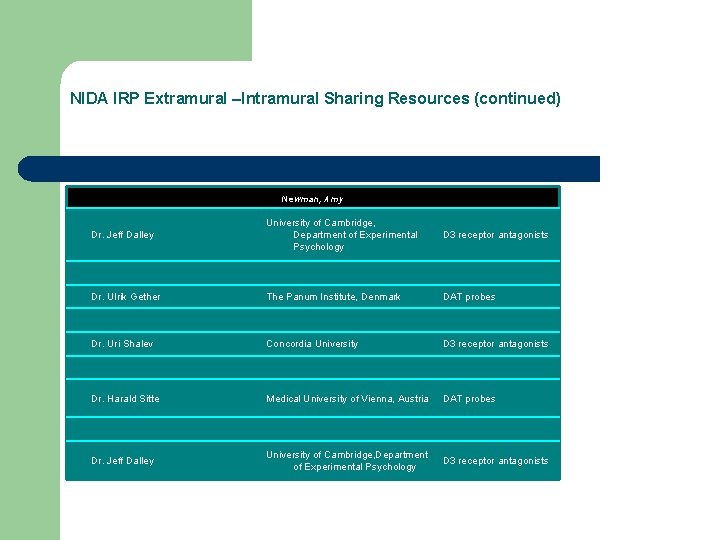
NIDA IRP Extramural –Intramural Sharing Resources (continued) Newman, Amy Dr. Jeff Dalley University of Cambridge, Department of Experimental Psychology D 3 receptor antagonists Dr. Ulrik Gether The Panum Institute, Denmark DAT probes Dr. Uri Shalev Concordia University D 3 receptor antagonists Dr. Harald Sitte Medical University of Vienna, Austria DAT probes Dr. Jeff Dalley University of Cambridge, Department of Experimental Psychology D 3 receptor antagonists
Irving Sunshine Award 2007 - Presented to Marilyn A. Huestis, Ph. D. , Chief of Chemistry and Drug Metabolism Section, Clinical Pharmacology and Therapeutics Research Branch, was recently selected for the prestigious Irving Sunshine Award from the International Association of Therapeutic Drug Monitoring and Clinical Toxicology (IATDMCT). This award is presented no more than every two years to a scientist who has made outstanding contributions in the field of Clinical Toxicology. The award is named after one of the key founding figures in the discipline of toxicology and is recognition of work that maintains the fine tradition of the science of Clinical Toxicology. The presentation will be made as part of the opening ceremony of the biannual Congress in Nice, September, 2007.
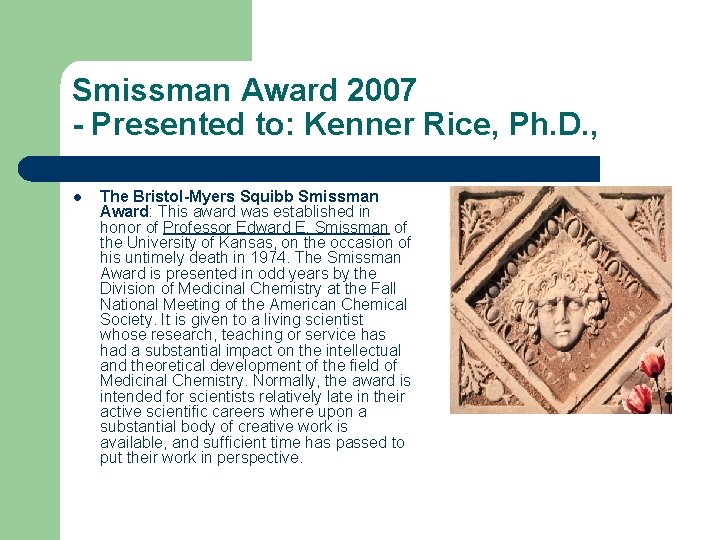
Smissman Award 2007 - Presented to: Kenner Rice, Ph. D. , l The Bristol-Myers Squibb Smissman Award: This award was established in honor of Professor Edward E. Smissman of the University of Kansas, on the occasion of his untimely death in 1974. The Smissman Award is presented in odd years by the Division of Medicinal Chemistry at the Fall National Meeting of the American Chemical Society. It is given to a living scientist whose research, teaching or service has had a substantial impact on the intellectual and theoretical development of the field of Medicinal Chemistry. Normally, the award is intended for scientists relatively late in their active scientific careers where upon a substantial body of creative work is available, and sufficient time has passed to put their work in perspective.
NIDA IRP 2007 Initiatives I. III. IV. Viral gene delivery Core Mitochondrial Diseases Program Obesity Program EMA Program