
National Human Genome Research Institute National Institutes of
- Slides: 32
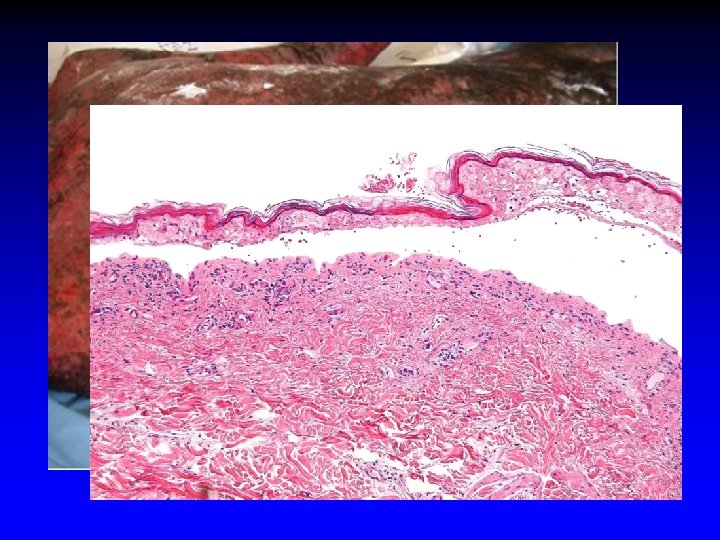
National Human Genome Research Institute National Institutes of Health U. S. Department of Health and Human Services Stevens Johnson Syndrome/Toxic Epidermal Necrolysis as a Paradigm of Pharmacogenetic Implementation U. S. Department of Health and Human Services National Institutes of Health National Human Genome Research Institute Teri Manolio, M. D. , Ph. D. National Advisory Council on Human Genome Research September 21, 2015
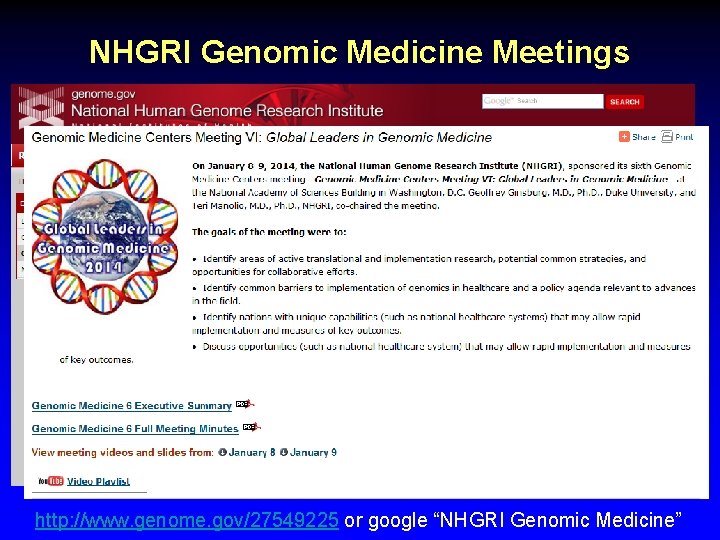
NHGRI Genomic Medicine Meetings http: //www. genome. gov/27549225 or google “NHGRI Genomic Medicine”
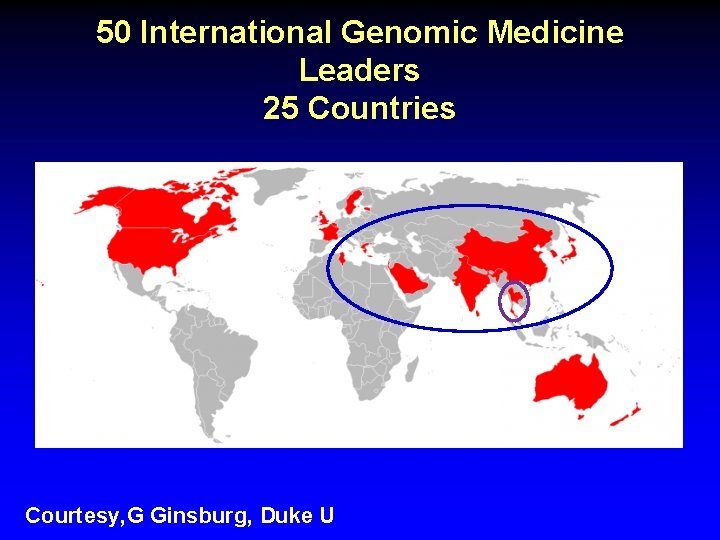
50 International Genomic Medicine Leaders 25 Countries Courtesy, G Ginsburg, Duke U
Genomic Medicine in Thailand Partly supported by Courtesy W Chantratita, Ramathibodi Hospital
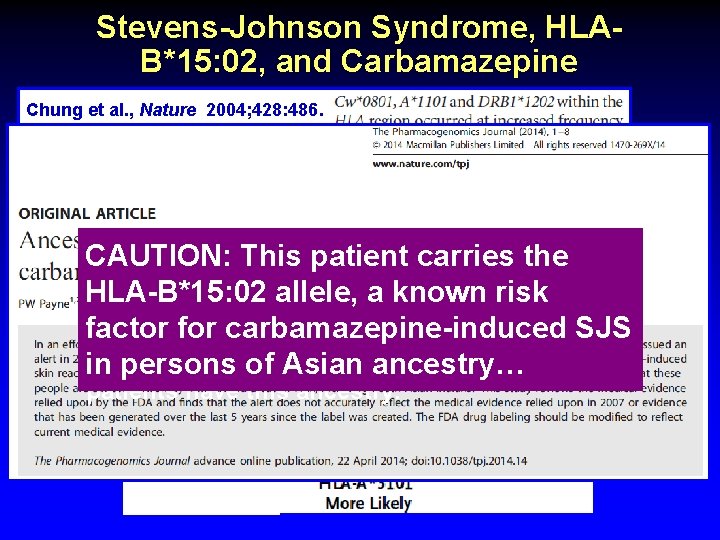
Stevens-Johnson Syndrome, HLAB*15: 02, and Carbamazepine Chung et al. , Nature 2004; 428: 486. SJS/TEN OR = 26 N Engl J Med. 2011; 364: 1134 -43. “Clinicians must determine a patientthe has CAUTION: This patientifcarries ancestry across broad areas of Asia. This HLA-B*15: 02 allele, a known risk requires clinicians to know what ‘Asian All Hyperfactor for carbamazepine-induced SJS ancestry’ means and use a consistent, reliable sensitivity method to figure out which in persons of Asian ancestry… ORhave = 9. 1 this ancestry. ” patients
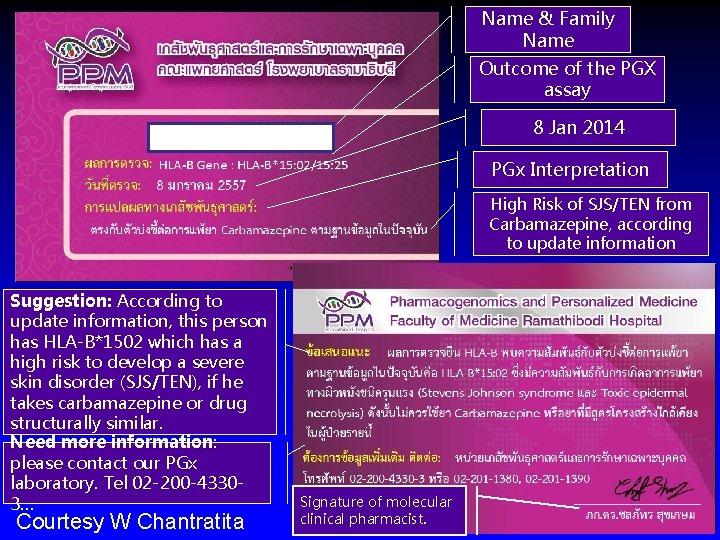
Name & Family Name Outcome of the PGX assay 8 Jan 2014 PGx Interpretation High Risk of SJS/TEN from Carbamazepine, according to update information Suggestion: According to update information, this person has HLA-B*1502 which has a high risk to develop a severe skin disorder (SJS/TEN), if he takes carbamazepine or drug structurally similar. Need more information: please contact our PGx laboratory. Tel 02 -200 -43303… Courtesy W Chantratita Signature of molecular clinical pharmacist.
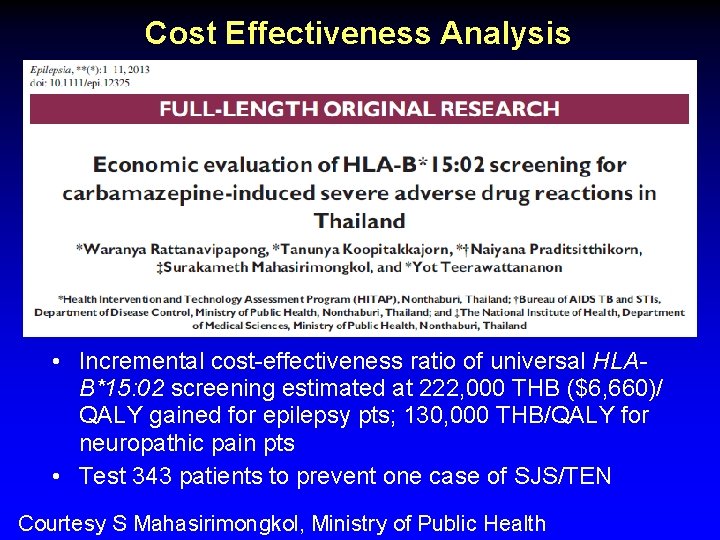
Cost Effectiveness Analysis • Incremental cost-effectiveness ratio of universal HLAB*15: 02 screening estimated at 222, 000 THB ($6, 660)/ QALY gained for epilepsy pts; 130, 000 THB/QALY for neuropathic pain pts • Test 343 patients to prevent one case of SJS/TEN Courtesy S Mahasirimongkol, Ministry of Public Health
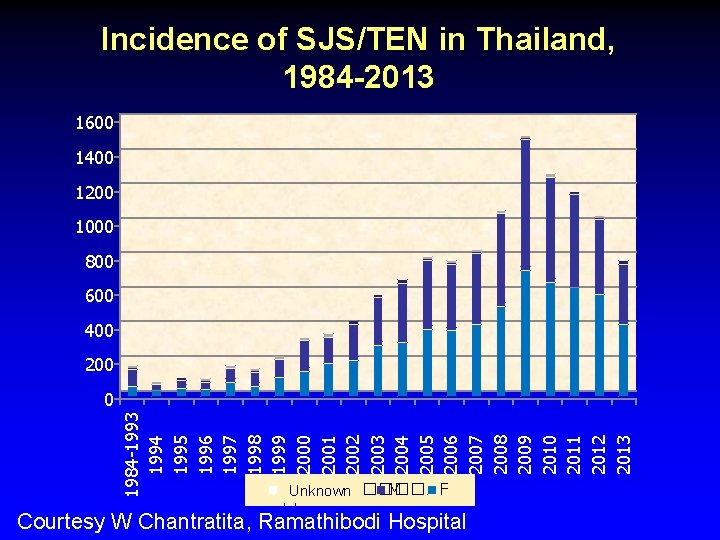
Incidence of SJS/TEN in Thailand, 1984 -2013 1600 1400 1200 1000 800 600 400 200 1984 -1993 1994 1995 1996 1997 1998 1999 2000 2001 2002 2003 2004 2005 2006 2007 2008 2009 2010 2011 2012 2013 0 ����� M F Unknown � Courtesy W Chantratita, Ramathibodi Hospital
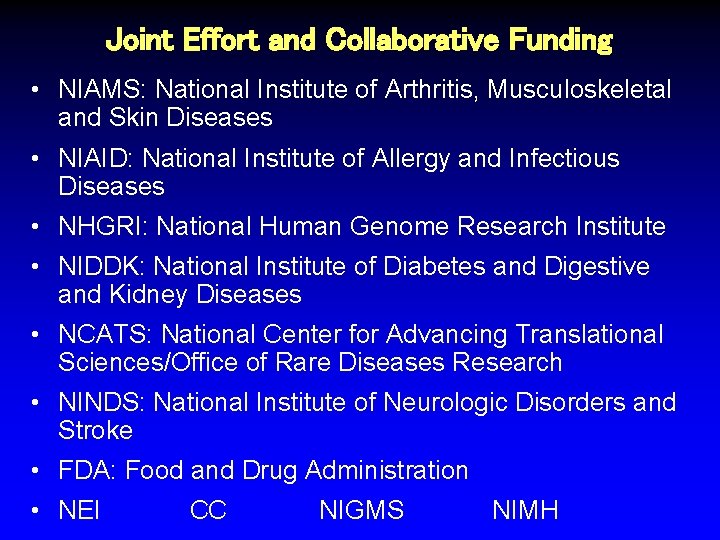
Joint Effort and Collaborative Funding • NIAMS: National Institute of Arthritis, Musculoskeletal and Skin Diseases • NIAID: National Institute of Allergy and Infectious Diseases • NHGRI: National Human Genome Research Institute • NIDDK: National Institute of Diabetes and Digestive and Kidney Diseases • NCATS: National Center for Advancing Translational Sciences/Office of Rare Diseases Research • NINDS: National Institute of Neurologic Disorders and Stroke • FDA: Food and Drug Administration • NEI CC NIGMS NIMH
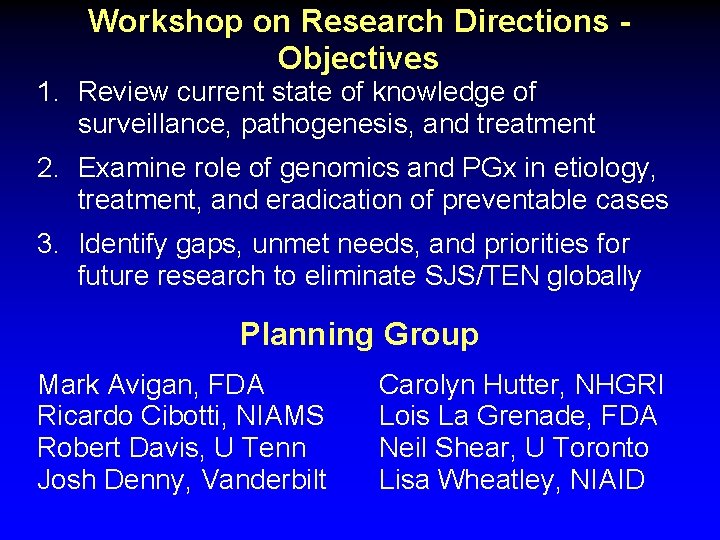
Workshop on Research Directions Objectives 1. Review current state of knowledge of surveillance, pathogenesis, and treatment 2. Examine role of genomics and PGx in etiology, treatment, and eradication of preventable cases 3. Identify gaps, unmet needs, and priorities for future research to eliminate SJS/TEN globally Planning Group Mark Avigan, FDA Ricardo Cibotti, NIAMS Robert Davis, U Tenn Josh Denny, Vanderbilt Carolyn Hutter, NHGRI Lois La Grenade, FDA Neil Shear, U Toronto Lisa Wheatley, NIAID
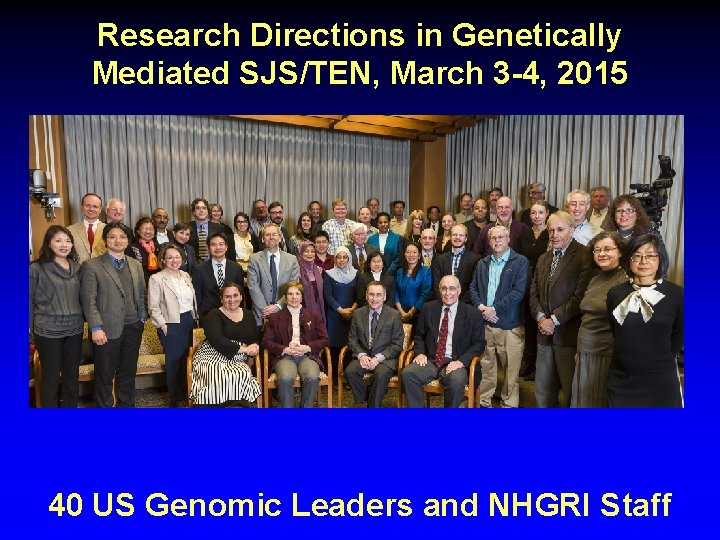
Research Directions in Genetically Mediated SJS/TEN, March 3 -4, 2015 40 US Genomic Leaders and NHGRI Staff
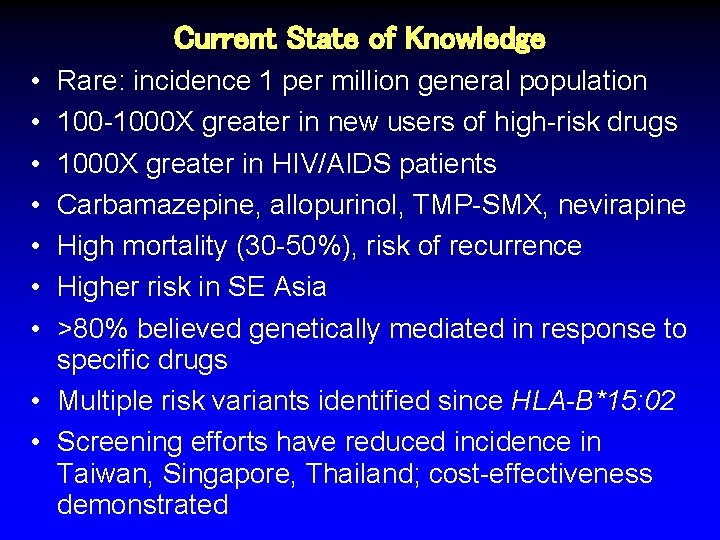
Current State of Knowledge • • Rare: incidence 1 per million general population 100 -1000 X greater in new users of high-risk drugs 1000 X greater in HIV/AIDS patients Carbamazepine, allopurinol, TMP-SMX, nevirapine High mortality (30 -50%), risk of recurrence Higher risk in SE Asia >80% believed genetically mediated in response to specific drugs • Multiple risk variants identified since HLA-B*15: 02 • Screening efforts have reduced incidence in Taiwan, Singapore, Thailand; cost-effectiveness demonstrated
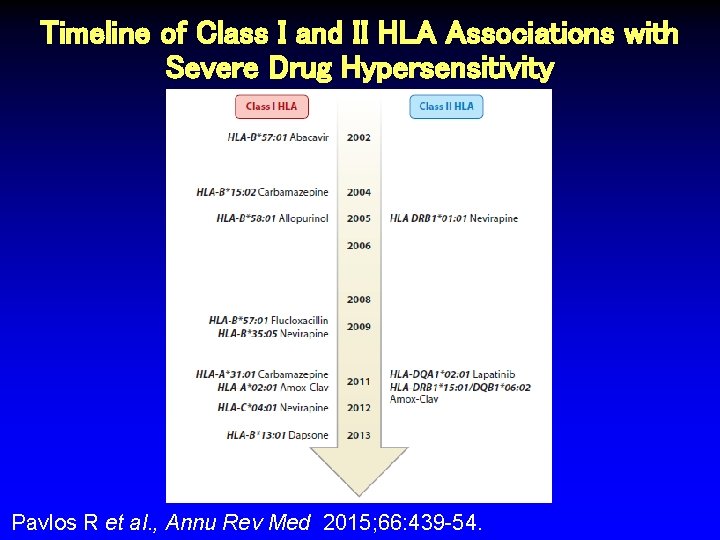
Timeline of Class I and II HLA Associations with Severe Drug Hypersensitivity Pavlos R et al. , Annu Rev Med 2015; 66: 439 -54.
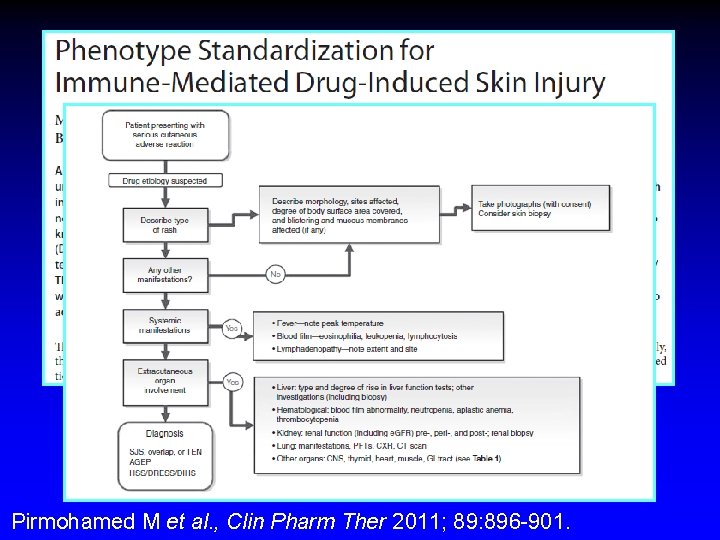
Clin Pharm Ther 2011; 89: 784 -85. Pirmohamed M et al. , Clin Pharm Ther 2011; 89: 896 -901.
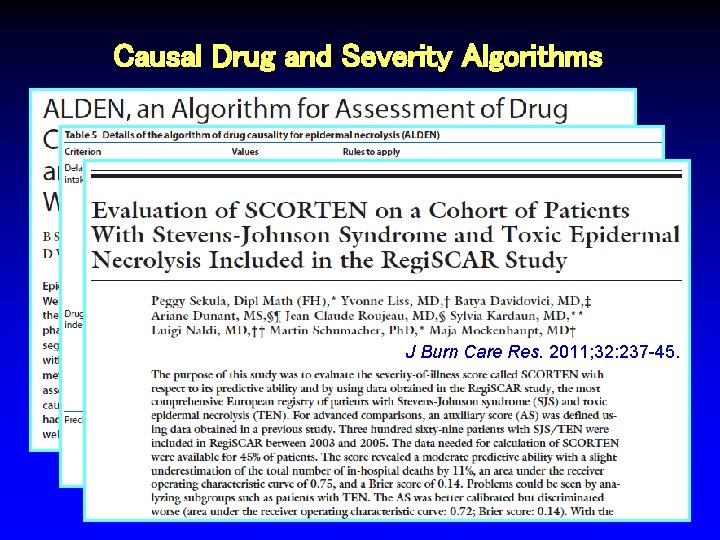
Causal Drug and Severity Algorithms Clin Pharm Ther 2010; 88: 60 -8. J Burn Care Res. 2011; 32: 237 -45.
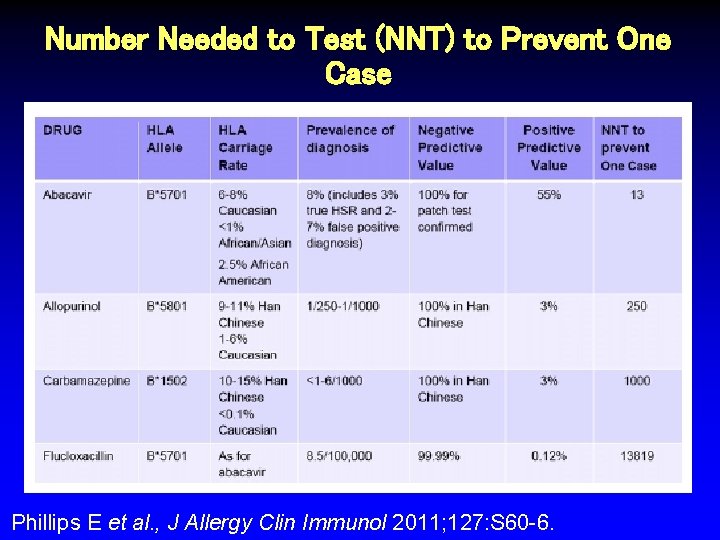
Number Needed to Test (NNT) to Prevent One Case Phillips E et al. , J Allergy Clin Immunol 2011; 127: S 60 -6.
Current State of Ignorance • Mechanism of immune reaction • Mechanism of cellular damage • High-risk chemical features of drugs likely to cause SJS/TEN • Current treatments ineffective, largely supportive • Severe sequelae frequent including blindness • Incidence estimates poor: one large U. S. hospital estimated 20 -year prevalence of 375 cases/106 • No in vitro tests for causative drug; have to stop and re-introduce gingerly, no pre-clinical ID
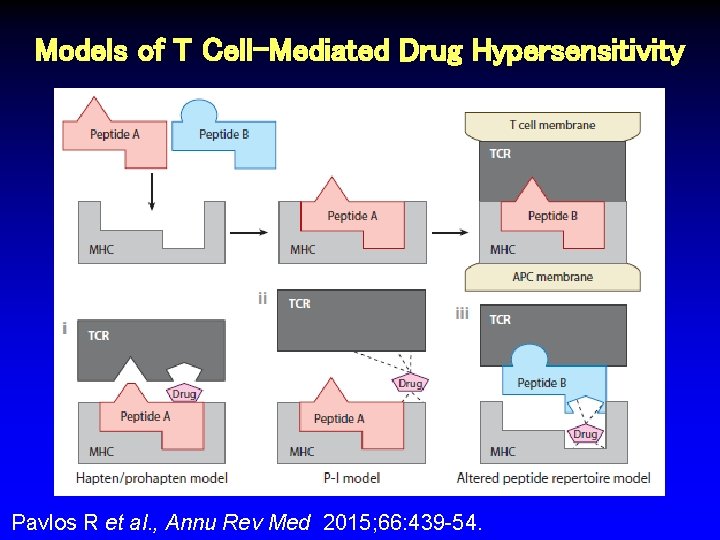
Models of T Cell-Mediated Drug Hypersensitivity Pavlos R et al. , Annu Rev Med 2015; 66: 439 -54.
Key Genomic Research Questions in SJS/TEN • What can ethnic-specific associations teach us about underlying mechanisms? • Why does only a minority of risk allele carriers develop SJS/TEN on exposure to culprit drugs? • Can HLA expression levels explain some of these differences? • Why are many of the same HLA alleles implicated repeatedly in immunologically mediated ADRs? • What is the impact of rare variation in HLA? Can we use sequencing and burden tests or pathway analyses to identify additional genetic risk factors?
Key Genomic Research Questions in SJS/TEN • Can DNA and other samples from drug trials that were halted due to SJS/TEN be accessed for genomic and immunopathogenesis studies? • Can pre-emptive HLA typing be of use in clinical care for a variety of conditions, particularly rheumatologic or autoimmune-related conditions? • What impact does pre-emptive HLA typing have on clinical care, outcomes, and resource utilization? • Can retrospective querying of EMR data across EMR-linked biobanks identify larger numbers of true SJS/TEN cases?
High Priority Basic Research • Develop in vivo, ex vivo, in vitro, and animal models to inform studies of causative drugs and preclinical testing of new drugs • Identify novel biomarkers in acute phases • Identify new predictive markers in addition to HLA and cytochrome P 450 variants • Identify factors that discriminate risk allele carriers who have a reaction from those who do not
High Priority Clinical Research • Develop low-cost pharmacogenomic assays for implementation in state/national health programs • Expand beyond one gene-one drug models to multi-gene panels or genomic sequencing • Implement testing in high-risk populations and study impact on both safety and efficacy • Consider broader HLA typing and linking to EMR for association with multiple health outcomes • Study ethnic-specific HLA associations or differences between admixed groups and parent populations
High Priority PGx and Outcomes Research • Conduct additional cost-effectiveness analyses to support implementation of routine genotyping in clinical care systems • Develop pilot projects assessing patient preferences for benefits and trade-offs of PGx testing • Address challenges of current screening recommendations such as low frequency and positive predictive value of risk alleles • Collect race/ethnicity information and study key population subgroups with high case burdens in the U. S. and globally
High Priority Research– Overarching and Facilitative • Stimulate U. S. , combine international efforts to collect and pool large numbers of cases diverse in ethnicity and implicated drugs, including: – Standardized case definitions, data collection – Biospecimens from early in disease course – Patient registries with associated biobanked samples in partnership with advocacy groups – Long-term outcomes • Engage burn units and specialists involved in care of SJS/TEN patients
Needed Infrastructure – International Consortium • International leadership, pharma participation, deposition in public databases– distinguished by scale and diversity • Registry based on standardized phenotyping, including molecular signatures • Standardized case definition, harmonized minimum clinical datasets to satisfy both retrospective and real-time case ascertainment and data collection • Screening and biobanking in early onset phase, including PBMCs and tissue, to identify diagnostic and prognostic biomarkers • Ability to dig deeper for validation, causality assessment, factors associated with progression and outcome
Needed Infrastructure – Pharmacosurveillance • Improved case ascertainment especially in raceethnic subgroups (beyond US Census groups) • Mandated reporting? Coordination with patient advocacy groups • Facilitated electronic transfer of case reports to FDA? • Deposition of genotypes in medical record with accompanying education, decision support, followup • Standardized processes for collecting and sharing genetic data across disparate sites • Coordination with burn units for case identification, focus on large cities or databases
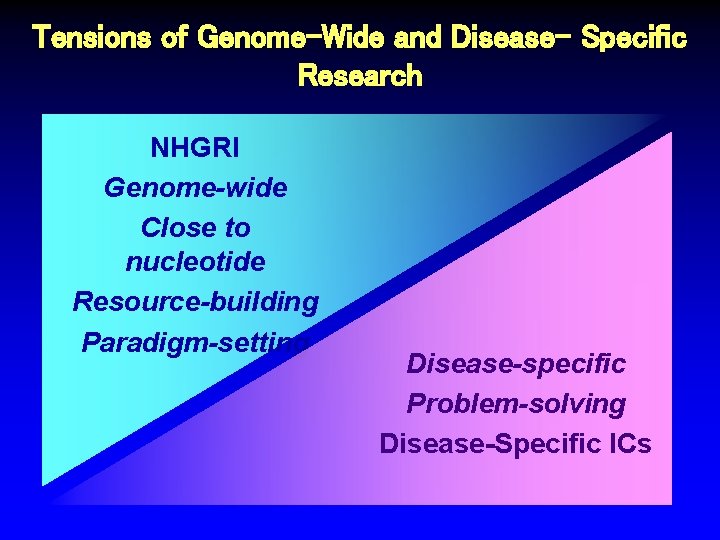
Tensions of Genome-Wide and Disease- Specific Research NHGRI Genome-wide Close to nucleotide Resource-building Paradigm-setting Disease-specific Problem-solving Disease-Specific ICs
Stimulate High Priority Research • What: – Large-scale effort to identify risk alleles, to include U. S. non-European groups – Assess rare variation in and expression of HLA – Examine variable penetrance, clarify biologic mechanisms of genomic risk – Assess impact of pre-emptive genomic testing • How: – Facilitate comparison and harmonization of phenotyping and case report efforts – Work with partner ICs to invite applications and contribute to ongoing international collaborations – Facilitate interactions of relevant investigators
Stimulate High Priority Research (2) • Call attention to area – Draft white paper for publication – Publish half-page summaries and calls to action in specialty journals – Continue to work with patient advocacy groups • Announce multi-IC priority areas through PA • Pursue feasibility, cost-effectiveness, and other pilot studies in FY 16 -FY 17 • Prepare for FY 18 large-scale risk allele finding and screening implementation efforts with partner ICs
Many Thanks… • • Carolyn Hutter Deborah Colantuoni Jeff Struewing Planning Group: – Mark Avigan (FDA) – Ricardo Cibotti (NIAMS/NIH) – Robert Davis (U Tennessee) – Josh Denny (Vanderbilt) – Lois La Grenade (FDA) – Neil Shear (U Toronto) – L Wheatley (NIAID/NIH)
Over to You… • Please advise us on appropriate role for NHGRI in broad spectrum of needed research in genetically mediated ADRs, from basic mechanisms to population screening and prevention • Suggest priorities for pursuit of the workshop’s recommendations for research and implementation