
National Hospice and Palliative Care Organizations Palliative Care
- Slides: 29
National � Hospice and Palliative Care Organization’s Palliative Care Resource Series DIFFERENTIATING MYTHS FROM SUITABLE APPROACHES TO MEDICATION MANAGEMENT IN HOME-BASED PALLIATIVE CARE Anna L Kostric, Pharm. D, BCPS, CPE Parag Bharadwaj, MD, FAAHPM Mary Lynn Mc. Pherson, Pharm. D, BCPS, CPE
Medication Management in Home Based Palliative Care: The Need q Determine methods to safely and effectively administer medications in the home setting q Preserve optimal symptom management, achieve goals of care, and avoid burden of hospital admissions q Avoid misconceptions surrounding medication management to ensure progress towards symptom control while maintaining patient safety
Overview q Common myths with medication management q Unique routes of medication administration q Off-label use of medications for symptom treatment
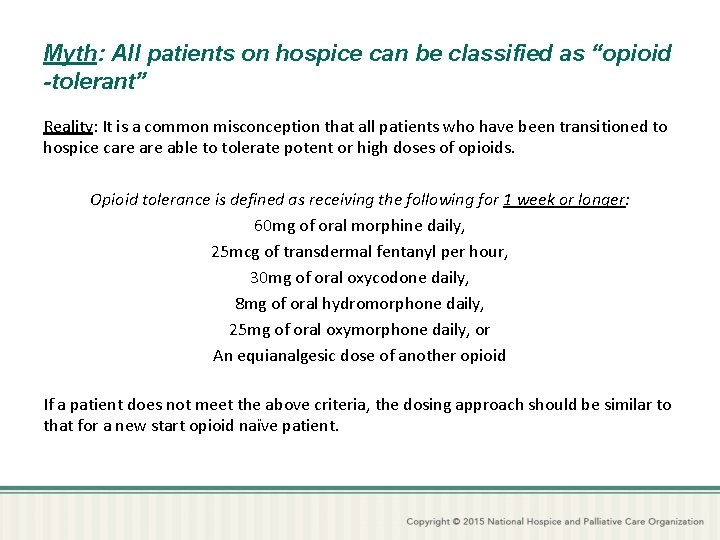
Myth: All patients on hospice can be classified as “opioid -tolerant” Reality: It is a common misconception that all patients who have been transitioned to hospice care able to tolerate potent or high doses of opioids. Opioid tolerance is defined as receiving the following for 1 week or longer: 60 mg of oral morphine daily, 25 mcg of transdermal fentanyl per hour, 30 mg of oral oxycodone daily, 8 mg of oral hydromorphone daily, 25 mg of oral oxymorphone daily, or An equianalgesic dose of another opioid If a patient does not meet the above criteria, the dosing approach should be similar to that for a new start opioid naïve patient.
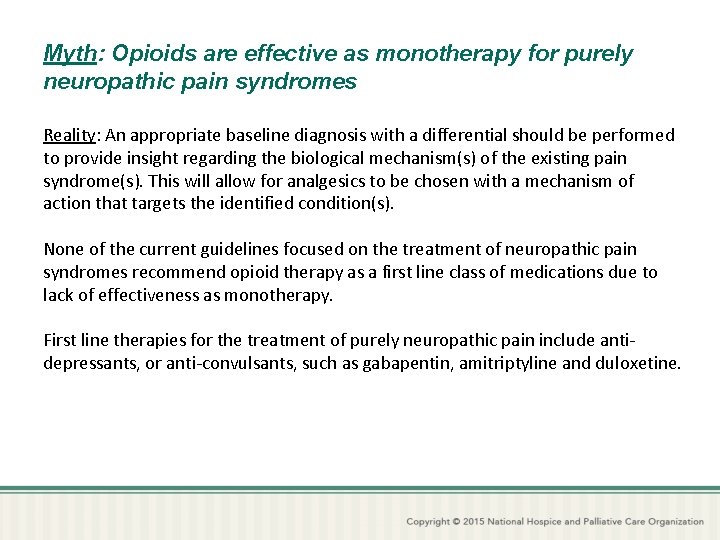
Myth: Opioids are effective as monotherapy for purely neuropathic pain syndromes Reality: An appropriate baseline diagnosis with a differential should be performed to provide insight regarding the biological mechanism(s) of the existing pain syndrome(s). This will allow for analgesics to be chosen with a mechanism of action that targets the identified condition(s). None of the current guidelines focused on the treatment of neuropathic pain syndromes recommend opioid therapy as a first line class of medications due to lack of effectiveness as monotherapy. First line therapies for the treatment of purely neuropathic pain include antidepressants, or anti-convulsants, such as gabapentin, amitriptyline and duloxetine.
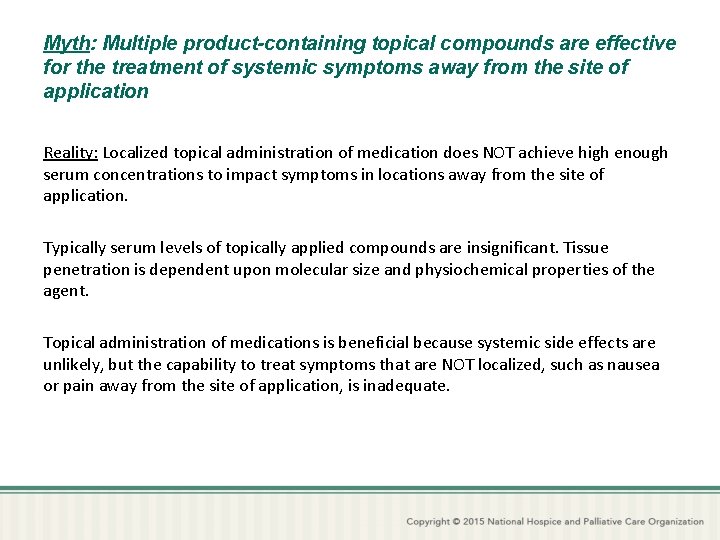
Myth: Multiple product-containing topical compounds are effective for the treatment of systemic symptoms away from the site of application Reality: Localized topical administration of medication does NOT achieve high enough serum concentrations to impact symptoms in locations away from the site of application. Typically serum levels of topically applied compounds are insignificant. Tissue penetration is dependent upon molecular size and physiochemical properties of the agent. Topical administration of medications is beneficial because systemic side effects are unlikely, but the capability to treat symptoms that are NOT localized, such as nausea or pain away from the site of application, is inadequate.
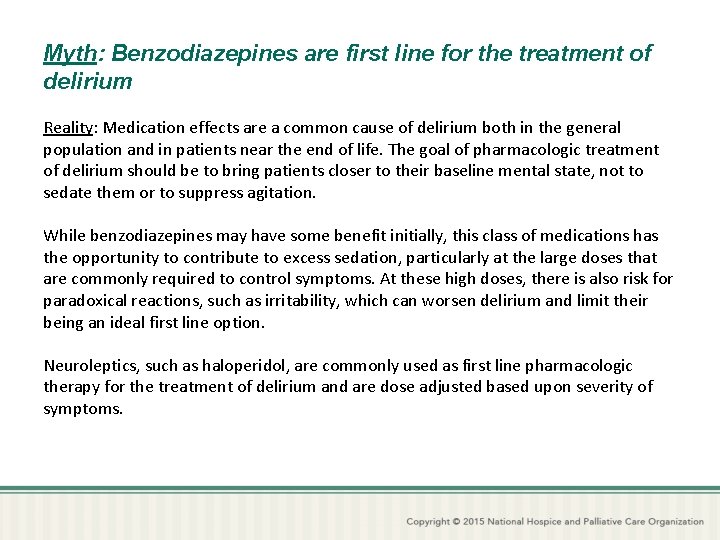
Myth: Benzodiazepines are first line for the treatment of delirium Reality: Medication effects are a common cause of delirium both in the general population and in patients near the end of life. The goal of pharmacologic treatment of delirium should be to bring patients closer to their baseline mental state, not to sedate them or to suppress agitation. While benzodiazepines may have some benefit initially, this class of medications has the opportunity to contribute to excess sedation, particularly at the large doses that are commonly required to control symptoms. At these high doses, there is also risk for paradoxical reactions, such as irritability, which can worsen delirium and limit their being an ideal first line option. Neuroleptics, such as haloperidol, are commonly used as first line pharmacologic therapy for the treatment of delirium and are dose adjusted based upon severity of symptoms.
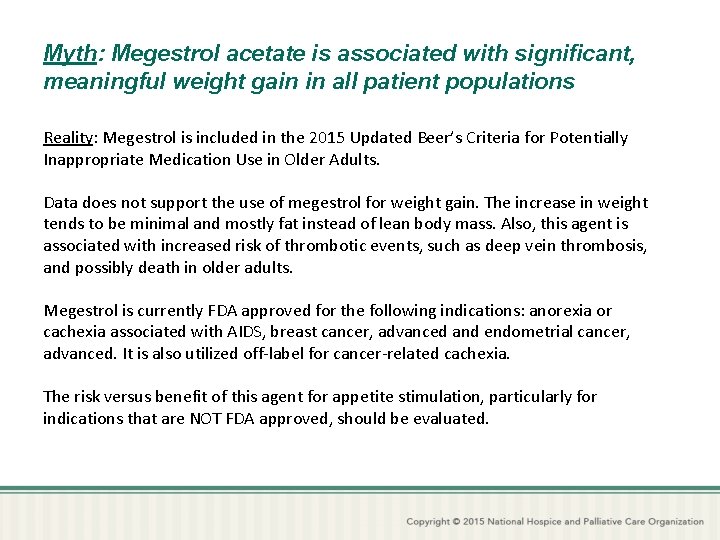
Myth: Megestrol acetate is associated with significant, meaningful weight gain in all patient populations Reality: Megestrol is included in the 2015 Updated Beer’s Criteria for Potentially Inappropriate Medication Use in Older Adults. Data does not support the use of megestrol for weight gain. The increase in weight tends to be minimal and mostly fat instead of lean body mass. Also, this agent is associated with increased risk of thrombotic events, such as deep vein thrombosis, and possibly death in older adults. Megestrol is currently FDA approved for the following indications: anorexia or cachexia associated with AIDS, breast cancer, advanced and endometrial cancer, advanced. It is also utilized off-label for cancer-related cachexia. The risk versus benefit of this agent for appetite stimulation, particularly for indications that are NOT FDA approved, should be evaluated.
Myth: Anticoagulant therapy should be discontinued for all patients transitioned to hospice care Reality: Despite a patient being transitioned to hospice care, there may remain greater than or equal to 6 months of life, during which time the need for anticoagulant therapy should be reevaluated based upon the patient’s clinical status. Anticoagulants may be prescribed for indications such as a history of thromboembolic event(s), atrial fibrillation or valve replacement. For each indication, the risk of a thrombosis event should be weighed against the risk of bleeding when deciding whether anticoagulant therapy should be continued. Acute or significant changes in clinical status, such as reduction in appetite, or concern for organ dysfunction, may warrant reassessment for risk versus benefit of continuation of therapy, as well as, closer follow-up monitoring. To optimize comfort for patients at the end of life, continual focus on goals of care and reevaluation of benefits and burdens of maintenance medications should be performed.
Myth: The intramuscular (IM) route of administration is an optimal alternative in the absence of oral and intravenous access Reality: The American Pain Society recommends against the use of the intramuscular (IM) route for the treatment of pain due to its multiple disadvantages, including painful injections (“causing pain to treat pain”), unreliable absorption that may make it difficult to maintain consistent blood levels, and risk for tissue damage/fibrosis with chronic IM injections. There a variety of other more ideal routes of administration that can be utilized in the absence of oral or IV access, including subcutaneous, transmucosal*, transdermal or rectal. *Some medications are manufactured as concentrated oral solutions, also known as “intensols”, which can be administered by the transmucosal route and are minimally invasive in comparison to other available routes*
Myth: Long acting analgesics can safely be titrated for treatment of acute pain syndromes (e. g. fentanyl patch) Reality: Acute pain cannot be optimized in a short period of time by a long acting agent since this formulation cannot be titrated frequently enough to avoid adverse effects and maintain patient safety. It takes 4 to 5 half-lives to achieve serum steady state concentrations and to see the full effect of a particular dosing schedule. If a medication is titrated prior to achieving steady state concentrations, there remains opportunity for accumulation in the patient’s system and increased risk for adverse effects. In an attempt to optimize acute pain control, the use of immediate release analgesics should be utilized to allow for rapid onset of action and frequent titration.
Unique Routes of Medication Administration Utilized in the Home q The oral route is preferred for medication administration, but is not always available due to reasons, such as, inability to swallow, persistent nausea/vomiting, severe oral lesions, weakness, unconsciousness/sedation or bowel obstruction. q The World Health Organization published a list of medications that are classified as “essential” in palliative care, which include benzodiazepines, haloperidol, laxatives, metoclopramide, opioid analgesics, steroids, antidepressants, and anti-cholinergic agents. q There a variety of methods that can be utilized to administer these medications to help maintain symptom control.
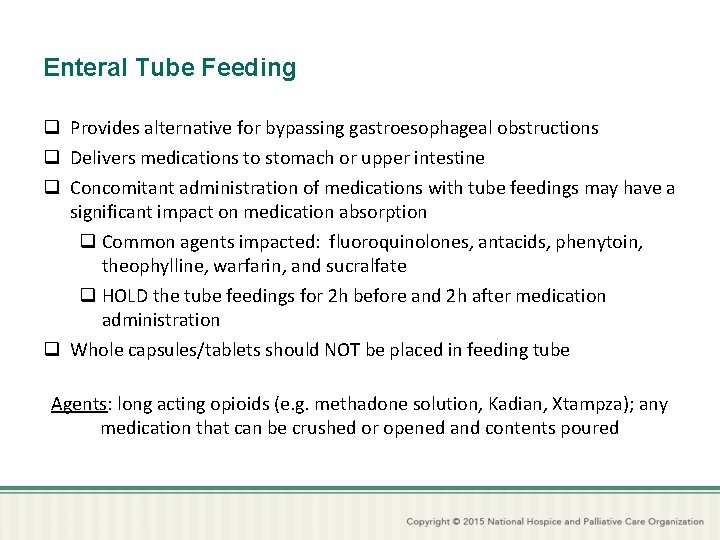
Enteral Tube Feeding q Provides alternative for bypassing gastroesophageal obstructions q Delivers medications to stomach or upper intestine q Concomitant administration of medications with tube feedings may have a significant impact on medication absorption q Common agents impacted: fluoroquinolones, antacids, phenytoin, theophylline, warfarin, and sucralfate q HOLD the tube feedings for 2 h before and 2 h after medication administration q Whole capsules/tablets should NOT be placed in feeding tube Agents: long acting opioids (e. g. methadone solution, Kadian, Xtampza); any medication that can be crushed or opened and contents poured
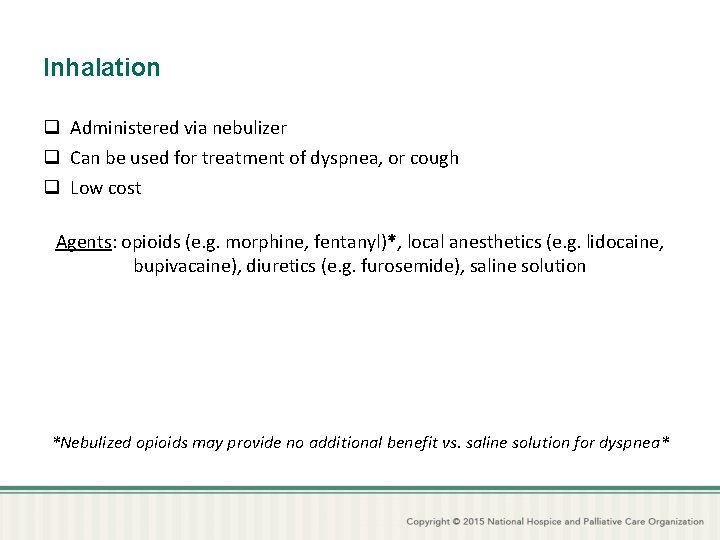
Inhalation q Administered via nebulizer q Can be used for treatment of dyspnea, or cough q Low cost Agents: opioids (e. g. morphine, fentanyl)*, local anesthetics (e. g. lidocaine, bupivacaine), diuretics (e. g. furosemide), saline solution *Nebulized opioids may provide no additional benefit vs. saline solution for dyspnea*
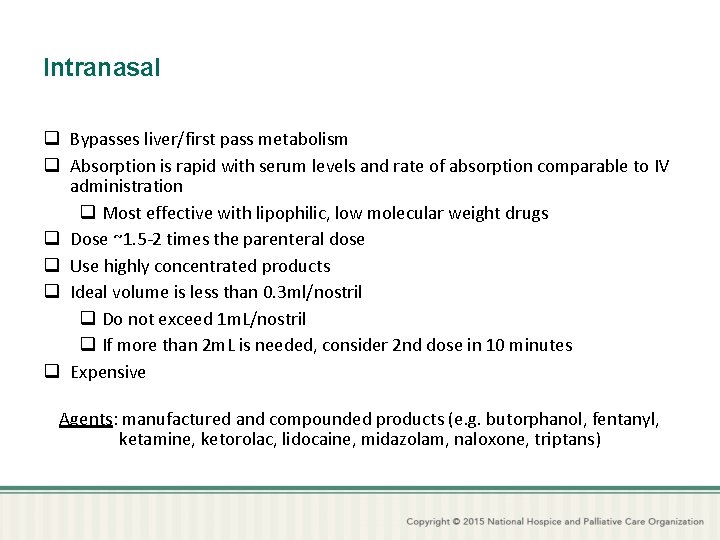
Intranasal q Bypasses liver/first pass metabolism q Absorption is rapid with serum levels and rate of absorption comparable to IV administration q Most effective with lipophilic, low molecular weight drugs q Dose ~1. 5 -2 times the parenteral dose q Use highly concentrated products q Ideal volume is less than 0. 3 ml/nostril q Do not exceed 1 m. L/nostril q If more than 2 m. L is needed, consider 2 nd dose in 10 minutes q Expensive Agents: manufactured and compounded products (e. g. butorphanol, fentanyl, ketamine, ketorolac, lidocaine, midazolam, naloxone, triptans)
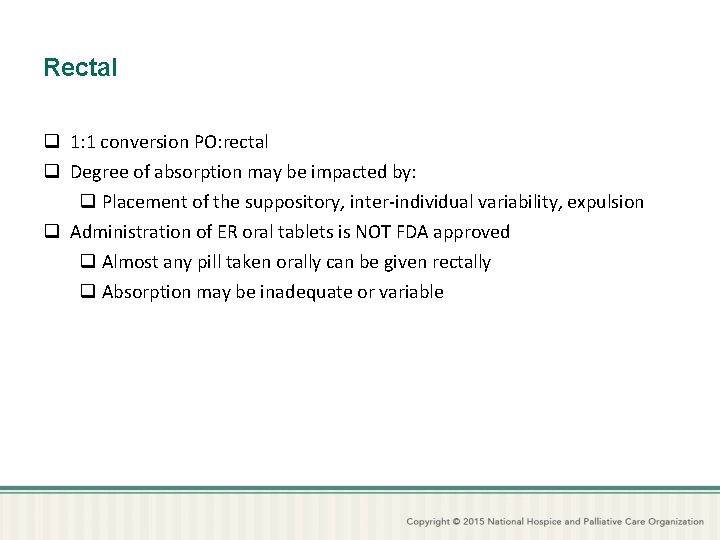
Rectal q 1: 1 conversion PO: rectal q Degree of absorption may be impacted by: q Placement of the suppository, inter-individual variability, expulsion q Administration of ER oral tablets is NOT FDA approved q Almost any pill taken orally can be given rectally q Absorption may be inadequate or variable
Rectal q Avoid enteric coated tablets due to requiring acidic environment for absorption q Route may not be accessible in the setting of diarrhea, constipation, fecal impaction, fissure or in the presence of patient/caregiver unacceptability Agents: manufactured and compounded suppositories (e. g. morphine, hydromorphone, diazepam, acetaminophen, indomethacin, promethazine, prochlorperazine); oral tablets (off-label)
Subcutaneous q Easy access/no need to find a vein q Reduced risk of infection vs. intravenous route q Can administer intermittent injections or by continuous infusion q 1: 1 conversion IV infusion: Subcut infusion q Delayed onset/offset of action vs. IV q Rate limitations → ~3 -5 ml/hour per site q. Subcut tissue in the abdomen can be used for fluid hydration (e. g. hypodermoclysis) as abdominal skin can accommodate a higher volume q Rotate access site every ~7 days
Subcutaneous q Some agents can be highly irritating and may require more frequent site changes (e. g. haloperidol, methadone, phenobarbital) q Unsatisfactory in the presence of anasarca, coagulopathy, circulatory insufficiency or in the presence of caregiver unwillingness to administer an injection Agents: opioids, benzodiazepines, anti-emetics, anti-psychotics, anticholinergics
Topical q q Target peripherally located sites of pain Typically applied directly over the painful site Insignificant systemic activity Consider avoiding topical compounds containing multiple agents q Expensive q Lack of literature supporting benefit q Variable absorption depending upon lipophilicity of the components added q Consider using one drug at a time to identify beneficial therapies Agents: manufactured and compounded analgesic and anti-inflammatory medications (e. g. diclofenac, lidocaine)
Transdermal q Ideal for patients unable to take PO medication or who will pull out IV/Subcut catheter q Serum levels are necessary for pharmacodynamic effect q Has systemic activity q Can be applied in a location away from the site of action and still provide benefit for symptom management q Absorption may be increased in the presence of fever or exposure to heating sources, e. g. electric blanket, heating pad q Pharmacokinetics or clearance may be altered in elderly, cachectic or debilitated patients that increases likelihood of respiratory depression with opioid patches Agents: analgesic patches (e. g. fentanyl, buprenorphine), anti-cholinergic patch (e. g. scopolamine)
Transmucosal (buccal/sublingual) q q For patients unable to swallow or who are dying Can be scheduled around the clock to provide baseline pain relief Limit volume to 1 m. L per dose Absorption is dependent on lipophilicity of the agent ( lipophilicity, absorption) q Solution must be retained in sublingual space and absorbed to avoid first pass metabolism
Transmucosal (buccal/sublingual) q Absorption may be hindered in the presence of copious secretions q In presence of diminished consciousness, may be increased risk for aspiration q Non-invasive/low cost Agents: concentrated oral solutions (e. g. lorazepam, morphine, oxycodone, methadone)
Off-Label Use of Medications for Symptom Treatment in the Home Setting q Several of the essential medications that are used within the palliative care/hospice patient population are NOT FDA approved for certain indications despite having literature and clinical consensus support for use. q It is important to gauge how to safely and effectively utilize these medications for the intended indications.
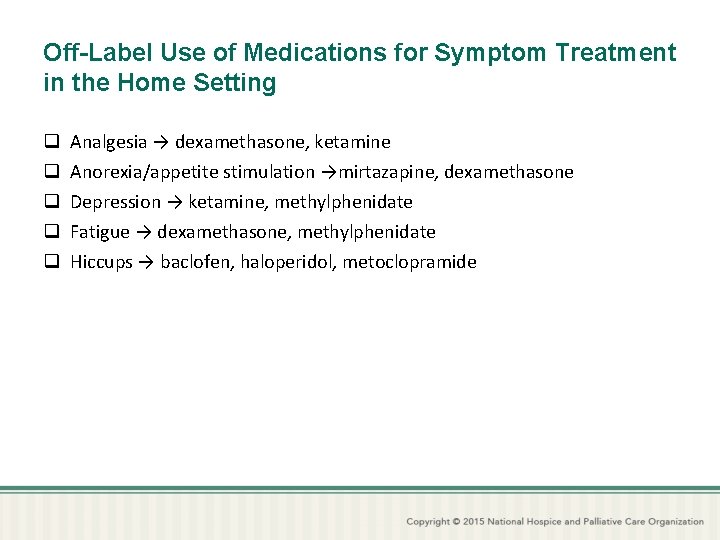
Off-Label Use of Medications for Symptom Treatment in the Home Setting q q q Analgesia → dexamethasone, ketamine Anorexia/appetite stimulation →mirtazapine, dexamethasone Depression → ketamine, methylphenidate Fatigue → dexamethasone, methylphenidate Hiccups → baclofen, haloperidol, metoclopramide
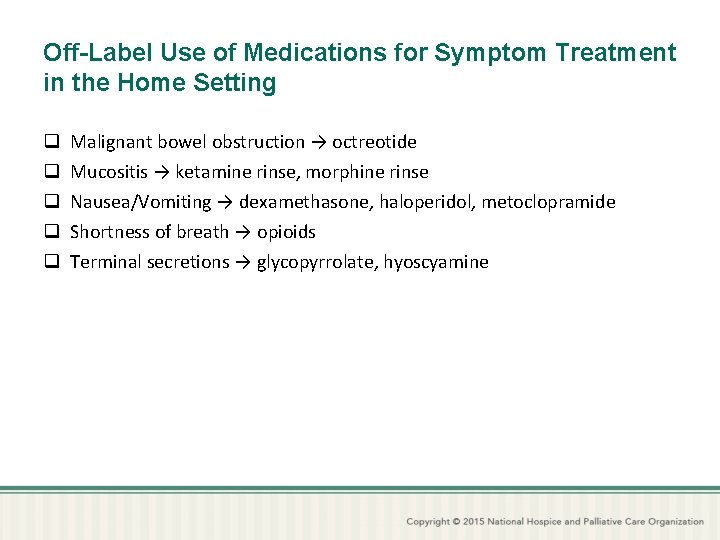
Off-Label Use of Medications for Symptom Treatment in the Home Setting q q q Malignant bowel obstruction → octreotide Mucositis → ketamine rinse, morphine rinse Nausea/Vomiting → dexamethasone, haloperidol, metoclopramide Shortness of breath → opioids Terminal secretions → glycopyrrolate, hyoscyamine
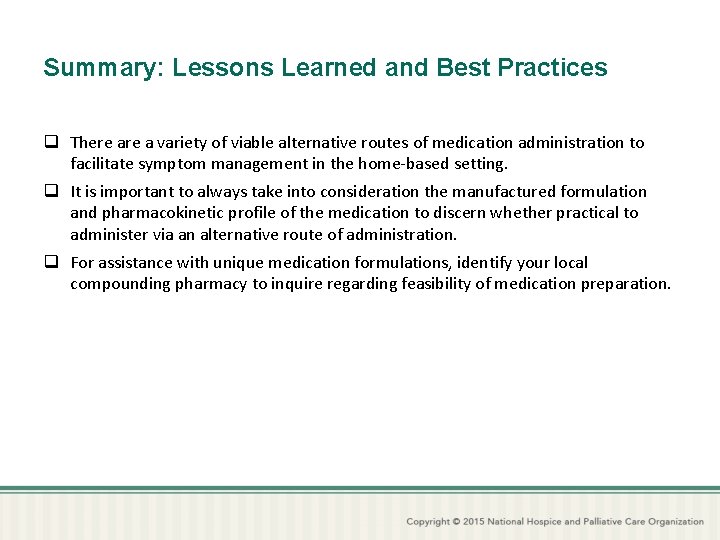
Summary: Lessons Learned and Best Practices q There a variety of viable alternative routes of medication administration to facilitate symptom management in the home-based setting. q It is important to always take into consideration the manufactured formulation and pharmacokinetic profile of the medication to discern whether practical to administer via an alternative route of administration. q For assistance with unique medication formulations, identify your local compounding pharmacy to inquire regarding feasibility of medication preparation.
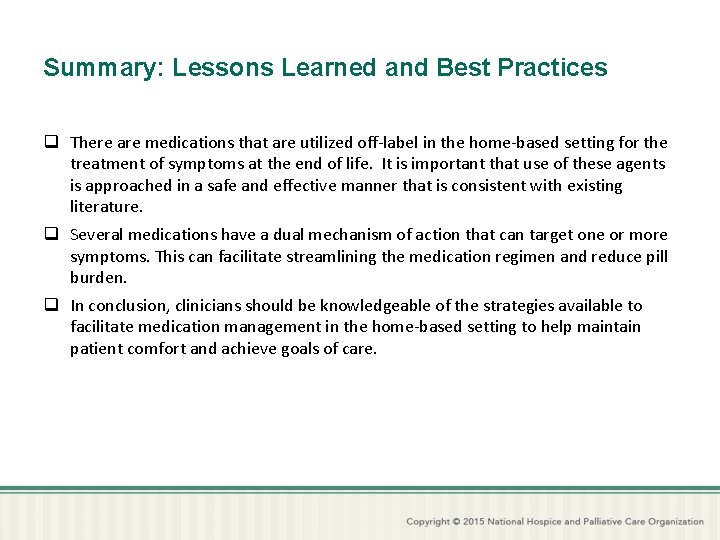
Summary: Lessons Learned and Best Practices q There are medications that are utilized off-label in the home-based setting for the treatment of symptoms at the end of life. It is important that use of these agents is approached in a safe and effective manner that is consistent with existing literature. q Several medications have a dual mechanism of action that can target one or more symptoms. This can facilitate streamlining the medication regimen and reduce pill burden. q In conclusion, clinicians should be knowledgeable of the strategies available to facilitate medication management in the home-based setting to help maintain patient comfort and achieve goals of care.
REFERENCES q q q q q q Bodtke and Ligon. Hospice and Palliative Medicine Handbook: A Clinical Guide. www. hpmhandbook. com 2016 Casarett et al. Diagnosis and Management of Delirium near the End of life. Ann Intern Med. 2001; 135: 32 -40 Cleary et al. The Pharmacologic Management of Cancer Pain. Palliative Care Reviews. Journal of Palliative Medicine. Volume 10, No 6, 2007 Duragesic (Fentanyl Transdermal System) Prescribing Information. Accessed 8. 16. 17. https: //www. duragesic. com/ Education in Palliative and End of Life Care (EPEC) program Essentials Medicines in Palliative Care. International Association for Hospice and Palliative Care. World Health Organization. 2013 Five Things Physicians and Patients Should Question. Choosing Wisely. American Academy of Hospice and Palliative Medicine. Gavi et al. Management of Feeding Tube Complications in the Long Term Care Resident. http: //www. managedhealthcareconnect. com/article/8614 GEMS (Guidelines for Effective Management of Symptoms). Hospi. Script Services. Giving Meds by Alternative Routes. Pharmacist’s Letter/Prescriber’s Letter. Detail document #310208. Feb 2015 IAHPC List of Essential Medicines for Palliative Care. Kerr CW, Drake J, Milch RA, et al. Effects of methylphenidate on fatigue and depression: a randomized, double-blind, placebo-controlled trial. J Pain Symptom Manage. 2012; 43(1): 68 -77 Lexi-Comp 2017. Wolters Kluwer Clinical Drug Information. Mc. Pherson, Mary Lynn. Demystifying Opioid Conversion Calculations: A Guide for Effective Dosing. ASHP. 2009 Palliative Care. NCCN Guidelines Clinical Practice Guidelines in Oncology. 2014. Palliative Care and Hospice Reference Guide. Summa Health System. Reisfeld GM et al. Rational use of sublingual opioids in palliative medicine. J Palliat Med 2007; Apr 10(2): 465 -75 Sera Et al. Commonly Prescribed Medications in a Population of Hospice Patients. American Journal of Hospice and Palliative Medicine. 2014, Vol 31(2), 126 -131 Sheehy-Skeffington et al. Caregivers Experiences of Managing Medications for Palliative Care Patients at the End of Life: A Qualitative Study. American Journal of Hospice and Palliative Medicine. 2014, Vol 31(2), 148 -154 Strickland, Jennifer M. Palliative Pharmacy Care. ASHP. 2009. WHO-Essential Medicines in Palliative Care – Executive Summary. International Association for Hospice and Palliative Care. 2013