
National Height Modernization Partner Meeting Neil D Weston
- Slides: 10
National Height Modernization Partner Meeting Neil D. Weston National Geodetic Survey, NOS, NOAA Frankfort, Kentucky April 30 – May 1, 2013
Best Practices for RTN Operators
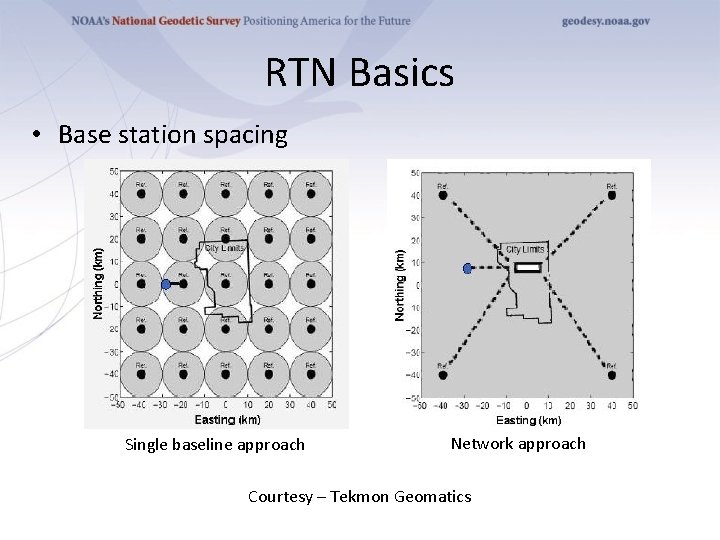
RTN Basics • Base station spacing Single baseline approach Network approach Courtesy – Tekmon Geomatics
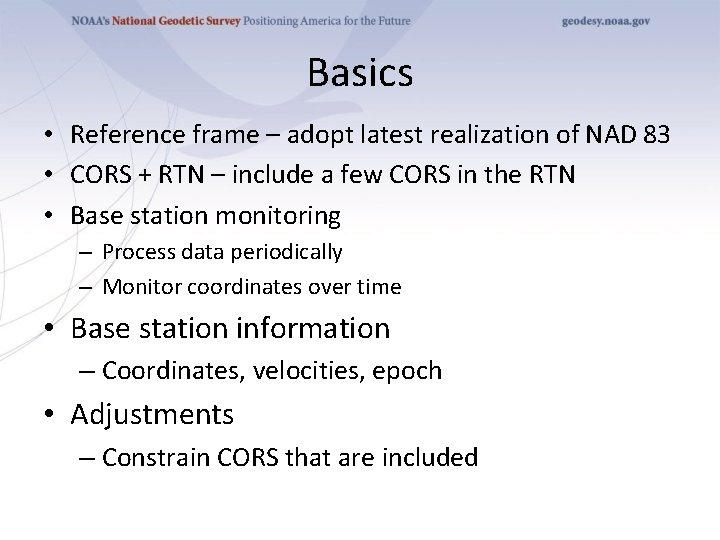
Basics • Reference frame – adopt latest realization of NAD 83 • CORS + RTN – include a few CORS in the RTN • Base station monitoring – Process data periodically – Monitor coordinates over time • Base station information – Coordinates, velocities, epoch • Adjustments – Constrain CORS that are included
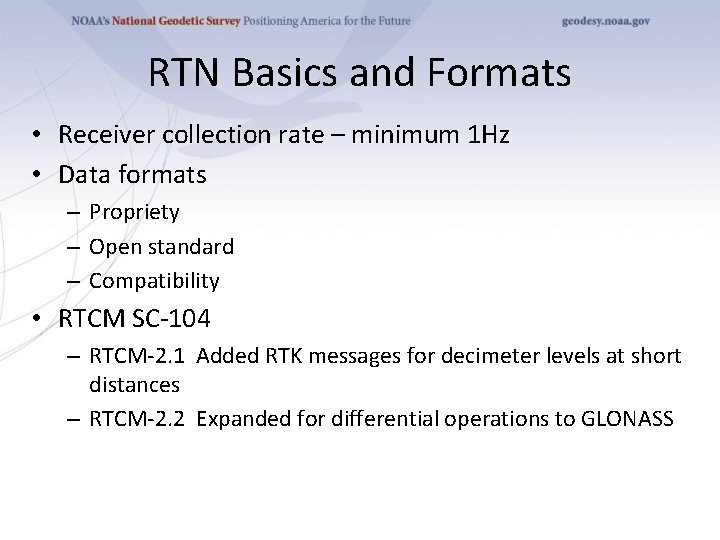
RTN Basics and Formats • Receiver collection rate – minimum 1 Hz • Data formats – Propriety – Open standard – Compatibility • RTCM SC-104 – RTCM-2. 1 Added RTK messages for decimeter levels at short distances – RTCM-2. 2 Expanded for differential operations to GLONASS
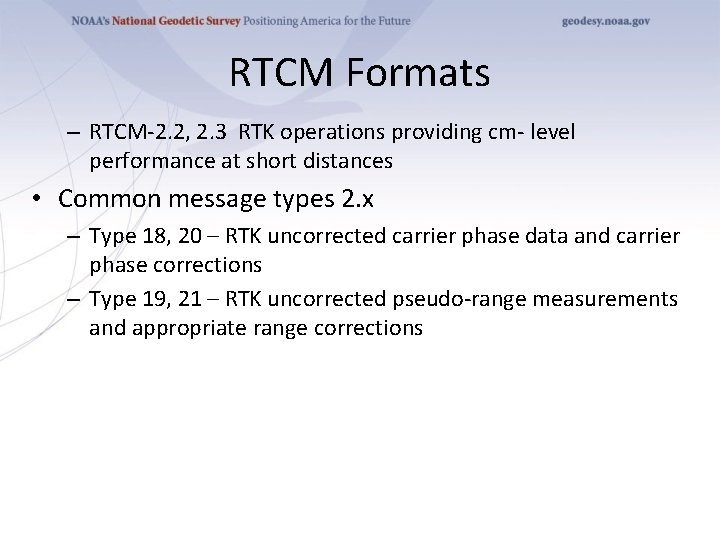
RTCM Formats – RTCM-2. 2, 2. 3 RTK operations providing cm- level performance at short distances • Common message types 2. x – Type 18, 20 – RTK uncorrected carrier phase data and carrier phase corrections – Type 19, 21 – RTK uncorrected pseudo-range measurements and appropriate range corrections
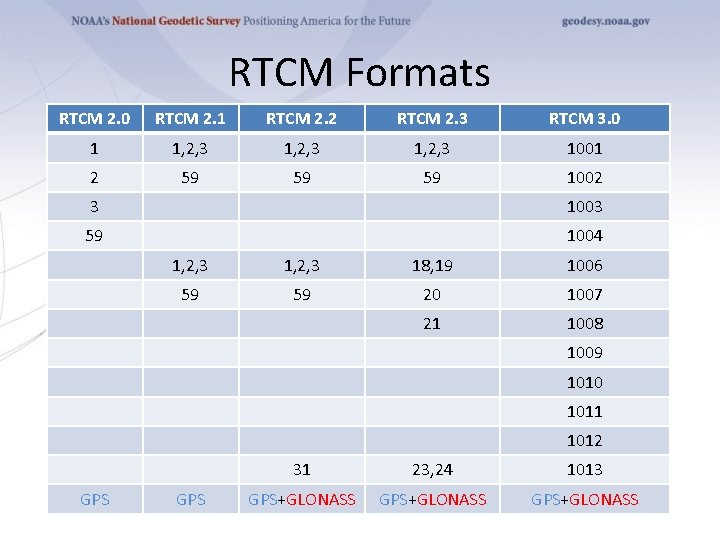
RTCM Formats RTCM 2. 0 RTCM 2. 1 RTCM 2. 2 RTCM 2. 3 RTCM 3. 0 1 1, 2, 3 1001 2 59 59 59 1002 3 1003 59 1004 1, 2, 3 18, 19 1006 59 59 20 1007 21 1008 1009 1010 1011 1012 GPS 31 23, 24 1013 GPS+GLONASS
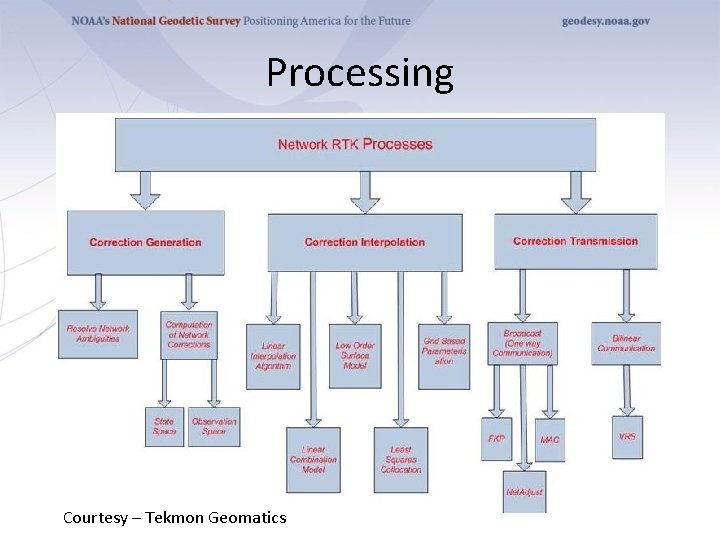
Processing Courtesy – Tekmon Geomatics
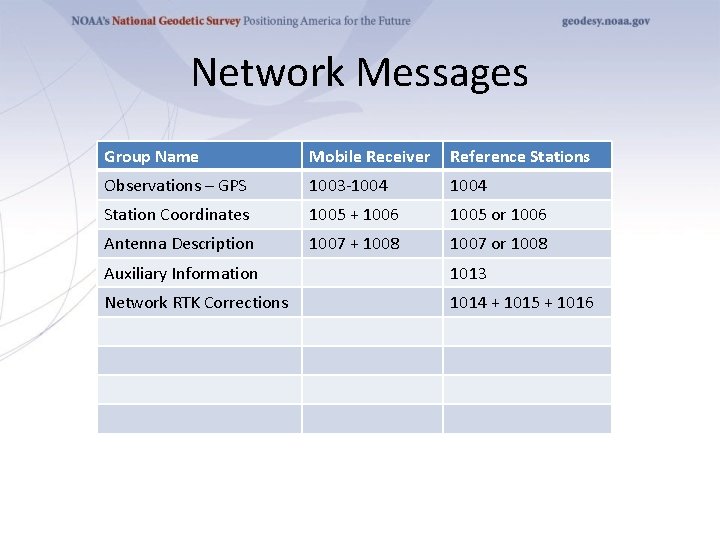
Network Messages Group Name Mobile Receiver Reference Stations Observations – GPS 1003 -1004 Station Coordinates 1005 + 1006 1005 or 1006 Antenna Description 1007 + 1008 1007 or 1008 Auxiliary Information 1013 Network RTK Corrections 1014 + 1015 + 1016
Thank You Neil D. Weston Chief – Spatial Reference System Division 301 -713 -3191 x 103 Neil. d. weston@noaa. gov