
National Guidelines for the Clinical Management of Opioid
- Slides: 15
National Guidelines for the Clinical Management of Opioid Use Disorder Lignes directrices Nationales sur la prise en charge clinique de la dépendance aux opioïdes Dr Ginette Poulin, RD, MD, CCFP, CISAM, CMCBT
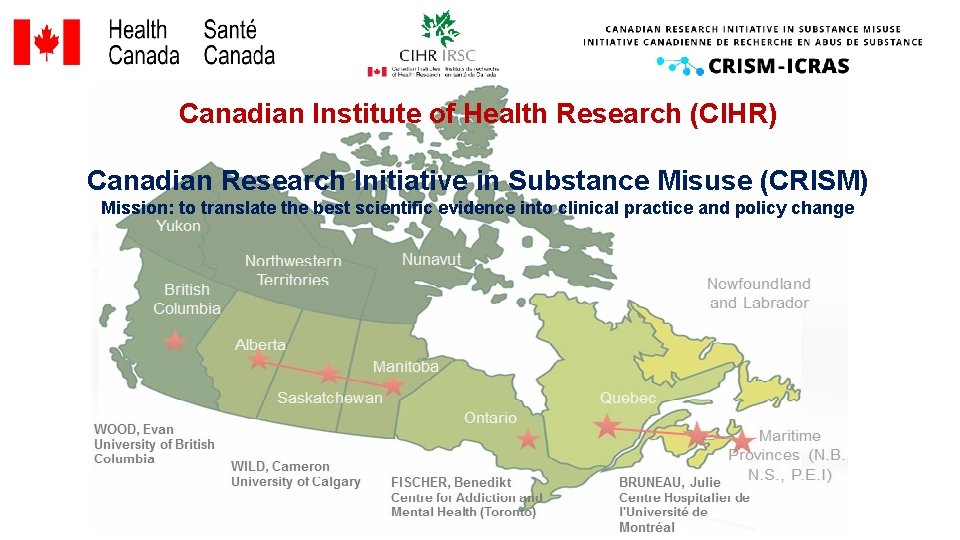
Canadian Institute of Health Research (CIHR) Canadian Research Initiative in Substance Misuse (CRISM) Mission: to translate the best scientific evidence into clinical practice and policy change
Purpose and Scope Identify best practices for the treatment of Opiate Use Disorder Serve as an educational tool and clinical practice recommendations Inform policy and program planning and development Promote standardization and consistency in medical care across Canada NOTE: The scope is limited to OUD oral treatments in the general adult and youth population.
CRISM National OUD Guidelines
Methods Structured Literature Review • Medically-assisted withdrawal management (detoxification) • Residential treatment • Long-term opioid agonist therapy • Opioid antagonist medications • Psychosocial treatment interventions and supports including peer-based mutual support groups • Harm reduction programs and services International standards for transparent, high-quality, rigorous clinical guidelines
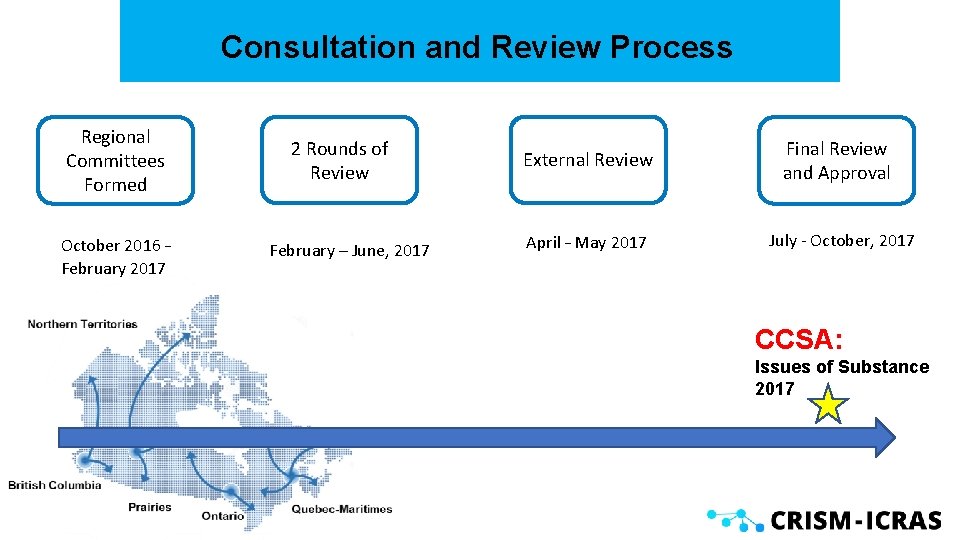
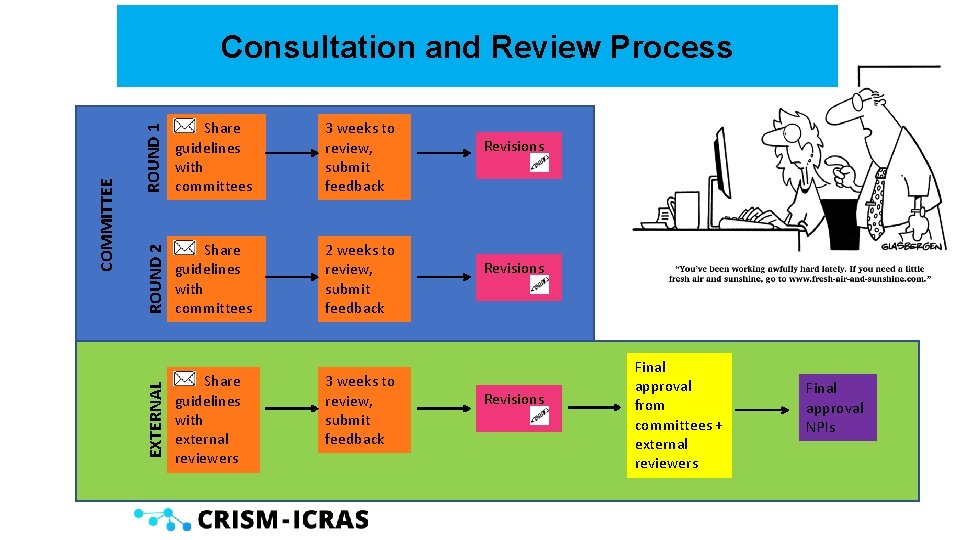
Consultation and Review Process Regional Committees Formed October 2016 – February 2017 2 Rounds of Review February – June, 2017 External Review April – May 2017 Final Review and Approval July - October, 2017 CCSA: Issues of Substance 2017
ROUND 1 Share guidelines with committees 3 weeks to review, submit feedback ROUND 2 Share guidelines with committees 2 weeks to review, submit feedback EXTERNAL COMMITTEE Consultation and Review Process Share guidelines with external reviewers 3 weeks to review, submit feedback Revisions Final approval from committees + external reviewers Final approval NPIs
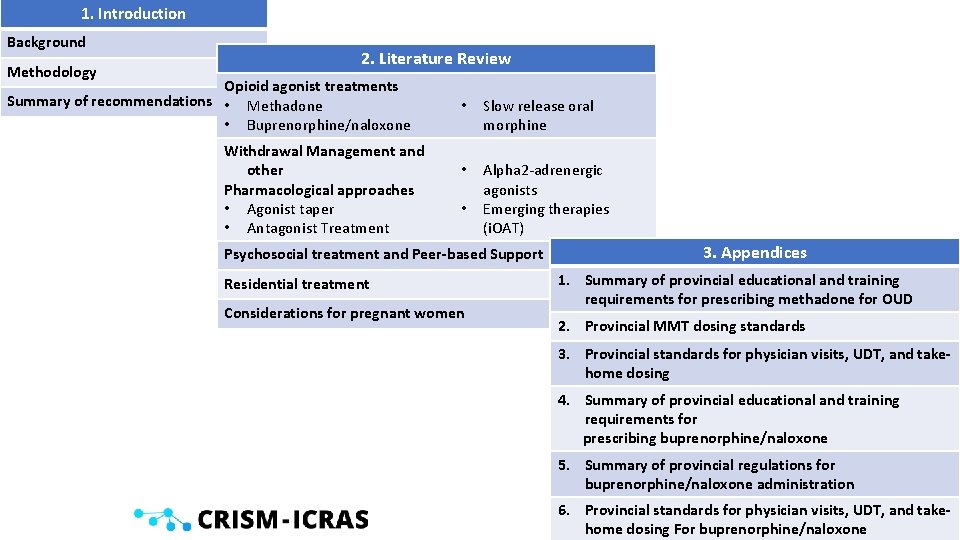
1. Introduction Background Methodology 2. Literature Review Opioid agonist treatments Summary of recommendations • Methadone • Buprenorphine/naloxone Withdrawal Management and other Pharmacological approaches • Agonist taper • Antagonist Treatment • Slow release oral morphine • Alpha 2 -adrenergic agonists Emerging therapies (i. OAT) • Psychosocial treatment and Peer-based Support Residential treatment Considerations for pregnant women 3. Appendices 1. Summary of provincial educational and training requirements for prescribing methadone for OUD 2. Provincial MMT dosing standards 3. Provincial standards for physician visits, UDT, and takehome dosing 4. Summary of provincial educational and training requirements for prescribing buprenorphine/naloxone 5. Summary of provincial regulations for buprenorphine/naloxone administration 6. Provincial standards for physician visits, UDT, and takehome dosing For buprenorphine/naloxone
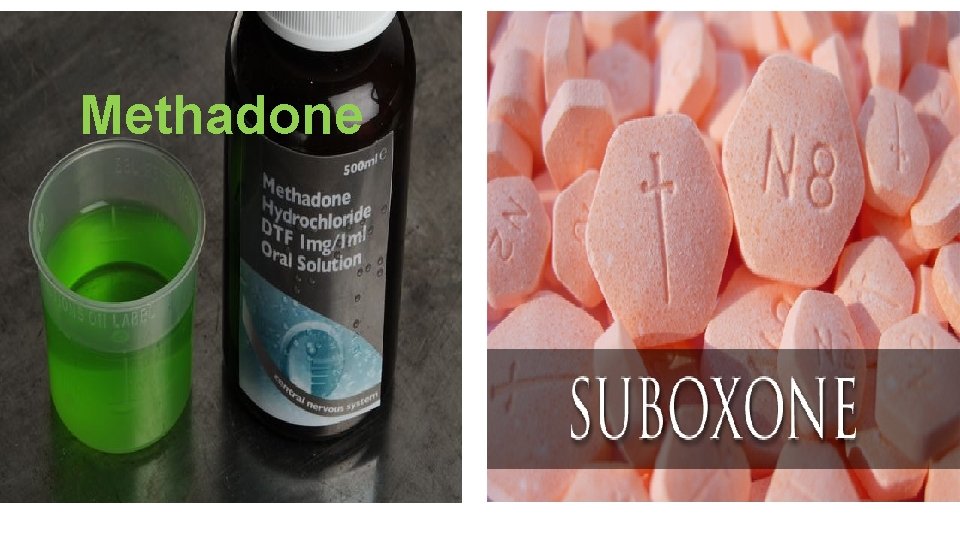
Methadone
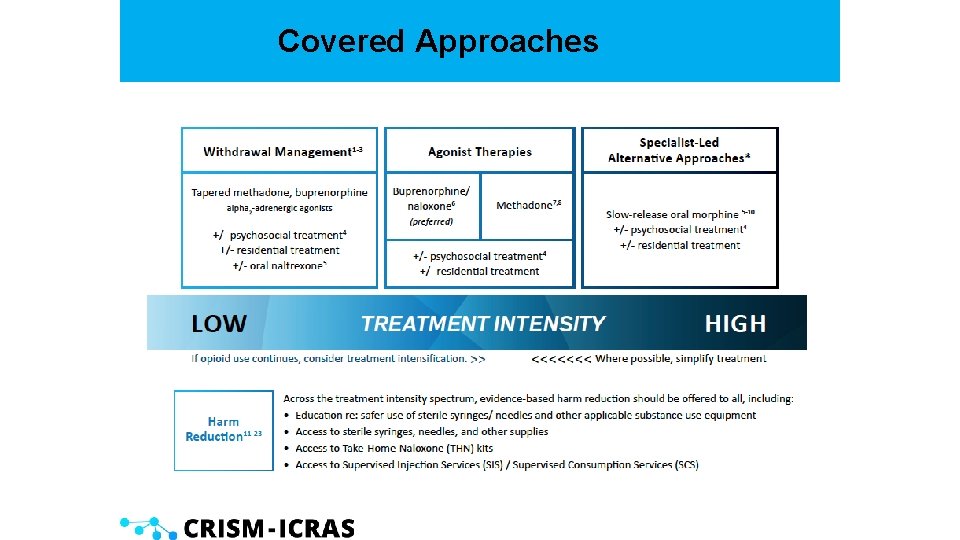
Covered Approaches
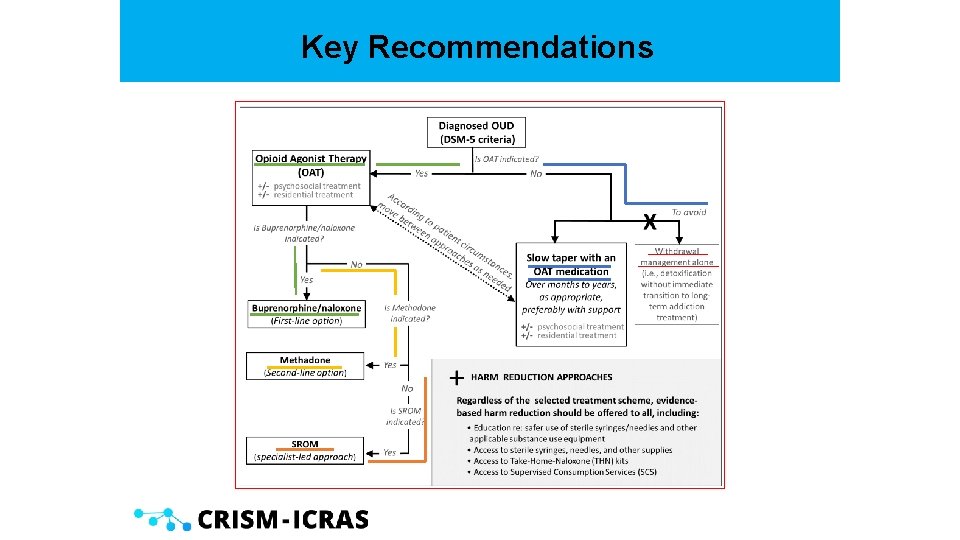
Key Recommendations
Next Steps: Dissemination and Implementation • Public release with CMAJ publication; media strategy • Letter to stakeholders (e. g. regulatory bodies) • CIHR/HC Knowledge Exchange Event – November 16, Calgary • KT materials (summary card, detox bulletin, Suboxone info) • Node-specific dissemination activities and national activities linked to emerging threat funding
Thank you! CRISM http: //www. cihr-irsc. gc. ca/e/44597. html Dr Ginette Poulin dr. gpoulin@afm. mb. ca