
National Curriculum Year 1 Children need to develop

- Slides: 21
National Curriculum: Year 1 Children need to develop: pleasure in reading; motivation to read; increased vocabulary; improved level of understanding. They will do this by frequently listening to: stories; poems; information texts; texts that they cannot yet read for themselves. By reading with an adult, children can also be shown the processes of finding information within a book, such as the use of contents or index pages.
How to Help Initially, reading with your child is about reading to them. Model clear reading with fluency and expression. Model how to read unknown words. Read a range of different texts, such as: recipe books; nursery rhymes; instruction manuals; leaflets for places you wish to visit; traditional tales. Show your child how to find information in a book rather than quickly finding it for them.
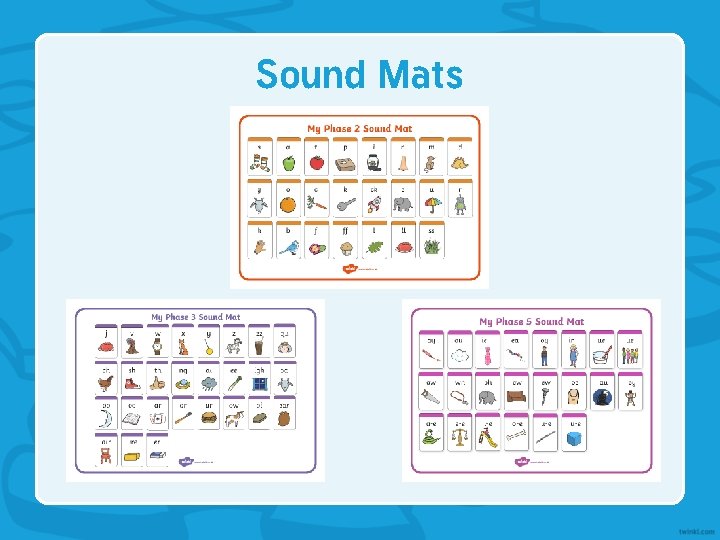
Phonics The National Curriculum states that year 1 children must use phonic knowledge as their primary approach to reading unfamiliar words. Children must be able to read all Phase 2, 3 and 5 graphemes by the end of year 1. The reason that Phase 4 graphemes are not mentioned is that no new graphemes are taught. Instead, children consolidate their ability to blend words containing a range of consonant clusters.
Sound Mats
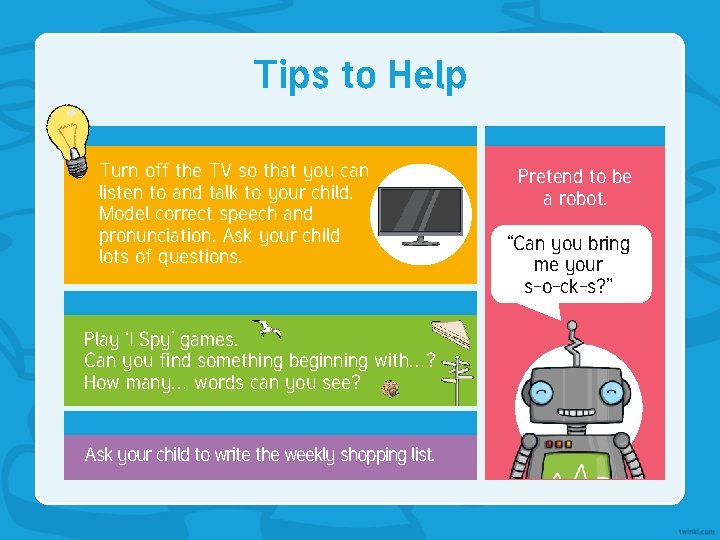
Tips to Help Turn off the TV so that you can listen to and talk to your child. Model correct speech and pronunciation. Ask your child lots of questions. Play ‘I Spy’ games. Can you find something beginning with…? How many… words can you see? Ask your child to write the weekly shopping list. Pretend to be a robot. “Can you bring me your s-o-ck-s? ”
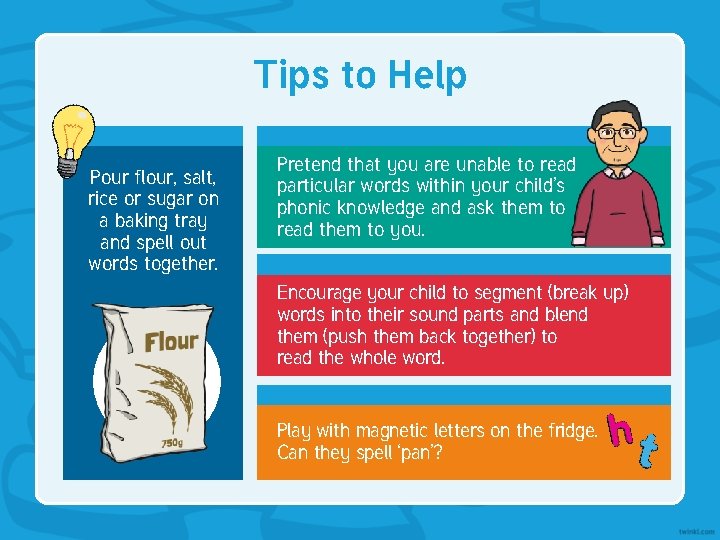
Tips to Help Pour flour, salt, rice or sugar on a baking tray and spell out words together. Pretend that you are unable to read particular words within your child’s phonic knowledge and ask them to read them to you. Encourage your child to segment (break up) words into their sound parts and blend them (push them back together) to read the whole word. Play with magnetic letters on the fridge. Can they spell ‘pan’?
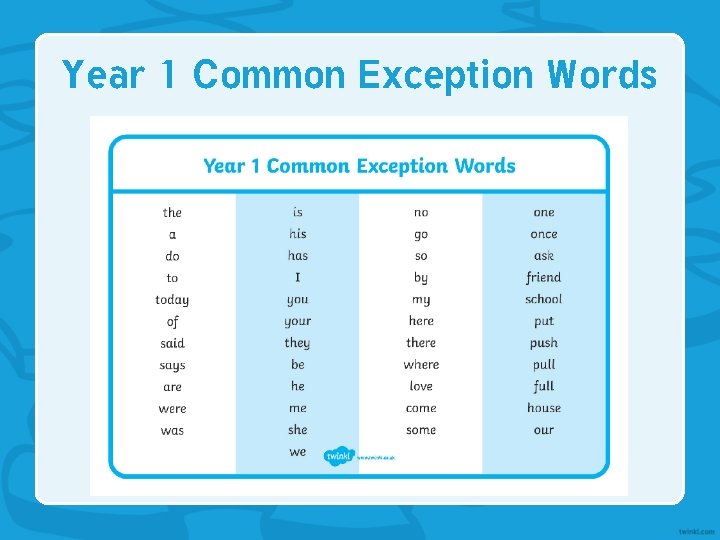
Year 1 Common Exception Words
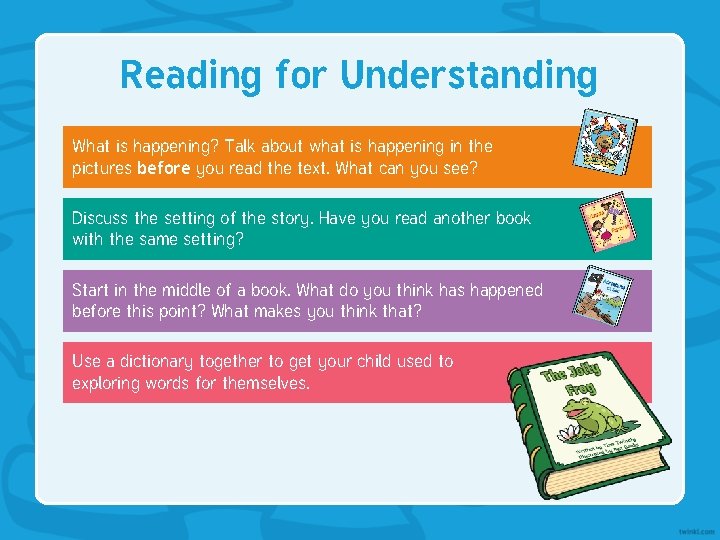
Reading for Understanding What is happening? Talk about what is happening in the pictures before you read the text. What can you see? Discuss the setting of the story. Have you read another book with the same setting? Start in the middle of a book. What do you think has happened before this point? What makes you think that? Use a dictionary together to get your child used to exploring words for themselves.
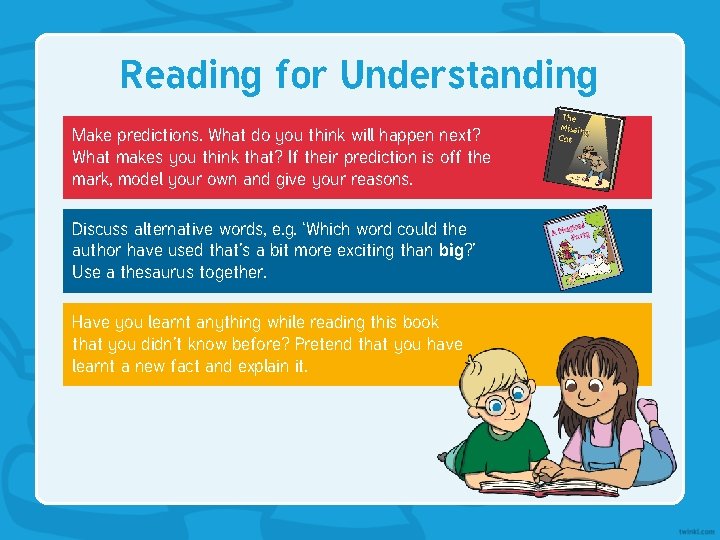
Reading for Understanding Make predictions. What do you think will happen next? What makes you think that? If their prediction is off the mark, model your own and give your reasons. Discuss alternative words, e. g. ‘Which word could the author have used that’s a bit more exciting than big? ’ Use a thesaurus together. Have you learnt anything while reading this book that you didn’t know before? Pretend that you have learnt a new fact and explain it.
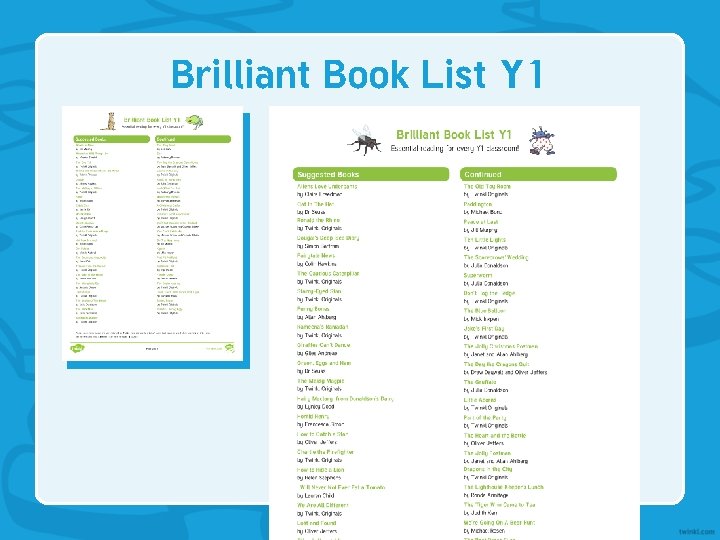
Brilliant Book List Y 1
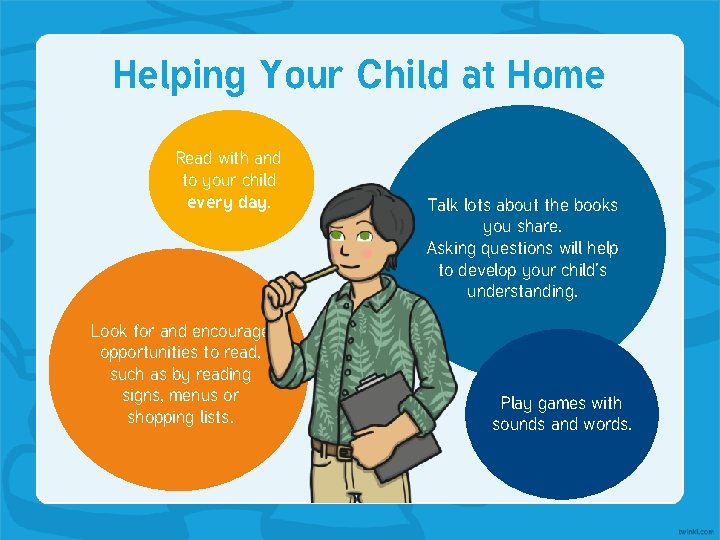
Helping Your Child at Home Read with and to your child every day. Look for and encourage opportunities to read, such as by reading signs, menus or shopping lists. Talk lots about the books you share. Asking questions will help to develop your child’s understanding. Play games with sounds and words.
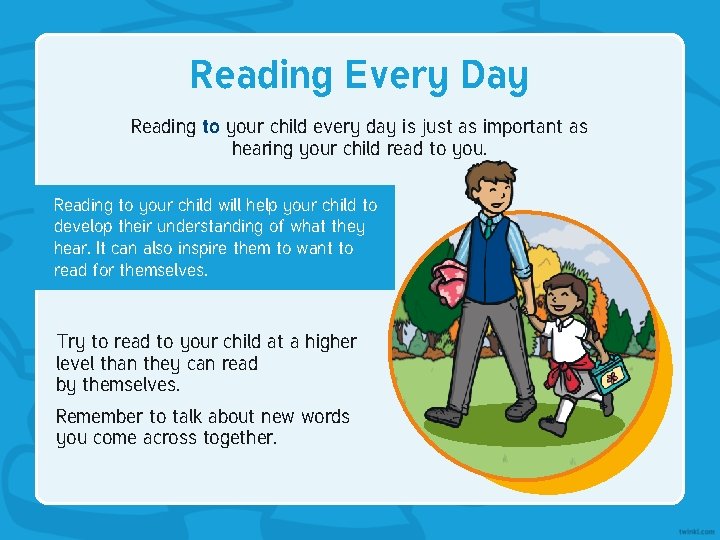
Reading Every Day Reading to your child every day is just as important as hearing your child read to you. Reading to your child will help your child to develop their understanding of what they hear. It can also inspire them to want to read for themselves. Try to read to your child at a higher level than they can read by themselves. Remember to talk about new words you come across together.
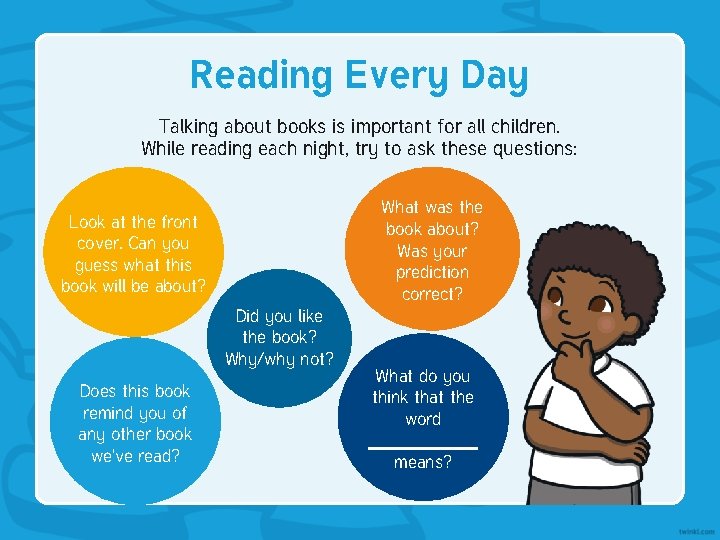
Reading Every Day Talking about books is important for all children. While reading each night, try to ask these questions: What was the book about? Was your prediction correct? Look at the front cover. Can you guess what this book will be about? Did you like the book? Why/why not? Does this book remind you of any other book we've read? What do you think that the word _____ means?
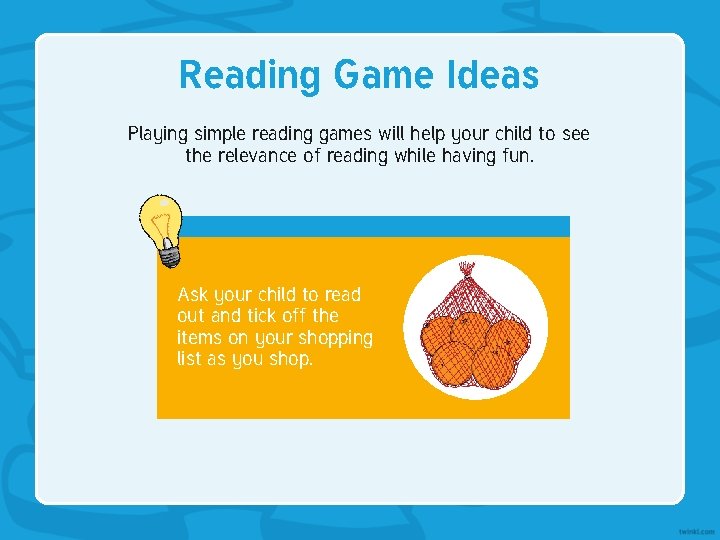
Reading Game Ideas Playing simple reading games will help your child to see the relevance of reading while having fun. Ask your child to read out and tick off the items on your shopping list as you shop.
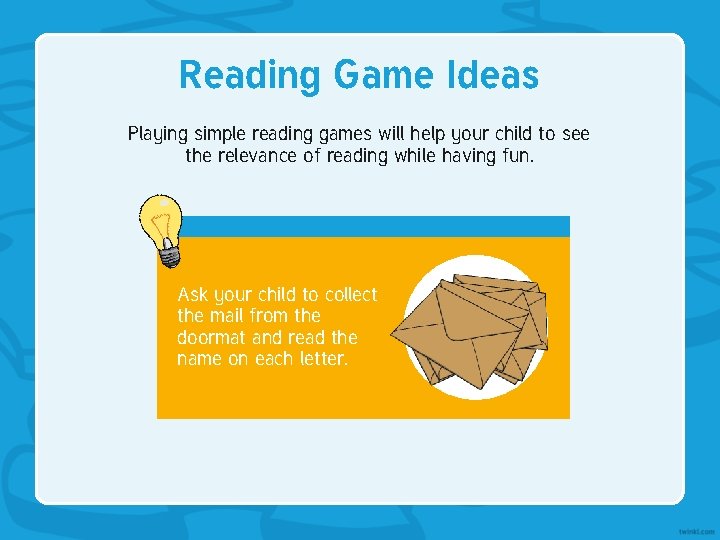
Reading Game Ideas Playing simple reading games will help your child to see the relevance of reading while having fun. Ask your child to collect the mail from the doormat and read the name on each letter.
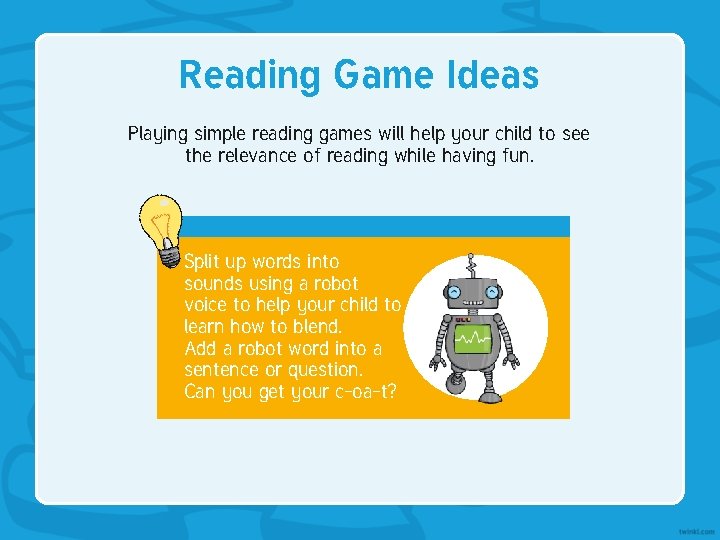
Reading Game Ideas Playing simple reading games will help your child to see the relevance of reading while having fun. Split up words into sounds using a robot voice to help your child to learn how to blend. Add a robot word into a sentence or question. Can you get your c-oa-t?
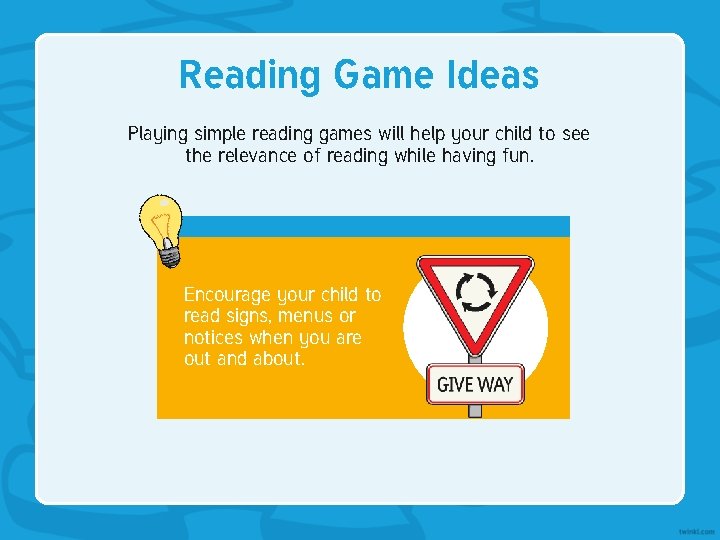
Reading Game Ideas Playing simple reading games will help your child to see the relevance of reading while having fun. Encourage your child to read signs, menus or notices when you are out and about.
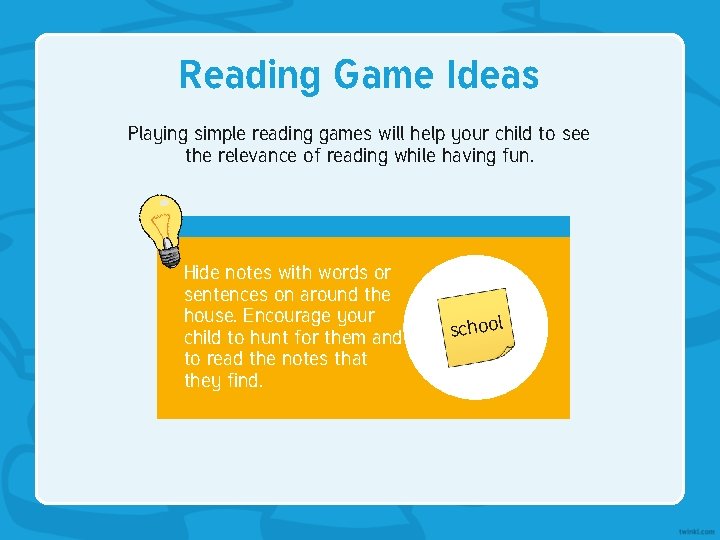
Reading Game Ideas Playing simple reading games will help your child to see the relevance of reading while having fun. Hide notes with words or sentences on around the house. Encourage your child to hunt for them and to read the notes that they find. school
Have you got any questions?