
National College Transitions Network MANAGE AND SCALE YOUR



- Slides: 32
National College Transitions Network MANAGE AND SCALE YOUR TRANSITIONS PROGRAM Charlene Gill & David Borden Austin Community College Austin, TX Building Bridges to Success: Strengthening Postsecondary Transition for Students in Adult Education
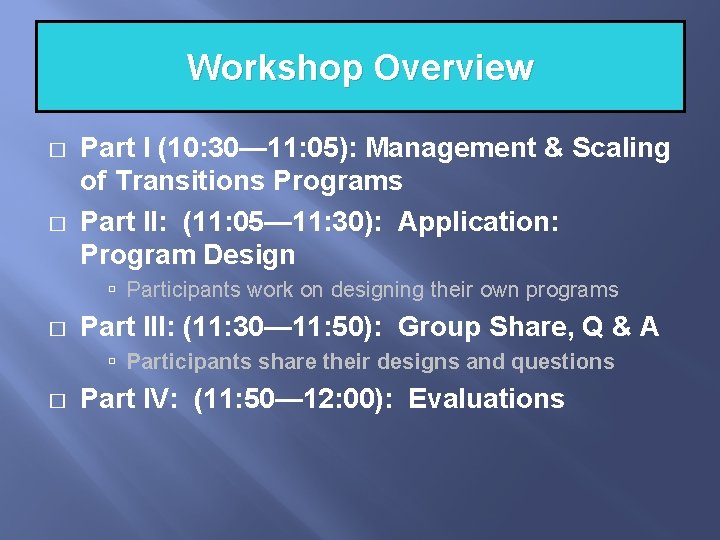
Workshop Overview � � Part I (10: 30— 11: 05): Management & Scaling of Transitions Programs Part II: (11: 05— 11: 30): Application: Program Design Participants work on designing their own programs � Part III: (11: 30— 11: 50): Group Share, Q & A Participants share their designs and questions � Part IV: (11: 50— 12: 00): Evaluations
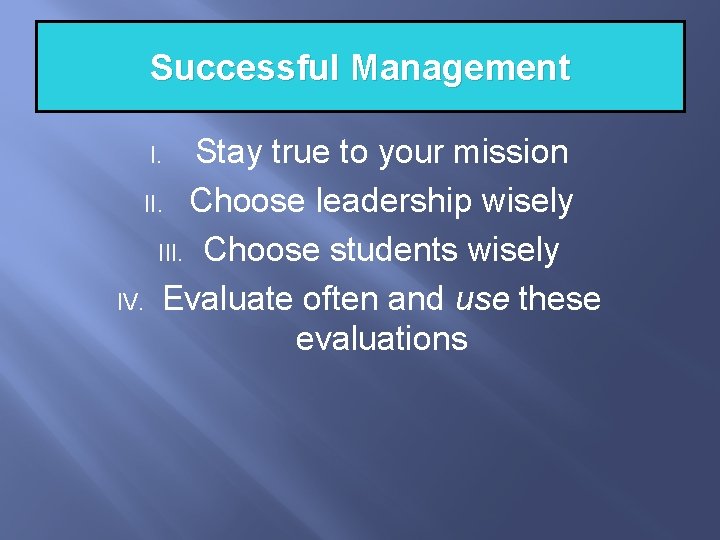
Successful Management Stay true to your mission II. Choose leadership wisely III. Choose students wisely IV. Evaluate often and use these evaluations I.
I: Manage by Mission � � Constantly review your core mission or the underlying philosophy and goals of the program. Let the mission guide you—the real mission.
Example: Mission: Ensure non-traditional students gain access to and success within higher education Underlying Philosophy: Our students deserve equal access to higher education, and they can and will succeed there with the proper supports.
II. Choose Leadership Wisely � Interview Process � For � Director/Coordinator and Instructors Look for Core Success Principles: � They CARE about the students. � They are DEDICATED to the students. � They are KNOWLEDEGABLE for the students. � They BELIEVE in the students.
II: Choose Leadership Wisely �Belief �Fitness—especially communication skills & good with students �Promote from within �Set high expectations �Trust your gut
Retain Great Leaders �Demonstrate Belief �Increase Fitness �Promote the Best �Offer plenty of support �Reward meeting of high expectations �Listen
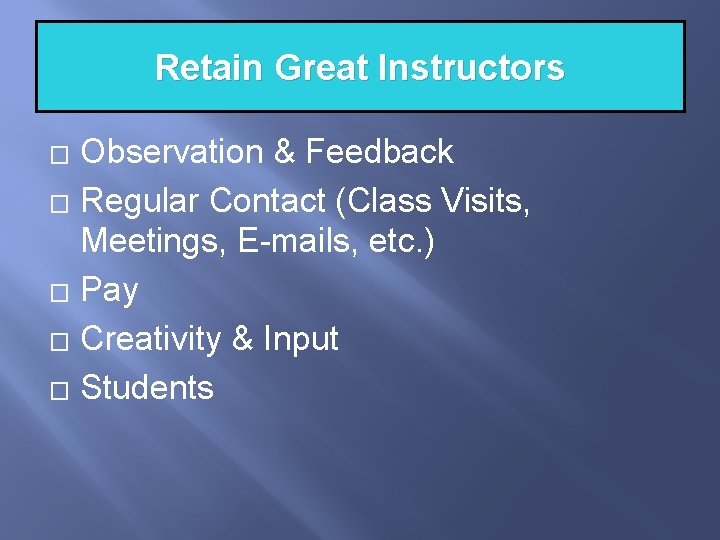
Retain Great Instructors Observation & Feedback � Regular Contact (Class Visits, Meetings, E-mails, etc. ) � Pay � Creativity & Input � Students �
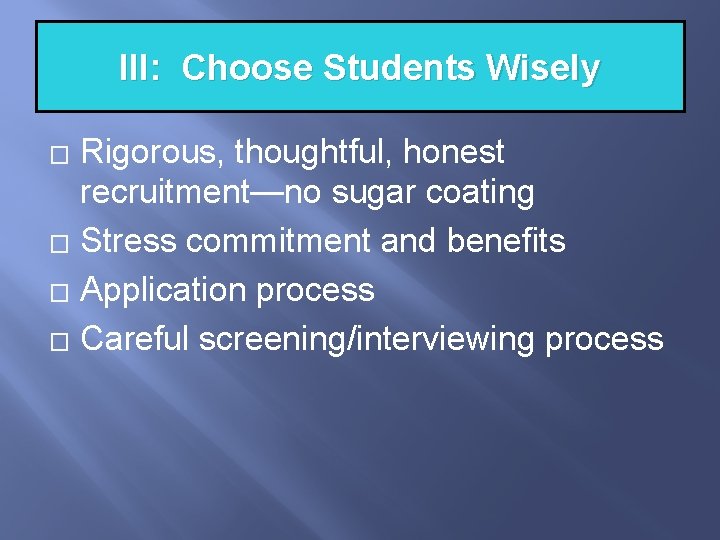
III: Choose Students Wisely Rigorous, thoughtful, honest recruitment—no sugar coating � Stress commitment and benefits � Application process � Careful screening/interviewing process �
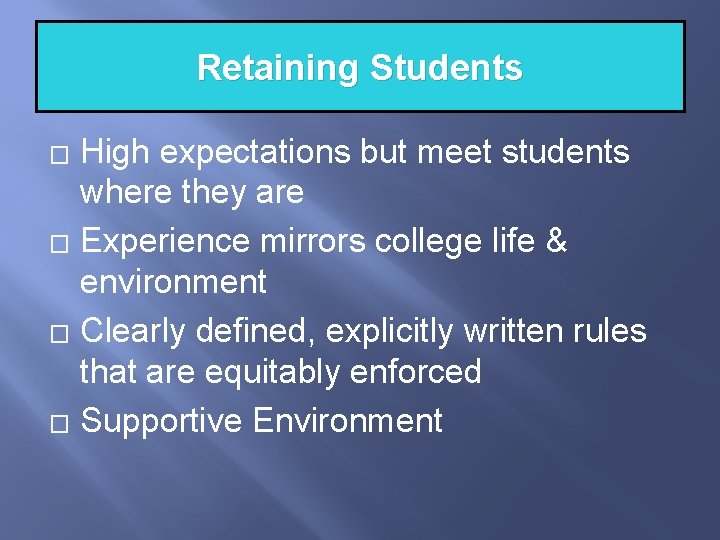
Retaining Students High expectations but meet students where they are � Experience mirrors college life & environment � Clearly defined, explicitly written rules that are equitably enforced � Supportive Environment �
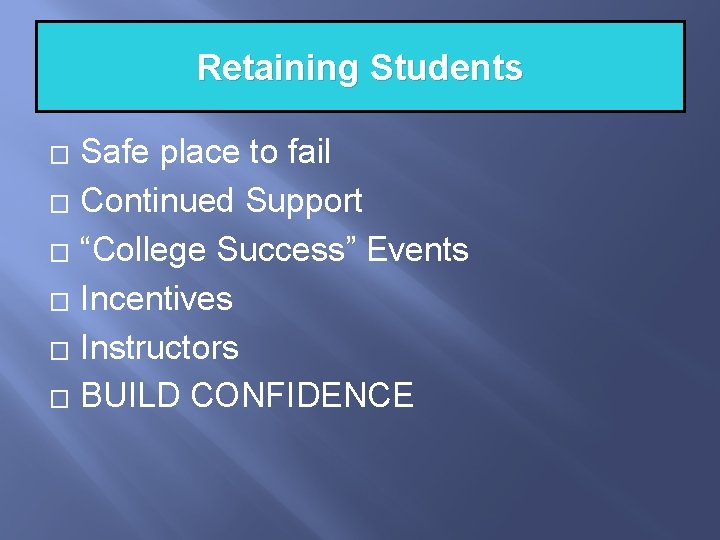
Retaining Students Safe place to fail � Continued Support � “College Success” Events � Incentives � Instructors � BUILD CONFIDENCE �
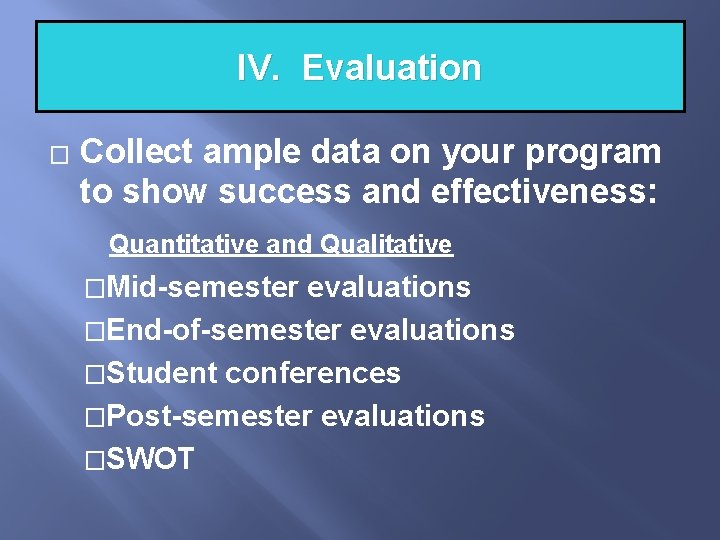
IV. Evaluation � Collect ample data on your program to show success and effectiveness: Quantitative and Qualitative �Mid-semester evaluations �End-of-semester evaluations �Student conferences �Post-semester evaluations �SWOT
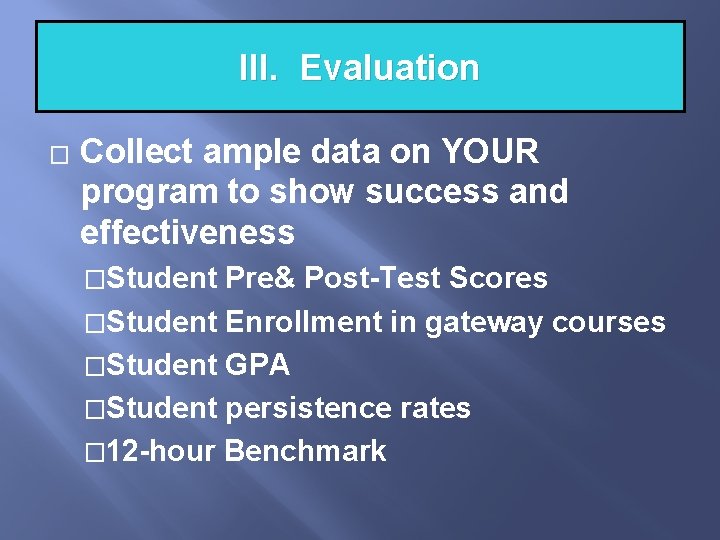
III. Evaluation � Collect ample data on YOUR program to show success and effectiveness �Student Pre& Post-Test Scores �Student Enrollment in gateway courses �Student GPA �Student persistence rates � 12 -hour Benchmark
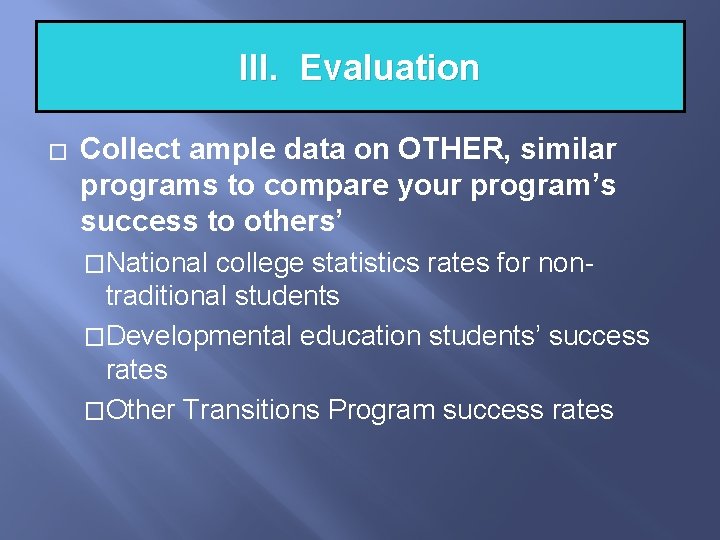
III. Evaluation � Collect ample data on OTHER, similar programs to compare your program’s success to others’ �National college statistics rates for nontraditional students �Developmental education students’ success rates �Other Transitions Program success rates
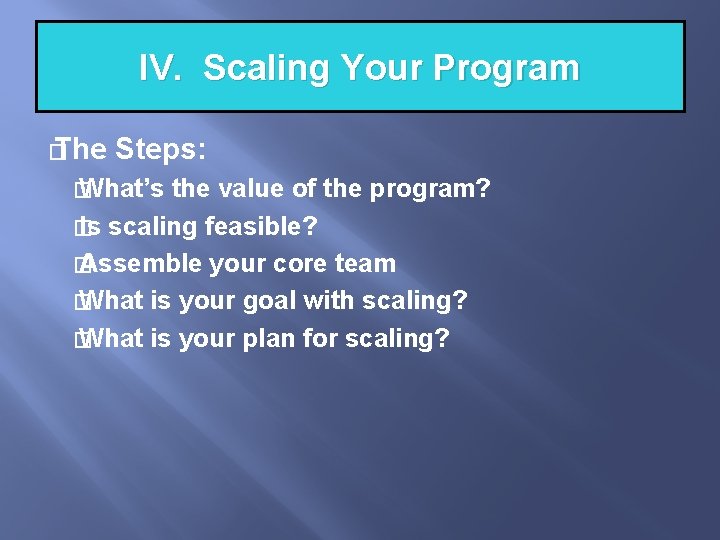
IV. Scaling Your Program � The Steps: � What’s the value of the program? � Is scaling feasible? � Assemble your core team � What is your goal with scaling? � What is your plan for scaling?
Determine and Prove the Value of Program Use data gathered from evaluation to determine � COMPARE: Don’t just look at raw numbers alone � LISTEN: Students, teachers, staff, community � IMAGINE: Impact on community
Determine Feasibility of Scaling � Do you have sufficient data to support? � Do you have the right allies? � Who opposes scaling? � Do you have the right team?
Determine Feasibility of Scaling � What resources are needed? � Is the program replicable, or is it dependent on particular personnel? � How does the program help the funder or institution meets its goals
IV. Scaling Your Program Do Your Homework a). Organize and Present Your Program’s Success Data b). Organize and Present Other Programs’ Success and/or Failure Data c). Invite to Site
IV. Scaling Your Program Do Your Homework d). Point to need of programming e). Highlight Benefits (to funder, to students, to society as a whole) f). Repeat as needed. Repetition and patience are key to success.
2: Assemble Your Team
Create a Diverse, Powerful Team Who else would benefit from serving this group of students? � Local Community College(s) � Other community organization(s) � State governments or education boards � National institutions with similar goals (Aspen, Goodwill, Bill & Melinda Gates)
Create a Diverse, Powerful Team Who else supports this particular group of students? � College advisors? � Department Chairs? � Dean of students? � College president? � Community leaders?
Define Your Goals for Scaling � So what? Scaling allows you to ____? This purpose matters to the college or the state or the community because______?
Determine Your Plan Create a Timeline for scaling and address the following questions: �How many students would be served? �What services/pathways would be offered? �How many employees are needed? �Who/what might offer funding?
Determine Your Plan Create a Timeline for scaling and address the following questions: �What is the cost? (To funders and/or students) �Location(s) of classes? �Partners? �Other supports in place?
References � � � � Complete College Texas. ” Complete College America Report, April 2013. Connelly, David. College Knowledge. Jossey-Bass, 2005. “Scaling Community College Interventions. ” Cutting Edge Series. 2. Achieving the Dream and Public Agenda, 2010. Parcell, Abby. “More to Most: Scaling up Effective � Community College Practices. ” MDC , 2012
Part II: Your Turn
Your Turn Applying what you learned in the first part of the workshop, begin designing your own Transitions Program. Include in your design: � � � Special visitors or presentations Student Recruitment Plan & Interview Questions Instructor & Staff Recruitment Plan & Interview Design Program Evaluation Plans Potential Funding Sources Expansion & Scalability Plans
Part III: Discussion Share Your Ideas w/the Group! � � � Optimum number of weeks & hours per week? Course schedule? Special visitors or presentations? Student Recruitment Plan & Interview Questions? Instructor Recruitment Plan & Interview Design? Program Evaluation Plans?
Thank you! Please fill out evaluation forms. Contact Info: David Borden 512. 223. 7738 Charlene Gill 512. 223. 5122 cgill@austincc. edu http: //www. austincc. edu/transitions/