
National Cipher Challenge A beginners guide to codes

National Cipher Challenge A beginner’s guide to codes and ciphers Part 4, breaking the affine shift cipher using modular inverses
Breaking a cipher is like solving an equation.
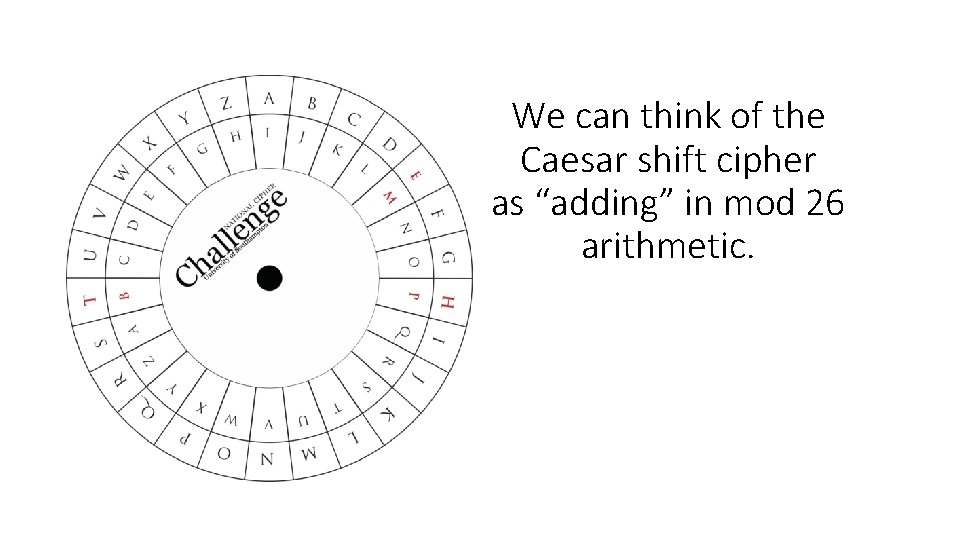
We can think of the Caesar shift cipher as “adding” in mod 26 arithmetic.
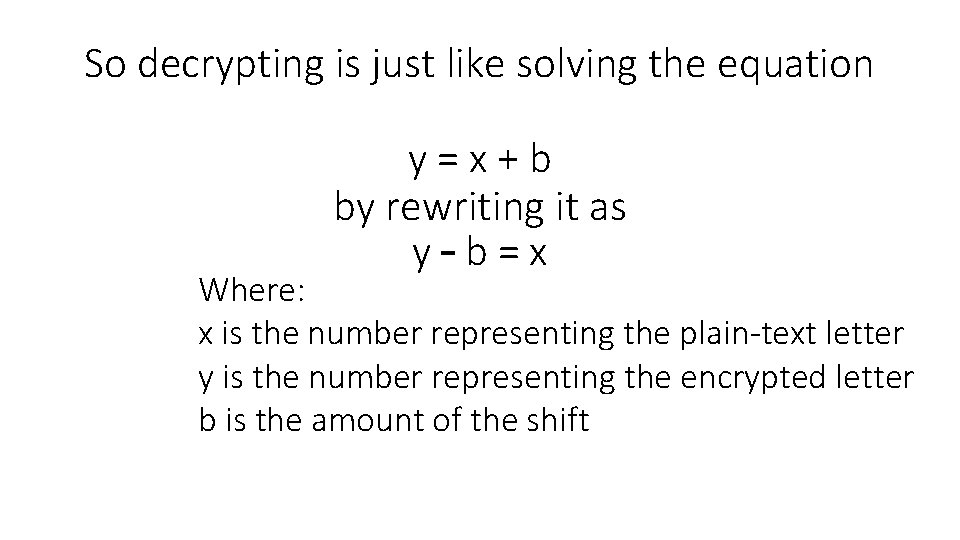
So decrypting is just like solving the equation y=x+b by rewriting it as y–b=x Where: x is the number representing the plain-text letter y is the number representing the encrypted letter b is the amount of the shift

Now let’s think about the affine shift cipher.
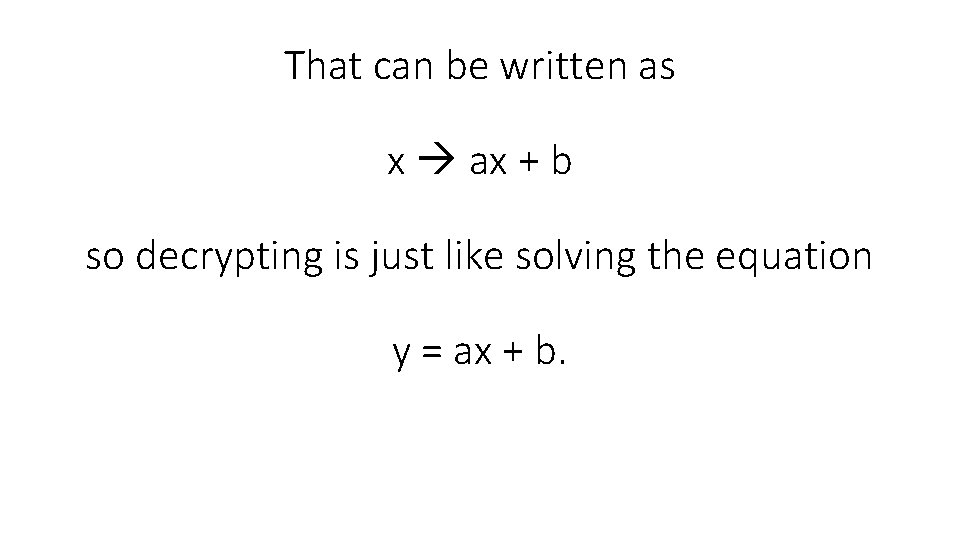
That can be written as x ax + b so decrypting is just like solving the equation y = ax + b.
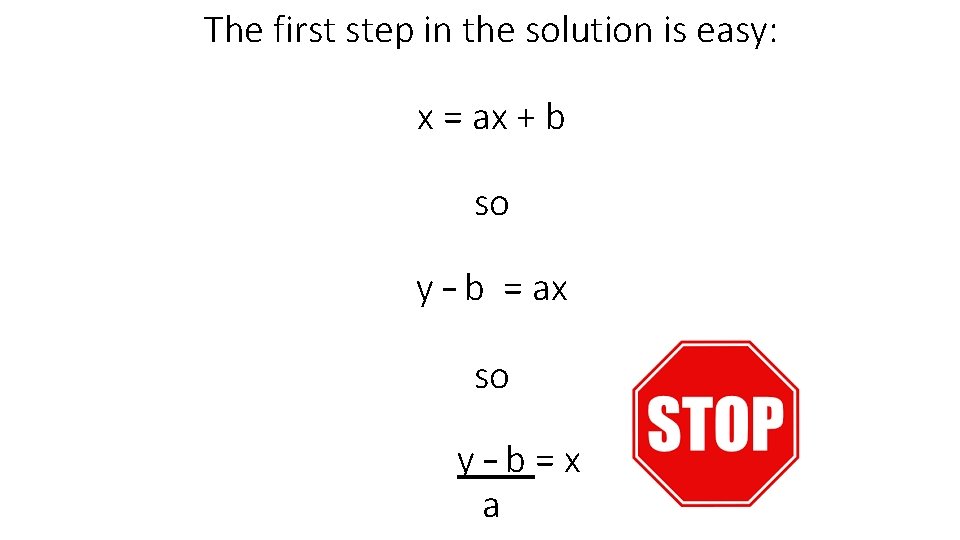
The first step in the solution is easy: x = ax + b so y – b = ax so y–b=x a
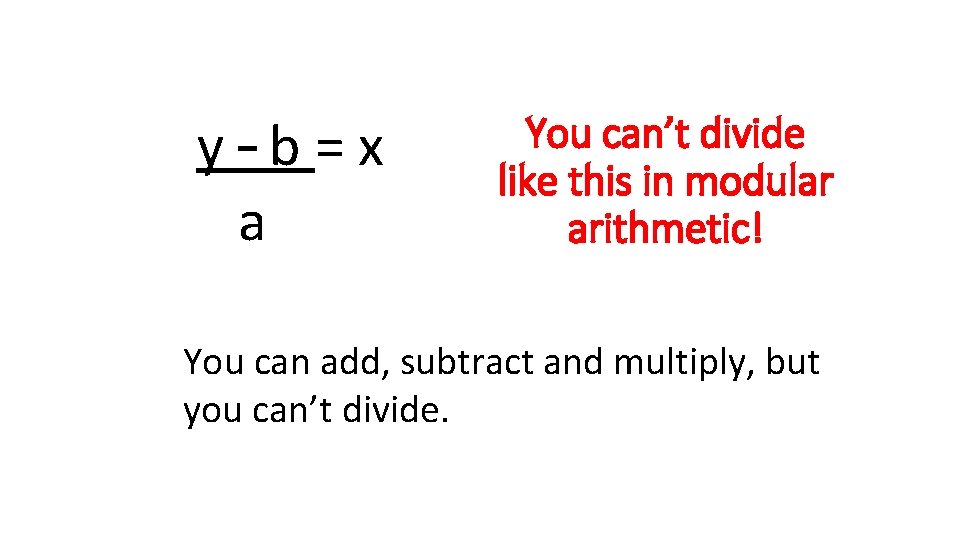
y – b = x a You can’t divide like this in modular arithmetic! You can add, subtract and multiply, but you can’t divide.
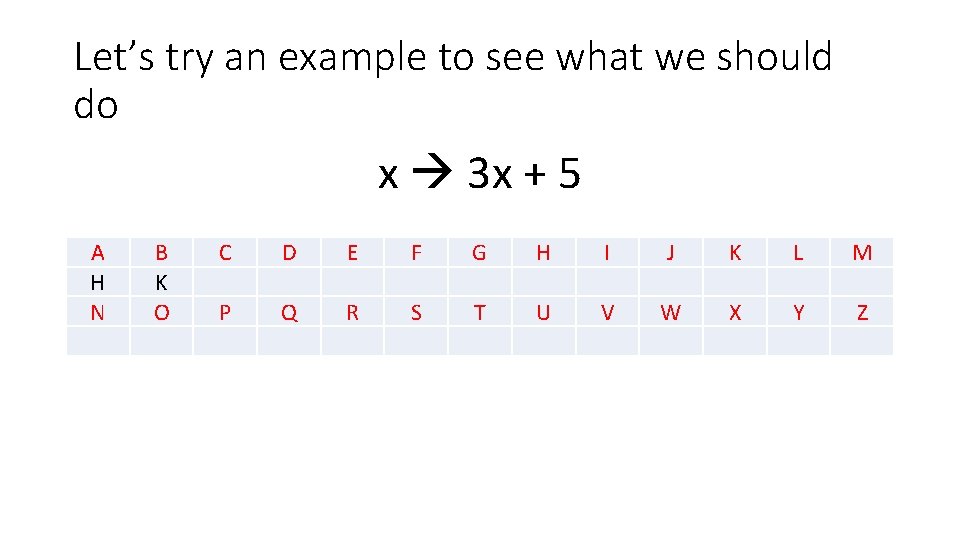
Let’s try an example to see what we should do x 3 x + 5 A H N B K O C P D Q E R F S G T H U I V J W K X L Y M Z
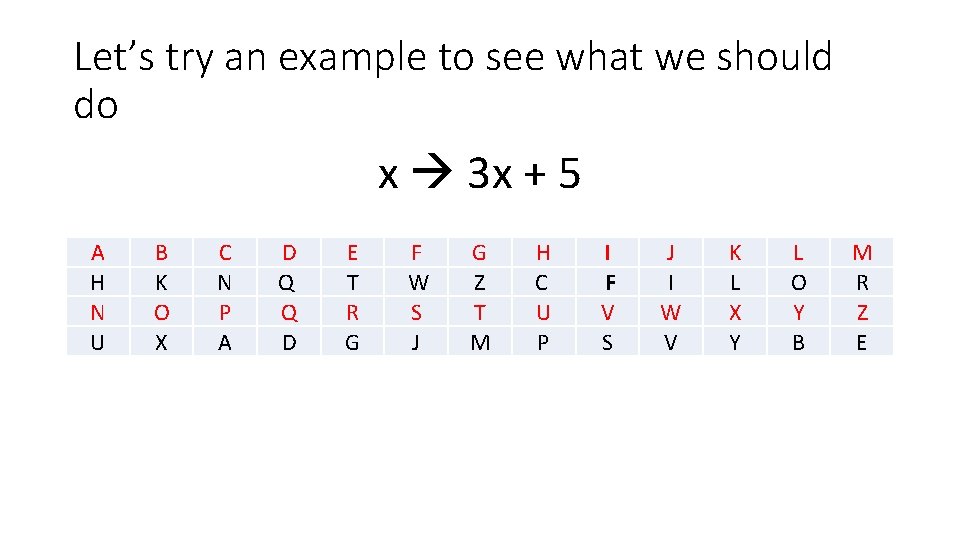
Let’s try an example to see what we should do x 3 x + 5 A H N U B K O X C N P A D Q Q D E T R G F W S J G Z T M H C U P I F V S J I W V K L X Y L O Y B M R Z E

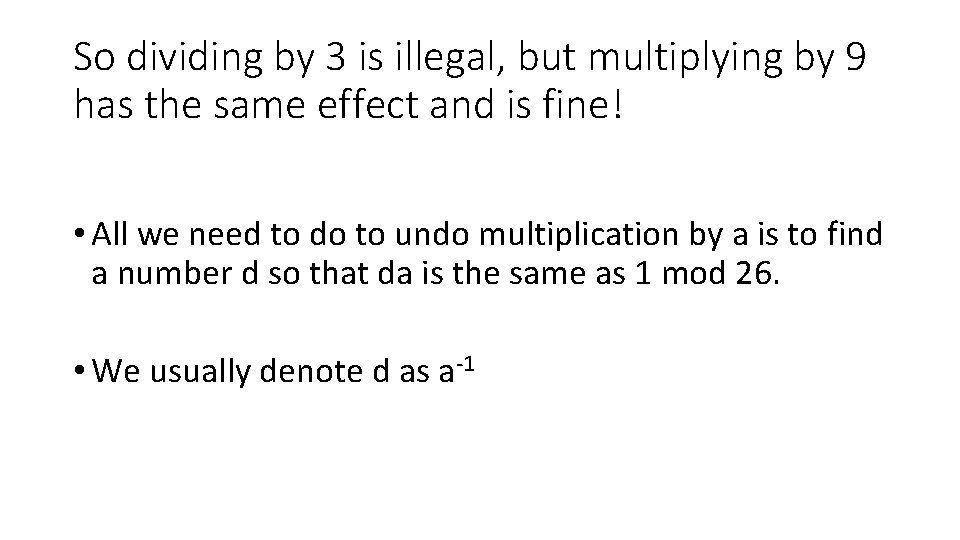
So dividing by 3 is illegal, but multiplying by 9 has the same effect and is fine! • All we need to do to undo multiplication by a is to find a number d so that da is the same as 1 mod 26. • We usually denote d as a-1
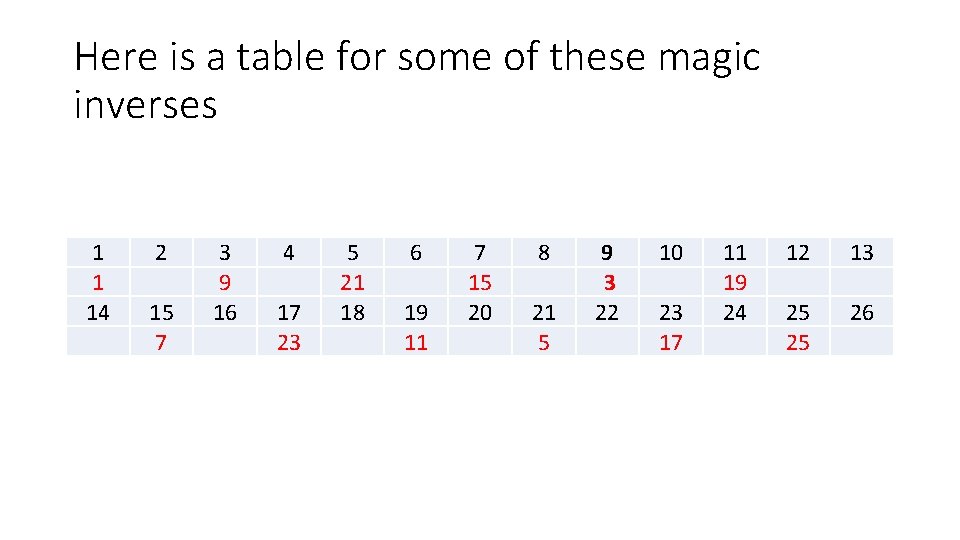
Here is a table for some of these magic inverses 1 1 14 2 15 7 3 9 16 4 17 23 5 21 18 6 19 11 7 15 20 8 21 5 9 3 22 10 23 17 11 19 24 12 13 25 25 26
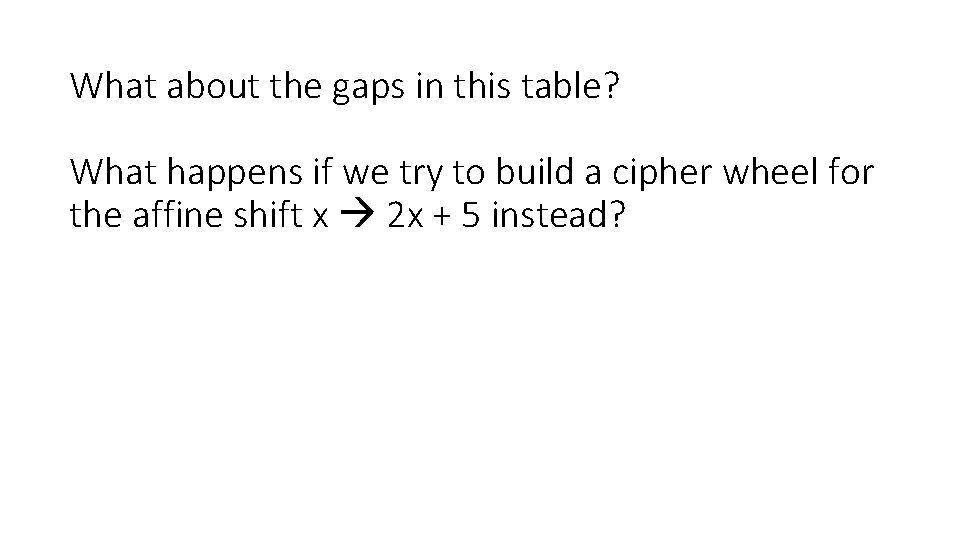
What about the gaps in this table? What happens if we try to build a cipher wheel for the affine shift x 2 x + 5 instead?

What other affine shifts don’t work?
- Slides: 15