
National Certified InvestigatorInspector Training NCIT Investigative Process Instructor
- Slides: 52
National Certified Investigator/Inspector Training (NCIT) Investigative Process Instructor: Name Agency ©© Council onon Licensure, Enforcement and Regulation Council Licensure, Enforcement and Regulation (CLEAR) Online: www. clearhq. org
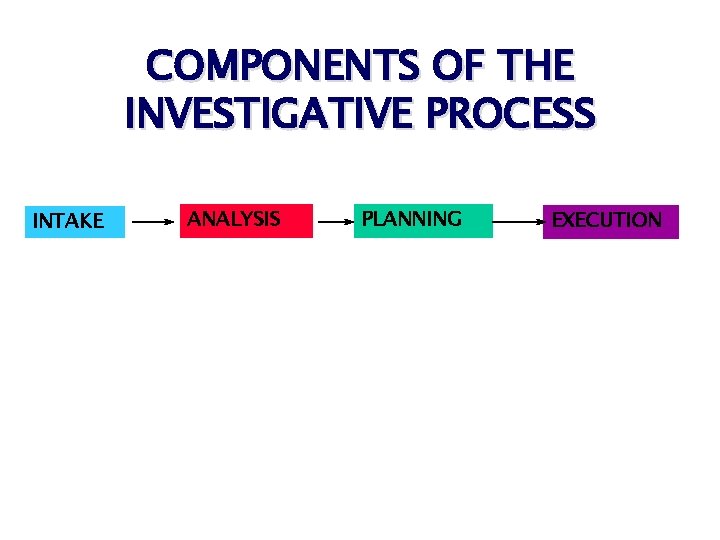
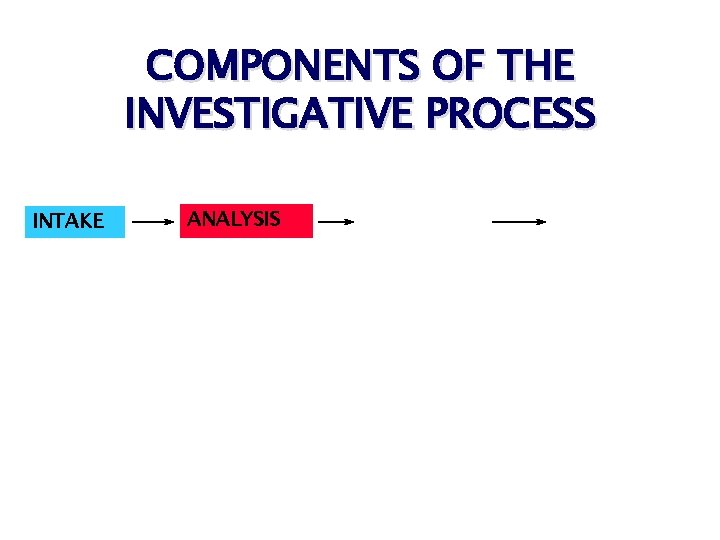
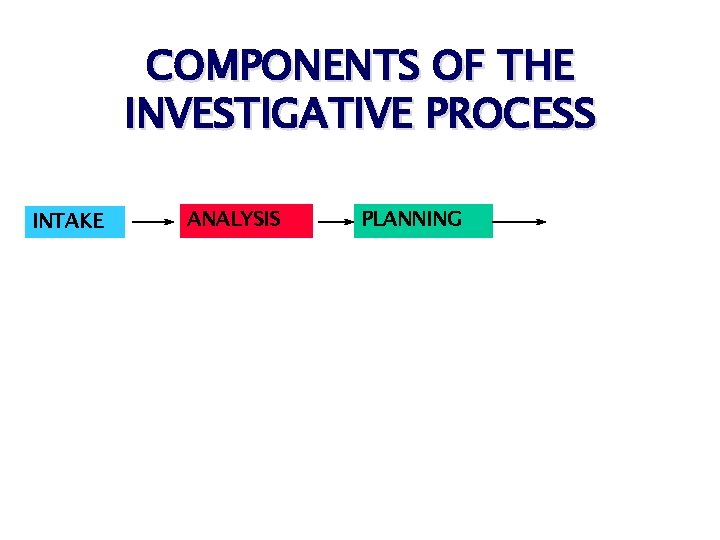
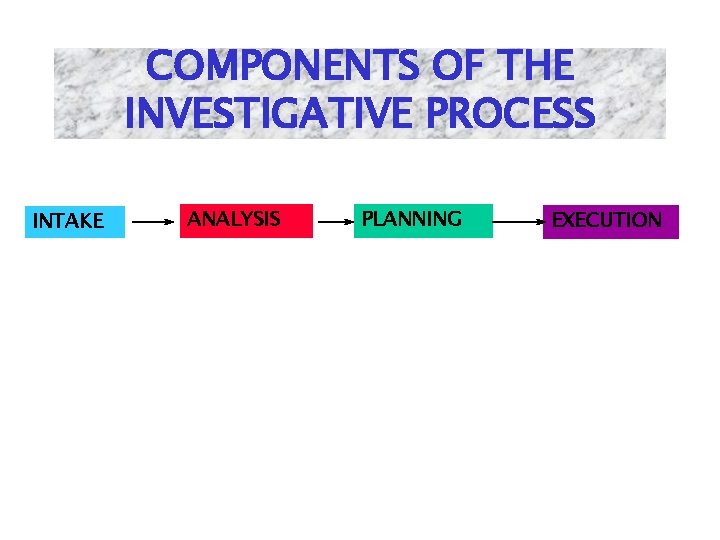
COMPONENTS OF THE INVESTIGATIVE PROCESS INTAKE ANALYSIS PLANNING EXECUTION
INTAKE Hall of Justice Complaint Intake
DEFINITIONS • COMPLAINT (LEGAL)
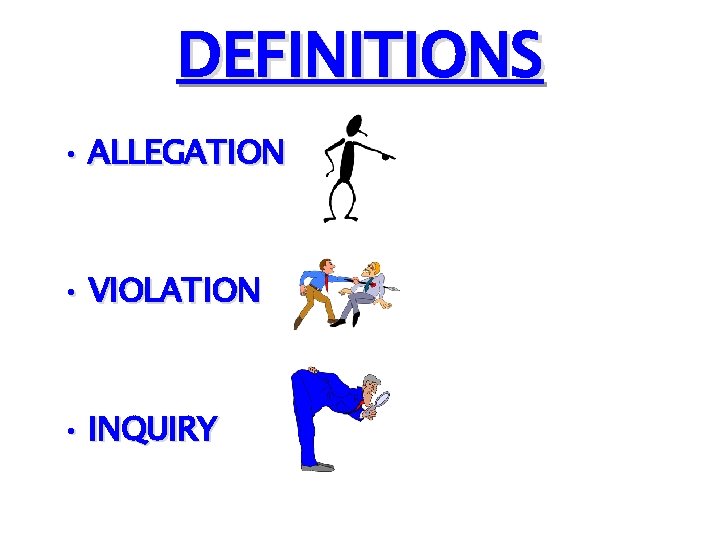
DEFINITIONS • ALLEGATION • VIOLATION • INQUIRY
DEFINITIONS JURISDICTION • interpret • apply
DEFINITIONS • LEGALLY SUFFICIENT COMPLAINT – facts as alleged, if shown to be true, would constitute a violation.
SOURCES Include: • Consumer • Other professional licensees • Media • Anonymous • Attorney representing complainant
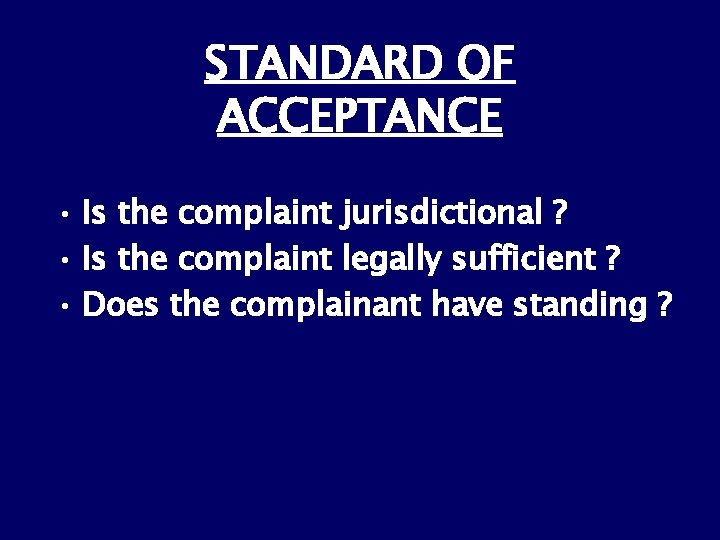
STANDARD OF ACCEPTANCE • Is the complaint jurisdictional ? • Is the complaint legally sufficient ? • Does the complainant have standing ?
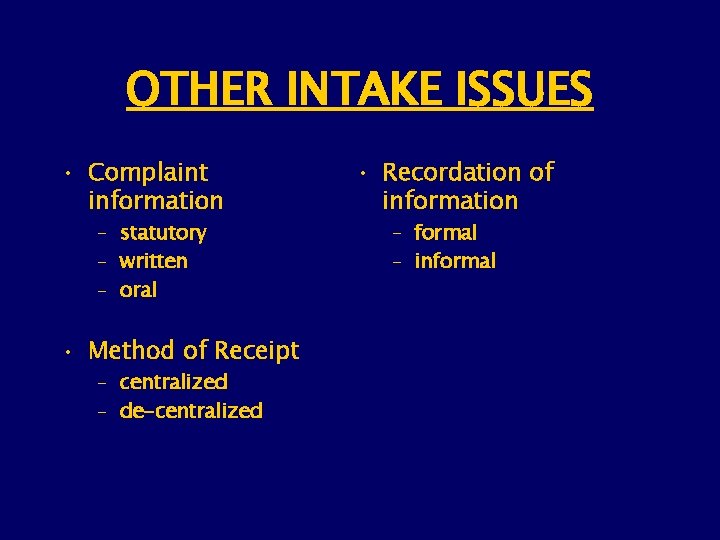
OTHER INTAKE ISSUES • Complaint information – statutory – written – oral • Method of Receipt – centralized – de-centralized • Recordation of information – formal – informal
COMPONENTS OF THE INVESTIGATIVE PROCESS INTAKE ANALYSIS
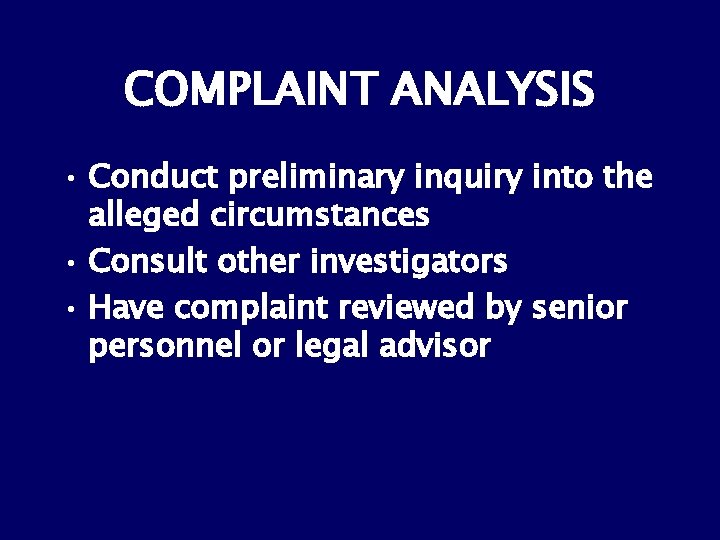
COMPLAINT ANALYSIS • Conduct preliminary inquiry into the alleged circumstances • Consult other investigators • Have complaint reviewed by senior personnel or legal advisor
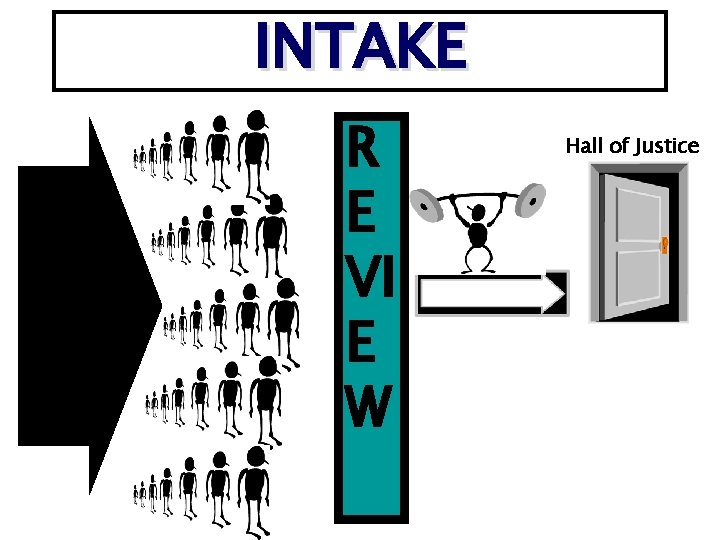
INTAKE R E VI E W Hall of Justice
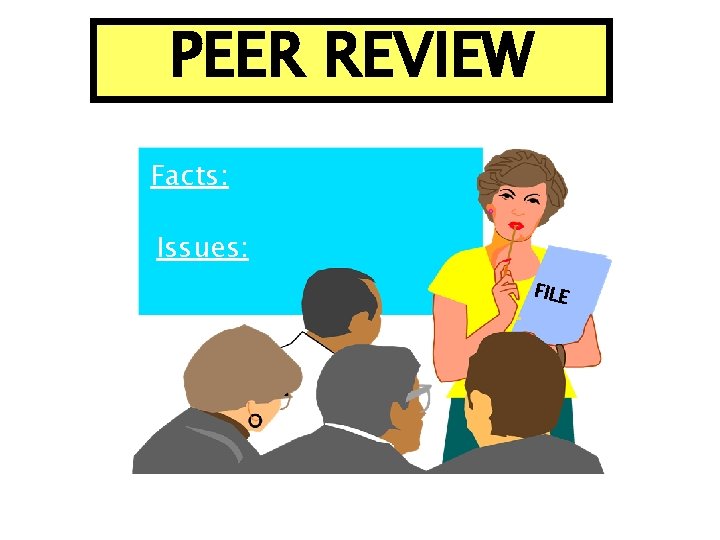
PEER REVIEW Facts: Issues: FILE
EXPERT ASSISTANCE
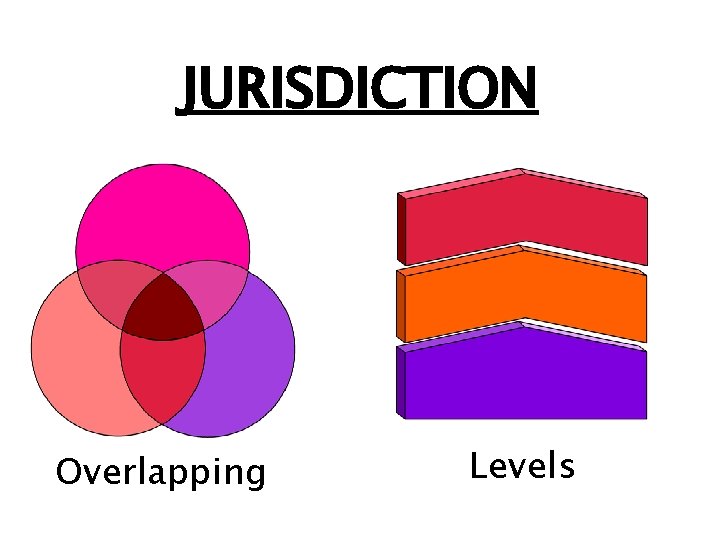
JURISDICTION Overlapping Levels
INTERAGENCY RELATIONS CHARACTERISTICS • Competitive • Cooperative • Suspicious • Persuasive • Assertive
BEHAVIOR OF INDIVIDUALS • Result of Stimuli- what is an emergency for me is not a concern for you. • Officials Play Roles- use it to your advantage • Predictable- know the other person’s trigger points and avoid them.
AGENCY INTERFACING • Try to work with agencies with similar missions and authority. • Avoid turf battles- they weaken the agencies involved. • Do not publicly criticize the agencies you are working with- no matter how much they deserve it. • Stay Positive and COOPERATE
• What agency takes precedence ? • Who directs the investigation ? • Who has final decision-making authority ? • Does participation in the investigation violate your statutes, rules or jurisdictional limits ?
COMPONENTS OF THE INVESTIGATIVE PROCESS INTAKE ANALYSIS PLANNING
ROLE OF THE INVESTIGATOR • Proper review of the complaint • Powers and authority
INVESTIGATIVE PLAN • Format is another word for organization and structure • Don’t focus on style, focus on substance • Format should be a plan with goals and benchmarks
THE FIVE W’S • WHO ? • WHAT ? • WHERE ? • WHEN ? • WHY ?
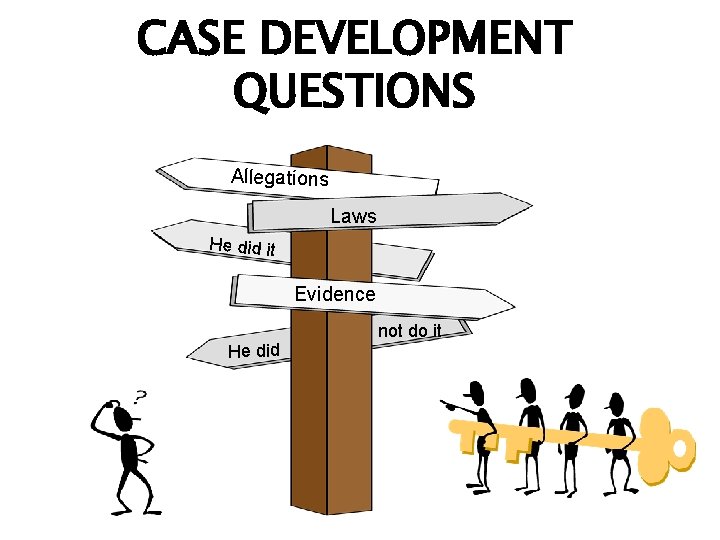
CASE DEVELOPMENT QUESTIONS Allegations Laws He did it Evidence He did not do it
DIRECTLY RELATED • Allegations? • Law/Regulation? • Evidence?
#1 Abandonment without a legal excuse.
#2 Abandonment or the intentional and unjustified failure to complete work contracted for. Unjustified cessation of work under a contract for a period of thirty days or more shall be considered evidence of abandonment.
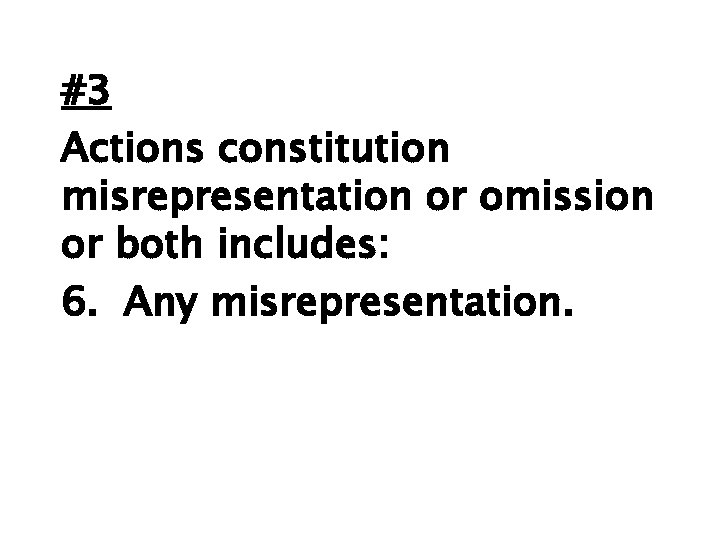
#3 Actions constitution misrepresentation or omission or both includes: 6. Any misrepresentation.
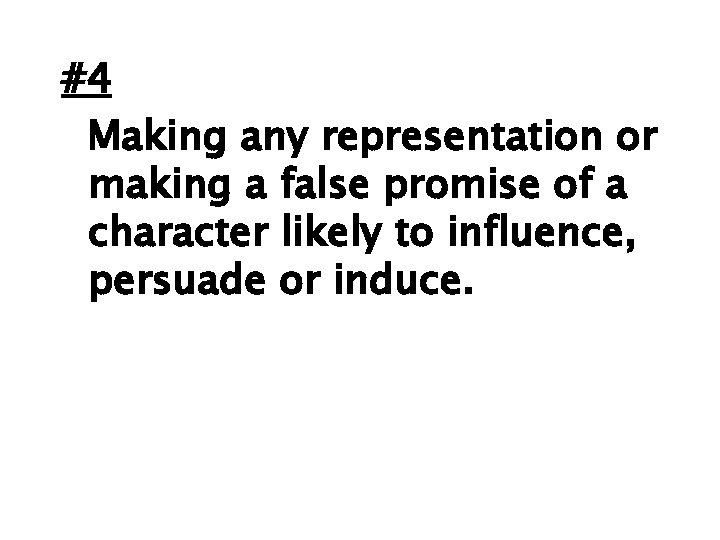
#4 Making any representation or making a false promise of a character likely to influence, persuade or induce.
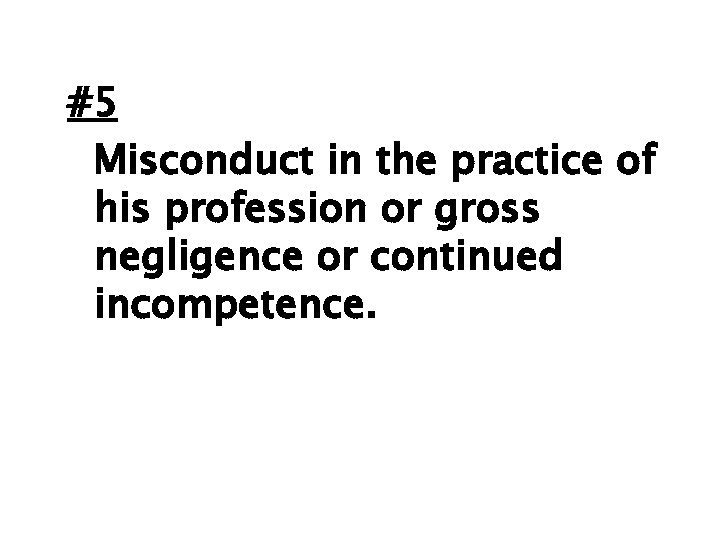
#5 Misconduct in the practice of his profession or gross negligence or continued incompetence.
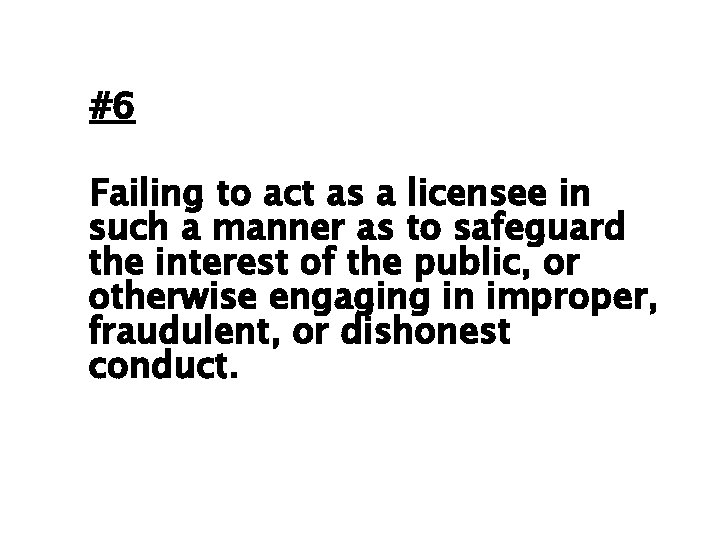
#6 Failing to act as a licensee in such a manner as to safeguard the interest of the public, or otherwise engaging in improper, fraudulent, or dishonest conduct.
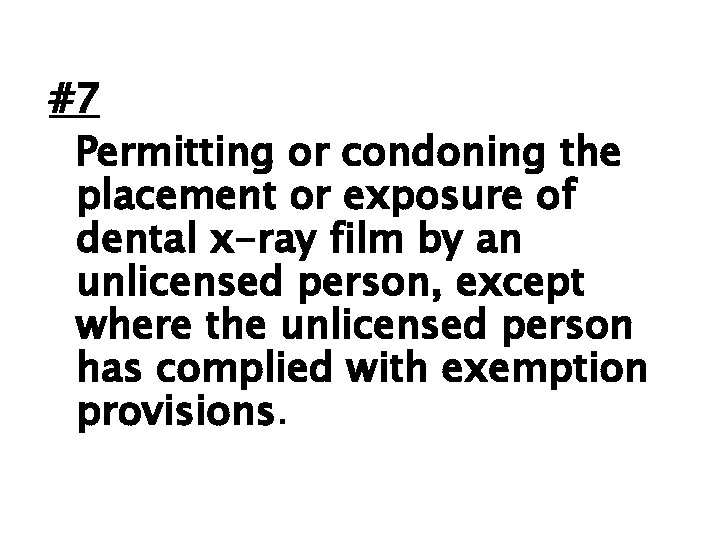
#7 Permitting or condoning the placement or exposure of dental x-ray film by an unlicensed person, except where the unlicensed person has complied with exemption provisions.
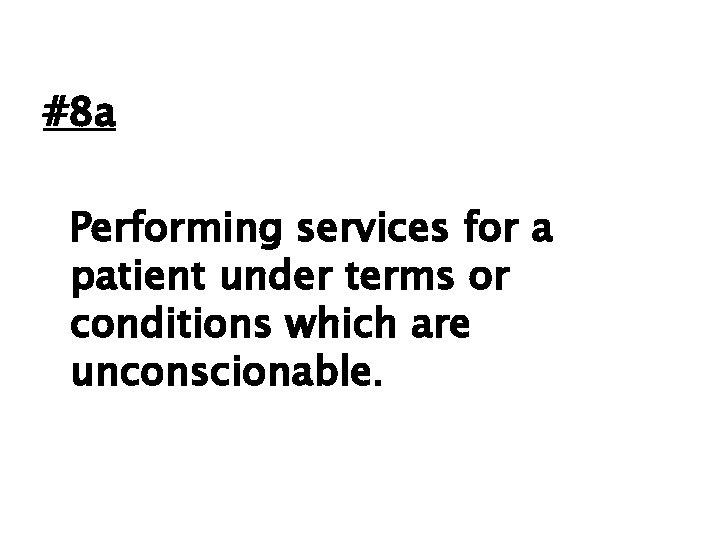
#8 a Performing services for a patient under terms or conditions which are unconscionable.
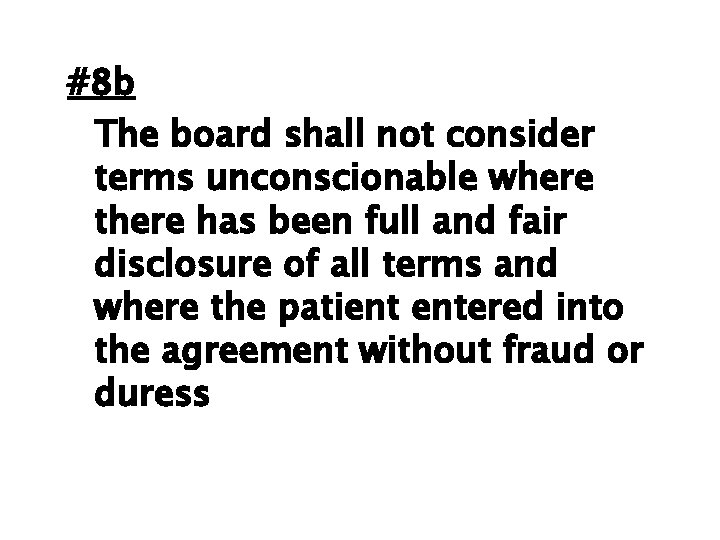
#8 b The board shall not consider terms unconscionable where there has been full and fair disclosure of all terms and where the patient entered into the agreement without fraud or duress
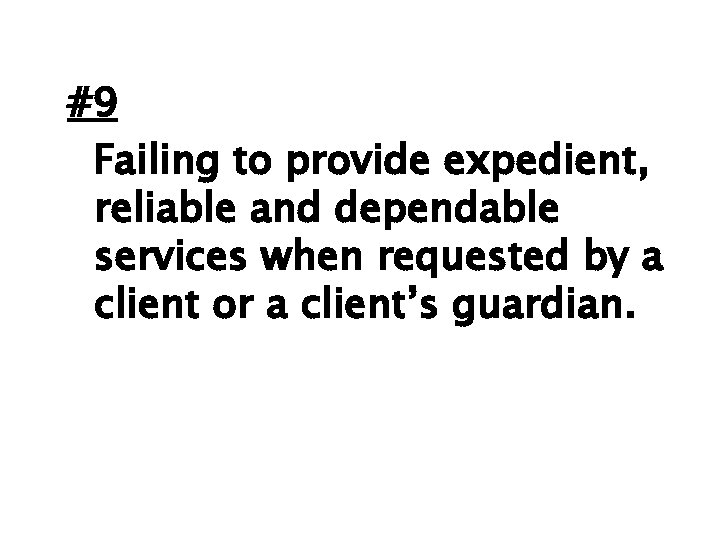
#9 Failing to provide expedient, reliable and dependable services when requested by a client or a client’s guardian.
#10 Falsifying or otherwise altering patient or employer records
#11 Having been convicted in any jurisdiction of a misdemeanor involving moral turpitude, sexual offense, drug distribution or physical injury on any felony
DIRECTLY RELATED • • • Elements of a violation? Sources? Witnesses? Legal instruments? Collection/ Maintenance • Expert? • Problems?
BURGLARY • “The breaking and entering, of a dwelling, of another, in the night time, with the intent of committing a felony. ”
INDIANA PESTICIDE USE AND APPLICATION LAW IC 15 -3 -3. 6 -14(9 a) • “Engaged in or profess to be engaged in the business of applying pesticides for hire, on the property of another, without having an Indiana Pesticide Business License. ”
INDIRECTLY RELATED • Priority of staff assignments • Costs • Geographic concerns • Training and skill • Governing regulations
SELECTION OF INVESTIGATIVE METHOD • Field/Central Office • Inspection • Use of Experts or Consultants • Undercover/Covert vs. Direct/Overt • Other
INVESTIGATIVE TOOLS > Required reports and records > Inspections > Subpoena > Search Warrants > Investigative Hearings > Demand Letter > Interviews
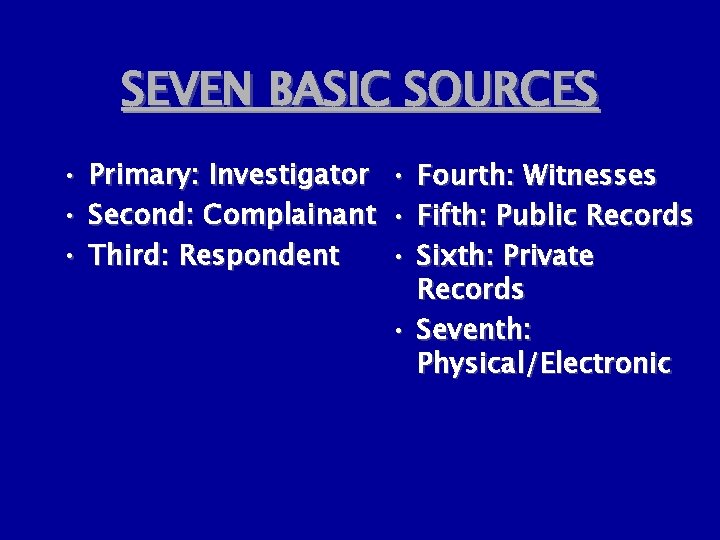
SEVEN BASIC SOURCES • Primary: Investigator • Fourth: Witnesses • Second: Complainant • Fifth: Public Records • Third: Respondent • Sixth: Private Records • Seventh: Physical/Electronic
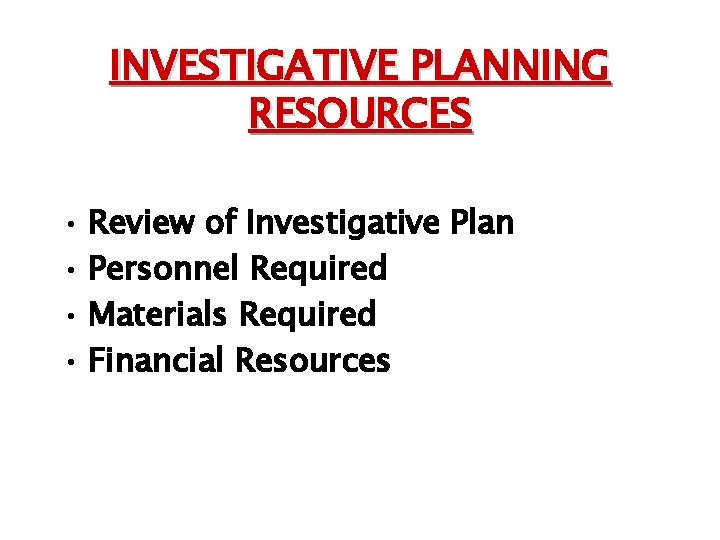
INVESTIGATIVE PLANNING RESOURCES • Review of Investigative Plan • Personnel Required • Materials Required • Financial Resources
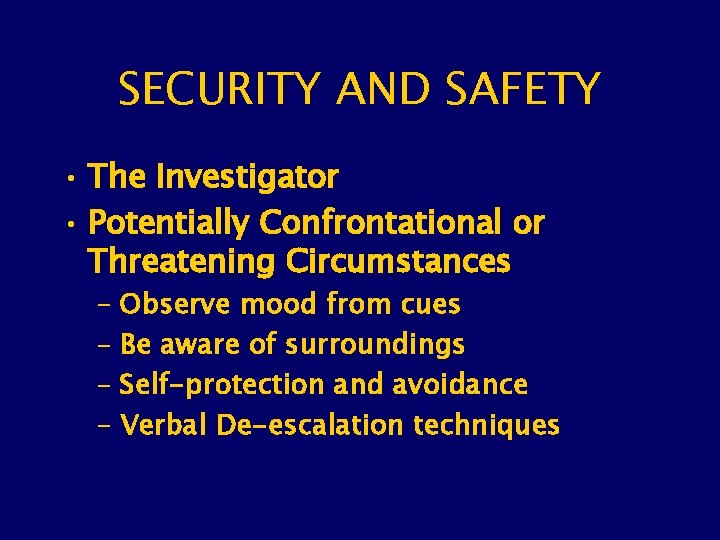
SECURITY AND SAFETY • The Investigator • Potentially Confrontational or Threatening Circumstances – Observe mood from cues – Be aware of surroundings – Self-protection and avoidance – Verbal De-escalation techniques
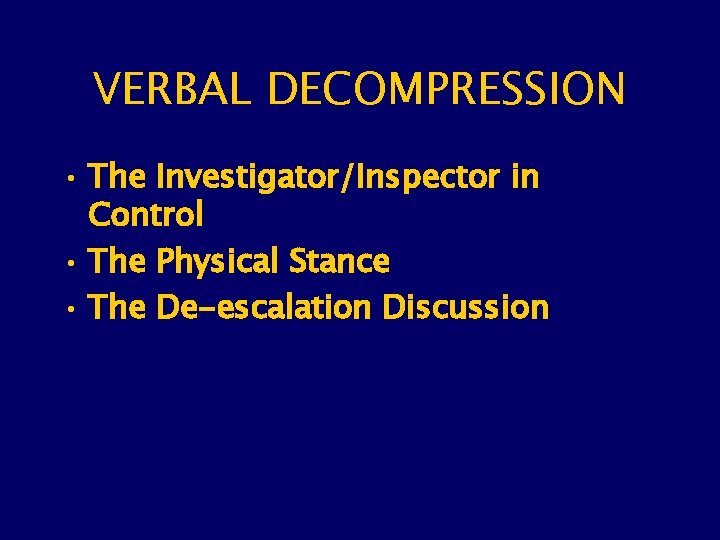
VERBAL DECOMPRESSION • The Investigator/Inspector in Control • The Physical Stance • The De-escalation Discussion
COMPONENTS OF THE INVESTIGATIVE PROCESS INTAKE ANALYSIS PLANNING EXECUTION
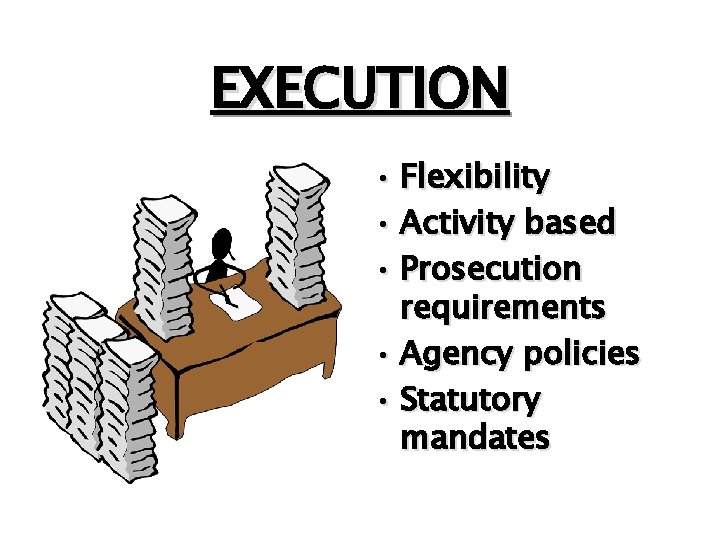
EXECUTION • Flexibility • Activity based • Prosecution requirements • Agency policies • Statutory mandates
THANK YOU
Investigative Process Contact Information: Name Agency Address City/State/Zip Code Phone: E-mail: CLEAR 403 Marquis Avenue Suite 200 Lexington, KY 40502 Phone: (859) 269 -1289 E-mail: clear@mis. net www. clearhq. org © Council on Licensure, Enforcement and Regulation