
NATIONAL CENTER FOR CASE STUDY TEACHING IN SCIENCE
- Slides: 49
NATIONAL CENTER FOR CASE STUDY TEACHING IN SCIENCE A Presentation to Accompany the Case Study: How to Make ATP: Three Classic Experiments in Biology by Monica L. Tischler Department of Biological Sciences Benedictine University, Lisle, IL 1
Energy transformations define life • Cells take energy from the environment • Cells transform energy and store it • All cellular processes use energy: growth, reproduction, communication, movement • Cells store energy in a high energy phosphate bond in the ATP molecule 2
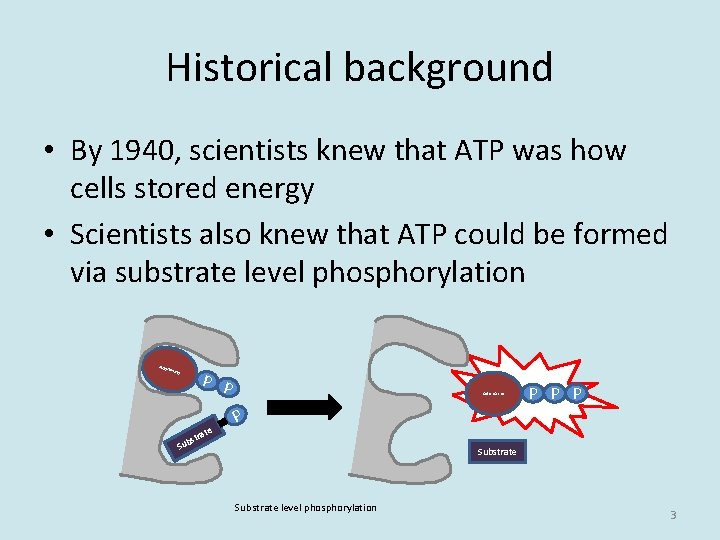
Historical background • By 1940, scientists knew that ATP was how cells stored energy • Scientists also knew that ATP could be formed via substrate level phosphorylation Ade no sine P P ate str Adenosine P P Substrate level phosphorylation 3
In the 1950 s, a metabolic puzzle: Why is so much ATP produced by cells in the presence but not absence of oxygen? • Is there some intermediate in some sort of biochemical pathway that forms ATP? 4
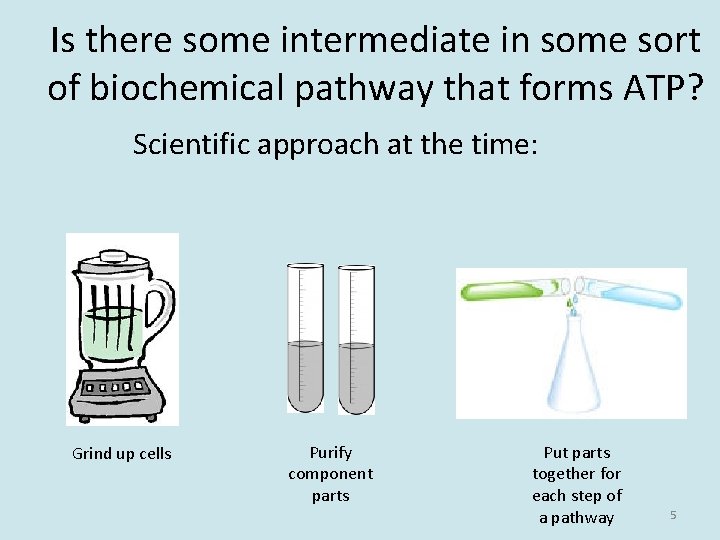
Is there some intermediate in some sort of biochemical pathway that forms ATP? Scientific approach at the time: Grind up cells Purify component parts Put parts together for each step of a pathway 5
1961: Peter Mitchell • Presented a different mechanism for ATP synthesis via electron transport chains • It took almost two decades for scientists to accept his model • Three fundamental questions that needed to be addressed to understand Mitchell’s model – What are electron transport chains? – What do they do? – How do they do it? 6
Part I What are they? (What are electron transport chains? ) 7
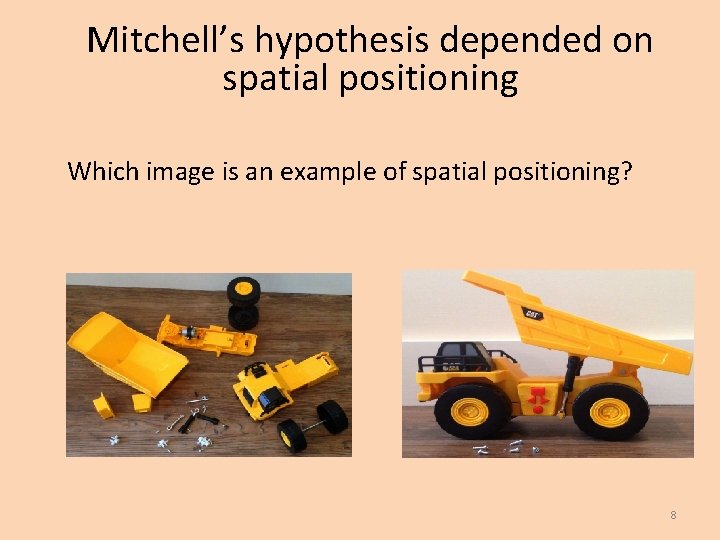
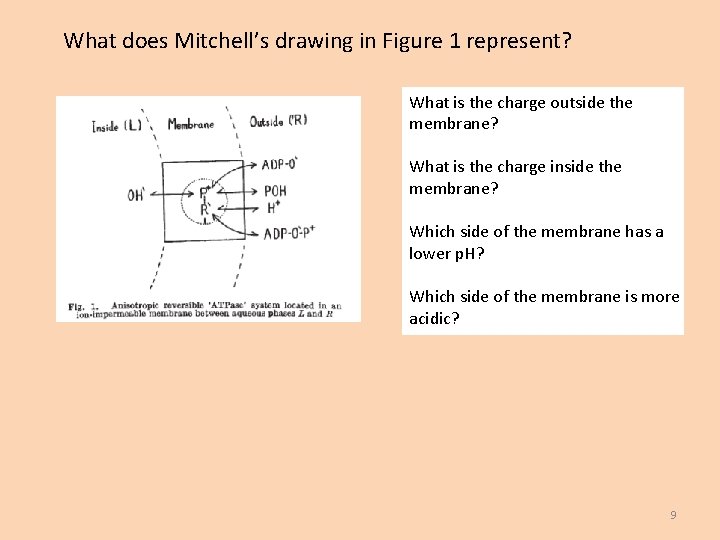
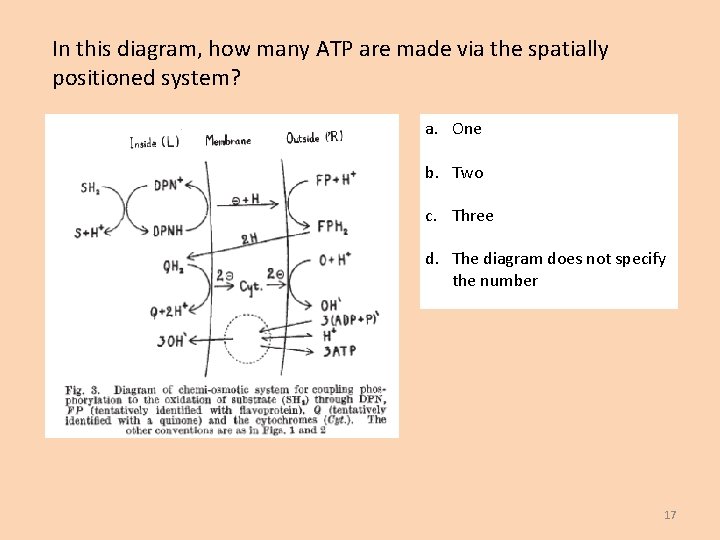
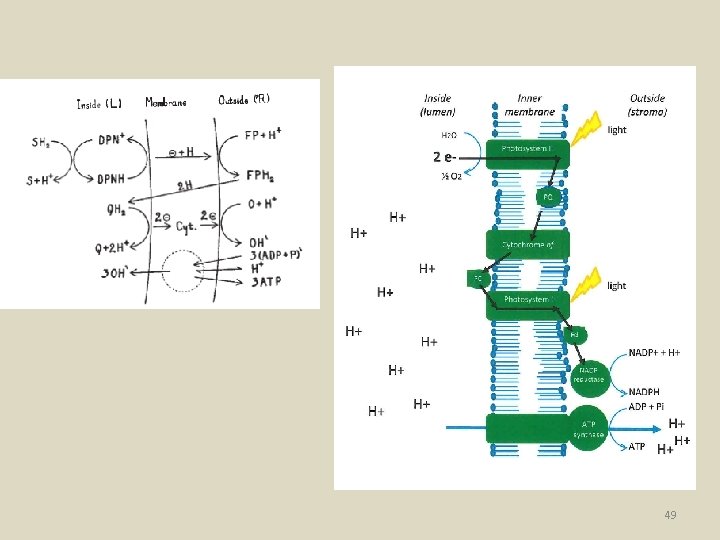
Mitchell’s hypothesis depended on spatial positioning Which image is an example of spatial positioning? 8
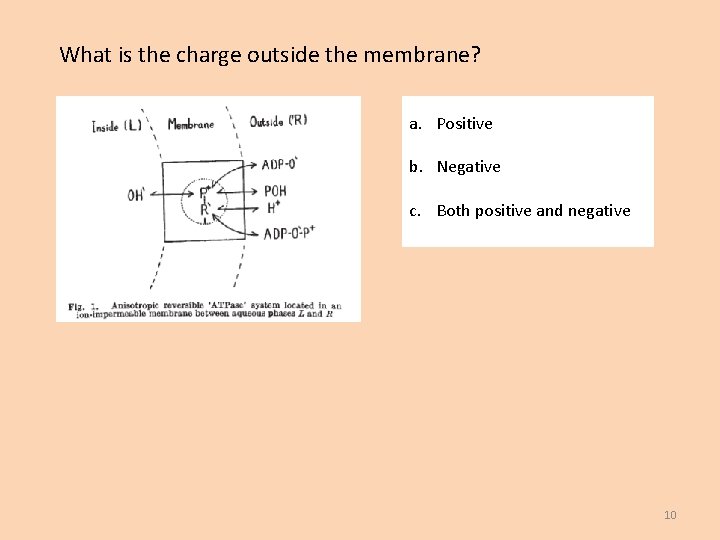
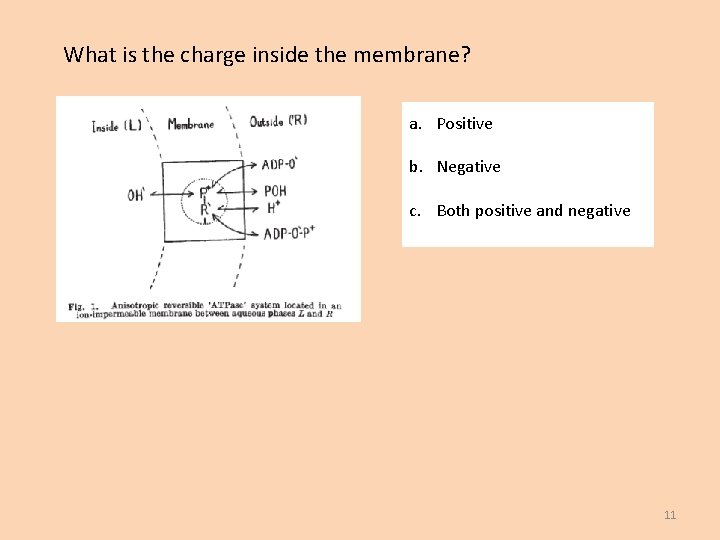
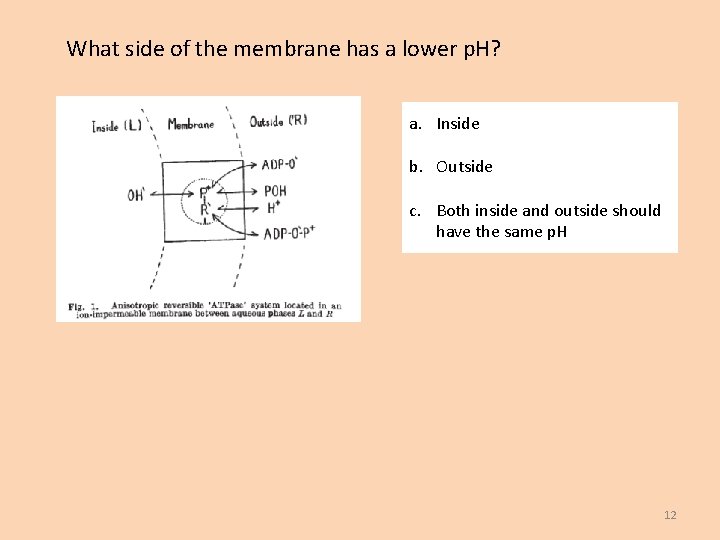
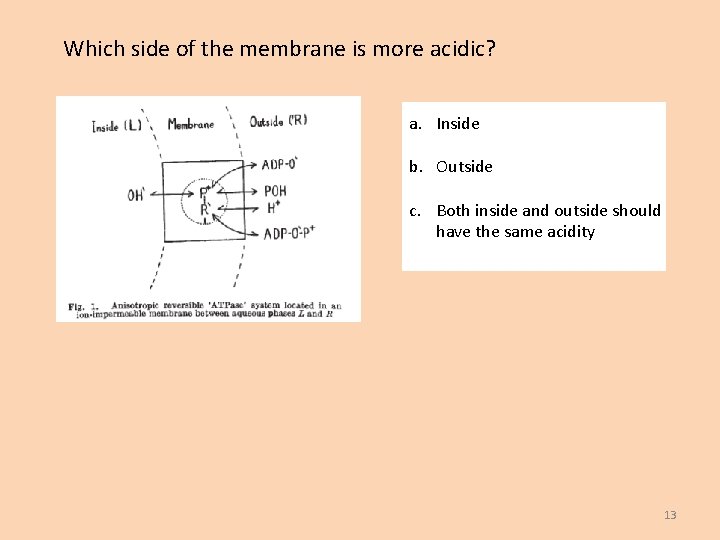
What does Mitchell’s drawing in Figure 1 represent? What is the charge outside the membrane? What is the charge inside the membrane? Which side of the membrane has a lower p. H? Which side of the membrane is more acidic? 9
What is the charge outside the membrane? a. Positive b. Negative c. Both positive and negative 10
What is the charge inside the membrane? a. Positive b. Negative c. Both positive and negative 11
What side of the membrane has a lower p. H? a. Inside b. Outside c. Both inside and outside should have the same p. H 12
Which side of the membrane is more acidic? a. Inside b. Outside c. Both inside and outside should have the same acidity 13
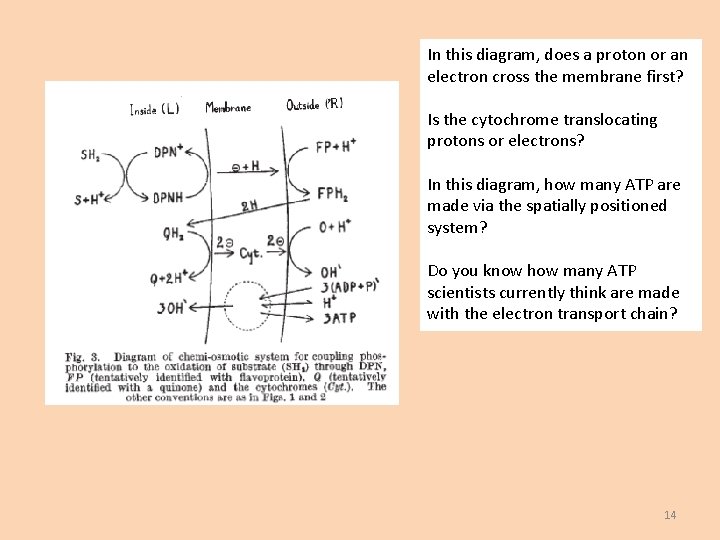
In this diagram, does a proton or an electron cross the membrane first? Is the cytochrome translocating protons or electrons? In this diagram, how many ATP are made via the spatially positioned system? Do you know how many ATP scientists currently think are made with the electron transport chain? 14
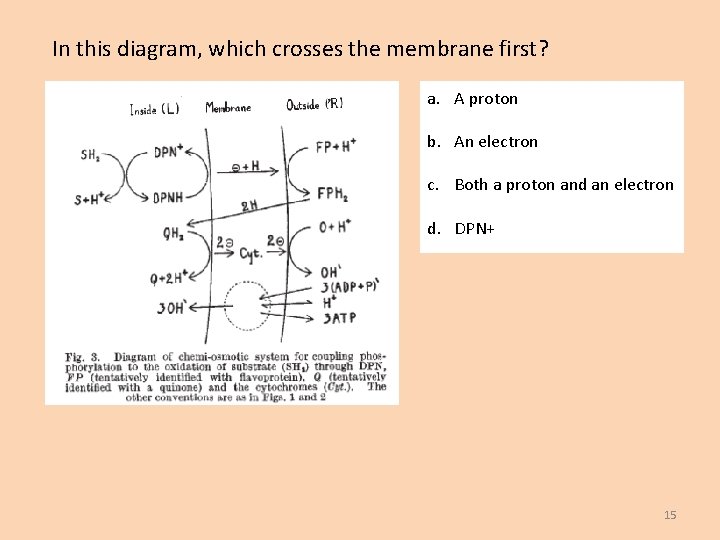
In this diagram, which crosses the membrane first? a. A proton b. An electron c. Both a proton and an electron d. DPN+ 15
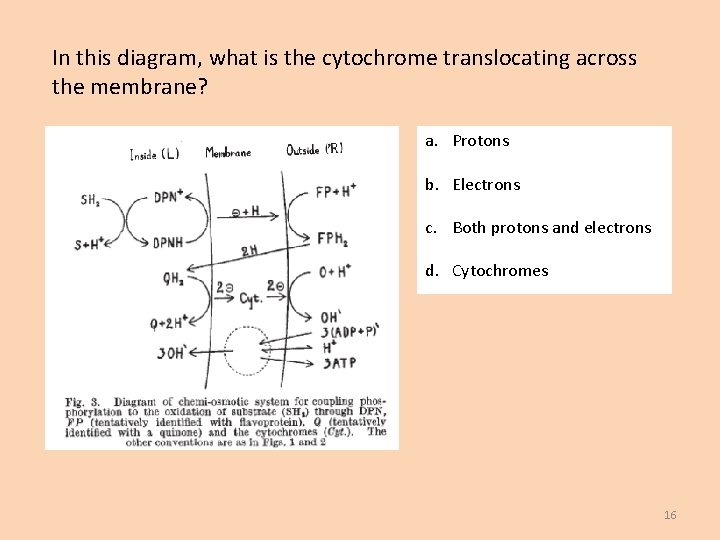
In this diagram, what is the cytochrome translocating across the membrane? a. Protons b. Electrons c. Both protons and electrons d. Cytochromes 16
In this diagram, how many ATP are made via the spatially positioned system? a. One b. Two c. Three d. The diagram does not specify the number 17
• Conclusion: Where the individual components of a reaction chain are placed in space can be important. ATP synthesis depends on transport of electrons and hydrogen (protons) in a membrane. Mitchell’s hypothesis was contrary to conventional thinking at the time. 18
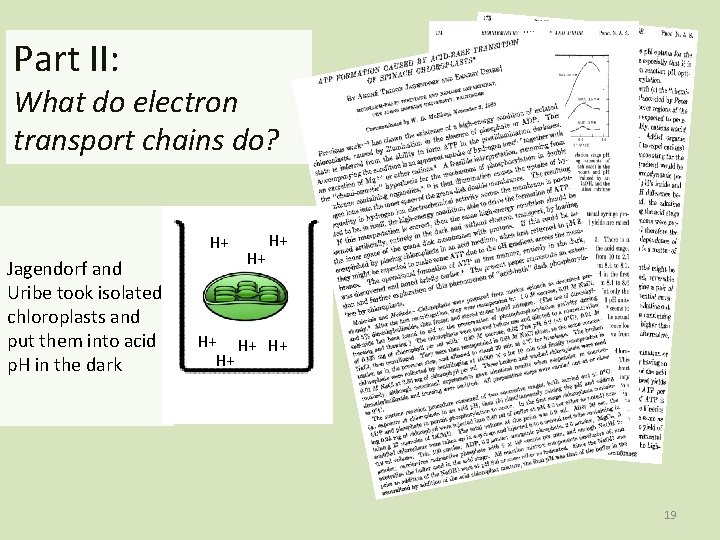
Part II: What do electron transport chains do? H+ Jagendorf and Uribe took isolated chloroplasts and put them into acid p. H in the dark H+ H+ H+ 19
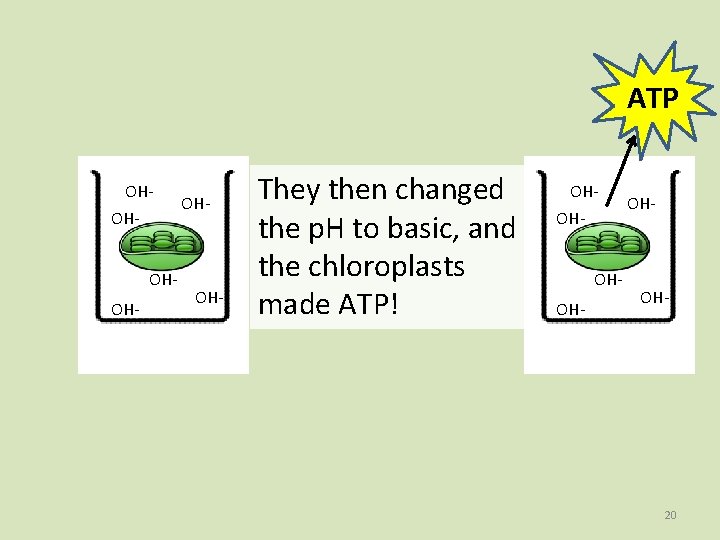
ATP OHOH- OH- They then changed the p. H to basic, and the chloroplasts made ATP! OHOH- OH- 20
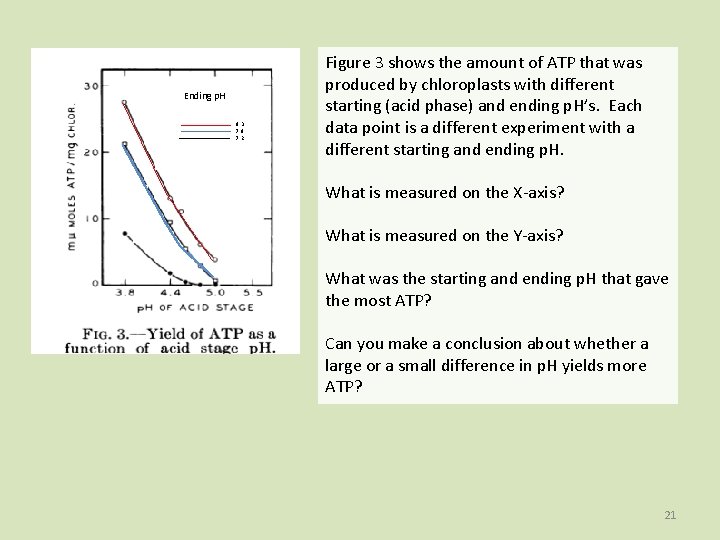
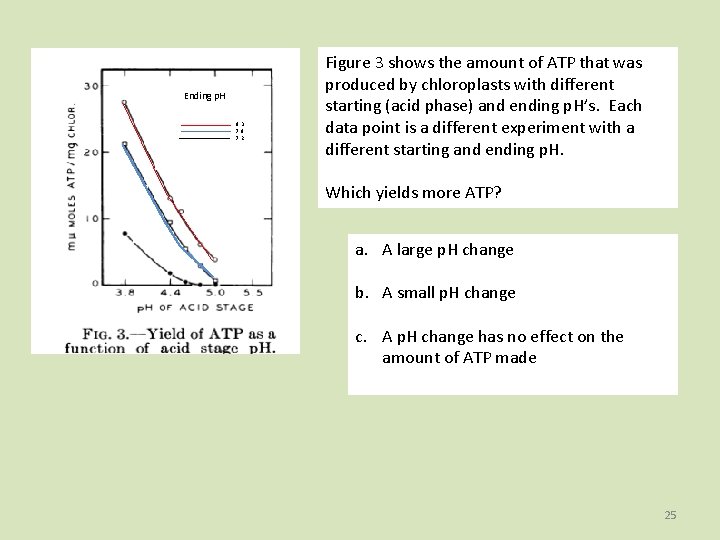
Ending p. H 8. 3 7. 8 7. 2 Figure 3 shows the amount of ATP that was produced by chloroplasts with different starting (acid phase) and ending p. H’s. Each data point is a different experiment with a different starting and ending p. H. What is measured on the X-axis? What is measured on the Y-axis? What was the starting and ending p. H that gave the most ATP? Can you make a conclusion about whether a large or a small difference in p. H yields more ATP? 21
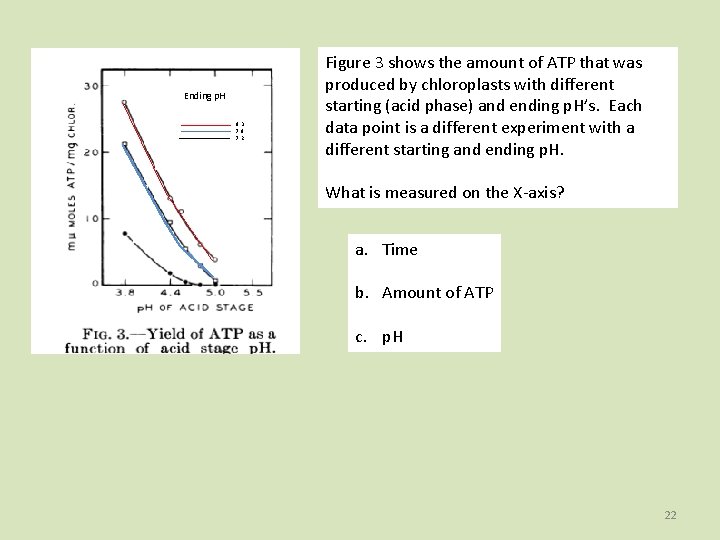
Ending p. H 8. 3 7. 8 7. 2 Figure 3 shows the amount of ATP that was produced by chloroplasts with different starting (acid phase) and ending p. H’s. Each data point is a different experiment with a different starting and ending p. H. What is measured on the X-axis? a. Time b. Amount of ATP c. p. H 22
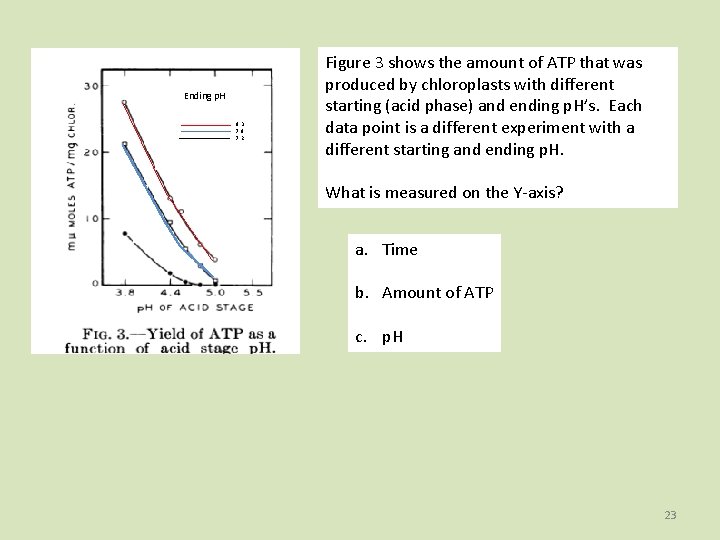
Ending p. H 8. 3 7. 8 7. 2 Figure 3 shows the amount of ATP that was produced by chloroplasts with different starting (acid phase) and ending p. H’s. Each data point is a different experiment with a different starting and ending p. H. What is measured on the Y-axis? a. Time b. Amount of ATP c. p. H 23
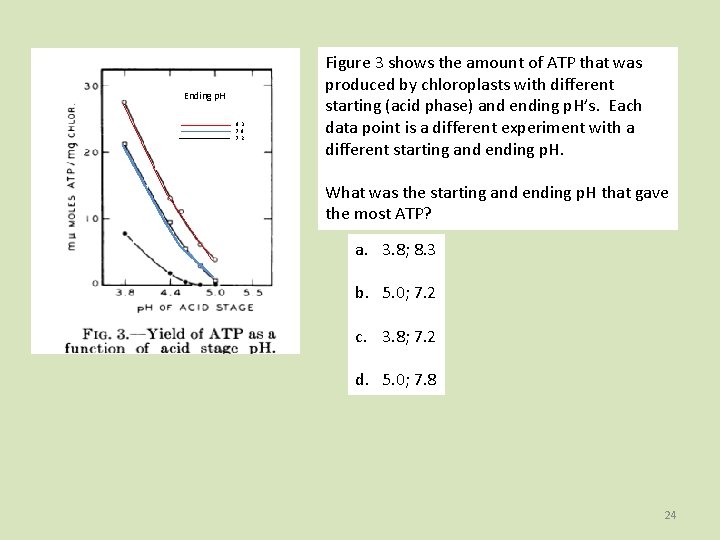
Ending p. H 8. 3 7. 8 7. 2 Figure 3 shows the amount of ATP that was produced by chloroplasts with different starting (acid phase) and ending p. H’s. Each data point is a different experiment with a different starting and ending p. H. What was the starting and ending p. H that gave the most ATP? a. 3. 8; 8. 3 b. 5. 0; 7. 2 c. 3. 8; 7. 2 d. 5. 0; 7. 8 24
Ending p. H 8. 3 7. 8 7. 2 Figure 3 shows the amount of ATP that was produced by chloroplasts with different starting (acid phase) and ending p. H’s. Each data point is a different experiment with a different starting and ending p. H. Which yields more ATP? a. A large p. H change b. A small p. H change c. A p. H change has no effect on the amount of ATP made 25
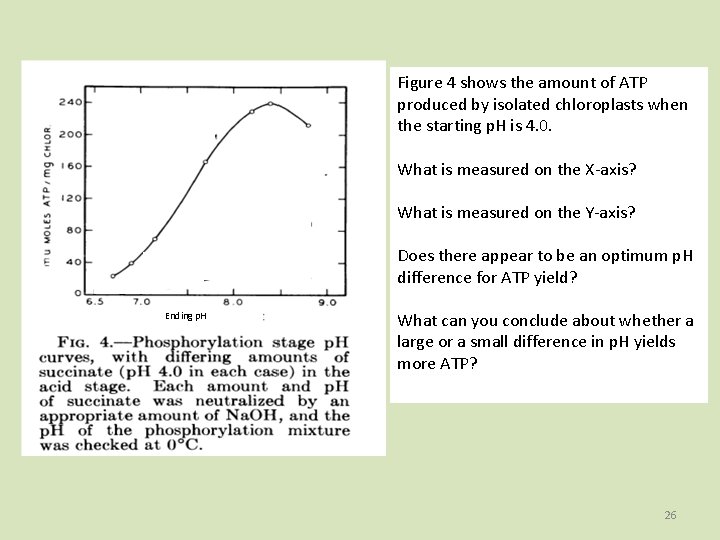
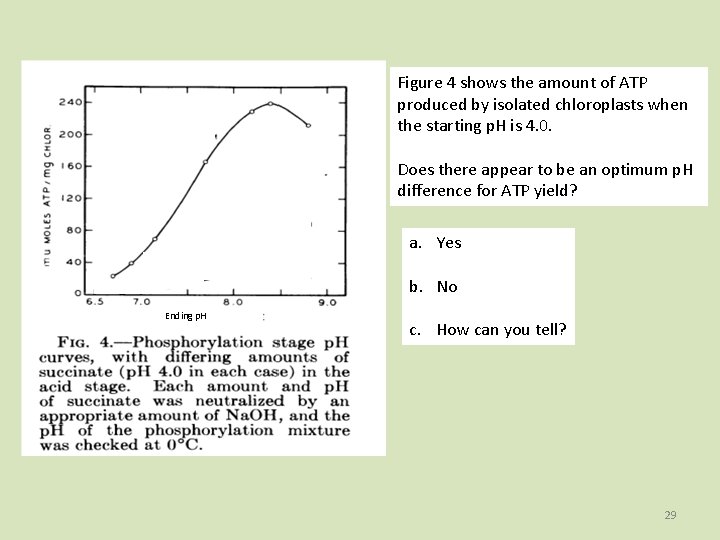
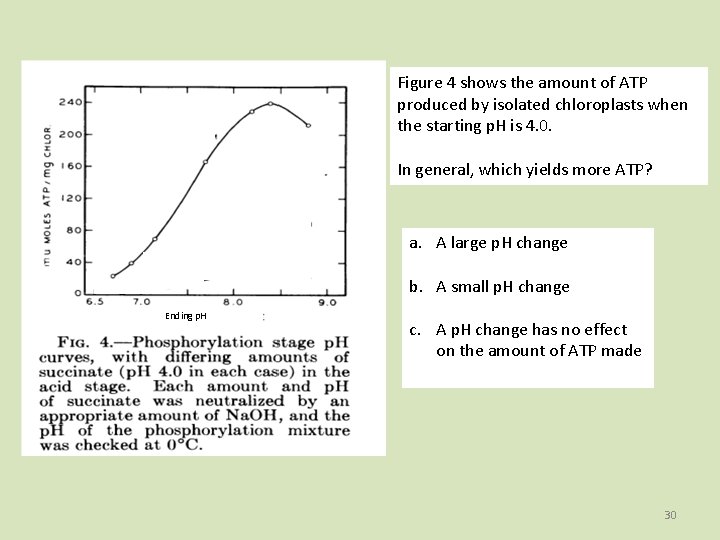
Figure 4 shows the amount of ATP produced by isolated chloroplasts when the starting p. H is 4. 0. What is measured on the X-axis? What is measured on the Y-axis? Does there appear to be an optimum p. H difference for ATP yield? Ending p. H What can you conclude about whether a large or a small difference in p. H yields more ATP? 26
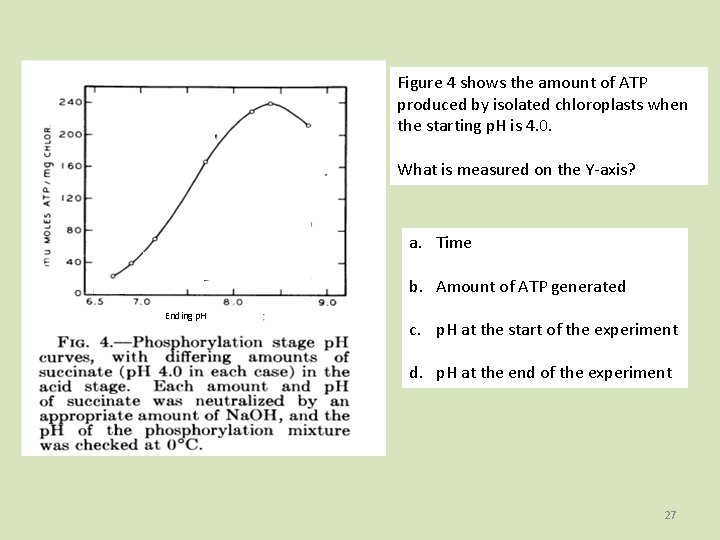
Figure 4 shows the amount of ATP produced by isolated chloroplasts when the starting p. H is 4. 0. What is measured on the Y-axis? a. Time b. Amount of ATP generated Ending p. H c. p. H at the start of the experiment d. p. H at the end of the experiment 27
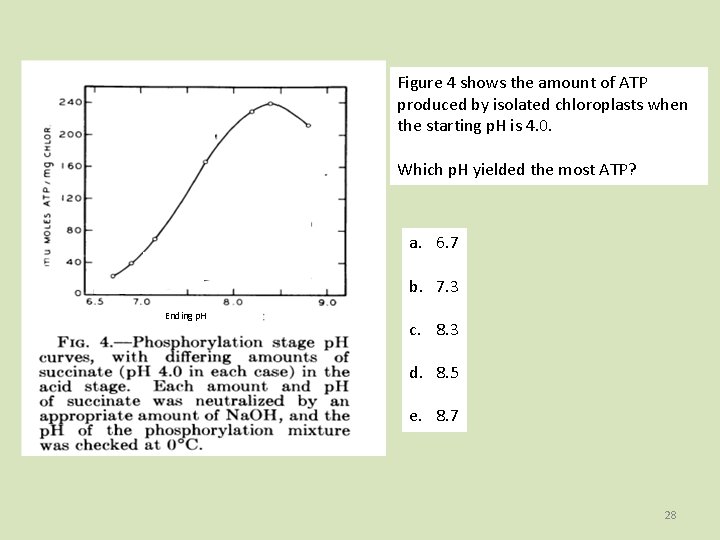
Figure 4 shows the amount of ATP produced by isolated chloroplasts when the starting p. H is 4. 0. Which p. H yielded the most ATP? a. 6. 7 b. 7. 3 Ending p. H c. 8. 3 d. 8. 5 e. 8. 7 28
Figure 4 shows the amount of ATP produced by isolated chloroplasts when the starting p. H is 4. 0. Does there appear to be an optimum p. H difference for ATP yield? a. Yes b. No Ending p. H c. How can you tell? 29
Figure 4 shows the amount of ATP produced by isolated chloroplasts when the starting p. H is 4. 0. In general, which yields more ATP? a. A large p. H change b. A small p. H change Ending p. H c. A p. H change has no effect on the amount of ATP made 30
• Conclusion: ATP was formed by chloroplasts in the dark when the p. H surrounding the chloroplasts changed. Something (other than light) was driving the ATP synthesis. A difference in p. H across the membrane is sufficient to form ATP. 31
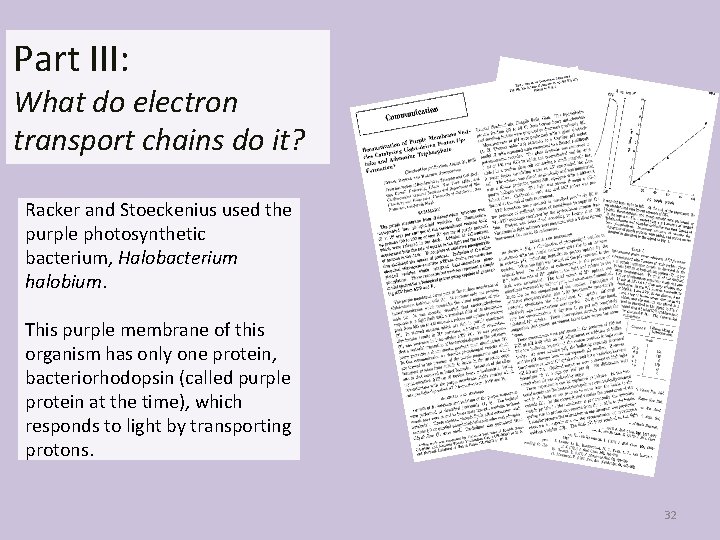
Part III: What do electron transport chains do it? Racker and Stoeckenius used the purple photosynthetic bacterium, Halobacterium halobium. This purple membrane of this organism has only one protein, bacteriorhodopsin (called purple protein at the time), which responds to light by transporting protons. 32
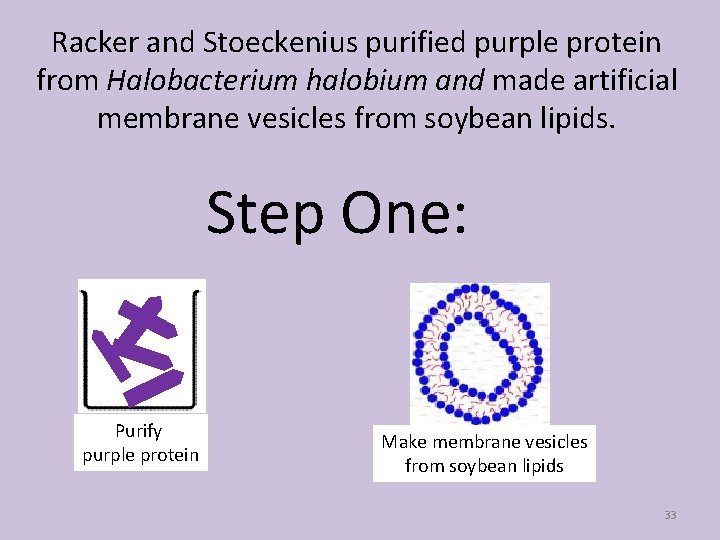
Racker and Stoeckenius purified purple protein from Halobacterium halobium and made artificial membrane vesicles from soybean lipids. Step One: Purify purple protein Make membrane vesicles from soybean lipids 33
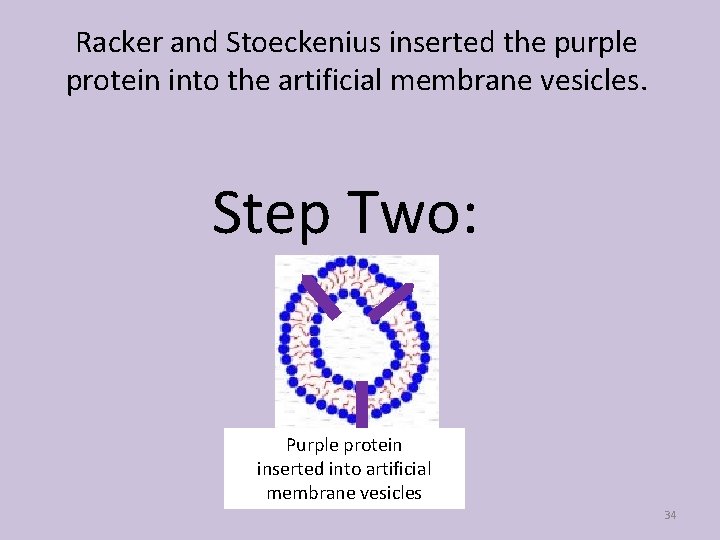
Racker and Stoeckenius inserted the purple protein into the artificial membrane vesicles. Step Two: Purple protein inserted into artificial membrane vesicles 34
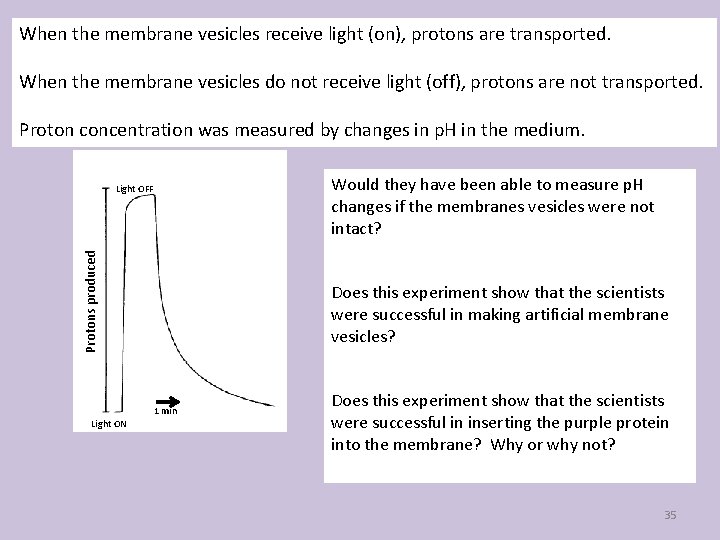
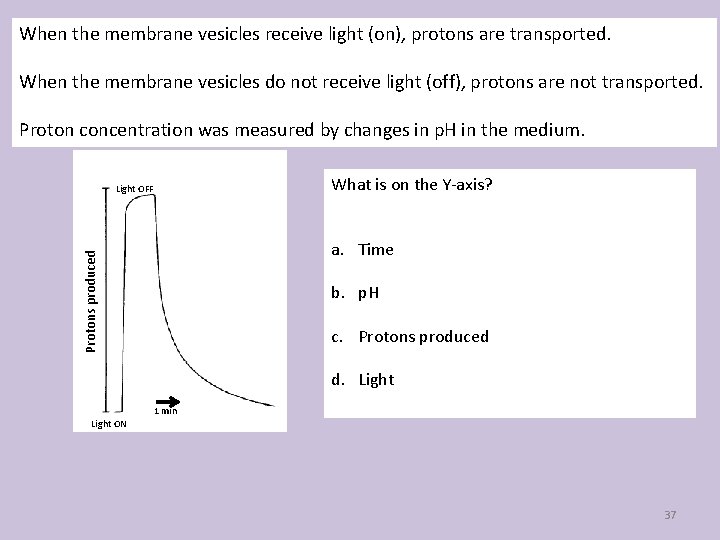
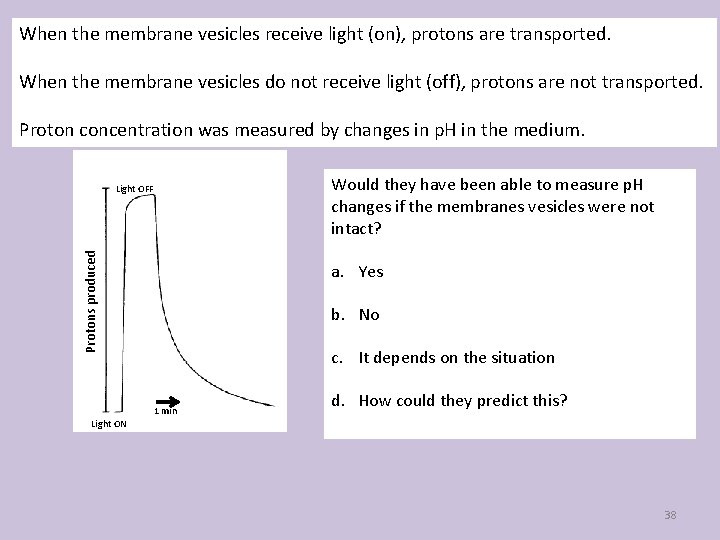
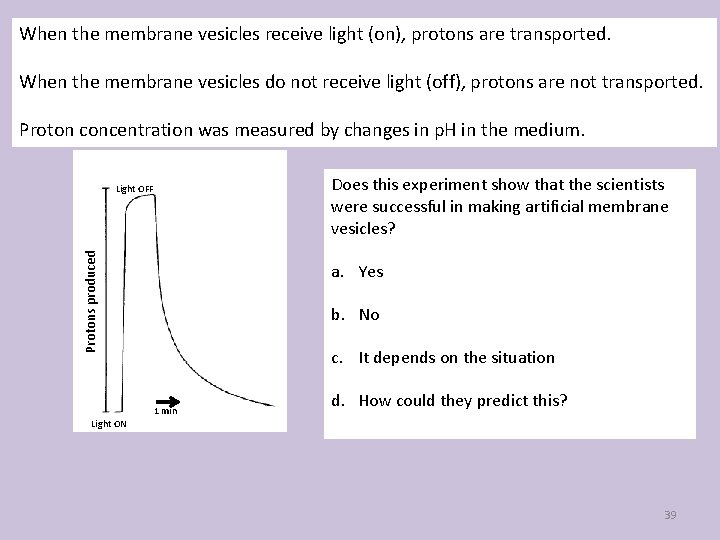
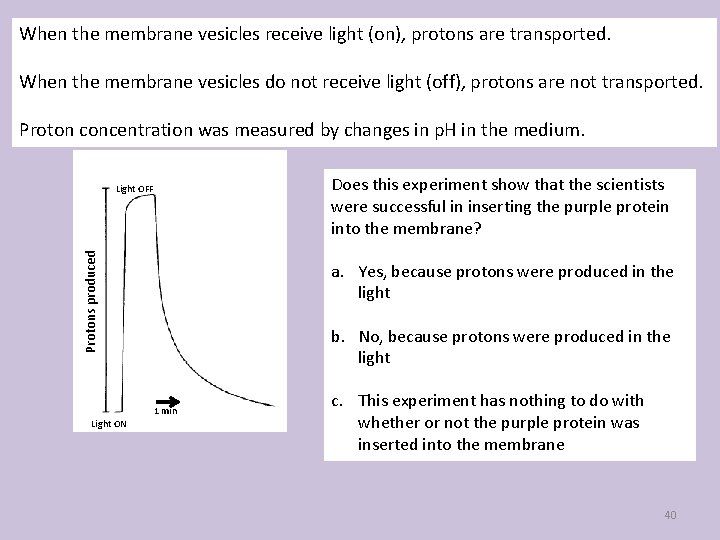
When the membrane vesicles receive light (on), protons are transported. When the membrane vesicles do not receive light (off), protons are not transported. Proton concentration was measured by changes in p. H in the medium. Protons produced Light OFF Does this experiment show that the scientists were successful in making artificial membrane vesicles? 1 min Light ON Would they have been able to measure p. H changes if the membranes vesicles were not intact? Does this experiment show that the scientists were successful in inserting the purple protein into the membrane? Why or why not? 35
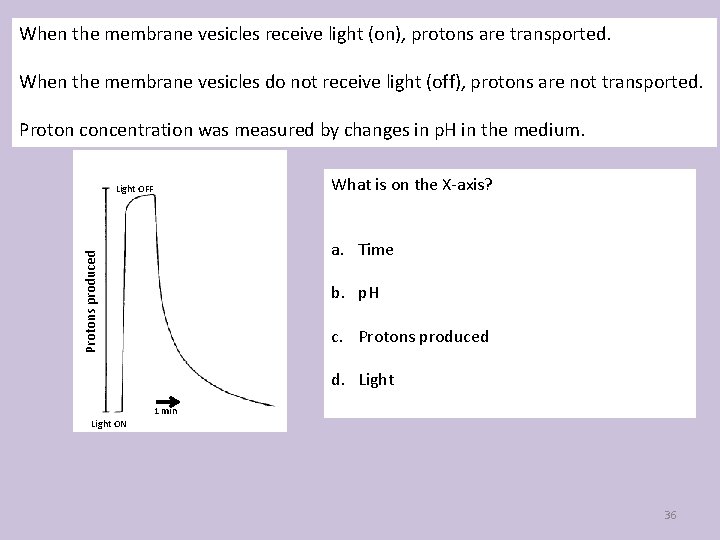
When the membrane vesicles receive light (on), protons are transported. When the membrane vesicles do not receive light (off), protons are not transported. Proton concentration was measured by changes in p. H in the medium. Light OFF What is on the X-axis? Protons produced a. Time b. p. H c. Protons produced d. Light 1 min Light ON 36
When the membrane vesicles receive light (on), protons are transported. When the membrane vesicles do not receive light (off), protons are not transported. Proton concentration was measured by changes in p. H in the medium. Light OFF What is on the Y-axis? Protons produced a. Time b. p. H c. Protons produced d. Light 1 min Light ON 37
When the membrane vesicles receive light (on), protons are transported. When the membrane vesicles do not receive light (off), protons are not transported. Proton concentration was measured by changes in p. H in the medium. Protons produced Light OFF Would they have been able to measure p. H changes if the membranes vesicles were not intact? a. Yes b. No c. It depends on the situation 1 min d. How could they predict this? Light ON 38
When the membrane vesicles receive light (on), protons are transported. When the membrane vesicles do not receive light (off), protons are not transported. Proton concentration was measured by changes in p. H in the medium. Protons produced Light OFF Does this experiment show that the scientists were successful in making artificial membrane vesicles? a. Yes b. No c. It depends on the situation 1 min d. How could they predict this? Light ON 39
When the membrane vesicles receive light (on), protons are transported. When the membrane vesicles do not receive light (off), protons are not transported. Proton concentration was measured by changes in p. H in the medium. Protons produced Light OFF a. Yes, because protons were produced in the light b. No, because protons were produced in the light 1 min Light ON Does this experiment show that the scientists were successful in inserting the purple protein into the membrane? c. This experiment has nothing to do with whether or not the purple protein was inserted into the membrane 40
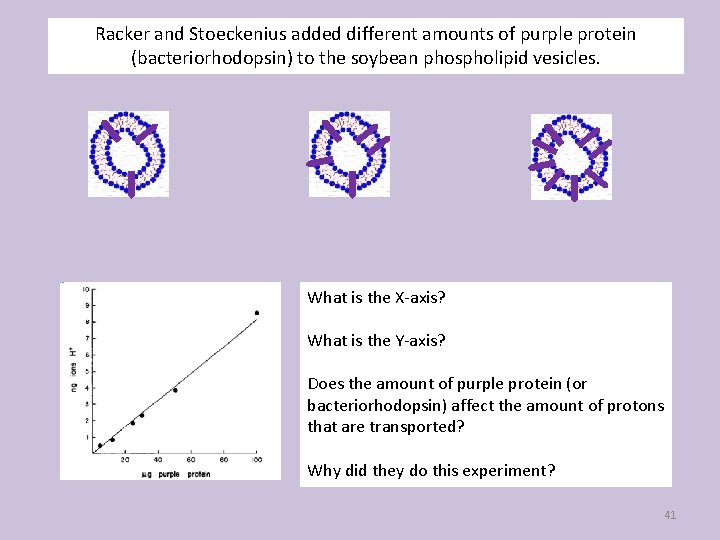
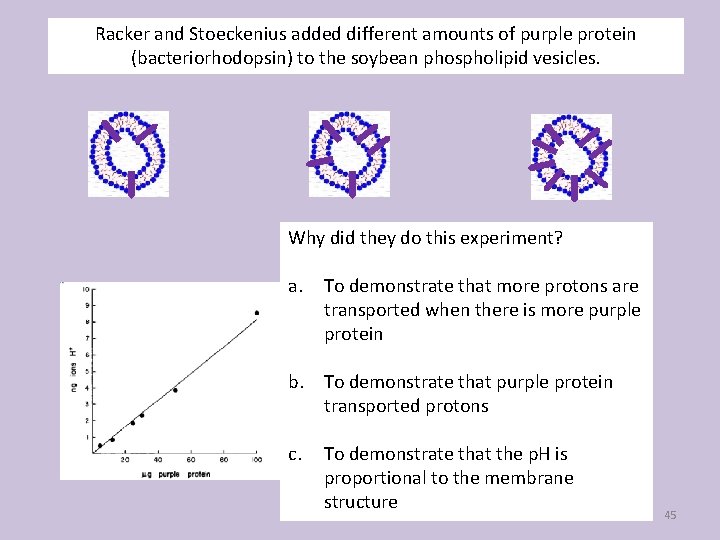
Racker and Stoeckenius added different amounts of purple protein (bacteriorhodopsin) to the soybean phospholipid vesicles. What is the X-axis? What is the Y-axis? Does the amount of purple protein (or bacteriorhodopsin) affect the amount of protons that are transported? Why did they do this experiment? 41
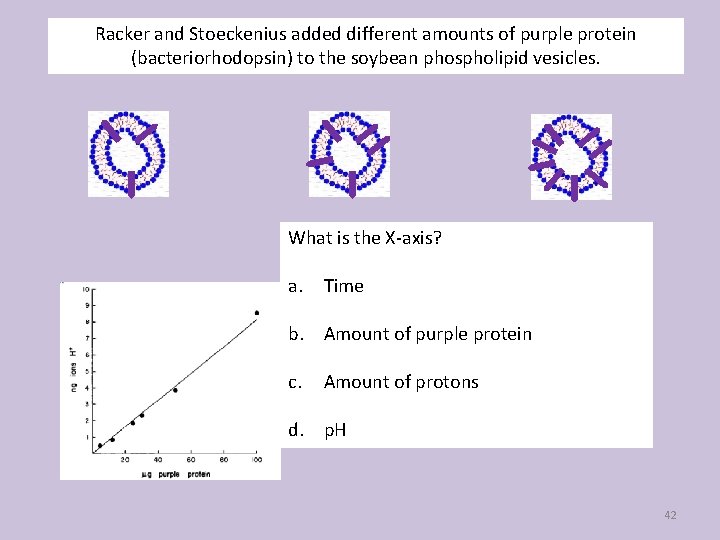
Racker and Stoeckenius added different amounts of purple protein (bacteriorhodopsin) to the soybean phospholipid vesicles. What is the X-axis? a. Time b. Amount of purple protein c. Amount of protons d. p. H 42
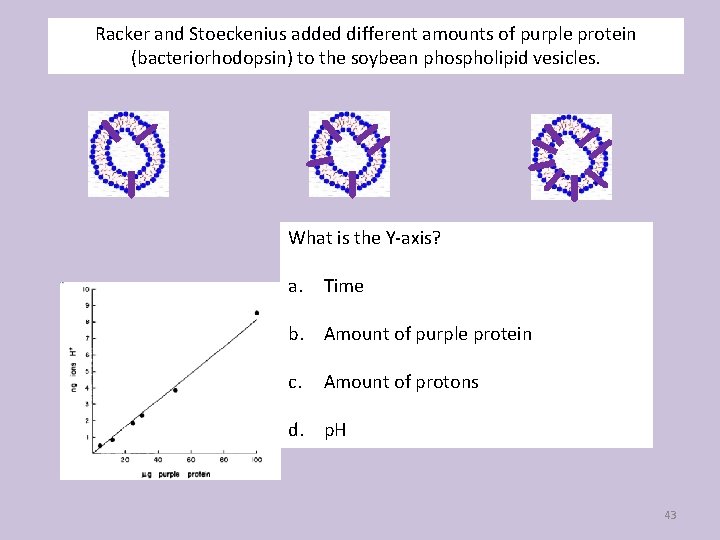
Racker and Stoeckenius added different amounts of purple protein (bacteriorhodopsin) to the soybean phospholipid vesicles. What is the Y-axis? a. Time b. Amount of purple protein c. Amount of protons d. p. H 43
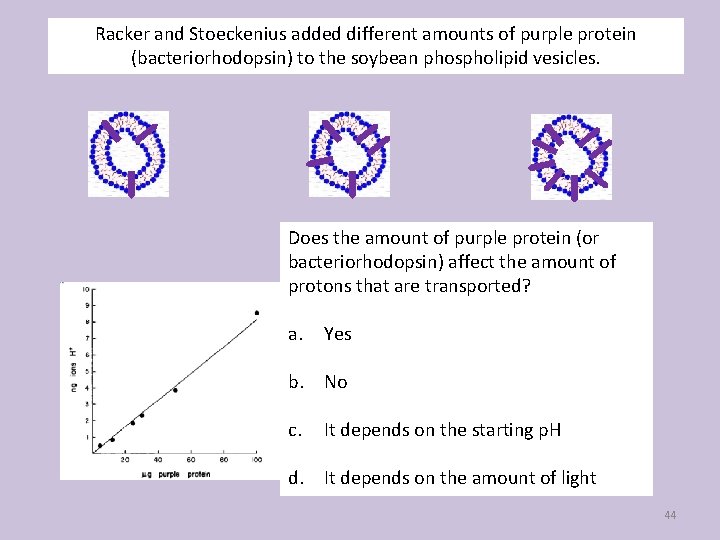
Racker and Stoeckenius added different amounts of purple protein (bacteriorhodopsin) to the soybean phospholipid vesicles. Does the amount of purple protein (or bacteriorhodopsin) affect the amount of protons that are transported? a. Yes b. No c. It depends on the starting p. H d. It depends on the amount of light 44
Racker and Stoeckenius added different amounts of purple protein (bacteriorhodopsin) to the soybean phospholipid vesicles. Why did they do this experiment? a. To demonstrate that more protons are transported when there is more purple protein b. To demonstrate that purple protein transported protons c. To demonstrate that the p. H is proportional to the membrane structure 45
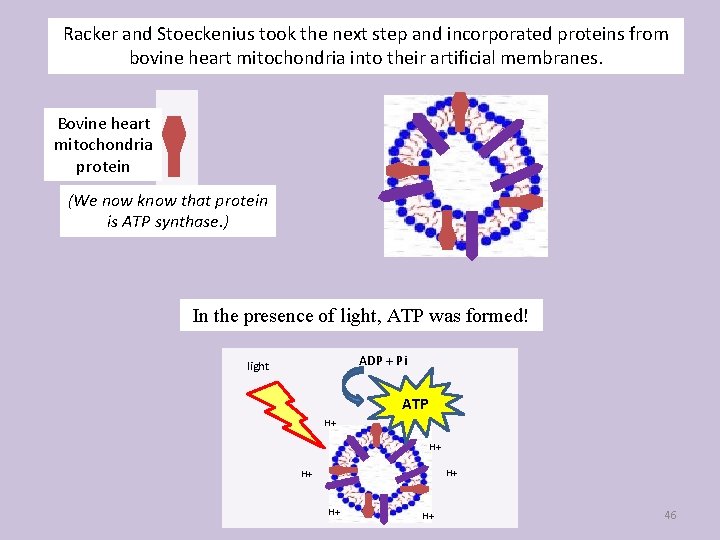
Racker and Stoeckenius took the next step and incorporated proteins from bovine heart mitochondria into their artificial membranes. Bovine heart mitochondria protein (We now know that protein is ATP synthase. ) In the presence of light, ATP was formed! ADP + Pi light ATP H+ H+ H+ 46
• Conclusion: ATP was formed by in artificial membrane vesicles when there was a protein to make an artificial proton gradient and an enzyme to make the ATP. 47
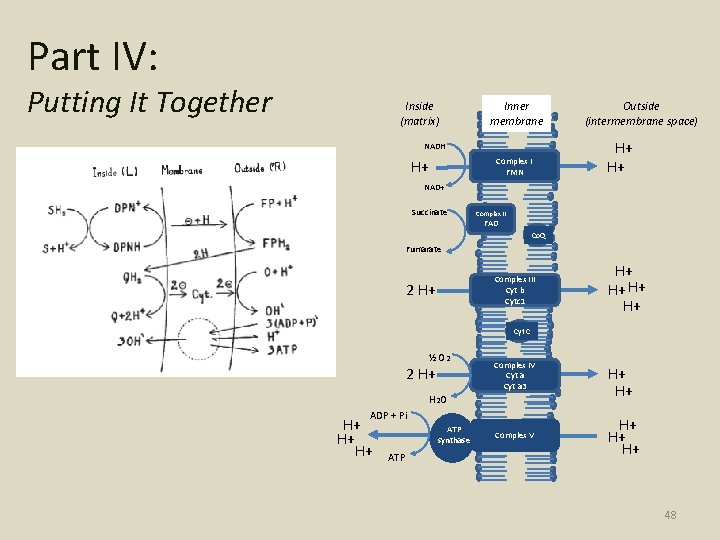
Part IV: Putting It Together Inside (matrix) Inner membrane NADH Complex I FMN H+ Outside (intermembrane space) H+ H+ NAD+ Succinate Complex II FAD Co. Q Fumarate Complex III Cyt b Cytc 1 2 H+ H+ H+ Cyt C ½ O 2 2 H+ Complex IV Cyt a 3 H 2 O ADP + Pi H+ H+ H+ ATP synthase ATP Complex V H+ H+ H+ 48
49