
National Cancer Institute Introduction to Mouse Genetics Karlyne


- Slides: 37
National Cancer Institute Introduction to Mouse Genetics Karlyne M. Reilly, Ph. D. Rare Tumors Initiative, CCR October 5, 2015
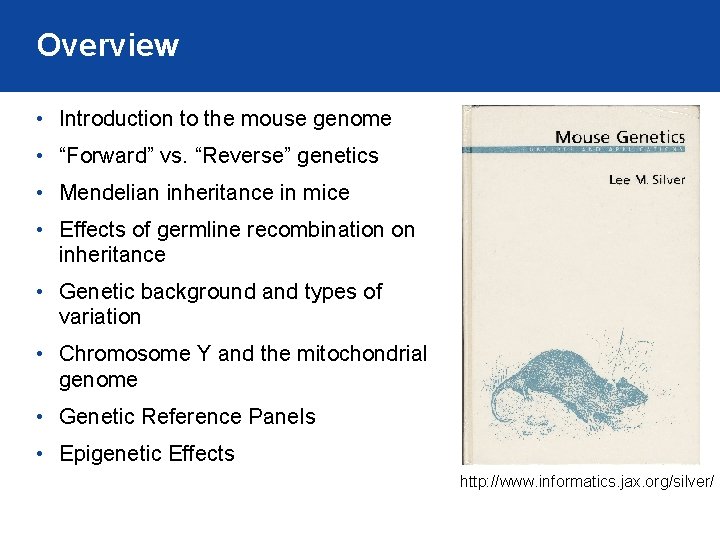
Overview • Introduction to the mouse genome • “Forward” vs. “Reverse” genetics • Mendelian inheritance in mice • Effects of germline recombination on inheritance • Genetic background and types of variation • Chromosome Y and the mitochondrial genome • Genetic Reference Panels • Epigenetic Effects http: //www. informatics. jax. org/silver/
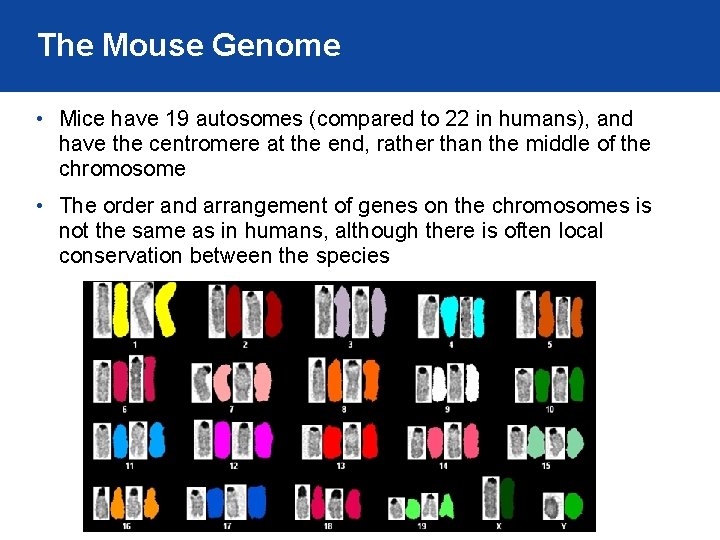
The Mouse Genome • Mice have 19 autosomes (compared to 22 in humans), and have the centromere at the end, rather than the middle of the chromosome • The order and arrangement of genes on the chromosomes is not the same as in humans, although there is often local conservation between the species
Units of Genetics • Gene ≠ Locus ≠ Allele – A gene is the unit of DNA that produces a product (RNA, protein) and is passed on from generation to generation – A locus is genetically defined as a region on a chromosome (which can encompass one gene, multiple genes, or no genes) having an inheritable phenotype (i. e. a regulatory motif could be a genetic locus, but not include a gene). A locus can be defined in genetic screens before the causal gene in the region has been identified. – An allele is the individual variant of DNA sequence at the gene or locus. Each individual will have 2 alleles at each gene or locus (except on the X and Y chromosomes). The allele could be a mutation or a poymorphism.
“Forward” and “Reverse” Genetics • “Forward genetics” approaches seek to understand what genes contribute to a phenotype in an unbiased way – Natural variation – Insertional mutagenesis (e. g. transposons) – Chemical mutagenesis (e. g. ENU) • “Reverse genetics” approaches seek to understand what a candidate gene contributes to a phenotype – Genetic engineering (e. g. CRISPER or homologous recombination in ES cells)
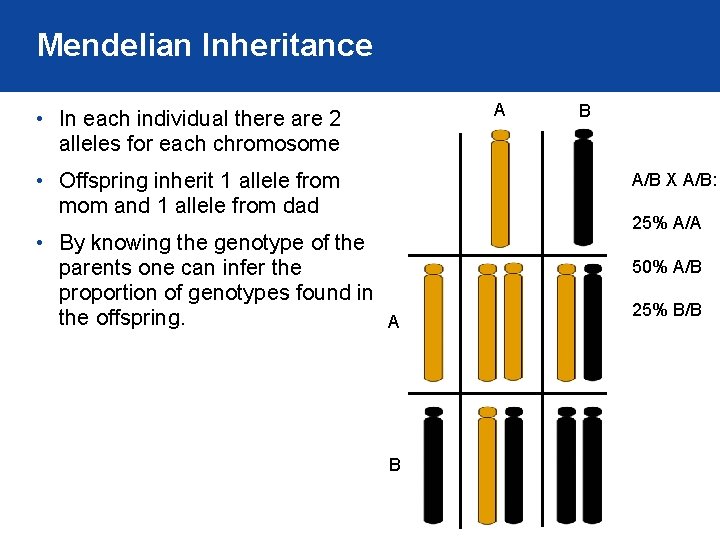
Mendelian Inheritance A • In each individual there are 2 alleles for each chromosome • Offspring inherit 1 allele from mom and 1 allele from dad • By knowing the genotype of the parents one can infer the proportion of genotypes found in the offspring. B A/B X A/B: 25% A/A 50% A/B A B 25% B/B
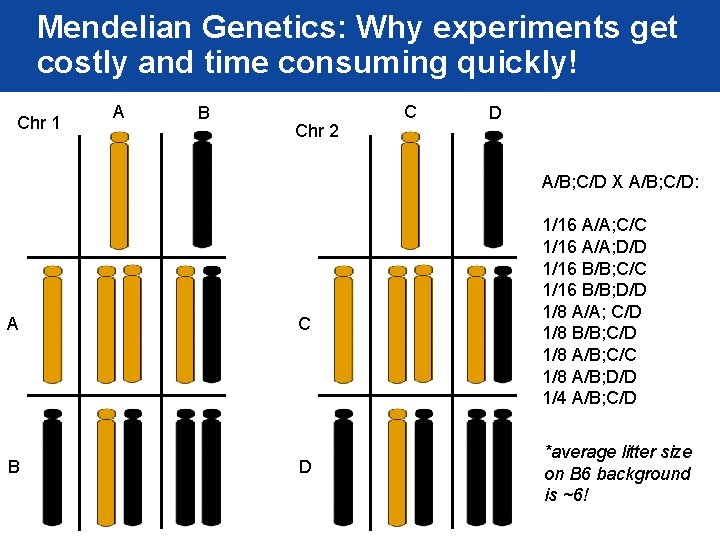
Mendelian Genetics: Why experiments get costly and time consuming quickly! Chr 1 A B Chr 2 C D A/B; C/D X A/B; C/D: A B C D 1/16 A/A; C/C 1/16 A/A; D/D 1/16 B/B; C/C 1/16 B/B; D/D 1/8 A/A; C/D 1/8 B/B; C/D 1/8 A/B; C/C 1/8 A/B; D/D 1/4 A/B; C/D *average litter size on B 6 background is ~6!
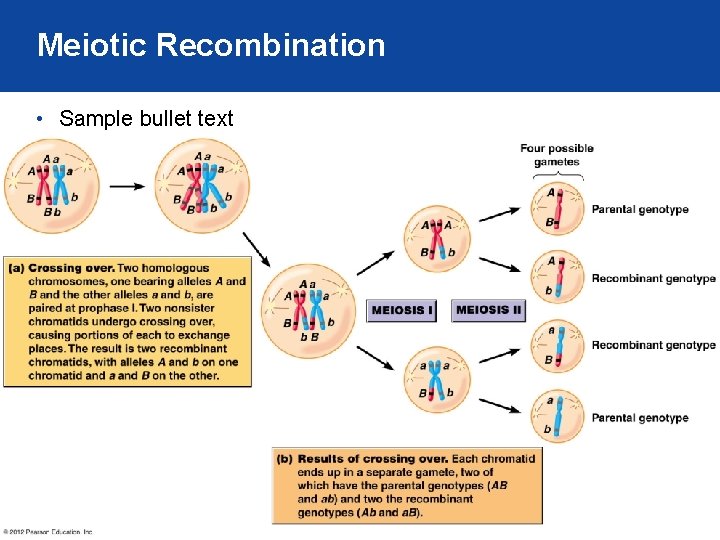
Meiotic Recombination • Sample bullet text • More sample bullet text
Units of Genetics II: Physical Map vs Genetic Map • Genomes contain “hotspots” and “coldspots” for recombination • The genetic map is measured in c. M, a unit of recombination frequency – 1 c. M between 2 loci indicates they have a 1% chance of recombining (1 recombination event in 100 gametes) • The physical map is measured in basepairs and is independent of the likelihood of recombination in different places along chromosomes • Mutations on the same chromosome cannot be bred to homozygosity unless the chromosomes undergo germline recombination
Linkage and Deviation from Mendelian Ratios • Because genes can be linked on chromosomes, separated by varying distances, two given genes may not be segregate independently • Example: You want to make a tissue-specific homozygous mutation in a gene, so you obtain a strain of mouse carrying lox. P sites surrounding a critical region in your gene of interest (Geneflox/flox), and a strain of mouse expressing the Cre enzyme transgene (Cre. Tg/Tg) from a promoter specific to your tissue. You cross the 2 lines together, getting the expected 50% Geneflox/wt; Cre. Tg/wt offspring. When you cross back to the Geneflox/flox line to get the homozygous mutation, you expect to get 25% Geneflox/flox; Cre. Tg/wt, but instead you get only Geneflox/flox (no Cre Tg) or Geneflox/wt; Cre. Tg/wt offspring. What happened? The Cre transgene inserted onto the same chromosome as Gene, so the Geneflox/wt; Cre. Tg/wt parent could pass on either the Geneflox allele or the Cre allele, but not both!
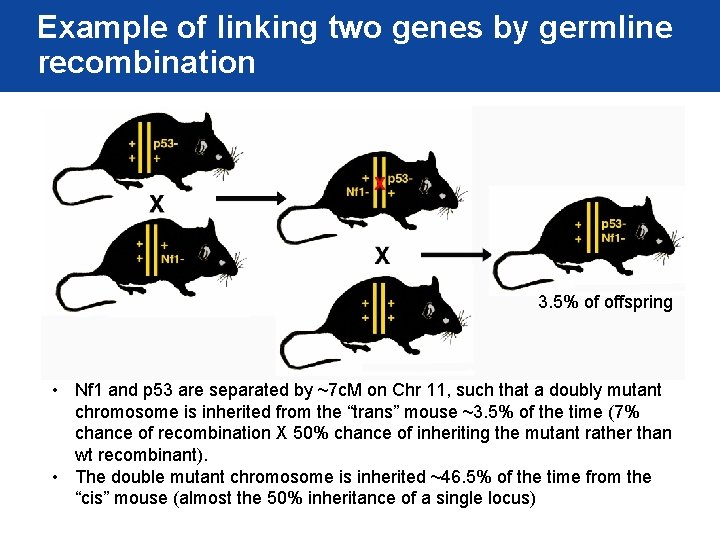
Example of linking two genes by germline recombination 3. 5% of offspring • Nf 1 and p 53 are separated by ~7 c. M on Chr 11, such that a doubly mutant chromosome is inherited from the “trans” mouse ~3. 5% of the time (7% chance of recombination X 50% chance of inheriting the mutant rather than wt recombinant). • The double mutant chromosome is inherited ~46. 5% of the time from the “cis” mouse (almost the 50% inheritance of a single locus)
Mutation vs Variation • Natural variants are alleles that are compatible with viability and reproduction, such that they are “evolutionarily neutral” within the population, although not necessarily neutral for the individual. – Example: Skin pigment in humans does not reduce fitness to reproduce, but may affect skin cancer risk in lighter skinned individuals or vitamin D deficiency in darker skinned individuals. • Mutations have a more severe phenotype, and are often “induced; ” however, whether an allele is a mutation or considered a natural variant can be somewhat arbitrary (e. g. familial BRCA mutations). • It is important to remember that natural variation can affect mouse phenotypes as strongly as mutations can.
Types of “Natural” Variation • SNPs (simple nucleotide polymorphisms) – variation in single basepairs (or short sequences) • INDELs (insertions/deletions) – variation in length along a given stretch of DNA, also referred to as CNVs (copy number variation) • Inactive retrotransposons – LINE/SINE sequences • Inversions (suppress germline recombination!) • VNTRs (variable number tandem repeats) – e. g. microsatellite markers
Mouse Subspecies • Many mouse experiments are performed on “classic” backgrounds developed by William Castle and C. C. Little in the early 1900 s. • “Fancy” mice were originally bred as pets through inbreeding of Mus musculus and Mus musculus domesticus descendants. These pet mice contributed to the “classic” inbred strains commonly used today. • Inbred strains of wild subspecies have also been developed, most notably CAST and SPRET mice. These strains more closely resemble “wild” mice and are more challenging to work with, but offer greater genetic diversity.
Genetic Background Effects • For any given gene allele/mutation, the genetic background is the sum for the allelic states of all other loci in the mouse (and is relative!) – For example, the CBA/J inbred strain carries a mutant allele that causes blindness by the age of weaning. Depending on whether or not you study vision, you might view this mutant allele as a mutation of interest or as part of the genetic background in your study of a different mutation. Just don’t be misled when examining phenotypes that require the mouse to see! • Genetic backgrounds are inherited in your experiment the same as any other mutation of interest, so make sure what you interpret as an effect of the mutation you are studying is not due to background effects.
Types of Mouse Genetic Backgrounds in Research • Inbred: All chromosomes are homozygous at all loci. Strains are inbred when germline recombination no longer changes the distribution of alleles, generally after 10 generations of backcrossing or 20 generations of inter-sibling crosses. – Congenic: A mutant allele bred onto an inbred strain, such that all unlinked loci are homozygous for the new strain – Consomic: A chromosome from one strain is inbred onto a different strain background (chromosome substitution strains). • Conplastic: Mitochondria from one strain is inbred onto a different strain background. • Hybrid (F 1): One copy of each chromosome is from one inbred strain, the other is from a different inbred strain. • Mixed: Random assortments of 2 or more strains.
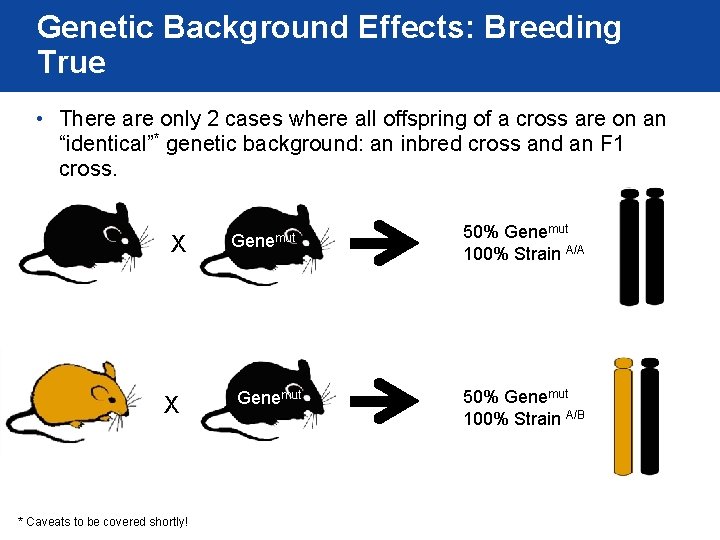
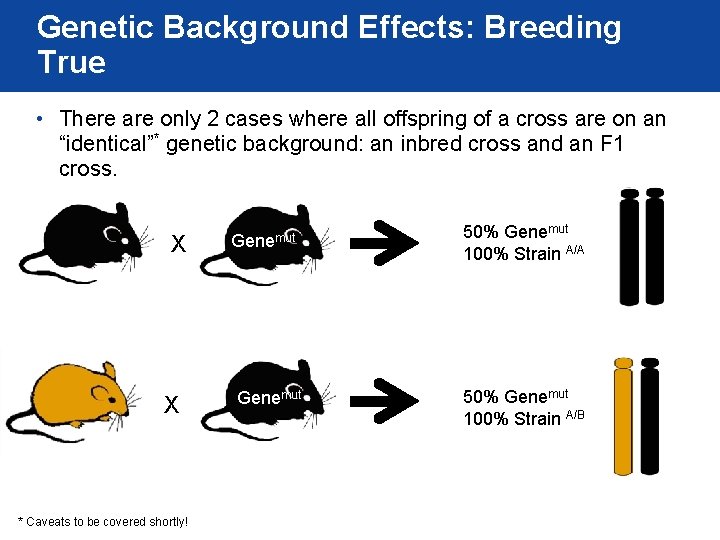
Genetic Background Effects: Breeding True • There are only 2 cases where all offspring of a cross are on an “identical”* genetic background: an inbred cross and an F 1 cross. X X * Caveats to be covered shortly! Genemut 50% Genemut 100% Strain A/A 50% Genemut 100% Strain A/B
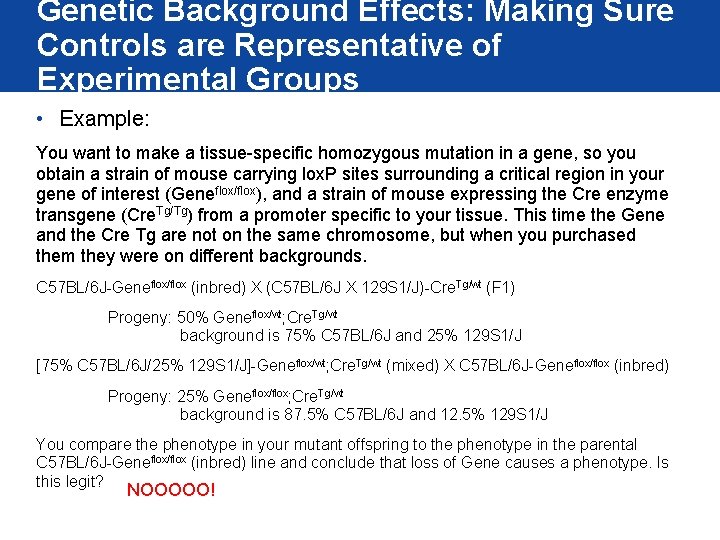
Genetic Background Effects: Making Sure Controls are Representative of Experimental Groups • Example: You want to make a tissue-specific homozygous mutation in a gene, so you obtain a strain of mouse carrying lox. P sites surrounding a critical region in your gene of interest (Geneflox/flox), and a strain of mouse expressing the Cre enzyme transgene (Cre. Tg/Tg) from a promoter specific to your tissue. This time the Gene and the Cre Tg are not on the same chromosome, but when you purchased them they were on different backgrounds. C 57 BL/6 J-Geneflox/flox (inbred) X (C 57 BL/6 J X 129 S 1/J)-Cre. Tg/wt (F 1) Progeny: 50% Geneflox/wt; Cre. Tg/wt background is 75% C 57 BL/6 J and 25% 129 S 1/J [75% C 57 BL/6 J/25% 129 S 1/J]-Geneflox/wt; Cre. Tg/wt (mixed) X C 57 BL/6 J-Geneflox/flox (inbred) Progeny: 25% Geneflox/flox; Cre. Tg/wt background is 87. 5% C 57 BL/6 J and 12. 5% 129 S 1/J You compare the phenotype in your mutant offspring to the phenotype in the parental C 57 BL/6 J-Geneflox/flox (inbred) line and conclude that loss of Gene causes a phenotype. Is this legit? NOOOOO!
Genetic Background Effects: Example • Different genetic backgrounds can have a dramatic effect on phenotypes caused by mutations in genes. • Example: Brain tumors is Nf 1 -/+; p 53 -/+cis mutant mice on the C 57 BL/6 J (red) and 129 S 4 (blue) backgrounds • Always ask yourself: Is the phenotypic difference due to my mutation of interest, or differences in the genetic background between my experimental groups? ! Direct siblings are usually the best control (but not always!). Staying on inbred backgrounds keeps you safer.
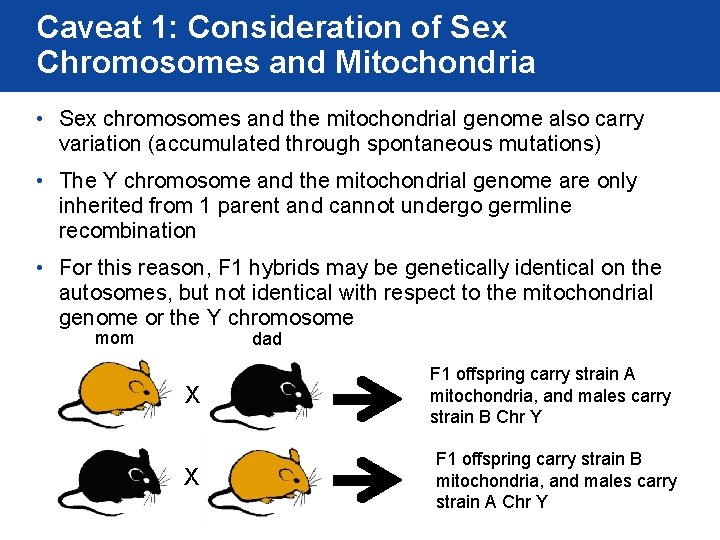
Caveat 1: Consideration of Sex Chromosomes and Mitochondria • Sex chromosomes and the mitochondrial genome also carry variation (accumulated through spontaneous mutations) • The Y chromosome and the mitochondrial genome are only inherited from 1 parent and cannot undergo germline recombination • For this reason, F 1 hybrids may be genetically identical on the autosomes, but not identical with respect to the mitochondrial genome or the Y chromosome mom dad X X F 1 offspring carry strain A mitochondria, and males carry strain B Chr Y F 1 offspring carry strain B mitochondria, and males carry strain A Chr Y
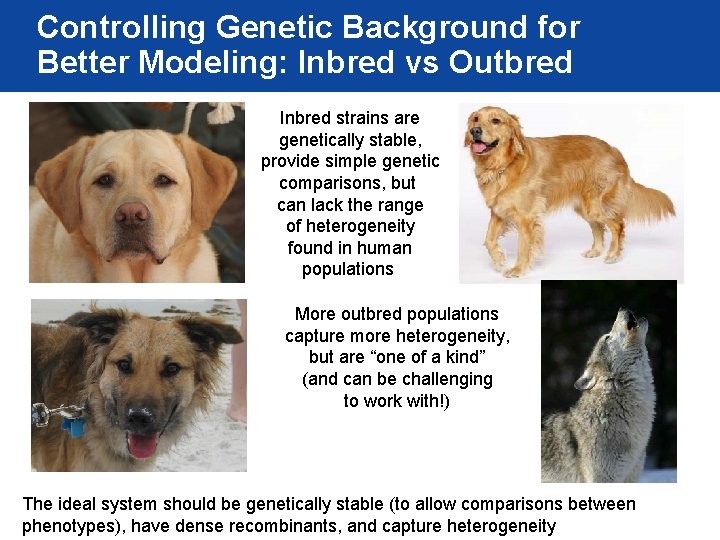
Controlling Genetic Background for Better Modeling: Inbred vs Outbred Inbred strains are genetically stable, provide simple genetic comparisons, but can lack the range of heterogeneity found in human populations More outbred populations capture more heterogeneity, but are “one of a kind” (and can be challenging to work with!) The ideal system should be genetically stable (to allow comparisons between phenotypes), have dense recombinants, and capture heterogeneity
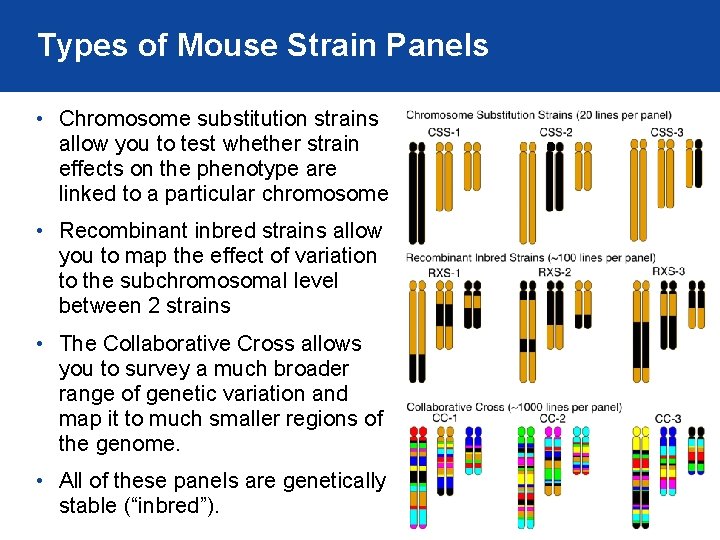
Types of Mouse Strain Panels • Chromosome substitution strains allow you to test whether strain effects on the phenotype are linked to a particular chromosome • Recombinant inbred strains allow you to map the effect of variation to the subchromosomal level between 2 strains • The Collaborative Cross allows you to survey a much broader range of genetic variation and map it to much smaller regions of the genome. • All of these panels are genetically stable (“inbred”).
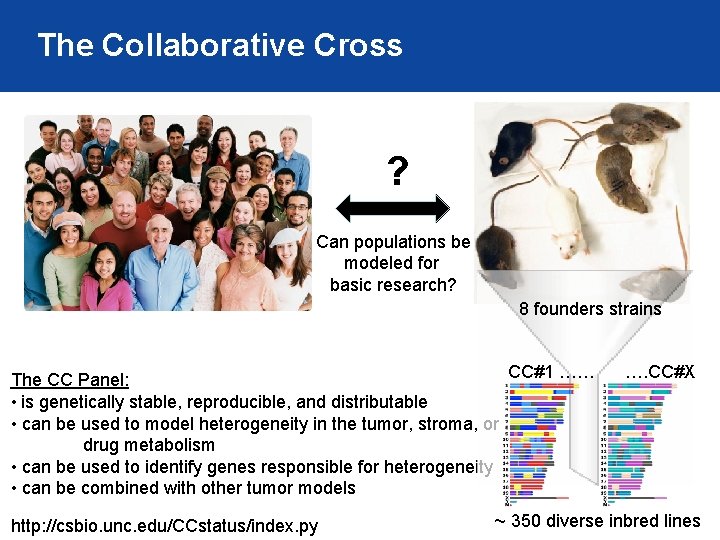
The Collaborative Cross ? Can populations be modeled for basic research? 8 founders strains CC#1 …… The CC Panel: • is genetically stable, reproducible, and distributable • can be used to model heterogeneity in the tumor, stroma, or drug metabolism • can be used to identify genes responsible for heterogeneity • can be combined with other tumor models http: //csbio. unc. edu/CCstatus/index. py …. CC#X ~ 350 diverse inbred lines
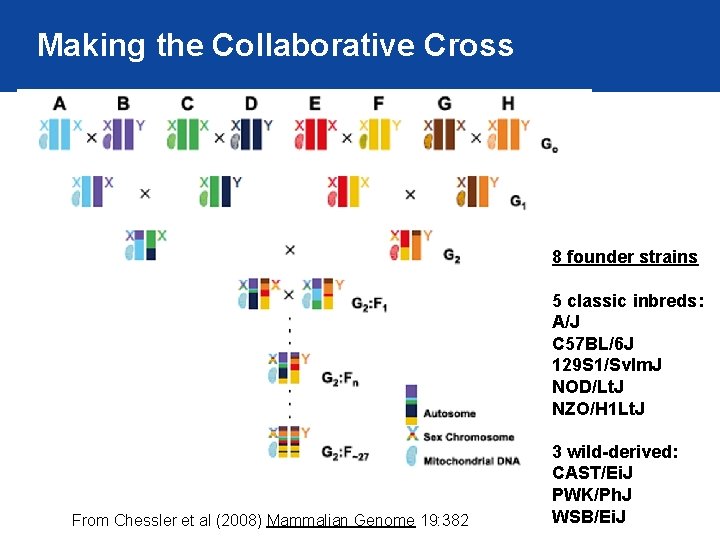
Making the Collaborative Cross 8 founder strains 5 classic inbreds: A/J C 57 BL/6 J 129 S 1/Sv. Im. J NOD/Lt. J NZO/H 1 Lt. J From Chessler et al (2008) Mammalian Genome 19: 382 3 wild-derived: CAST/Ei. J PWK/Ph. J WSB/Ei. J
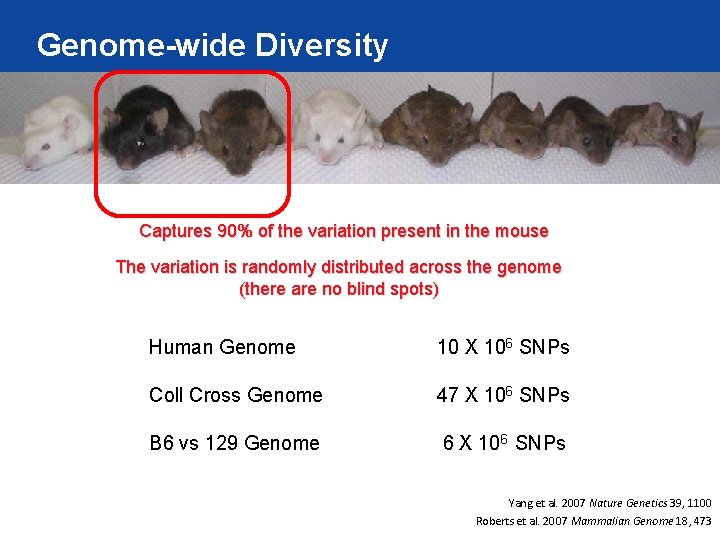
Genome-wide Diversity Captures 90% of the variation present in the mouse The variation is randomly distributed across the genome (there are no blind spots) Human Genome 10 X 106 SNPs Coll Cross Genome 47 X 106 SNPs B 6 vs 129 Genome 6 X 10⁶ SNPs Yang et al. 2007 Nature Genetics 39, 1100 Roberts et al. 2007 Mammalian Genome 18, 473
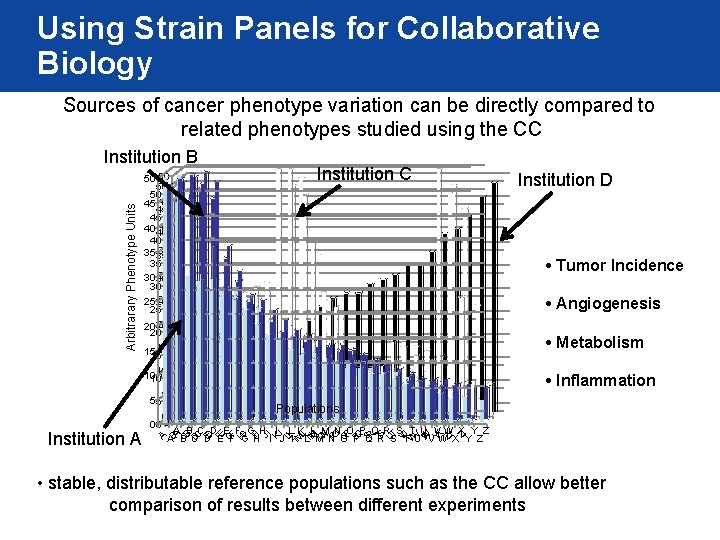
Using Strain Panels for Collaborative Biology Sources of cancer phenotype variation can be directly compared to related phenotypes studied using the CC Institution A 50 50 45 45 40 40 35 35 30 30 25 25 20 20 15 15 10 10 1010 5 55 5 0 00 0 Institution C Institution D • Tumor Incidence • Angiogenesis • Metabolism • Inflammation Populations A B C D E F G H I J K L M N O P Q R S T U VW X Y Z A BA CB DC ED FE GF HG HI JI KJ LK ML NM ON PO QP RQ SR TS UT VU WV XW YX ZY Z Arbitrarary Phenotype Units Institution B • stable, distributable reference populations such as the CC allow better comparison of results between different experiments
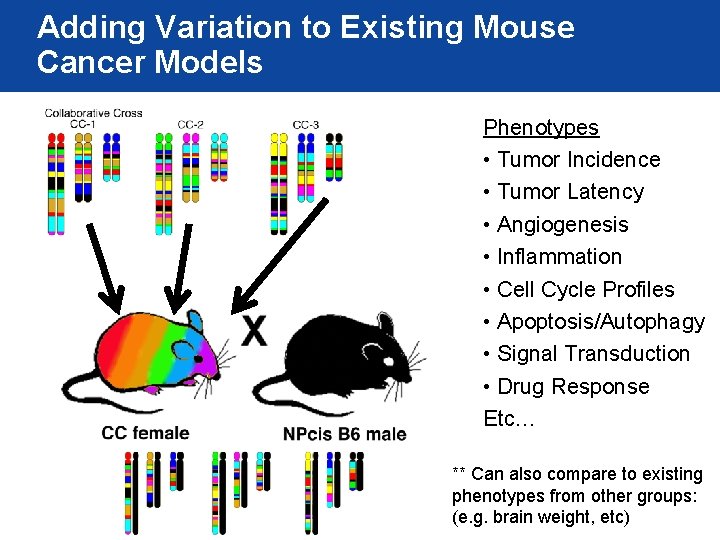
Adding Variation to Existing Mouse Cancer Models Phenotypes • Tumor Incidence • Tumor Latency • Angiogenesis • Inflammation • Cell Cycle Profiles • Apoptosis/Autophagy • Signal Transduction • Drug Response Etc… ** Can also compare to existing phenotypes from other groups: (e. g. brain weight, etc)
Genetic Background Effects: Breeding True • There are only 2 cases where all offspring of a cross are on an “identical”* genetic background: an inbred cross and an F 1 cross. X X * Caveats to be covered shortly! Genemut 50% Genemut 100% Strain A/A 50% Genemut 100% Strain A/B
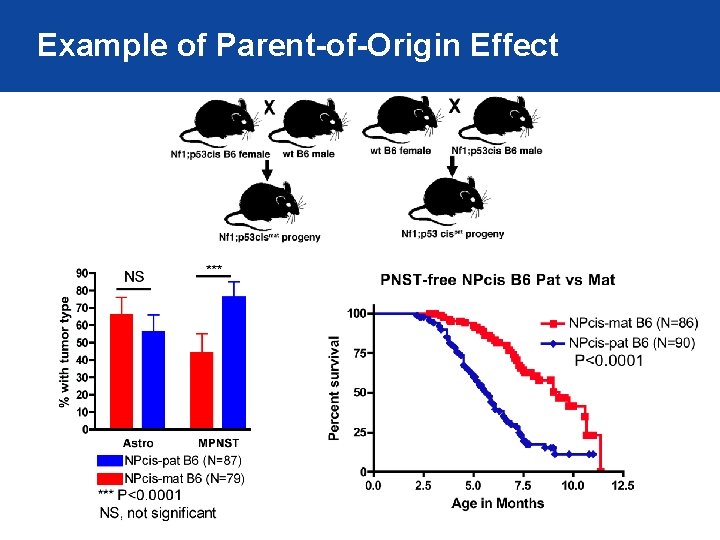
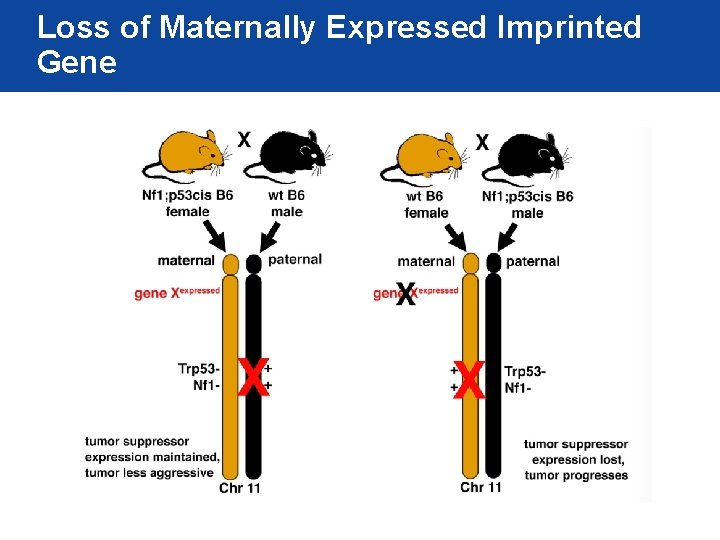
Caveat #2: Parent-of-origin effects • Animals that are genetically identical can be epigenetically distinct, leading to changes in phenotypes • Imprinted genes are expressed from only one chromosome (either the mother’s chromosome or father’s depending on the imprinted gene) • Direct effects: Imprinted genes can have variant alleles that alter levels of expression or the function of the protein. • Indirect effects: In the context of cancer, genes are frequently lost or amplified as cancer progresses. Imprinted genes that are linked to strong driving mutations may have very different effects depending on whether the mother’s or father’s chromosome is affected.
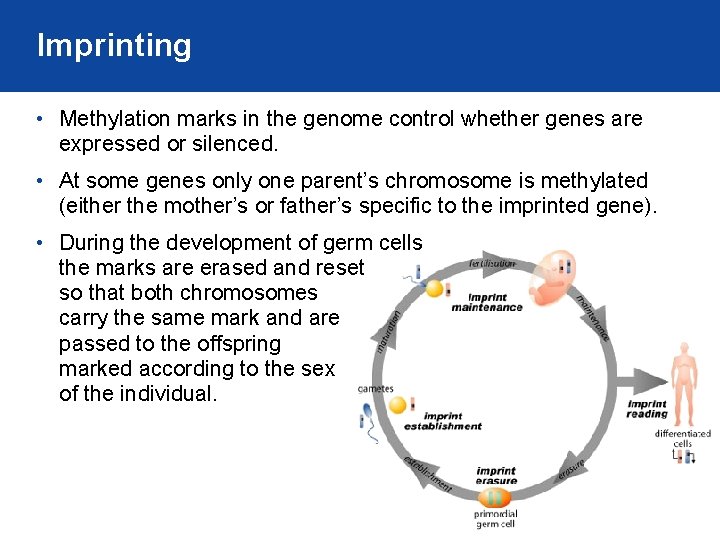
Imprinting • Methylation marks in the genome control whether genes are expressed or silenced. • At some genes only one parent’s chromosome is methylated (either the mother’s or father’s specific to the imprinted gene). • During the development of germ cells the marks are erased and reset so that both chromosomes carry the same mark and are passed to the offspring marked according to the sex of the individual.
Example of Parent-of-Origin Effect
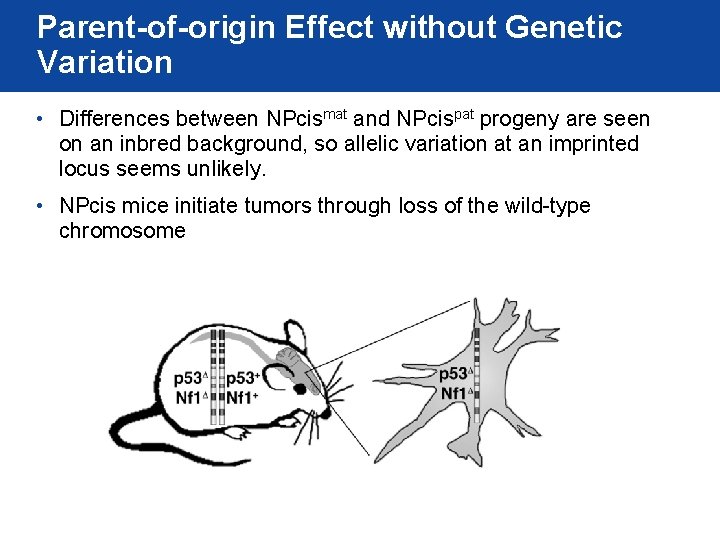
Parent-of-origin Effect without Genetic Variation • Differences between NPcismat and NPcispat progeny are seen on an inbred background, so allelic variation at an imprinted locus seems unlikely. • NPcis mice initiate tumors through loss of the wild-type chromosome
Loss of Maternally Expressed Imprinted Gene
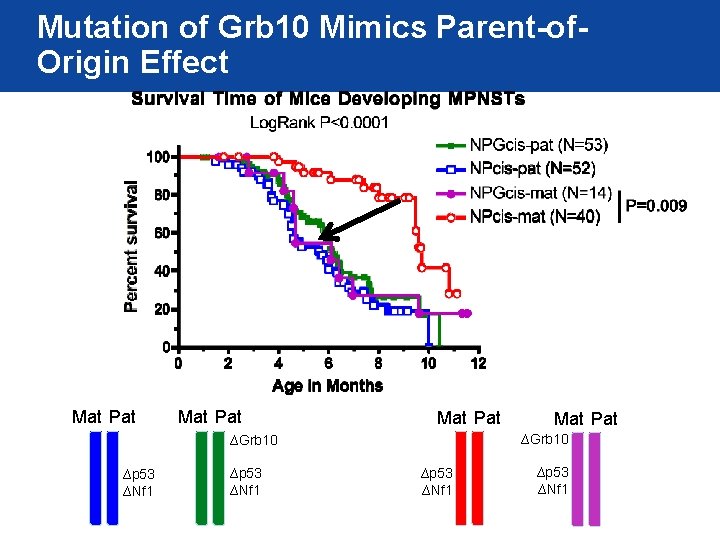
Mutation of Grb 10 Mimics Parent-of. Origin Effect Mat Pat ∆Grb 10 ∆p 53 ∆Nf 1 Mat Pat ∆p 53 ∆Nf 1
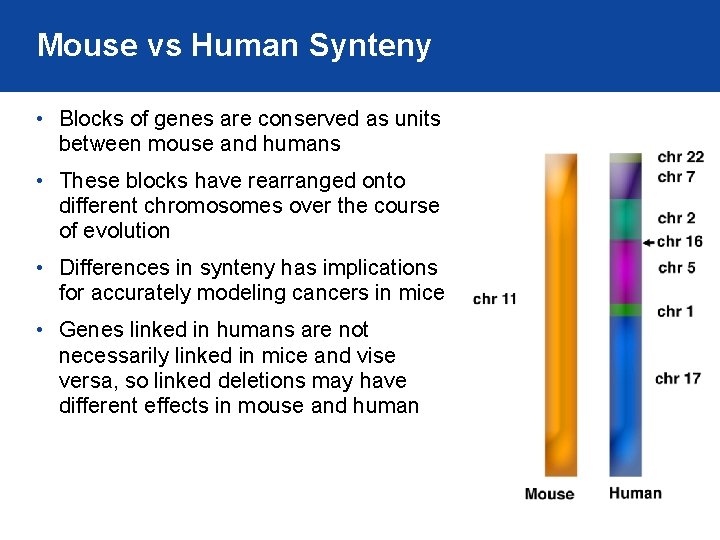
Mouse vs Human Synteny • Blocks of genes are conserved as units between mouse and humans • These blocks have rearranged onto different chromosomes over the course of evolution • Differences in synteny has implications for accurately modeling cancers in mice • Genes linked in humans are not necessarily linked in mice and vise versa, so linked deletions may have different effects in mouse and human
Summary • Many factors in inheritance can confound the interpretation of mouse phenotypes • Careful record keeping, including parents, grand-parents, great grand-parents, strain, and generation of cross, helps to determine whether unexpected results have another explanation. • Careful experimental design either reduces variability in experimental and control groups OR distributes variability equally across experimental and control groups. • New mouse tools such as the Collaborative Cross are making it easier to include natural variation in experiments to better mimic the human population • Your mouse’s tumor knows who its parents are – so should you!
Resources • Silver, L. M. Mouse Genetics Oxford University Press, 1995 http: //www. informatics. jax. org/silver/ • Cook, M. J. The Anatomy of the Laboratory Mouse Academic Press, 1965 http: //www. informatics. jax. org/cookbook/ • Mouse Phenome Database: http: //phenome. jax. org/ • Mouse Genome Informatics: http: //www. informatics. jax. org/ • Mouse-Human-Rat Synteny: http: //www. ncbi. nlm. nih. gov/projects/homology/maps/ • Allen Brain Atlas: http: //mouse. brain-map. org/ • GENSAT: http: //www. gensat. org/index. html • Center for Genome Dynamics: http: //cgd. jax. org/tools. shtml • UNC Computational Genetics Tools: http: //compgen. unc. edu/wp/? page_id=10 • Mouse strain and genotype nomenclature: http: //www. informatics. jax. org/mgihome/nomen/gene. shtml#pns • International Mouse Strain Resource: http: //www. findmice. org//index. jsp