
National Black Family Promotions Coalition Methodological Approach Carolyn

National Black Family Promotions Coalition: Methodological Approach Carolyn M. Springer, Ph. D. September 23, 2005
Secondary Data • Cull and synthesize data – Multiple Sources – Interdisciplinary • Health of Black Families – Maternal and Infant Health – Family wellness • A Critical Eye – Identify Strengths – Identify Existing Gaps
Secondary Data • Provide Conceptual Frameworks – Ecological Model • User Friendly – Interpret data for different audiences • Recommendations – Inform audiences – Inform practice – Inform policy
Black Americans • 36 million; 12 % of US population • Race and Ethnicity as major determinants of health – Poverty – Increased morbidity – Increased mortality – Inadequate health insurance – Limited access to health care
Poverty • 52% poor or near poor (24% Whites) • Twice as likely to be unemployed (10. 3% vs. 4. 7%) • In 2002, 33% of Blacks had income less than $15, 260 (vs. 11% Whites) • Black Children <18 years – 3 x as likely to be living in poverty – 62% single parent households – 56% households headed by women
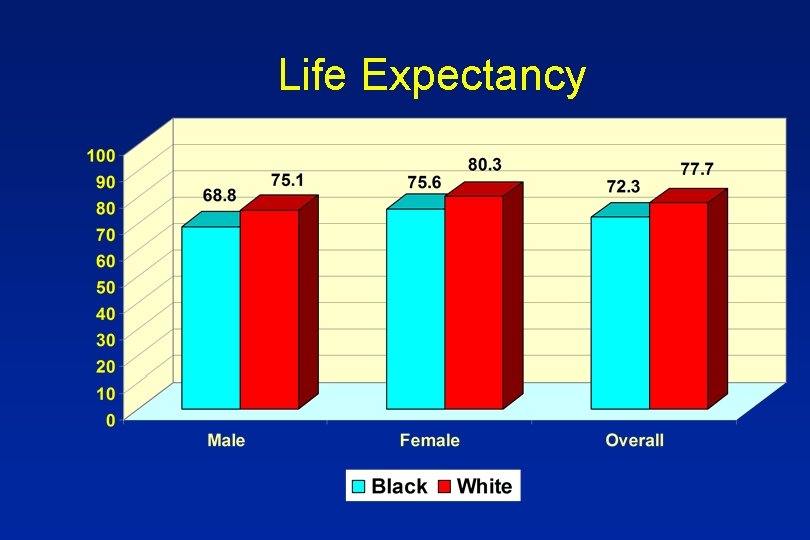
Life Expectancy
Adult Health • Black males: higher incidence of prostate, lung/bronchus, colon/rectal and stomach cancer • Black females: lower incidence of breast cancer but higher fatality; higher incidence of colon/rectal, pancreatic and stomach cancer • Higher rates of hypertension • Higher rates of STDs • AIDS cases: Black males (42%); Black Females (65%)
Maternal and Child Health • IMR : 13. 3% for Blacks; 5. 7% for Whites • Black infants are twice as likely – to die in infancy – to be born pre-term – to be low birth weight • Black women – More than 2 x likely to receive late or no pre-natal care – 3 to 4 x as likely to die from pregnancy and related complications
Teen Pregnancy • From 1991 -2002, 30% decline among 15 -19 year olds • Black teens decreased most (42%) • In 2000, Black teens pregnancy rate higher than national average (153. 3 vs. 83. 6 per 1000) • 57% of Black girls become pregnant at least once
Postpartum Depression • Similar rates by race/ethnicity • Individual, community and systemic barriers may heighten risk – Identification – Treatment • Misperceptions about tx • Fears • Lack of insurance
Tobacco Use • 22% Blacks use tobacco (27% men, 22% women) • 45, 000 tobacco related deaths among Black adults • Smoke less and smoke later in life but more likely to die • About 15% of Black teens smoke • Smoke cigarettes with high menthol content • 10% of pregnant women smoked
Other Drugs • Alcohol – Drink less – More alcohol-related medical problems – Higher rates of mortality • Illicit Drug Use – Blacks 1 in 13 vs. 1 in 16 for Whites
Domestic Violence • Black women – 35% higher than Whites – 22% higher than other ethnic groups – About 12 in every 1000 • Escalates during pregnancy – 23% of women who seek prenatal acre – 17% of abused women indicate first abuse during pregnancy
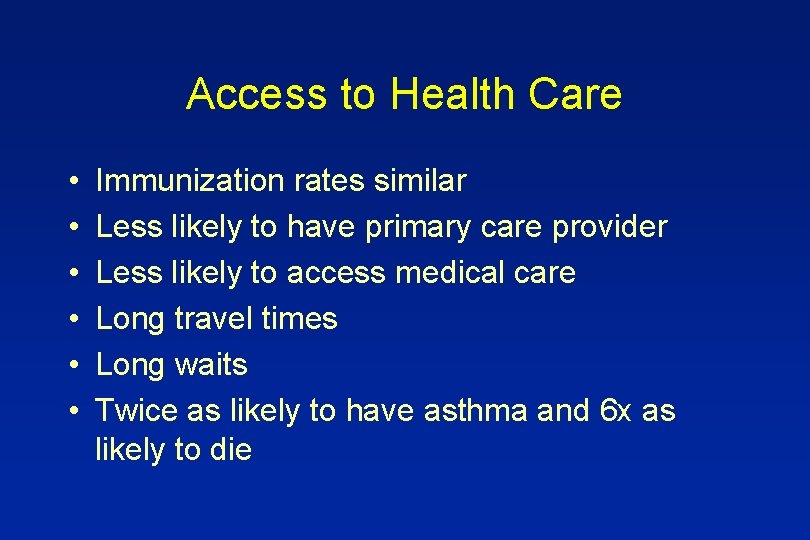
Access to Health Care • • • Immunization rates similar Less likely to have primary care provider Less likely to access medical care Long travel times Long waits Twice as likely to have asthma and 6 x as likely to die
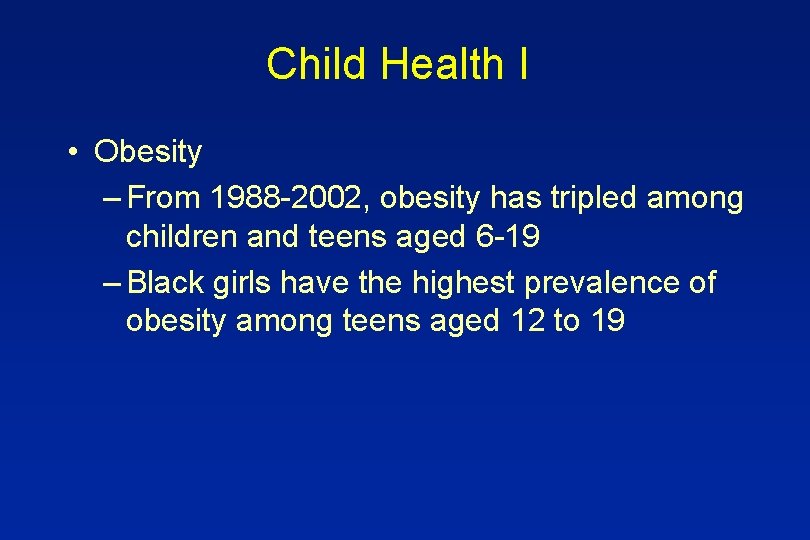
Child Health I • Obesity – From 1988 -2002, obesity has tripled among children and teens aged 6 -19 – Black girls have the highest prevalence of obesity among teens aged 12 to 19
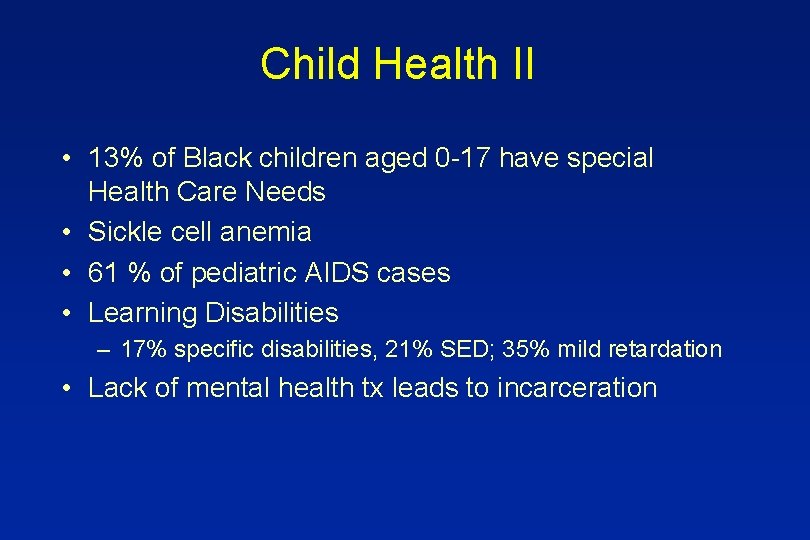
Child Health II • 13% of Black children aged 0 -17 have special Health Care Needs • Sickle cell anemia • 61 % of pediatric AIDS cases • Learning Disabilities – 17% specific disabilities, 21% SED; 35% mild retardation • Lack of mental health tx leads to incarceration
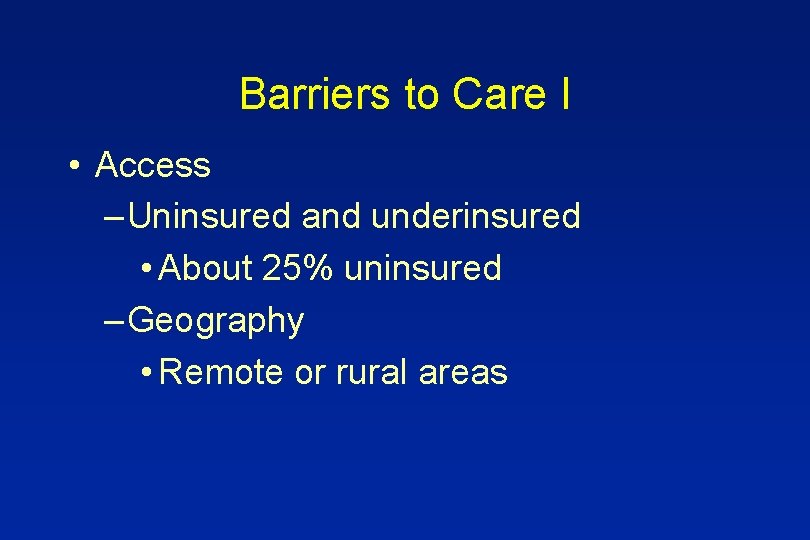
Barriers to Care I • Access – Uninsured and underinsured • About 25% uninsured – Geography • Remote or rural areas
Barriers to Care II • Relationship with health care providers – 23% report poor communication with providers • Leave without asking questions • Leave without understanding – Negative experiences • Looked down upon • Disrespected
Qualitative Data • Give voice to those who are silent or who have been silenced • Insider perspective • Use their frames of reference and language • Begin with general question or problem • Hypotheses emerge from research • Samples small; have identified characteristics • Close, personal relationship to subjects • Allow for participant input • Less structured measures • Descriptive analysis- identify key themes
Qualitative Methods • Focus Groups – Focused dialogue with 8 -10 participants – Can be used to further explore an issue – Can be used to develop measures • Town Hall Meetings – Moderated conversation for larger groups – Allow different perspectives to be heard – Members of the community can reflect on issues and make recommendations
The “Demon Plague” • Semi-structured interviews with 37 APIs living with HIV (Kang, Rapkin, Springer and Kim, 2003) • 16 interviews with undocumented immigrants (Chinese, Japanese, East Indian, Bengali, Burmese, Other) • Lack of Knowledge and Misperceptions – Self, Community Members • Stigma and Discrimination • Immigration-Related Stressors • Difficulty Navigating Service Systems
Caribbean Women “Speak Out” • TCC and NYC Dept. of Heath (2001) • Gather information about high IMR in Central and South Brooklyn to inform practice and interventions • Role of cultural traditions and practices in accessing care • 8 Focus Groups with women from Jamaica, Trinidad and Tobago, Haiti and Guyana • 62 participants who lived in US from 2 -15 years and had a live or still birth in the last 5 years
Caribbean Women “Speak Out” • Women’s knowledge and awareness of IM • Behavioral and Cultural Factors During Preconception and Pregnancy • Social and Environmental Barriers to obtaining optimal care • Similarities and Differences
- Slides: 23