
National Animal Identification System Dr John R Clifford


- Slides: 21
National Animal Identification System Dr. John R. Clifford Deputy Administrator Veterinary Services Safeguarding Animal Health 1
NAIS Objectives • Program will enhance U. S. efforts to respond to outbreaks, quickly and effectively • Determining locations of potentially exposed locations and animals as quickly as possible v Determine size and scope of outbreak v Determine source v Timely response reduces spread and impact Safeguarding Animal Health 2
Potential Diseases of Concern • In recent years, APHIS and States has addressed: v Exotic Newcastle disease v Vesicular stomatitis v Avian influenza • Epidemiological investigations to trace animals of interest for BSE • Bottom line: we need a system that enables State and Federal animal health officials to address existing diseases, FADs, and emerging domestic diseases Safeguarding Animal Health 3
Support Existing Control and Eradication Programs • NAIS will also support ongoing control and eradication programs v v • Scrapie Bovine tuberculosis Johnes Brucellosis NAIS will be critical to complete disease eradication programs Safeguarding Animal Health 4
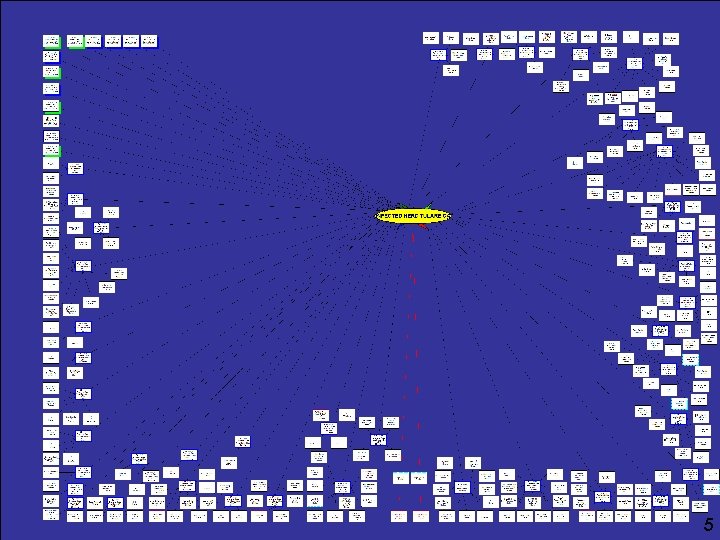
Safeguarding Animal Health 5 5
Safeguarding Animal Health 66
Benefits to Producers and Animal Owners • More timely response = benefits to producers v v v • Smaller quarantine zones, less intrusion Movement restrictions lifted sooner Healthy animals boost consumer confidence Even access to markets – domestic and international Recreational animals resume movement NAIS will help uphold U. S. reputation for healthy animals Safeguarding Animal Health 7
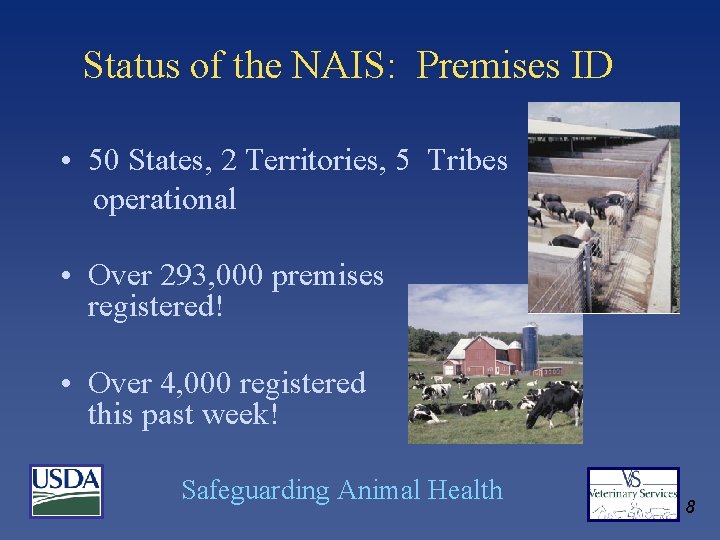
Status of the NAIS: Premises ID • 50 States, 2 Territories, 5 Tribes operational • Over 293, 000 premises registered! • Over 4, 000 registered this past week! Safeguarding Animal Health 8
Status of the NAIS: Premises ID • Nationwide premises registration data saves: v. Manpower v. Time v. Logistical support • Premises registration provides States with the ability to alert animal owners with early information about precautions to take to limit disease spread Safeguarding Animal Health 9
Premises Identification: Who should participate? • USDA encourages all livestock and poultry owners to register their premises • Voluntary premises registration does not obligate producers to participate in identification or tracking components • Premises registration free in all States Safeguarding Animal Health 10
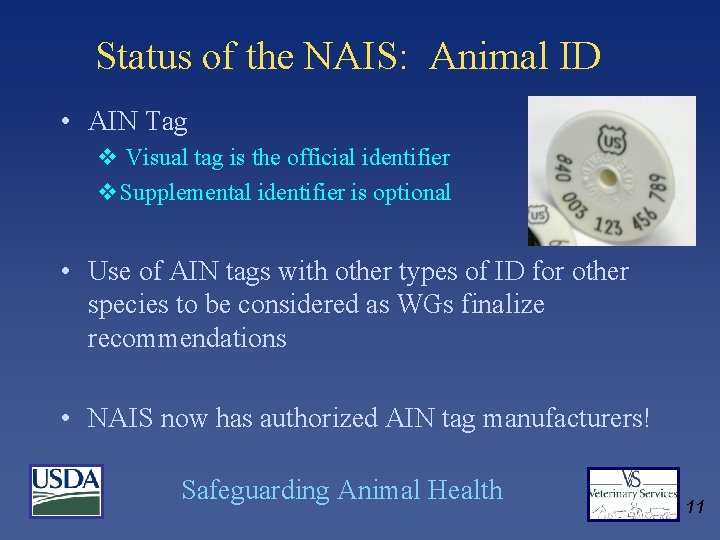
Status of the NAIS: Animal ID • AIN Tag v Visual tag is the official identifier v. Supplemental identifier is optional • Use of AIN tags with other types of ID for other species to be considered as WGs finalize recommendations • NAIS now has authorized AIN tag manufacturers! Safeguarding Animal Health 11
Animal ID: Which animals should be identified in the NAIS? • Need for animal identification directly associated with reporting of animal movements v Animals engaged in “reportable” movements should be identified before they leave premises of origin • Animals that do not leave premises do not need ID Safeguarding Animal Health 12
Status of the NAIS: Animal Tracking • Industry/States to manage ATDs • USDA developing ATPS to work with multiple ATDs • Authorized State and Federal animal health officials utilize ATPS to submit queries to the ATDs for information in certain situations: v. Confirmed positive test for FAD v. Animal disease emergency v. Conducting traceback or trace forward Safeguarding Animal Health 13
Animal Tracking Private/State Databases • Interim/Development Phase v. USDA evaluating systems v. Organizations with systems that meet interim requirements may enter into agreement with USDA v. Collaborate to define full IT requirements v June 2006 – early 2007 Safeguarding Animal Health 14
Animal Tracking: What is “reportable”? • Reportable movements = movements with high impact potential for disease spread • Species Working Groups developing recommendations for specific types of movement that pose disease risk for each species Safeguarding Animal Health 15
Animal Tracking: Non-reportable movements • Some movements do not need to be reported: v Pasture to pasture movement within a premises v Animals that “get out” v. Movement to custom slaughter for personal consumption v. Local movement for recreational purposes (e. g. trail ride) v. Exhibition in local shows, parades, or fairs Safeguarding Animal Health 16
Future of the NAIS • Build on the progress we’ve already made – especially in premises and animal identification • Progress in a timely manner • Work together to achieve goals Safeguarding Animal Health 17
Implementation Plan • Move forward through a voluntary program v Producers test and recommend most practical solutions v Market drivers (age, source, and process verification) • High level of participation is necessary to achieve successful animal disease program Safeguarding Animal Health 18
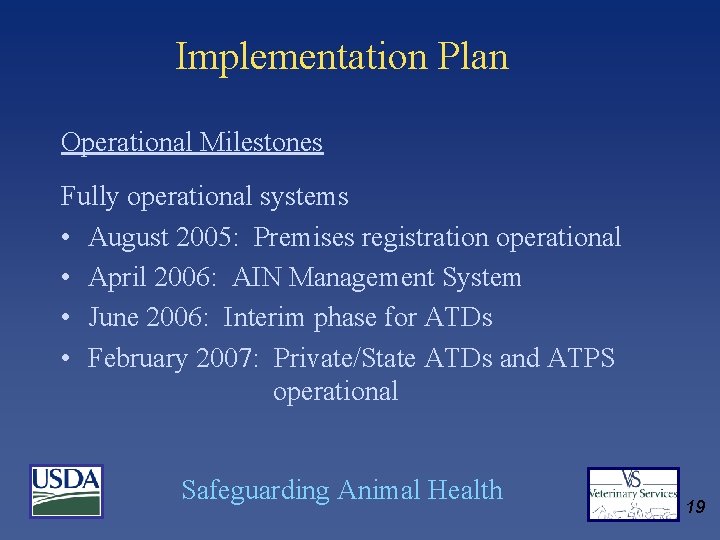
Implementation Plan Operational Milestones Fully operational systems • August 2005: Premises registration operational • April 2006: AIN Management System • June 2006: Interim phase for ATDs • February 2007: Private/State ATDs and ATPS operational Safeguarding Animal Health 19
Confidentiality • USDA APHIS Policy: Protect individuals’ confidential information in accordance with FOIA • Privacy Act: Protects personal information collected, maintained, and disseminated by any Federal government entity Safeguarding Animal Health 20
Safeguarding Animal Health 21