
National 5 Graphic Communication EXAM KNOWLEDGE Line Types
- Slides: 23
National 5 Graphic Communication EXAM KNOWLEDGE Line Types, Drawing Types, British Standards and Dimensioning
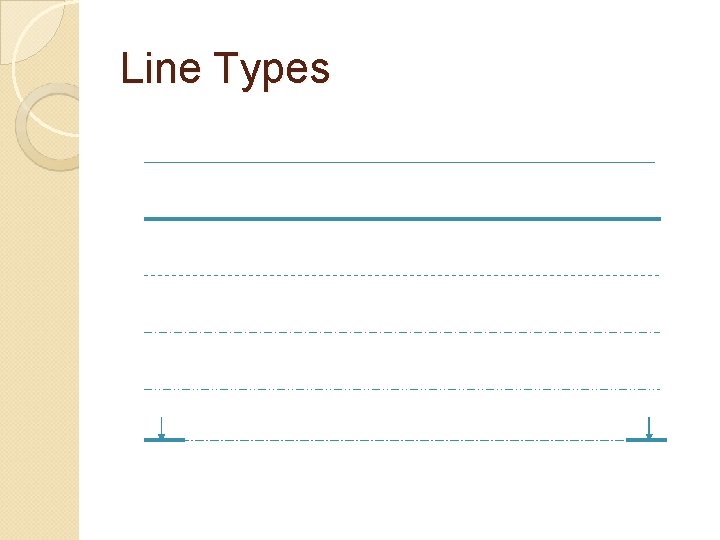
Line Types
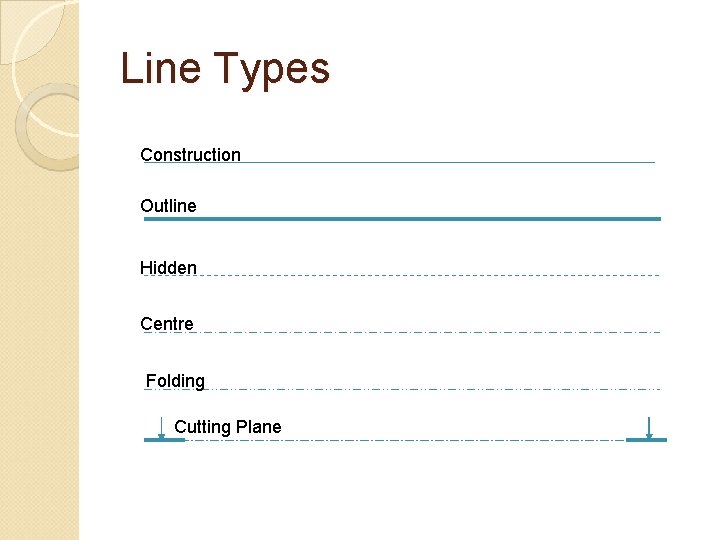
Line Types Construction Outline Hidden Centre Folding Cutting Plane
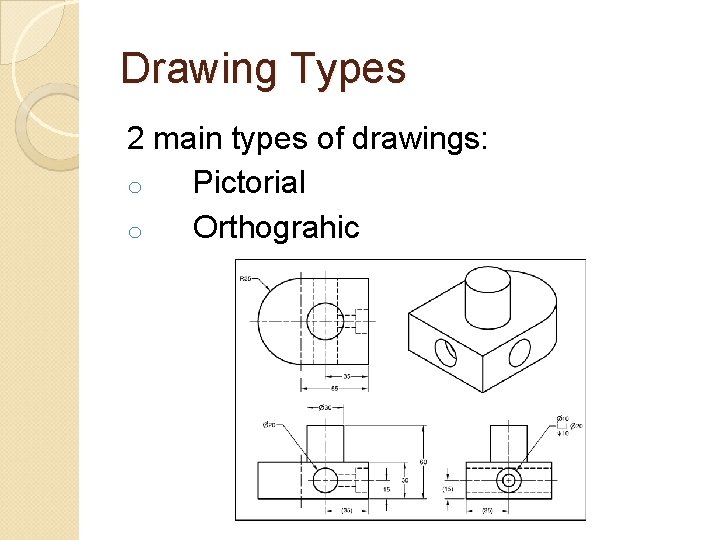
Drawing Types 2 main types of drawings: o Pictorial o Orthograhic
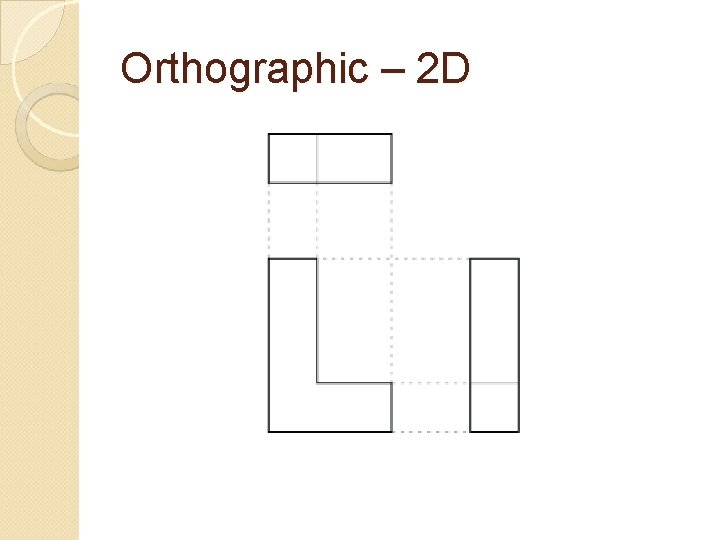
Orthographic – 2 D
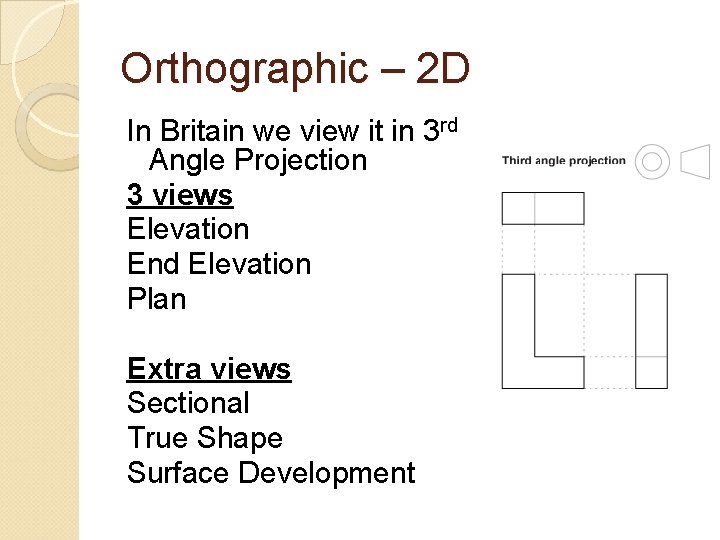
Orthographic – 2 D In Britain we view it in 3 rd Angle Projection 3 views Elevation End Elevation Plan Extra views Sectional True Shape Surface Development
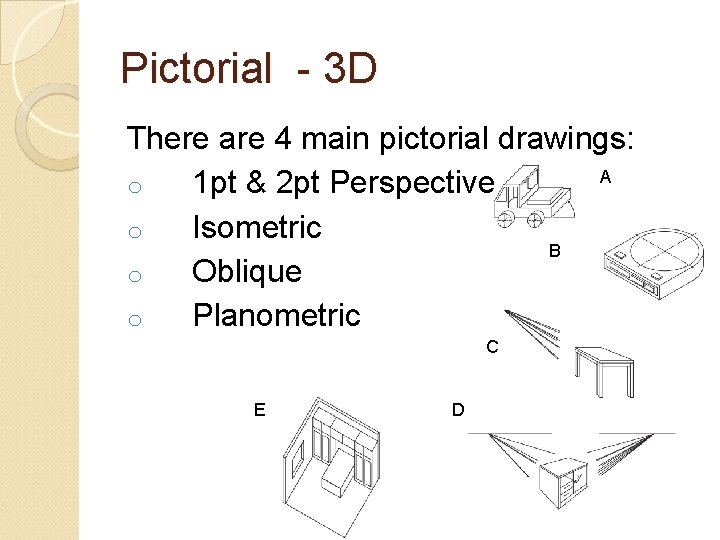
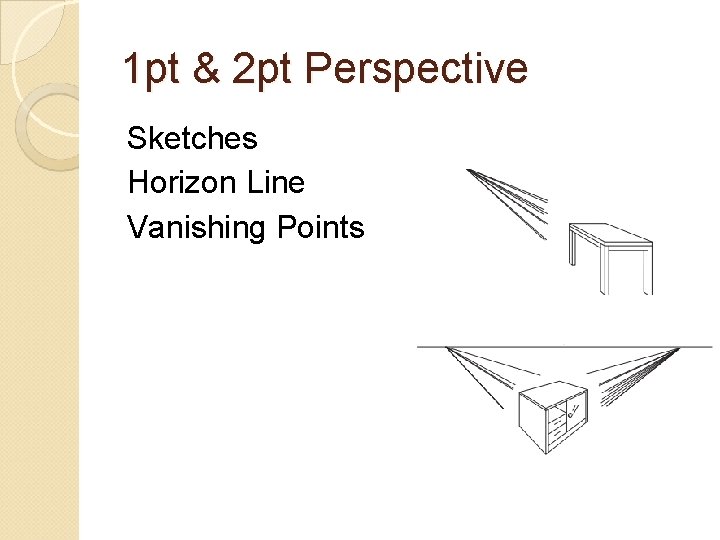
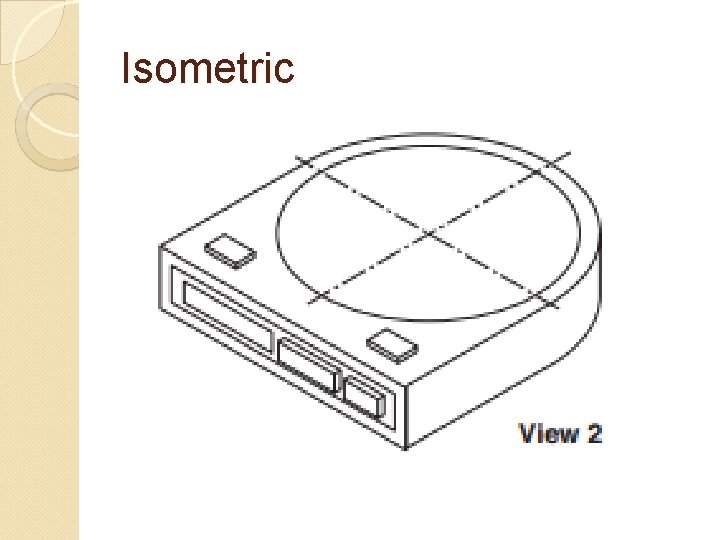
Pictorial - 3 D There are 4 main pictorial drawings: A o 1 pt & 2 pt Perspective o Isometric B o Oblique o Planometric C E D
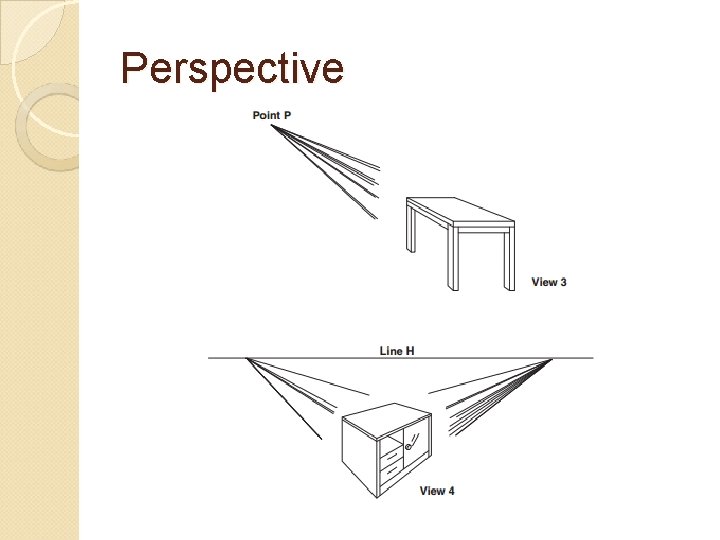
Perspective
1 pt & 2 pt Perspective Sketches Horizon Line Vanishing Points
Isometric
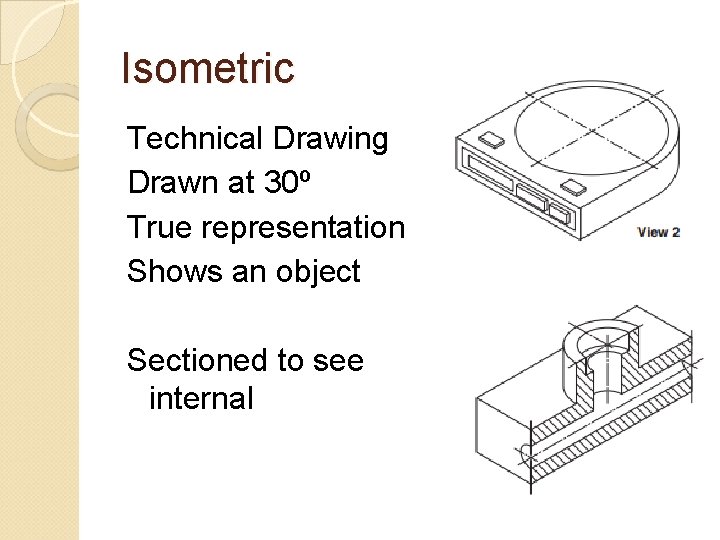
Isometric Technical Drawing Drawn at 30º True representation Shows an object Sectioned to see internal
Planometric
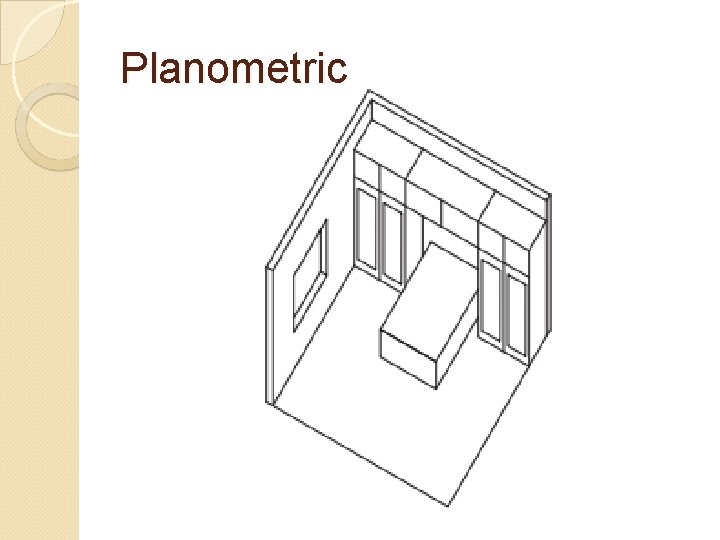
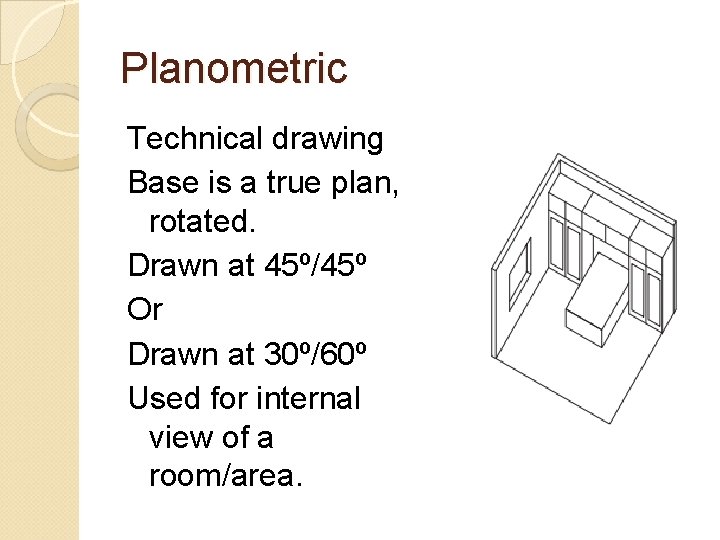
Planometric Technical drawing Base is a true plan, rotated. Drawn at 45º/45º Or Drawn at 30º/60º Used for internal view of a room/area.
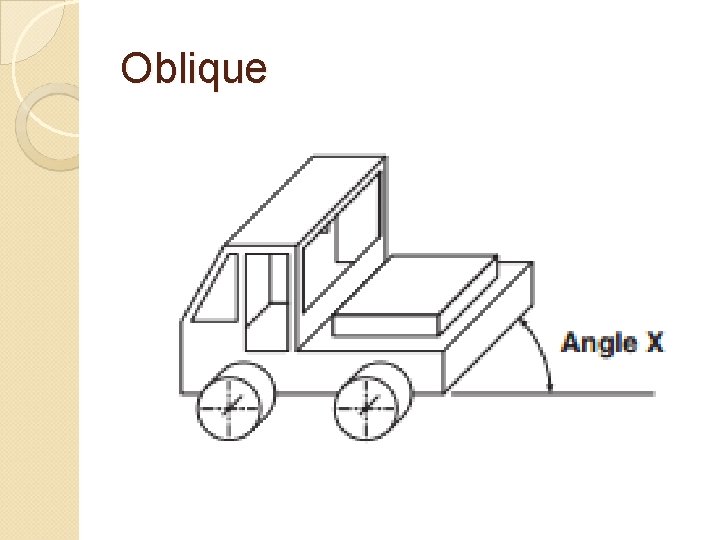
Oblique
Exam Knowledge Expected to know. . . The different pictorials. The angles of each pictorial. What each pictorial would be used for.
British Standards are the accepted way we apply standards to work in the industrial and commercial world. British Standards reduce any faults or confusion that could be made when developing design based work and ensure that people can communicate clearly with each other. It is a technical language that professional people become accustomed to using. Sometimes the work is stamped with the Kitemark.
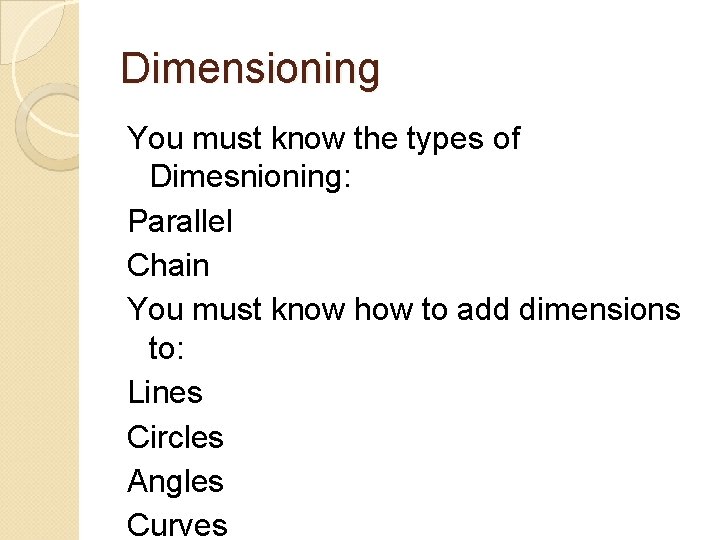
Dimensioning You must know the types of Dimesnioning: Parallel Chain You must know how to add dimensions to: Lines Circles Angles Curves
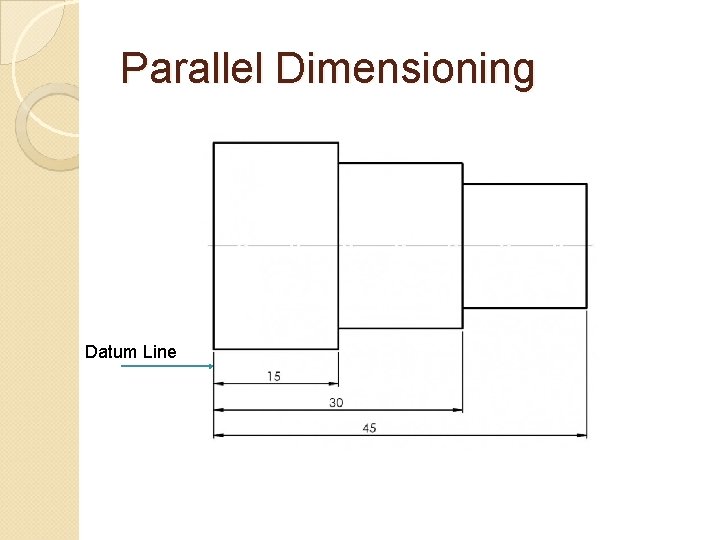
Parallel Dimensioning Datum Line
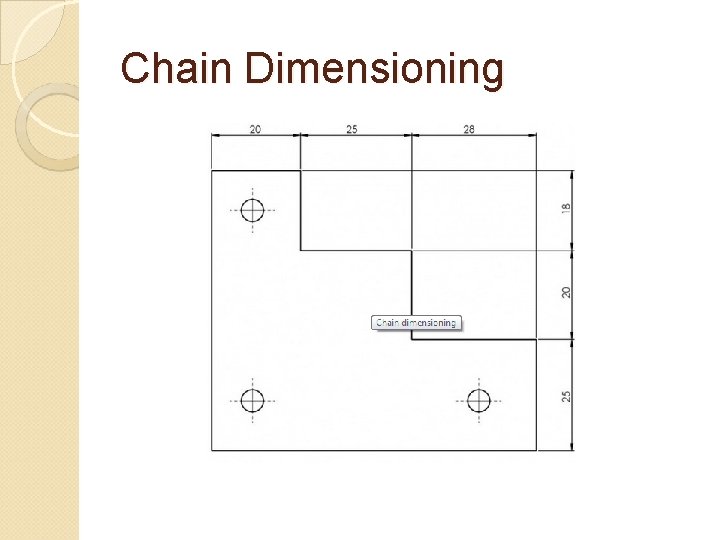
Chain Dimensioning
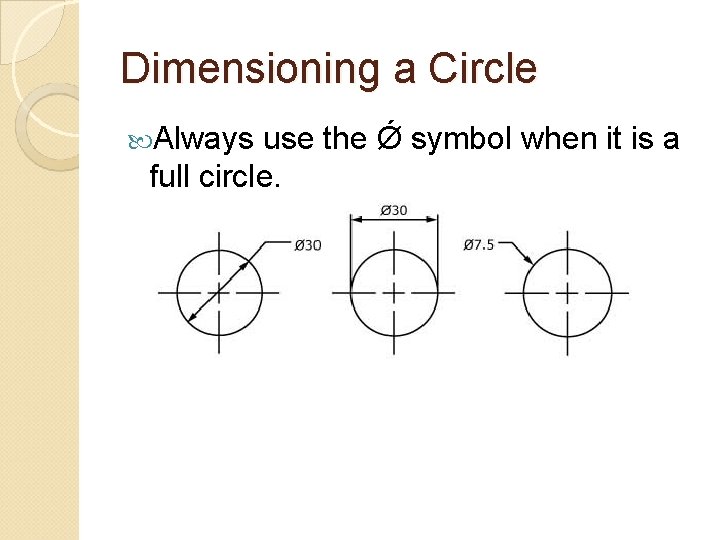
Dimensioning a Circle Always use the Ǿ symbol when it is a full circle.
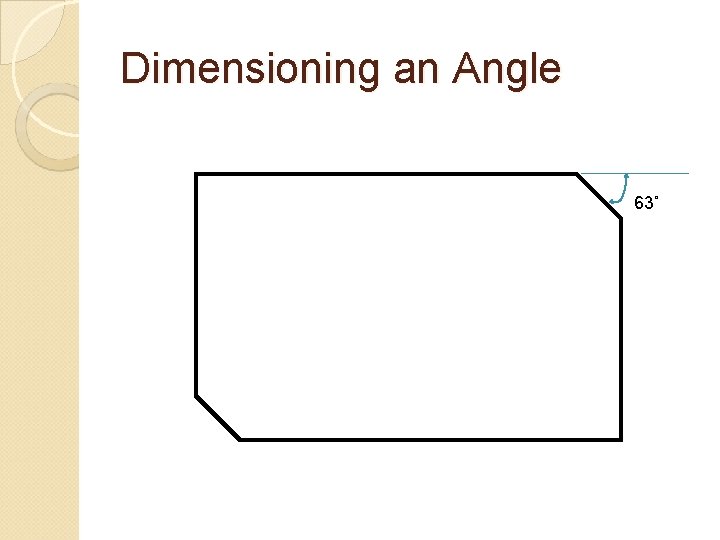
Dimensioning an Angle 63˚
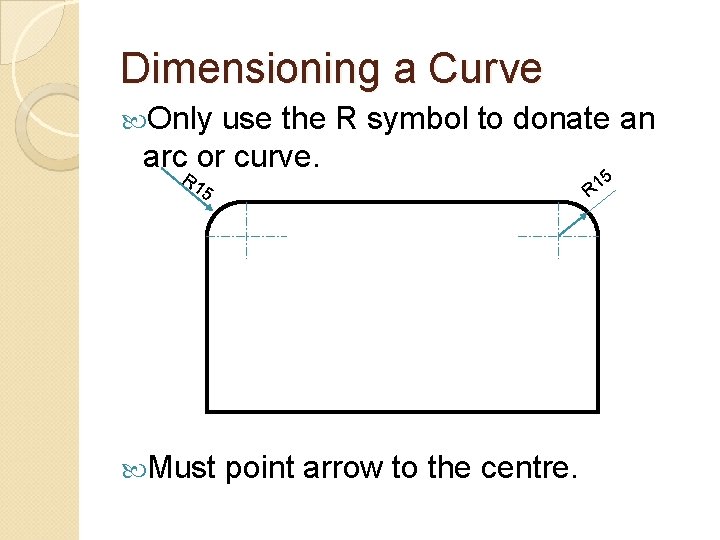
Dimensioning a Curve Only use the R symbol to donate an arc. R or curve. 5 1 R 15 Must point arrow to the centre.
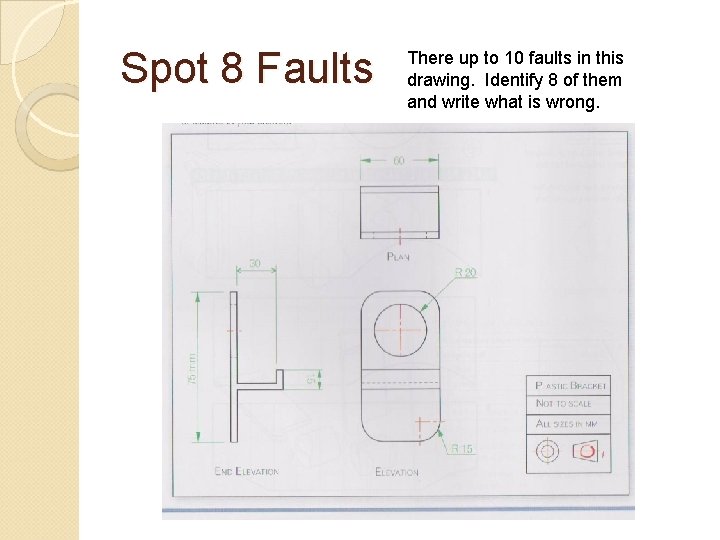
Spot 8 Faults There up to 10 faults in this drawing. Identify 8 of them and write what is wrong.