
National 5 Cell Biology Enzymes We are learning
National 5 Cell Biology Enzymes
We are learning to: • • Describe the properties of an enzyme Explain the importance of enzymes Describe an enzyme reaction Explain the specificity of enzymes for their substrate
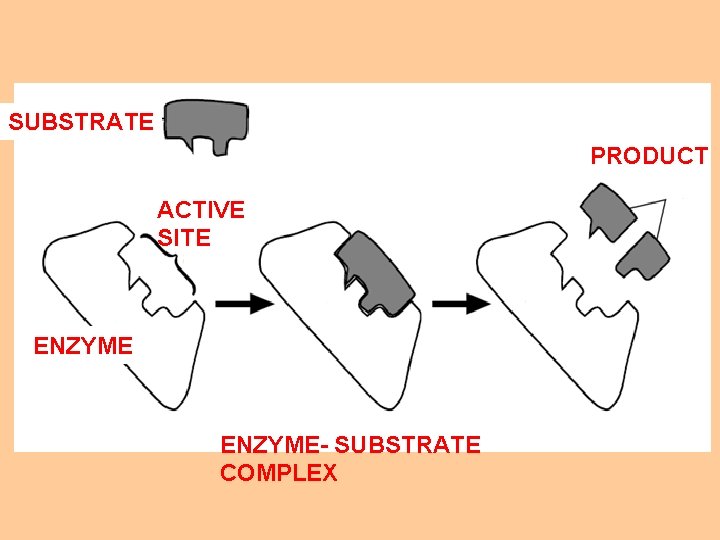
What I'm looking for: • Mind map showing the properties of enzymes • Labelled diagram showing the stages of an enzyme reaction • 2 examples of degradation enzymes • 1 example of a synthesis enzyme
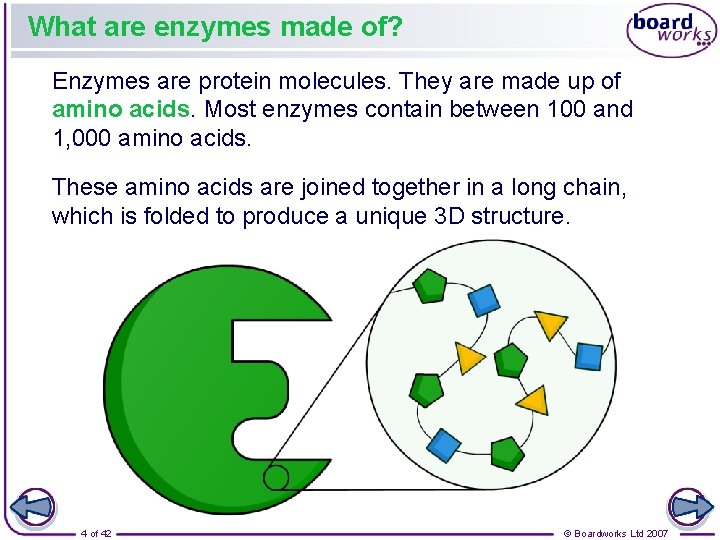
What are enzymes made of? Enzymes are protein molecules. They are made up of amino acids. Most enzymes contain between 100 and 1, 000 amino acids. These amino acids are joined together in a long chain, which is folded to produce a unique 3 D structure. 4 of 42 © Boardworks Ltd 2007
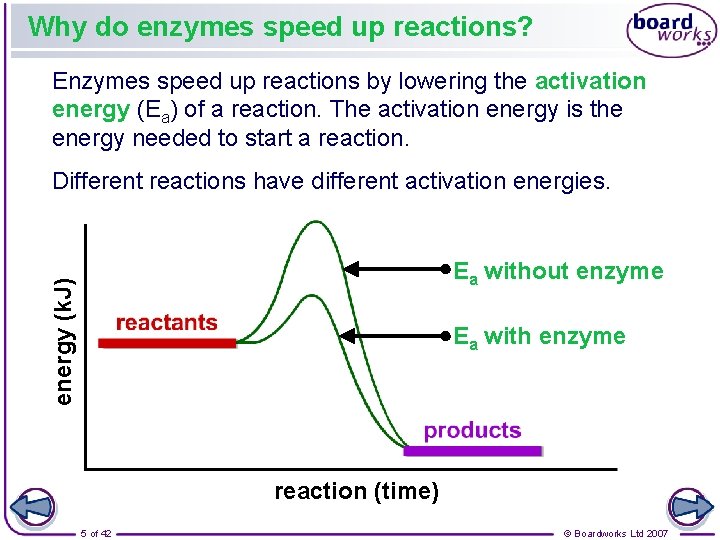
Why do enzymes speed up reactions? Enzymes speed up reactions by lowering the activation energy (Ea) of a reaction. The activation energy is the energy needed to start a reaction. Different reactions have different activation energies. energy (k. J) Ea without enzyme Ea with enzyme reaction (time) 5 of 42 © Boardworks Ltd 2007
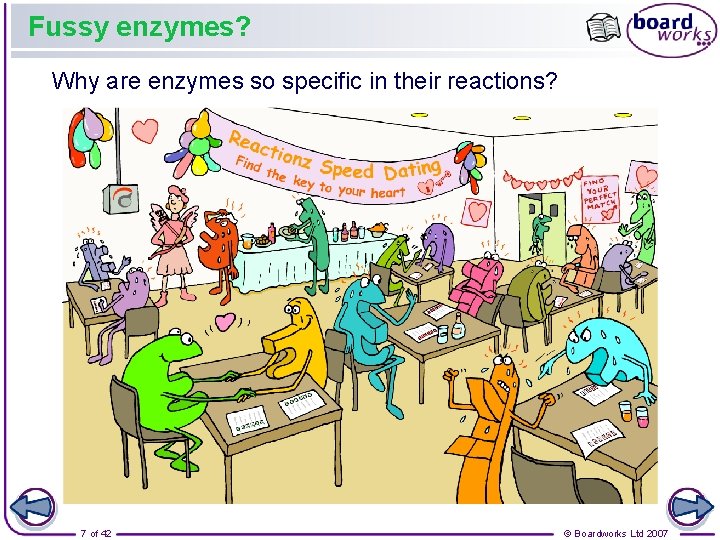
Fussy enzymes? Why are enzymes so specific in their reactions? 7 of 42 © Boardworks Ltd 2007
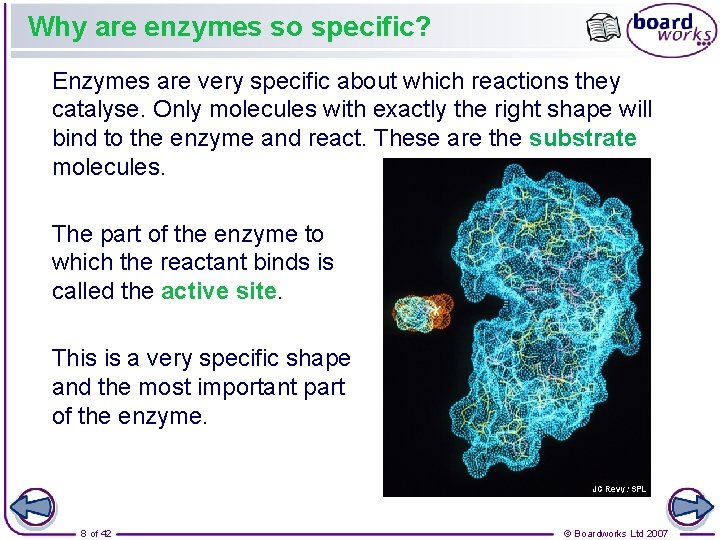
Why are enzymes so specific? Enzymes are very specific about which reactions they catalyse. Only molecules with exactly the right shape will bind to the enzyme and react. These are the substrate molecules. The part of the enzyme to which the reactant binds is called the active site. This is a very specific shape and the most important part of the enzyme. 8 of 42 © Boardworks Ltd 2007
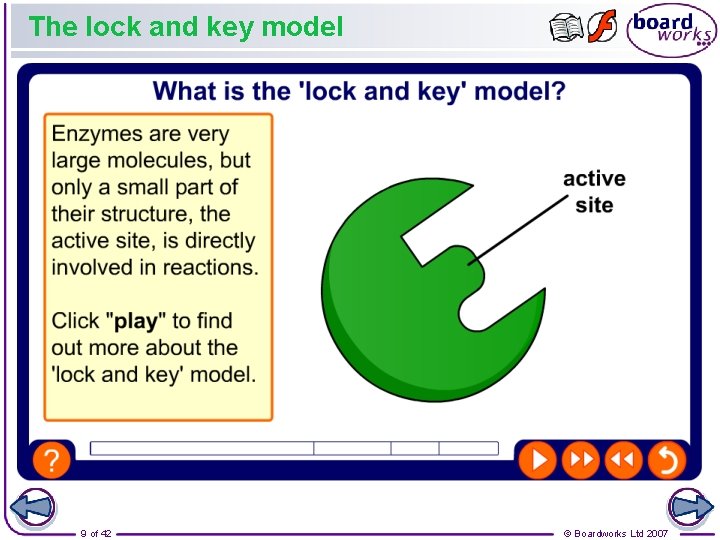
The lock and key model 9 of 42 © Boardworks Ltd 2007
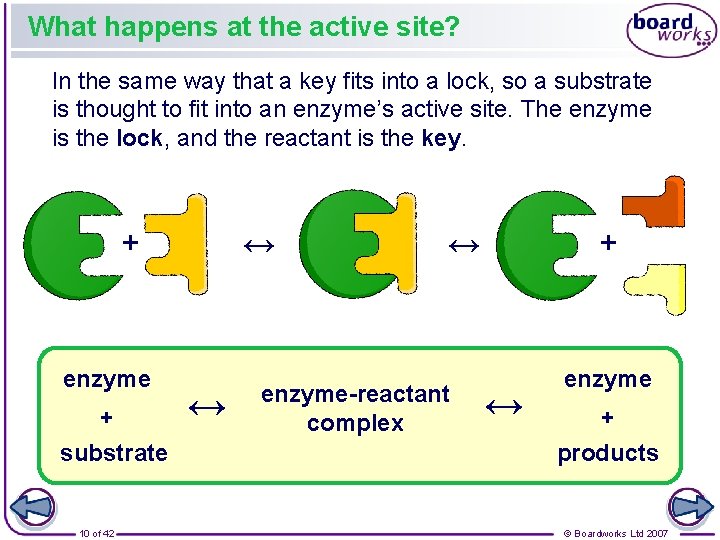
What happens at the active site? In the same way that a key fits into a lock, so a substrate is thought to fit into an enzyme’s active site. The enzyme is the lock, and the reactant is the key. ↔ + enzyme + substrate 10 of 42 ↔ ↔ enzyme-reactant complex + ↔ enzyme + products © Boardworks Ltd 2007
SUBSTRATE PRODUCT ACTIVE SITE ENZYME- SUBSTRATE COMPLEX
I can: • • Describe the properties of an enzyme Explain the importance of enzymes Describe an enzyme reaction Explain the specificity of enzymes for their substrate
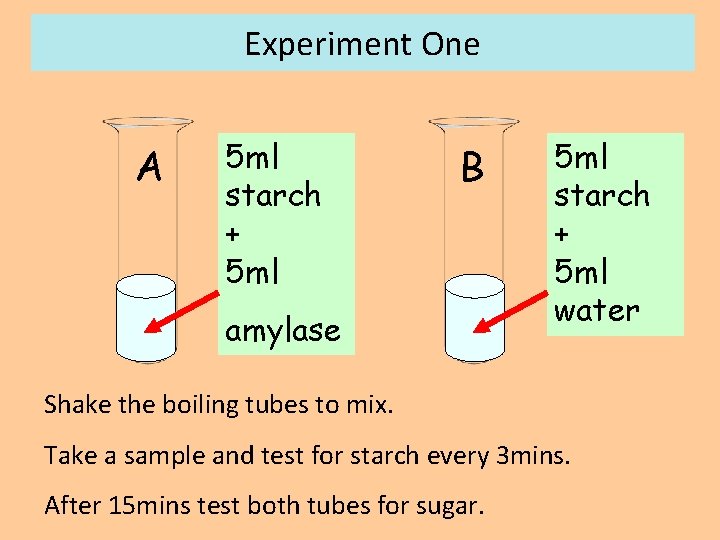
Experiment One A 5 ml starch + 5 ml B amylase 5 ml starch + 5 ml water Shake the boiling tubes to mix. Take a sample and test for starch every 3 mins. After 15 mins test both tubes for sugar.
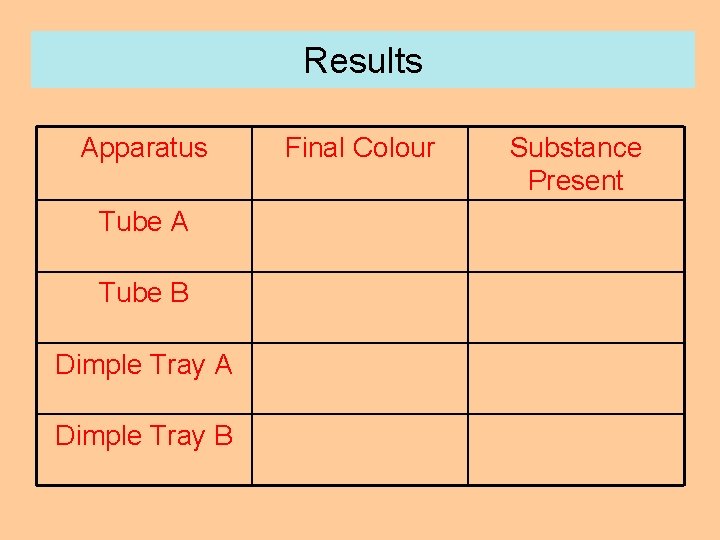
Results Apparatus Tube A Tube B Dimple Tray A Dimple Tray B Final Colour Substance Present
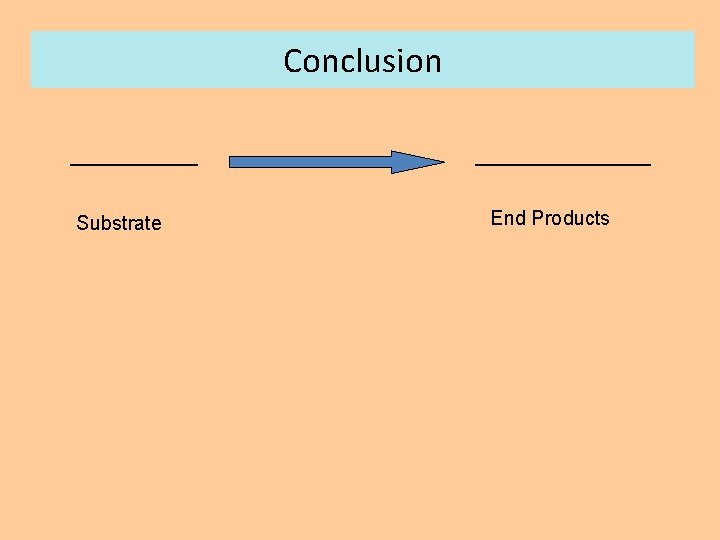
Conclusion ____ Substrate ______ End Products
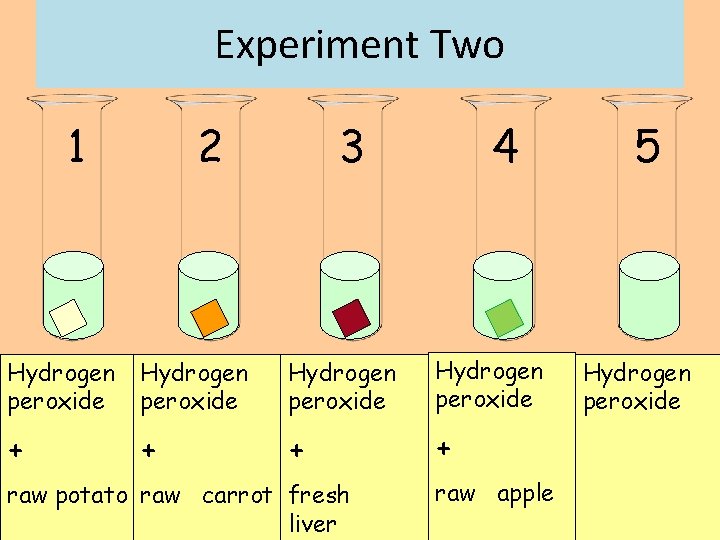
Experiment Two 1 2 3 4 5 Hydrogen peroxide Hydrogen peroxide + + + raw apple boiled liver raw potato raw carrot fresh liver
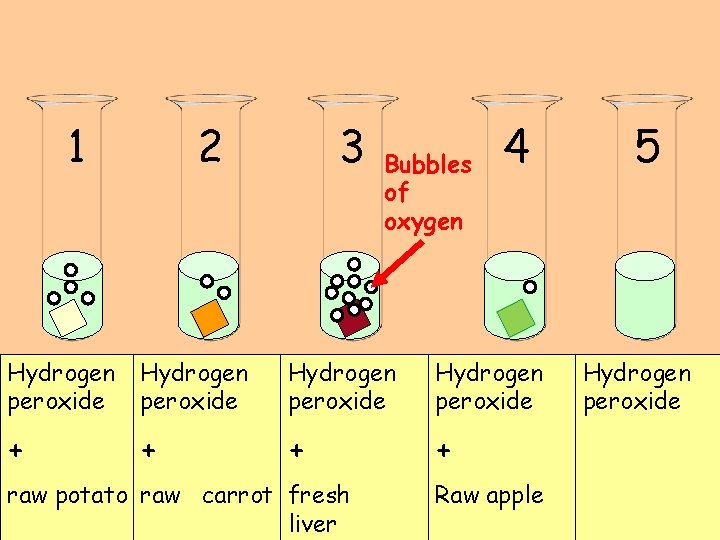
1 2 3 Bubbles of oxygen 4 5 Hydrogen peroxide Hydrogen peroxide + + + Raw apple boiled liver raw potato raw carrot fresh liver
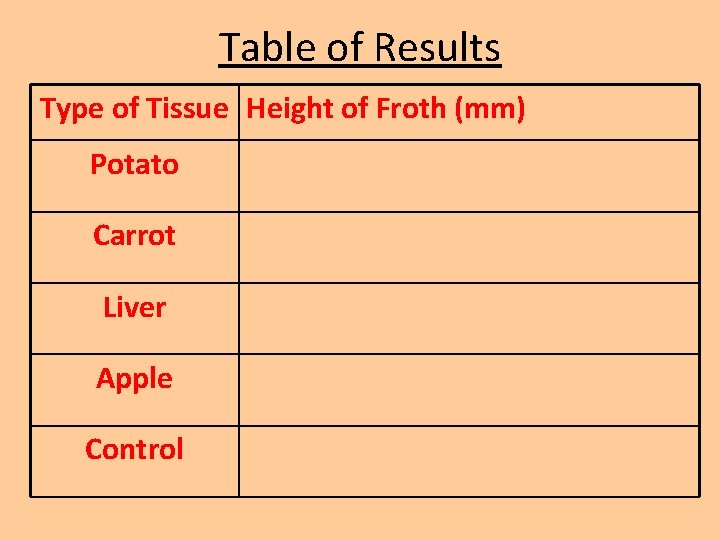
Table of Results Type of Tissue Height of Froth (mm) Potato Carrot Liver Apple Control
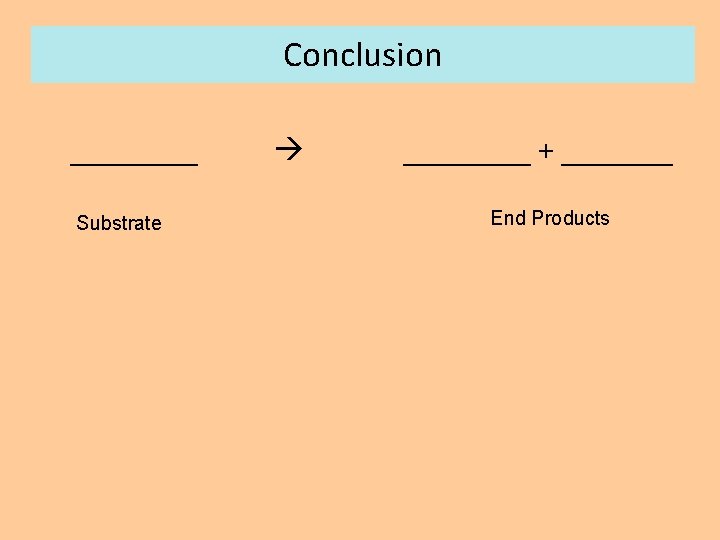
Conclusion ____ Substrate ____ + _______ End Products
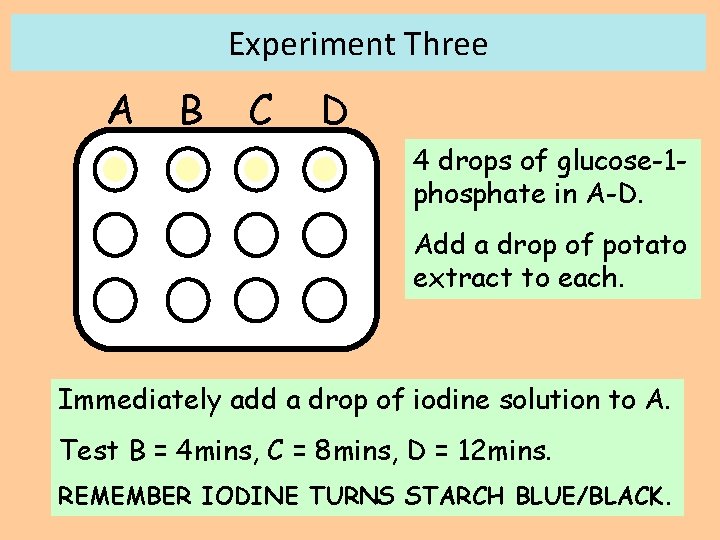
Experiment Three A B C D 4 drops of glucose-1 phosphate in A-D. Add a drop of potato extract to each. Immediately add a drop of iodine solution to A. Test B = 4 mins, C = 8 mins, D = 12 mins. REMEMBER IODINE TURNS STARCH BLUE/BLACK.
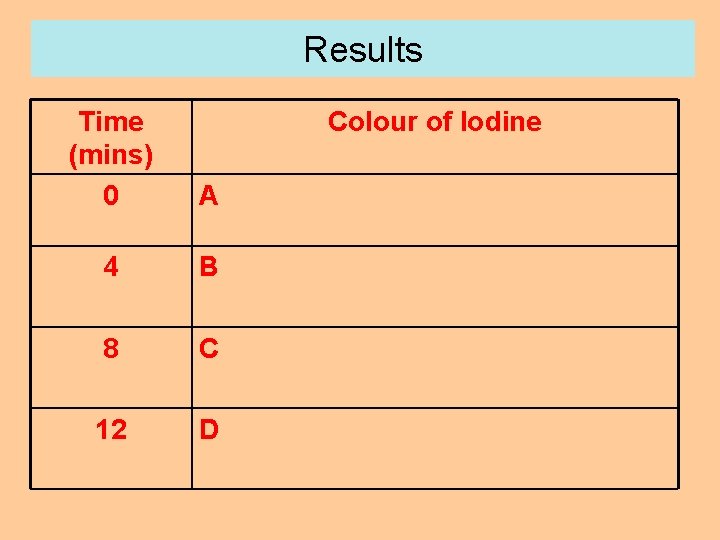
Results Time (mins) 0 Colour of Iodine A 4 B 8 C 12 D
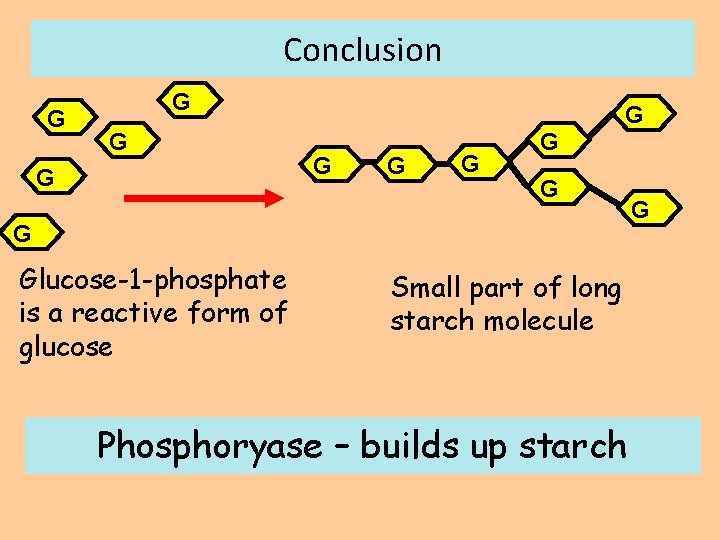
Conclusion G G Glucose-1 -phosphate is a reactive form of glucose Small part of long starch molecule Phosphoryase – builds up starch G
- Slides: 22