
National 5 Biology Unit 3 Life on Earth
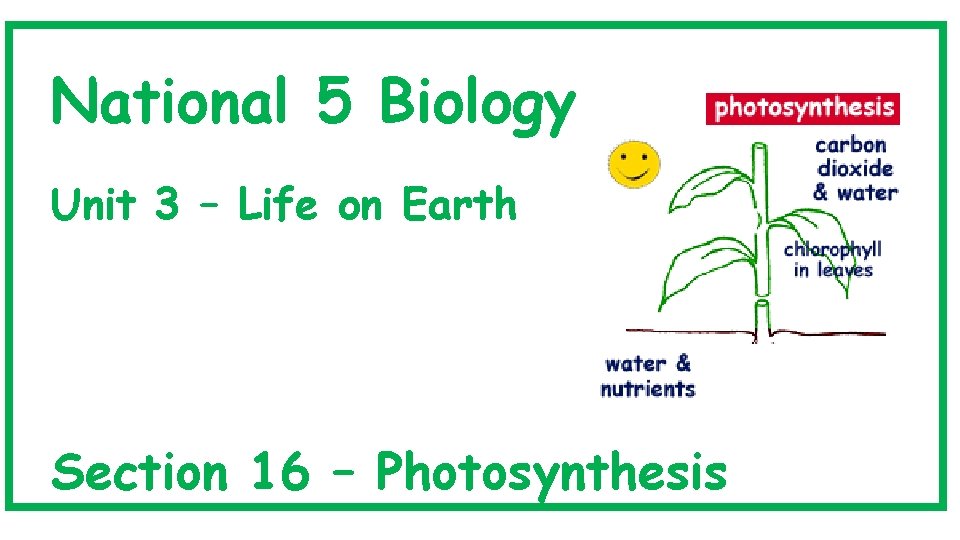
National 5 Biology Unit 3 – Life on Earth Section 16 – Photosynthesis
Learning Intentions On completion of this unit you should be able to: • Describe photosynthesis as a two-stage process By end the of light thisreactions section youenergy should be ablebyto: • the Describe – light is absorbed chlorophyll in the chloroplasts and is converted into chemical energy in the form of ATP which is used in the production of glucose. • The importance of diffusion in the movement of carbon dioxide and oxygen into and out of the leaf cells. • Describe the carbon fixation phase as being a series of enzyme controlled reactions which use hydrogen and ATP (produced by the light reactions) with carbon dioxide to produce sugar. • State that the chemical energy in sugar is available for respiration, or that it can be converted into other substances, such as starch (storage) and cellulose (structural). • Describe limiting factors such as carbon dioxide concentration, light intensity, and temperature and their effects on photosynthesis and plant growth. • To analyse limiting factor graphs.
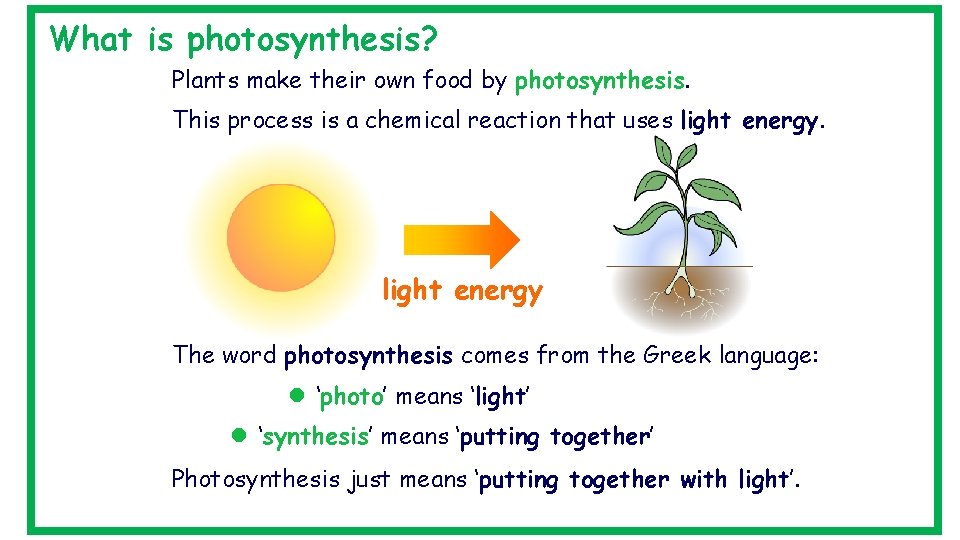
What is photosynthesis? Plants make their own food by photosynthesis. This process is a chemical reaction that uses light energy The word photosynthesis comes from the Greek language: l ‘photo’ means ‘light’ l ‘synthesis’ means ‘putting together’ Photosynthesis just means ‘putting together with light’.
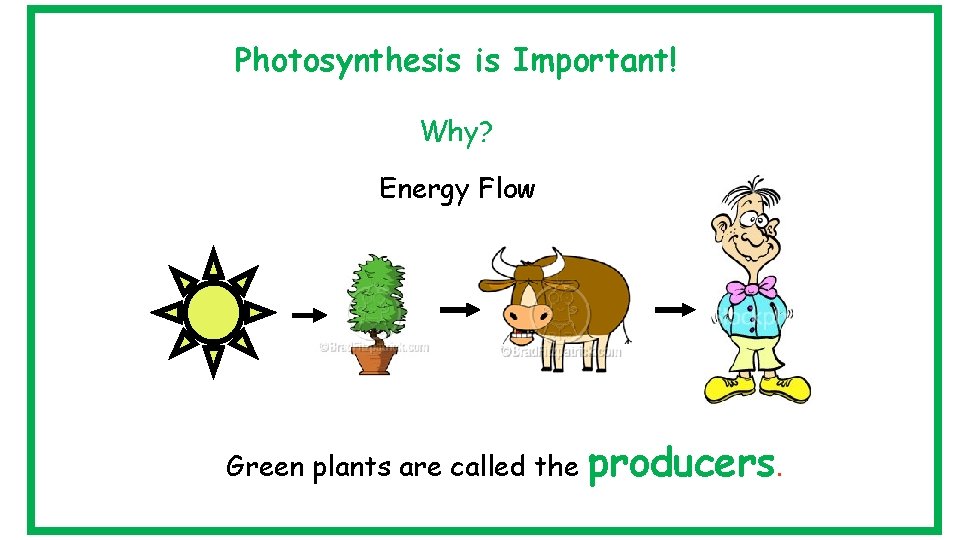
Photosynthesis is Important! Why? Energy Flow Green plants are called the producers.
Photosynthesis
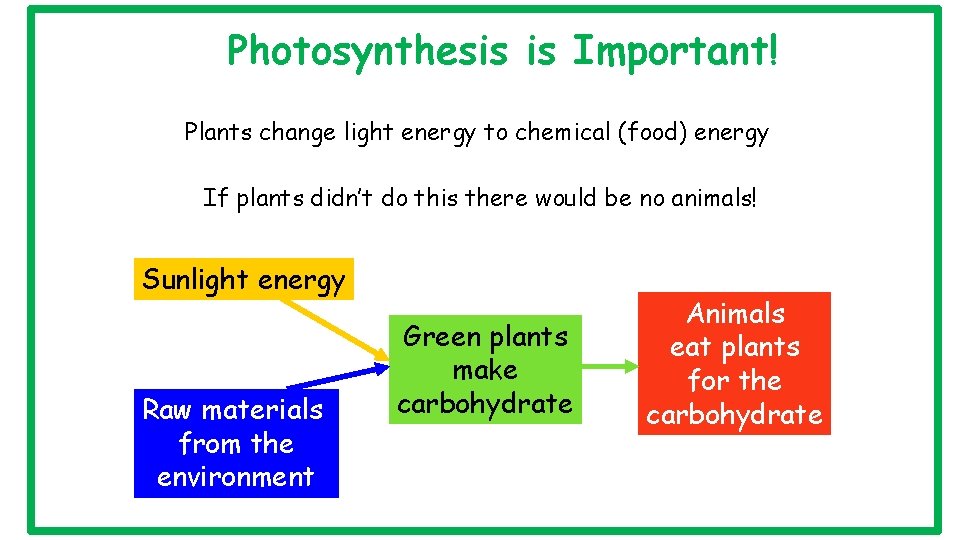
Photosynthesis is Important! Plants change light energy to chemical (food) energy If plants didn’t do this there would be no animals! Sunlight energy Raw materials from the environment Green plants make carbohydrate Animals eat plants for the carbohydrate
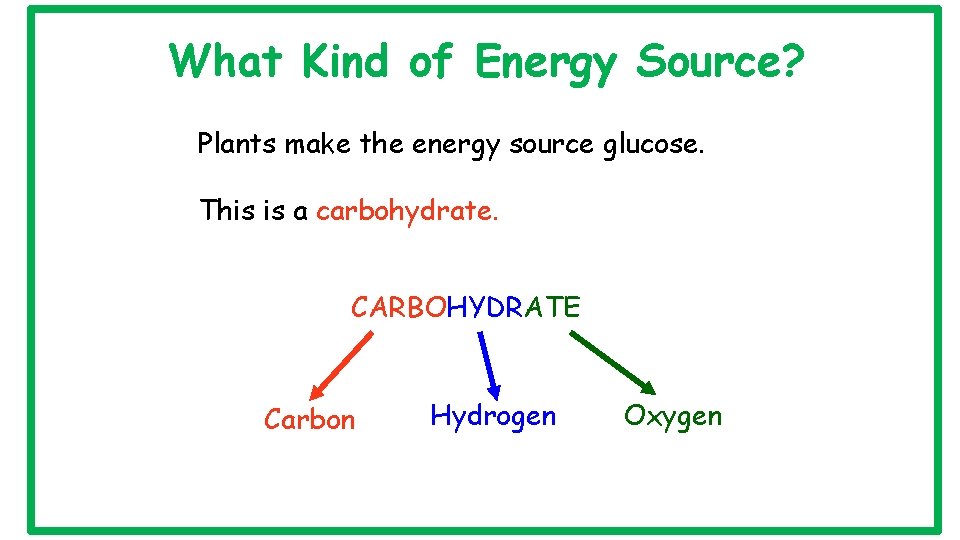
What Kind of Energy Source? Plants make the energy source glucose. This is a carbohydrate. CARBOHYDRATE Carbon Hydrogen Oxygen
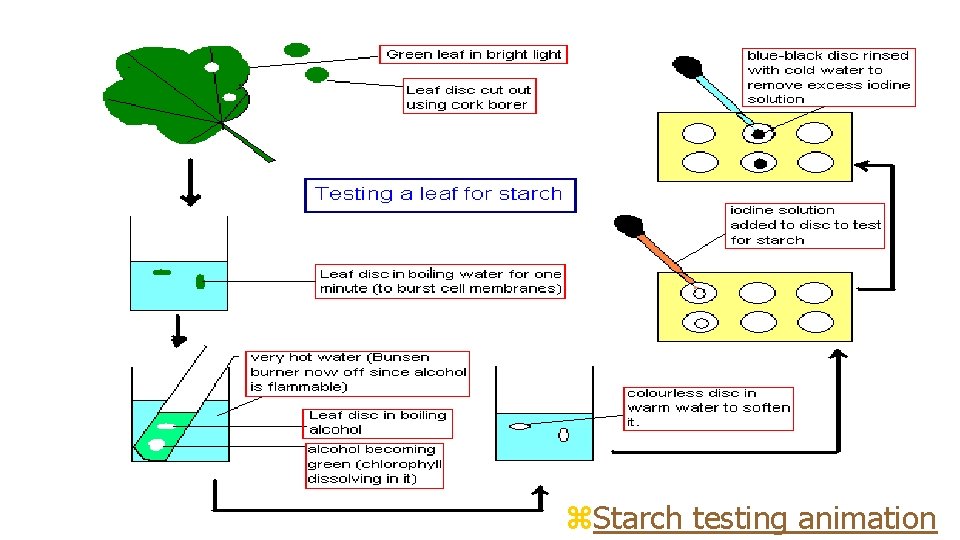
Testing for Starch z. Starch testing animation
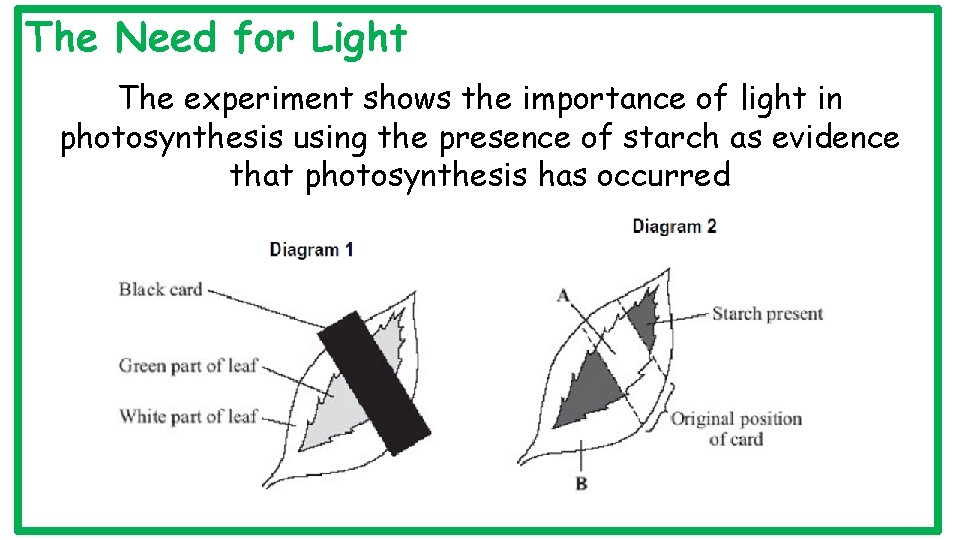
The Need for Light The experiment shows the importance of light in photosynthesis using the presence of starch as evidence that photosynthesis has occurred
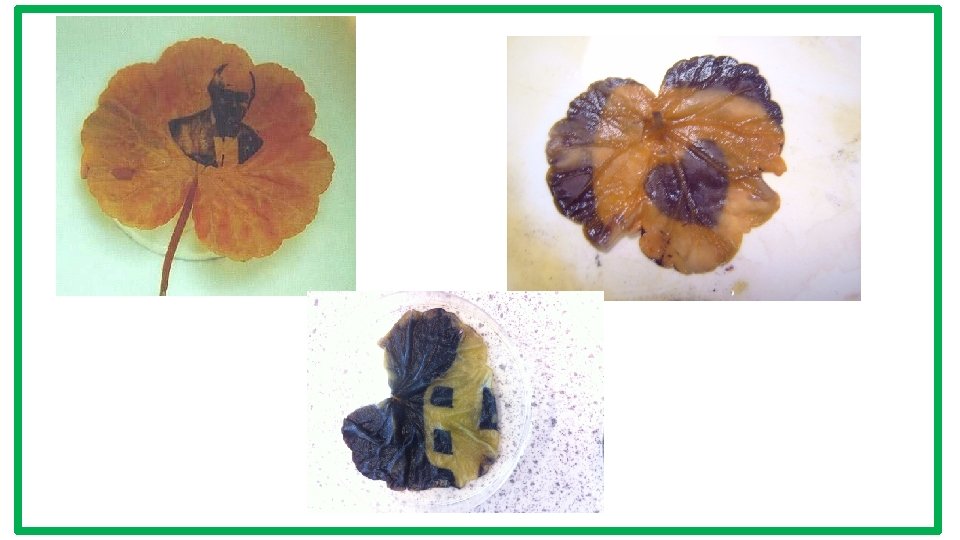
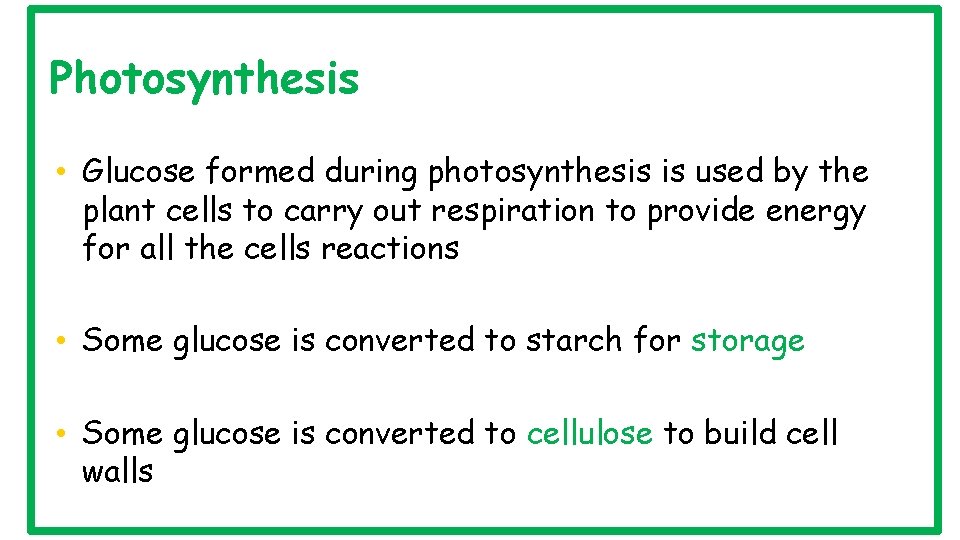
Photosynthesis • Glucose formed during photosynthesis is used by the plant cells to carry out respiration to provide energy for all the cells reactions • Some glucose is converted to starch for storage • Some glucose is converted to cellulose to build cell walls
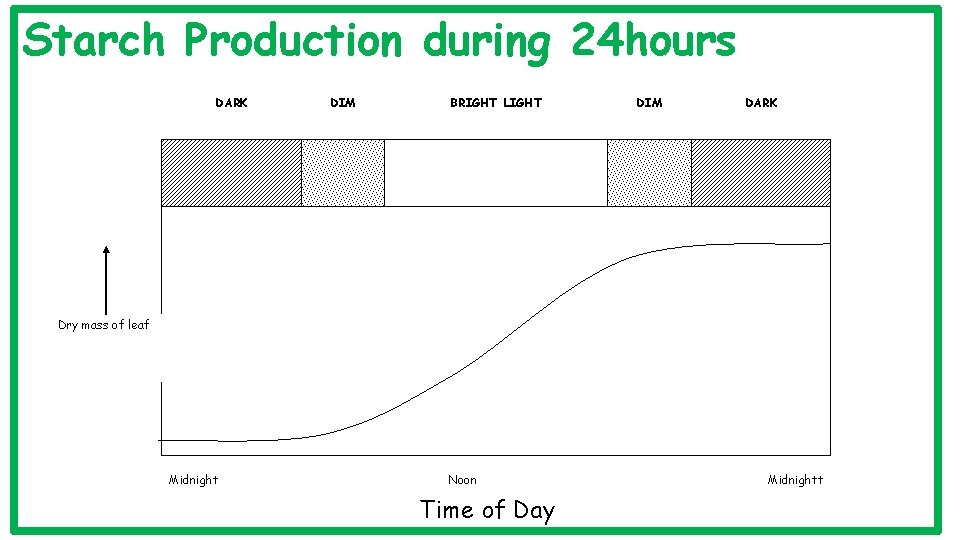
Starch Production during 24 hours DARK DIM BRIGHT LIGHT DIM DARK Dry mass of leaf Midnight Noon Time of Day Midnightt

The Role of Chlorophyll - Variegated leaf
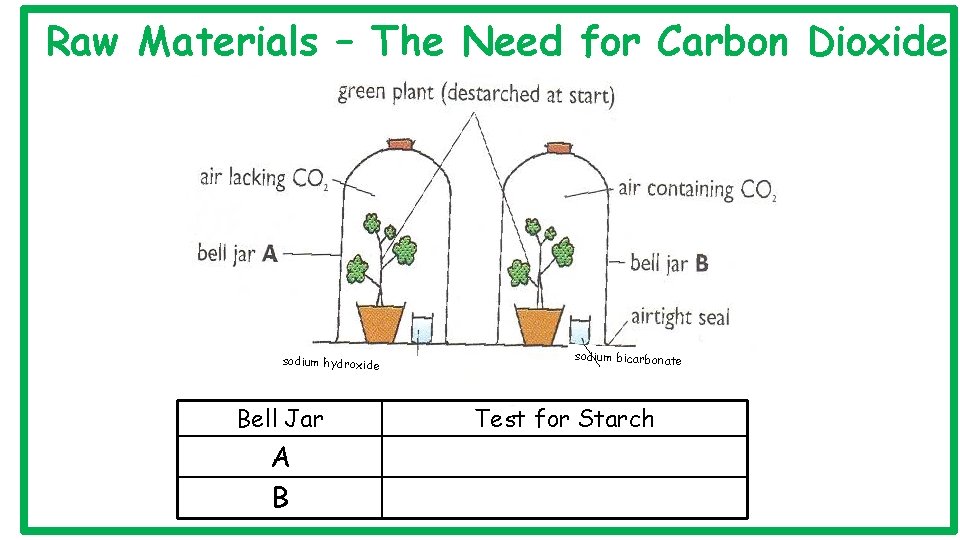
Raw Materials – The Need for Carbon Dioxide sodium hydroxide Bell Jar A B sodium bicarbonate Test for Starch
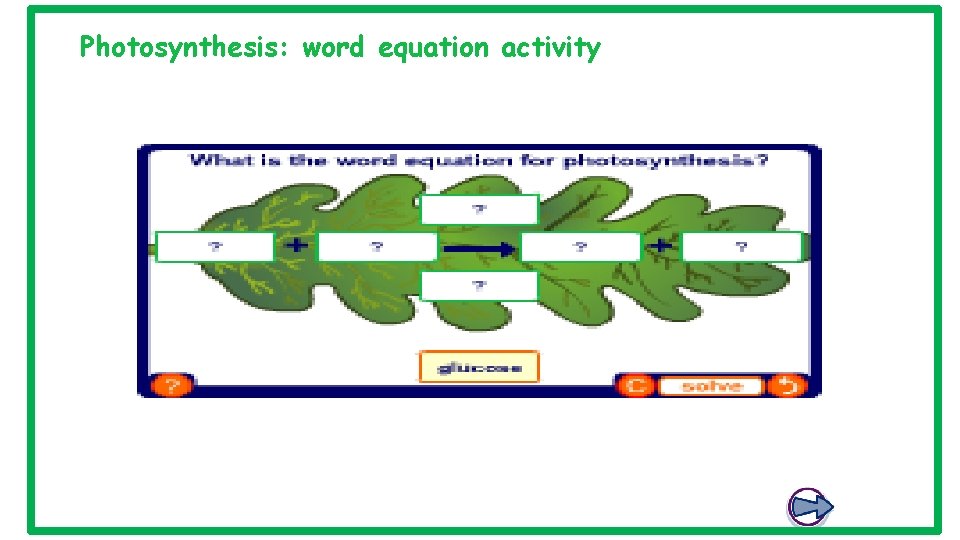
Photosynthesis: word equation activity
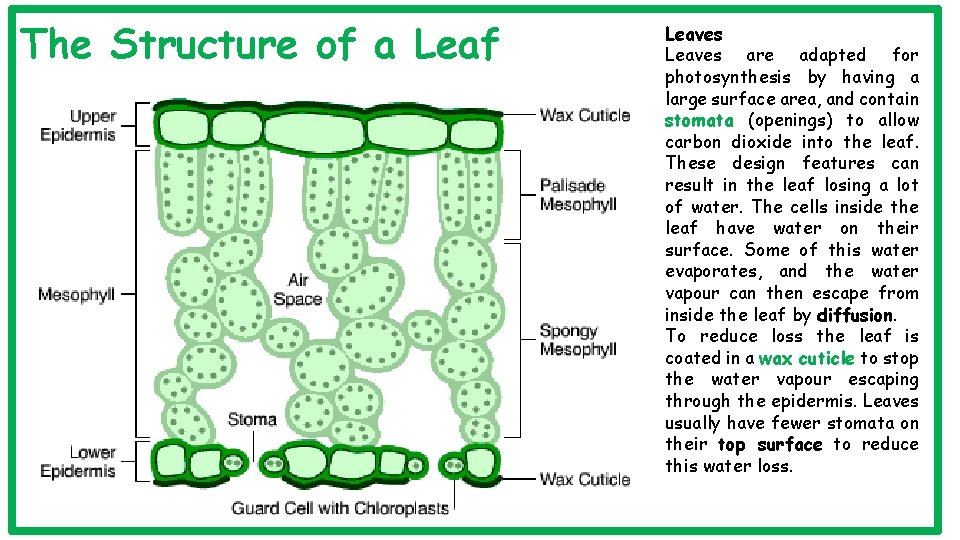
The Structure of a Leaf Leaves are adapted for photosynthesis by having a large surface area, and contain stomata (openings) to allow carbon dioxide into the leaf. These design features can result in the leaf losing a lot of water. The cells inside the leaf have water on their surface. Some of this water evaporates, and the water vapour can then escape from inside the leaf by diffusion. To reduce loss the leaf is coated in a wax cuticle to stop the water vapour escaping through the epidermis. Leaves usually have fewer stomata on their top surface to reduce this water loss.
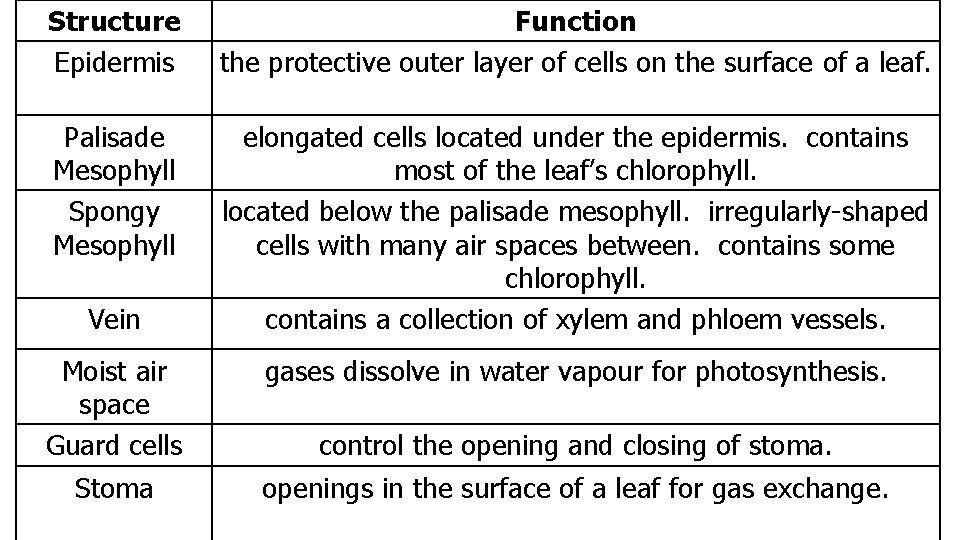
Structure Epidermis Function the protective outer layer of cells on the surface of a leaf. Palisade Mesophyll Spongy Mesophyll elongated cells located under the epidermis. contains most of the leaf’s chlorophyll. located below the palisade mesophyll. irregularly-shaped cells with many air spaces between. contains some chlorophyll. contains a collection of xylem and phloem vessels. Vein Moist air space Guard cells gases dissolve in water vapour for photosynthesis. Stoma openings in the surface of a leaf for gas exchange. control the opening and closing of stoma.
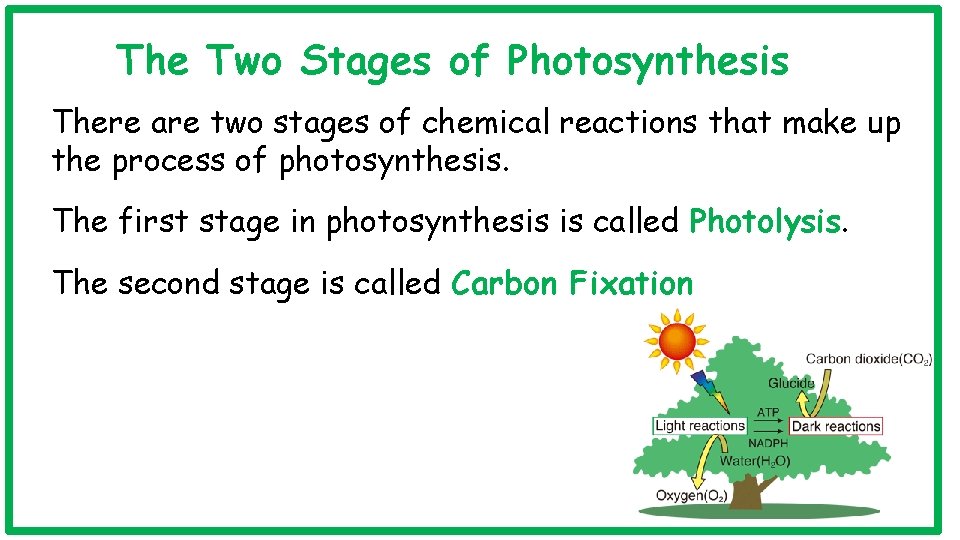
The Two Stages of Photosynthesis There are two stages of chemical reactions that make up the process of photosynthesis. The first stage in photosynthesis is called Photolysis. The second stage is called Carbon Fixation
Photolysis The first stage of photosynthesis is photolysis - the splitting of water Light energy is captured by the chlorophyll in chloroplasts and used to split water into oxygen gas and hydrogen The oxygen diffuses out of the cell. http: //www. twigonglow. com/films/photosynthesis-1186/
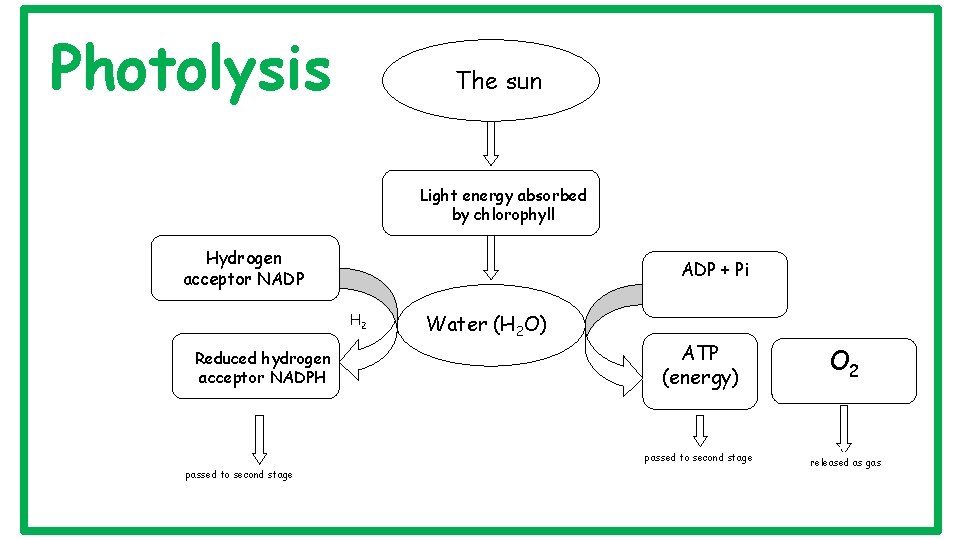
Photolysis The sun Light energy absorbed by chlorophyll Hydrogen acceptor NADP + Pi H 2 Reduced hydrogen acceptor NADPH Water (H 2 O) ATP (energy) passed to second stage O 2 released as gas
Carbon Fixation The second stage of photosynthesis is carbon fixation. Carbon Dioxide undergoes a series of enzyme controlled reactions and combines with the hydrogen from photolysis to form glucose. This also requires the ATP which was formed in photolysis. Both stages of photosynthesis occur in the chloroplast
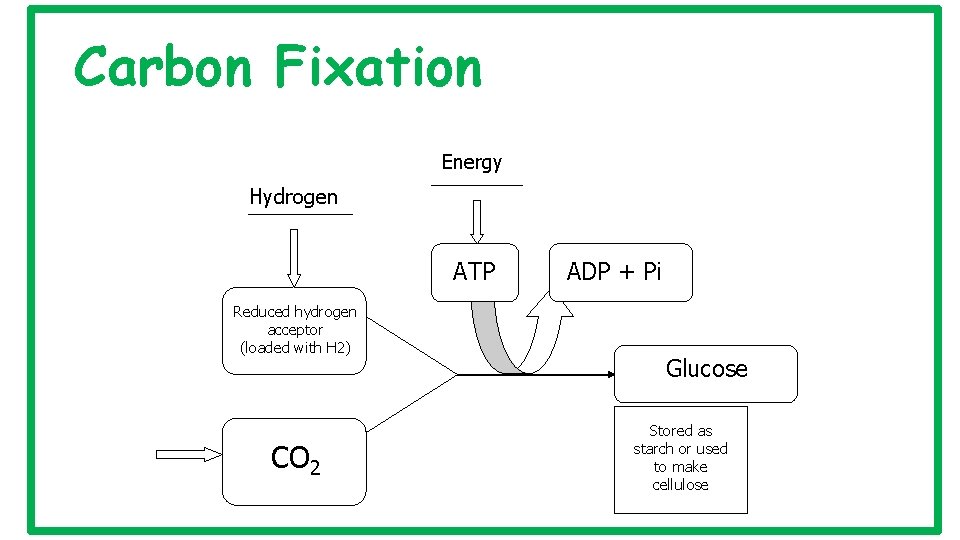
Carbon Fixation Energy Hydrogen ATP Reduced hydrogen acceptor (loaded with H 2) CO 2 ADP + Pi Glucose Stored as starch or used to make cellulose
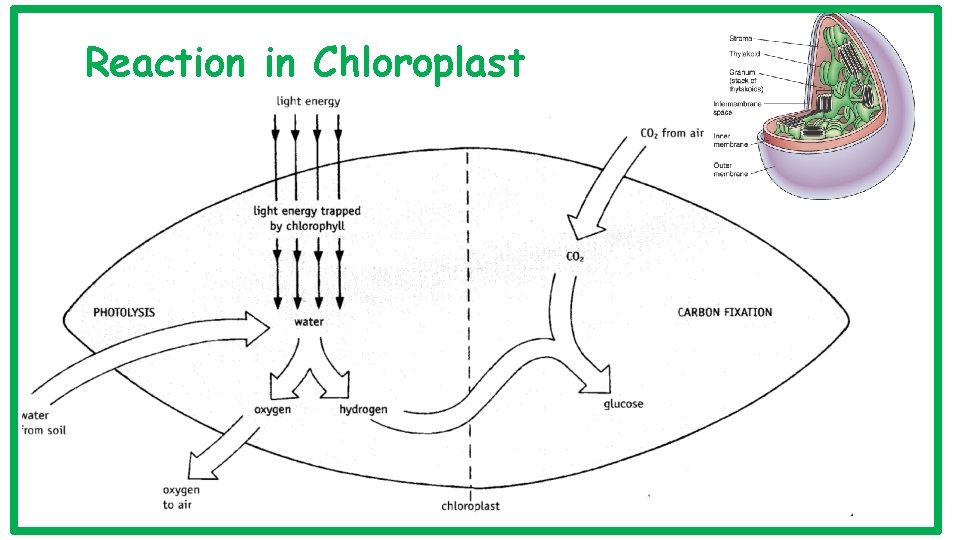
Reaction in Chloroplast
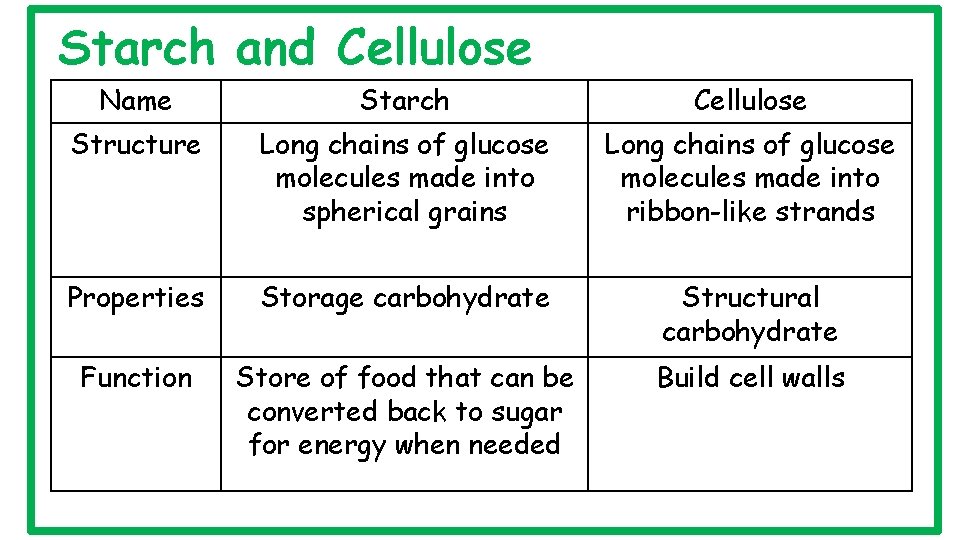
Starch and Cellulose Name Starch Cellulose Structure Long chains of glucose molecules made into spherical grains Long chains of glucose molecules made into ribbon-like strands Properties Storage carbohydrate Structural carbohydrate Function Store of food that can be converted back to sugar for energy when needed Build cell walls
Limiting Factors in Photosynthesis A limiting factor is some factor which when in short supply prevents photosynthesis proceeding more quickly The rate of photosynthesis can be measured by § The production of oxygen § The uptake of carbon dioxide § The production of carbohydrate
Limiting Factors The rate of photosynthesis may be limited by § Light Intensity § Carbon dioxide concentration § Temperature Removing any limiting factor allows early crops to be produced
The Elodea Bubbler Elodea is a type of pondweed. It is a good plant to use to study the effects that limiting light has on photosynthesis Use this Multimedia Science school to perform a virtual version of this experiment or look at the demo set up to answer the questions.
Questions for the Elodea Bubbler experiment Plot your results on a graph. How does the distance from the light source relate to the light intensity? What gas do you think the bubbles contain? Using your data and your graph, describe the trend that it shows. Why do you think this trend occurs? Can you think of any other factors, apart from light intensity, which could affect the rate of photosynthesis in Elodea? How do factors affect photosynthesis? How could you improve this experiment to achieve more precise, accurate and reliable results?
![Results Light Intensity Rate of photosynthesis [number of bubbles/min] 10 20 30 40 50](http://slidetodoc.com/presentation_image_h2/754861c29a6908ebf0cae890dce28320/image-29.jpg "Results Light Intensity Rate of photosynthesis [number of bubbles/min] 10 20 30 40 50")
Results Light Intensity Rate of photosynthesis [number of bubbles/min] 10 20 30 40 50 60 70 0 6 15 26 35 38 38
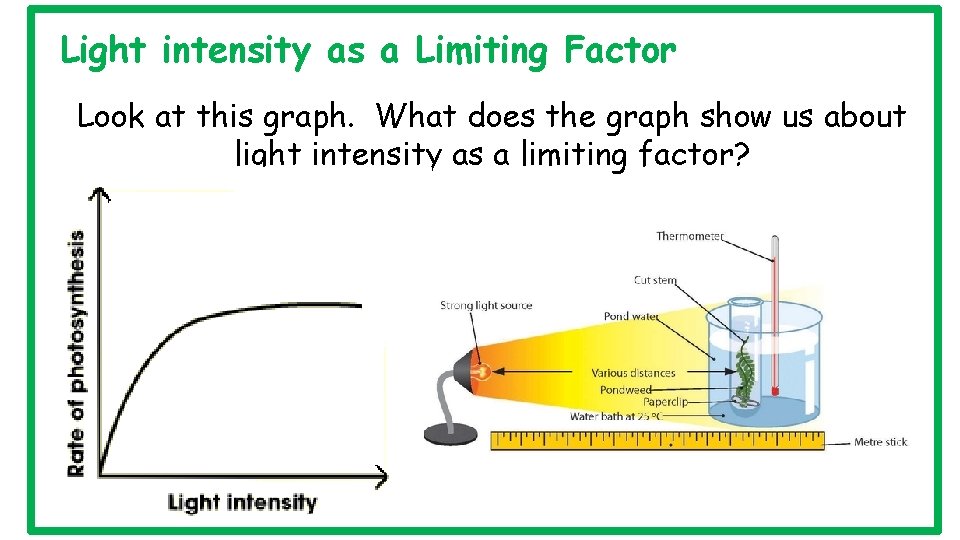
Light intensity as a Limiting Factor Look at this graph. What does the graph show us about light intensity as a limiting factor?
Light Intensity as a Limiting Factor Without enough light, a plant cannot photosynthesise very quickly, even if there is plenty of water and carbon dioxide. Increasing the light intensity will boost the speed of photosynthesis to a certain rate where it will then level off. At this point it cannot increase anymore.
![Results Carbon Dioxide Concentration [%] Rate of photosynthesis [number of bubbles/min] 0. 01 0](http://slidetodoc.com/presentation_image_h2/754861c29a6908ebf0cae890dce28320/image-32.jpg "Results Carbon Dioxide Concentration [%] Rate of photosynthesis [number of bubbles/min] 0. 01 0")
Results Carbon Dioxide Concentration [%] Rate of photosynthesis [number of bubbles/min] 0. 01 0 0. 02 1 0. 03 2 0. 04 3 0. 05 5 0. 06 6 0. 07 6
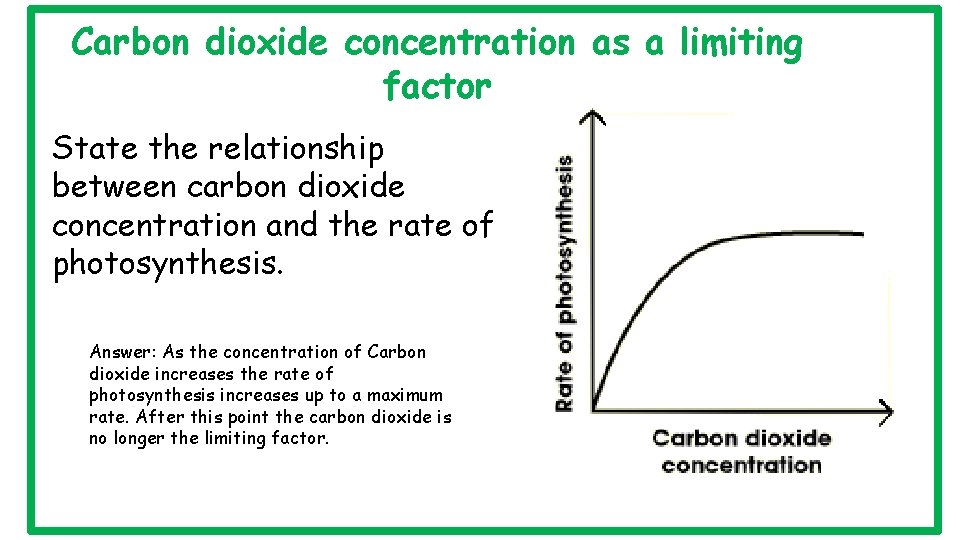
Carbon dioxide concentration as a limiting factor State the relationship between carbon dioxide concentration and the rate of photosynthesis. Answer: As the concentration of Carbon dioxide increases the rate of photosynthesis increases up to a maximum rate. After this point the carbon dioxide is no longer the limiting factor.
Carbon dioxide concentration as a limiting factor Sometimes photosynthesis is limited by the concentration of carbon dioxide in the air. Even if there is plenty of light, a plant cannot photosynthesise if there is not enough carbon dioxide available.
![Results Temperature [o. C] Rate of photosynthesis [number of bubbles/min] 0 0 5 6](http://slidetodoc.com/presentation_image_h2/754861c29a6908ebf0cae890dce28320/image-35.jpg "Results Temperature [o. C] Rate of photosynthesis [number of bubbles/min] 0 0 5 6")
Results Temperature [o. C] Rate of photosynthesis [number of bubbles/min] 0 0 5 6 10 9 15 13 20 18 25 18 30 18 35 9 40 0
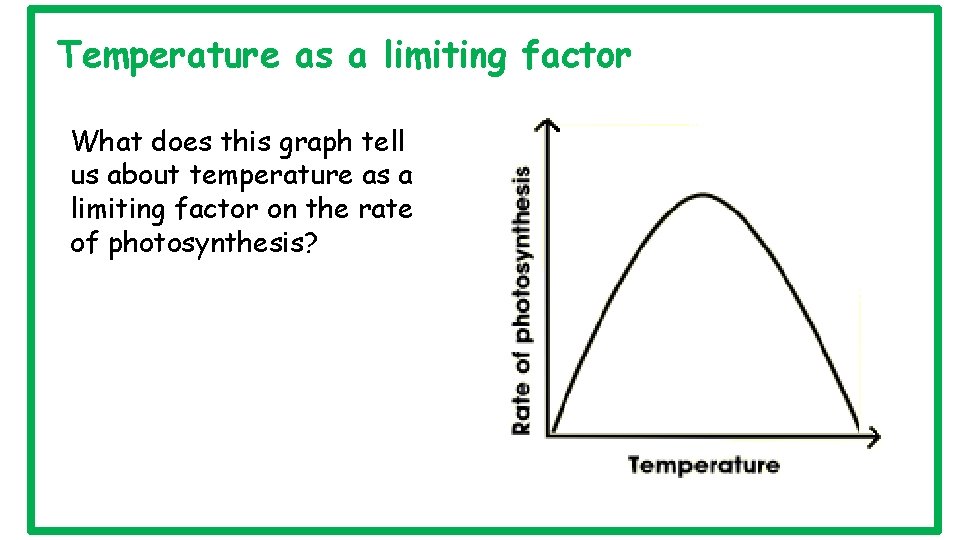
Temperature as a limiting factor What does this graph tell us about temperature as a limiting factor on the rate of photosynthesis?
Temperature as a limiting factor If it gets too cold, the rate of photosynthesis will decrease. Plants cannot photosynthesise if it gets too hot.
Word ATP carbon dioxide carbon fixation cellulose chlorophyll Diffusion chloroplast glucose Meaning
Light Reactions limiting factor oxygen
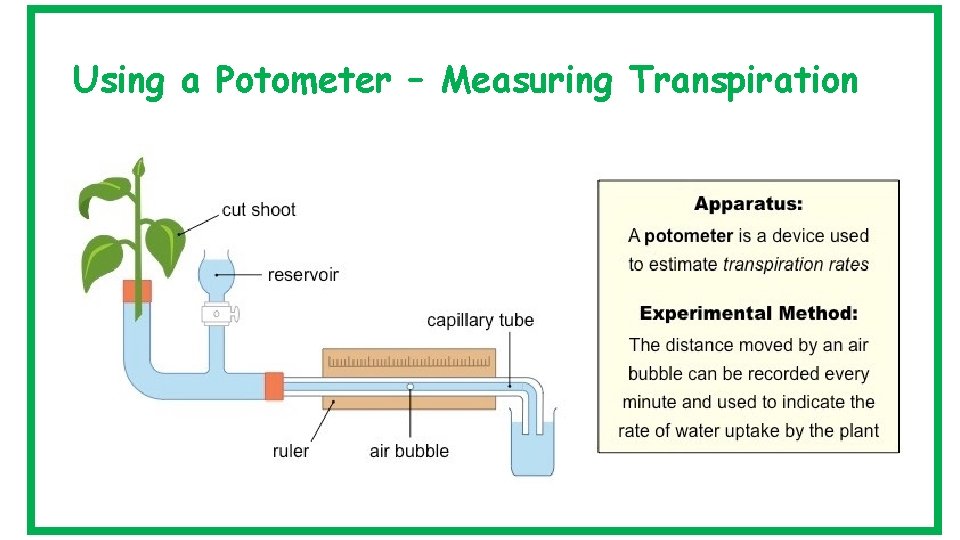
Using a Potometer – Measuring Transpiration
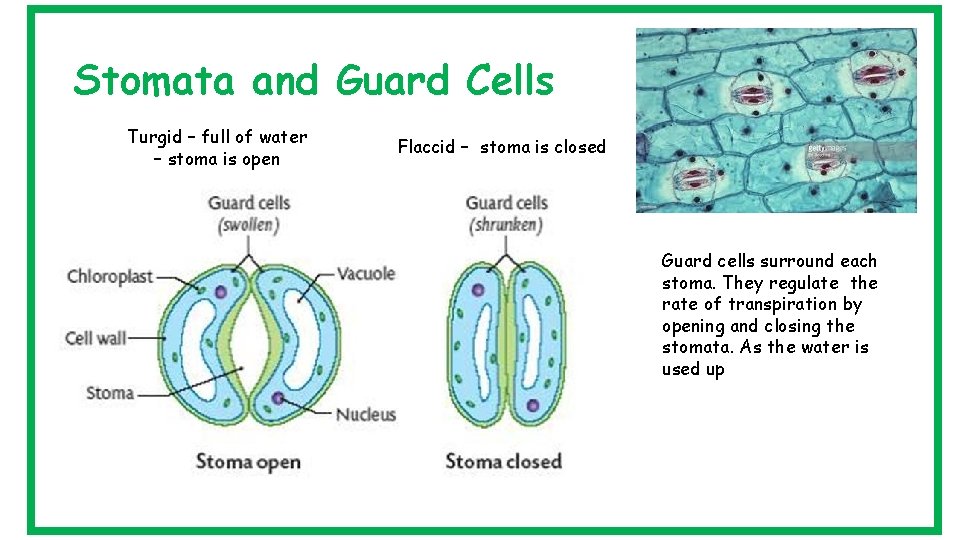
Stomata and Guard Cells Turgid – full of water – stoma is open Flaccid – stoma is closed Guard cells surround each stoma. They regulate the rate of transpiration by opening and closing the stomata. As the water is used up
Structure of the Chloroplast
- Slides: 42