
National 5 Biology Unit 2 Multicellular Organisms Key

National 5 Biology Unit 2: Multicellular Organisms Key Area 2. 1: Producing New Cells 2. 1 d: Part 1 – Specialisation of cells 6/14/2021 Mrs Smith - National 5 Biology 1

National 5 Biology Learning Intentions By the end of this Key Area you should be able to • Explain that specialisation of cells leads to the formation of a variety of cells which are adapted to perform a specific function. • Give examples of specialised cells in both plants and animals. 6/14/2021 Mrs Smith - National 5 Biology 2

All organisations have a LEVEL OF ORGANISATION Cell Tissue Organ Body System Organism 6/14/2021 Mrs Smith - National 5 Biology 3
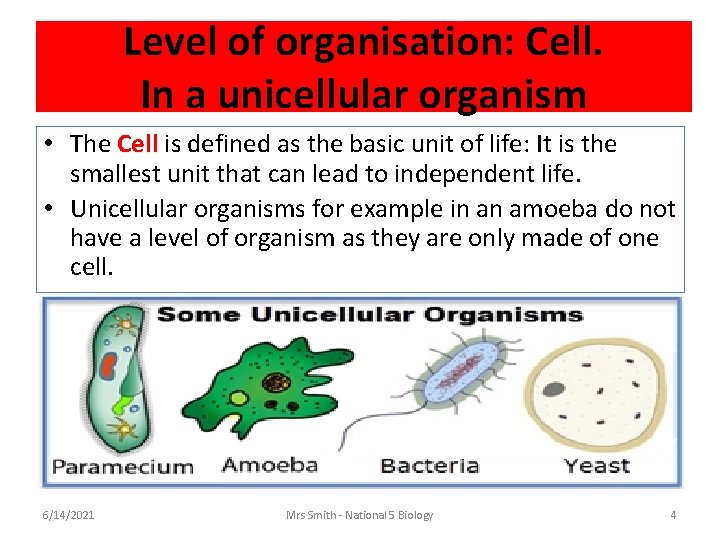
Level of organisation: Cell. In a unicellular organism • The Cell is defined as the basic unit of life: It is the smallest unit that can lead to independent life. • Unicellular organisms for example in an amoeba do not have a level of organism as they are only made of one cell. 6/14/2021 Mrs Smith - National 5 Biology 4

Level of organisation: Cell. In a multicellular organism • The body of a multicellular organism consists of a large number of cells. • It would be inefficient for every one of these cells to carry out every function essential for the maintenance of life. Instead a division of labour is achieved by the cells being organised into tissues and the tissues being united to form tissues Cell Tissue Organ 6/14/2021 Mrs Smith - National 5 Biology 5
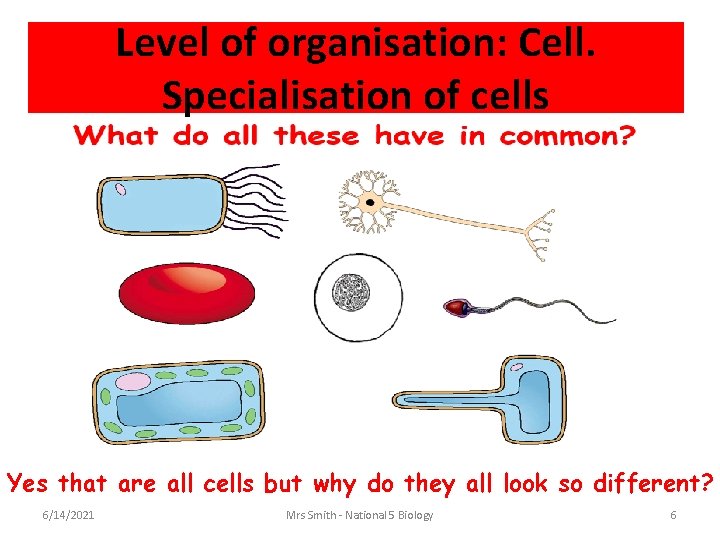
Level of organisation: Cell. Specialisation of cells Yes that are all cells but why do they all look so different? 6/14/2021 Mrs Smith - National 5 Biology 6
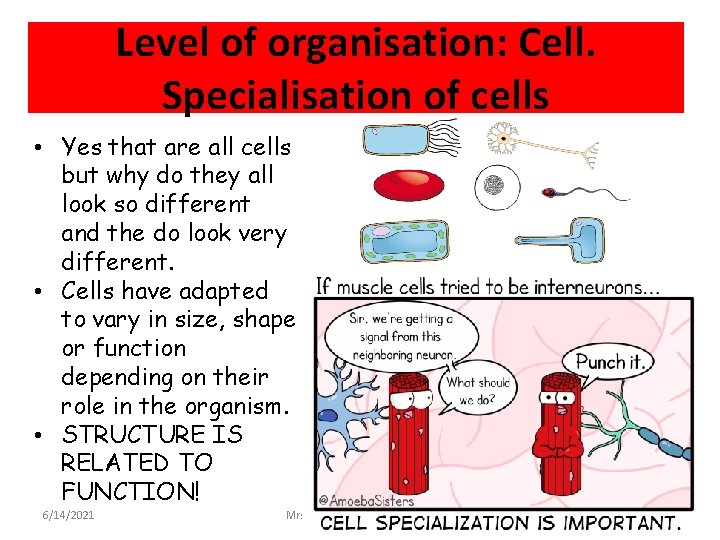
Level of organisation: Cell. Specialisation of cells • Yes that are all cells but why do they all look so different and the do look very different. • Cells have adapted to vary in size, shape or function depending on their role in the organism. • STRUCTURE IS RELATED TO FUNCTION! 6/14/2021 Mrs Smith - National 5 Biology 7
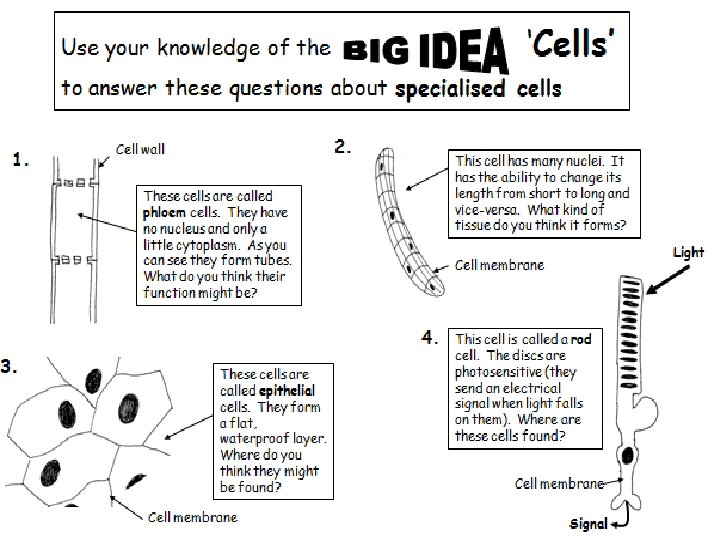
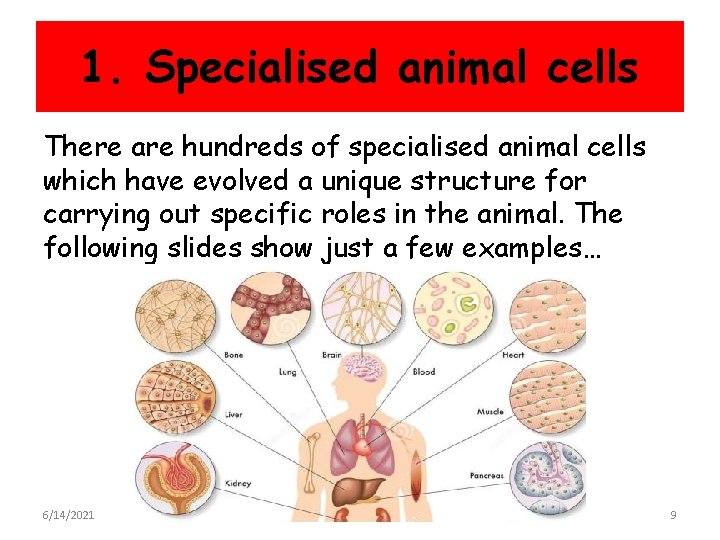
1. Specialised animal cells There are hundreds of specialised animal cells which have evolved a unique structure for carrying out specific roles in the animal. The following slides show just a few examples… 6/14/2021 Mrs Smith - National 5 Biology 9
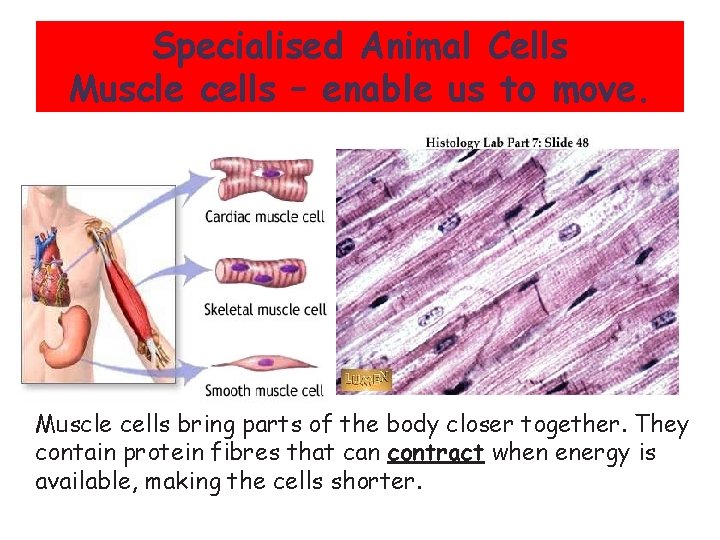
Specialised Animal Cells Muscle cells – enable us to move. Muscle cells bring parts of the body closer together. They contain protein fibres that can contract when energy is available, making the cells shorter.
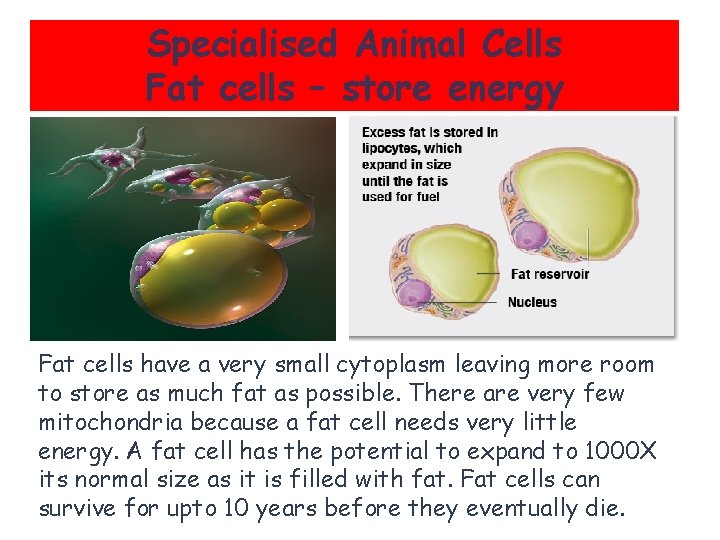
Specialised Animal Cells Fat cells – store energy Fat cells have a very small cytoplasm leaving more room to store as much fat as possible. There are very few mitochondria because a fat cell needs very little energy. A fat cell has the potential to expand to 1000 X its normal size as it is filled with fat. Fat cells can survive for upto 10 years before they eventually die.
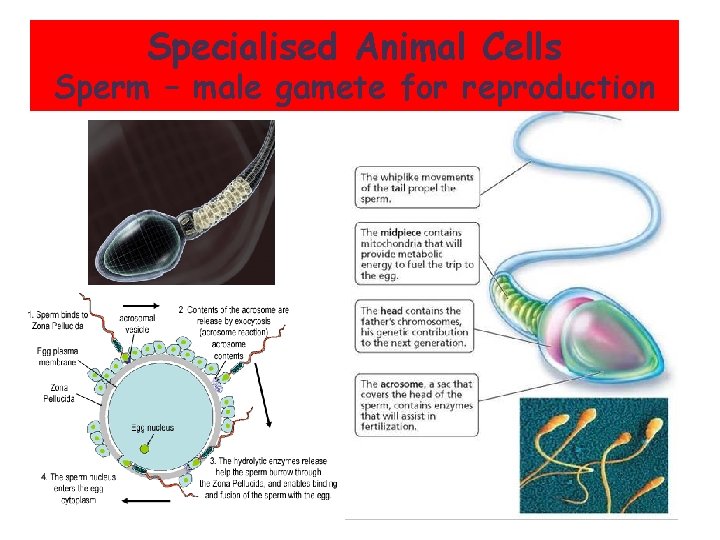
Specialised Animal Cells Sperm – male gamete for reproduction
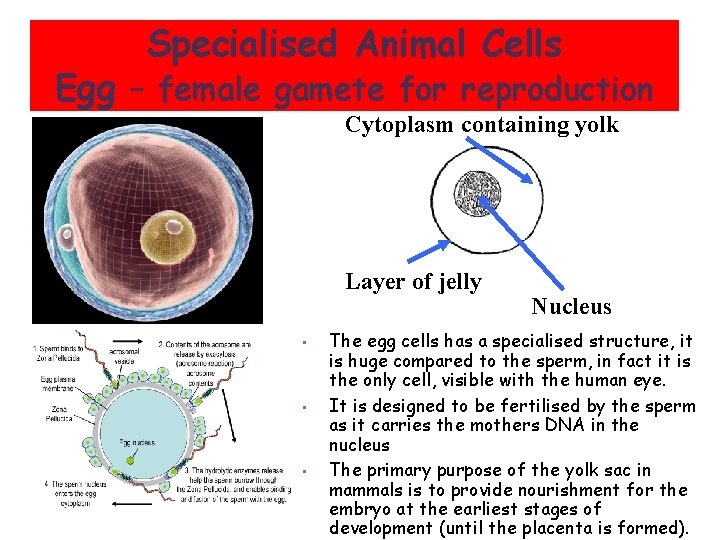
Specialised Animal Cells Egg – female gamete for reproduction Cytoplasm containing yolk Layer of jelly • • • Nucleus The egg cells has a specialised structure, it is huge compared to the sperm, in fact it is the only cell, visible with the human eye. It is designed to be fertilised by the sperm as it carries the mothers DNA in the nucleus The primary purpose of the yolk sac in mammals is to provide nourishment for the embryo at the earliest stages of development (until the placenta is formed).
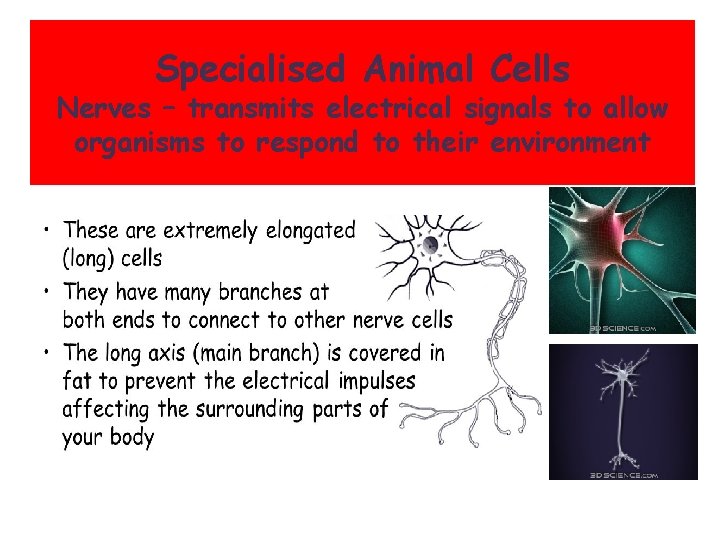
Specialised Animal Cells Nerves – transmits electrical signals to allow organisms to respond to their environment
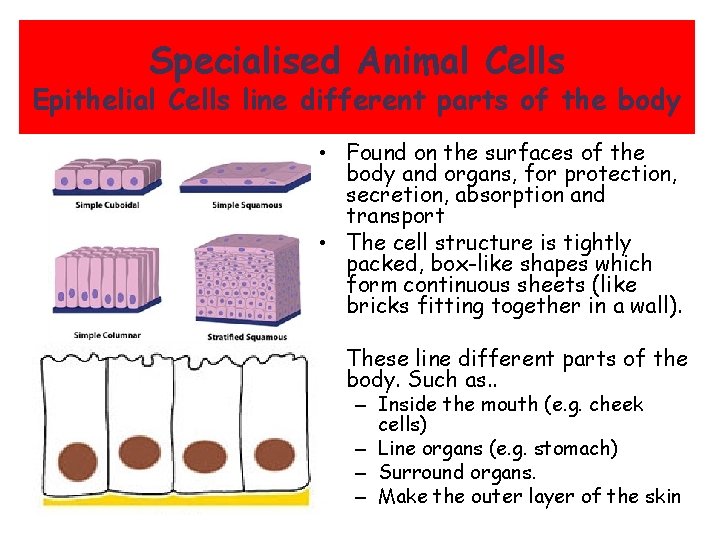
Specialised Animal Cells Epithelial Cells line different parts of the body • Found on the surfaces of the body and organs, for protection, secretion, absorption and transport • The cell structure is tightly packed, box-like shapes which form continuous sheets (like bricks fitting together in a wall). • These line different parts of the body. Such as. . – Inside the mouth (e. g. cheek cells) – Line organs (e. g. stomach) – Surround organs. – Make the outer layer of the skin
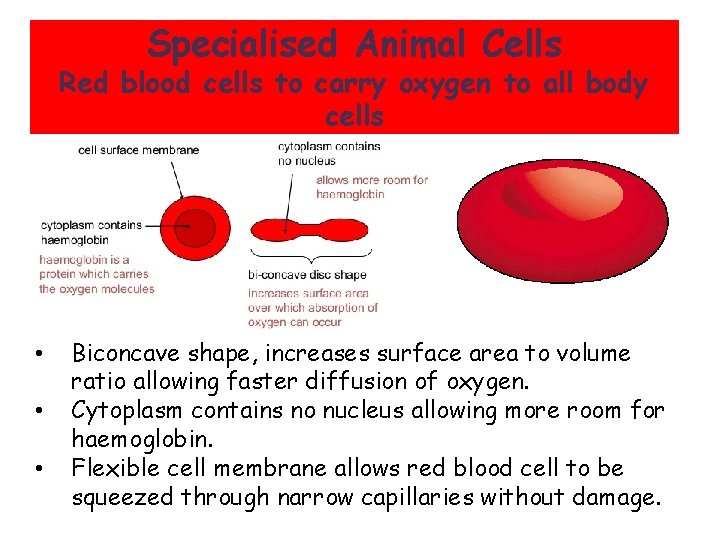
Red blood cells – Carry oxygen Specialised Animal Cells to all Red blood cells to carry oxygen to all body the other cells of the body. cells • • • Biconcave shape, increases surface area to volume ratio allowing faster diffusion of oxygen. Cytoplasm contains no nucleus allowing more room for haemoglobin. Flexible cell membrane allows red blood cell to be squeezed through narrow capillaries without damage.
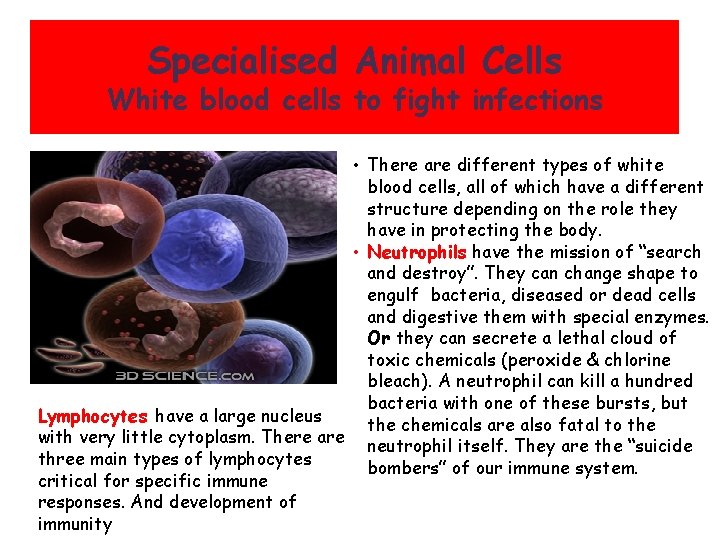
Specialised Animal Cells White blood cells to fight infections • There are different types of white blood cells, all of which have a different structure depending on the role they have in protecting the body. • Neutrophils have the mission of “search and destroy”. They can change shape to engulf bacteria, diseased or dead cells and digestive them with special enzymes. Or they can secrete a lethal cloud of toxic chemicals (peroxide & chlorine bleach). A neutrophil can kill a hundred bacteria with one of these bursts, but Lymphocytes have a large nucleus the chemicals are also fatal to the with very little cytoplasm. There are neutrophil itself. They are the “suicide three main types of lymphocytes bombers” of our immune system. critical for specific immune responses. And development of immunity
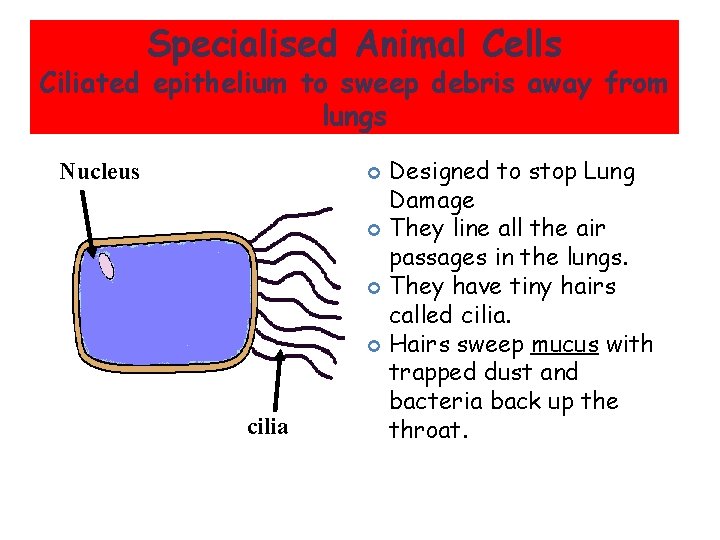
Specialised Animal Cells Ciliated epithelium to sweep debris away from lungs Nucleus Designed to stop Lung Damage They line all the air passages in the lungs. They have tiny hairs called cilia. Hairs sweep mucus with trapped dust and bacteria back up the throat. cilia
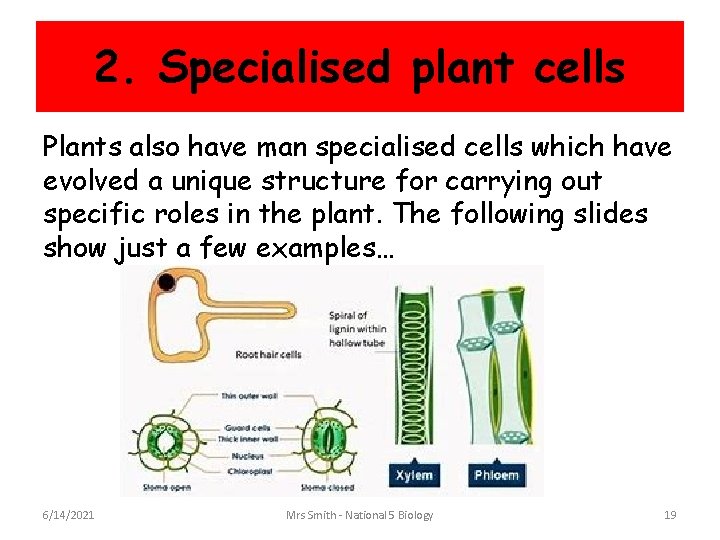
2. Specialised plant cells Plants also have man specialised cells which have evolved a unique structure for carrying out specific roles in the plant. The following slides show just a few examples… 6/14/2021 Mrs Smith - National 5 Biology 19
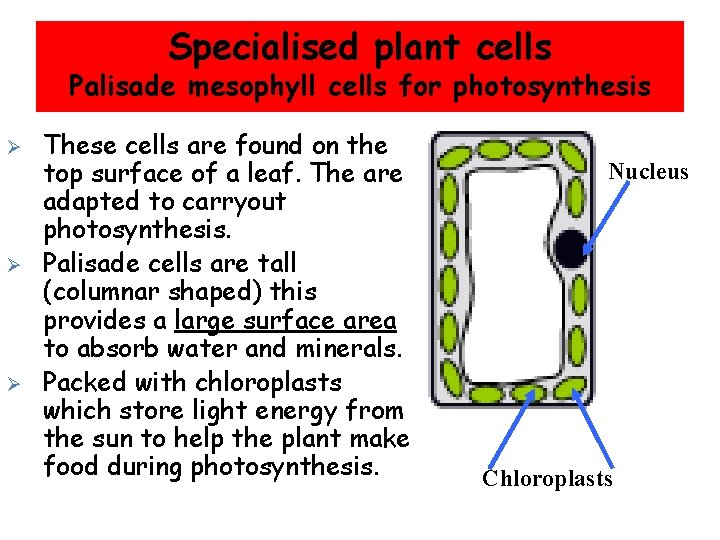
Specialised plant cells Palisade mesophyll cells for photosynthesis Ø Ø Ø These cells are found on the top surface of a leaf. The are adapted to carryout photosynthesis. Palisade cells are tall (columnar shaped) this provides a large surface area to absorb water and minerals. Packed with chloroplasts which store light energy from the sun to help the plant make food during photosynthesis. Nucleus Chloroplasts
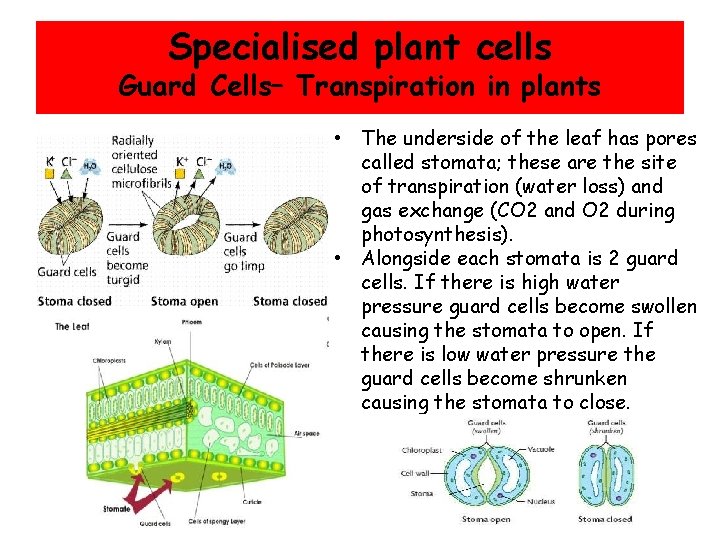
Specialised plant cells Guard Cells– Transpiration in plants • The underside of the leaf has pores called stomata; these are the site of transpiration (water loss) and gas exchange (CO 2 and O 2 during photosynthesis). • Alongside each stomata is 2 guard cells. If there is high water pressure guard cells become swollen causing the stomata to open. If there is low water pressure the guard cells become shrunken causing the stomata to close.
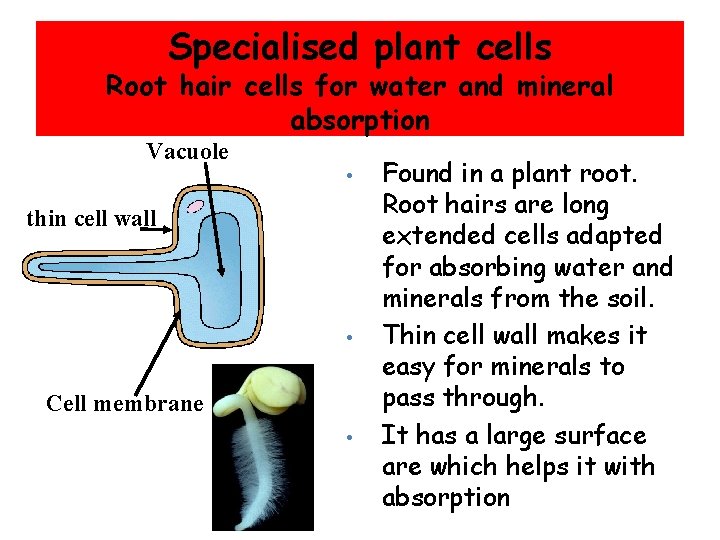
Specialised plant cells Root hair cells for water and mineral absorption Vacuole • thin cell wall • Cell membrane • Found in a plant root. Root hairs are long extended cells adapted for absorbing water and minerals from the soil. Thin cell wall makes it easy for minerals to pass through. It has a large surface are which helps it with absorption
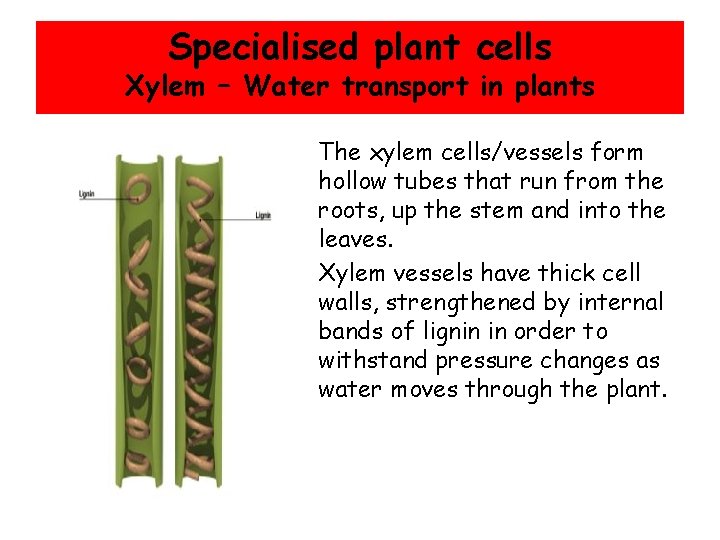
Specialised plant cells Xylem – Water transport in plants • • The xylem cells/vessels form hollow tubes that run from the roots, up the stem and into the leaves. Xylem vessels have thick cell walls, strengthened by internal bands of lignin in order to withstand pressure changes as water moves through the plant.
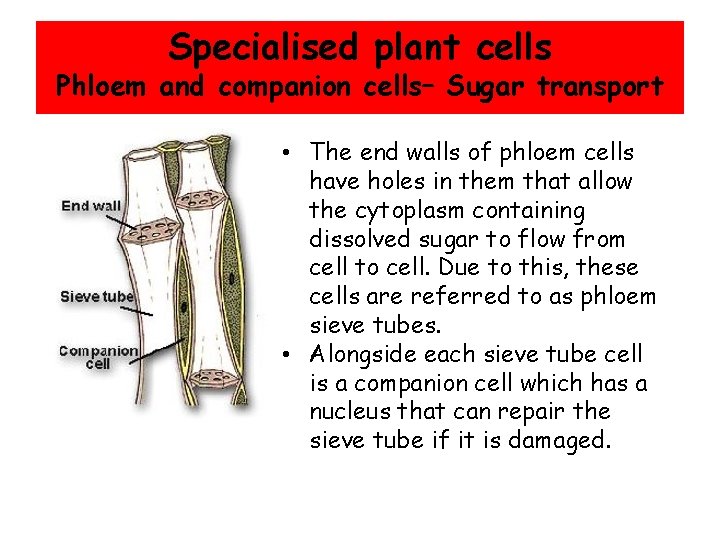
Specialised plant cells Phloem and companion cells– Sugar transport • The end walls of phloem cells have holes in them that allow the cytoplasm containing dissolved sugar to flow from cell to cell. Due to this, these cells are referred to as phloem sieve tubes. • Alongside each sieve tube cell is a companion cell which has a nucleus that can repair the sieve tube if it is damaged.
Specialised cells • We have demonstrated there are lots of different types of specialised cells in both plant and animal cells. • As we get further into the course you will learn about some of these in more detail for example when we do transport in plants you will learn about phloem and xylem. • Don’t panic if you can’t remember all these cell types. The take home message is…. cells have adapted a structure to meet their required function. • Try to learn at least 2 examples of specialised cells from each animals and plants.
TASK: CARD SORT: Specialisation of cells There are 4 cards per group. Find the matches. You will have a picture of a cell, cell name, where its found and why its shape is adapted to its job. Are you up for the challenge. Do this in Groups You have 10 minutes.
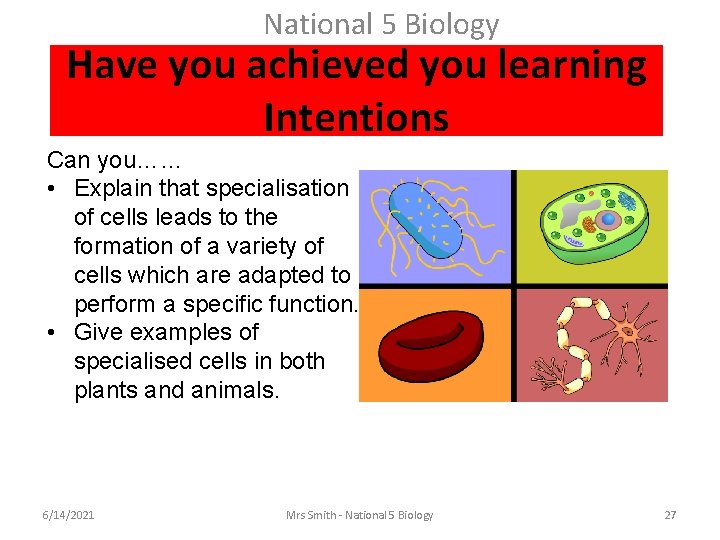
National 5 Biology Have you achieved you learning Intentions Can you…… • Explain that specialisation of cells leads to the formation of a variety of cells which are adapted to perform a specific function. • Give examples of specialised cells in both plants and animals. 6/14/2021 Mrs Smith - National 5 Biology 27

National 5 Biology Unit 2: Multicellular Organisms Key Area 2. 1: Producing New Cells 2. 1 d: Part 1 – Specialisation of cells leads to the level of organisation 6/14/2021 Mrs Smith - National 5 Biology 28
National 5 Biology Learning Intentions By the end of this Key Area you should be able to • Describe that similar cells form tissues, which in turn form organs and organs combine to make body systems. • Give examples of plant and animal organs and organ systems. • State that a hierarchy exists which allows organisms to work as an integrated whole. • Be aware that the biological levels of organisation (hierarchy) can be extended to include population, community, ecosystem and biosphere. (not in Nat 5 but ties in with unit 3 somewhat!). 6/14/2021 Mrs Smith - National 5 Biology 29
Level of organisation: Cells Tissues • We have learned there are lots of different specialised cells in plants and animals. • In fact there are over 220 different cell types in the human body. • Each type of cells is adapted to carry out a particular function, either solely, but usually by forming a particular tissue, this is because; it is very inefficient for each cell to carry out every function essential for the maintenance of life. Instead a division of labour is achieved by the cells being organised into tissues and the tissues being united to form organs Cell Tissue Organ 6/14/2021 Mrs Smith - National 5 Biology 30
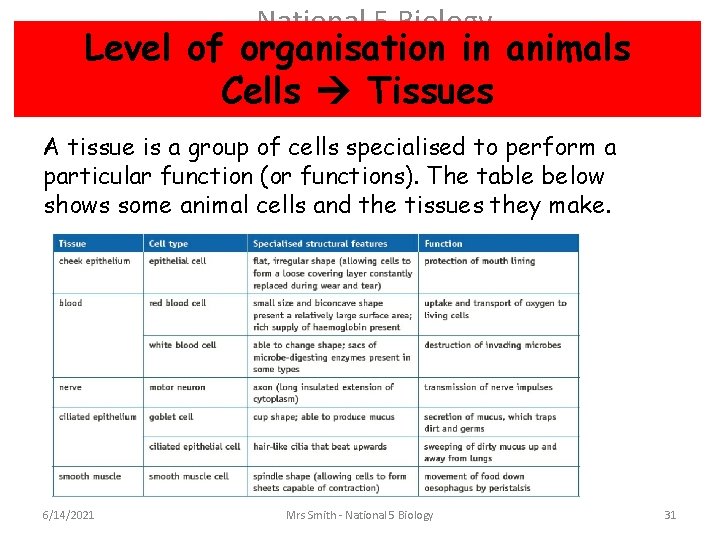
National 5 Biology Level of organisation in animals Cells Tissues A tissue is a group of cells specialised to perform a particular function (or functions). The table below shows some animal cells and the tissues they make. 6/14/2021 Mrs Smith - National 5 Biology 31
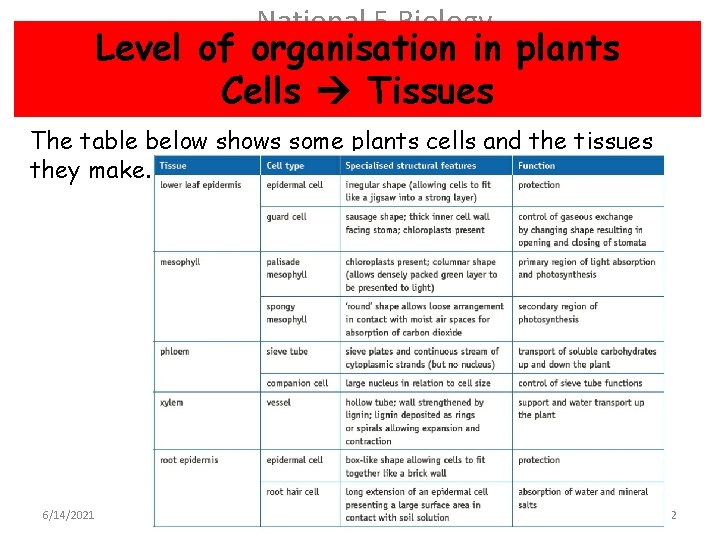
National 5 Biology Level of organisation in plants Cells Tissues The table below shows some plants cells and the tissues they make. 6/14/2021 Mrs Smith - National 5 Biology 32
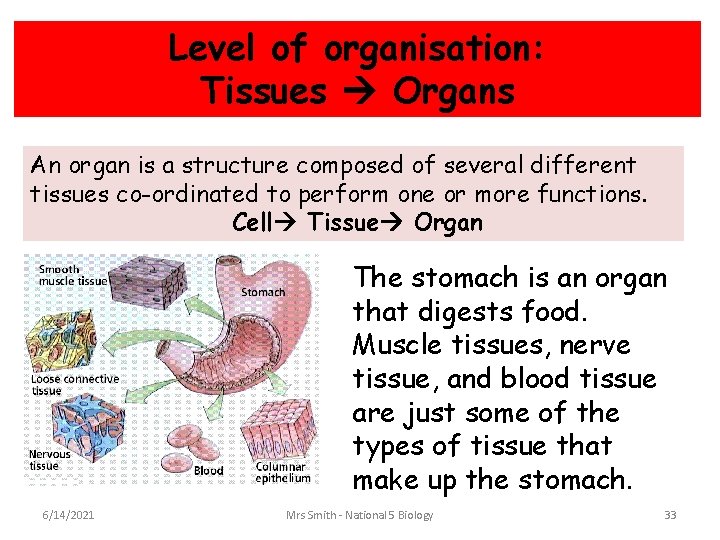
Level of organisation: Tissues Organs An organ is a structure composed of several different tissues co-ordinated to perform one or more functions. Cell Tissue Organ The stomach is an organ that digests food. Muscle tissues, nerve tissue, and blood tissue are just some of the types of tissue that make up the stomach. 6/14/2021 Mrs Smith - National 5 Biology 33
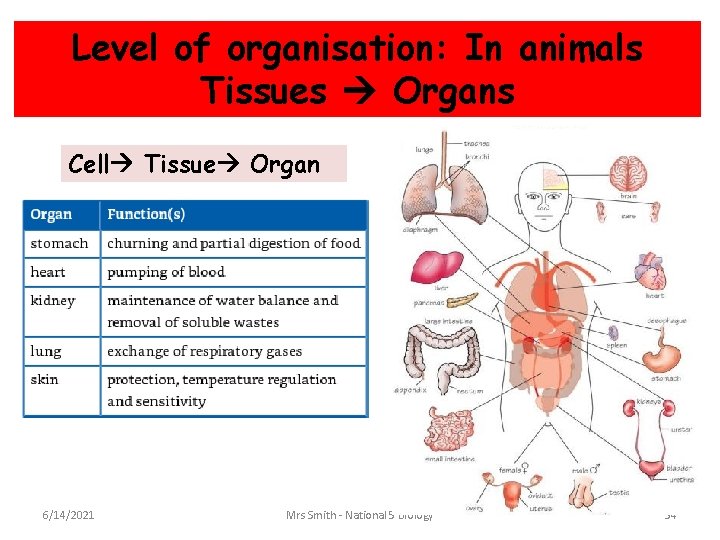
Level of organisation: In animals Tissues Organs Cell Tissue Organ 6/14/2021 Mrs Smith - National 5 Biology 34
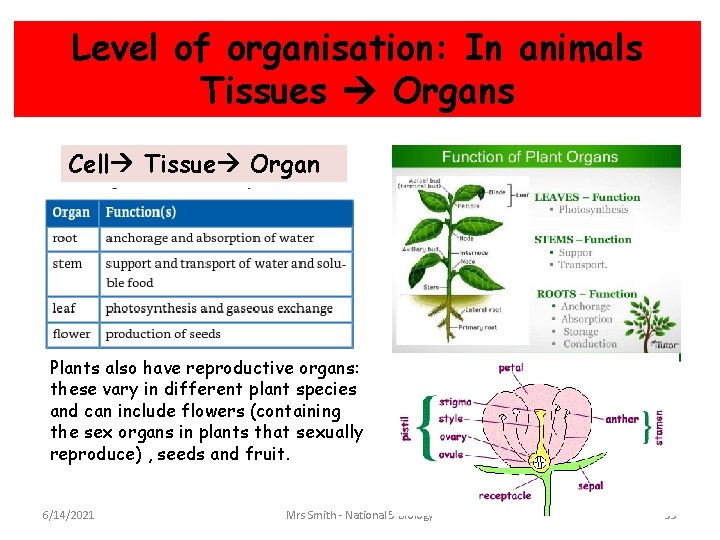
Level of organisation: In animals Tissues Organs Cell Tissue Organ Plants also have reproductive organs: these vary in different plant species and can include flowers (containing the sex organs in plants that sexually reproduce) , seeds and fruit. 6/14/2021 Mrs Smith - National 5 Biology 35
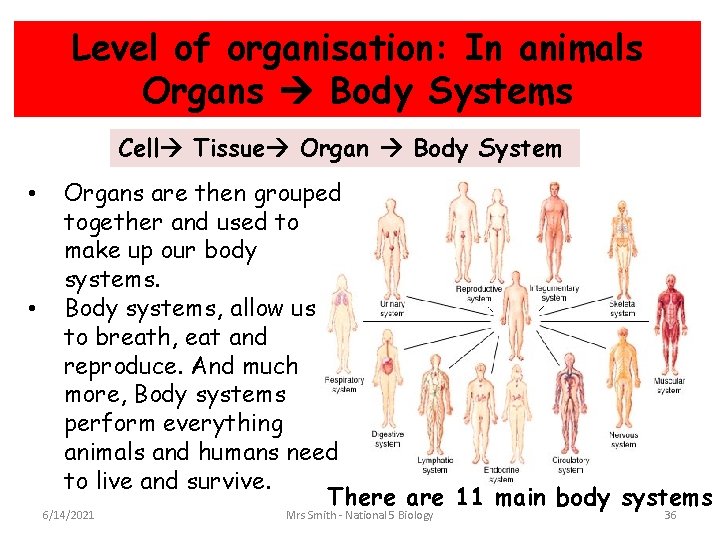
Level of organisation: In animals Organs Body Systems Cell Tissue Organ Body System • • Organs are then grouped together and used to make up our body systems. Body systems, allow us to breath, eat and reproduce. And much more, Body systems perform everything animals and humans need to live and survive. There are 11 main body systems 6/14/2021 Mrs Smith - National 5 Biology 36
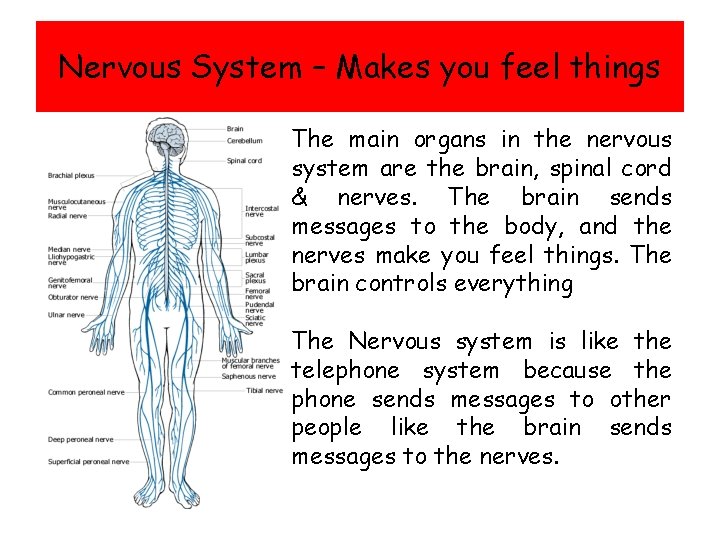
Nervous System – Makes you feel things The main organs in the nervous system are the brain, spinal cord & nerves. The brain sends messages to the body, and the nerves make you feel things. The brain controls everything The Nervous system is like the telephone system because the phone sends messages to other people like the brain sends messages to the nerves.
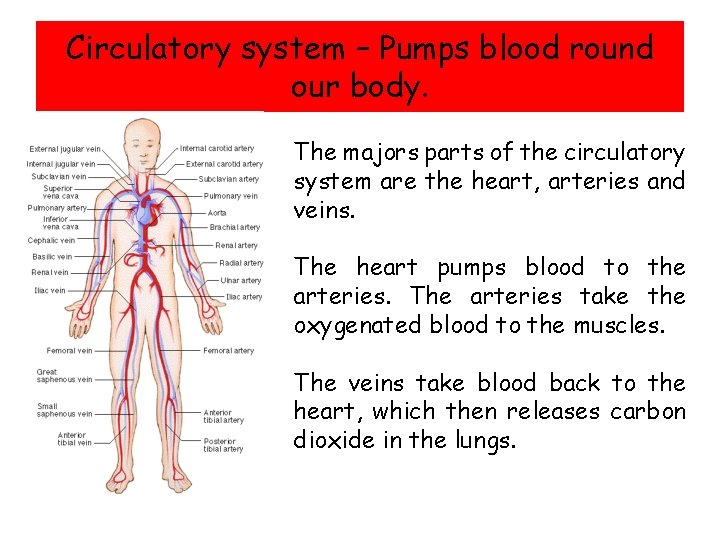
Circulatory system – Pumps blood round our body. The majors parts of the circulatory system are the heart, arteries and veins. The heart pumps blood to the arteries. The arteries take the oxygenated blood to the muscles. The veins take blood back to the heart, which then releases carbon dioxide in the lungs.
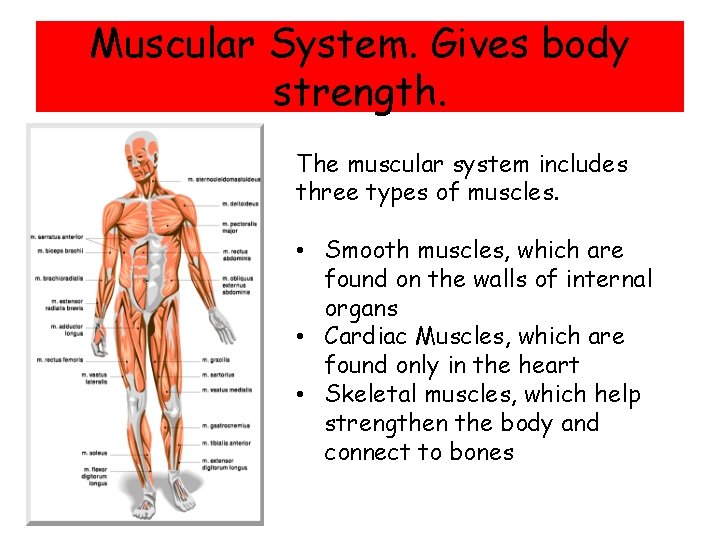
Muscular System. Gives body strength. The muscular system includes three types of muscles. • Smooth muscles, which are found on the walls of internal organs • Cardiac Muscles, which are found only in the heart • Skeletal muscles, which help strengthen the body and connect to bones
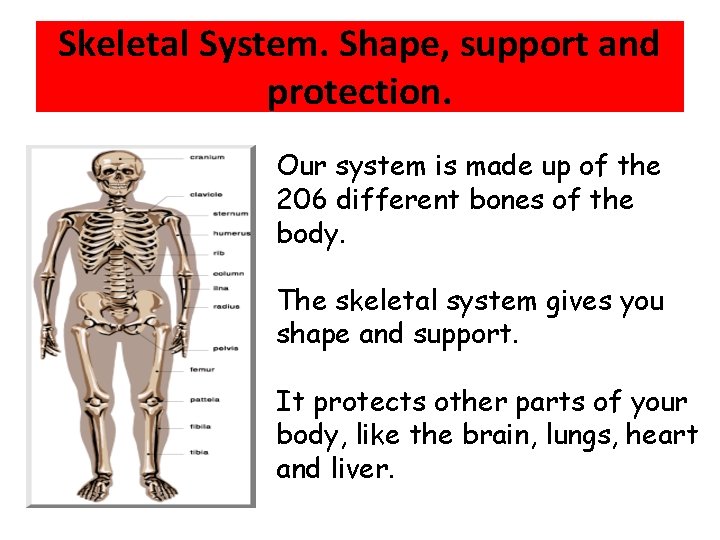
Skeletal System. Shape, support and protection. Our system is made up of the 206 different bones of the body. The skeletal system gives you shape and support. It protects other parts of your body, like the brain, lungs, heart and liver.
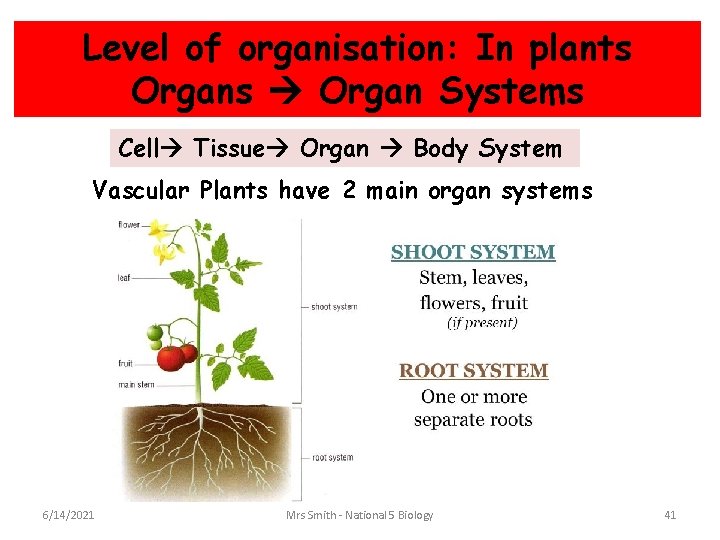
Level of organisation: In plants Organs Organ Systems Cell Tissue Organ Body System Vascular Plants have 2 main organ systems 6/14/2021 Mrs Smith - National 5 Biology 41
Interactions with other body systems Body Systems Organism Cell Tissue Organ Body System Organism • All of the systems within the body interact with one another to keep an organism healthy. Although each system has specific functions, they are all interconnected and dependent on one another. • e. g. The nervous system controls various organs of the body directly. The brain also receives information from many organs of the body and adjusts signals to these organs to maintain proper functioning.
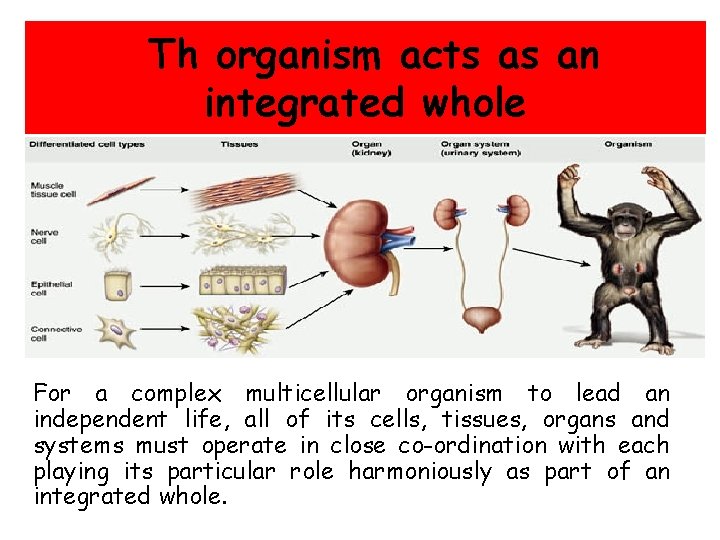
Th organism acts as an integrated whole For a complex multicellular organism to lead an independent life, all of its cells, tissues, organs and systems must operate in close co-ordination with each playing its particular role harmoniously as part of an integrated whole.
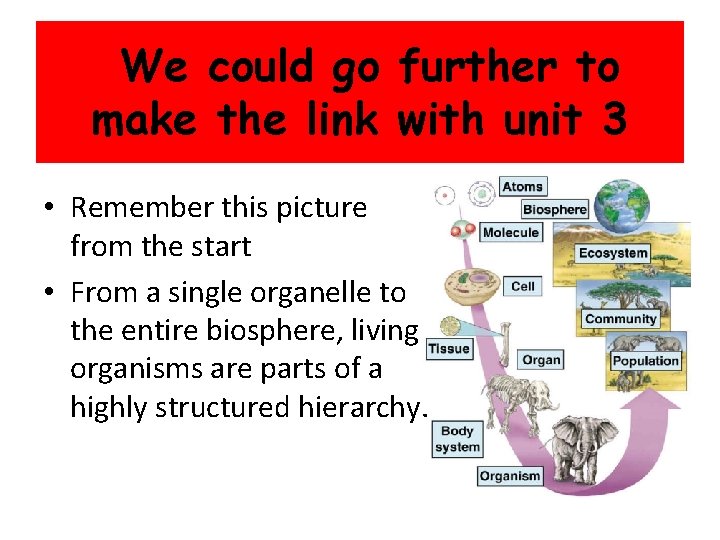
We could go further to make the link with unit 3 • Remember this picture from the start • From a single organelle to the entire biosphere, living organisms are parts of a highly structured hierarchy.
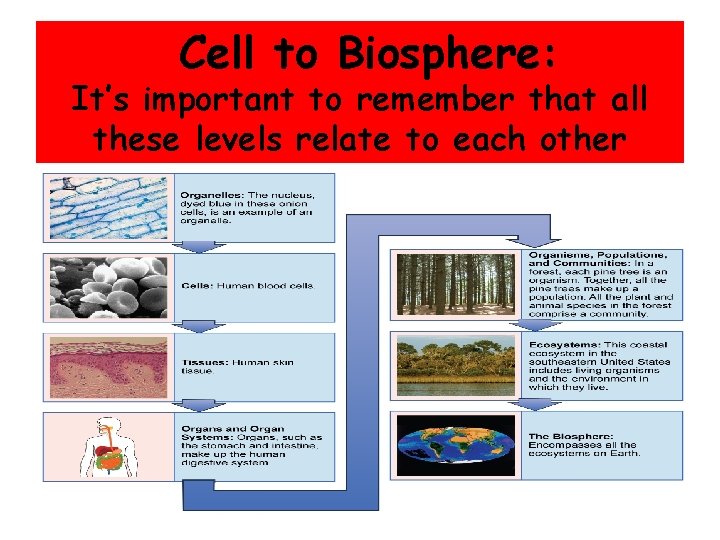
Cell to Biosphere: It’s important to remember that all these levels relate to each other
Biological Levels of organisation
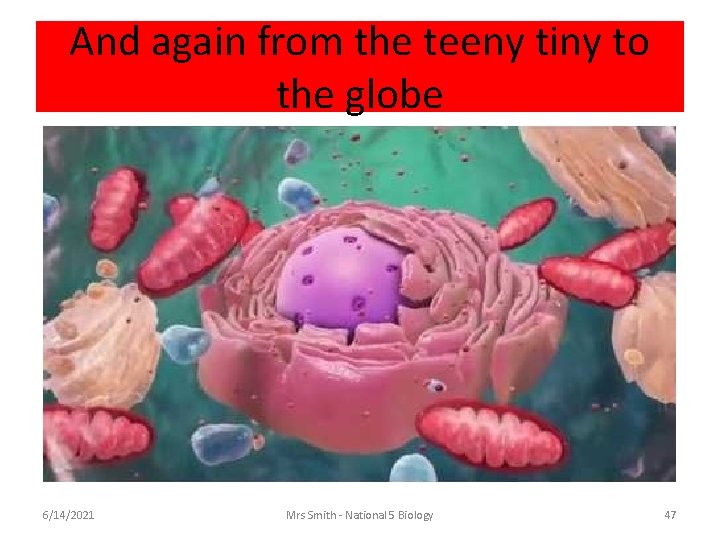
And again from the teeny tiny to the globe 6/14/2021 Mrs Smith - National 5 Biology 47
National 5 Biology Have you achieved you Learning Intentions Can you…. . • Describe that similar cells form tissues, which in turn form organs and organs combine to make body systems. • Give examples of plant and animal organs and organ systems. • State that a hierarchy exists which allows organisms to work as an integrated whole. • Extend your knowledge to describe that the biological levels of organisation (hierarchy) can be extended to include population, community, ecosystem and biosphere. (not in Nat 5 but ties in with unit 3 somewhat!). 6/14/2021 Mrs Smith - National 5 Biology 48
- Slides: 48