
National 5 Biology Unit 2 Cell Biology Section
National 5 Biology Unit 2 – Cell Biology Section 11 Transport in Plants
We will be learning how to… Explain why multicellular organisms require transport systems Explain why plants require a transport system for water State the name for the movement of water through a plant State the structures involved in the transport of water in plants Describe the structure and function of xylem Describe the function of guard cells Describe the process of transpiration Name environmental factors which increase the rate of transpiration in plants • Explain why plants require a transport system for sugar • State the structure involved in the transport of sugar in plants • •
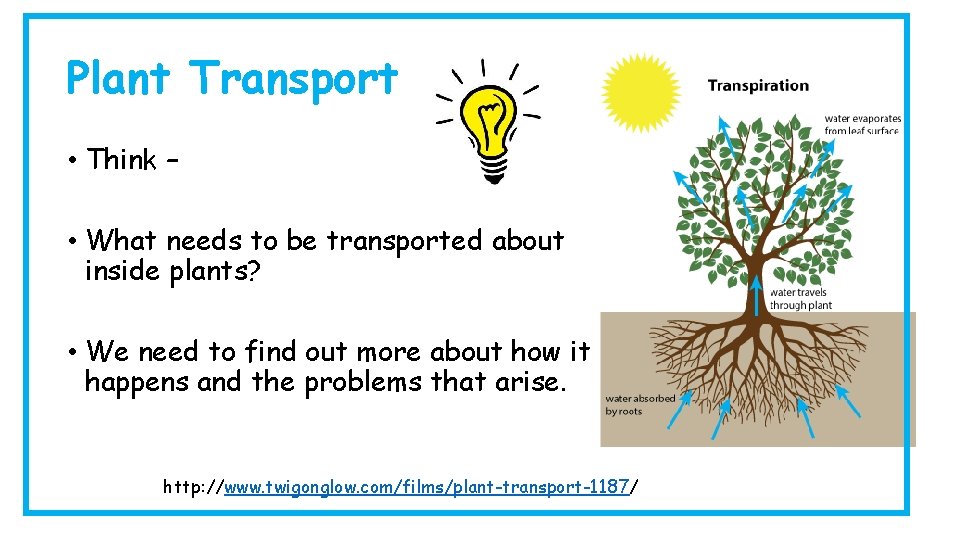
Plant Transport • Think – • What needs to be transported about inside plants? • We need to find out more about how it happens and the problems that arise. http: //www. twigonglow. com/films/plant-transport-1187/
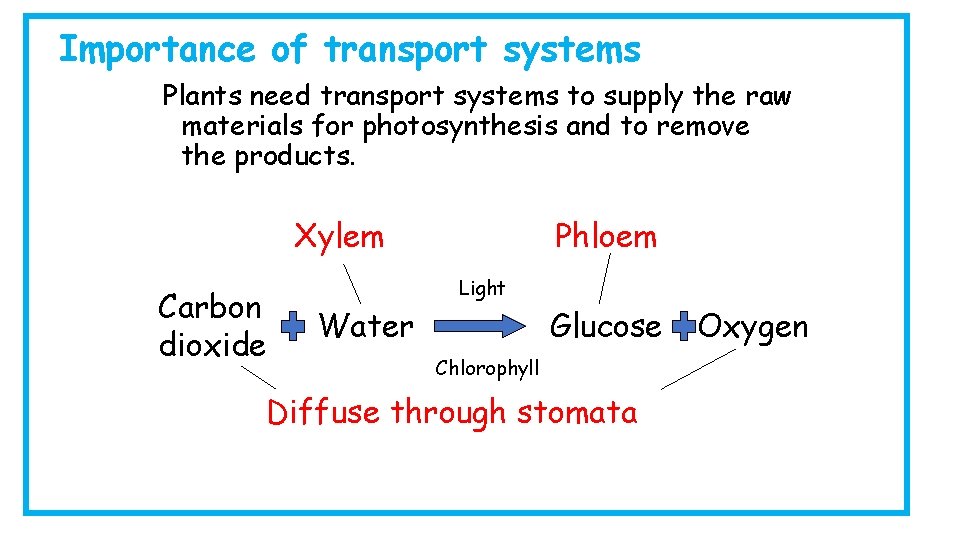
Importance of transport systems Plants need transport systems to supply the raw materials for photosynthesis and to remove the products. Xylem Carbon dioxide Phloem Light Water Glucose Chlorophyll Diffuse through stomata Oxygen
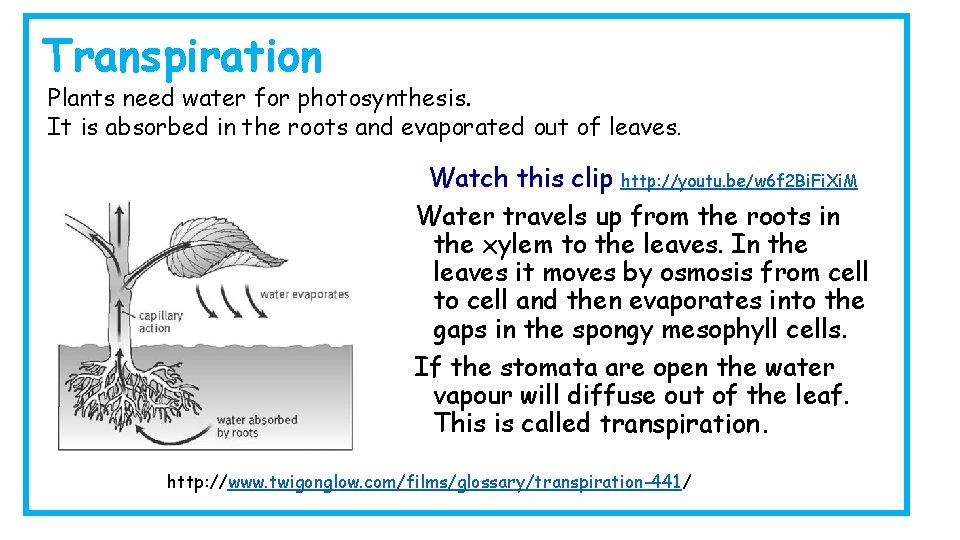
Transpiration Plants need water for photosynthesis. It is absorbed in the roots and evaporated out of leaves. Watch this clip http: //youtu. be/w 6 f 2 Bi. Fi. Xi. M Water travels up from the roots in the xylem to the leaves. In the leaves it moves by osmosis from cell to cell and then evaporates into the gaps in the spongy mesophyll cells. If the stomata are open the water vapour will diffuse out of the leaf. This is called transpiration. http: //www. twigonglow. com/films/glossary/transpiration-441/
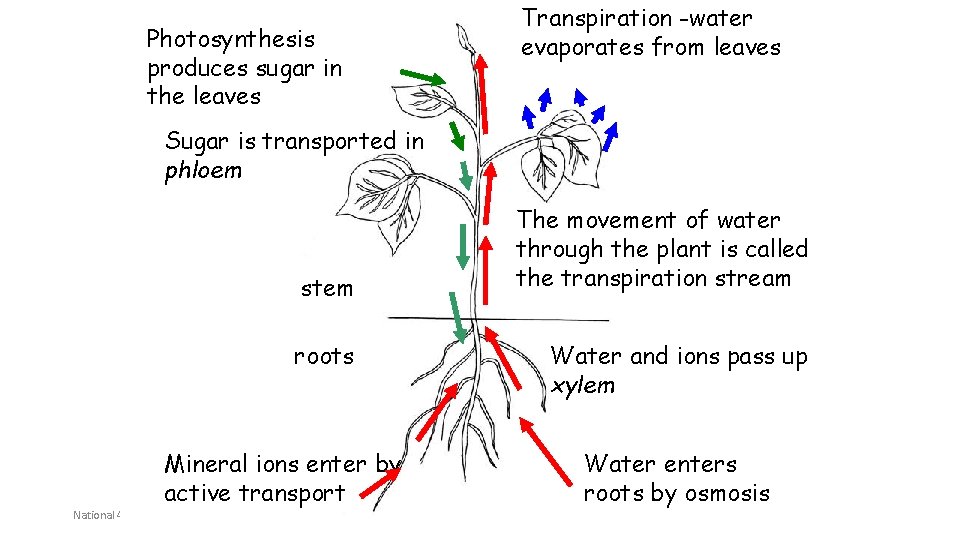
Photosynthesis produces sugar in the leaves Transpiration -water evaporates from leaves Sugar is transported in phloem stem roots Mineral ions enter by active transport National 4/5 Biology Course Unit 2 The movement of water through the plant is called the transpiration stream Water and ions pass up xylem Water enters roots by osmosis
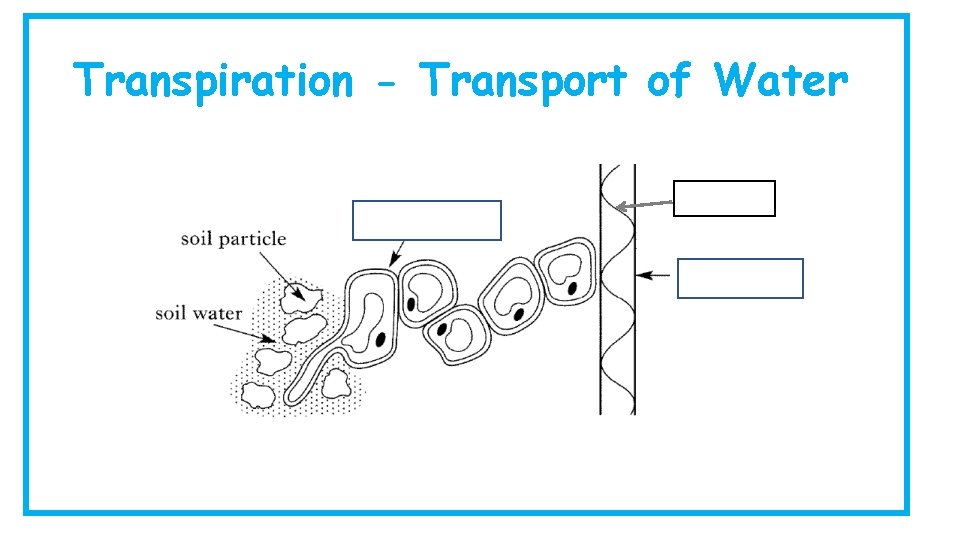
Transpiration - Transport of Water lignin xylem vessel

Root Hair Cell Structure Long root hair to increase surface area Function Collects water and mineral nutrients present in soil to transport this to the rest of the plant
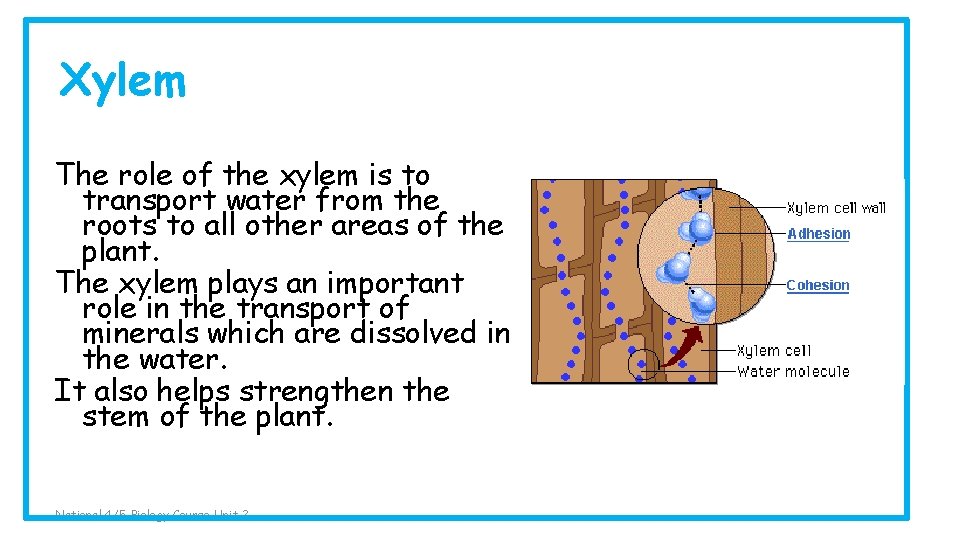
Xylem The role of the xylem is to transport water from the roots to all other areas of the plant. The xylem plays an important role in the transport of minerals which are dissolved in the water. It also helps strengthen the stem of the plant. National 4/5 Biology Course Unit 2

Xylem They have no cell contents and no nucleus. They are hollow tubes of dead cells. The end walls have broken down and have disintegrated. Side walls are strengthened by lignin to prevent damage by water pressure
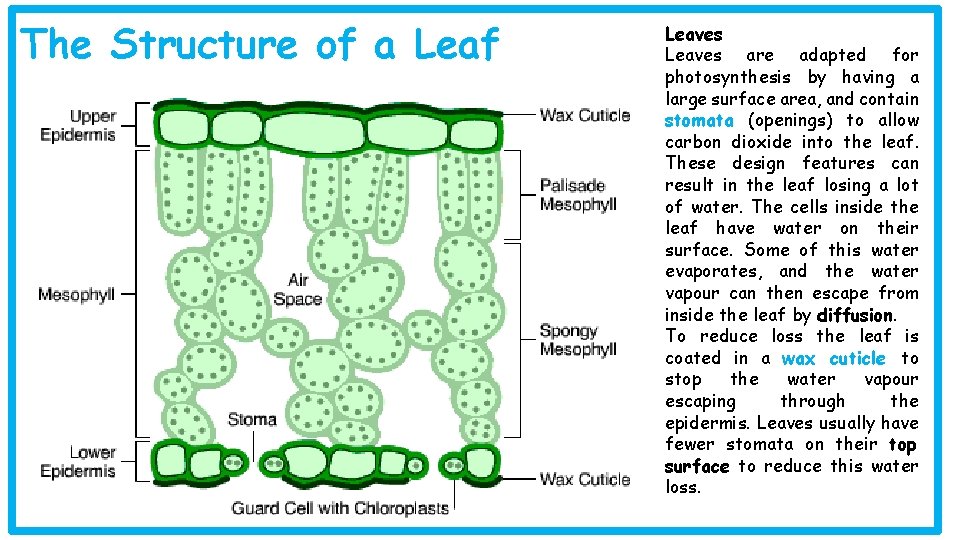
The Structure of a Leaf Leaves are adapted for photosynthesis by having a large surface area, and contain stomata (openings) to allow carbon dioxide into the leaf. These design features can result in the leaf losing a lot of water. The cells inside the leaf have water on their surface. Some of this water evaporates, and the water vapour can then escape from inside the leaf by diffusion. To reduce loss the leaf is coated in a wax cuticle to stop the water vapour escaping through the epidermis. Leaves usually have fewer stomata on their top surface to reduce this water loss.
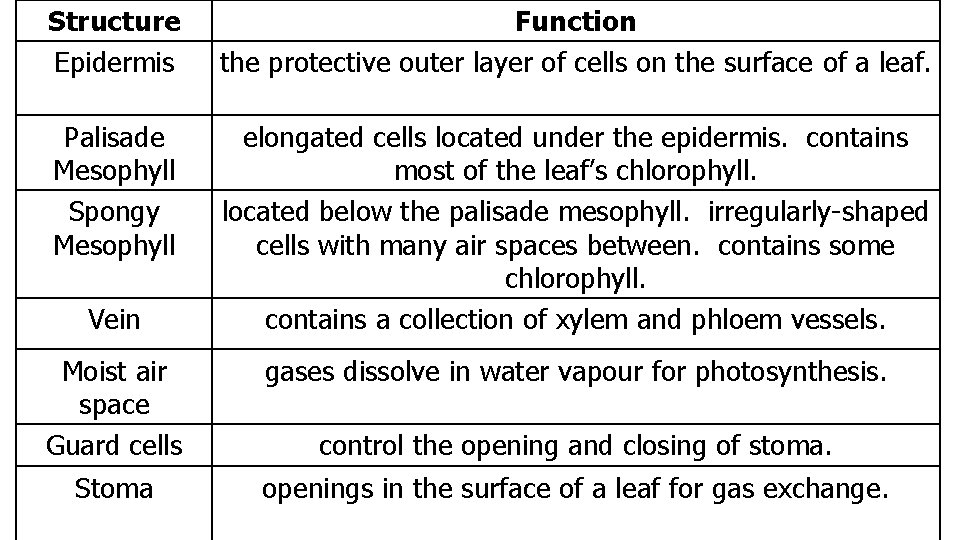
Structure Epidermis Function the protective outer layer of cells on the surface of a leaf. Palisade Mesophyll Spongy Mesophyll elongated cells located under the epidermis. contains most of the leaf’s chlorophyll. located below the palisade mesophyll. irregularly-shaped cells with many air spaces between. contains some chlorophyll. contains a collection of xylem and phloem vessels. Vein Moist air space Guard cells gases dissolve in water vapour for photosynthesis. Stoma openings in the surface of a leaf for gas exchange. control the opening and closing of stoma.
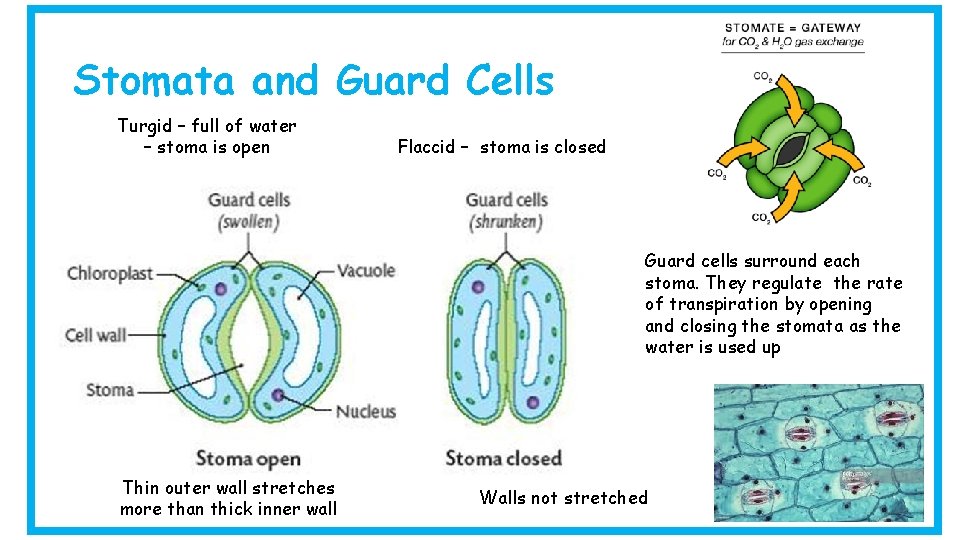
Stomata and Guard Cells Turgid – full of water – stoma is open Flaccid – stoma is closed Guard cells surround each stoma. They regulate the rate of transpiration by opening and closing the stomata as the water is used up Thin outer wall stretches more than thick inner wall Walls not stretched
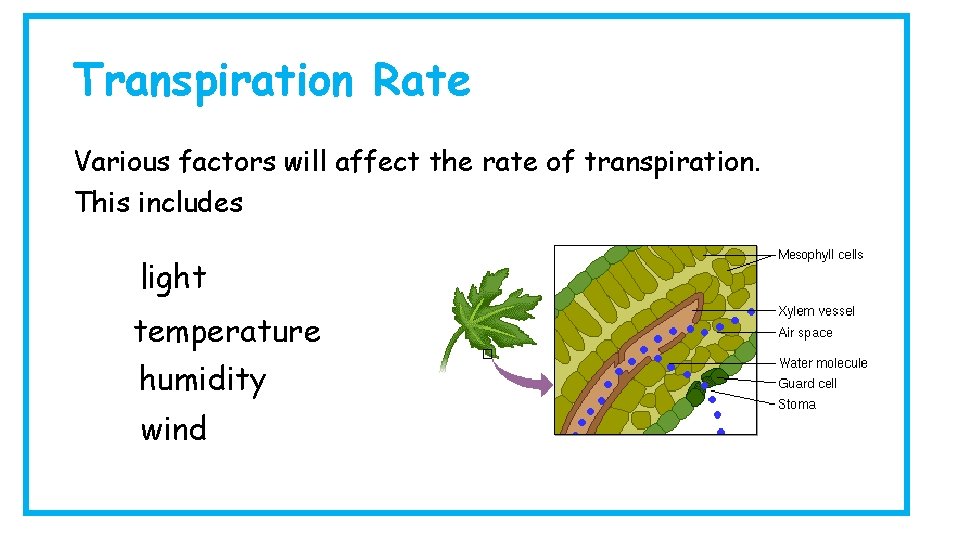
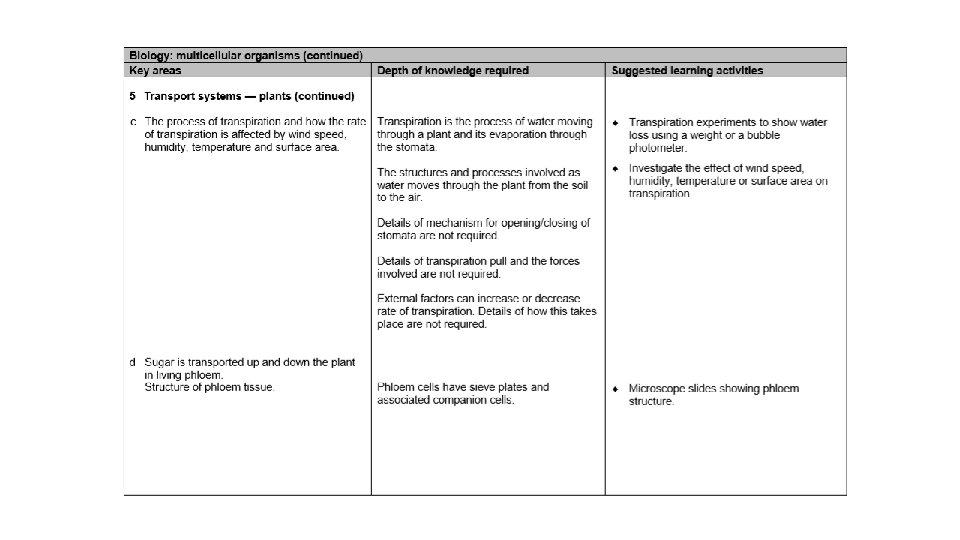
Transpiration Rate Various factors will affect the rate of transpiration. This includes light temperature humidity wind
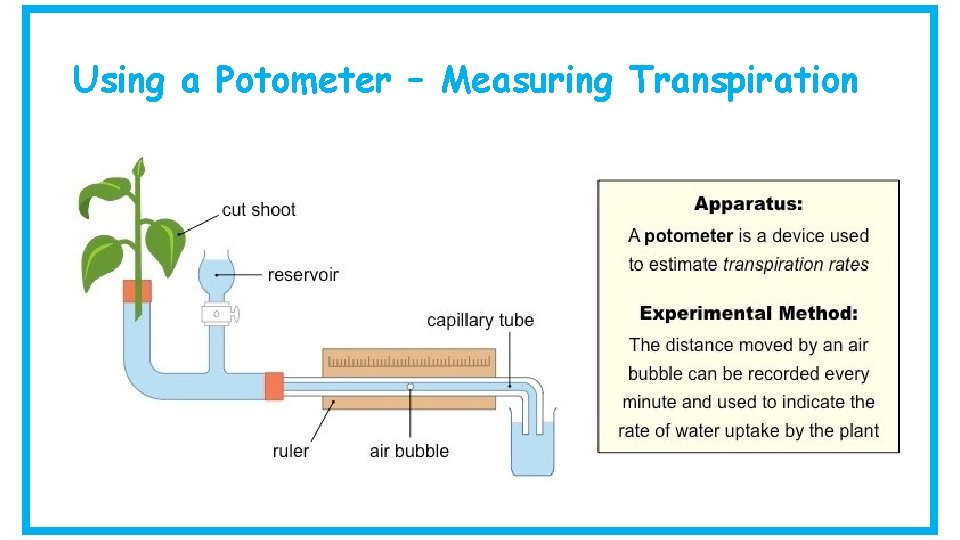
Using a Potometer – Measuring Transpiration
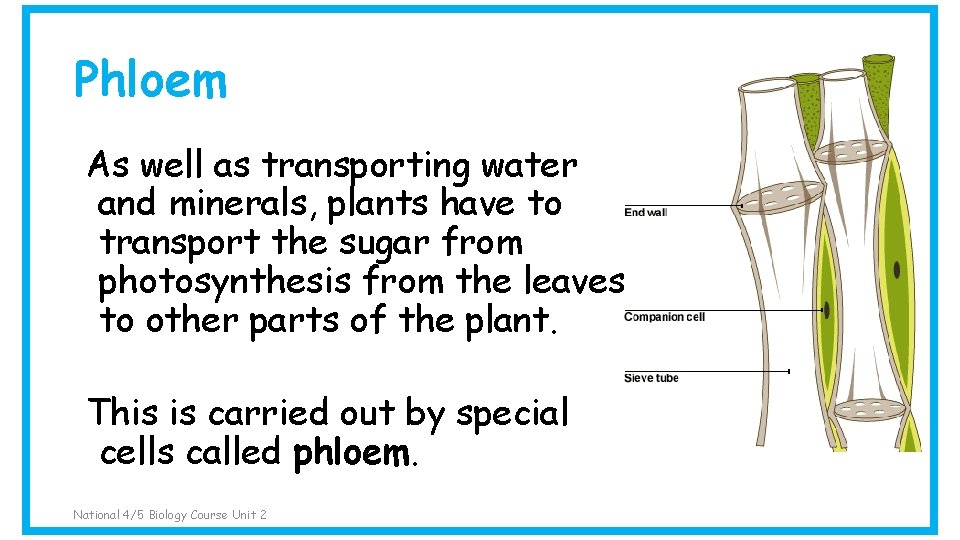
Phloem As well as transporting water and minerals, plants have to transport the sugar from photosynthesis from the leaves to other parts of the plant. This is carried out by special cells called phloem. National 4/5 Biology Course Unit 2
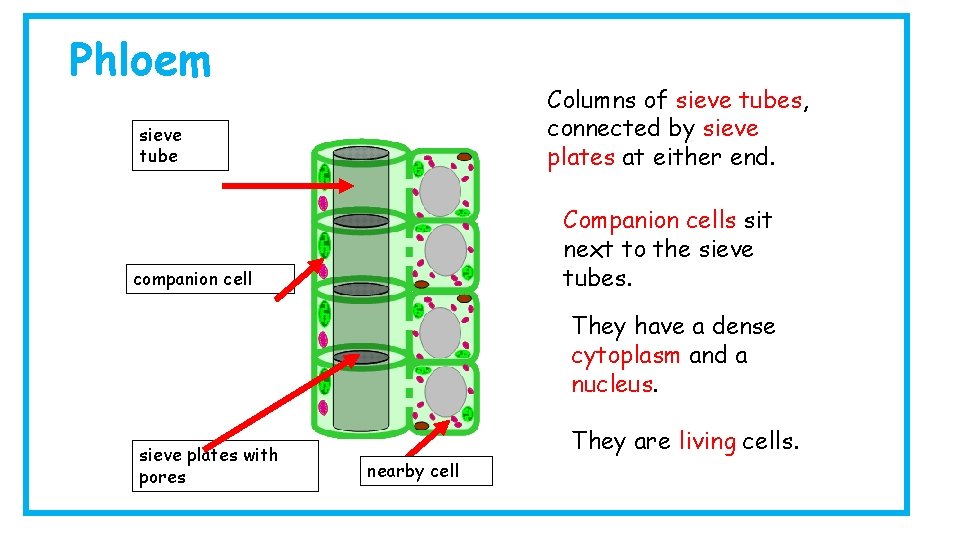
Phloem Columns of sieve tubes, connected by sieve plates at either end. sieve tube Companion cells sit next to the sieve tubes. companion cell They have a dense cytoplasm and a nucleus. sieve plates with pores They are living cells. nearby cell
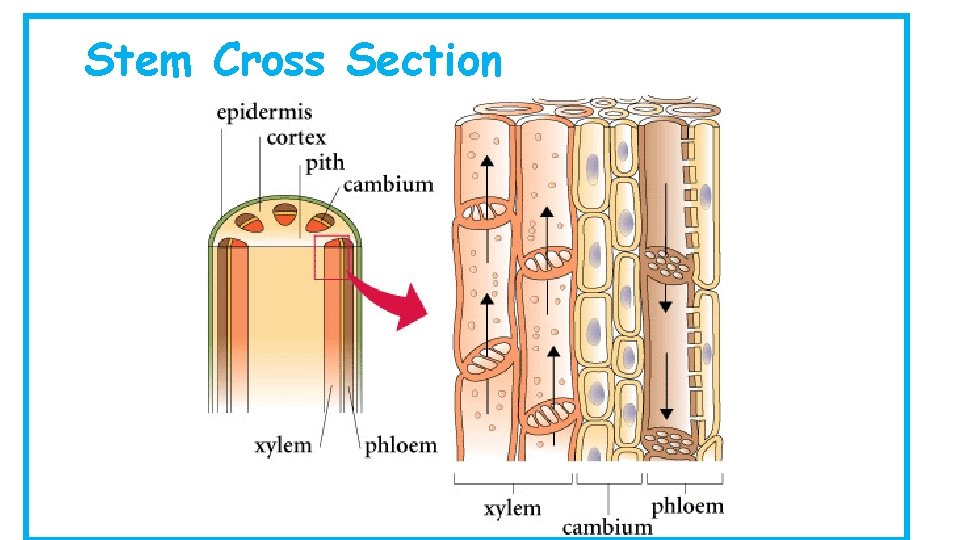
Stem Cross Section
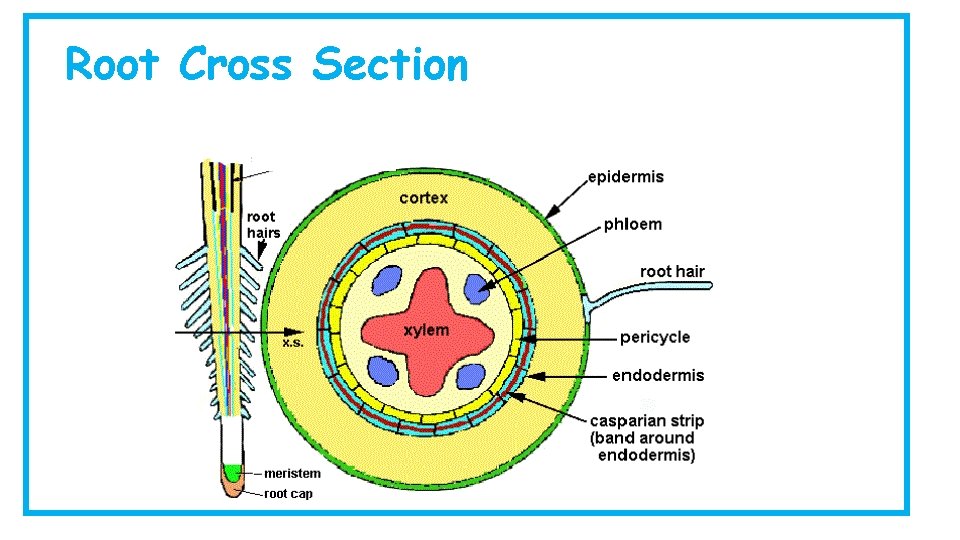
Root Cross Section
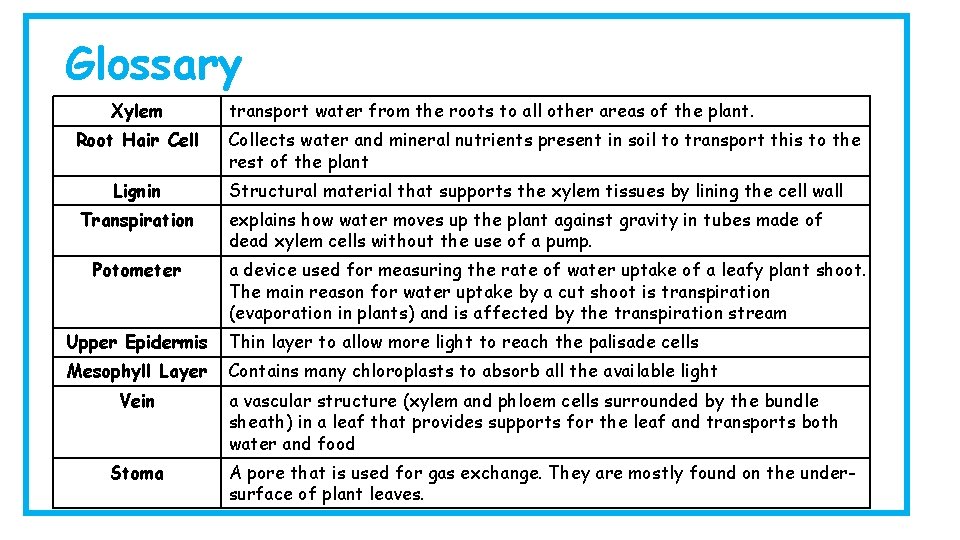
Glossary Xylem Root Hair Cell Lignin Transpiration Potometer transport water from the roots to all other areas of the plant. Collects water and mineral nutrients present in soil to transport this to the rest of the plant Structural material that supports the xylem tissues by lining the cell wall explains how water moves up the plant against gravity in tubes made of dead xylem cells without the use of a pump. a device used for measuring the rate of water uptake of a leafy plant shoot. The main reason for water uptake by a cut shoot is transpiration (evaporation in plants) and is affected by the transpiration stream Upper Epidermis Thin layer to allow more light to reach the palisade cells Mesophyll Layer Contains many chloroplasts to absorb all the available light Vein Stoma a vascular structure (xylem and phloem cells surrounded by the bundle sheath) in a leaf that provides supports for the leaf and transports both water and food A pore that is used for gas exchange. They are mostly found on the undersurface of plant leaves.
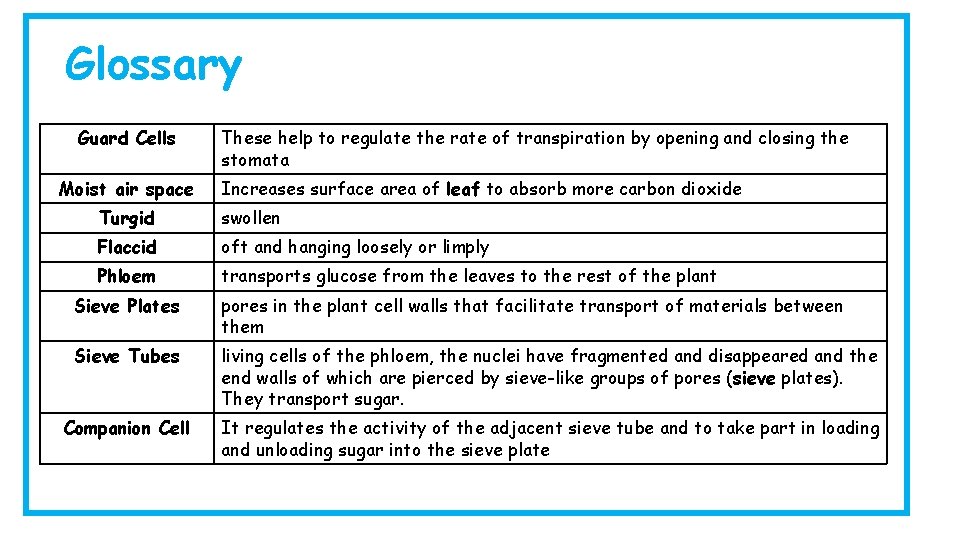
Glossary Guard Cells Moist air space These help to regulate the rate of transpiration by opening and closing the stomata Increases surface area of leaf to absorb more carbon dioxide Turgid swollen Flaccid oft and hanging loosely or limply Phloem transports glucose from the leaves to the rest of the plant Sieve Plates pores in the plant cell walls that facilitate transport of materials between them Sieve Tubes living cells of the phloem, the nuclei have fragmented and disappeared and the end walls of which are pierced by sieve-like groups of pores (sieve plates). They transport sugar. Companion Cell It regulates the activity of the adjacent sieve tube and to take part in loading and unloading sugar into the sieve plate
- Slides: 23