
National 5 Biology Unit 1 Cell Biology Key
National 5 Biology Unit 1: Cell Biology Key Area 1. 2 c: Diffusion 6/16/2021 Mrs Smith 1
National 5 Biology Learning Intentions By the end of this Key Area, you should be able to describe how • Diffusion is an example of passive transport, this means it does not require energy. • Diffusion in cells is defined as the movement of molecules down a concentration gradient from a higher to lower concentration. • Different concentrations of substances exist between cells and their environment. And discuses diffusion in terms of concentration gradients. • Why diffusion is important to cells (discussion should include glucose, carbon dioxide and oxygen in terms of tier concentration gradient. 6/16/2021 Mrs Smith 2
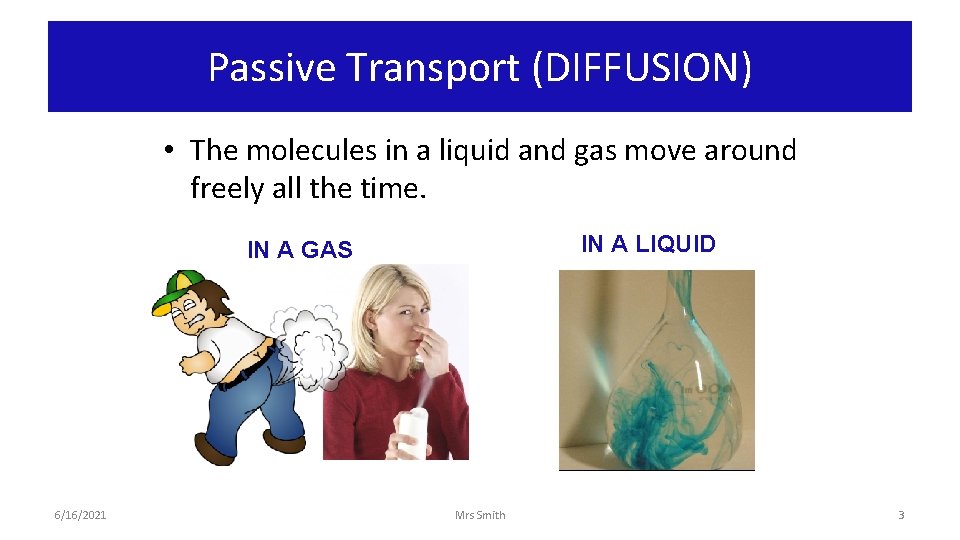
Passive Transport (DIFFUSION) • The molecules in a liquid and gas move around freely all the time. IN A LIQUID IN A GAS 6/16/2021 Mrs Smith 3
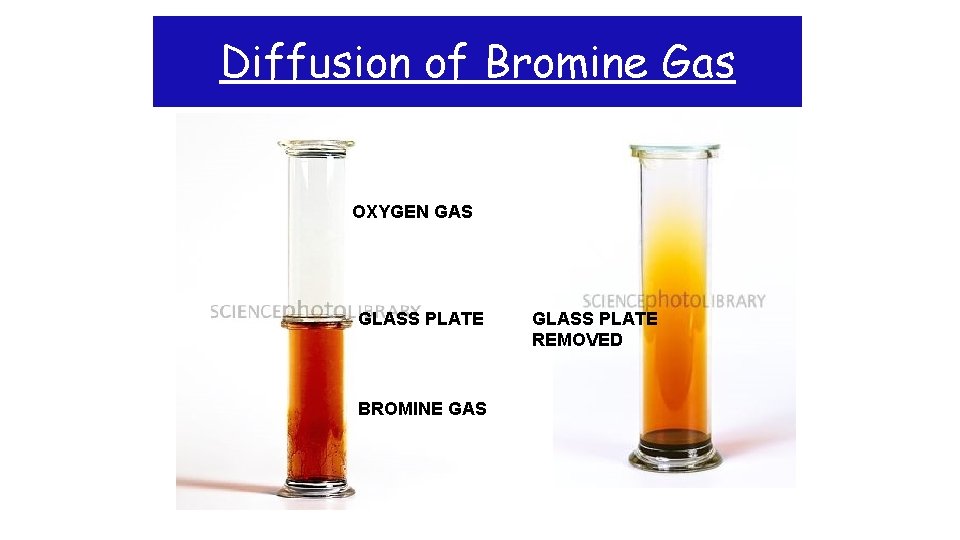
Diffusion of Bromine Gas OXYGEN GAS GLASS PLATE BROMINE GAS GLASS PLATE REMOVED
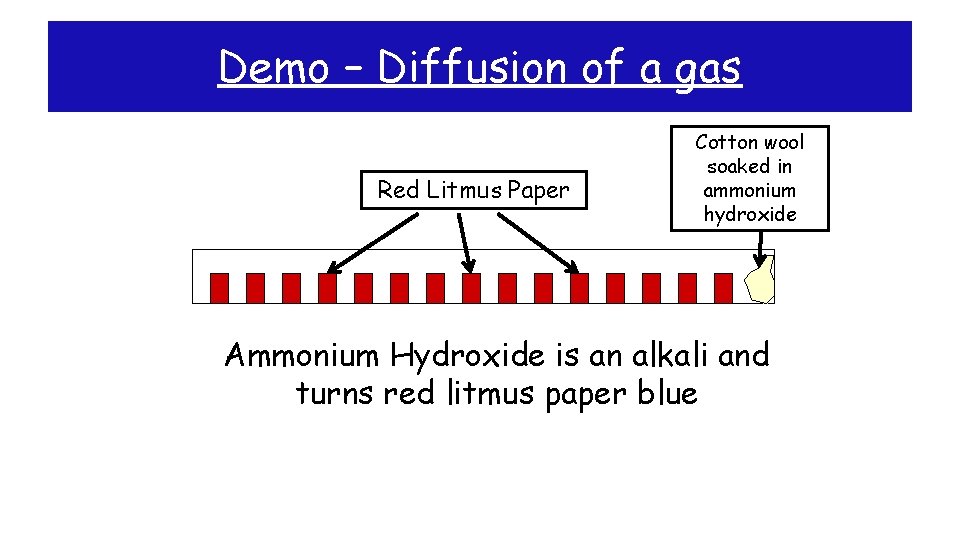
Demo – Diffusion of a gas Red Litmus Paper Cotton wool soaked in ammonium hydroxide Ammonium Hydroxide is an alkali and turns red litmus paper blue
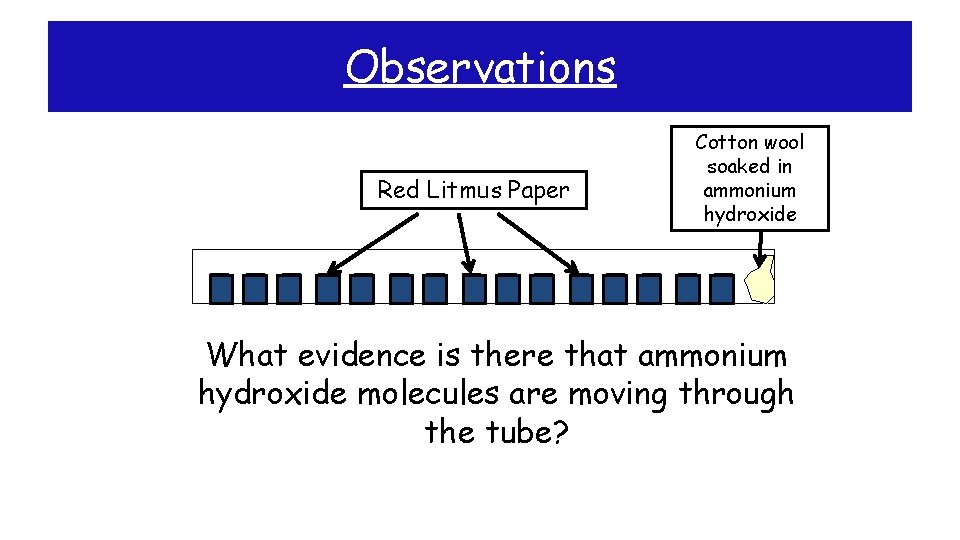
Observations Red Litmus Paper Cotton wool soaked in ammonium hydroxide What evidence is there that ammonium hydroxide molecules are moving through the tube?
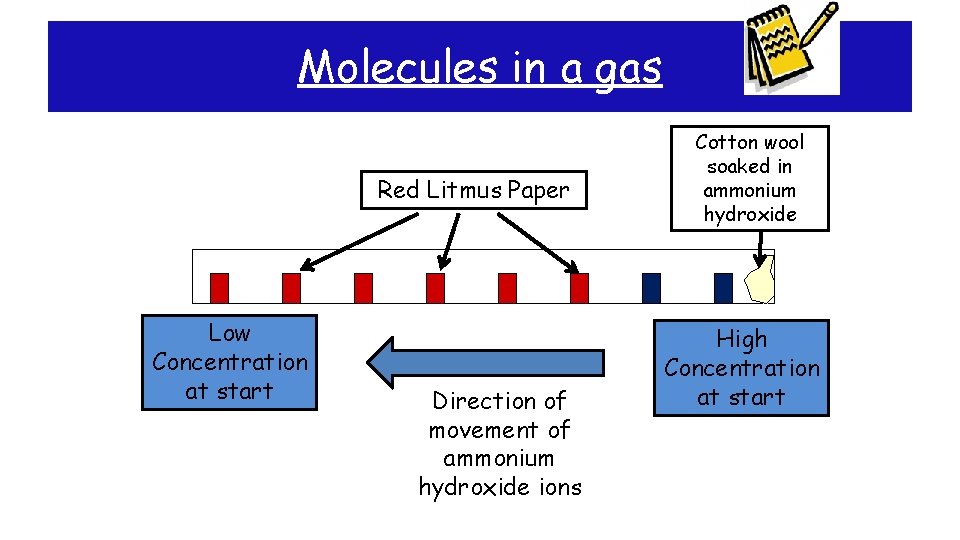
Molecules in a gas Red Litmus Paper Low Concentration at start Direction of movement of ammonium hydroxide ions Cotton wool soaked in ammonium hydroxide High Concentration at start
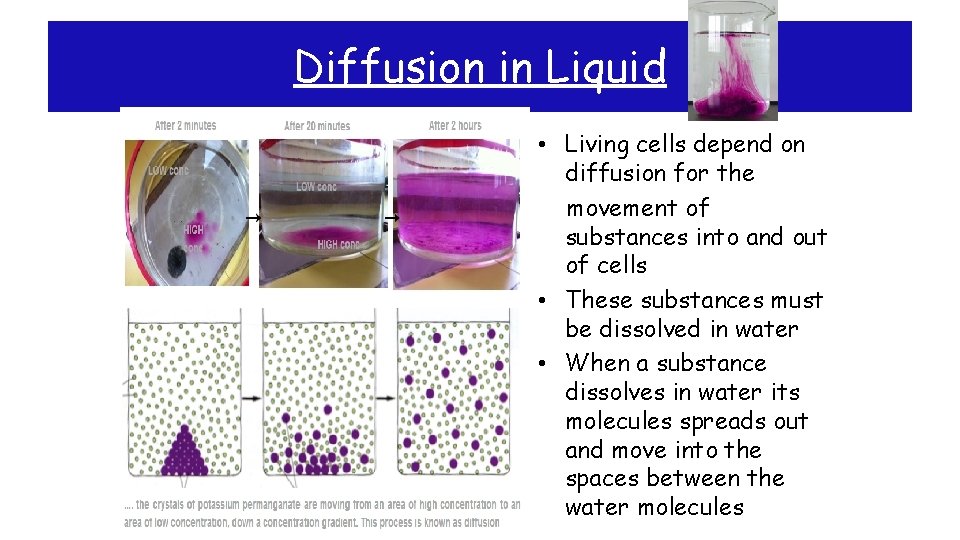
Diffusion in Liquid • Living cells depend on diffusion for the movement of substances into and out of cells • These substances must be dissolved in water • When a substance dissolves in water its molecules spreads out and move into the spaces between the water molecules
Diffusion of potassium permanganate crystals in water 6/16/2021 Mrs Smith 9
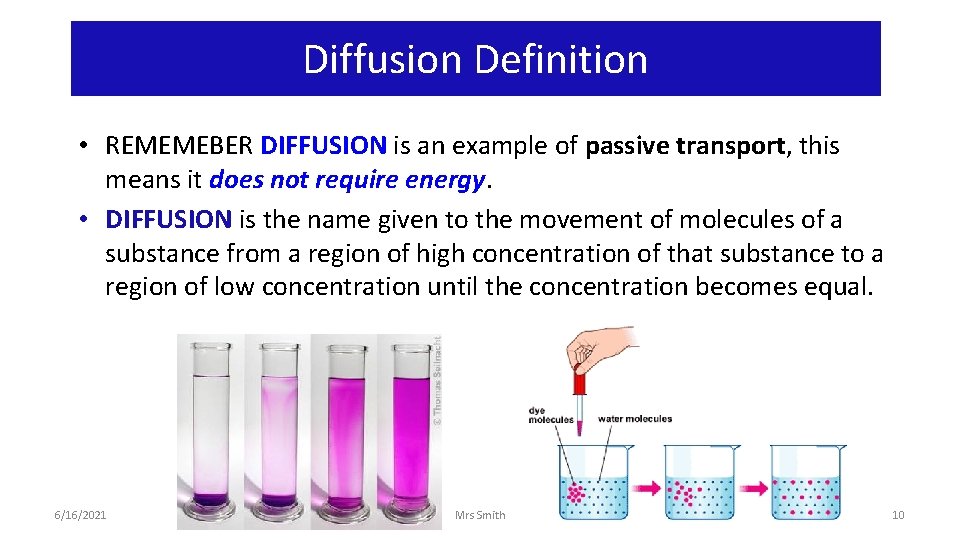
Diffusion Definition • REMEMEBER DIFFUSION is an example of passive transport, this means it does not require energy. • DIFFUSION is the name given to the movement of molecules of a substance from a region of high concentration of that substance to a region of low concentration until the concentration becomes equal. 6/16/2021 Mrs Smith 10
Online Animation CLICK HERE FOR A diffusion animation Or use the link below http: //www. stolaf. edu/people/giannini/flashanimat/transport/diffusion. swf
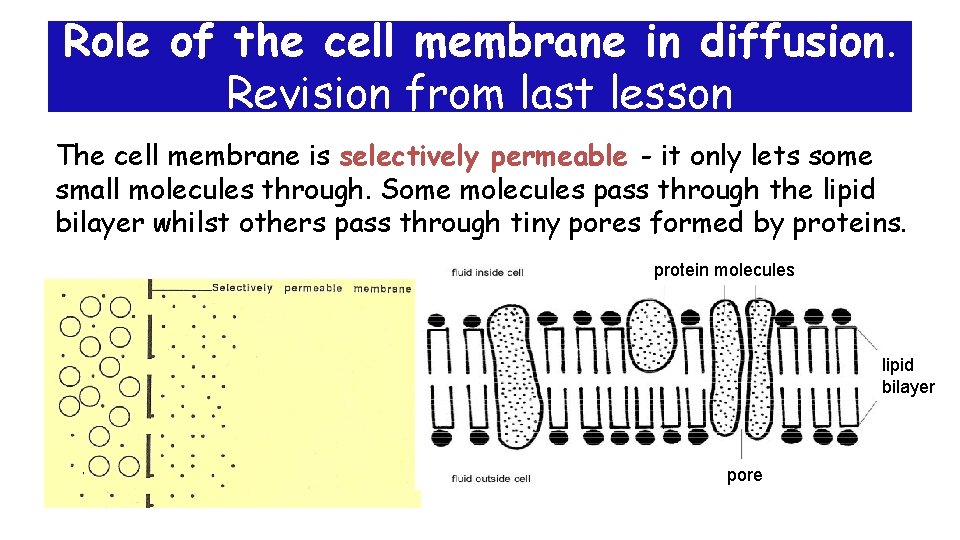
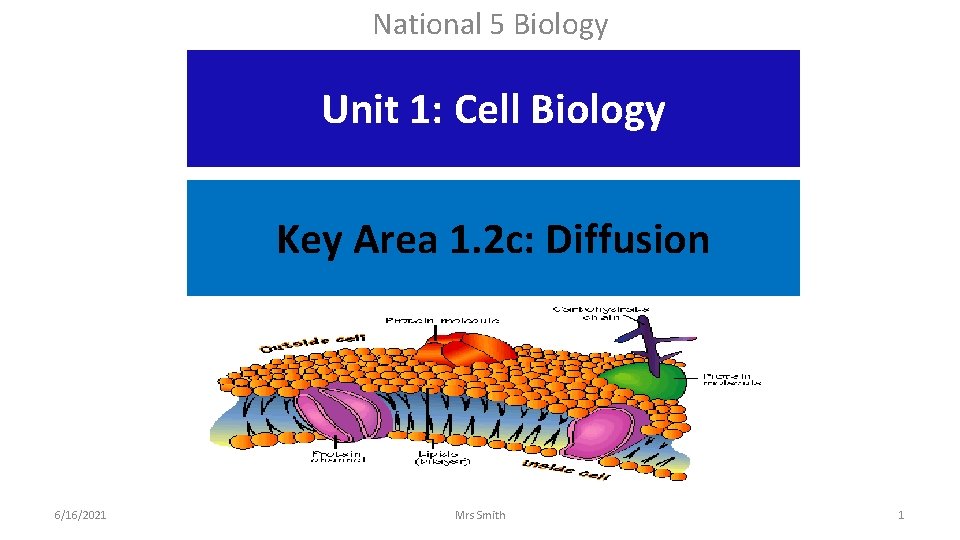
Role of the cell membrane in diffusion. Revision from last lesson The cell membrane is selectively permeable - it only lets some small molecules through. Some molecules pass through the lipid bilayer whilst others pass through tiny pores formed by proteins. protein molecules lipid bilayer pore
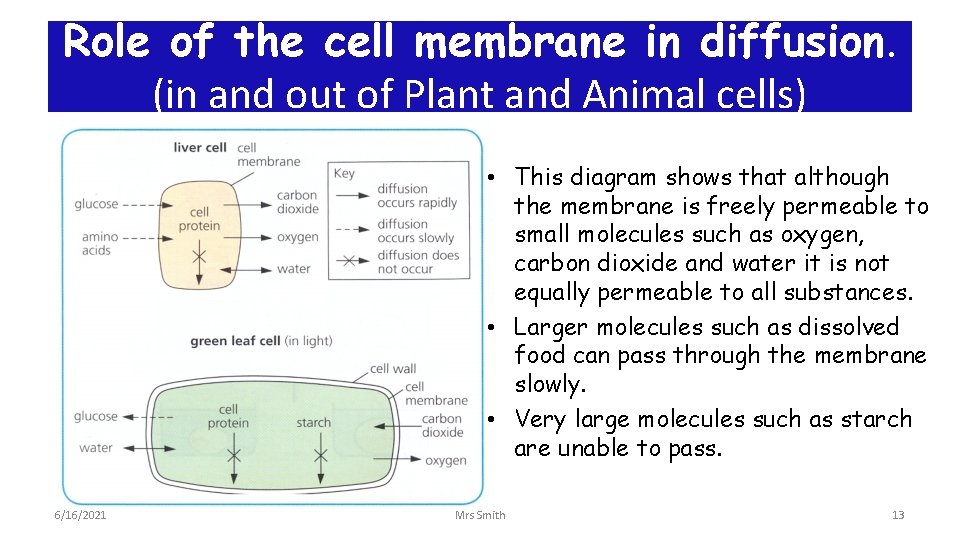
Role of the cell membrane in diffusion. (in and out of Plant and Animal cells) • This diagram shows that although the membrane is freely permeable to small molecules such as oxygen, carbon dioxide and water it is not equally permeable to all substances. • Larger molecules such as dissolved food can pass through the membrane slowly. • Very large molecules such as starch are unable to pass. 6/16/2021 Mrs Smith 13
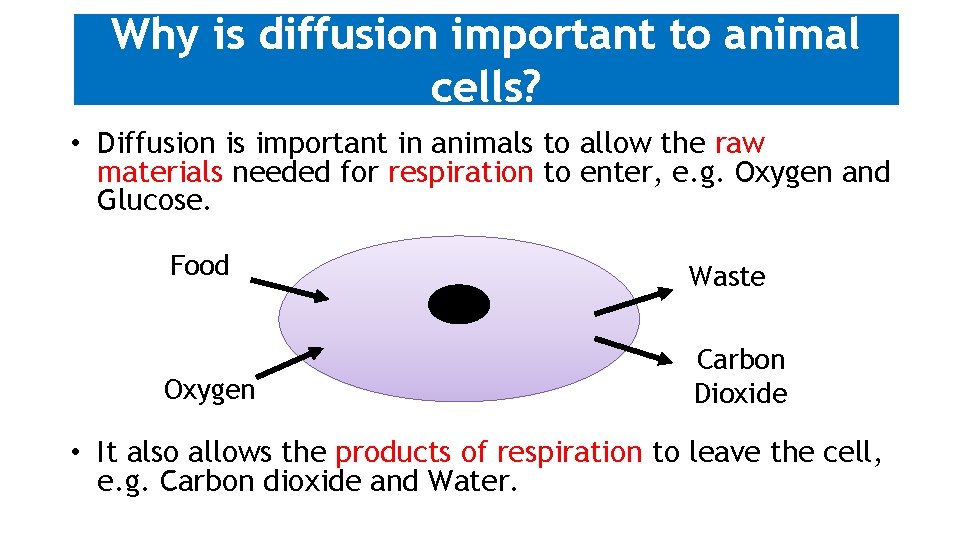
Why is diffusion important to animal cells? • Diffusion is important in animals to allow the raw materials needed for respiration to enter, e. g. Oxygen and Glucose. Food Waste Oxygen Carbon Dioxide • It also allows the products of respiration to leave the cell, e. g. Carbon dioxide and Water.

Unicellular organisms - Diffusion of oxygen and carbon dioxide Different concentrations of substances exist inside a cell compared with outside in its environment. Unicellular means only one cell. 6/16/2021 Mrs Smith 15
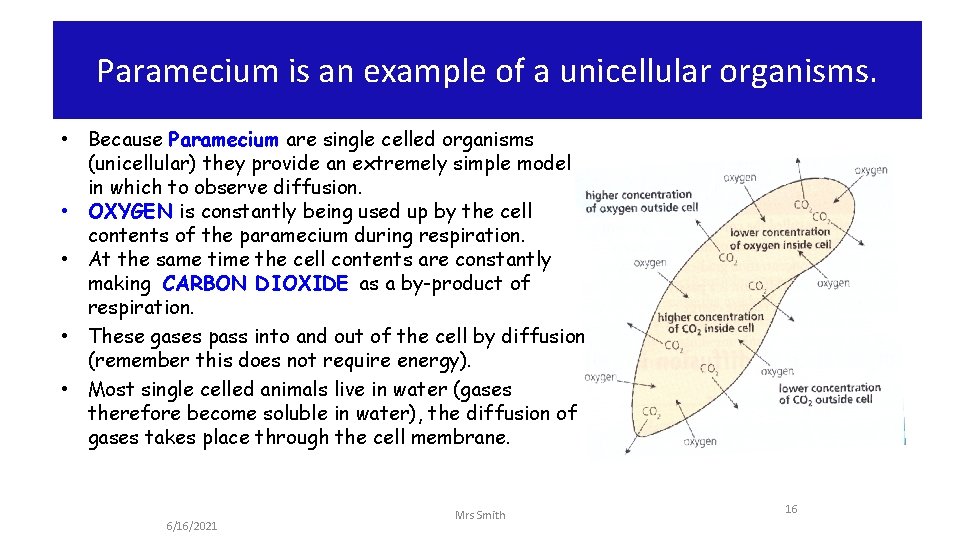
Paramecium is an example of a unicellular organisms. • Because Paramecium are single celled organisms (unicellular) they provide an extremely simple model in which to observe diffusion. • OXYGEN is constantly being used up by the cell contents of the paramecium during respiration. • At the same time the cell contents are constantly making CARBON DIOXIDE as a by-product of respiration. • These gases pass into and out of the cell by diffusion (remember this does not require energy). • Most single celled animals live in water (gases therefore become soluble in water), the diffusion of gases takes place through the cell membrane. 6/16/2021 Mrs Smith 16
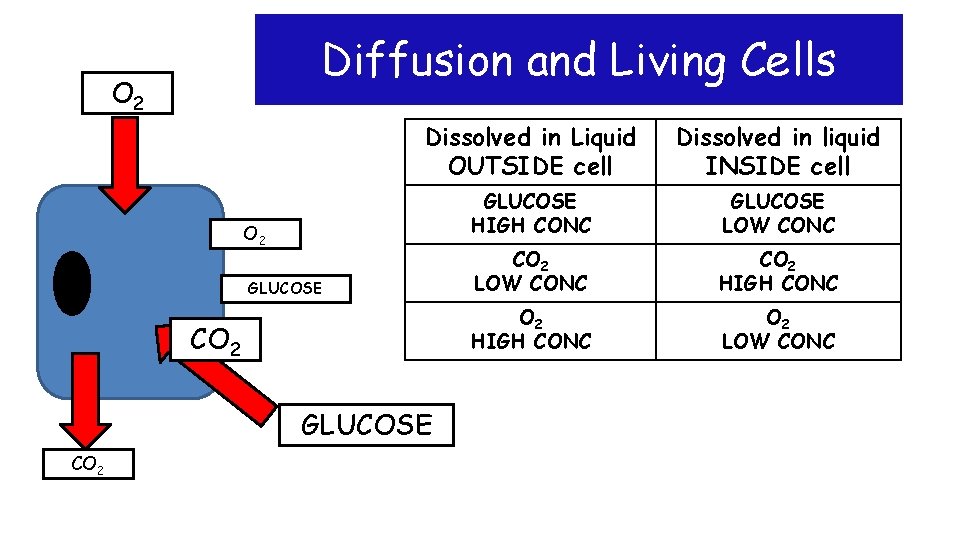
Diffusion and Living Cells O 2 Dissolved in Liquid OUTSIDE cell Dissolved in liquid INSIDE cell GLUCOSE HIGH CONC GLUCOSE LOW CONC CO 2 HIGH CONC O 2 LOW CONC O 2 GLUCOSE CO 2
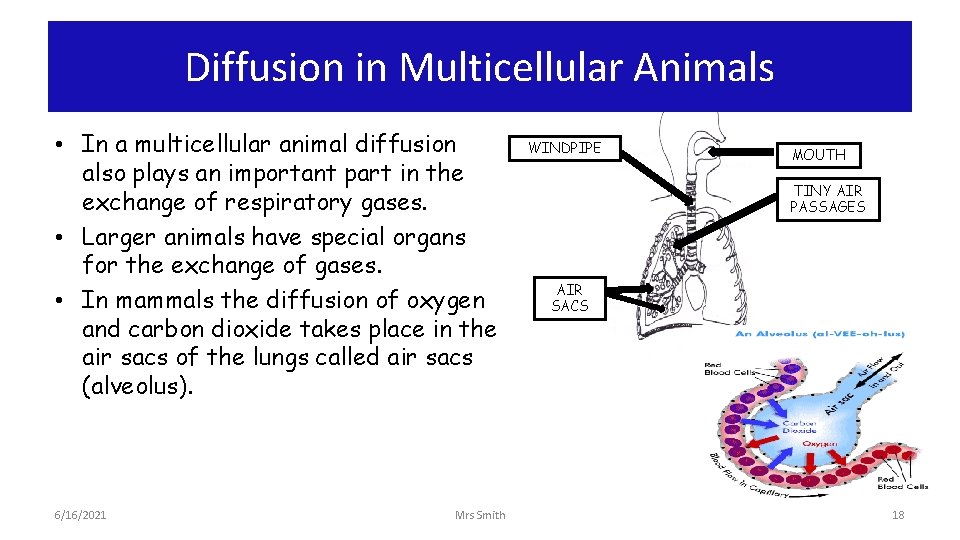
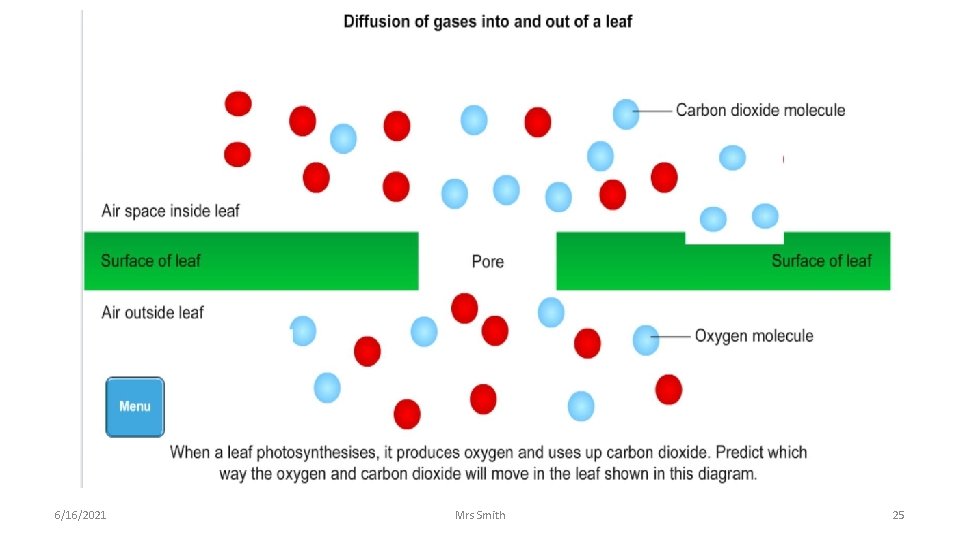
Diffusion in Multicellular Animals • In a multicellular animal diffusion also plays an important part in the exchange of respiratory gases. • Larger animals have special organs for the exchange of gases. • In mammals the diffusion of oxygen and carbon dioxide takes place in the air sacs of the lungs called air sacs (alveolus). 6/16/2021 Mrs Smith WINDPIPE MOUTH TINY AIR PASSAGES AIR SACS 18
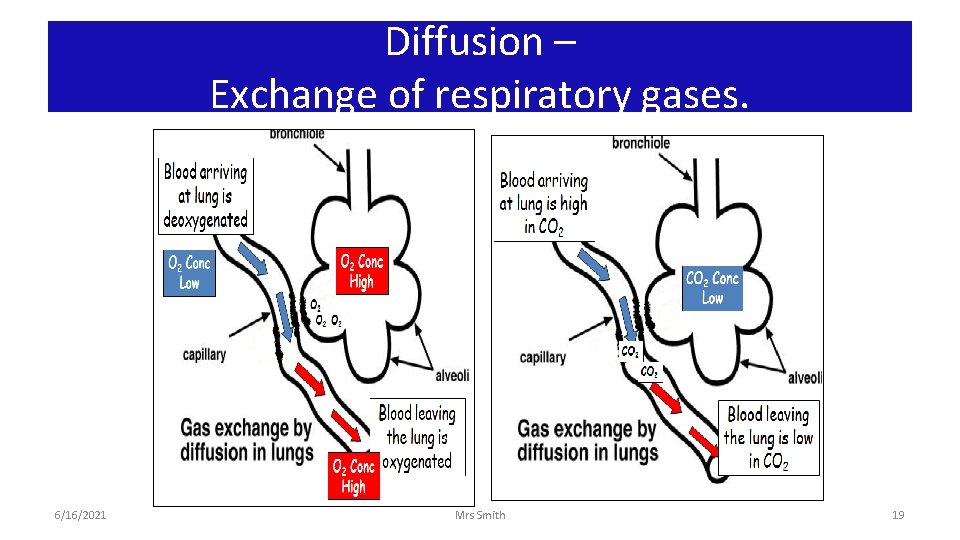
Diffusion – Exchange of respiratory gases. 6/16/2021 Mrs Smith 19
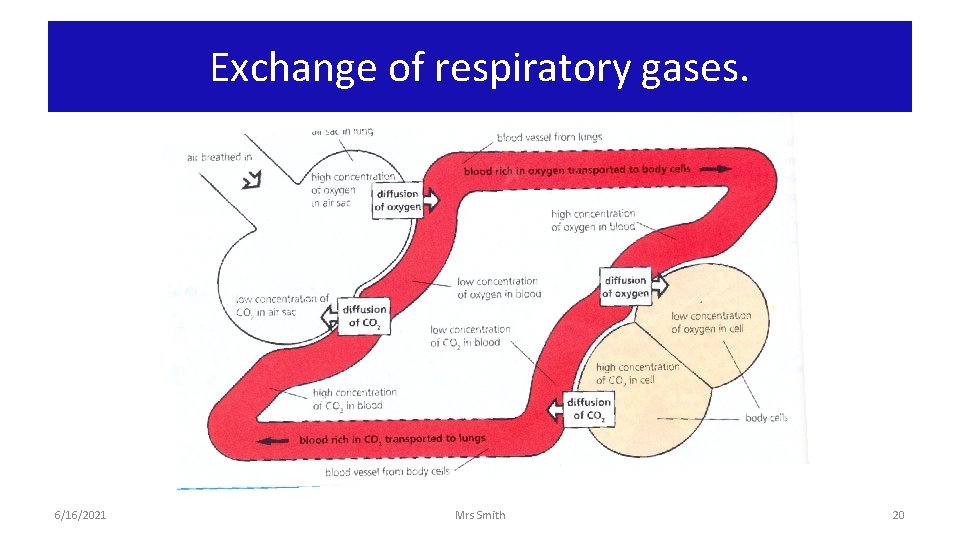
Exchange of respiratory gases. 6/16/2021 Mrs Smith 20
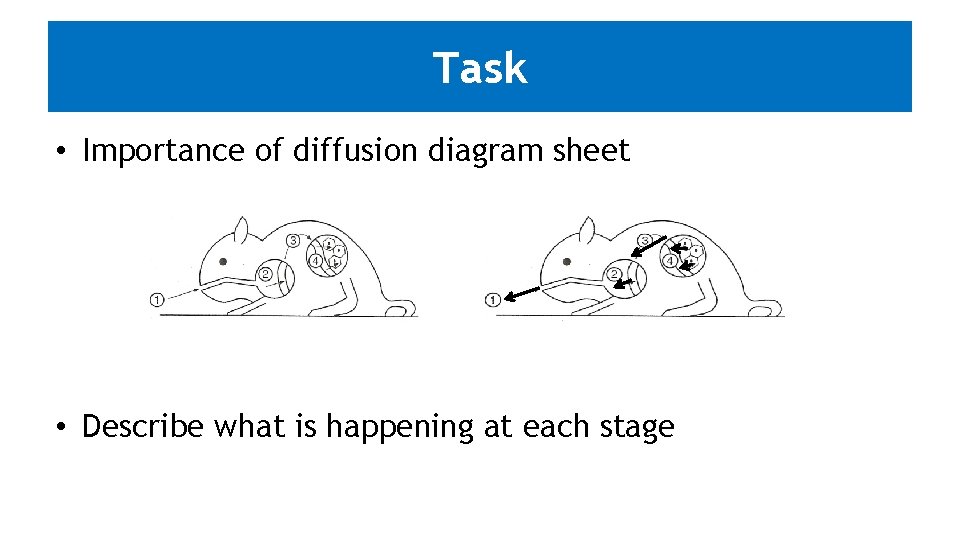
Task • Importance of diffusion diagram sheet • Describe what is happening at each stage
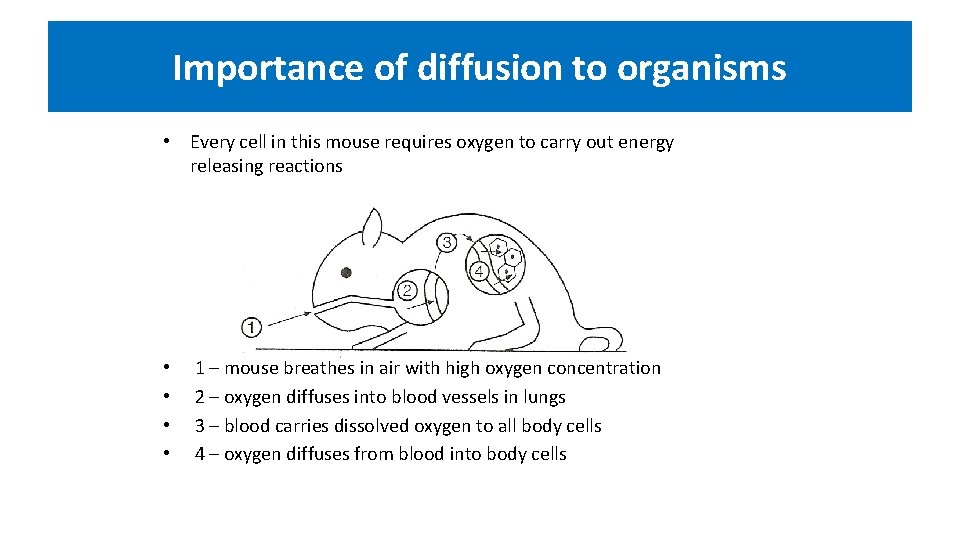
Importance of diffusion to organisms • Every cell in this mouse requires oxygen to carry out energy releasing reactions • • 1 – mouse breathes in air with high oxygen concentration 2 – oxygen diffuses into blood vessels in lungs 3 – blood carries dissolved oxygen to all body cells 4 – oxygen diffuses from blood into body cells
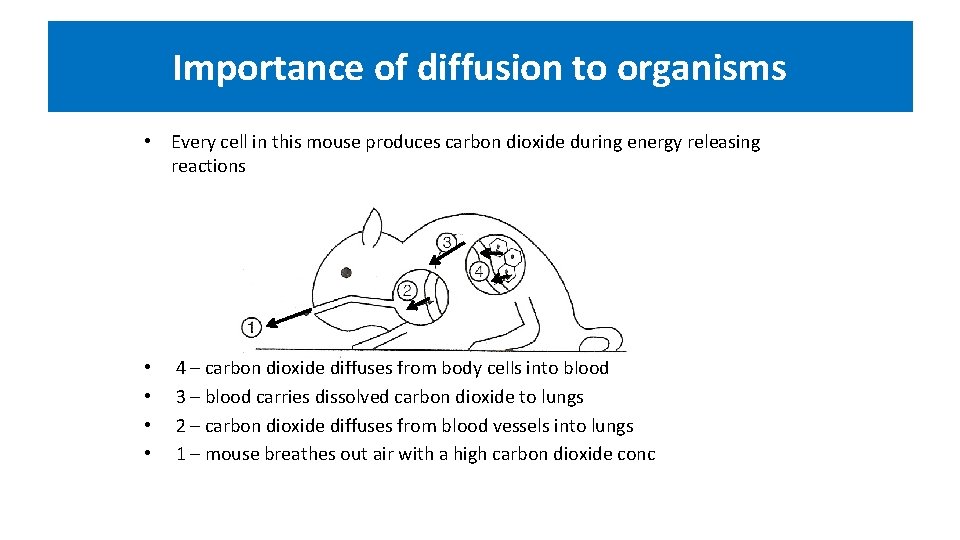
Importance of diffusion to organisms • Every cell in this mouse produces carbon dioxide during energy releasing reactions • • 4 – carbon dioxide diffuses from body cells into blood 3 – blood carries dissolved carbon dioxide to lungs 2 – carbon dioxide diffuses from blood vessels into lungs 1 – mouse breathes out air with a high carbon dioxide conc
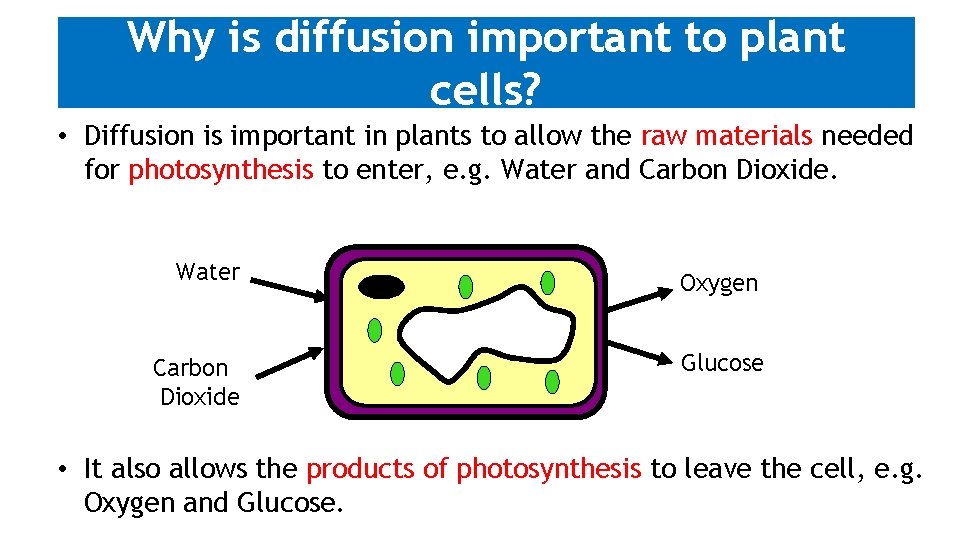
Why is diffusion important to plant cells? • Diffusion is important in plants to allow the raw materials needed for photosynthesis to enter, e. g. Water and Carbon Dioxide. Water Oxygen Carbon Dioxide Glucose • It also allows the products of photosynthesis to leave the cell, e. g. Oxygen and Glucose.
6/16/2021 Mrs Smith 25
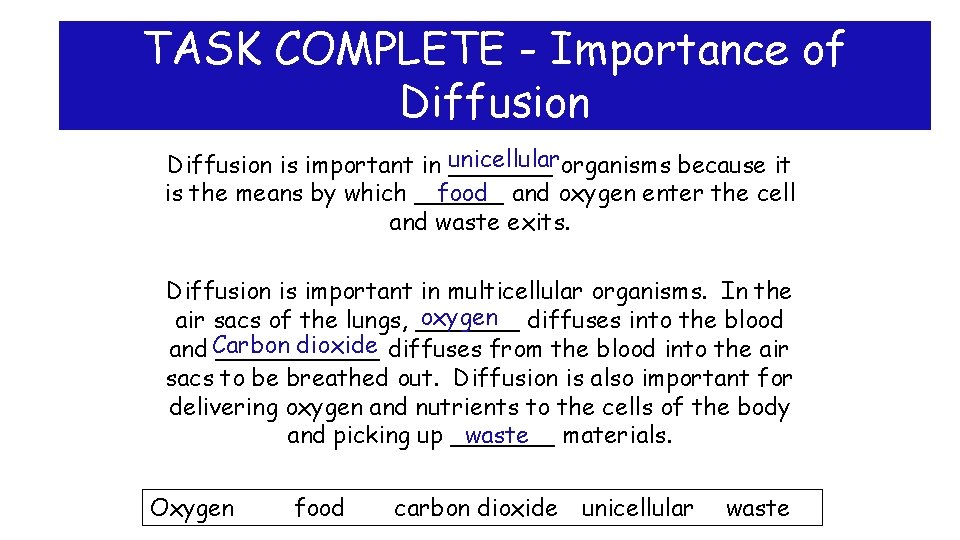
TASK COMPLETE - Importance of Diffusion unicellularorganisms because it Diffusion is important in _______ food and oxygen enter the cell is the means by which ______ and waste exits. Diffusion is important in multicellular organisms. In the oxygen diffuses into the blood air sacs of the lungs, _______ dioxide diffuses from the blood into the air and Carbon ______ sacs to be breathed out. Diffusion is also important for delivering oxygen and nutrients to the cells of the body waste materials. and picking up _______ Oxygen food carbon dioxide unicellular waste

Example exam question

Task TYK 1 • Complete questions 1 – 4. Torrance p 9 6/16/2021 Mrs Smith 28
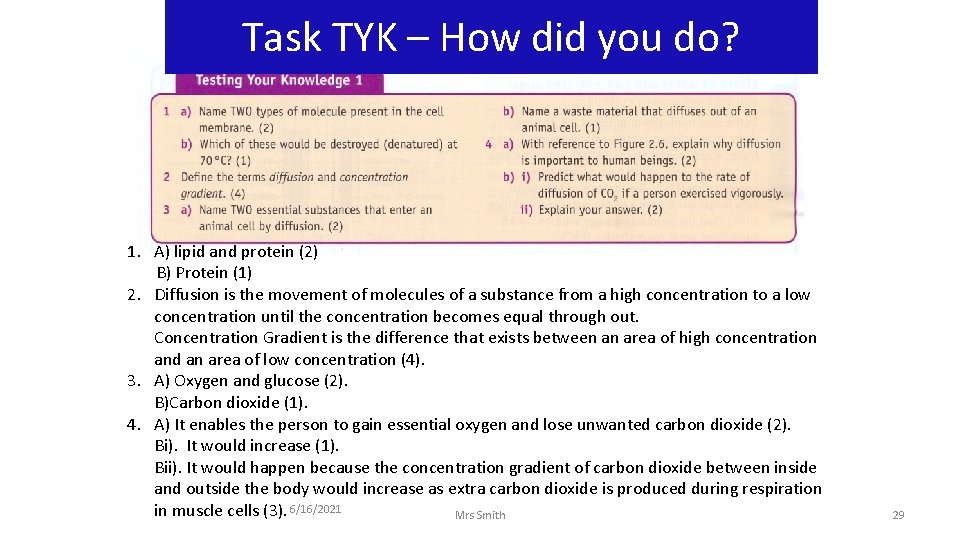
Task TYK – How did you do? 1. A) lipid and protein (2) B) Protein (1) 2. Diffusion is the movement of molecules of a substance from a high concentration to a low concentration until the concentration becomes equal through out. Concentration Gradient is the difference that exists between an area of high concentration and an area of low concentration (4). 3. A) Oxygen and glucose (2). B)Carbon dioxide (1). 4. A) It enables the person to gain essential oxygen and lose unwanted carbon dioxide (2). Bi). It would increase (1). Bii). It would happen because the concentration gradient of carbon dioxide between inside and outside the body would increase as extra carbon dioxide is produced during respiration in muscle cells (3). 6/16/2021 Mrs Smith 29
- Slides: 29