
National 45 Graphic Communication Colour Theory Graphic Communication
- Slides: 24
National 4/5 Graphic Communication Colour Theory
Graphic Communication ¢ ¢ ¢ The use of colour plays a massive role in Graphic Communication. It can be used to convey feelings, to create visual impact and to suggest the use for products. It can also be used in signs and symbols to convey specific types of information.
Graphic Communication ¢ You will need to know about the colour wheel. ¢ What are primary colours? What are secondary colours? What are tertiary colours? What colours are contrasting? What colours are harmonious? What colours are advancing? What colours are rededing? What colours are warm or cold? What is meant by the terms: tone; tints; and shades? ¢ ¢ ¢ ¢
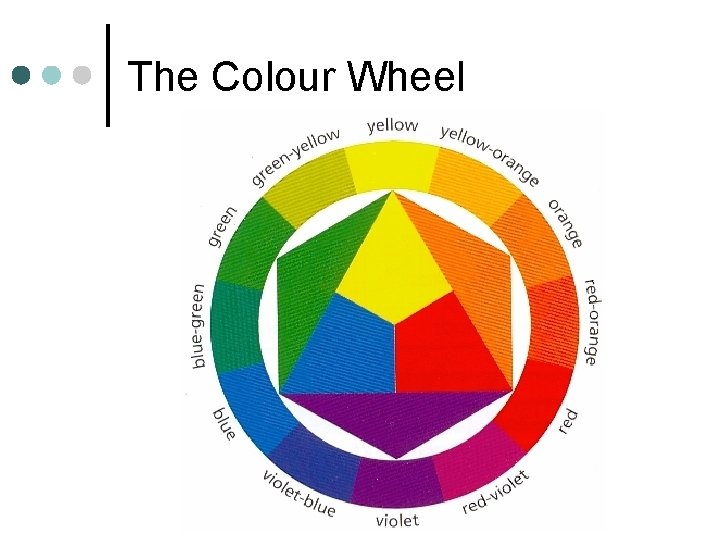
The Colour Wheel
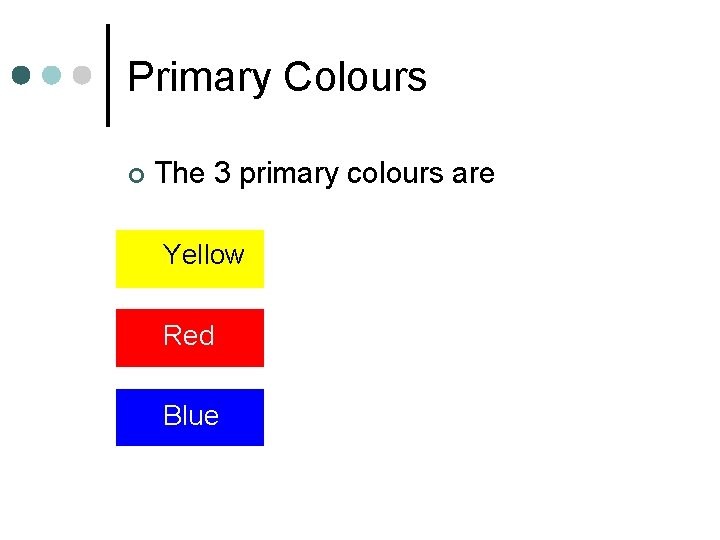
Primary Colours ¢ The 3 primary colours are Yellow Red Blue
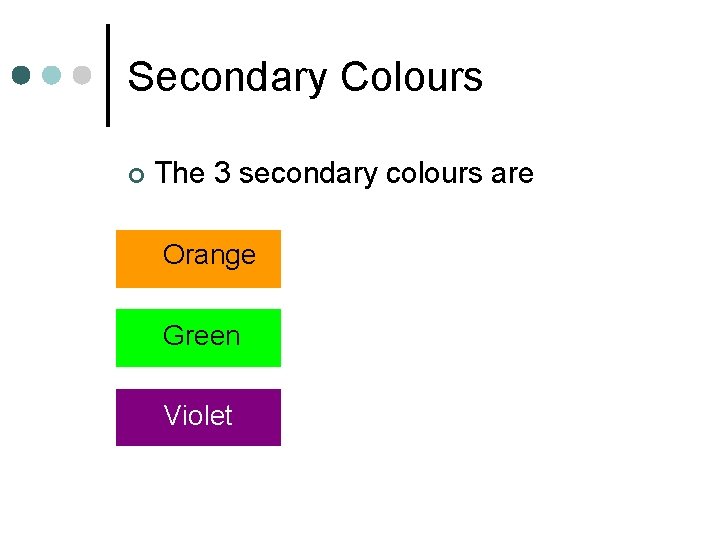
Secondary Colours ¢ The 3 secondary colours are Orange Green Violet
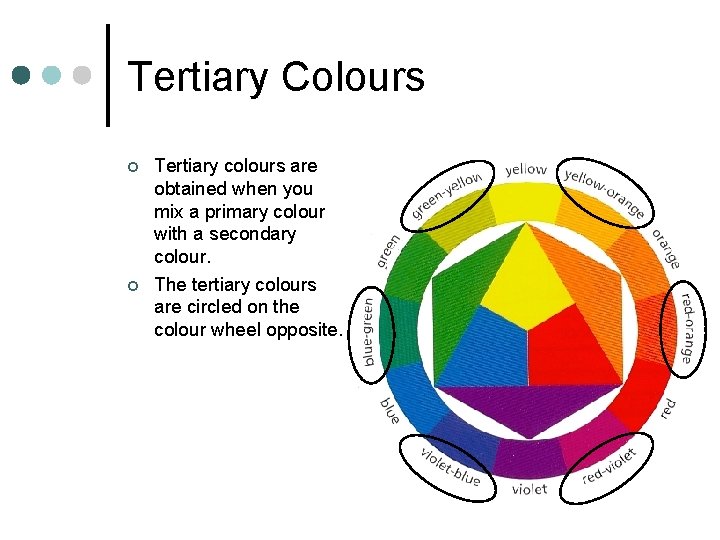
Tertiary Colours ¢ ¢ Tertiary colours are obtained when you mix a primary colour with a secondary colour. The tertiary colours are circled on the colour wheel opposite.
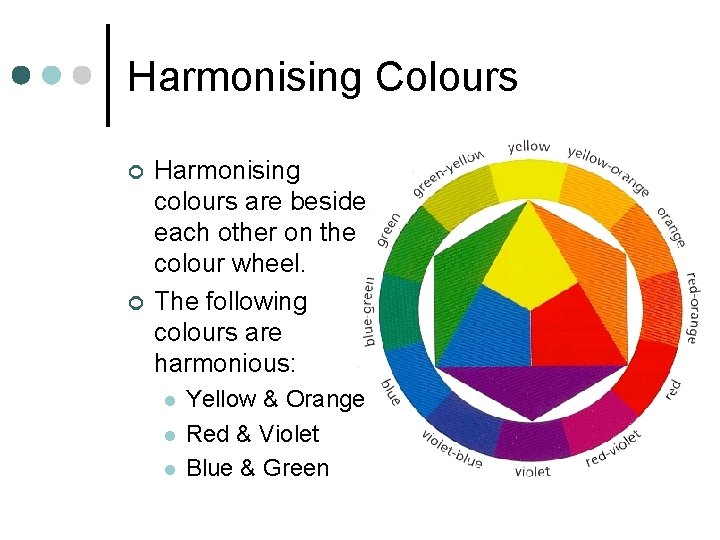
Harmonising Colours ¢ ¢ Harmonising colours are beside each other on the colour wheel. The following colours are harmonious: l l l Yellow & Orange Red & Violet Blue & Green
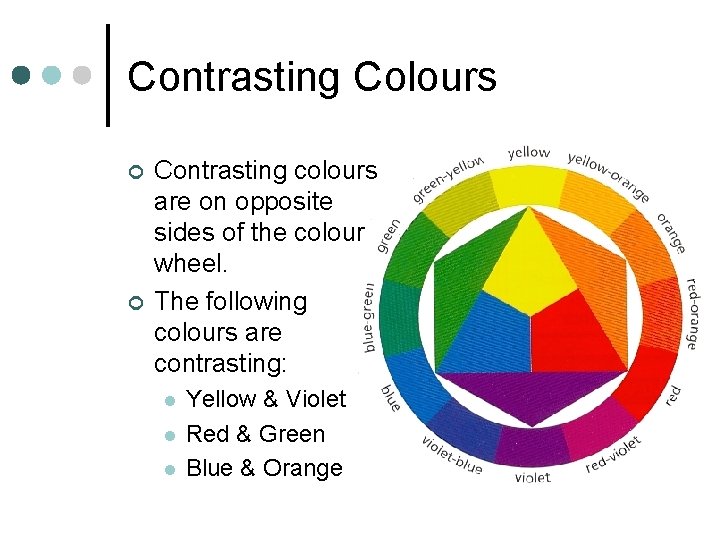
Contrasting Colours ¢ ¢ Contrasting colours are on opposite sides of the colour wheel. The following colours are contrasting: l l l Yellow & Violet Red & Green Blue & Orange
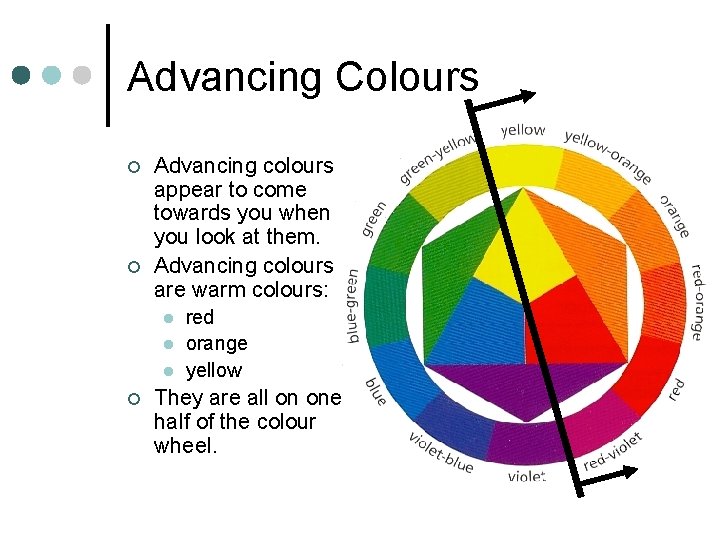
Advancing Colours ¢ ¢ Advancing colours appear to come towards you when you look at them. Advancing colours are warm colours: l l l ¢ red orange yellow They are all on one half of the colour wheel.
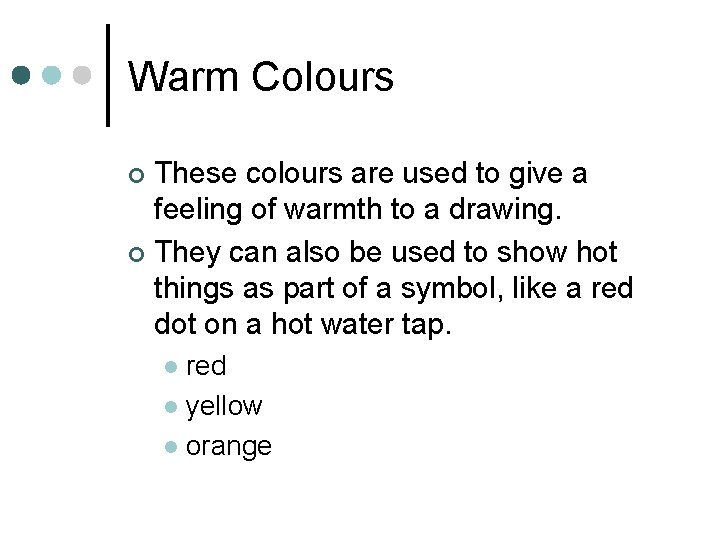
Warm Colours These colours are used to give a feeling of warmth to a drawing. ¢ They can also be used to show hot things as part of a symbol, like a red dot on a hot water tap. ¢ red l yellow l orange l
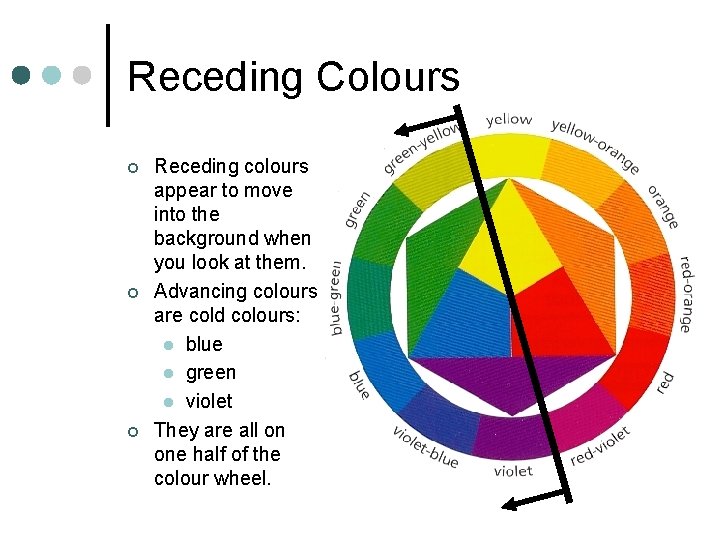
Receding Colours ¢ ¢ ¢ Receding colours appear to move into the background when you look at them. Advancing colours are cold colours: l blue l green l violet They are all on one half of the colour wheel.
Cold Colours These colours are used to give a feeling of coldness to a drawing. ¢ They can also be used to show cold things as part of a symbol, like a blue dot on a cold water tap. ¢ blue l green l violet l
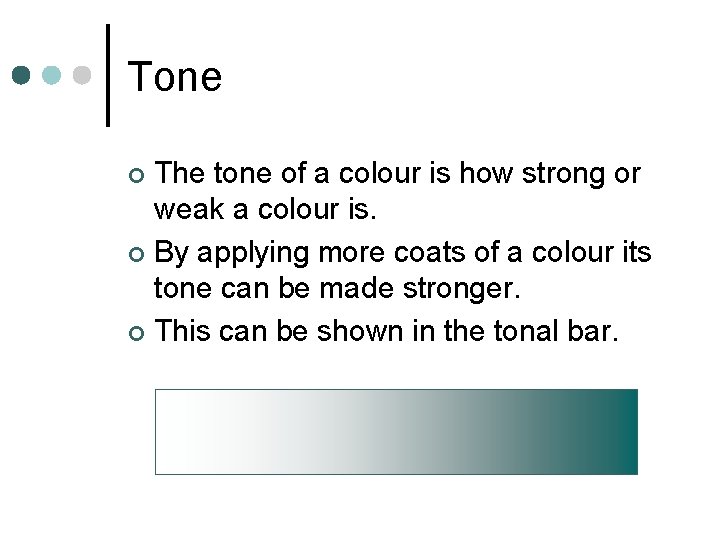
Tone The tone of a colour is how strong or weak a colour is. ¢ By applying more coats of a colour its tone can be made stronger. ¢ This can be shown in the tonal bar. ¢
Tint & Shade Tints and shades are created by adding white or black to a colour. ¢ White is added to a colour to give it a tint. Pale colours tend to be soft. ¢ Black is added to a colour to give it a shade. Dark colours look as though they are heavy. ¢
Feelings & Instruction Colours are often used to convey feeling or instruction. ¢ This is helpful as it can be used as signs in any language. ¢ The following slides tell us what feelings colours give. ¢
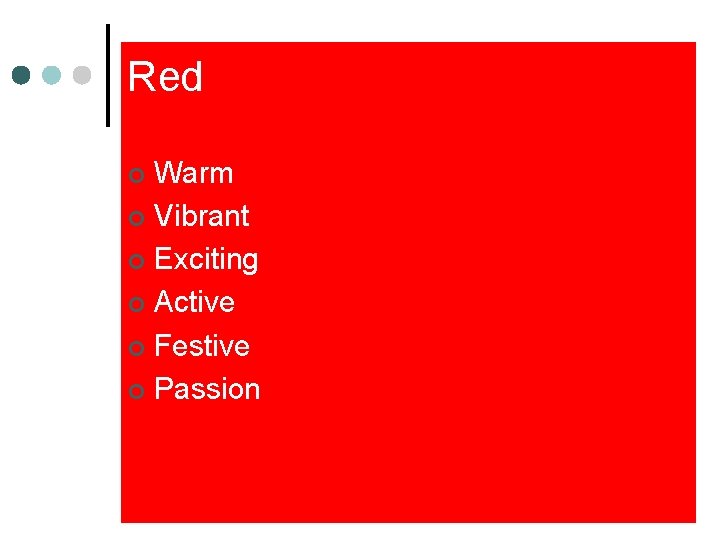
Red Warm ¢ Vibrant ¢ Exciting ¢ Active ¢ Festive ¢ Passion ¢
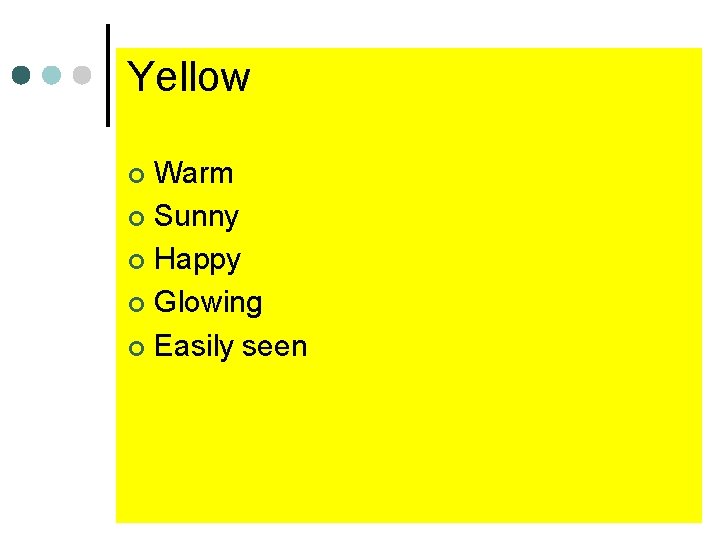
Yellow Warm ¢ Sunny ¢ Happy ¢ Glowing ¢ Easily seen ¢
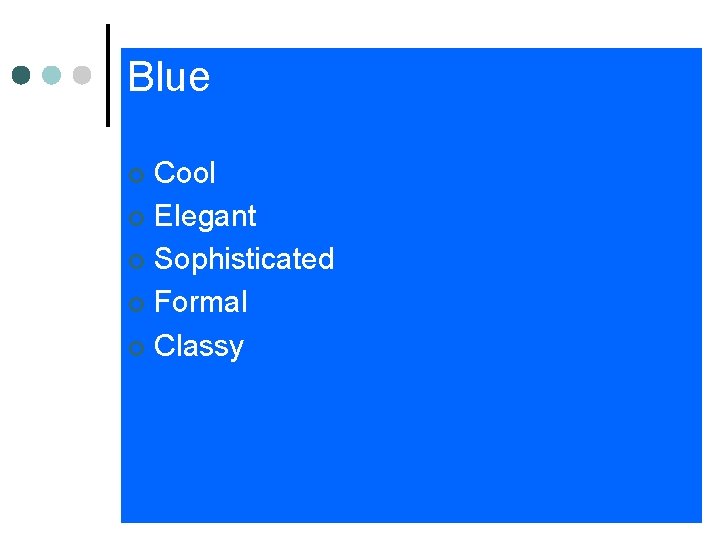
Blue Cool ¢ Elegant ¢ Sophisticated ¢ Formal ¢ Classy ¢
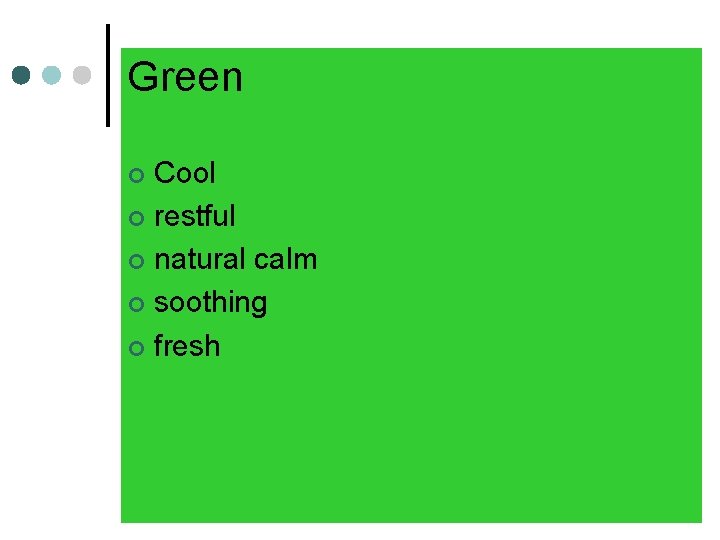
Green Cool ¢ restful ¢ natural calm ¢ soothing ¢ fresh ¢
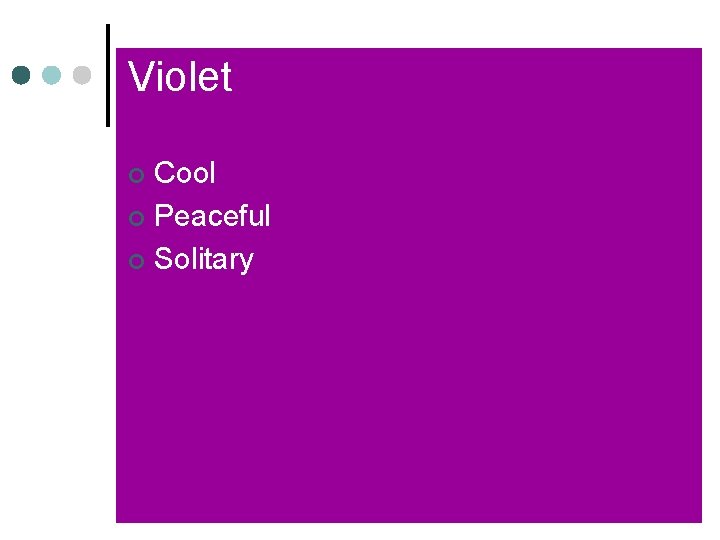
Violet Cool ¢ Peaceful ¢ Solitary ¢
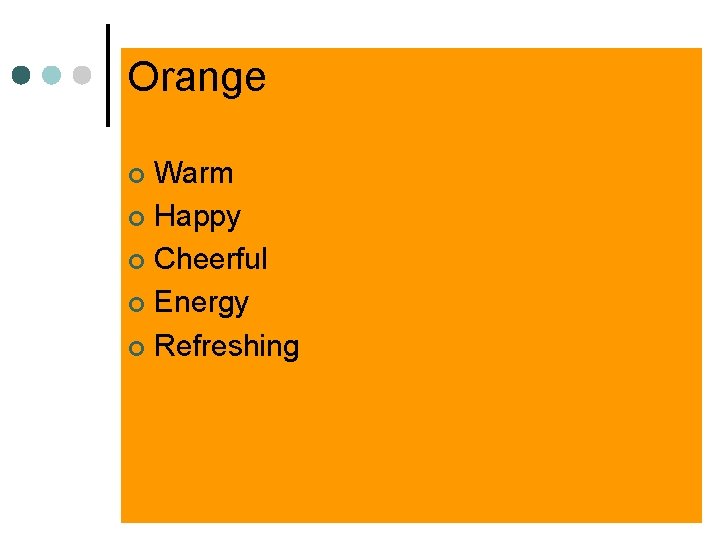
Orange Warm ¢ Happy ¢ Cheerful ¢ Energy ¢ Refreshing ¢
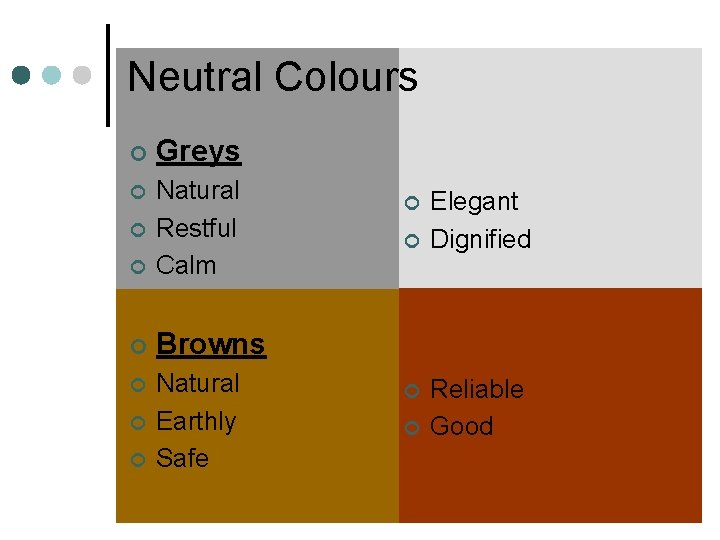
Neutral Colours ¢ Greys ¢ ¢ Natural Restful Calm ¢ Browns ¢ Natural Earthly Safe ¢ ¢ ¢ ¢ Elegant Dignified Reliable Good
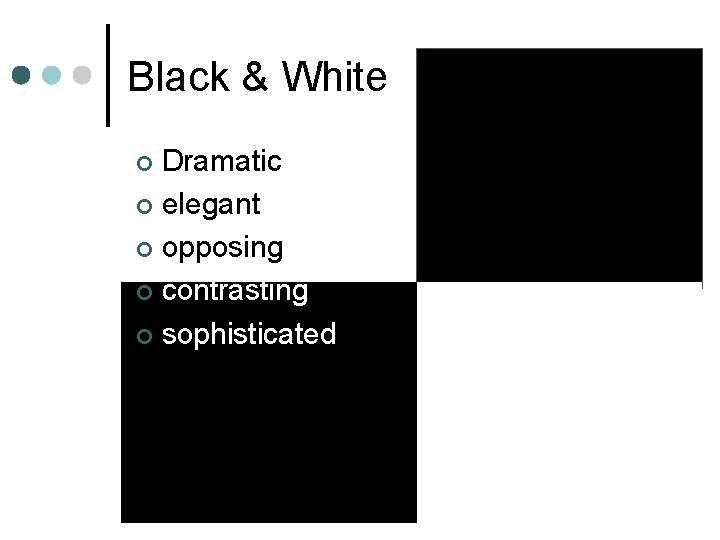
Black & White Dramatic ¢ elegant ¢ opposing ¢ contrasting ¢ sophisticated ¢