
Nation vs State l Whats the Difference l
- Slides: 46
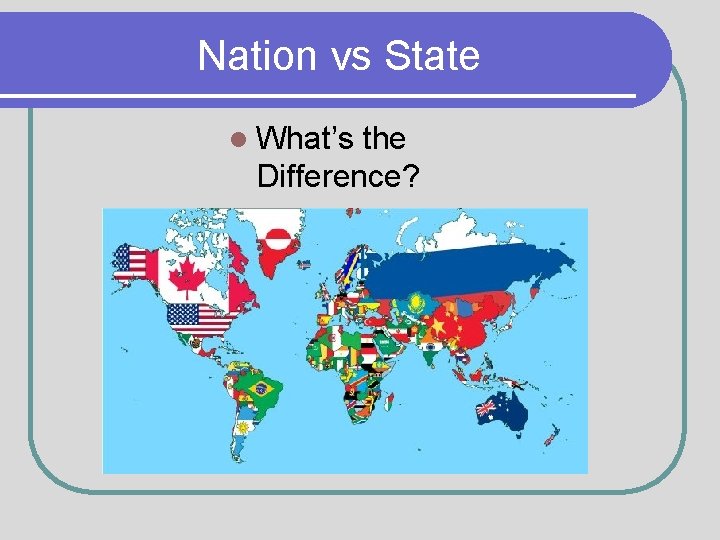
Nation vs State l What’s the Difference?
l State l an independent political unit occupying a defined, populated territory and having full sovereign control over its internal and foreign affairs. l Nation l is a group of people with a common culture occupying a particular territory, bound together by a strong sense of unity arising from shared beliefs and customs
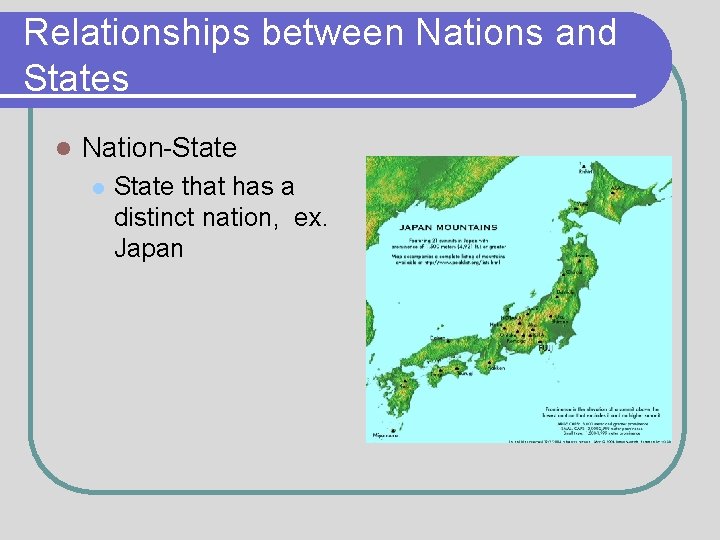
Relationships between Nations and States l Nation-State l State that has a distinct nation, ex. Japan
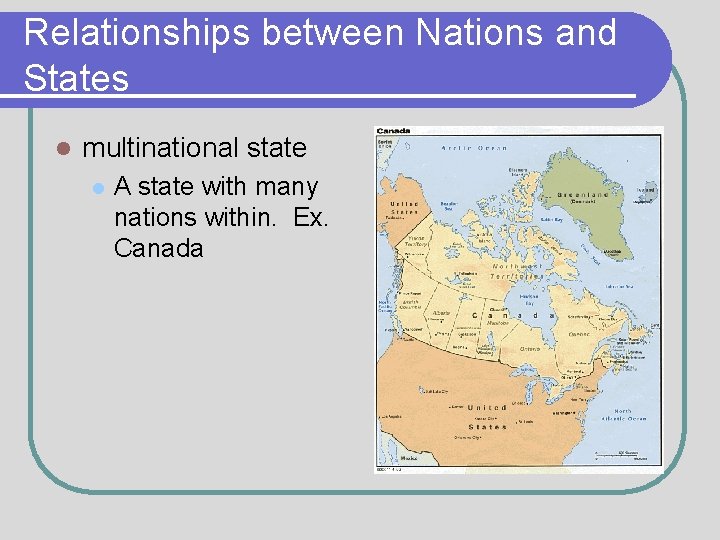
Relationships between Nations and States l multinational state l A state with many nations within. Ex. Canada
Relationships between Nations and States l part-nation state A single nation that is dispersed and predominant in two or more states. l Ex. Arab Nation l
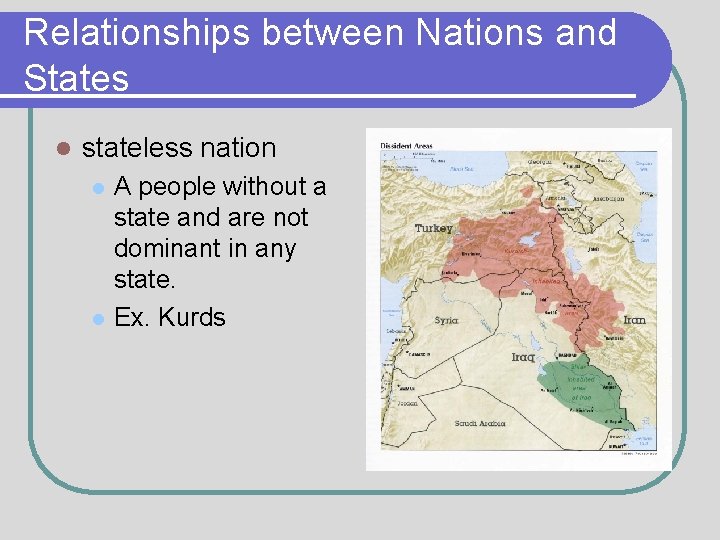
Relationships between Nations and States l stateless nation l l A people without a state and are not dominant in any state. Ex. Kurds
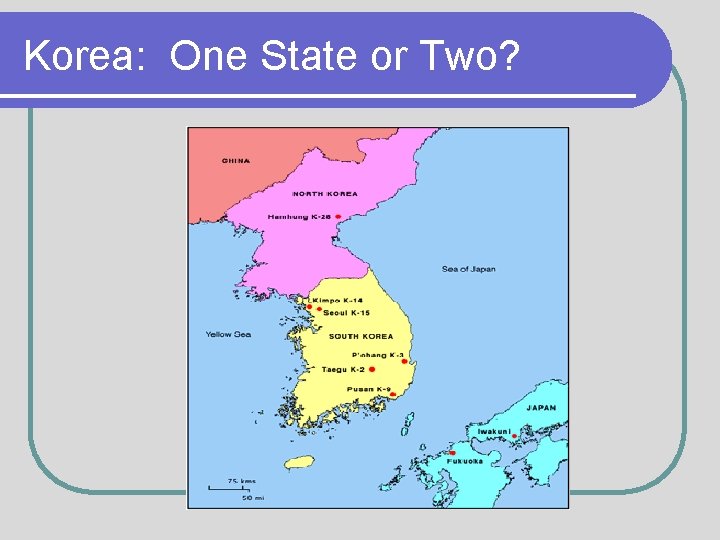
Korea: One State or Two?
Korea l. A colony of Japan for many years l Divided into two occupation zones after WW II (USSR-North, U. S. -South) l Country divided along the 38 th parallel l N. Korea invaded S. Korea in 1950 l This started a 3 year war. Border stayed the same as before the war.
Korea l Both countries want to reunite. l Talks ceased with N. Korea development of nuclear power. l In 1992 both countries were admitted to the UN as separate countries.
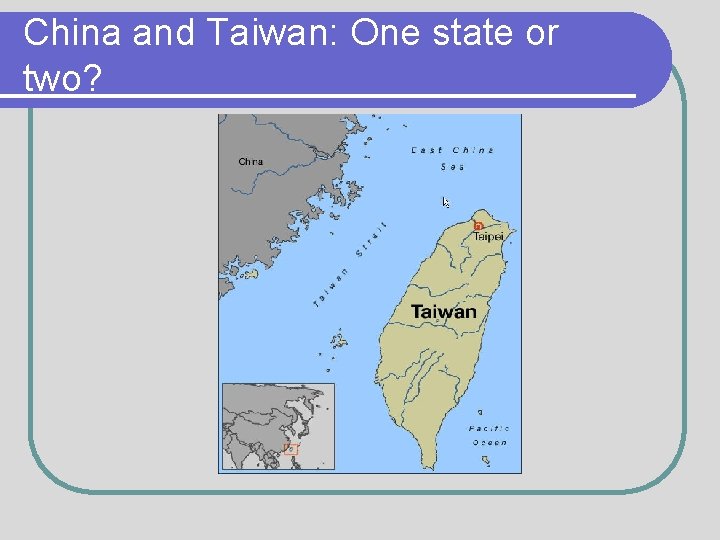
China and Taiwan: One state or two?
China and Taiwan l Is the Island of Taiwan a sovereign state? l Until 1999 both agreed that Taiwan was part of China l Civil War fought in late 1940’s between Communists and Nationalists. l Nationalists lost, fled to Taiwan.
China and Taiwan l Until 1971, the U. S. recognized the Nationalists as the official govt. of China l Taiwan is the most populous state not in the United Nations
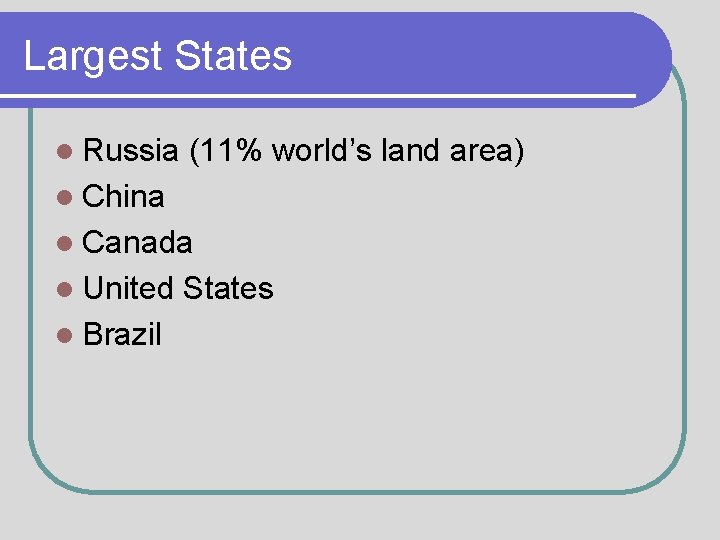
Largest States l Russia (11% world’s land area) l China l Canada l United l Brazil States
Smallest States (Microstates) l Monaco (Smallest in the UN, . 6 sq. mi) l Most are islands and sovereign
What is the largest landmass not part of a sovereign state? l Antarctica
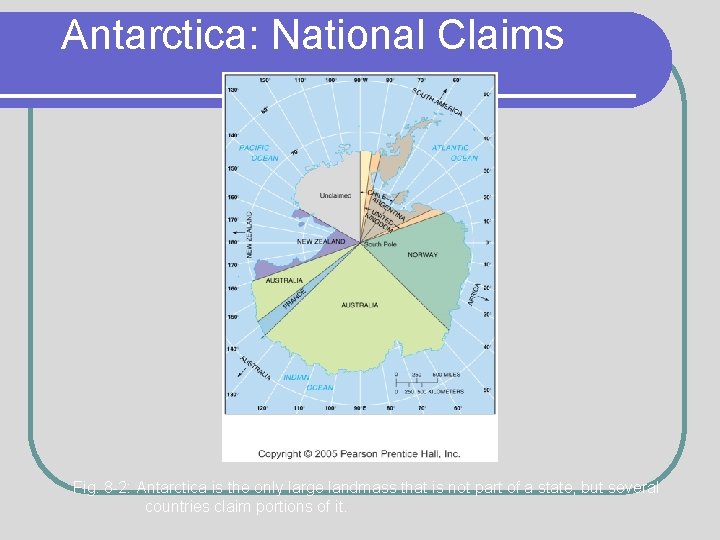
Antarctica: National Claims Fig. 8 -2: Antarctica is the only large landmass that is not part of a state, but several countries claim portions of it.
History of States l Modern movement to divide the world into states originated in Europe. l Can be traced to Middle East and Fertile Crescent l City-states were the first states to evolve l Walls established the boundaries of the city, the country side grew food for city.
History of States (Europe) l Ancient world political unity was at its height during the Roman Empire l Collapsed in 5 th Century A. D. l European portion divided into estates l Consolidation of estates by kings formed the first states (England, France, and Spain) l Germany and Italy, 19 th Century
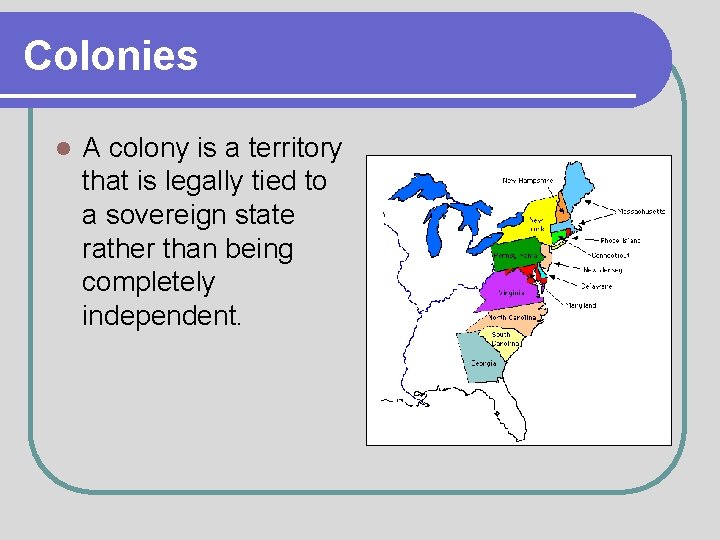
Colonies l A colony is a territory that is legally tied to a sovereign state rather than being completely independent.
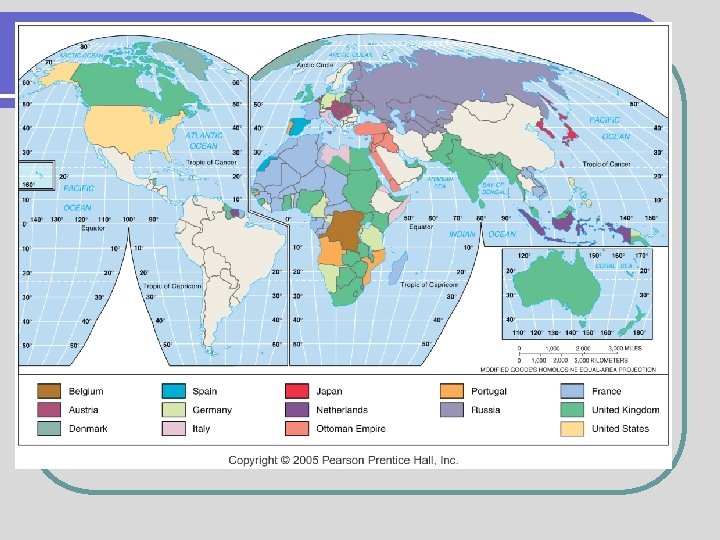
European Colonialism l European States controlled much of the world through colonialism l 3 Reasons Promote Christianity l Colonies provide resources l Number of colonies = power l l God, Gold, and Glory
History of Colonialism l Began in 1400 s and discovered N. America l From 1776 – 1824 European Powers lost most of their colonies in W. Hemisphere l European powers then focused on Africa and Asia
Imperialism v. Colonialism l Colonization of Africa/Asia is referred to as Imperialism l Imperialism is control of territory already occupied and organized by an indigenous society, whereas colonialism is control of previously uninhabited or sparsely inhabited land
Largest Colonial Powers l United Kingdom had the largest colonial empire. “Sun never set” on their empire. France had the second-largest overseas territory. l
Colonial Practices (France) l France attempted to assimilate colonies into French culture. l France tried to educate an elite group to provide local leadership l After independence a lot of French colonies retained close ties with France.
Colonial Practices (The U. K. ) l The British created different governments for different territories l This protected the diverse cultures and local customs. l Most British colonies made peaceful transition to independence
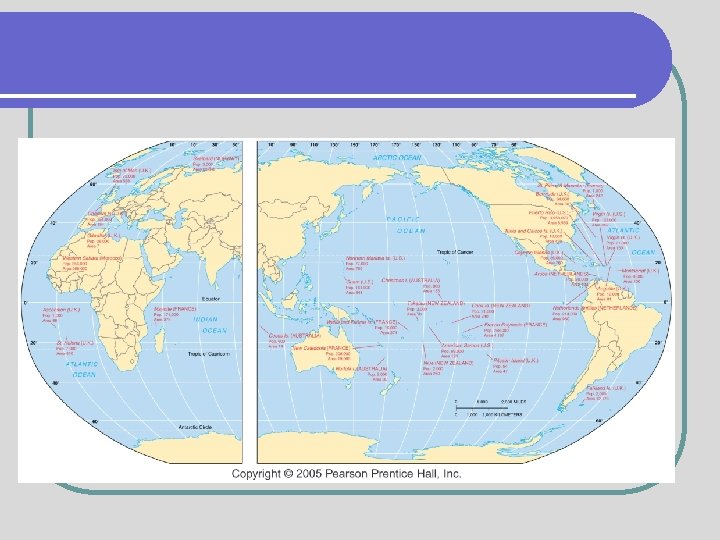
The Few Remaining colonies l Most Populous Colony—Puerto Rico One half of population wants to be a state and one half wants to remain a commonwealth of the U. S. l Pitcairn is the least (U. K. ) l This is the island settled by mutineers from the ship Bounty l 54 people, 2 sq. mi. l
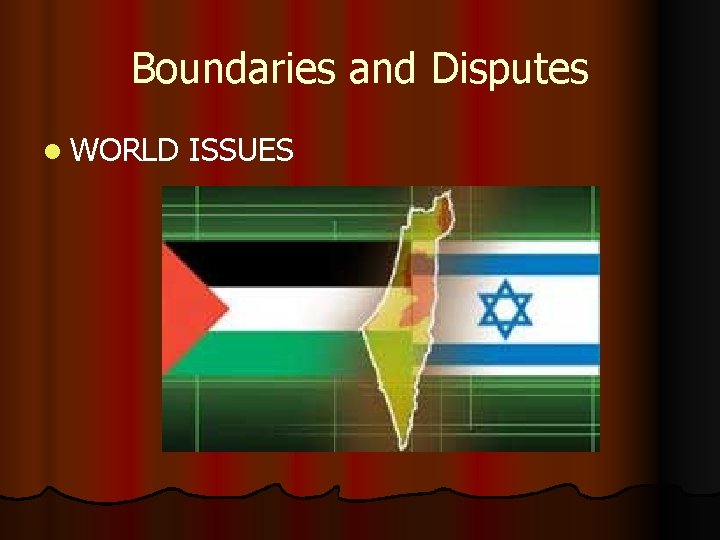
Boundaries and Disputes l WORLD ISSUES
Five Basic Shapes of States l Compact l Prorupted l Elongated l Fragmented l Perforted
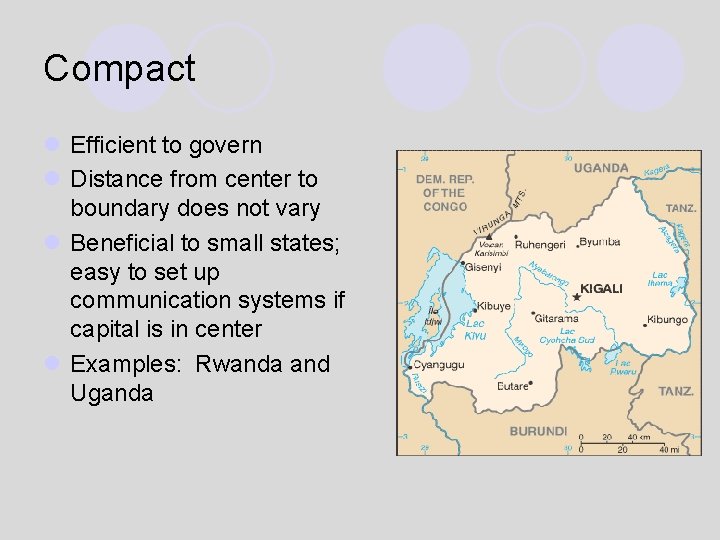
Compact l Efficient to govern l Distance from center to boundary does not vary l Beneficial to small states; easy to set up communication systems if capital is in center l Examples: Rwanda and Uganda
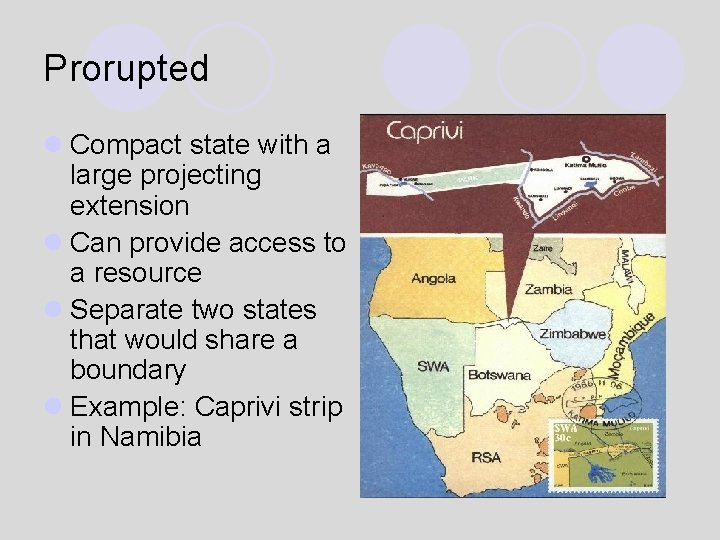
Prorupted l Compact state with a large projecting extension l Can provide access to a resource l Separate two states that would share a boundary l Example: Caprivi strip in Namibia
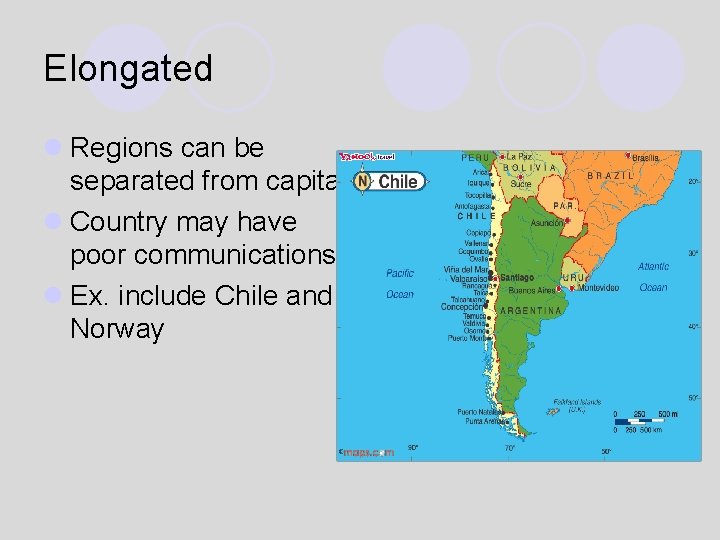
Elongated l Regions can be separated from capital l Country may have poor communications l Ex. include Chile and Norway
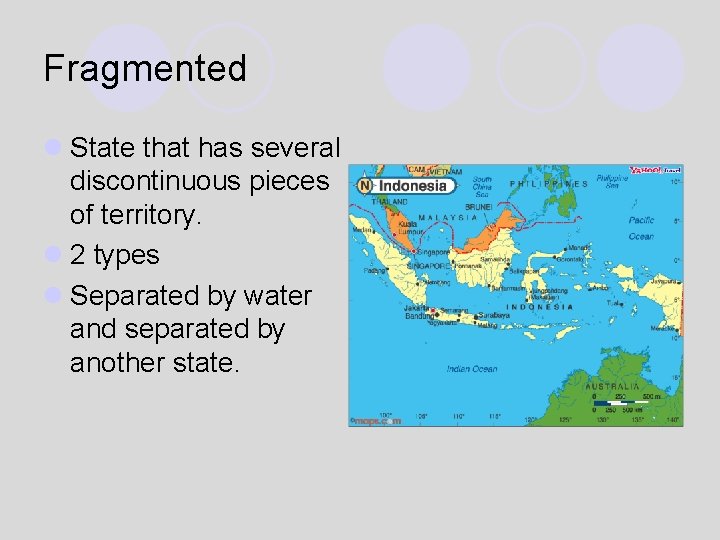
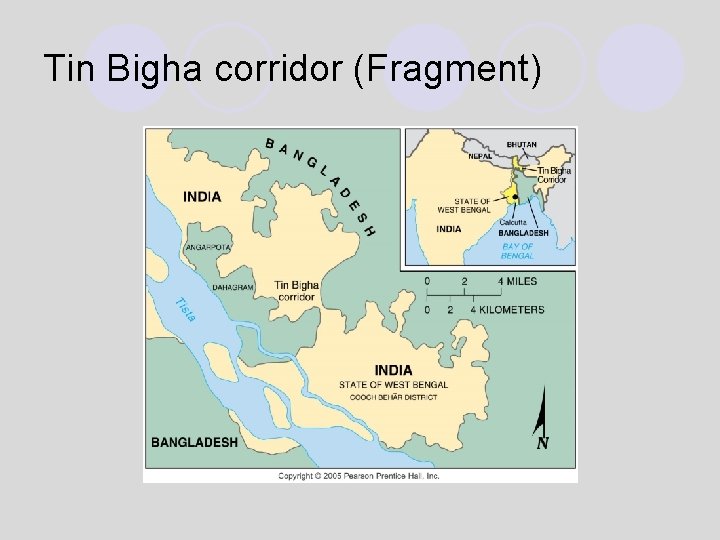
Fragmented l State that has several discontinuous pieces of territory. l 2 types l Separated by water and separated by another state.
Tin Bigha corridor (Fragment)
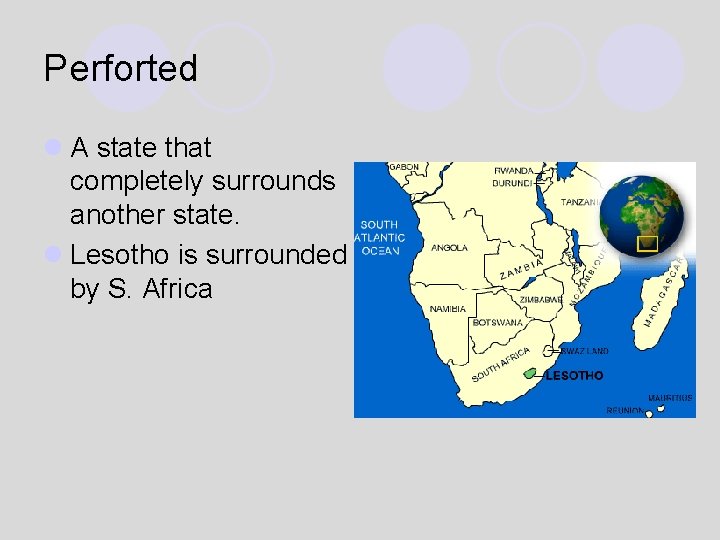
Perforted l A state that completely surrounds another state. l Lesotho is surrounded by S. Africa
Landlocked states l Lacks a direct outlet to the sea. l Most common in Africa, 14 states are landlocked l Ocean access is critical, international trade. l Landlocked states must work with neighboring states to transport goods to the ocean.
Types of boundaries l Physical l Geometric l Cultural
Physical Boundaries l Use physical features to establish boundary. ¡Mountains ¡Deserts ¡Bodies of water, rivers.
Geometric Boundaries l Lines drawn on maps that follow specific lines of latitude or longitude.
Cultural Boundaries l Religious boundaries ¡Used in dividing Ireland Pakistan/India l Language Boundaries ¡European countries set main boundaries based on language. Ex. France, Germany, and Italy.
May also classify boundary when boundary was made. l Antecedent boundary—drawn before an area becomes populated. l Subsequent boundary—drawn after the cultural landscape has been developed. l Consequent boundary is a type of subsequent boundary that is drawn to accommodate differences within a state. l Subsequent superimposed boundaries— boundaries forced on a country by a conquering or colonizing power.
What are some government authorities inside a state? l establishes the legal code l what kind of currency will be used l may have to join army l speak a common language l kind of religion that is taught in school
Two types of states. l 1. Unitary: Highly centralized governments, few internal cultural contrasts, strong sense of national identity, borders are cultural as well as political. l 2. Federal: Associations with provinces or states and the states have strong regional govt. responsibilities. Capital city was created to serve as an administration center. l The trend is for countries to have a federal government.
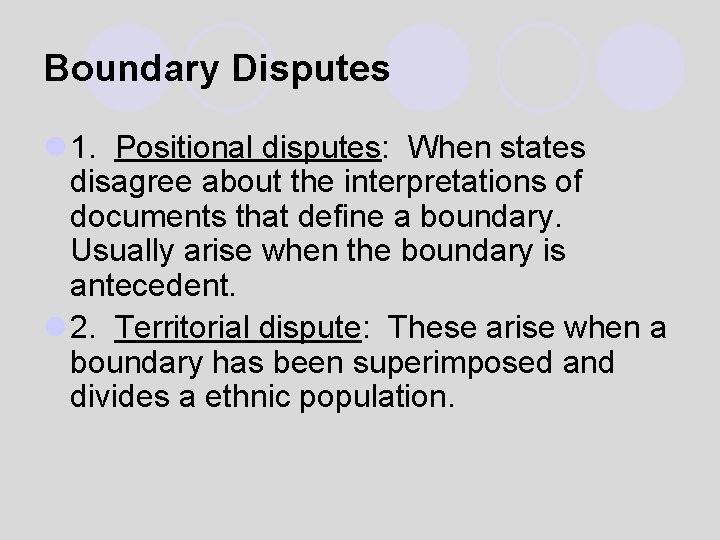
Boundary Disputes l 1. Positional disputes: When states disagree about the interpretations of documents that define a boundary. Usually arise when the boundary is antecedent. l 2. Territorial dispute: These arise when a boundary has been superimposed and divides a ethnic population.
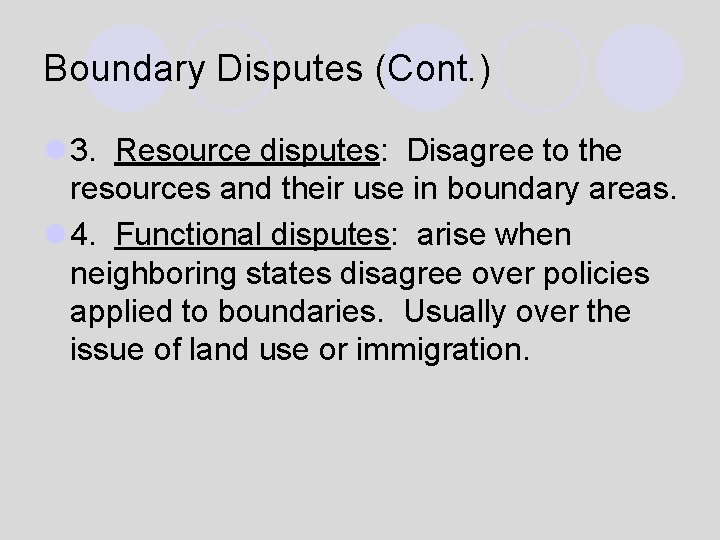
Boundary Disputes (Cont. ) l 3. Resource disputes: Disagree to the resources and their use in boundary areas. l 4. Functional disputes: arise when neighboring states disagree over policies applied to boundaries. Usually over the issue of land use or immigration.