
Nascent Superfluidity in Bilayer TwoDimensional Electron Systems Melinda
Nascent Superfluidity in Bilayer Two-Dimensional Electron Systems Melinda Kellogg Jim Eisenstein Loren Pfeiffer Ken West April 29, 2004 MIT-Harvard Center for Ultracold Atoms
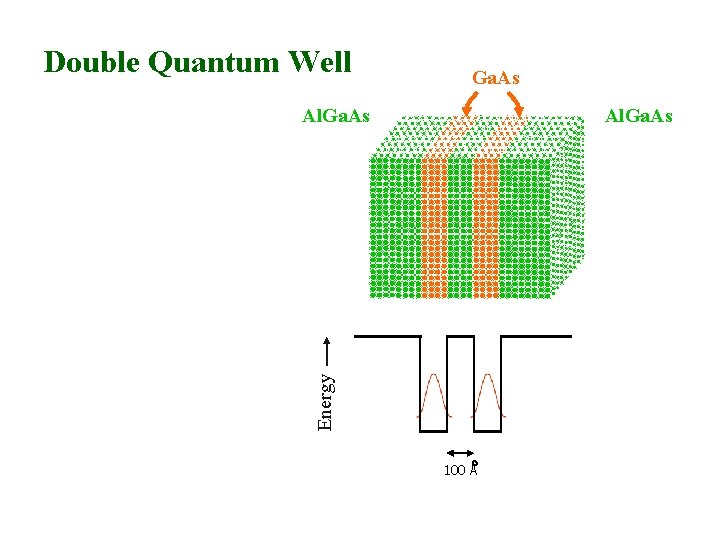
Double Quantum Well Ga. As Al. Ga. As Energy Al. Ga. As 100 A
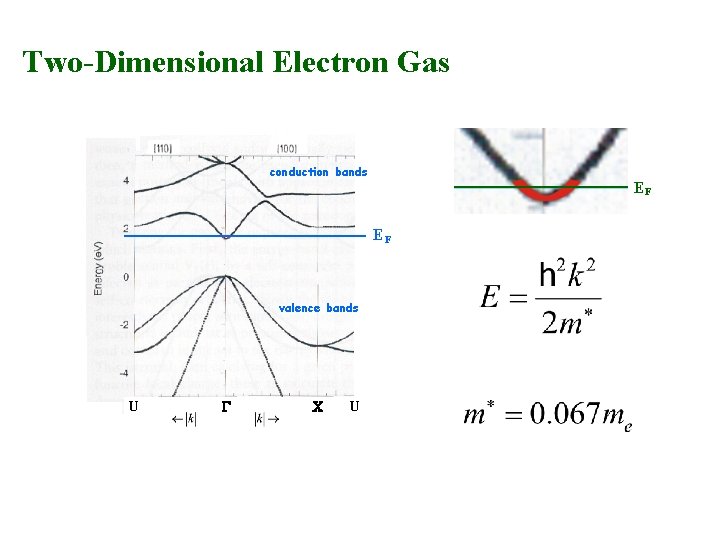
Two-Dimensional Electron Gas conduction bands EF EF valence bands U G C U
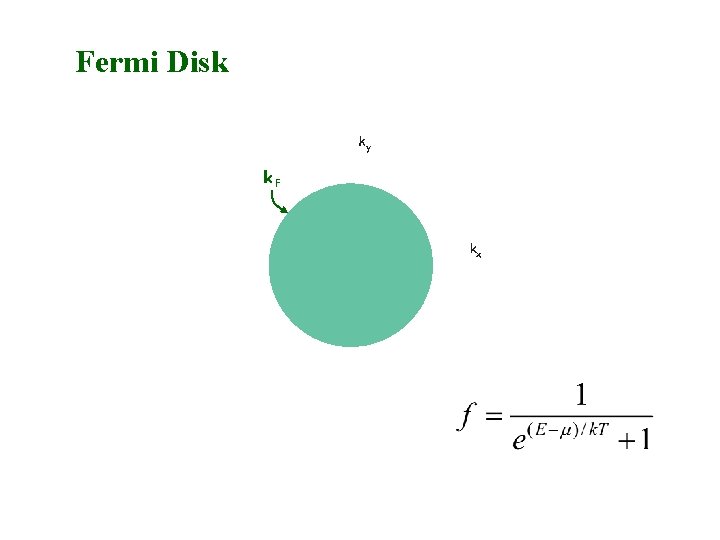
Fermi Disk k. F
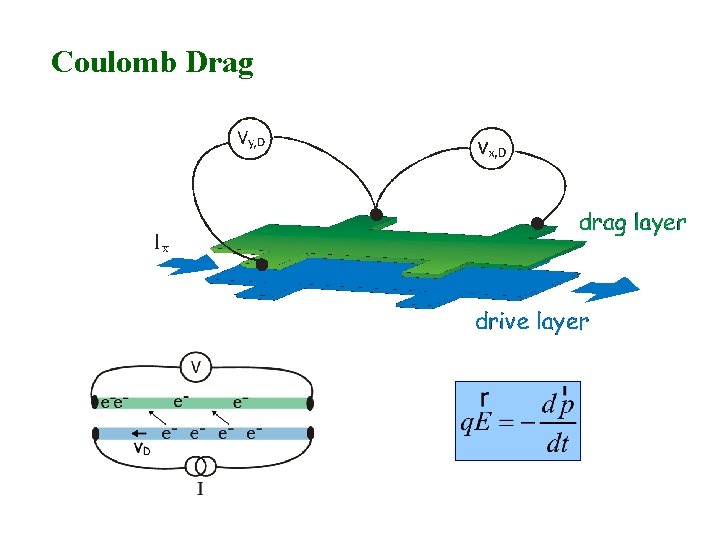
Coulomb Drag
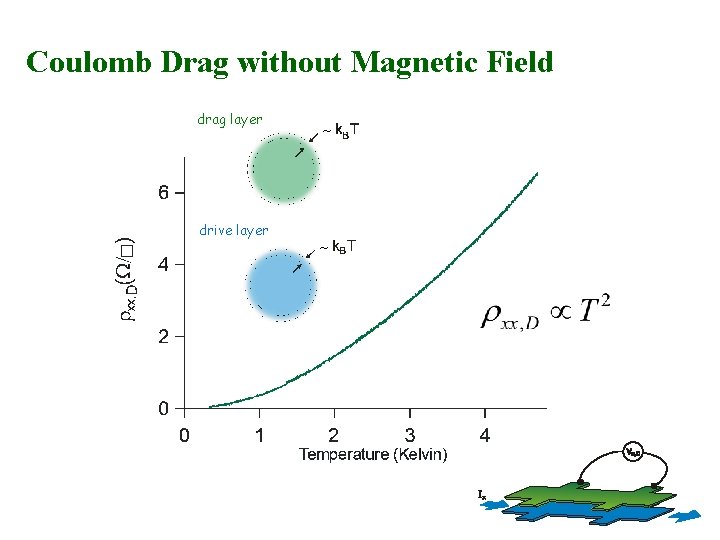
Coulomb Drag without Magnetic Field drag layer drive layer ~ ~
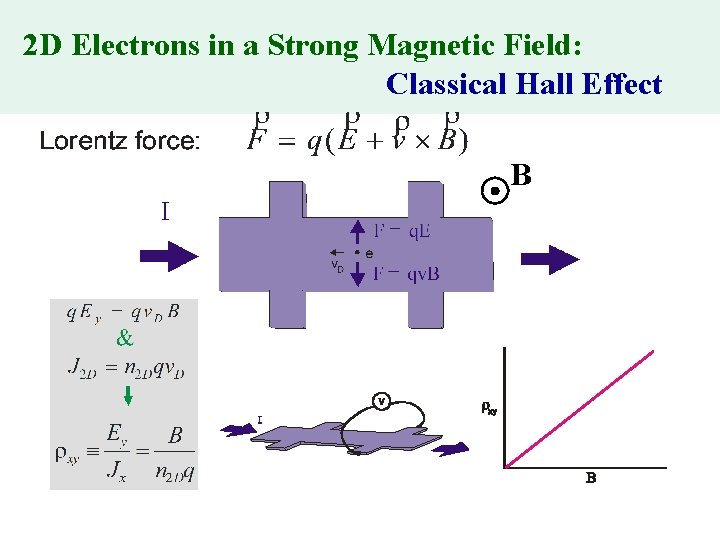
2 D Electrons in a Strong Magnetic Field: Classical Hall Effect B
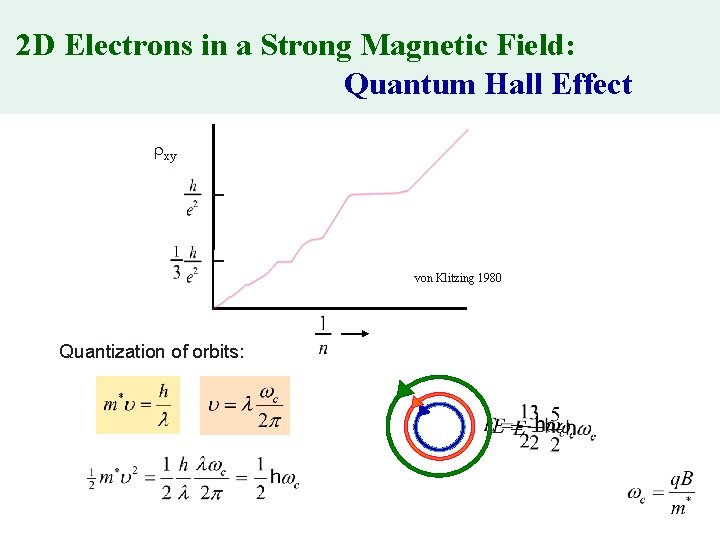
2 D Electrons in a Strong Magnetic Field: Quantum Hall Effect rxy von Klitzing 1980 Quantization of orbits:
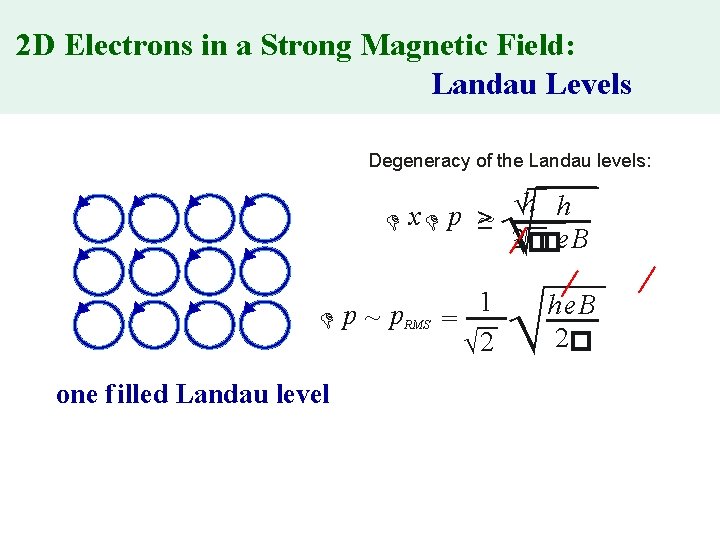
2 D Electrons in a Strong Magnetic Field: Landau Levels Degeneracy of the Landau levels: √h h p x ≥ ~ D D 2√ppe. B 1 p D ~ p. RMS = √ 2 one f illed Landau level √ √ h e. B 2 p
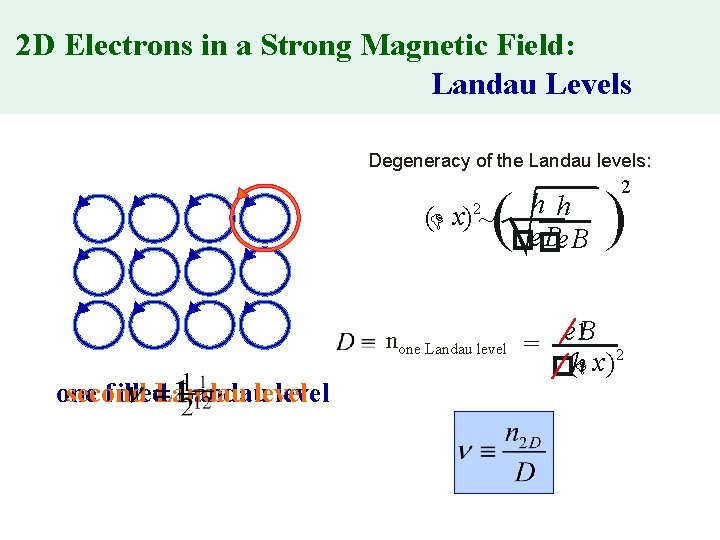
2 D Electrons in a Strong Magnetic Field: Landau Levels Degeneracy of the Landau levels: 2 (√ ) (D x) 2~ h h pe. B 1 none Landau level = e. B second Landau level one f illed Landau level 2 x h ( ) D p
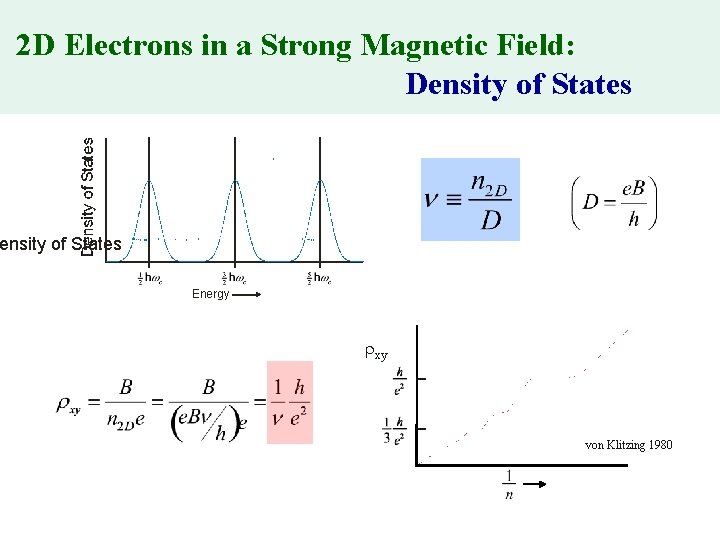
2 D Electrons in a Strong Magnetic Field: Density of States Energy rxy von Klitzing 1980
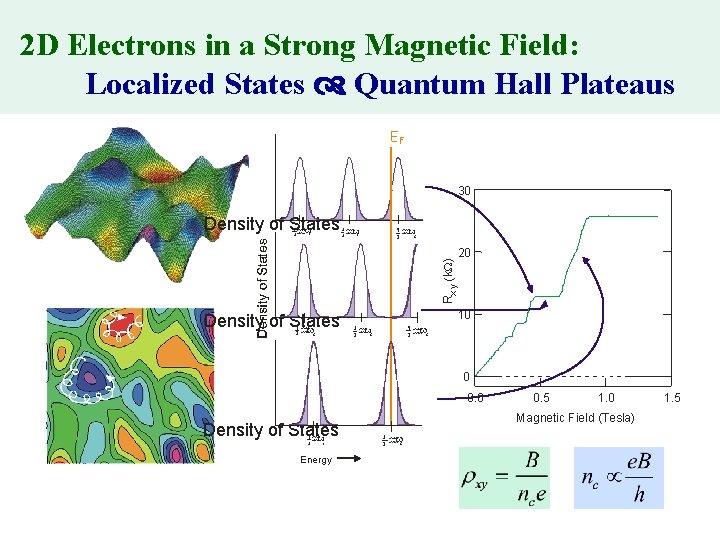
2 D Electrons in a Strong Magnetic Field: Localized States Quantum Hall Plateaus EF 30 Density of States hw 1 2 c 3 2 hwc 5 hw c 2 Rx y ( k. W) 20 Density of States hw 1 2 c 10 3 w 2 h c 5 2 hwc 0 0. 0 Density of States hw 1 2 c Energy 0. 5 1. 0 Magnetic Field (Tesla) 3 2 hwc 1. 5
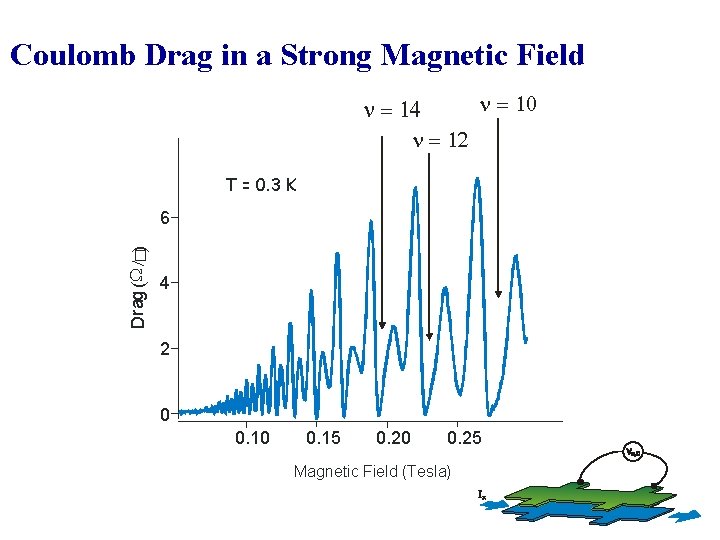
Coulomb Drag in a Strong Magnetic Field n = 10 n = 14 n = 12 T = 0. 3 K Dr ag (W /c) 6 4 2 0 0. 15 0. 20 0. 25 Magnetic Field (Tesla)
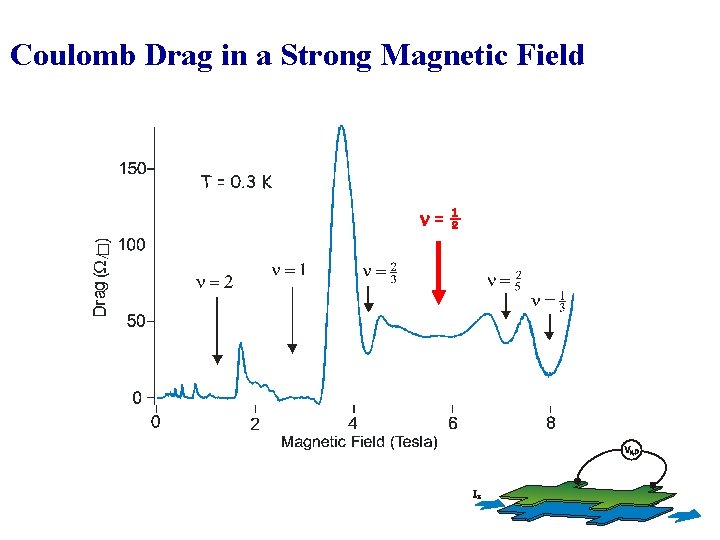
Coulomb Drag in a Strong Magnetic Field =½

300 250 Drag ( W/c) 200 150 100 T = 0. 3 K 50 0 0. 5 1. 0 1. 5 1/ n 2. 0 2. 5 3. 0 3. 5
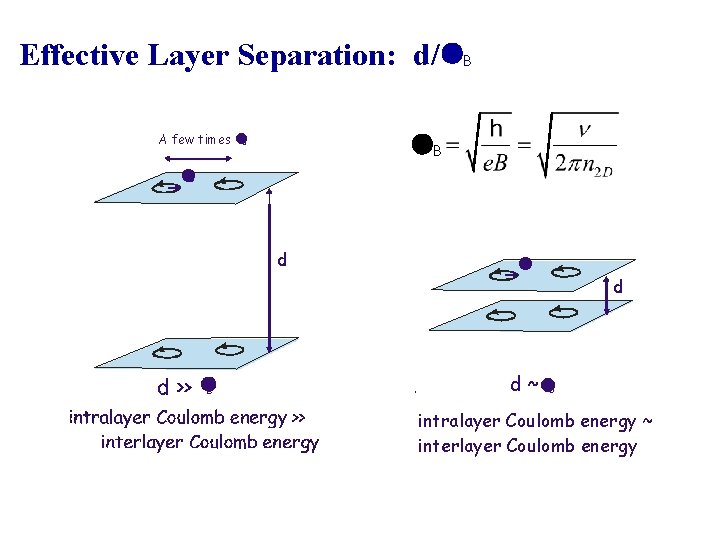
Effective Layer Separation: d/l. B A few times l. B d d ~l. B intralayer Coulomb energy ~ interlayer Coulomb energy
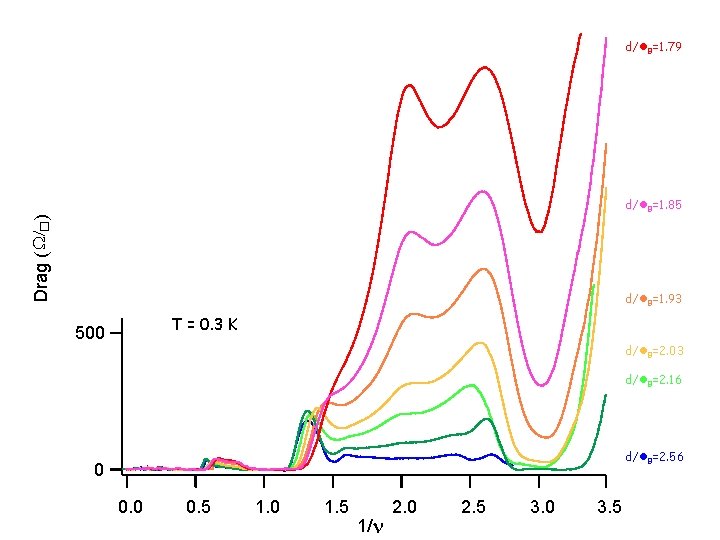
d/l. B=1. 79 1500 1000 Drag ( W/c ) d/l. B=1. 85 d/l. B=1. 93 T = 0. 3 K 500 d/l. B=2. 03 d/l. B=2. 16 d/l. B=2. 56 0 0. 5 1. 0 1. 5 1/ n 2. 0 2. 5 3. 0 3. 5
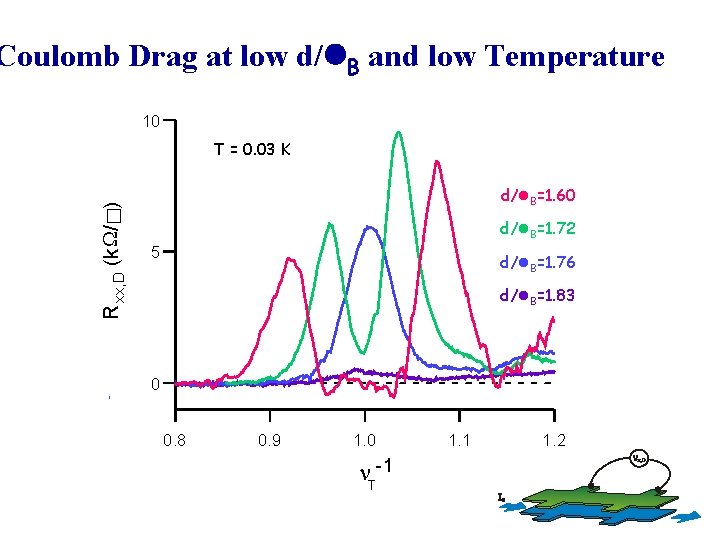
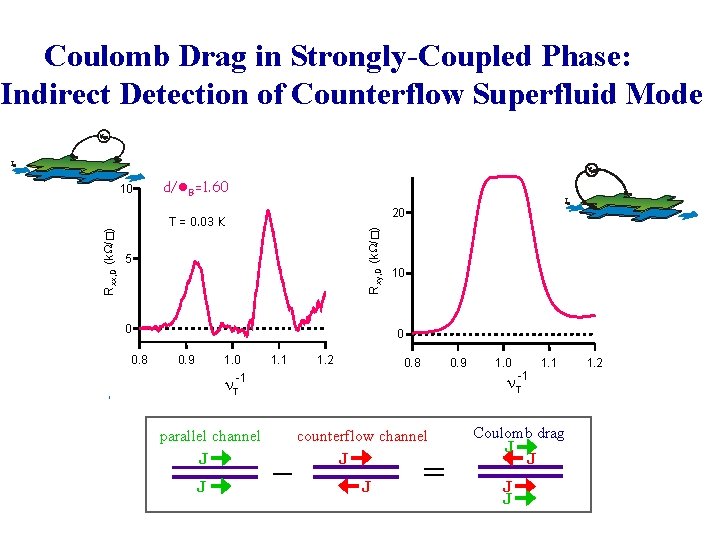
Coulomb Drag at low d/l. B and low Temperature 10 R xx, D (k W/ c) T = 0. 03 K d/l. B=1. 60 d/l. B=1. 72 5 d/l. B=1. 76 d/l. B=1. 83 0 0. 8 0. 9 1. 0 n. T -1 1. 2
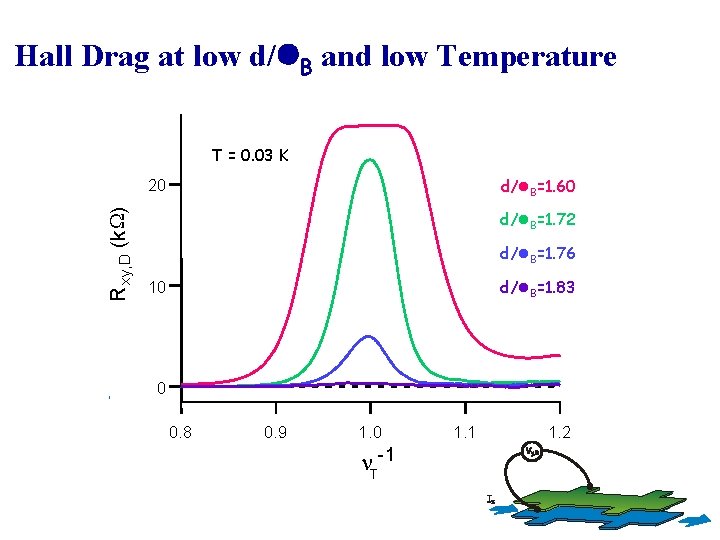
Hall Drag at low d/l. B and low Temperature T = 0. 03 K d/l. B=1. 60 R xy, D (k W) 20 d/l. B=1. 72 d/l. B=1. 76 d/l. B=1. 83 10 0 0. 8 0. 9 1. 0 n. T -1 1. 2
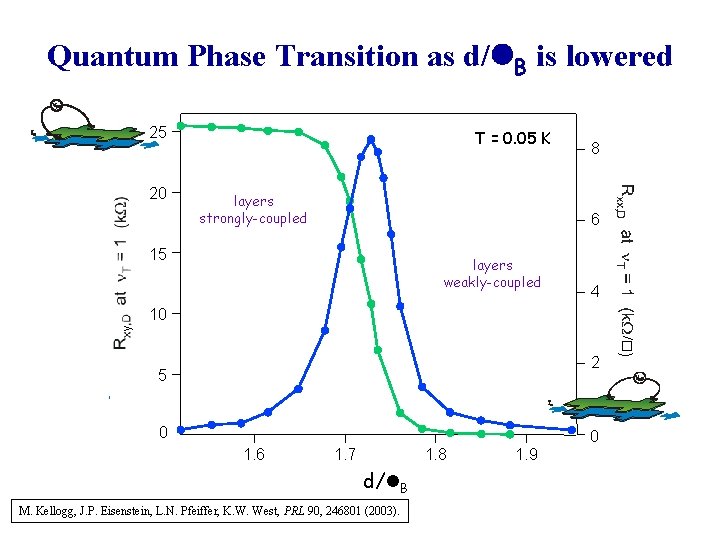
Quantum Phase Transition as d/l. B is lowered 25 20 T = 0. 05 K layers strongly-coupled 8 6 15 layers weakly-coupled 4 c/ y 10 0 0 1. 6 1. 7 1. 8 d/l. B M. Kellogg, J. P. Eisenstein, L. N. Pfeiffer, K. W. West, PRL 90, 246801 (2003). 1. 9 ) 2 5

Quantum Phase Transition as d/l. B is lowered T = 0. 1 K T = 0. 05 K layers strongly-coupled 8 T = 0. 25 K T = 0. 3 K 6 4 layers weakly-coupled 2 0 1. 2 1. 4 1. 6 d/l. B 1. 8 2. 0
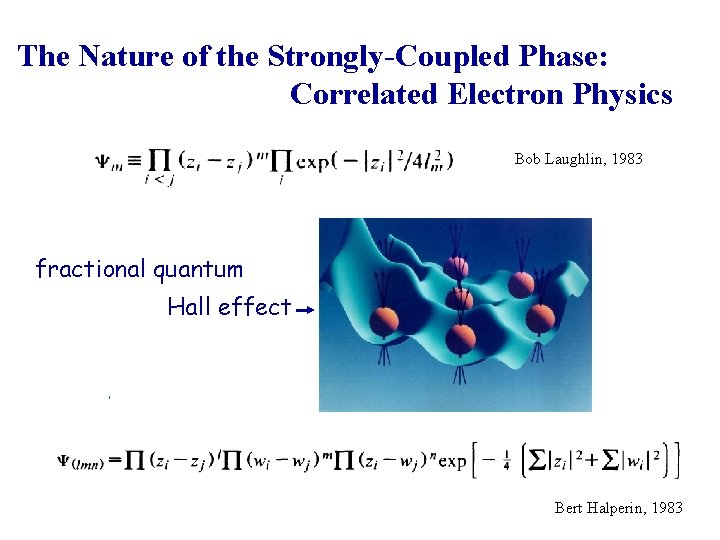
The Nature of the Strongly-Coupled Phase: Correlated Electron Physics Bob Laughlin, 1983 fractional quantum Hall effect Bert Halperin, 1983
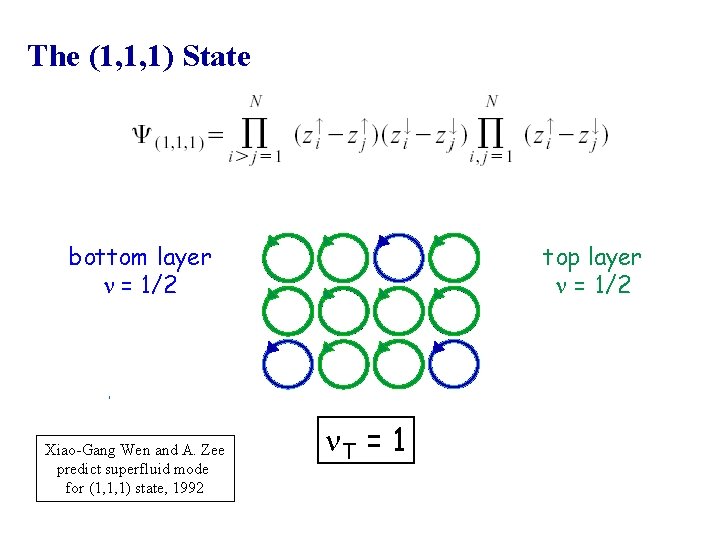
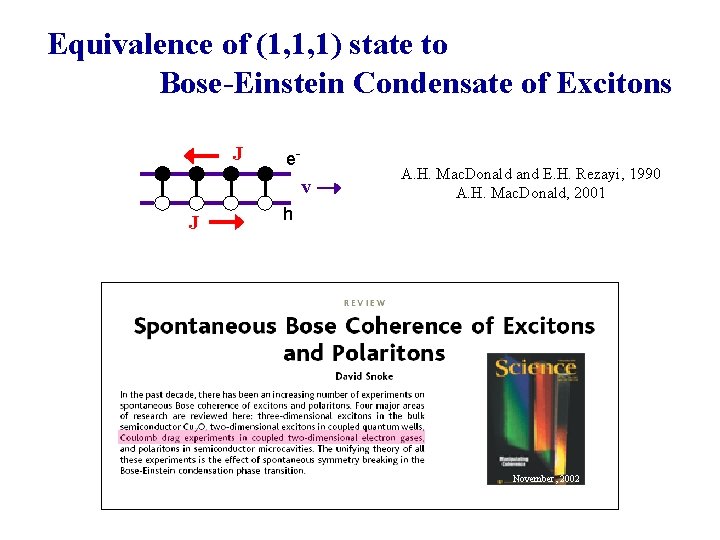
The (1, 1, 1) State bottom layer n = 1/2 Xiao-Gang Wen and A. Zee predict superfluid mode for (1, 1, 1) state, 1992 top layer n = 1/2 n. T = 1
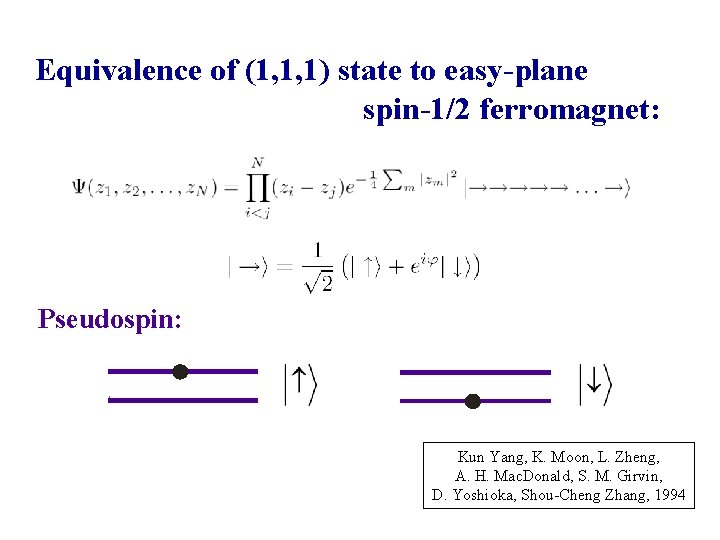
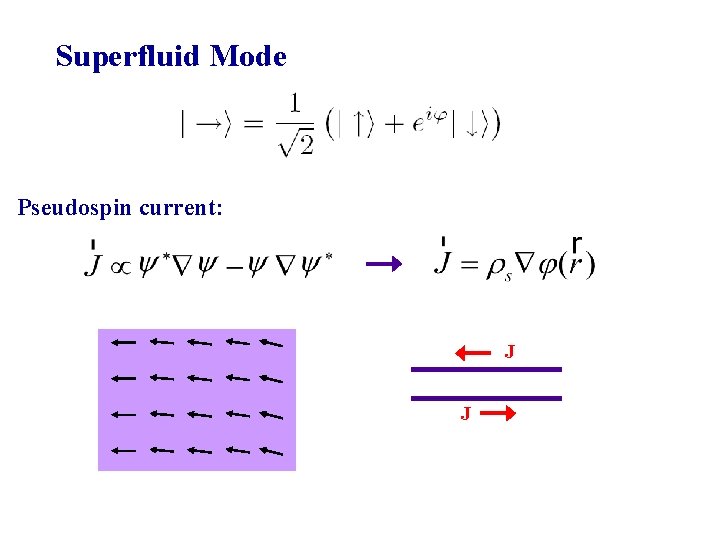
Equivalence of (1, 1, 1) state to easy-plane spin-1/2 ferromagnet: Pseudospin: Kun Yang, K. Moon, L. Zheng, A. H. Mac. Donald, S. M. Girvin, D. Yoshioka, Shou-Cheng Zhang, 1994
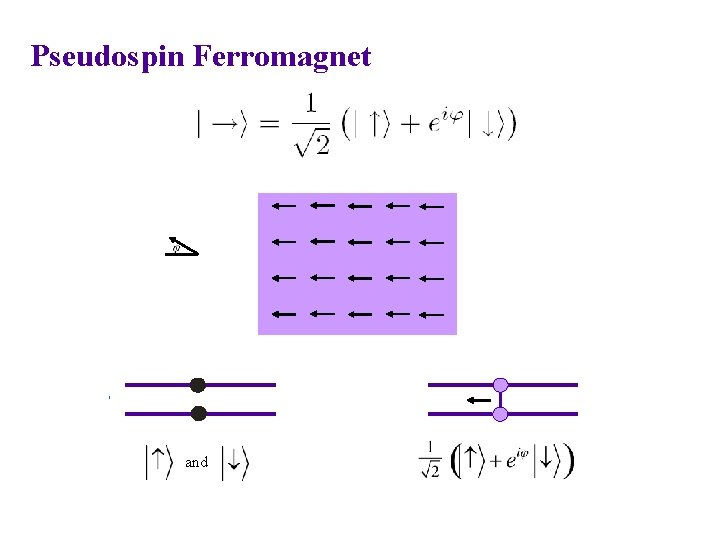
Pseudospin Ferromagnet and
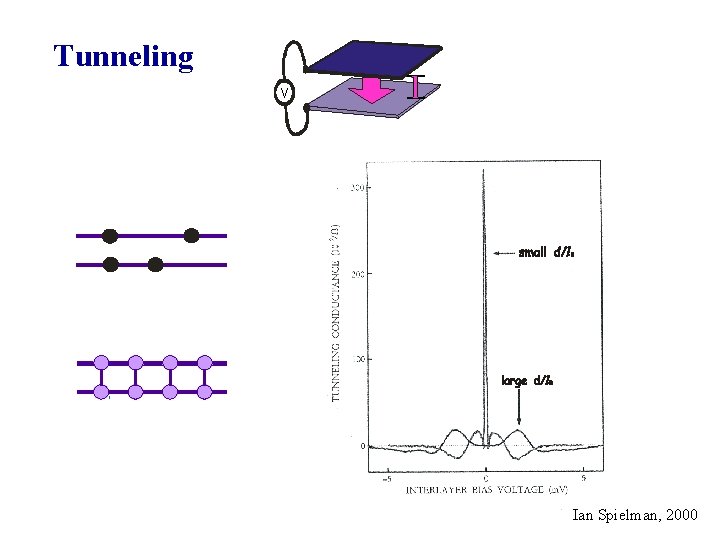
Tunneling V Ian Spielman, 2000
Superfluid Mode Pseudospin current: J J
Equivalence of (1, 1, 1) state to Bose-Einstein Condensate of Excitons J e- v J A. H. Mac. Donald and E. H. Rezayi, 1990 A. H. Mac. Donald, 2001 h November, 2002
Current Channels: Parallel & Counterflow parallel channel JJ JJ e- v h Coulomb drag counterflow channel + JJ JJ J = J J J
Coulomb Drag in Strongly-Coupled Phase: Indirect Detection of Counterflow Superfluid Mode d/l. B=1. 60 20 T = 0. 03 K R xy, D (k W/ c) R xx, D (k W/ c) 10 5 0 0. 8 10 0 0. 9 1. 0 -1 1. 2 0. 8 0. 9 J -1 1. 1 n. T parallel channel J 1. 0 _ counterflow channel J J = Coulomb drag J J 1. 2
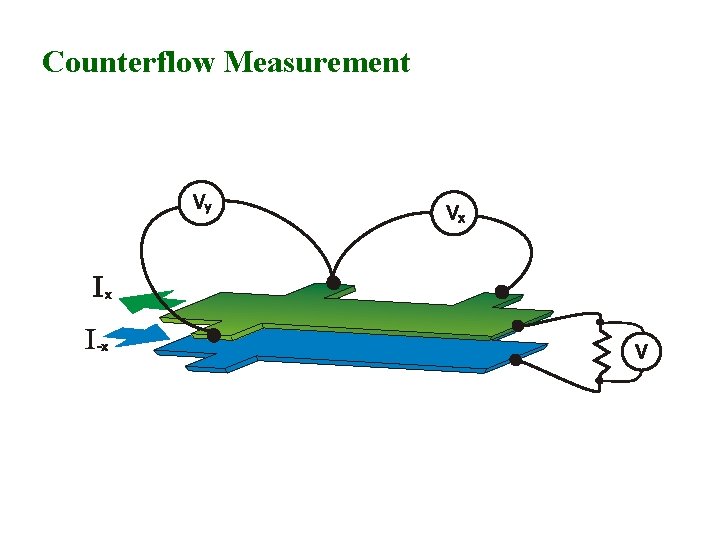
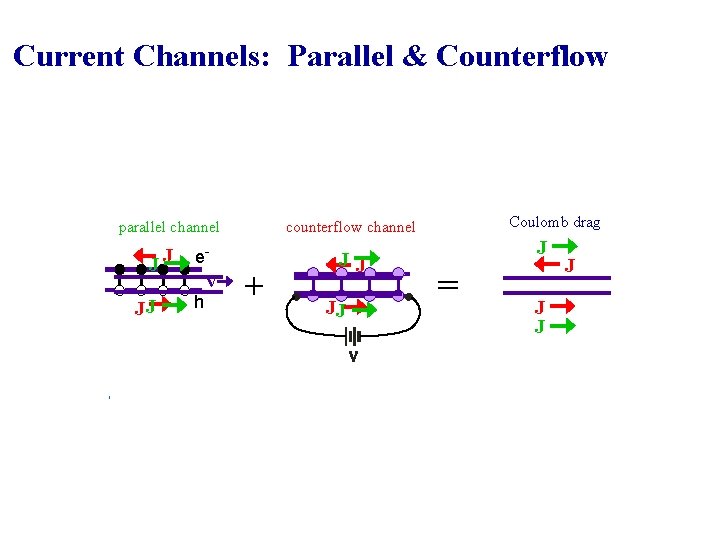
Counterflow Measurement
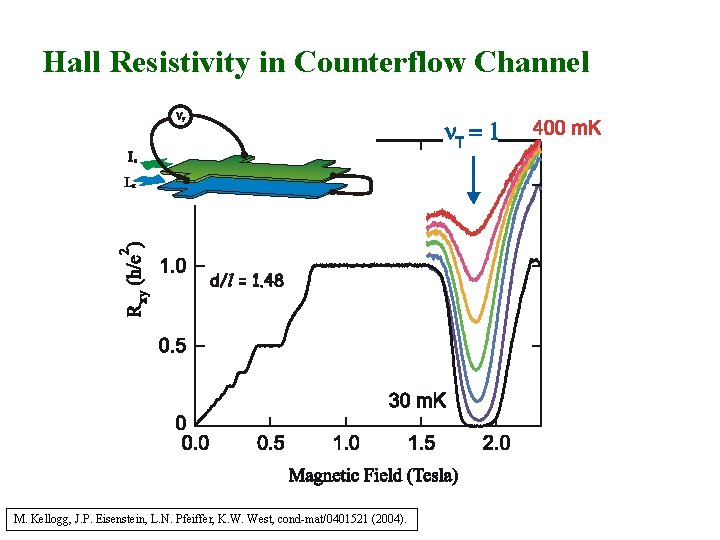
Hall Resistivity in Counterflow Channel M. Kellogg, J. P. Eisenstein, L. N. Pfeiffer, K. W. West, cond-mat/0401521 (2004).
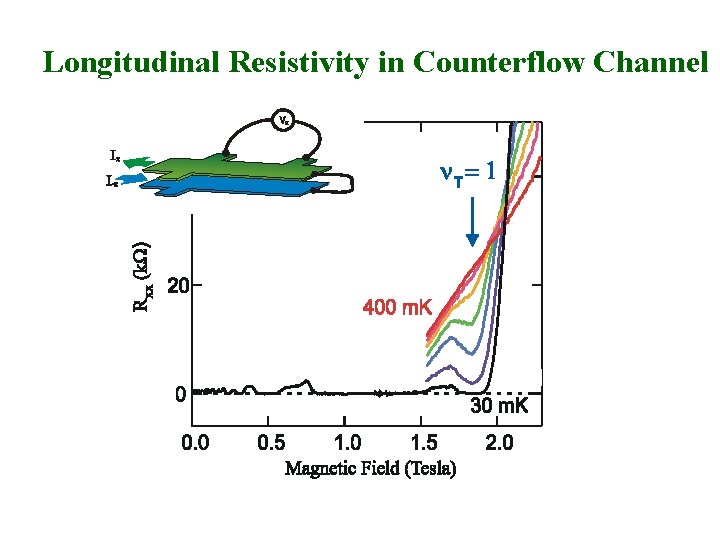
Longitudinal Resistivity in Counterflow Channel
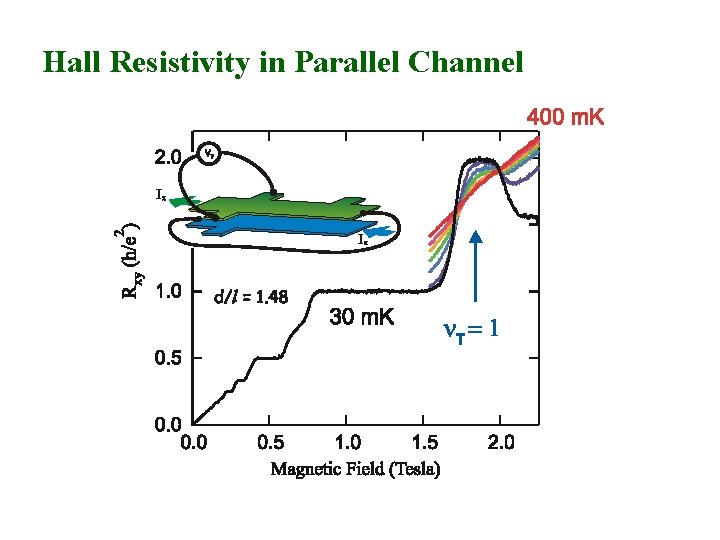
Hall Resistivity in Parallel Channel
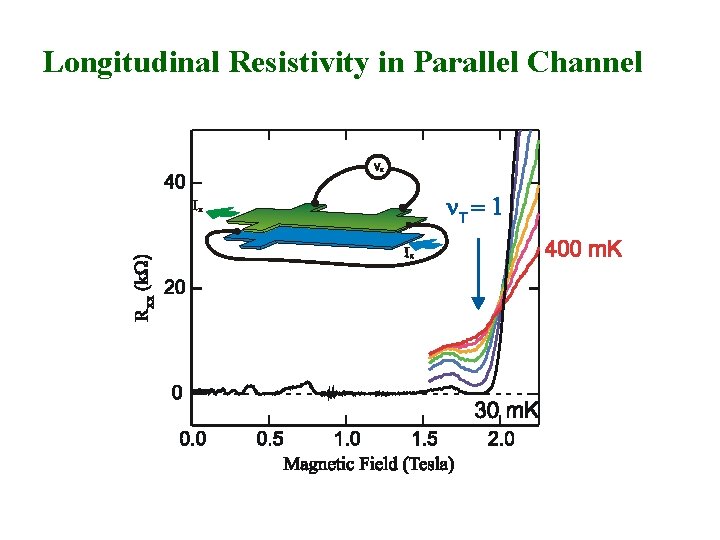
Longitudinal Resistivity in Parallel Channel
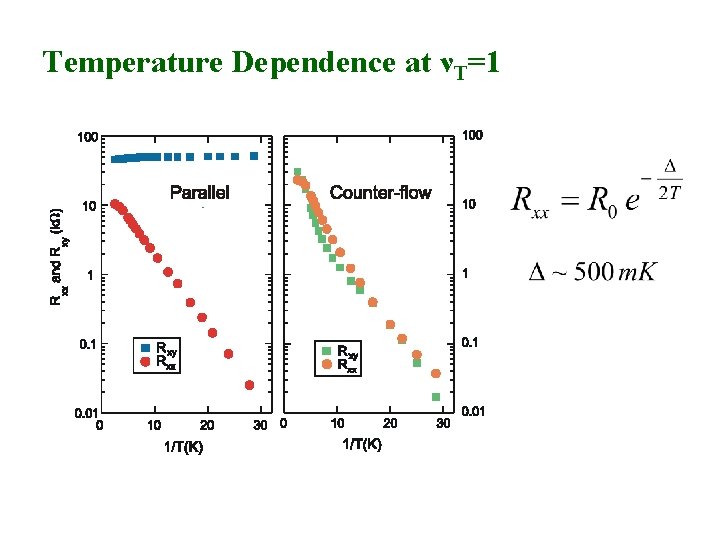
Temperature Dependence at νT=1
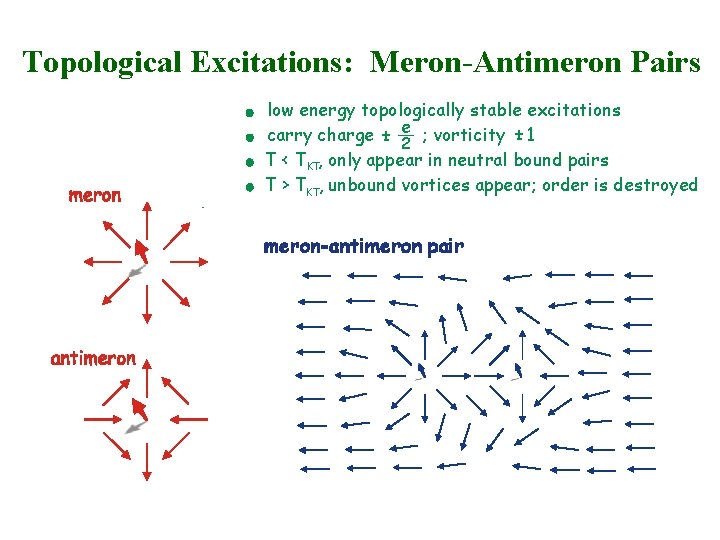
Topological Excitations: Meron-Antimeron Pairs low energy topologically stable excitations + carry charge +- e 2 ; vorticity - 1 T < TKT, only appear in neutral bound pairs T > TKT, unbound vortices appear; order is destroyed
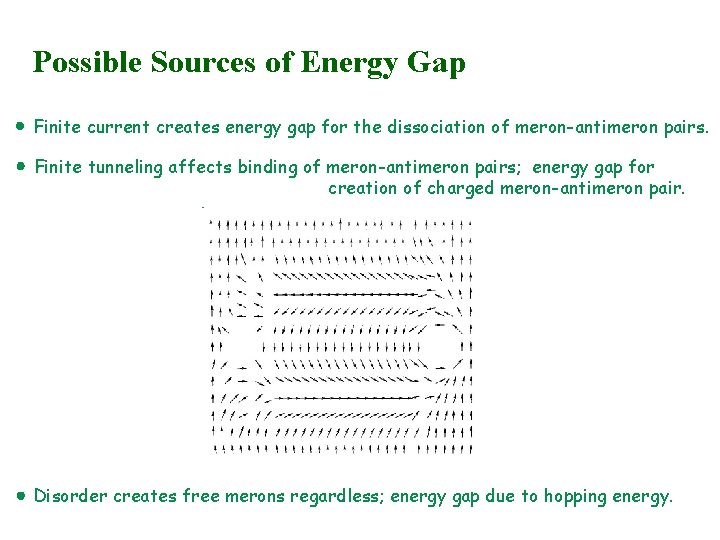
Possible Sources of Energy Gap Finite current creates energy gap for the dissociation of meron-antimeron pairs. Finite tunneling affects binding of meron-antimeron pairs; energy gap for creation of charged meron-antimeron pair. Disorder creates free merons regardless; energy gap due to hopping energy.
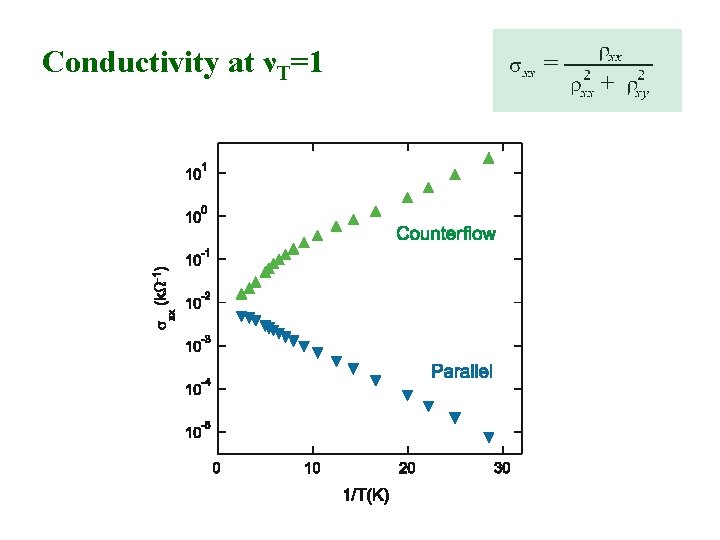
Conductivity at νT=1
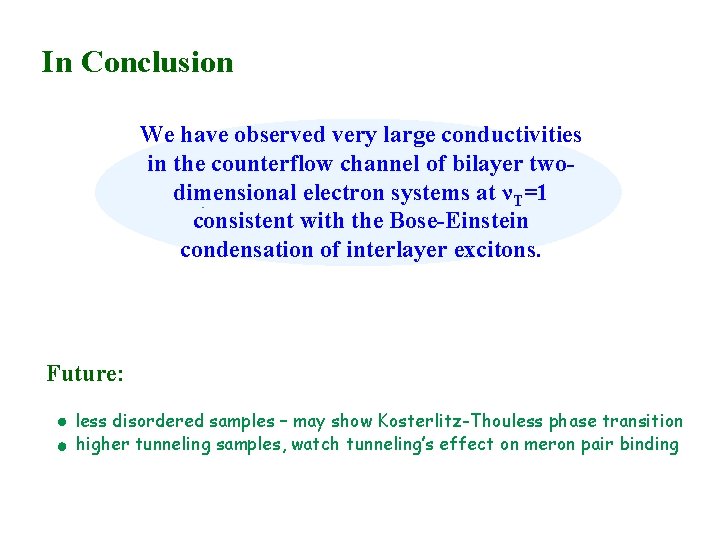
In Conclusion We have observed very large conductivities in the counterflow channel of bilayer twodimensional electron systems at νT=1 consistent with the Bose-Einstein condensation of interlayer excitons. Future: less disordered samples – may show Kosterlitz-Thouless phase transition higher tunneling samples, watch tunneling’s effect on meron pair binding
- Slides: 40