
NASA Astrophysics Mario R Perez Wilton T Sanders
- Slides: 27
NASA Astrophysics Mario R. Perez Wilton T. Sanders Science Mission Directorate June 25, 2015
Topics Requested • SAT & APRA Investments – M. Perez • Suborbital - W. Sanders - Sounding Rockets - Balloons (in progress) • Explorer Program • Probes Notional Plans • Others (Q&A) 2
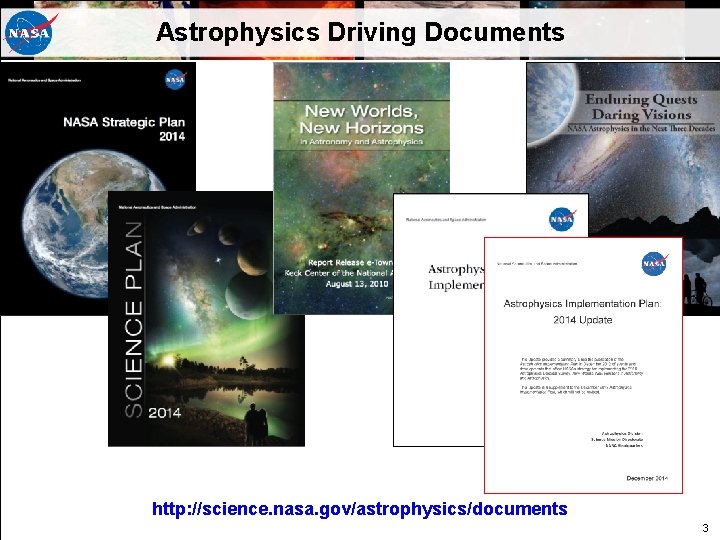
Astrophysics Driving Documents http: //science. nasa. gov/astrophysics/documents 3
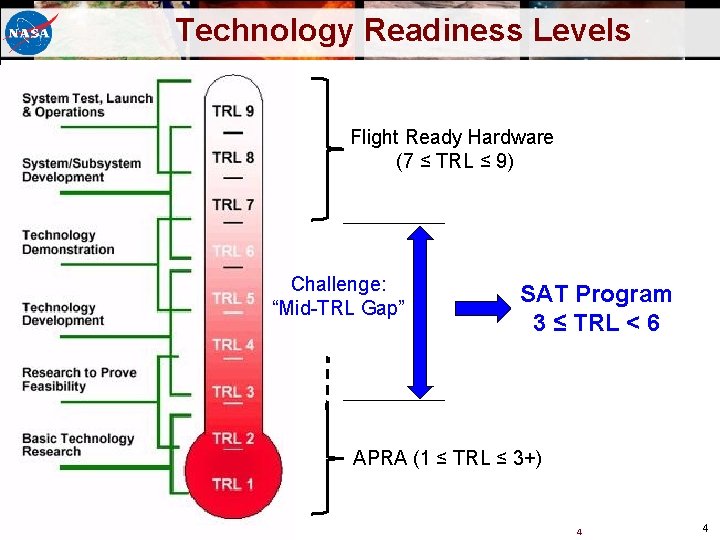
Technology Readiness Levels Flight Ready Hardware (7 ≤ TRL ≤ 9) Challenge: “Mid-TRL Gap” SAT Program 3 ≤ TRL < 6 APRA (1 ≤ TRL ≤ 3+) 4 4
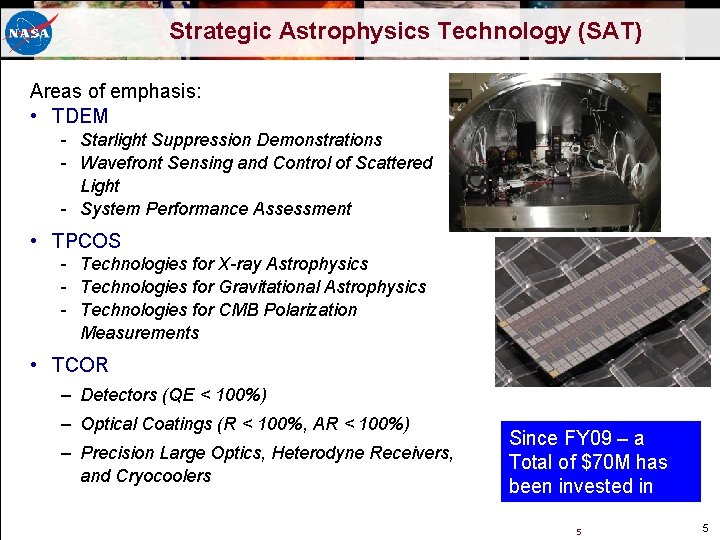
Strategic Astrophysics Technology (SAT) Areas of emphasis: • TDEM - Starlight Suppression Demonstrations - Wavefront Sensing and Control of Scattered Light - System Performance Assessment • TPCOS - Technologies for X-ray Astrophysics - Technologies for Gravitational Astrophysics - Technologies for CMB Polarization Measurements • TCOR – Detectors (QE < 100%) – Optical Coatings (R < 100%, AR < 100%) – Precision Large Optics, Heterodyne Receivers, and Cryocoolers Since FY 09 – a Total of $70 M has been invested in SAT 5 5
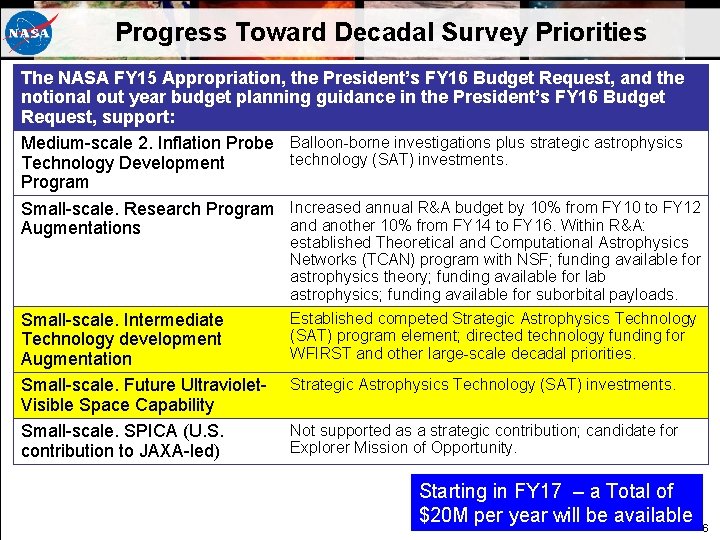
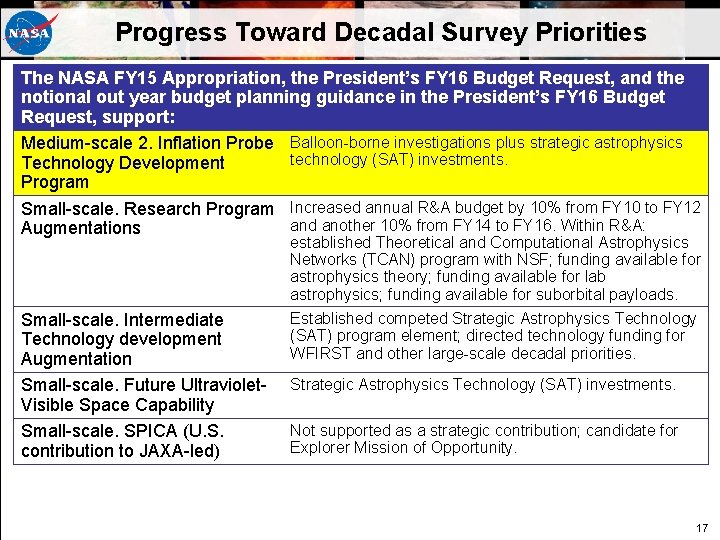
Progress Toward Decadal Survey Priorities The NASA FY 15 Appropriation, the President’s FY 16 Budget Request, and the notional out year budget planning guidance in the President’s FY 16 Budget Request, support: Medium-scale 2. Inflation Probe Balloon-borne investigations plus strategic astrophysics technology (SAT) investments. Technology Development Program Small-scale. Research Program Increased annual R&A budget by 10% from FY 10 to FY 12 and another 10% from FY 14 to FY 16. Within R&A: Augmentations established Theoretical and Computational Astrophysics Networks (TCAN) program with NSF; funding available for astrophysics theory; funding available for lab astrophysics; funding available for suborbital payloads. Small-scale. Intermediate Technology development Augmentation Small-scale. Future Ultraviolet. Visible Space Capability Small-scale. SPICA (U. S. contribution to JAXA-led) Established competed Strategic Astrophysics Technology (SAT) program element; directed technology funding for WFIRST and other large-scale decadal priorities. Strategic Astrophysics Technology (SAT) investments. Not supported as a strategic contribution; candidate for Explorer Mission of Opportunity. Starting in FY 17 – a Total of $20 M per year will be available 6
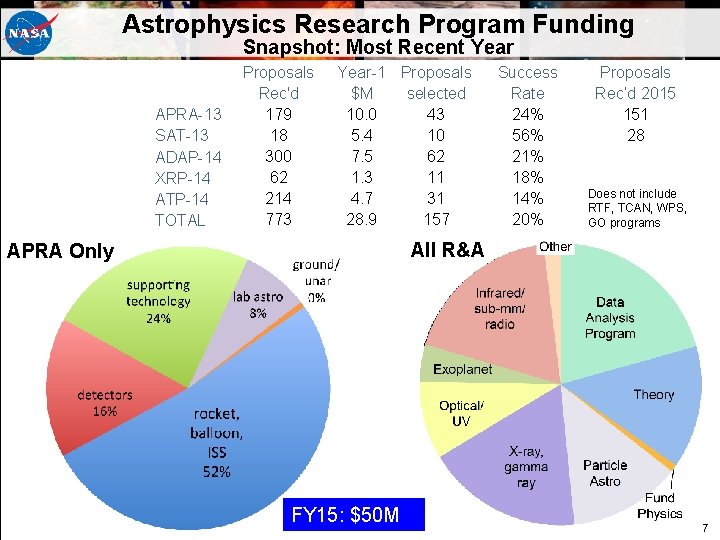
Astrophysics Research Program Funding Snapshot: Most Recent Year ~ ~ APRA-13 SAT-13 ADAP-14 XRP-14 ATP-14 TOTAL Proposals Rec'd 179 18 300 62 214 773 Year-1 Proposals $M selected 10. 0 43 5. 4 10 7. 5 62 1. 3 11 4. 7 31 28. 9 157 Success Rate 24% 56% 21% 18% 14% 20% Proposals Rec’d 2015 151 28 Does not include RTF, TCAN, WPS, GO programs All R&A APRA Only FY 15: $50 M 7
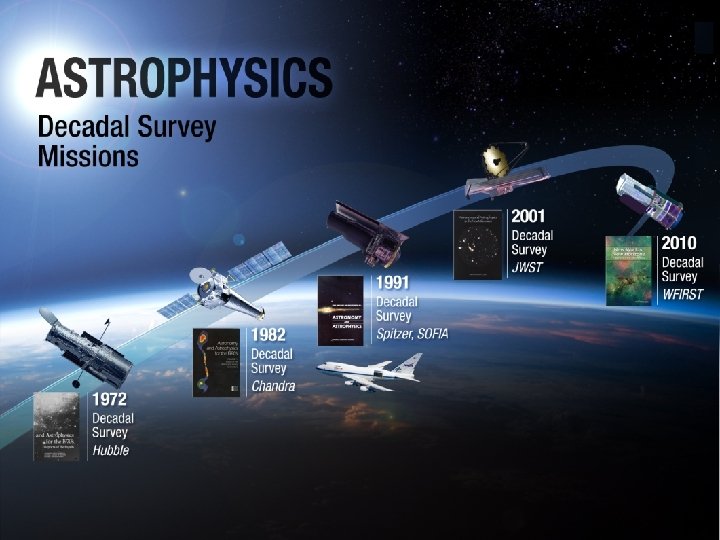
Decadal Survey 2010 Goals • Suborbital Program - Increase rate of flights - Research rockets and orbital rockets - Long-Duration Balloons (LDBs) and Ultra-Long Duration Balloons (ULDBs) - Fly Super Pressure Balloons (SPB) from midlatitudes to include more dark time, an astronomical requirements (e. g. , around Australia) 04/07/2011 8
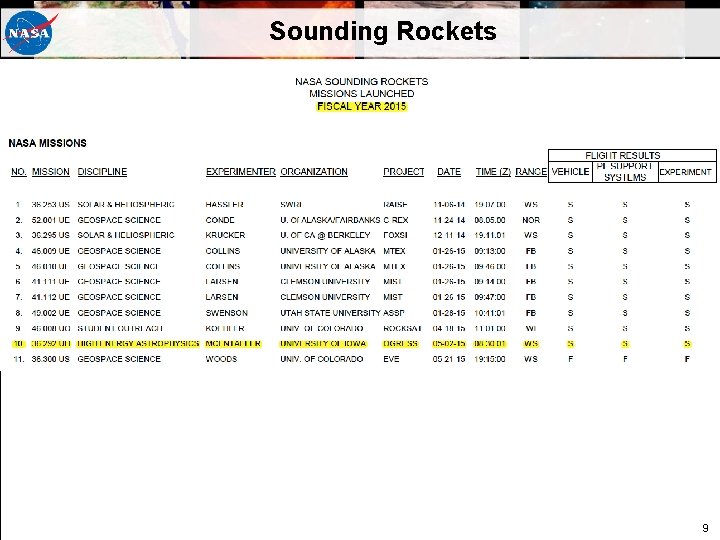
Sounding Rockets 9
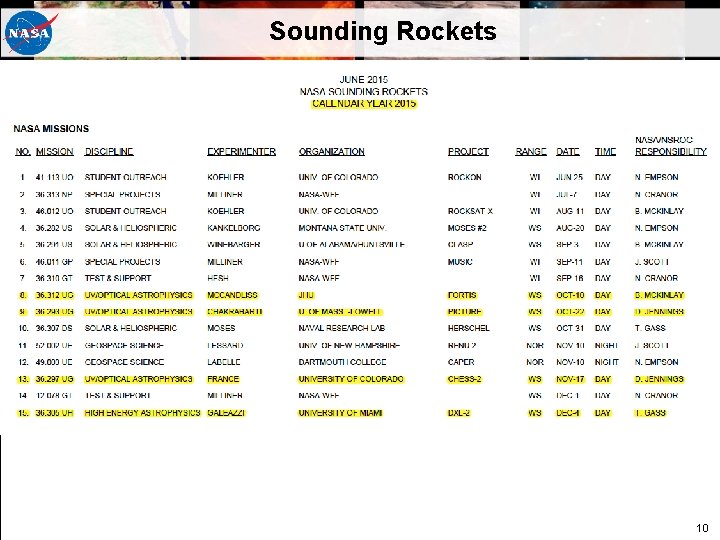
Sounding Rockets 10
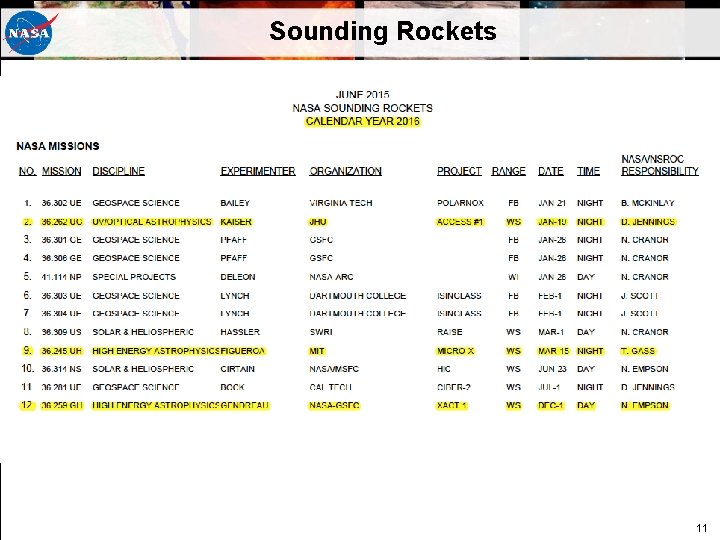
Sounding Rockets 11
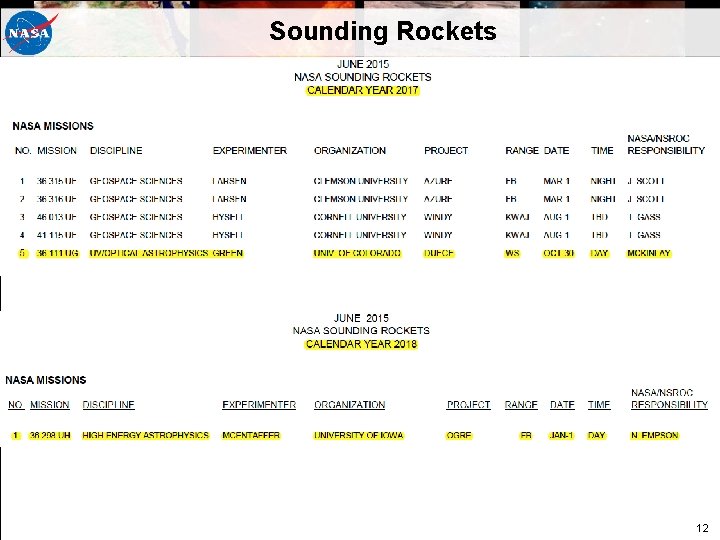
Sounding Rockets 12
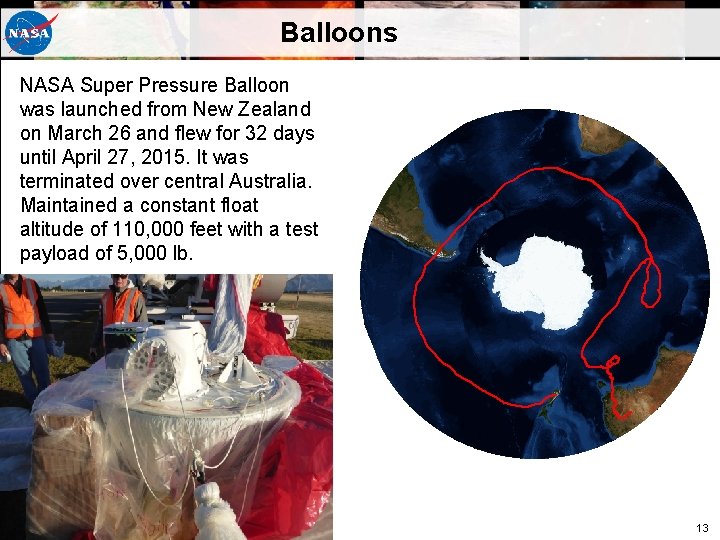
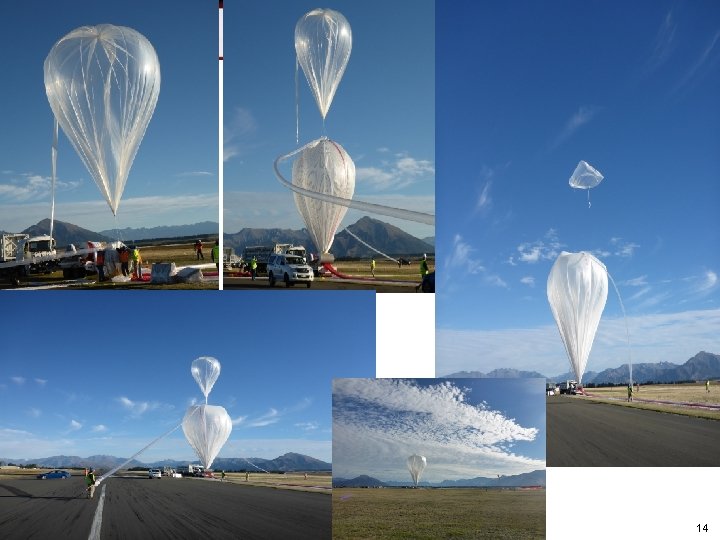
Balloons NASA Super Pressure Balloon was launched from New Zealand on March 26 and flew for 32 days until April 27, 2015. It was terminated over central Australia. Maintained a constant float altitude of 110, 000 feet with a test payload of 5, 000 lb. 13
14
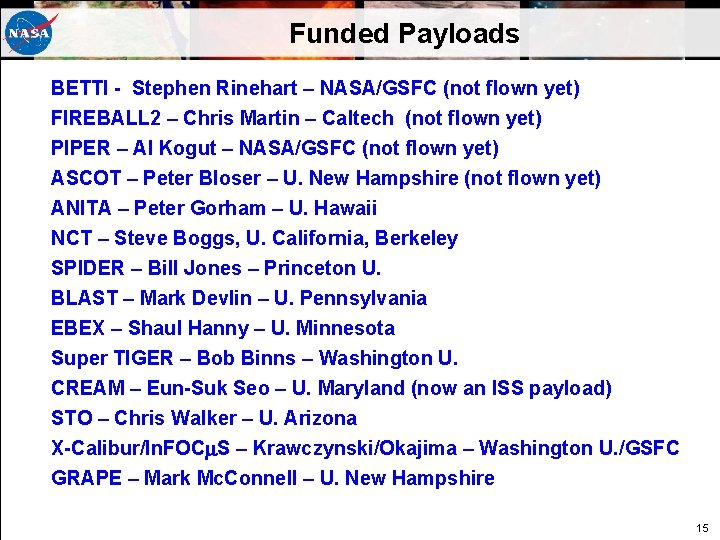
Funded Payloads BETTI - Stephen Rinehart – NASA/GSFC (not flown yet) FIREBALL 2 – Chris Martin – Caltech (not flown yet) PIPER – Al Kogut – NASA/GSFC (not flown yet) ASCOT – Peter Bloser – U. New Hampshire (not flown yet) ANITA – Peter Gorham – U. Hawaii NCT – Steve Boggs, U. California, Berkeley SPIDER – Bill Jones – Princeton U. BLAST – Mark Devlin – U. Pennsylvania EBEX – Shaul Hanny – U. Minnesota Super TIGER – Bob Binns – Washington U. CREAM – Eun-Suk Seo – U. Maryland (now an ISS payload) STO – Chris Walker – U. Arizona X-Calibur/In. FOCm. S – Krawczynski/Okajima – Washington U. /GSFC GRAPE – Mark Mc. Connell – U. New Hampshire 15
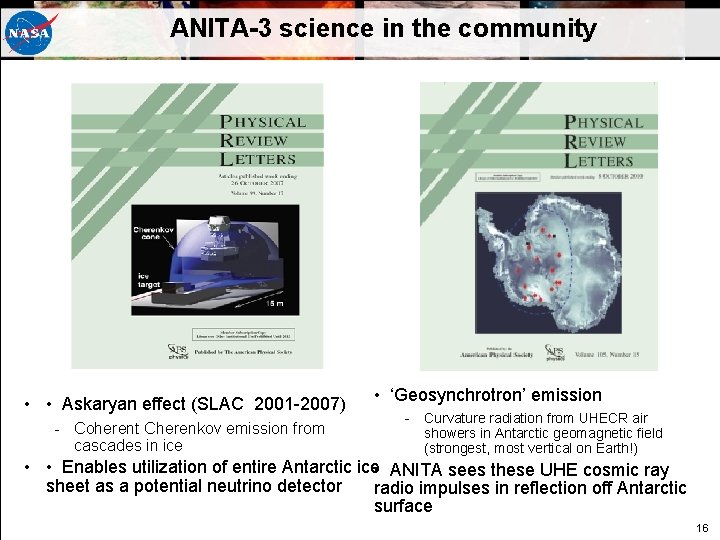
ANITA-3 science in the community • • Askaryan effect (SLAC 2001 -2007) - Coherent Cherenkov emission from cascades in ice • ‘Geosynchrotron’ emission - Curvature radiation from UHECR air showers in Antarctic geomagnetic field (strongest, most vertical on Earth!) • • Enables utilization of entire Antarctic ice • ANITA sees these UHE cosmic ray sheet as a potential neutrino detector radio impulses in reflection off Antarctic surface 16
Progress Toward Decadal Survey Priorities The NASA FY 15 Appropriation, the President’s FY 16 Budget Request, and the notional out year budget planning guidance in the President’s FY 16 Budget Request, support: Medium-scale 2. Inflation Probe Balloon-borne investigations plus strategic astrophysics technology (SAT) investments. Technology Development Program Small-scale. Research Program Increased annual R&A budget by 10% from FY 10 to FY 12 and another 10% from FY 14 to FY 16. Within R&A: Augmentations established Theoretical and Computational Astrophysics Networks (TCAN) program with NSF; funding available for astrophysics theory; funding available for lab astrophysics; funding available for suborbital payloads. Small-scale. Intermediate Technology development Augmentation Small-scale. Future Ultraviolet. Visible Space Capability Small-scale. SPICA (U. S. contribution to JAXA-led) Established competed Strategic Astrophysics Technology (SAT) program element; directed technology funding for WFIRST and other large-scale decadal priorities. Strategic Astrophysics Technology (SAT) investments. Not supported as a strategic contribution; candidate for Explorer Mission of Opportunity. 17
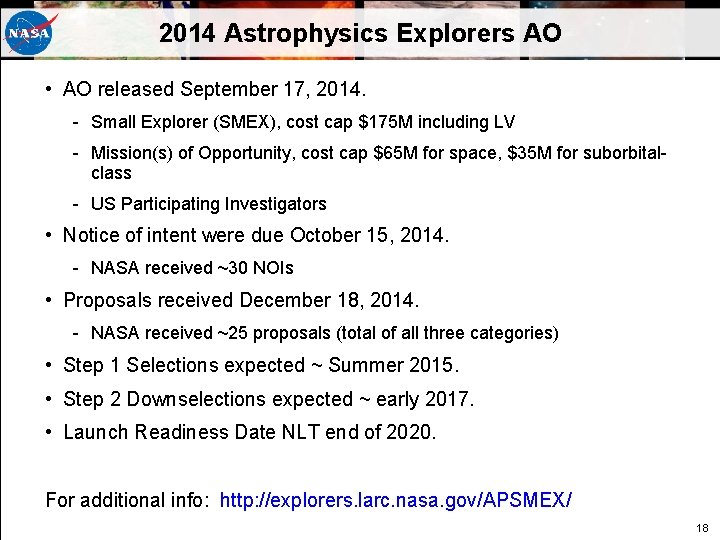
2014 Astrophysics Explorers AO • AO released September 17, 2014. - Small Explorer (SMEX), cost cap $175 M including LV - Mission(s) of Opportunity, cost cap $65 M for space, $35 M for suborbitalclass - US Participating Investigators • Notice of intent were due October 15, 2014. - NASA received ~30 NOIs • Proposals received December 18, 2014. - NASA received ~25 proposals (total of all three categories) • Step 1 Selections expected ~ Summer 2015. • Step 2 Downselections expected ~ early 2017. • Launch Readiness Date NLT end of 2020. For additional info: http: //explorers. larc. nasa. gov/APSMEX/ 18
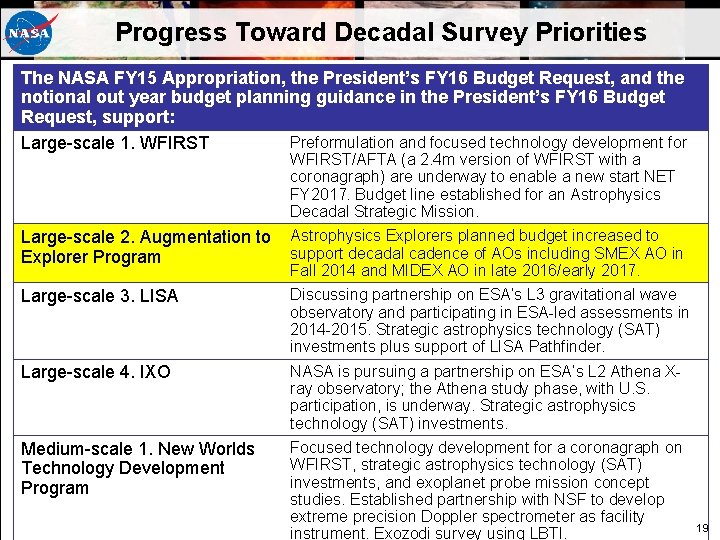
Progress Toward Decadal Survey Priorities The NASA FY 15 Appropriation, the President’s FY 16 Budget Request, and the notional out year budget planning guidance in the President’s FY 16 Budget Request, support: Preformulation and focused technology development for Large-scale 1. WFIRST/AFTA (a 2. 4 m version of WFIRST with a coronagraph) are underway to enable a new start NET FY 2017. Budget line established for an Astrophysics Decadal Strategic Mission. Large-scale 2. Augmentation to Astrophysics Explorers planned budget increased to support decadal cadence of AOs including SMEX AO in Explorer Program Fall 2014 and MIDEX AO in late 2016/early 2017. Large-scale 3. LISA Discussing partnership on ESA’s L 3 gravitational wave observatory and participating in ESA-led assessments in 2014 -2015. Strategic astrophysics technology (SAT) investments plus support of LISA Pathfinder. Large-scale 4. IXO NASA is pursuing a partnership on ESA’s L 2 Athena Xray observatory; the Athena study phase, with U. S. participation, is underway. Strategic astrophysics technology (SAT) investments. Medium-scale 1. New Worlds Technology Development Program Focused technology development for a coronagraph on WFIRST, strategic astrophysics technology (SAT) investments, and exoplanet probe mission concept studies. Established partnership with NSF to develop extreme precision Doppler spectrometer as facility instrument. Exozodi survey using LBTI. 19
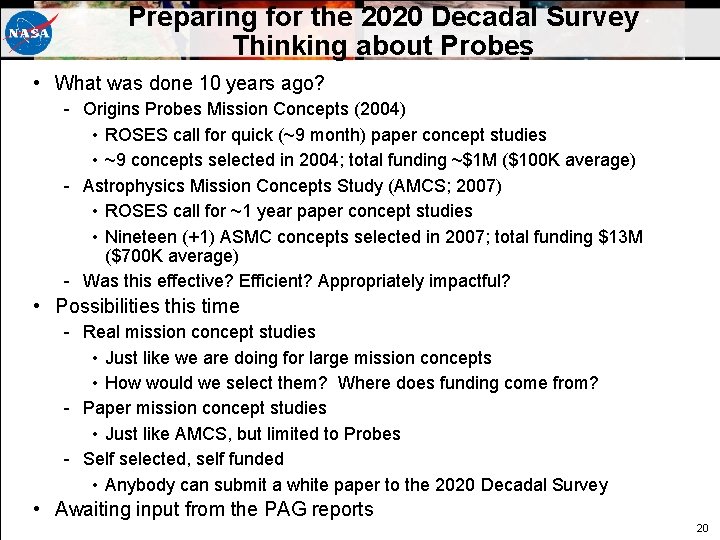
Preparing for the 2020 Decadal Survey Thinking about Probes • What was done 10 years ago? - Origins Probes Mission Concepts (2004) • ROSES call for quick (~9 month) paper concept studies • ~9 concepts selected in 2004; total funding ~$1 M ($100 K average) - Astrophysics Mission Concepts Study (AMCS; 2007) • ROSES call for ~1 year paper concept studies • Nineteen (+1) ASMC concepts selected in 2007; total funding $13 M ($700 K average) - Was this effective? Efficient? Appropriately impactful? • Possibilities this time - Real mission concept studies • Just like we are doing for large mission concepts • How would we select them? Where does funding come from? - Paper mission concept studies • Just like AMCS, but limited to Probes - Self selected, self funded • Anybody can submit a white paper to the 2020 Decadal Survey • Awaiting input from the PAG reports 20
Preparing for the 2020 Decadal Survey Medium-class (Probe) Concepts Probe-class (medium size) mission concepts • No decision has been made by NASA at this time on how to provide input to the 2020 Decadal Survey Committee regarding probe-class missions. • There are multiple paths to identifying probe-class mission concepts, and none have been precluded at this time. • Each of the STDTs for large mission concepts will be challenged to identify one or more probe-class versions of their mission and to estimate the percentage of the original science case that can be achieved. • The Mid-Decade Review may provide recommendations to NASA regarding the value of probe-class mission concept studies in advance of the 2020 Decadal Survey. • Should NASA conduct stand-alone probe-class mission concept studies, they would be initiated no earlier than FY 2017. 21
Backups 22
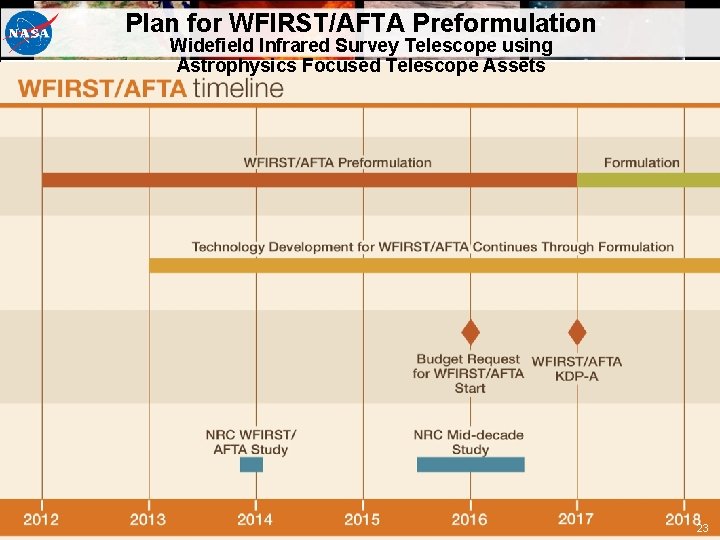
Plan for WFIRST/AFTA Preformulation Widefield Infrared Survey Telescope using Astrophysics Focused Telescope Assets 23
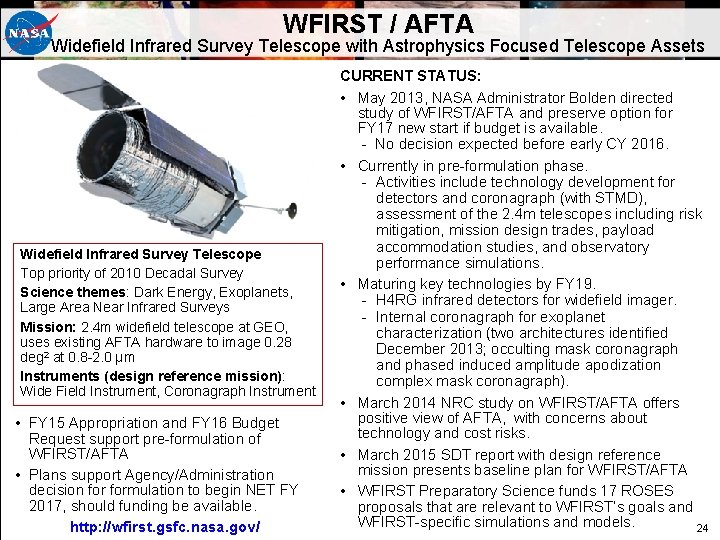
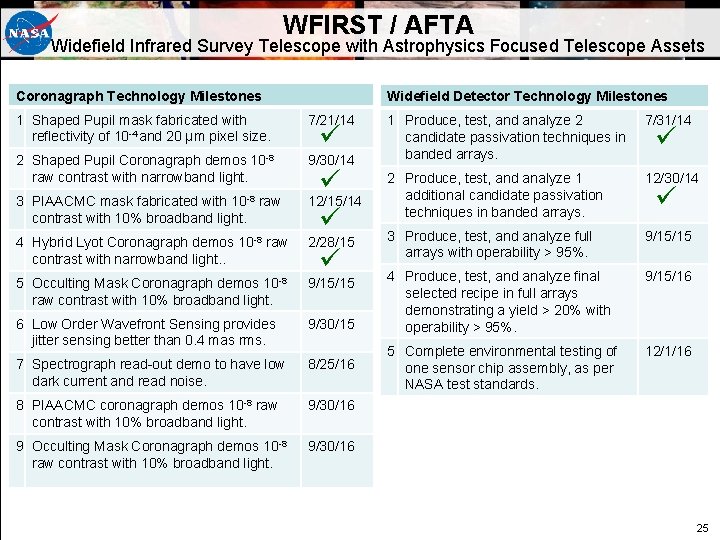
WFIRST / AFTA Widefield Infrared Survey Telescope with Astrophysics Focused Telescope Assets Widefield Infrared Survey Telescope Top priority of 2010 Decadal Survey Science themes: Dark Energy, Exoplanets, Large Area Near Infrared Surveys Mission: 2. 4 m widefield telescope at GEO, uses existing AFTA hardware to image 0. 28 deg 2 at 0. 8 -2. 0 µm Instruments (design reference mission): Wide Field Instrument, Coronagraph Instrument • FY 15 Appropriation and FY 16 Budget Request support pre-formulation of WFIRST/AFTA • Plans support Agency/Administration decision formulation to begin NET FY 2017, should funding be available. http: //wfirst. gsfc. nasa. gov/ CURRENT STATUS: • May 2013, NASA Administrator Bolden directed study of WFIRST/AFTA and preserve option for FY 17 new start if budget is available. - No decision expected before early CY 2016. • Currently in pre-formulation phase. - Activities include technology development for detectors and coronagraph (with STMD), assessment of the 2. 4 m telescopes including risk mitigation, mission design trades, payload accommodation studies, and observatory performance simulations. • Maturing key technologies by FY 19. - H 4 RG infrared detectors for widefield imager. - Internal coronagraph for exoplanet characterization (two architectures identified December 2013; occulting mask coronagraph and phased induced amplitude apodization complex mask coronagraph). • March 2014 NRC study on WFIRST/AFTA offers positive view of AFTA, with concerns about technology and cost risks. • March 2015 SDT report with design reference mission presents baseline plan for WFIRST/AFTA • WFIRST Preparatory Science funds 17 ROSES proposals that are relevant to WFIRST’s goals and WFIRST-specific simulations and models. 24
WFIRST / AFTA Widefield Infrared Survey Telescope with Astrophysics Focused Telescope Assets Coronagraph Technology Milestones Widefield Detector Technology Milestones 1 Shaped Pupil mask fabricated with reflectivity of 10 -4 and 20 μm pixel size. 7/21/14 2 Shaped Pupil Coronagraph demos 10 -8 raw contrast with narrowband light. 3 PIAACMC mask fabricated with 10 -8 raw contrast with 10% broadband light. 4 Hybrid Lyot Coronagraph demos 10 -8 raw contrast with narrowband light. . 9/30/14 12/15/14 2/28/15 5 Occulting Mask Coronagraph demos 10 -8 raw contrast with 10% broadband light. 9/15/15 6 Low Order Wavefront Sensing provides jitter sensing better than 0. 4 mas rms. 9/30/15 7 Spectrograph read-out demo to have low dark current and read noise. 8/25/16 8 PIAACMC coronagraph demos 10 -8 raw contrast with 10% broadband light. 9/30/16 9 Occulting Mask Coronagraph demos 10 -8 raw contrast with 10% broadband light. 9/30/16 1 Produce, test, and analyze 2 candidate passivation techniques in banded arrays. 7/31/14 2 Produce, test, and analyze 1 additional candidate passivation techniques in banded arrays. 12/30/14 3 Produce, test, and analyze full arrays with operability > 95%. 9/15/15 4 Produce, test, and analyze final selected recipe in full arrays demonstrating a yield > 20% with operability > 95%. 9/15/16 5 Complete environmental testing of one sensor chip assembly, as per NASA test standards. 12/1/16 25
LRD: 2018 LRD: 2020 s 2003 1999 1990 26 26
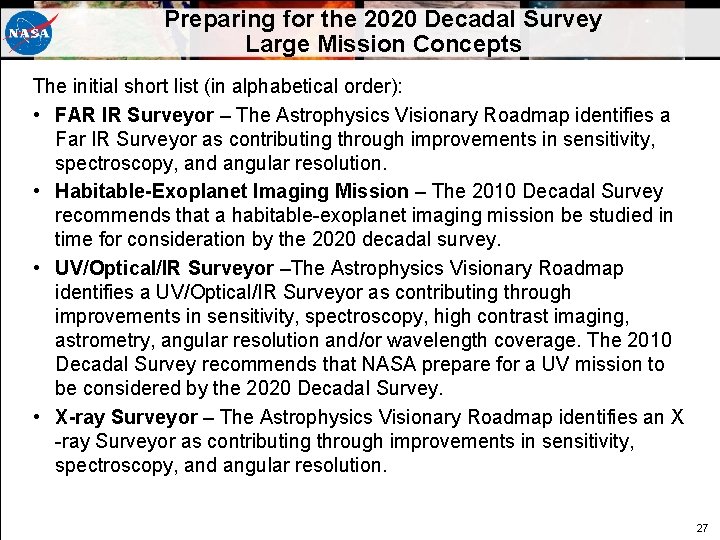
Preparing for the 2020 Decadal Survey Large Mission Concepts The initial short list (in alphabetical order): • FAR IR Surveyor – The Astrophysics Visionary Roadmap identifies a Far IR Surveyor as contributing through improvements in sensitivity, spectroscopy, and angular resolution. • Habitable-Exoplanet Imaging Mission – The 2010 Decadal Survey recommends that a habitable-exoplanet imaging mission be studied in time for consideration by the 2020 decadal survey. • UV/Optical/IR Surveyor –The Astrophysics Visionary Roadmap identifies a UV/Optical/IR Surveyor as contributing through improvements in sensitivity, spectroscopy, high contrast imaging, astrometry, angular resolution and/or wavelength coverage. The 2010 Decadal Survey recommends that NASA prepare for a UV mission to be considered by the 2020 Decadal Survey. • X-ray Surveyor – The Astrophysics Visionary Roadmap identifies an X -ray Surveyor as contributing through improvements in sensitivity, spectroscopy, and angular resolution. 27