
Narrative Writing Punctuating Dialogue Narrative Writing a story



- Slides: 12
Narrative Writing: Punctuating Dialogue
Narrative Writing: a story of event(s) Strong narratives show a story of a time or event that is…. .
ü dialogue: quoting directly stated words “One line of dialogue is worth paragraphs of description. No matter what you say about a character, if he doesn’t speak, he hasn’t truly come alive. ” |Leslie Epstein| Director of Creative Writing Program at Boston University
1. Begin a new quotation with a capital letter. “Get in the car–now!” she commanded. She commanded, “Get in the car–now!” Note: do not use quotation marks in an indirect quotation (not the speaker’s exact words). She commanded that we get into the car.
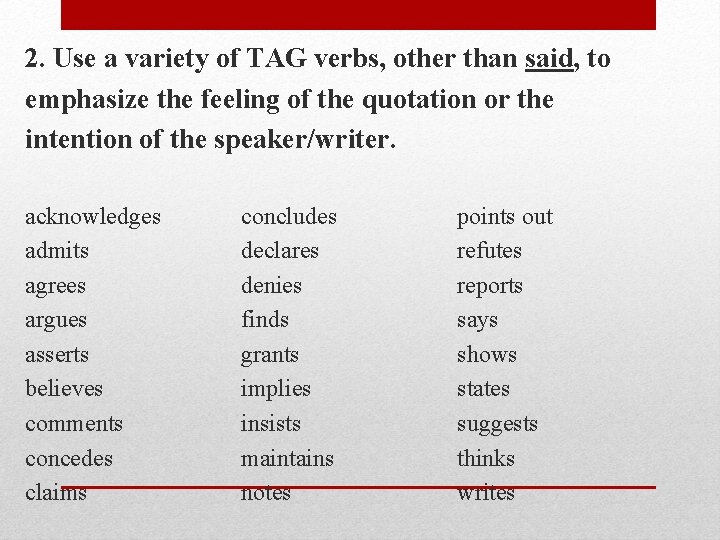
2. Use a variety of TAG verbs, other than said, to emphasize the feeling of the quotation or the intention of the speaker/writer. acknowledges admits agrees argues asserts believes comments concedes claims concludes declares denies finds grants implies insists maintains notes points out refutes reports says shows states suggests thinks writes
• “I want to go to the play with Tim, ” she______. What TAG can you use to convey that she is…. . -content -angry -happy
Many times no “tag” is needed because the speaker is clearly recognizable: Tom turned to Martha. “Did you go to Dance for IPADs? ” “Yes, I can’t wait to use those IPADs!” she replied. “Me too!” “I hope we can use twitter on the IPADs!” “Hashtag I love school!” Martha exclaimed.
3. Place commas and periods inside the quotations. Place a question mark, exclamation point inside the closing quotation marks when it is part of the quotation. “Are the groups ready to present? ” inquired Ms. Kasten.
• PICTURES: Create your own dialogue using correct punctuation Remember: 1. Quotation marks are used for words directly stated 2. Begin a new quotation with a capital letter 3. Commas, periods, exclamation points, and question marks are inside the quotation when it is part of the quotation 4. You must use a variety of TAG verbs- do not use the same one twice!