
Narrative Research Methods Narrative Inquiry Research Methodology Group
- Slides: 40
Narrative Research Methods/ Narrative Inquiry Research Methodology Group Webinar September 27, 2018 Jim Lane, Ed. D. Center for Educational and Instructional Technology Research Ryan Rominger, Ph. D. , LCPC-PIT Center for Leadership Studies and Educational Research
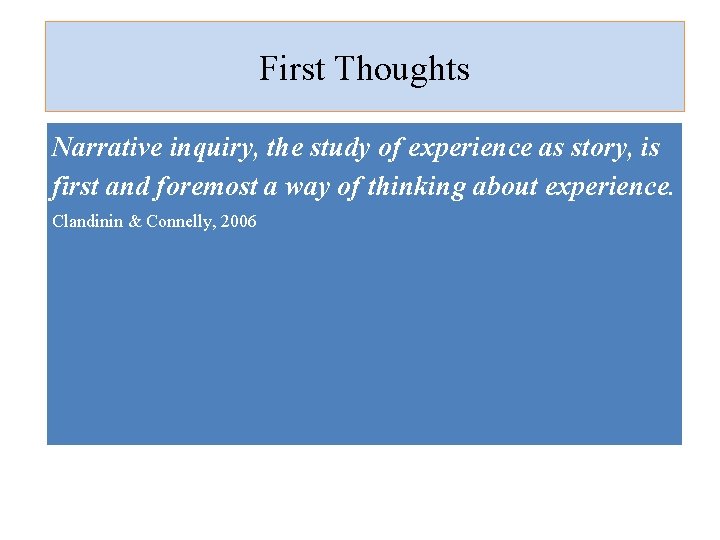
First Thoughts Narrative inquiry, the study of experience as story, is first and foremost a way of thinking about experience. Clandinin & Connelly, 2006
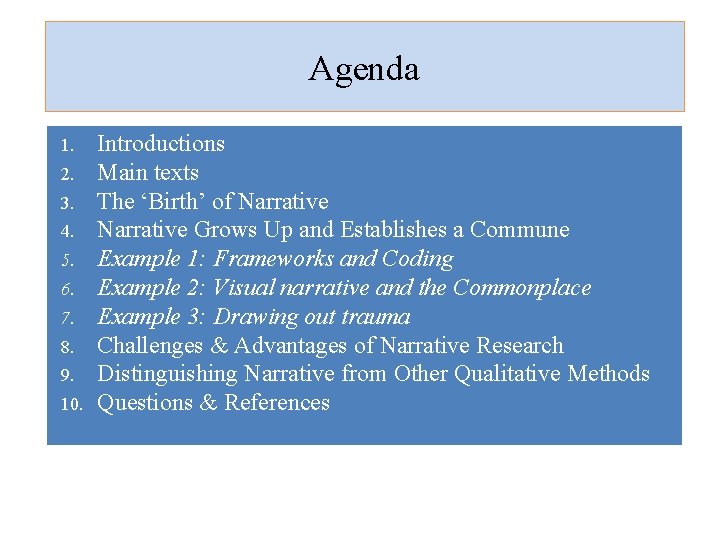
Agenda 1. 2. 3. 4. 5. 6. 7. 8. 9. 10. Introductions Main texts The ‘Birth’ of Narrative Grows Up and Establishes a Commune Example 1: Frameworks and Coding Example 2: Visual narrative and the Commonplace Example 3: Drawing out trauma Challenges & Advantages of Narrative Research Distinguishing Narrative from Other Qualitative Methods Questions & References
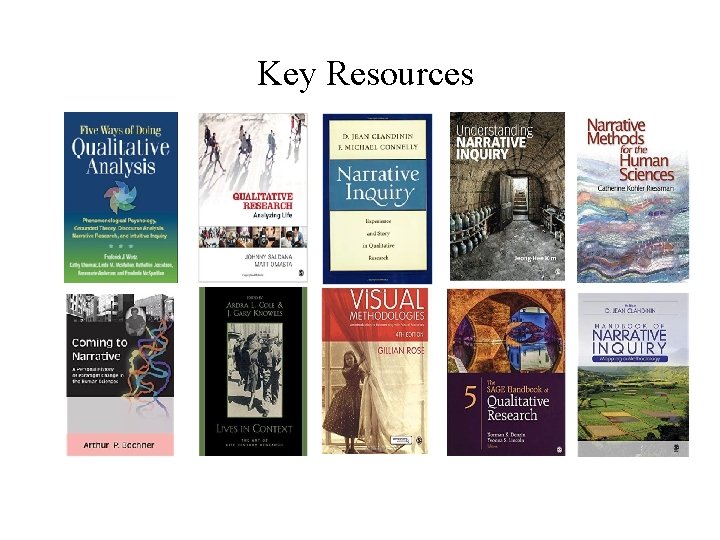
Key Resources
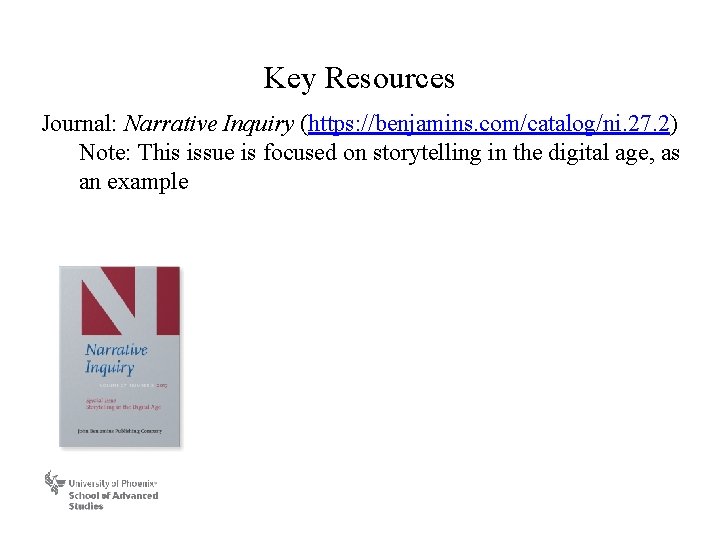
Key Resources Journal: Narrative Inquiry (https: //benjamins. com/catalog/ni. 27. 2) Note: This issue is focused on storytelling in the digital age, as an example
Meet Mr/Ms ‘Narrative’ Ø Ø Ø Parents: Phenomenology (Husserl) and Hermeneutics (Heidegger) Ø Phenom = universalism & objectivism, Herm = context/’thrownness’ & subjectivism Ø Herm = interpretation, meaning making as people engage the world Cousin: Linguistic Analysis Ø Gadamer (hermeneutics and influence of language) Ø Ricouer (language, linguistic phenom, textual & language analysis) Narrative Emerges: The Birth of Narrative Ø Polkinghorn (narrative & narrative research methods)
Narrative’s Mesosystem Ø Ø Ø Narrative intricately linked to CONSTRUCTIVISM People construct meaning of experiences they have People also co-create, or co-construct, experience Ø Reciprocal influence upon surroundings Thus, narrative research recognizes BOTH participant’s creation of reality/meaning AND researcher’s creation of reality/meaning through analysis of the participant’s shared stories NOT about generalizing to other groups - very much recognizes CONTEXT, although may offer up the narrative/meta-narrative to see if it also applies to others
Narrative Grows Up Ø Ø Relationship to ethnography (cousin, aunt/uncle? ) - quite a bit of overlap, particularly when discussing ‘meta-narratives’ which are socially constructed stories about groups (often taken as ‘truths’ of that group’s lived experience) Renewed focus on qualitative methods in all scientific endeavors In psychology, response to cognitive psychology, we understand the world better through stories and narratives rather than disconnected cognitive elements (Schiff, 2012) Arts-based research has been another influential factor
Philosophical/Theoretical/Interpretive Paradigms Ø Application combines Theory, Practice, and Personal Experience. Ø Narrative cannot exist in a vacuum. We cannot make sense of the stories told without the help of a theory or the intersection of multiple theories. Theories should inform or guide us to understand a story but not to diminish our ability to listen. Theories are there to be used, not to dictate to us or shape our stories (Kim, 2016). Here a few: Ø Critical Theory Ø Critical Race Theory Ø Feminist Theory Ø LGBTQ
A Theoretical and Methodological Caveat Ø The place of theory in narrative inquiry differs from the place of theory in formalistic inquiries. Ø Narrative inquirers begin with experience as lived and told in stories. Ø For narrative inquiry, it is more productive to begin with explorations of the phenomena of experience rather than in comparative analysis of various theoretical methodological frames. (Clandinin & Connelly, 2000).
So, what is Narrative Research Method? Narrative Research Methods, or Narrative Inquiry Analysis of a person’s ‘story, ’ of an experience he or she has had Goal of researcher is to draw out the story from the participant Story can be told many ways, including through visual means Researcher may create vignettes of each story, create one overarching meta-narrative that includes the main aspects of all shared stories, depict the story through imagery, create a fictitious story/play demonstrating main ‘gist’ of narratives, or even identify main ‘themes’ found within the narratives. Ø In many ways, NRM/NI is one of loosest methods, with many different ways of approaching the analysis and presentation of results! Ø Ø Ø
Narrating as ‘making present’ Ø As I see it, the foundational property of narrating is to“make present. ” This is narrating’s primary function. (Schiff, 2012) Ø Making present is 1) Declarative: Making present gives presence to subjective experience; 2) Temporal: Making present gives meaning to the past, present and future; 3) Spatial (social): Making present co-creates shared and divergent understandings of the world. (Schiff, 2012)
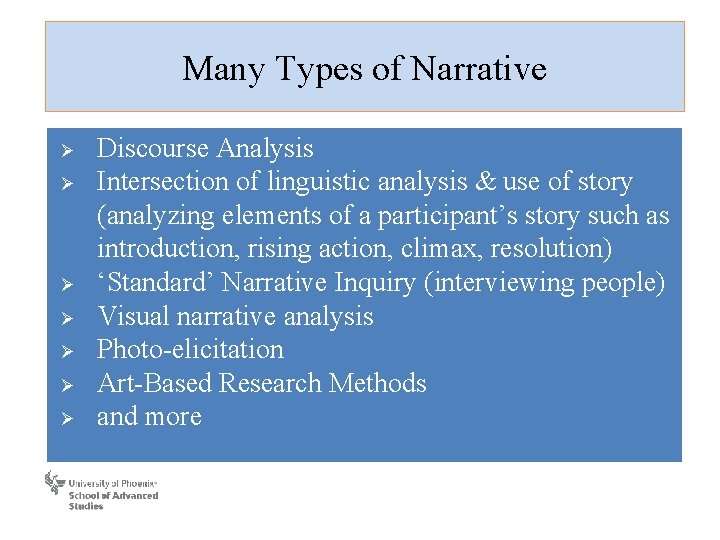
Many Types of Narrative Ø Ø Ø Ø Discourse Analysis Intersection of linguistic analysis & use of story (analyzing elements of a participant’s story such as introduction, rising action, climax, resolution) ‘Standard’ Narrative Inquiry (interviewing people) Visual narrative analysis Photo-elicitation Art-Based Research Methods and more
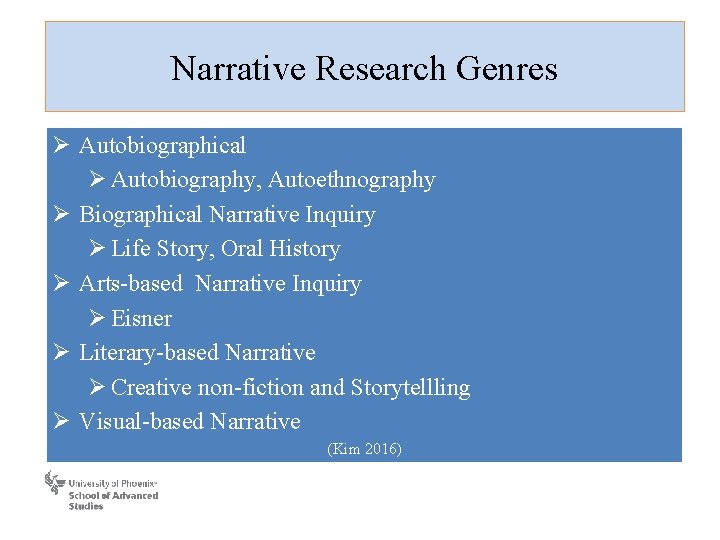
Narrative Research Genres Ø Autobiographical Ø Autobiography, Autoethnography Ø Biographical Narrative Inquiry Ø Life Story, Oral History Ø Arts-based Narrative Inquiry Ø Eisner Ø Literary-based Narrative Ø Creative non-fiction and Storytellling Ø Visual-based Narrative (Kim 2016)
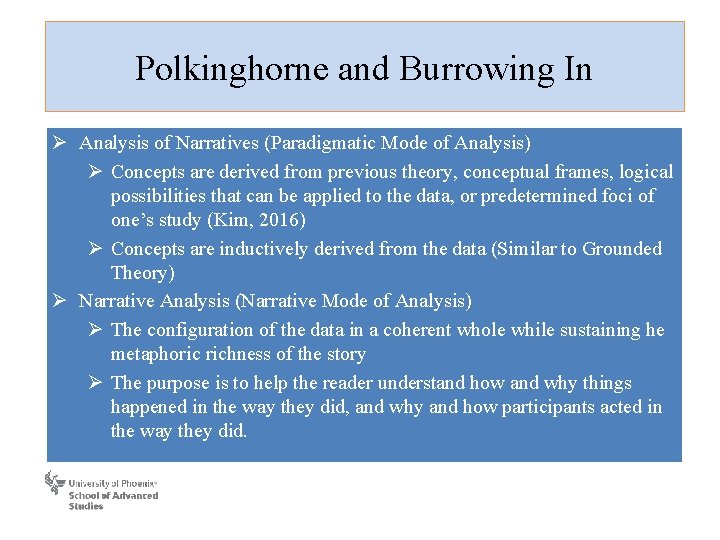
Polkinghorne and Burrowing In Ø Analysis of Narratives (Paradigmatic Mode of Analysis) Ø Concepts are derived from previous theory, conceptual frames, logical possibilities that can be applied to the data, or predetermined foci of one’s study (Kim, 2016) Ø Concepts are inductively derived from the data (Similar to Grounded Theory) Ø Narrative Analysis (Narrative Mode of Analysis) Ø The configuration of the data in a coherent whole while sustaining he metaphoric richness of the story Ø The purpose is to help the reader understand how and why things happened in the way they did, and why and how participants acted in the way they did.
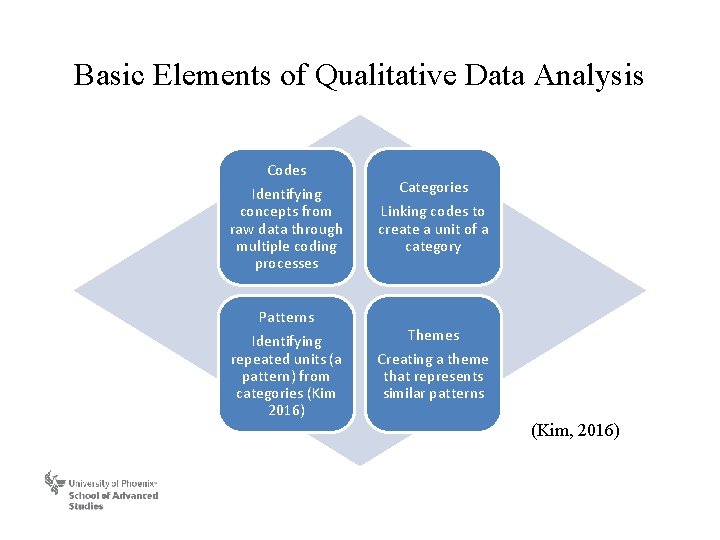
Basic Elements of Qualitative Data Analysis Codes Identifying concepts from raw data through multiple coding processes Patterns Identifying repeated units (a pattern) from categories (Kim 2016) Categories Linking codes to create a unit of a category Themes Creating a theme that represents similar patterns (Kim, 2016)
Broad-Stroke, Holistic Analysis Ø Ø Macro-coding Seeing larger patterns Holistic (Doctoral) writers imagine themselves to be writing a generalizable document, in which the threads constitute generalizations and participants fade into support roles … This kind of reduction, a reduction downward to themes (rather than upward to overarching categories as in the formalistic) yields a different kind of text with a different role for the participants (Clandinin & Connelly, 2000)
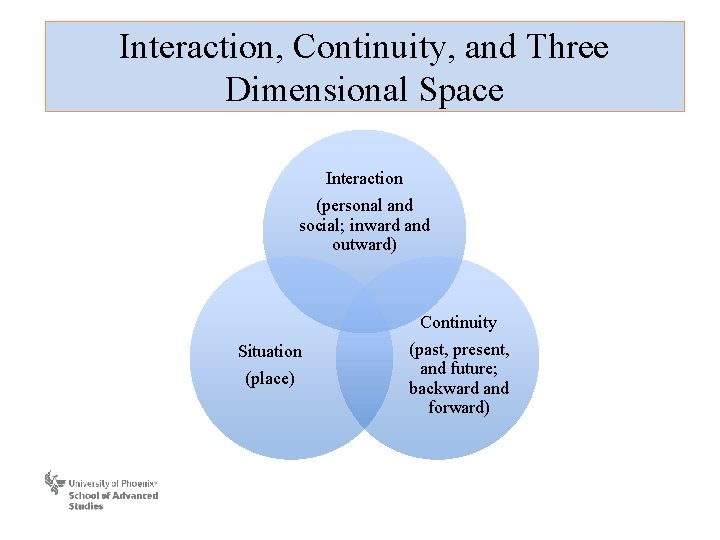
Interaction, Continuity, and Three Dimensional Space Interaction (personal and social; inward and outward) Continuity Situation (place) (past, present, and future; backward and forward)
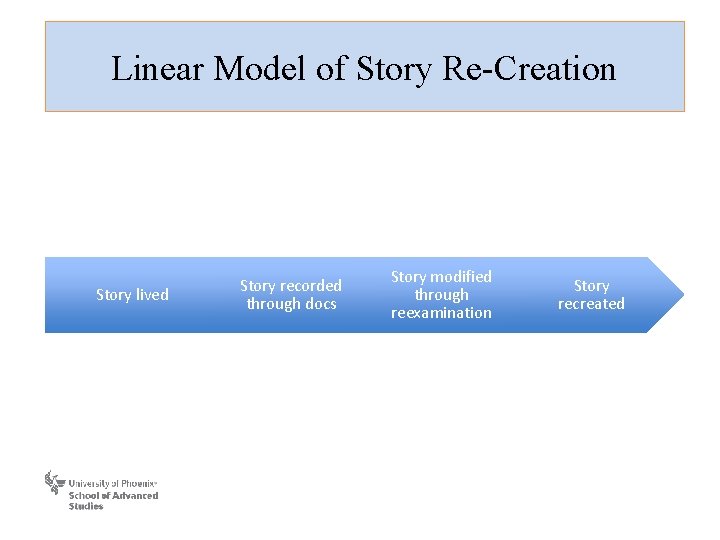
Linear Model of Story Re-Creation Story lived Story recorded through docs Story modified through reexamination Story recreated
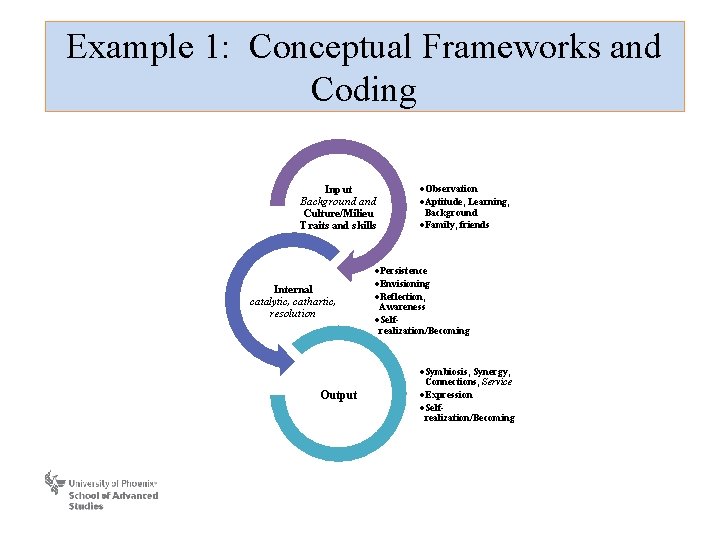
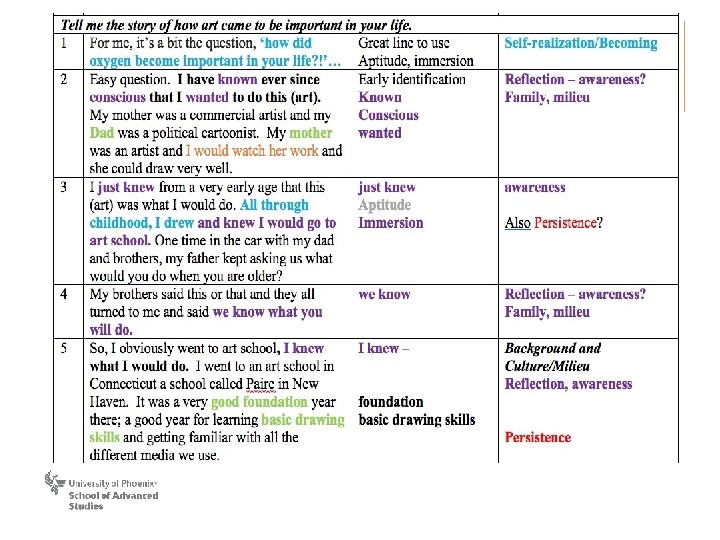
Example 1: Conceptual Frameworks and Coding Input Background and Culture/Milieu Traits and skills Internal catalytic, cathartic, resolution Output Observation Aptitude, Learning, Background Family, friends Persistence Envisioning Reflection, Awareness Selfrealization/Becoming Symbiosis, Synergy, Connections, Service Expression Selfrealization/Becoming
Key Texts
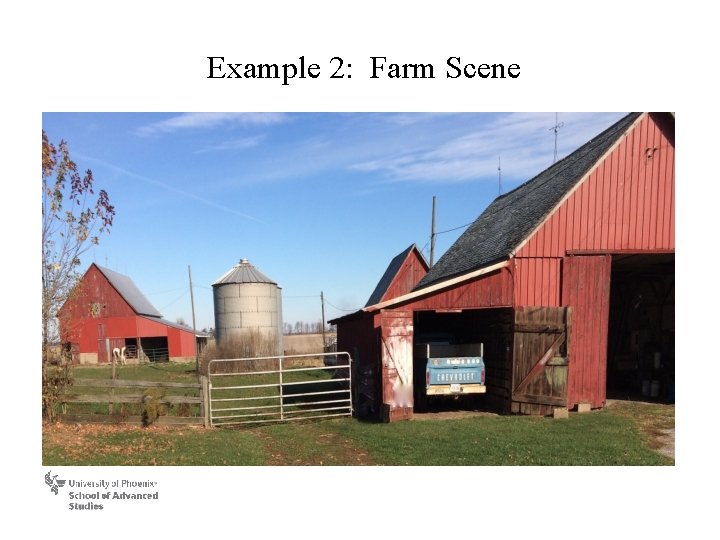
Example 2: Visual Narrative Inquiry and the Commonplace Making visual narrative research draws upon the use of still photography to evoke memory in our lives, a memory around which we construct and reconstruct life stories. Bach, 2001
Esthetics and the Value of the Commonplace Ø Each artifact evokes within its viewer a possible story of its history or an explanatory purpose for its presence. Ø These stories and explanations accumulate into a larger picture of a participant’s local world and suggest a variety of emotional and affective human meanings connected to the objects. Saldana & Omasta, 2018
Esthetics and the Value of the Commonplace Ø In order to understand the esthetic in its ultimate and approved forms, one must begin with it in the raw; in the events and scenes that hold the attentive eye and ear of man. Ø Ordinary experiences are the sources outside an individual which give rise to experience … Ordinarily we take such facts for granted as too commonplace to record. Dewey, 1934
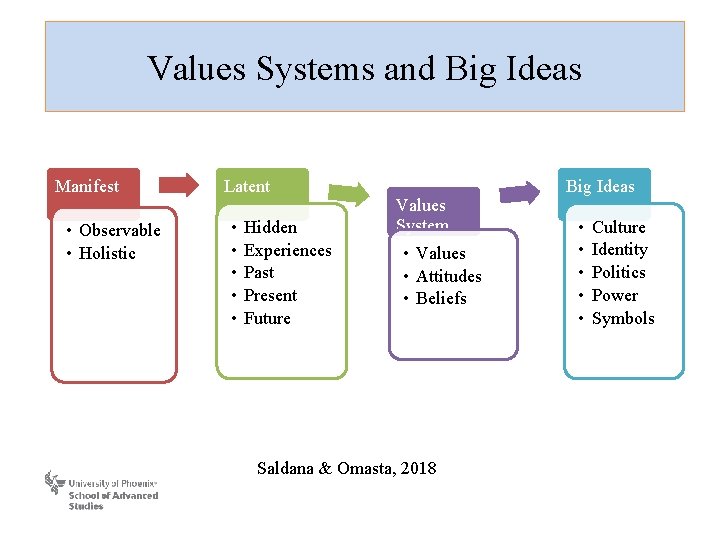
Values Systems and Big Ideas Manifest • Observable • Holistic Latent • • • Hidden Experiences Past Present Future Values System • Values • Attitudes • Beliefs Saldana & Omasta, 2018 Big Ideas • • • Culture Identity Politics Power Symbols
Lenses, Filters, and Angles for Fieldwork Researchers are like cameras and their eyes like lenses. The way researchers perceive social life can be influenced and affected by their own significant demographic attributes such as gender, age, race/ethnicity, sexual orientation, socioeconomic class, and/or occupation (Saldana & Omasta, 2018).
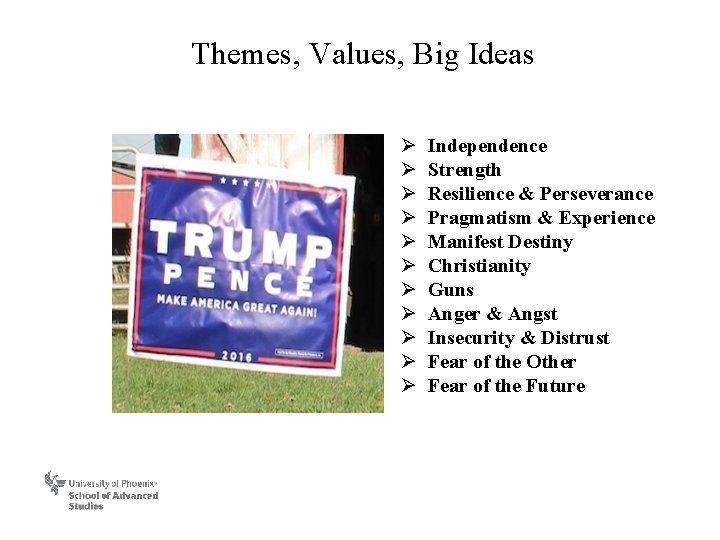
Example 2: Farm Scene
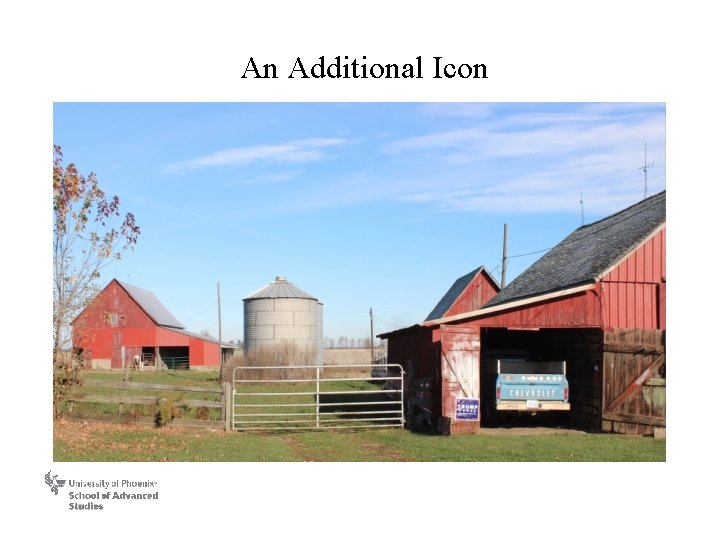
An Additional Icon
Themes, Values, Big Ideas Ø Ø Ø Independence Strength Resilience & Perseverance Pragmatism & Experience Manifest Destiny Christianity Guns Anger & Angst Insecurity & Distrust Fear of the Other Fear of the Future
Lenses, Filters, and Angles for Fieldwork Ø The filters that cover a researcher’s lens might consist of a set of personal values, attitudes, and beliefs about the world, formed by her (or his) unique personal biography, learned experiences, and individual thinking patterns (Saldana & Omasta, 2018). Ø How does the introduction of this powerful icon change one’s perception of the scene?
Example 3: Drawing out Trauma Ø Ø Ø Dr. Iishana Artra Group expressive arts with male combat vets who had PTSD Narrative (therapy) as they told their respective stories Visual narrative components as they drew/painted/etc. their experiences In dissertation she had a section for each participant, with a concise version of his story, along with his pictures ALSO transformative in nature, as the vets changed through the interactions in the study - healing through the research process
Challenges and Advantages of Using Narrative Challenges Advantages Need to make sure and get a ‘full’ story, so need depth to the data. Not just description of an experience. Ethics - if open, flexible that can present problems with IRBs who want concrete steps Slipping out of constructive worldview into essentialist/etc. Inhabit the stories of participants - if traumatic, need self-care in place Get to hear people talk about their ‘stories’! Method is loose enough to make it your own (style) Can include different artifacts to build story, including visuals & art Help give voice to those without - can have social justice & advocacy perspective
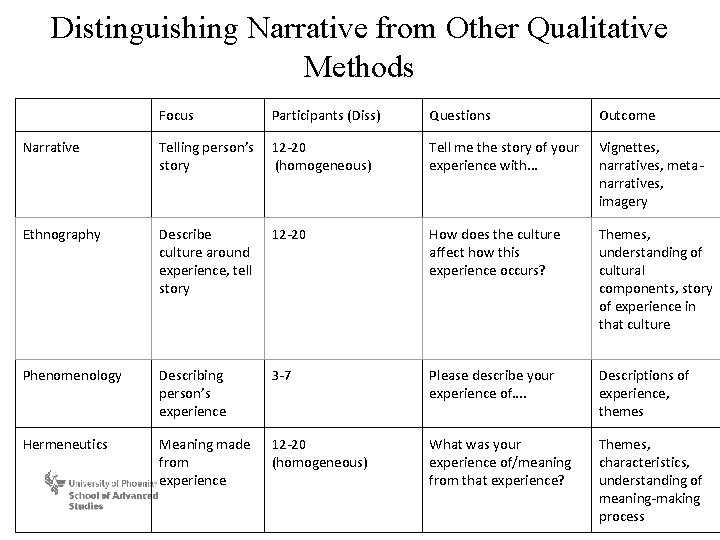
Distinguishing Narrative from Other Qualitative Methods Focus Participants (Diss) Questions Outcome Narrative Telling person’s story 12 -20 (homogeneous) Tell me the story of your experience with. . . Vignettes, narratives, metanarratives, imagery Ethnography Describe culture around experience, tell story 12 -20 How does the culture affect how this experience occurs? Themes, understanding of cultural components, story of experience in that culture Phenomenology Describing person’s experience 3 -7 Please describe your experience of…. Descriptions of experience, themes Hermeneutics Meaning made from experience 12 -20 (homogeneous) What was your experience of/meaning from that experience? Themes, characteristics, understanding of meaning-making process
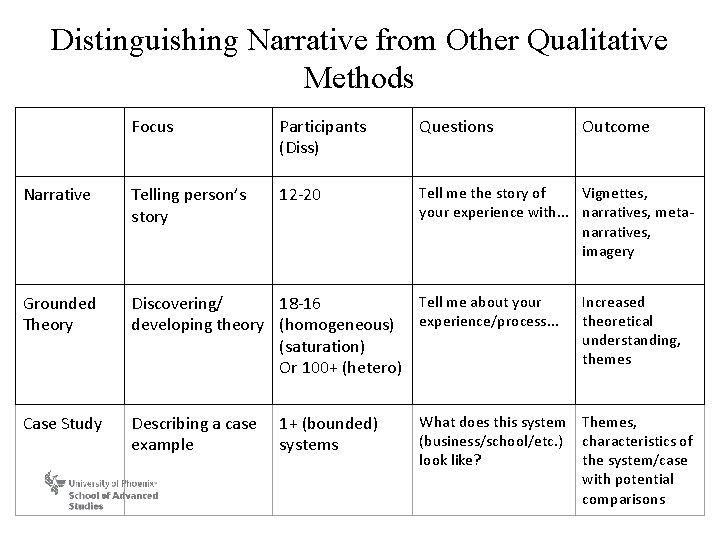
Distinguishing Narrative from Other Qualitative Methods Focus Participants (Diss) Questions Narrative Telling person’s story 12 -20 Tell me the story of Vignettes, your experience with. . . narratives, metanarratives, imagery Grounded Theory Tell me about your Discovering/ 18 -16 developing theory (homogeneous) experience/process. . . (saturation) Or 100+ (hetero) Case Study Describing a case example 1+ (bounded) systems Outcome Increased theoretical understanding, themes What does this system Themes, (business/school/etc. ) characteristics of look like? the system/case with potential comparisons
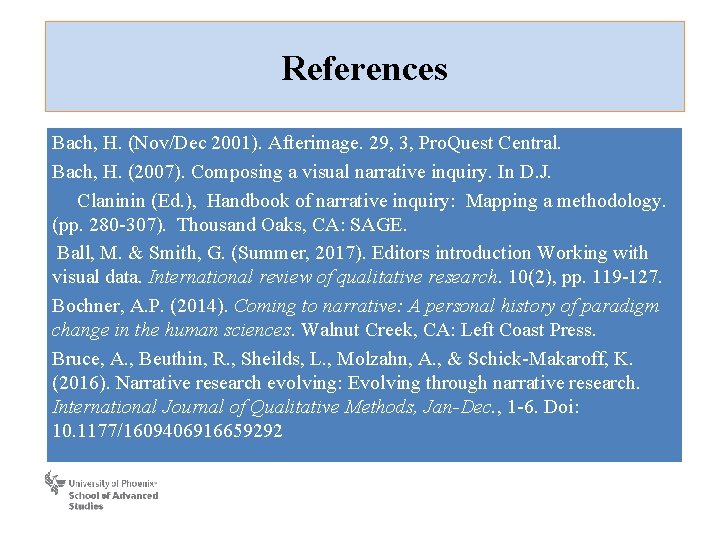
References Bach, H. (Nov/Dec 2001). Afterimage. 29, 3, Pro. Quest Central. Bach, H. (2007). Composing a visual narrative inquiry. In D. J. Claninin (Ed. ), Handbook of narrative inquiry: Mapping a methodology. (pp. 280 -307). Thousand Oaks, CA: SAGE. Ball, M. & Smith, G. (Summer, 2017). Editors introduction Working with visual data. International review of qualitative research. 10(2), pp. 119 -127. Bochner, A. P. (2014). Coming to narrative: A personal history of paradigm change in the human sciences. Walnut Creek, CA: Left Coast Press. Bruce, A. , Beuthin, R. , Sheilds, L. , Molzahn, A. , & Schick-Makaroff, K. (2016). Narrative research evolving: Evolving through narrative research. International Journal of Qualitative Methods, Jan-Dec. , 1 -6. Doi: 10. 1177/1609406916659292
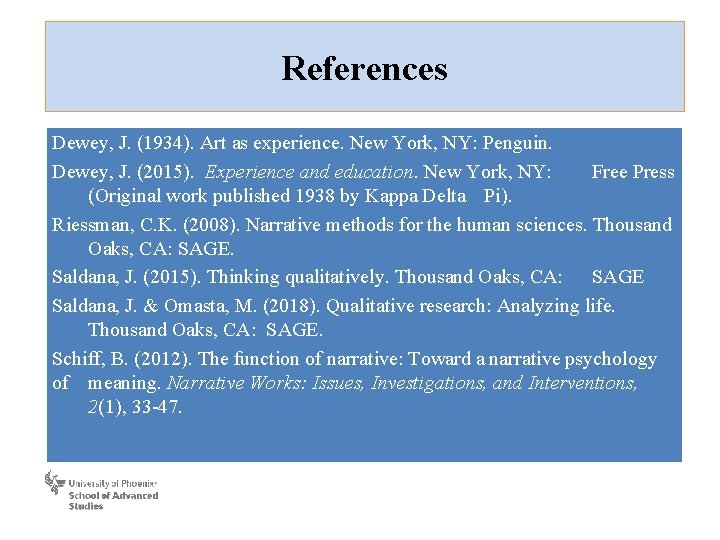
References Dewey, J. (1934). Art as experience. New York, NY: Penguin. Dewey, J. (2015). Experience and education. New York, NY: Free Press (Original work published 1938 by Kappa Delta Pi). Riessman, C. K. (2008). Narrative methods for the human sciences. Thousand Oaks, CA: SAGE. Saldana, J. (2015). Thinking qualitatively. Thousand Oaks, CA: SAGE Saldana, J. & Omasta, M. (2018). Qualitative research: Analyzing life. Thousand Oaks, CA: SAGE. Schiff, B. (2012). The function of narrative: Toward a narrative psychology of meaning. Narrative Works: Issues, Investigations, and Interventions, 2(1), 33 -47.
References Wertz, F. J. , Charmaz, K. , Mc. Mullen, L. M. , Josselson, R. , Anderson, R. , & Mc. Spadden, E. (2011). Five ways of doing qualitative analysis: Phenomenological psychology, grounded theory, discourse analysis, narrative research, and intuitive inquiry. New York, NY: The Guilford Press.
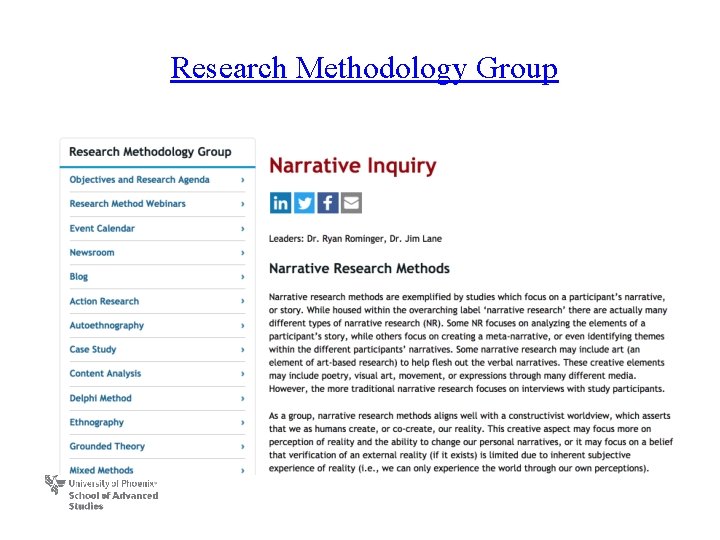
Research Methodology Group
Questions? Center for Educational and Instructional Technology Research Educational. Technology@phoenix. edu Center for Leadership Studies and Educational Research https: //research. phoenix. edu/research-centers/centerleadership-studies-and-educational-research
NEXT WEBINAR : Oct 11, 2018 4: 00 -5: 00 pm AZ time Quantitative Measurement Development of Surveys Chara Price https: //research. phoenix. edu/content/research-methodologygroup/quantitative-resources-conferences-journals