
Narrative Literary Terms Plot The events that make





- Slides: 22
Narrative Literary Terms
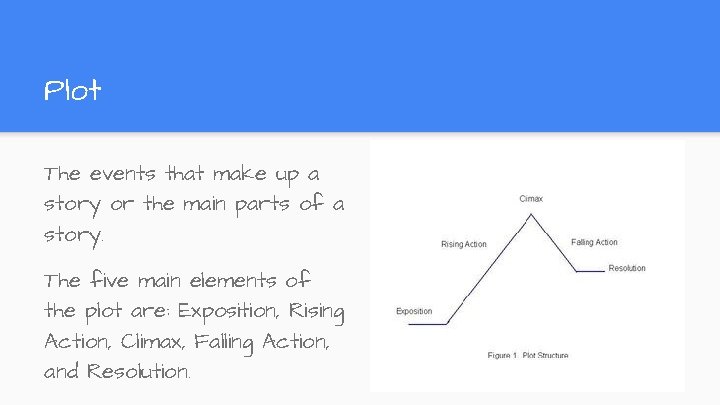
Plot The events that make up a story or the main parts of a story. The five main elements of the plot are: Exposition, Rising Action, Climax, Falling Action, and Resolution.
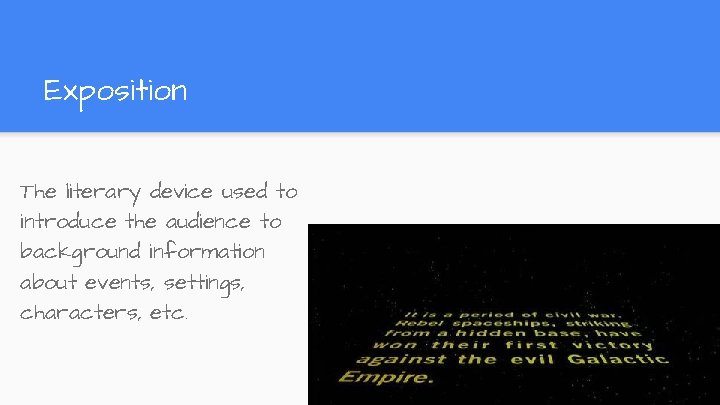
Exposition The literary device used to introduce the audience to background information about events, settings, characters, etc.
Lord of the Rings Example
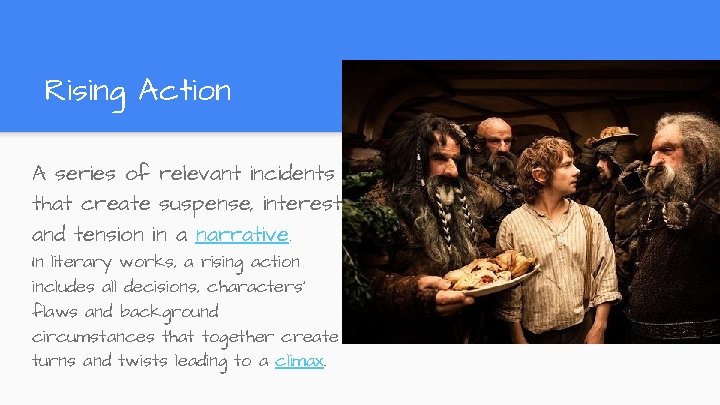
Rising Action A series of relevant incidents that create suspense, interest and tension in a narrative. In literary works, a rising action includes all decisions, characters’ flaws and background circumstances that together create turns and twists leading to a climax.
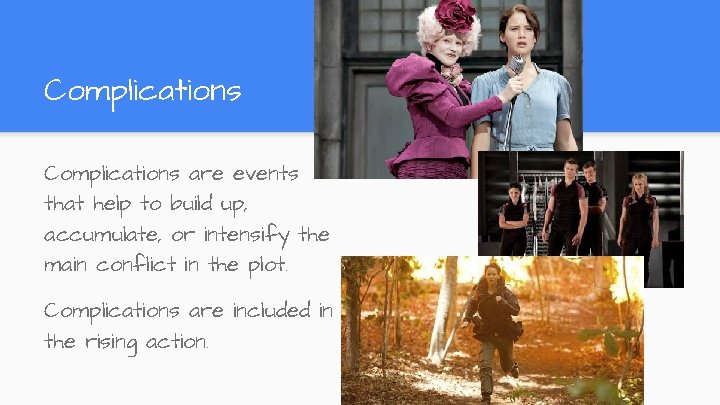
Complications are events that help to build up, accumulate, or intensify the main conflict in the plot. Complications are included in the rising action.
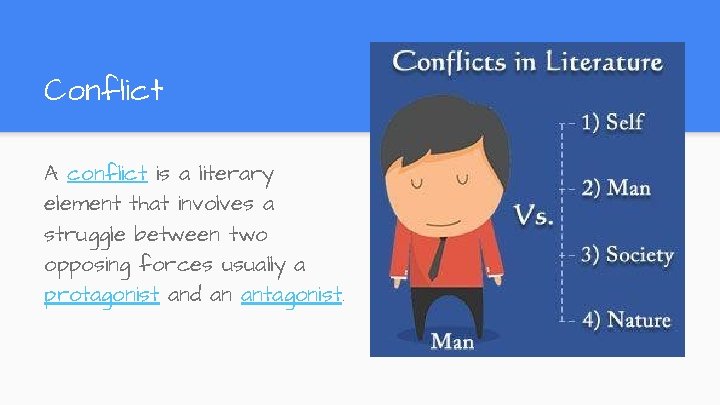
Conflict A conflict is a literary element that involves a struggle between two opposing forces usually a protagonist and an antagonist.
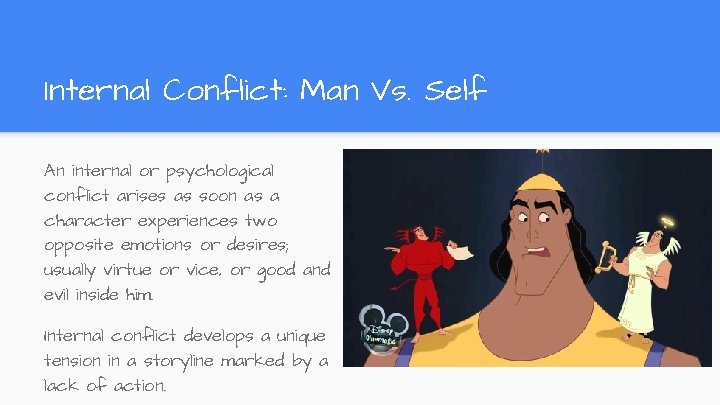
Internal Conflict: Man Vs. Self An internal or psychological conflict arises as soon as a character experiences two opposite emotions or desires; usually virtue or vice, or good and evil inside him. Internal conflict develops a unique tension in a storyline marked by a lack of action.
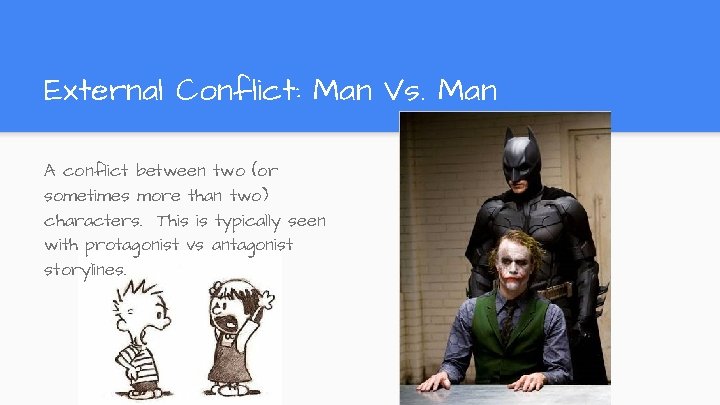
External Conflict: Man Vs. Man A conflict between two (or sometimes more than two) characters. This is typically seen with protagonist vs antagonist storylines.
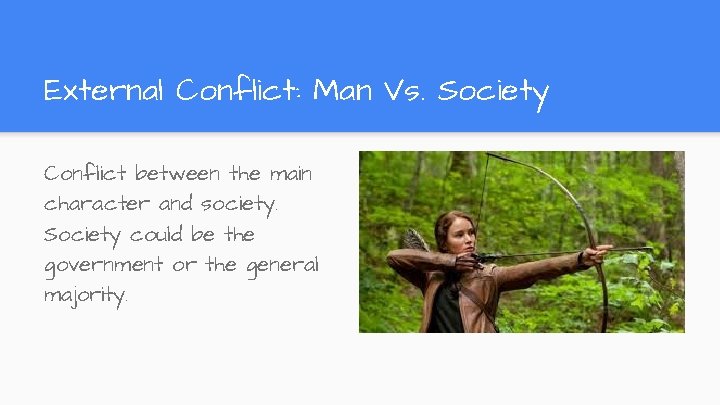
External Conflict: Man Vs. Society Conflict between the main character and society. Society could be the government or the general majority.
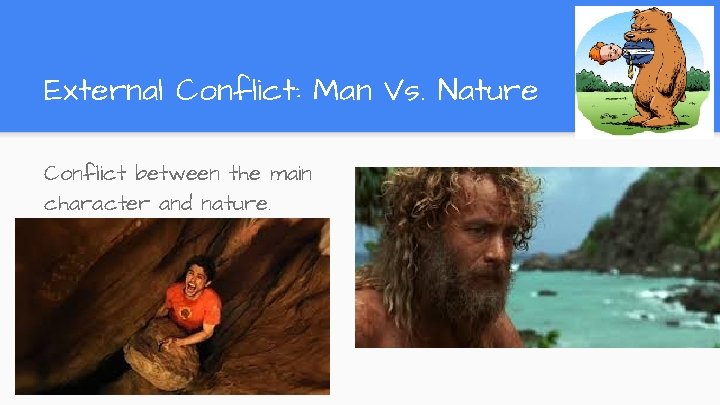
External Conflict: Man Vs. Nature Conflict between the main character and nature.
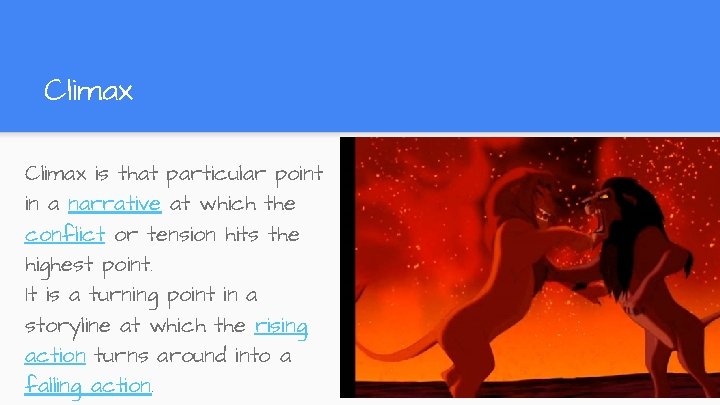
Climax is that particular point in a narrative at which the conflict or tension hits the highest point. It is a turning point in a storyline at which the rising action turns around into a falling action.
Mulan Climax
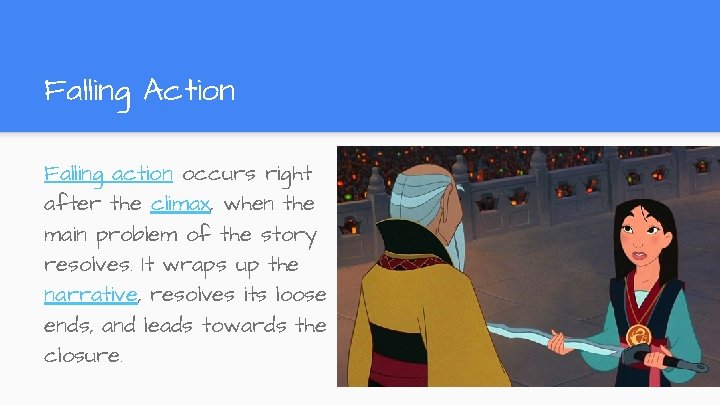
Falling Action Falling action occurs right after the climax, when the main problem of the story resolves. It wraps up the narrative, resolves its loose ends, and leads towards the closure.
Mulan Falling Action
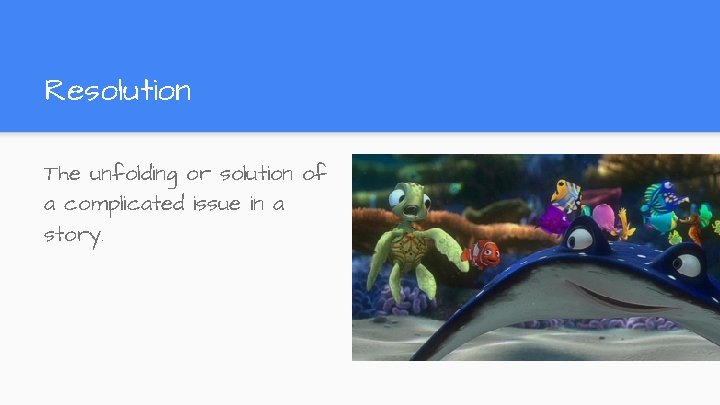
Resolution The unfolding or solution of a complicated issue in a story.
Mulan Resolution
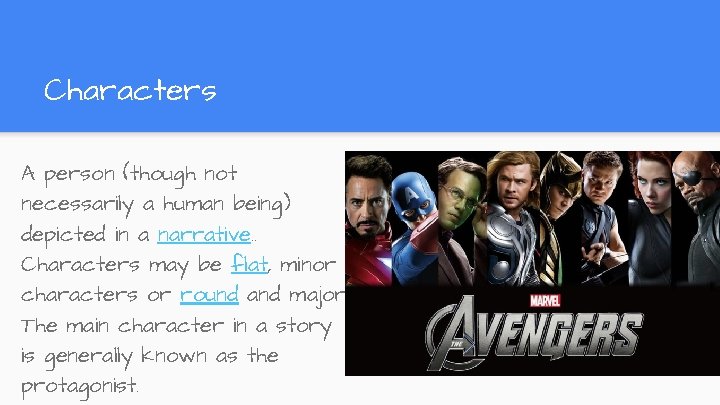
Characters A person (though not necessarily a human being) depicted in a narrative. . Characters may be flat, minor characters or round and major. The main character in a story is generally known as the protagonist.
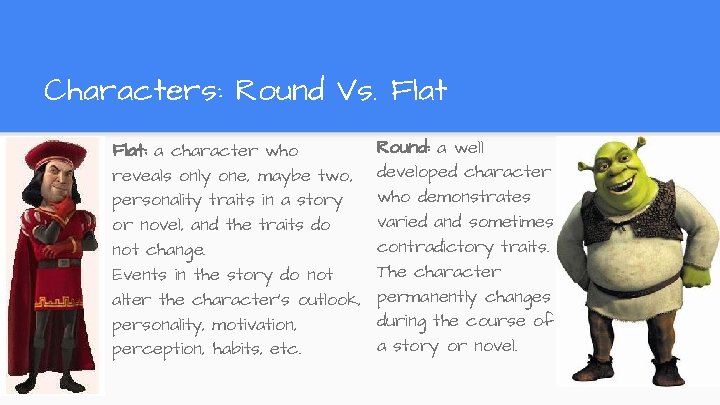
Characters: Round Vs. Flat: a character who reveals only one, maybe two, personality traits in a story or novel, and the traits do not change. Events in the story do not alter the character’s outlook, personality, motivation, perception, habits, etc. Round: a well developed character who demonstrates varied and sometimes contradictory traits. The character permanently changes during the course of a story or novel.
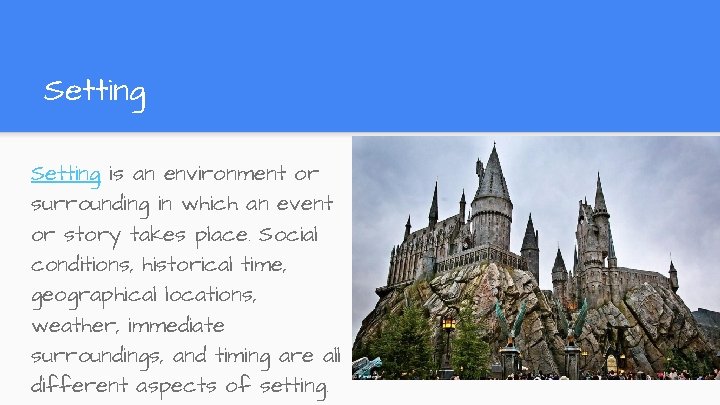
Setting is an environment or surrounding in which an event or story takes place. Social conditions, historical time, geographical locations, weather, immediate surroundings, and timing are all different aspects of setting.
Theme is defined as a main idea or an underlying meaning of a literary work that may be stated directly or indirectly.
Aladdin Example