
Narrative Conventions How a text is put together



- Slides: 9
Narrative Conventions How a text is put together
What is a narrative convention? O Narrative: a fictional story O Convention: the way something is normally constructed/the parts something must consist of.
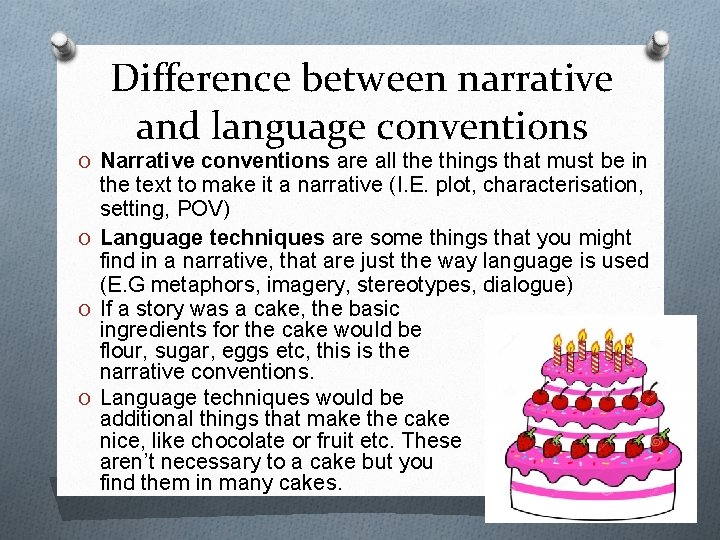
Difference between narrative and language conventions O Narrative conventions are all the things that must be in the text to make it a narrative (I. E. plot, characterisation, setting, POV) O Language techniques are some things that you might find in a narrative, that are just the way language is used (E. G metaphors, imagery, stereotypes, dialogue) O If a story was a cake, the basic ingredients for the cake would be flour, sugar, eggs etc, this is the narrative conventions. O Language techniques would be additional things that make the cake nice, like chocolate or fruit etc. These aren’t necessary to a cake but you find them in many cakes.
Plot and Narrative Structure O Plot: exposition - development; turning point; climax; resolution. The development of conflict, tension and suspense. O Structure- the order that events are revealed. Structure can be circular, O Chronological, flashback, flash-forward, foreshadowing, a final twist.
Characterisation O Identify the protagonist, antagonist, central character(s), minor characters, the ‘other’ O Construction of character through: point of view; description, speech/dialogue; thoughts; actions; symbolism; stereotypes; juxtaposition O Representation of identities, attitudes, values and ideologies through characters.
Setting O Time, place, atmosphere O Setting as a representation of a society constructed through description, symbolism, imagery, allusions/references.
Narrative Point of View O The relationship between reader and narrator which determines the ‘distance’: First, second, third person limited/ omniscient.
Language, Style and Tone O Style: the way something is said eg formal, informal, slang, colloquial, jargon, dialect, conversational, natural O Tone: refers to the mood, attitude and feeling communicated by and within a text. Eg sarcastic, humorous, serious, questioning, angry, persuasive, informative. O Style and tone is created through the use of language and language devices.
Theme O Central ideas/issues explored in the text.