
Napoleon He was like an expert chess player
- Slides: 23
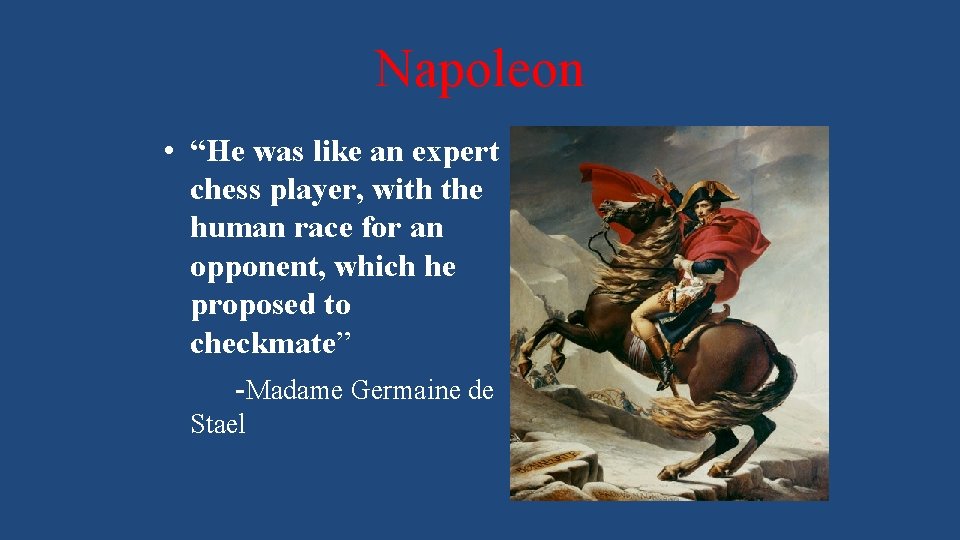
Napoleon • “He was like an expert chess player, with the human race for an opponent, which he proposed to checkmate” -Madame Germaine de Stael
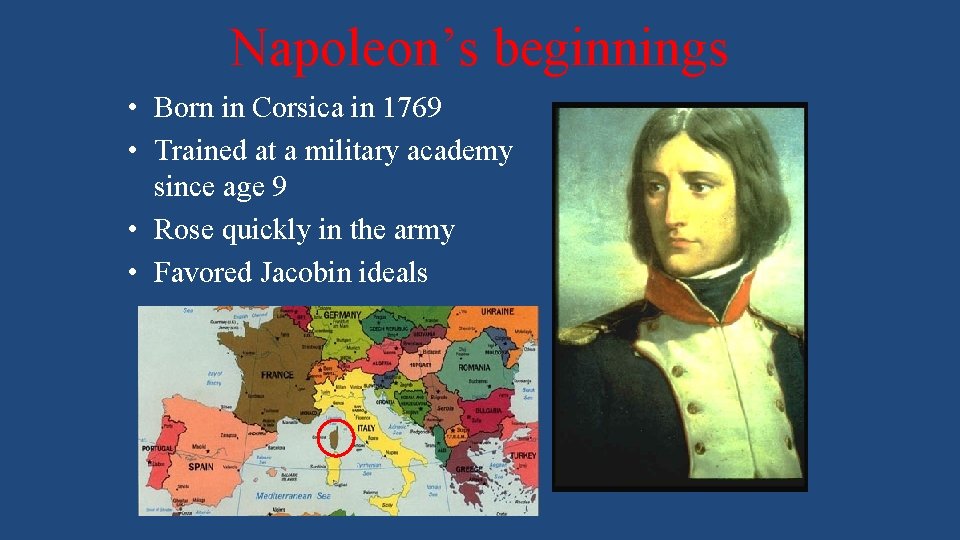
Napoleon’s beginnings • Born in Corsica in 1769 • Trained at a military academy since age 9 • Rose quickly in the army • Favored Jacobin ideals
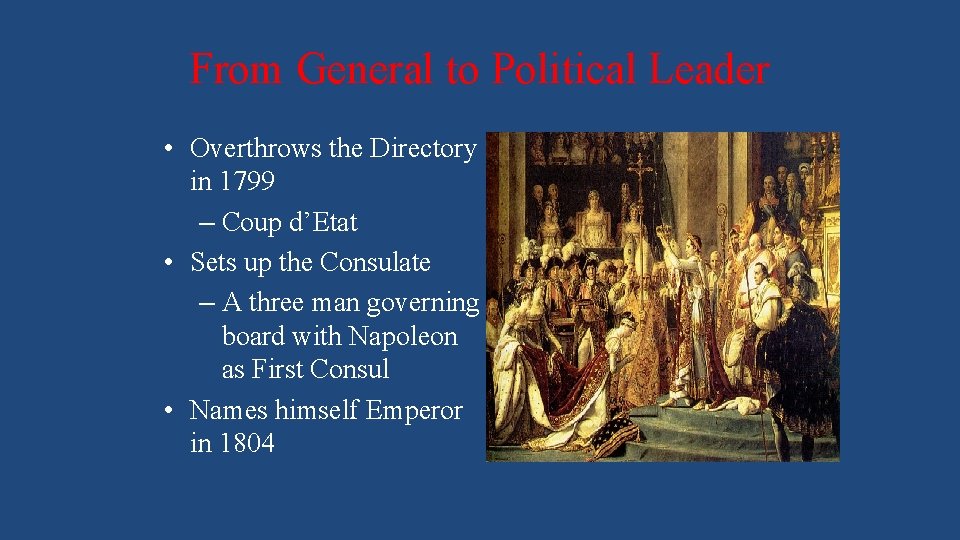
From General to Political Leader • Overthrows the Directory in 1799 – Coup d’Etat • Sets up the Consulate – A three man governing board with Napoleon as First Consul • Names himself Emperor in 1804
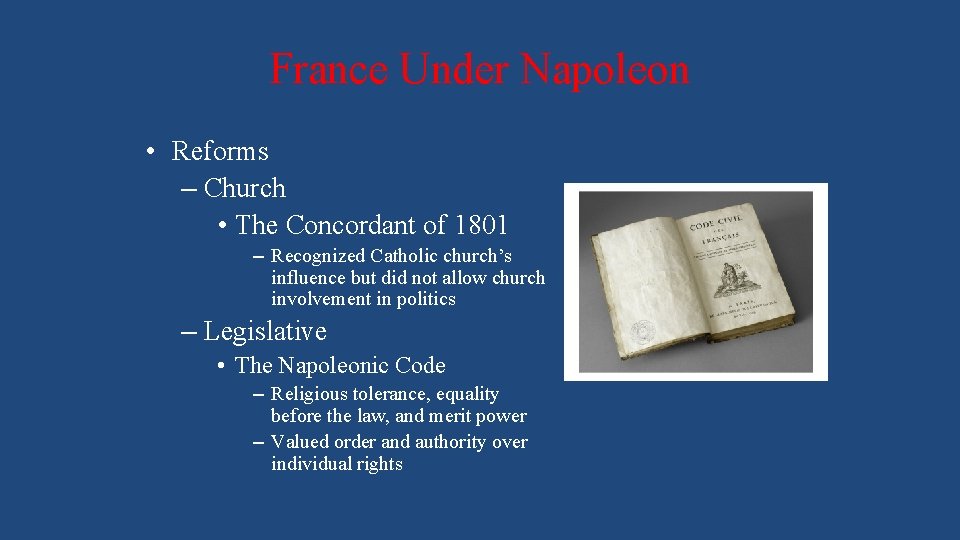
France Under Napoleon • Reforms – Church • The Concordant of 1801 – Recognized Catholic church’s influence but did not allow church involvement in politics – Legislative • The Napoleonic Code – Religious tolerance, equality before the law, and merit power – Valued order and authority over individual rights
Empire of Napoleon • Brilliant military general • Annexed large parts of western Europe – Signed peace treaties with Russia, Austria, and Prussia • Failed battle in Egypt – Aimed at disturbing British trade routes to India – Admiral Horatio Nelson • Main enemy was Great Britain
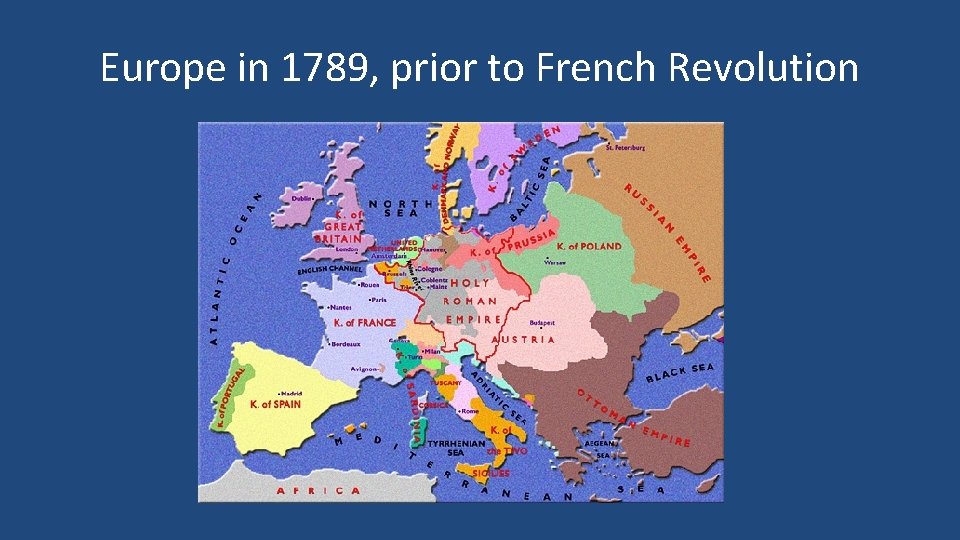
Europe in 1789, prior to French Revolution
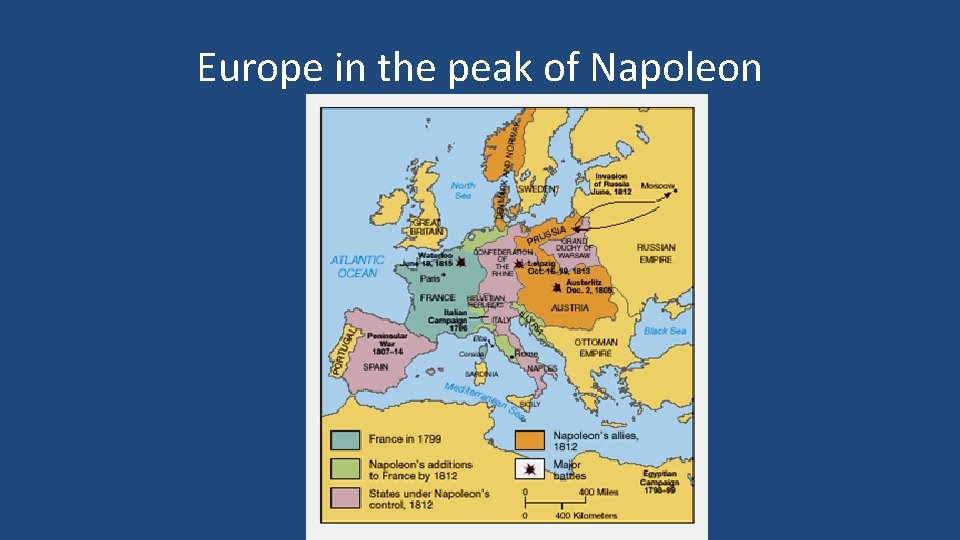
Europe in the peak of Napoleon
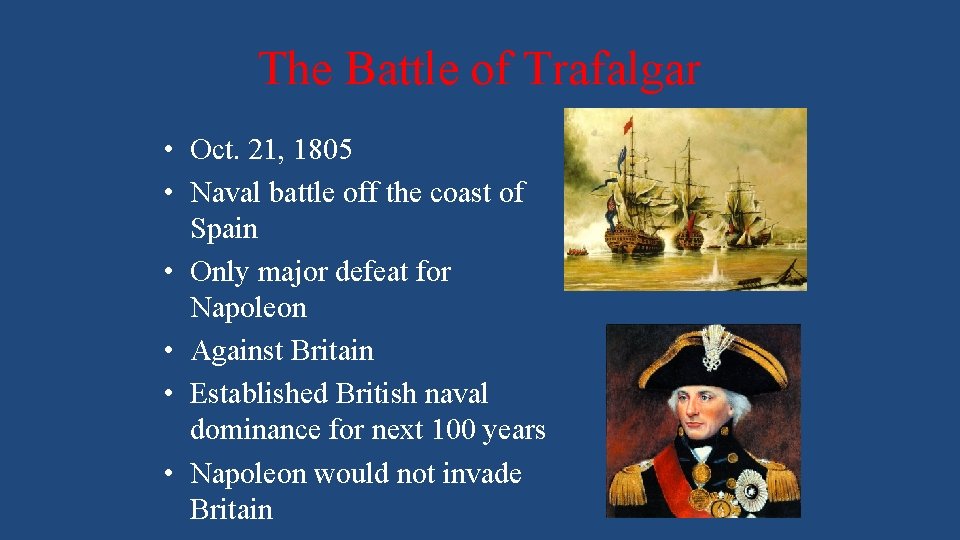
The Battle of Trafalgar • Oct. 21, 1805 • Naval battle off the coast of Spain • Only major defeat for Napoleon • Against Britain • Established British naval dominance for next 100 years • Napoleon would not invade Britain
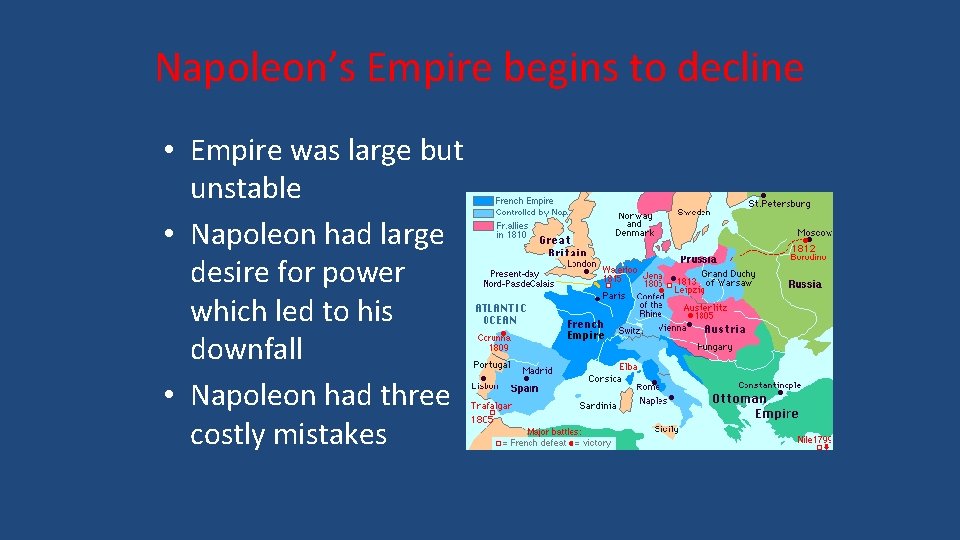
Napoleon’s Empire begins to decline • Empire was large but unstable • Napoleon had large desire for power which led to his downfall • Napoleon had three costly mistakes
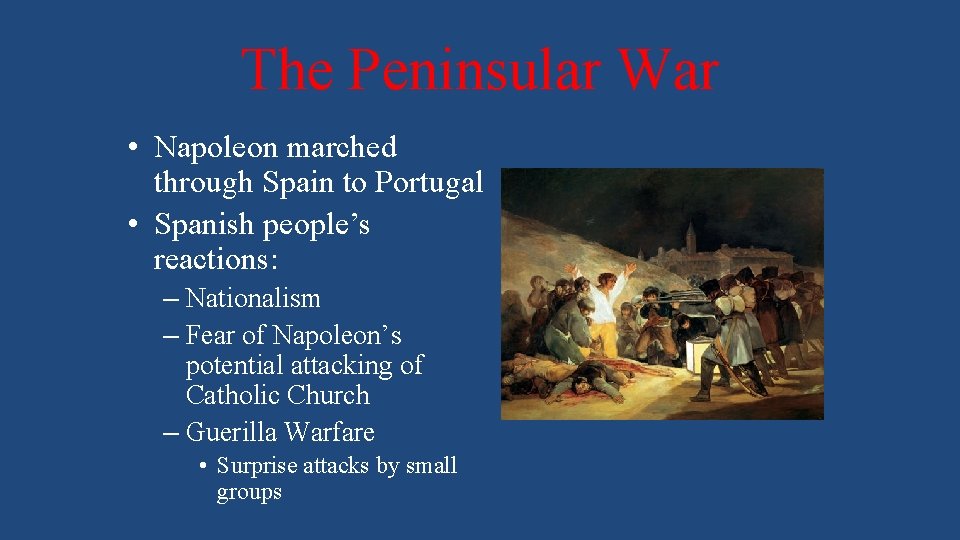
The Peninsular War • Napoleon marched through Spain to Portugal • Spanish people’s reactions: – Nationalism – Fear of Napoleon’s potential attacking of Catholic Church – Guerilla Warfare • Surprise attacks by small groups
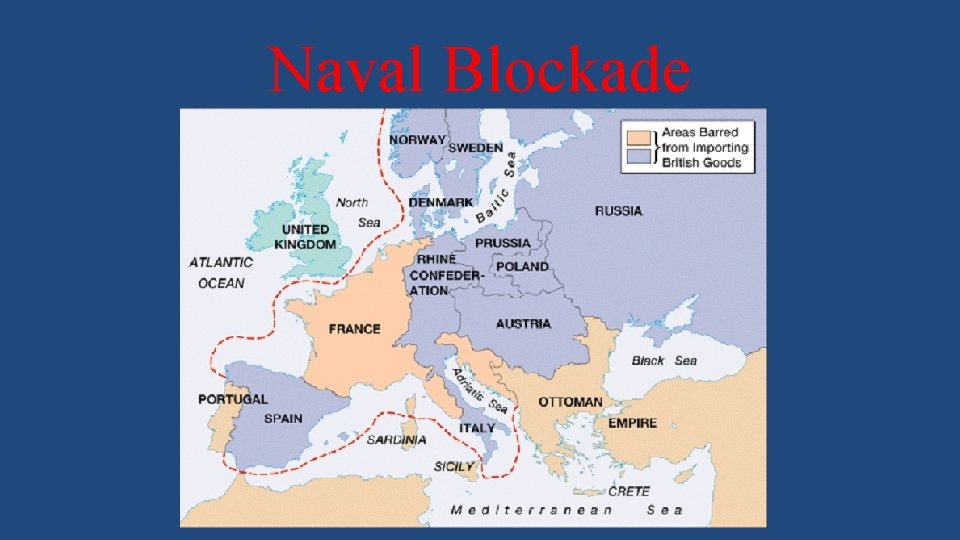
The Continental System • Aimed to make Europe self-sufficient and hurt British trading economy • Set up a blockade – A forced closing of sea ports • Proved ineffective due to poor enforcement • British set up own blockade – Main cause for War of 1812 between USA and Britain
Naval Blockade
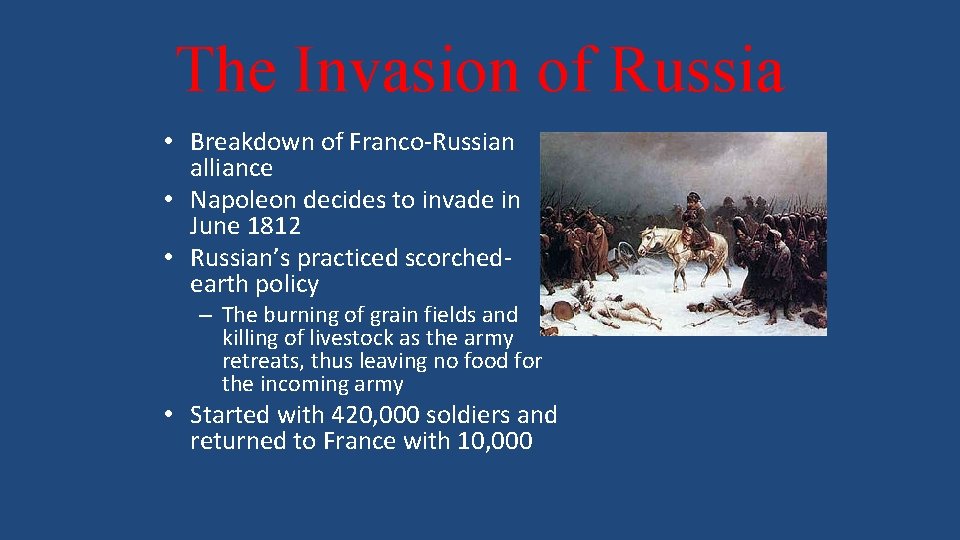
The Invasion of Russia • Breakdown of Franco-Russian alliance • Napoleon decides to invade in June 1812 • Russian’s practiced scorchedearth policy – The burning of grain fields and killing of livestock as the army retreats, thus leaving no food for the incoming army • Started with 420, 000 soldiers and returned to France with 10, 000
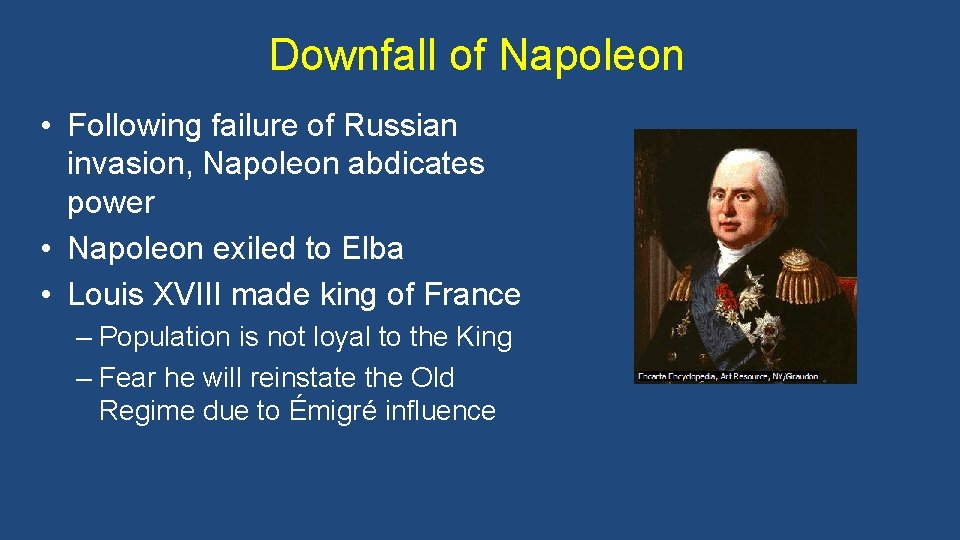
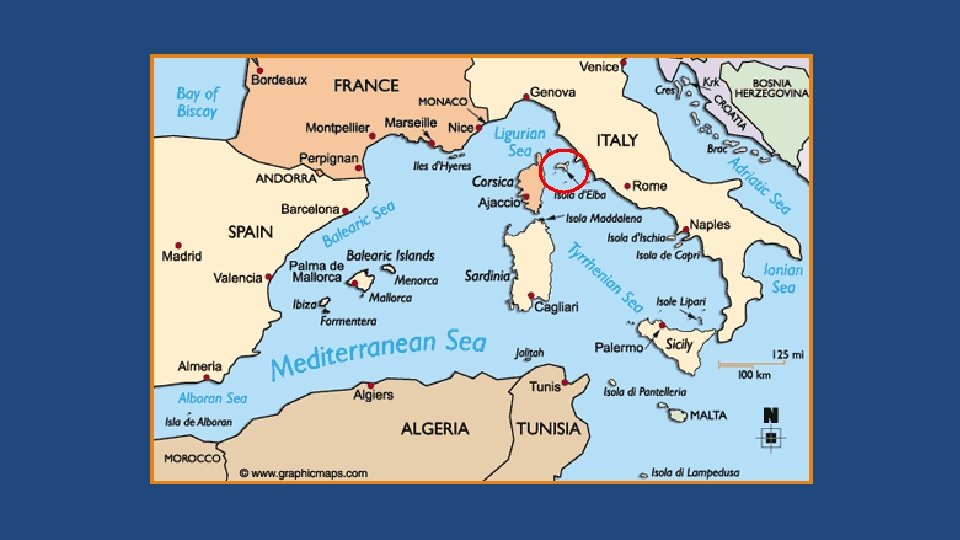
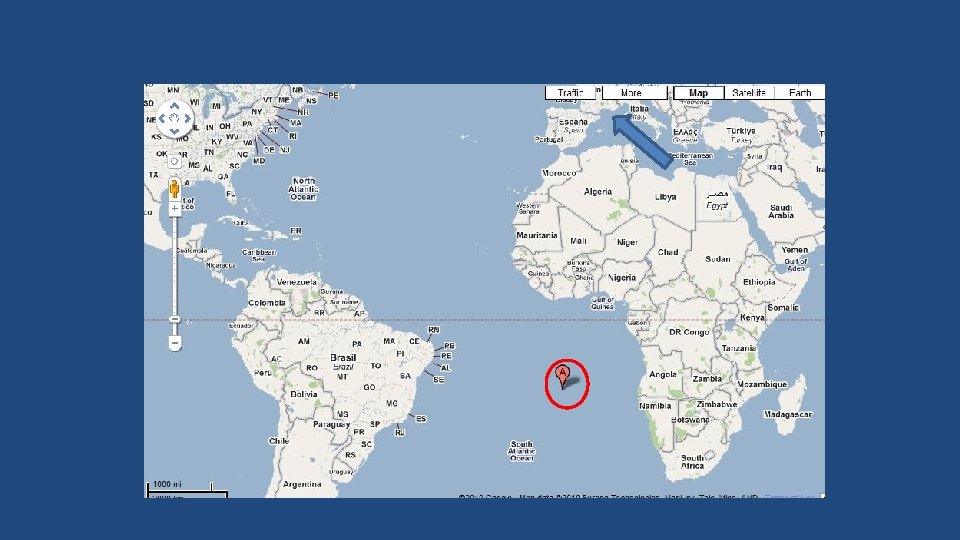
Downfall of Napoleon • Following failure of Russian invasion, Napoleon abdicates power • Napoleon exiled to Elba • Louis XVIII made king of France – Population is not loyal to the King – Fear he will reinstate the Old Regime due to Émigré influence
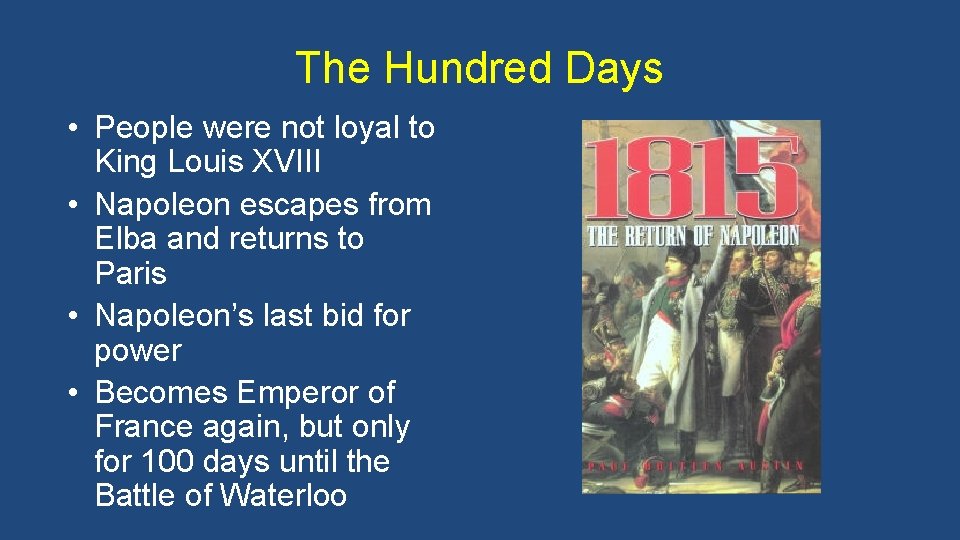
The Hundred Days • People were not loyal to King Louis XVIII • Napoleon escapes from Elba and returns to Paris • Napoleon’s last bid for power • Becomes Emperor of France again, but only for 100 days until the Battle of Waterloo
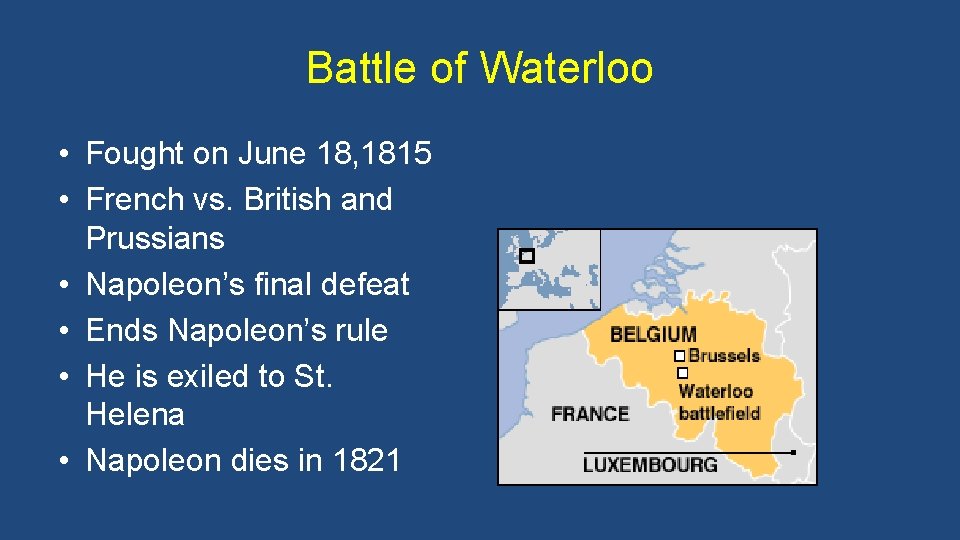
Battle of Waterloo • Fought on June 18, 1815 • French vs. British and Prussians • Napoleon’s final defeat • Ends Napoleon’s rule • He is exiled to St. Helena • Napoleon dies in 1821
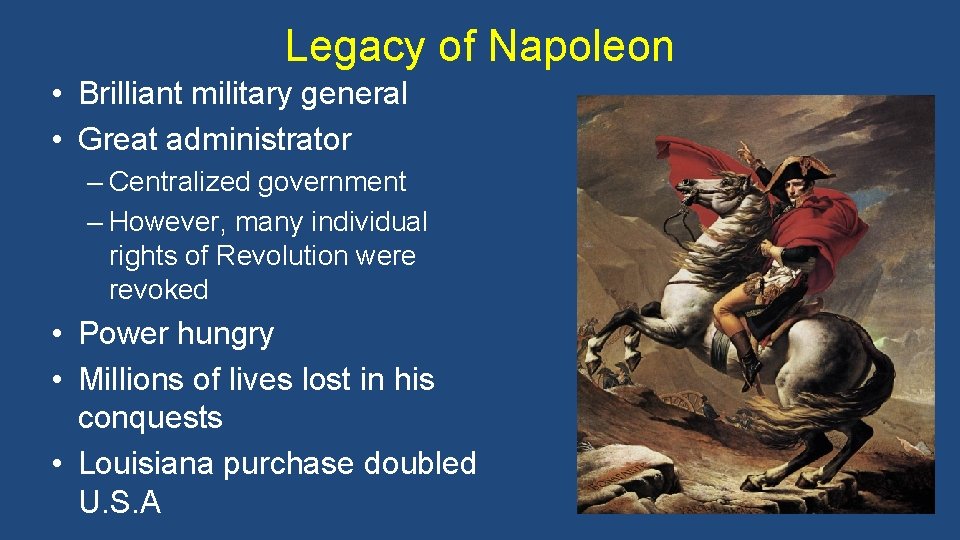
Legacy of Napoleon • Brilliant military general • Great administrator – Centralized government – However, many individual rights of Revolution were revoked • Power hungry • Millions of lives lost in his conquests • Louisiana purchase doubled U. S. A
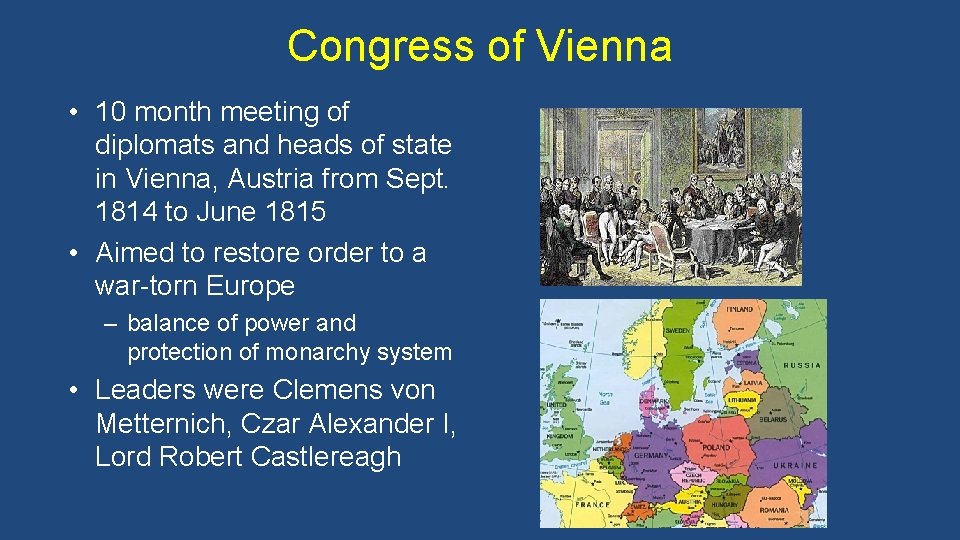
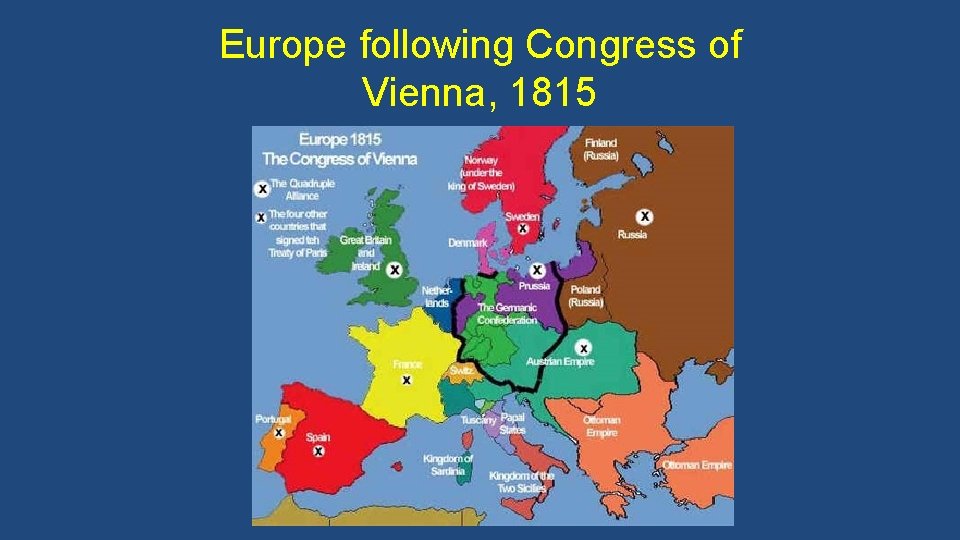
Congress of Vienna • 10 month meeting of diplomats and heads of state in Vienna, Austria from Sept. 1814 to June 1815 • Aimed to restore order to a war-torn Europe – balance of power and protection of monarchy system • Leaders were Clemens von Metternich, Czar Alexander I, Lord Robert Castlereagh
Europe following Congress of Vienna, 1815
Congress of Vienna • Balance of Power – Contain French expansion by putting strong countries around it (the Netherlands, Prussia, Austria) • Stability – Put “legitimate” monarchs back on the throne in Portugal, Spain, and Italy • Provided peace and stability for 100 years
Beginnings of Nationalism • Napoleon and French Revolution would stir feelings of nationalism in Europe and Latin America • New borders from Congress of Vienna would cause internal conflicts