
NAPOLEON AND THE FRENCH EMPIRE Rise to Power



- Slides: 59
NAPOLEON AND THE FRENCH EMPIRE
Rise to Power
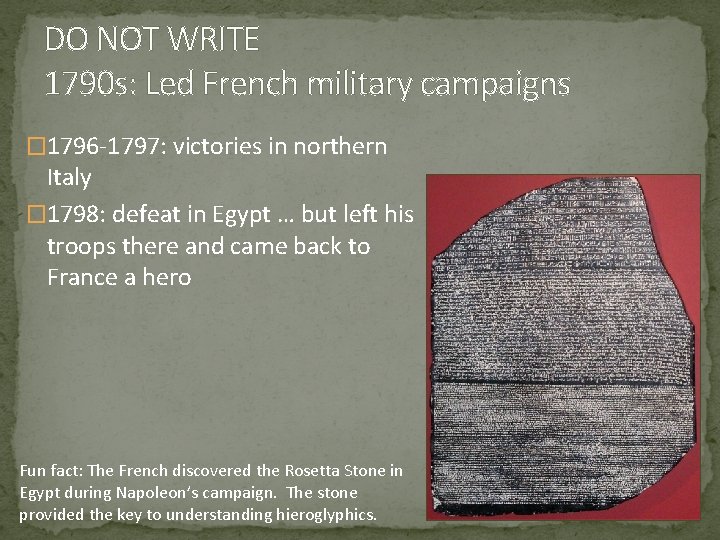
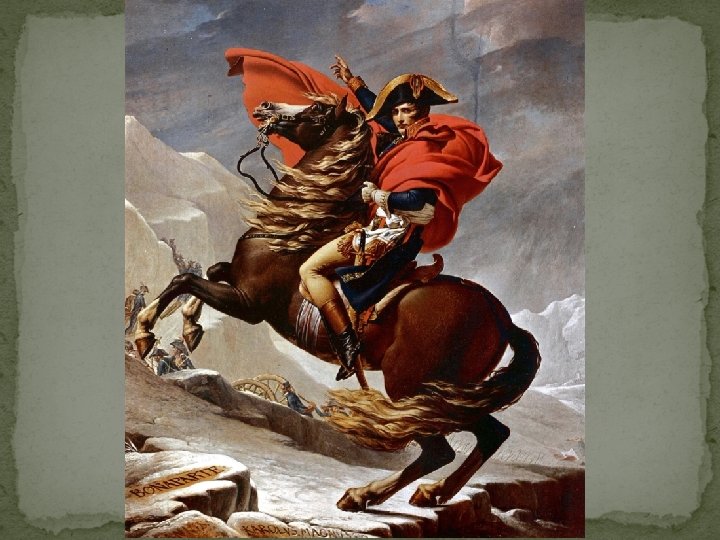
DO NOT WRITE 1790 s: Led French military campaigns � 1796 -1797: victories in northern Italy � 1798: defeat in Egypt … but left his troops there and came back to France a hero Fun fact: The French discovered the Rosetta Stone in Egypt during Napoleon’s campaign. The stone provided the key to understanding hieroglyphics.
1799: Coup d’etat November: �overthrew Directory �est. the “Consulate” �named “First Consul” (Julius Caesar’s title) December: �new constitution (#4) approved in a plebiscite Official report: 3, 011, 007 for; 1, 562 against
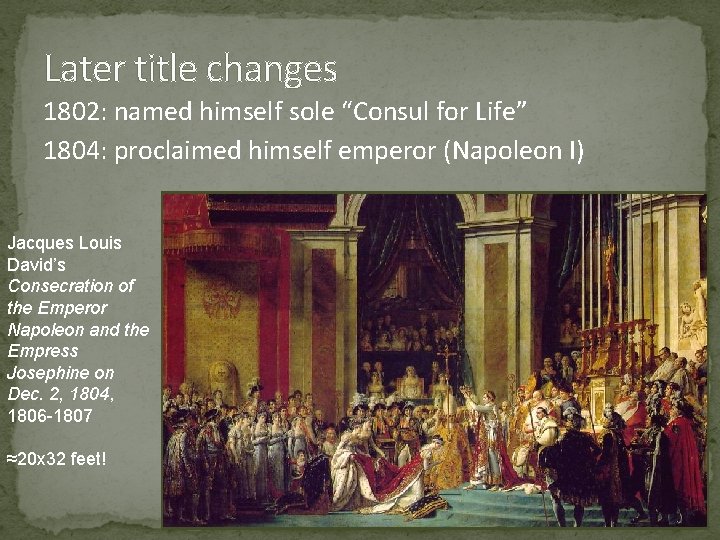
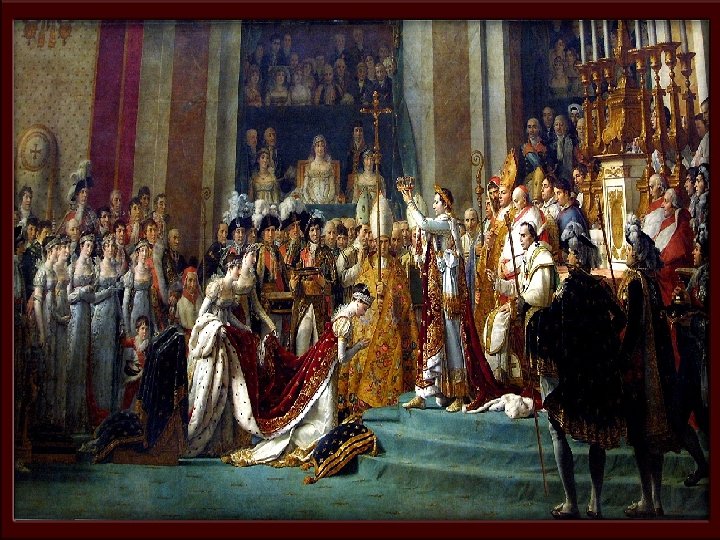
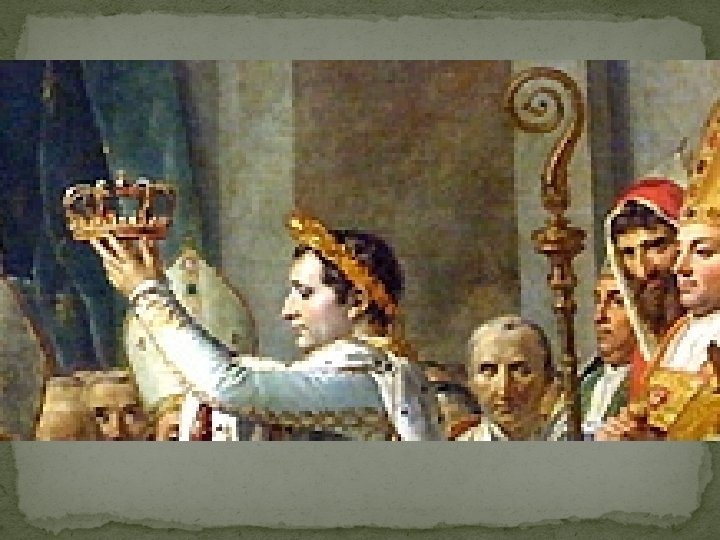
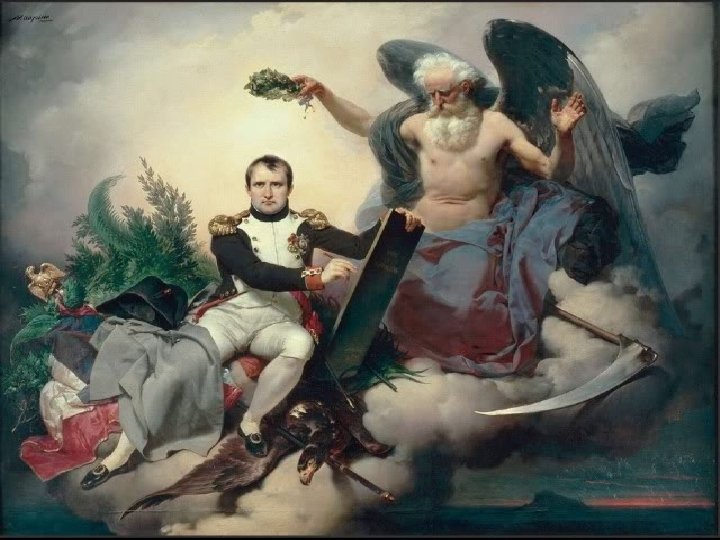
Later title changes 1802: named himself sole “Consul for Life” 1804: proclaimed himself emperor (Napoleon I) Jacques Louis David’s Consecration of the Emperor Napoleon and the Empress Josephine on Dec. 2, 1804, 1806 -1807 ≈20 x 32 feet!
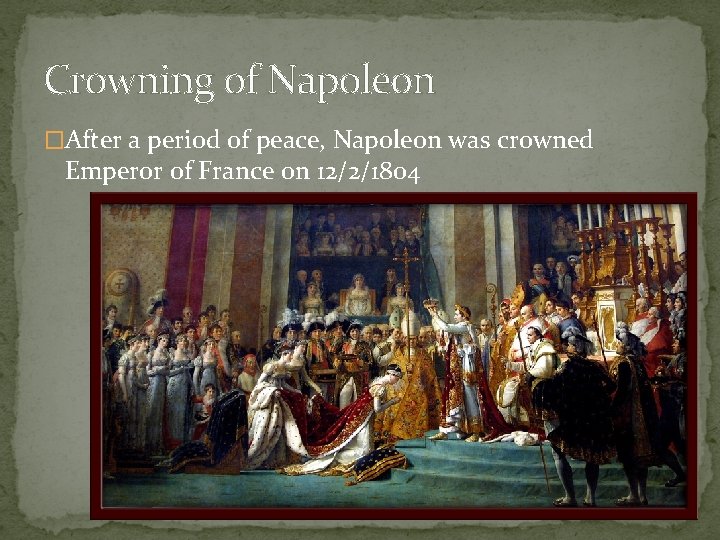
Crowning of Napoleon �After a period of peace, Napoleon was crowned Emperor of France on 12/2/1804
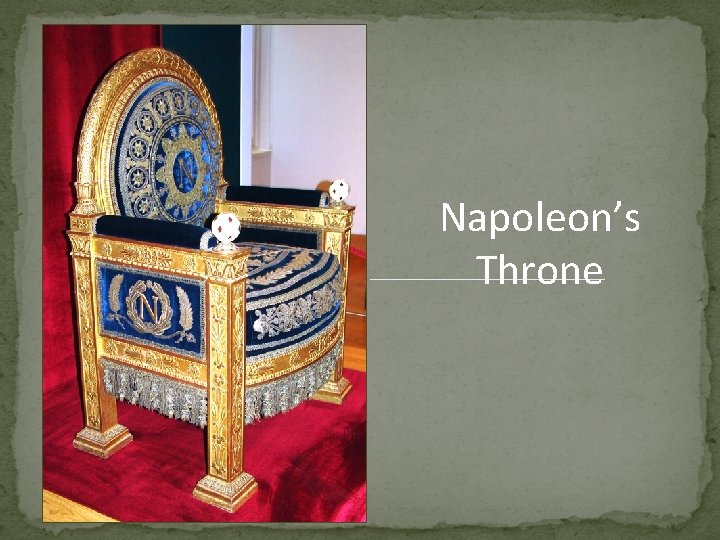
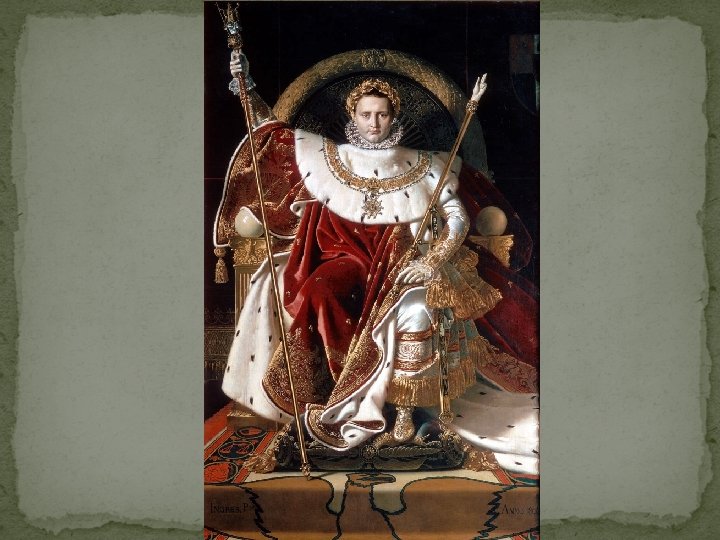
Napoleon’s Throne
Domestic reforms & policies
(1) Concordat of 1801 �What the CC gained: �declaration: “Catholicism was the religion of the great majority of the French” �Pope can depose French bishops �Church seminaries permitted �What Napoleon gained: �Religious freedom kept – CC not a state church �Pope accepts loss of church lands & tithes �State nominates bishops, pays clergy
(2) Civil Code of 1804 (Napoleonic Code) �Legal equality of all male citizens �Security of $$/private property �Women lost rights: �Dependents on fathers or husbands �Cannot make contracts �Cannot have bank accounts in own names
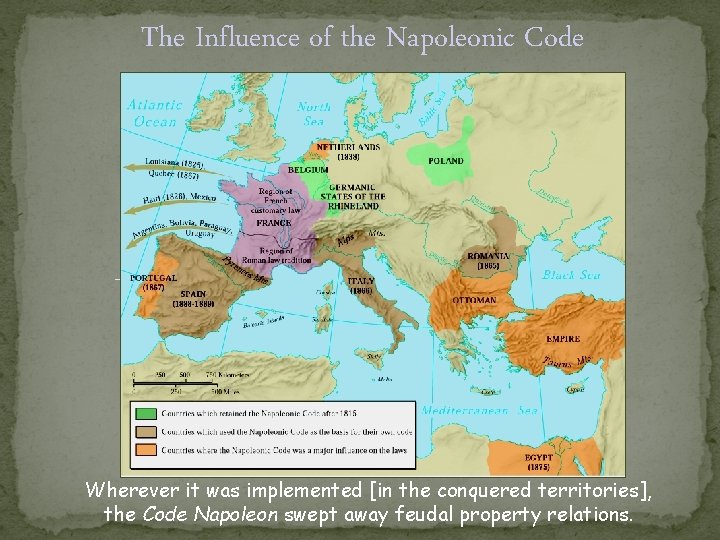
The Influence of the Napoleonic Code Wherever it was implemented [in the conquered territories], the Code Napoleon swept away feudal property relations.
(3) Strengthened the bureaucracy �Former revolutionaries put in gov’t posts �Emigrés invited back, given jobs, swear loyalty oath �New imperial nobility – positions granted on the basis of merit
(4) Financial reforms �Tax reform – no tax exemptions due to status �Improvement of accounting methods �Est. sound currency and public credit �Est. Bank of France
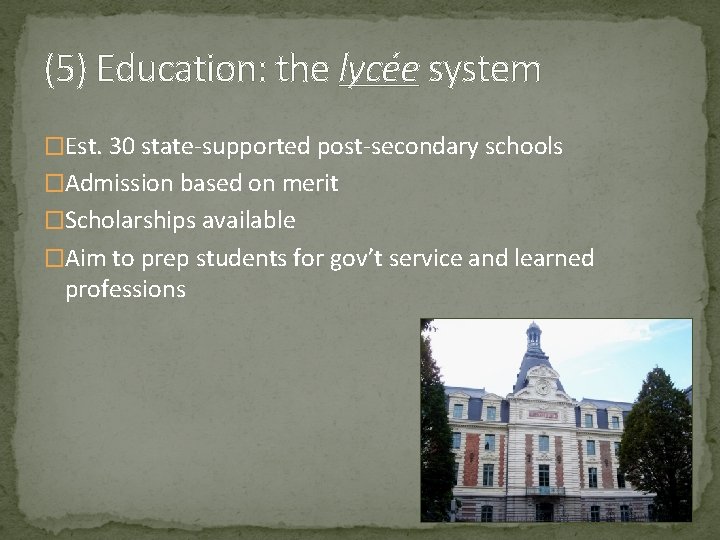
(5) Education: the lycée system �Est. 30 state-supported post-secondary schools �Admission based on merit �Scholarships available �Aim to prep students for gov’t service and learned professions
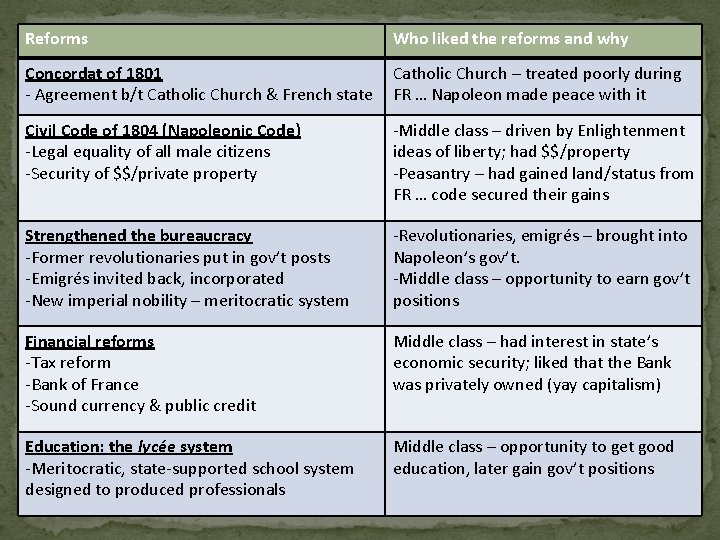
Reforms Who liked the reforms and why Concordat of 1801 - Agreement b/t Catholic Church & French state Catholic Church – treated poorly during FR … Napoleon made peace with it Civil Code of 1804 (Napoleonic Code) -Legal equality of all male citizens -Security of $$/private property -Middle class – driven by Enlightenment ideas of liberty; had $$/property -Peasantry – had gained land/status from FR … code secured their gains Strengthened the bureaucracy -Former revolutionaries put in gov’t posts -Emigrés invited back, incorporated -New imperial nobility – meritocratic system -Revolutionaries, emigrés – brought into Napoleon’s gov’t. -Middle class – opportunity to earn gov’t positions Financial reforms -Tax reform -Bank of France -Sound currency & public credit Middle class – had interest in state’s economic security; liked that the Bank was privately owned (yay capitalism) Education: the lycée system -Meritocratic, state-supported school system designed to produced professionals Middle class – opportunity to get good education, later gain gov’t positions
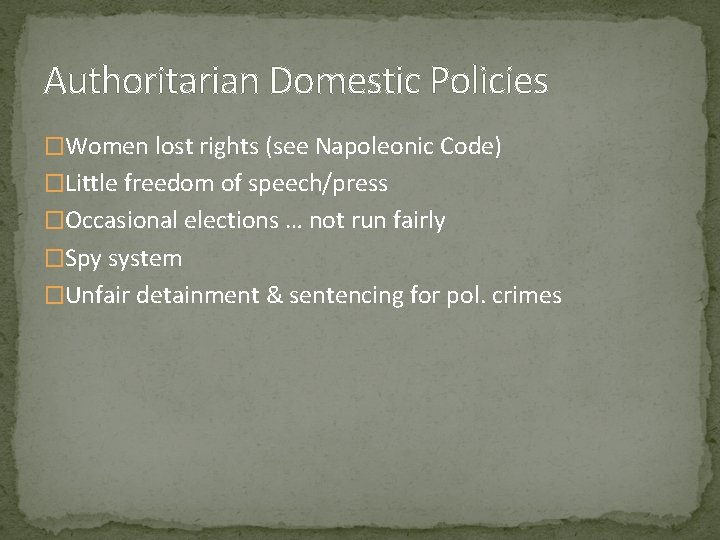
Authoritarian Domestic Policies �Women lost rights (see Napoleonic Code) �Little freedom of speech/press �Occasional elections … not run fairly �Spy system �Unfair detainment & sentencing for pol. crimes
Foreign policy
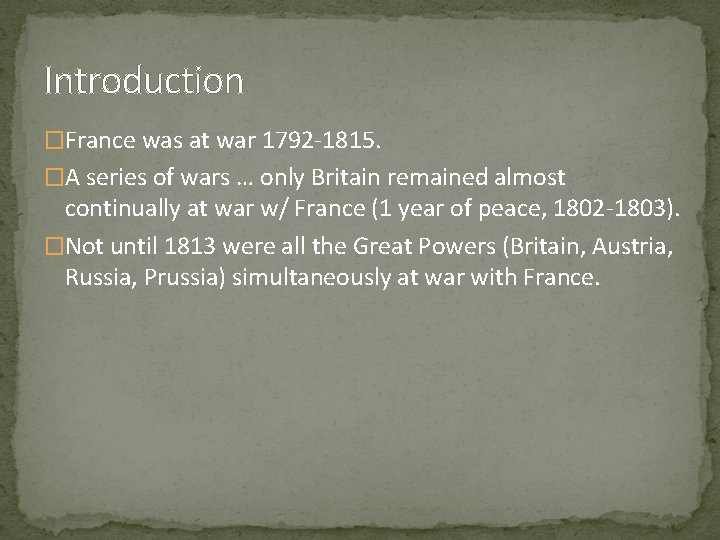
Introduction �France was at war 1792 -1815. �A series of wars … only Britain remained almost continually at war w/ France (1 year of peace, 1802 -1803). �Not until 1813 were all the Great Powers (Britain, Austria, Russia, Prussia) simultaneously at war with France.
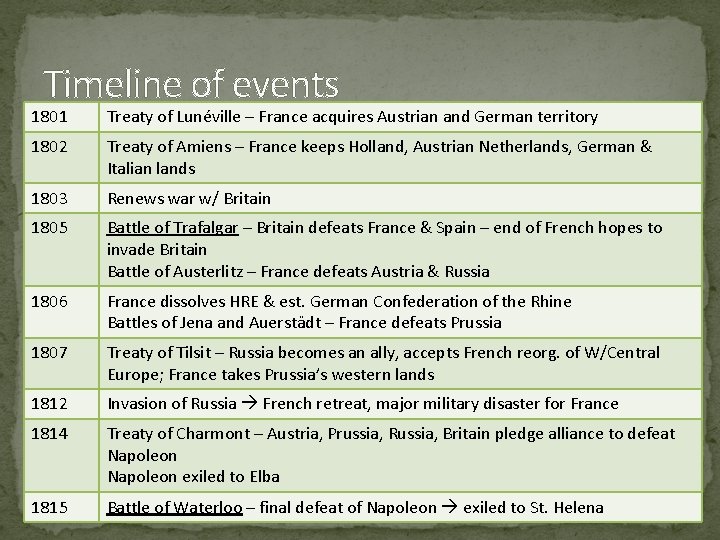
Timeline of events 1801 Treaty of Lunéville – France acquires Austrian and German territory 1802 Treaty of Amiens – France keeps Holland, Austrian Netherlands, German & Italian lands 1803 Renews war w/ Britain 1805 Battle of Trafalgar – Britain defeats France & Spain – end of French hopes to invade Britain Battle of Austerlitz – France defeats Austria & Russia 1806 France dissolves HRE & est. German Confederation of the Rhine Battles of Jena and Auerstädt – France defeats Prussia 1807 Treaty of Tilsit – Russia becomes an ally, accepts French reorg. of W/Central Europe; France takes Prussia’s western lands 1812 Invasion of Russia French retreat, major military disaster for France 1814 Treaty of Charmont – Austria, Prussia, Russia, Britain pledge alliance to defeat Napoleon exiled to Elba 1815 Battle of Waterloo – final defeat of Napoleon exiled to St. Helena
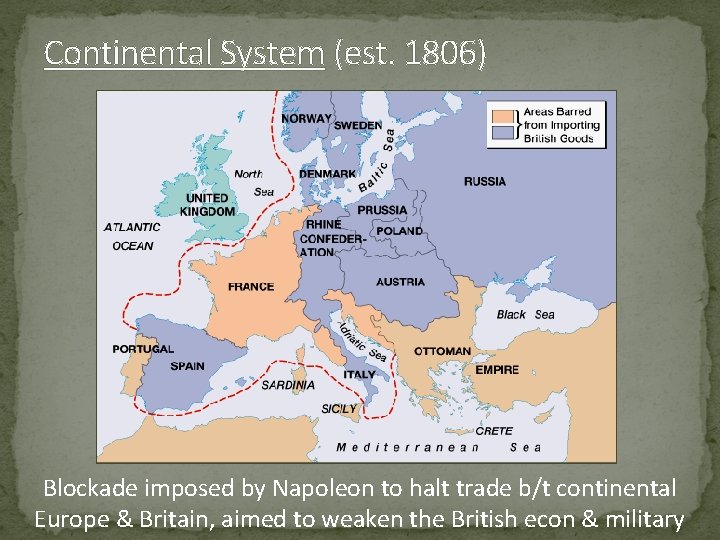
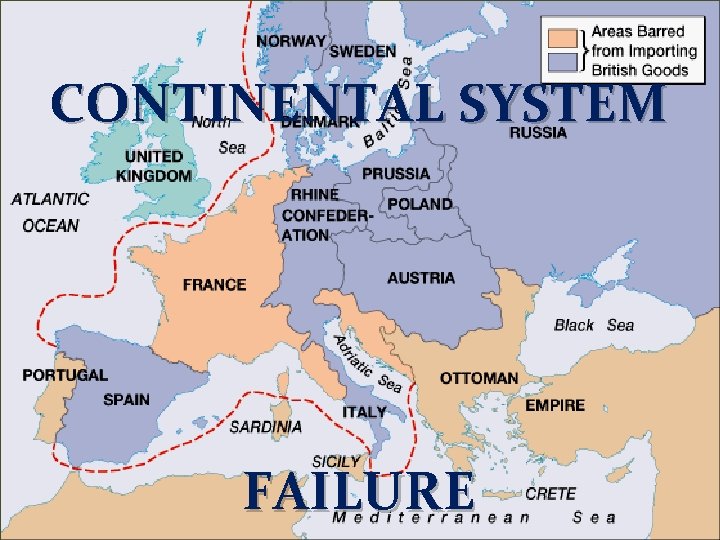
Continental System (est. 1806) Blockade imposed by Napoleon to halt trade b/t continental Europe & Britain, aimed to weaken the British econ & military
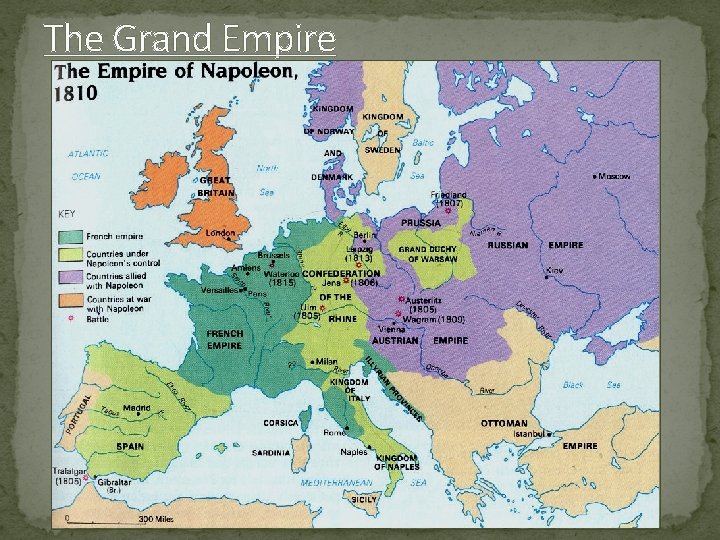
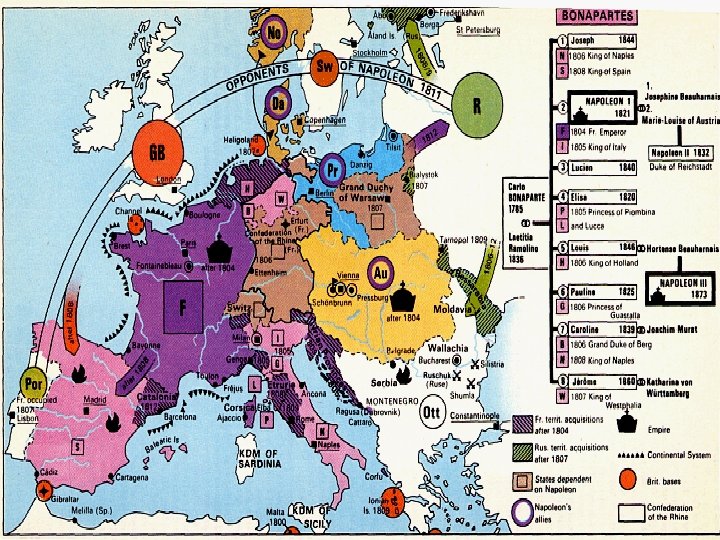
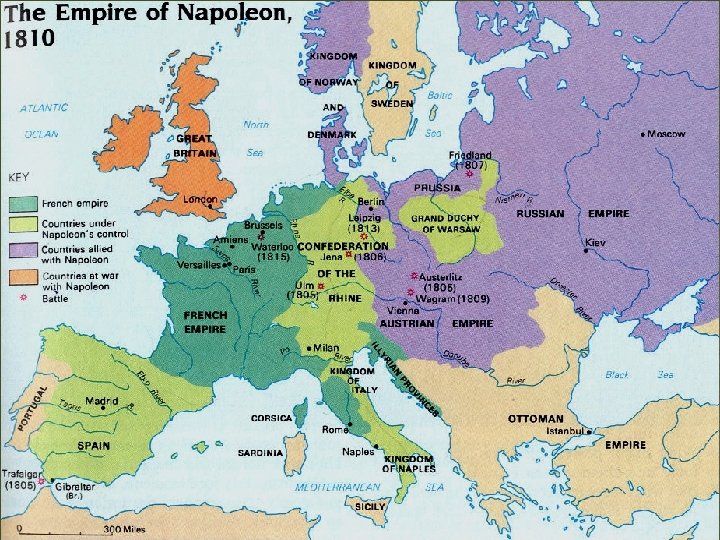
The Grand Empire
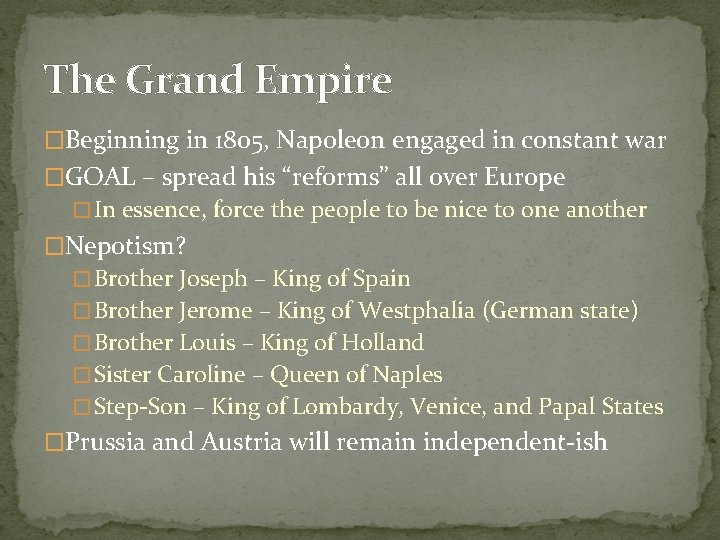
The Grand Empire �Beginning in 1805, Napoleon engaged in constant war �GOAL – spread his “reforms” all over Europe � In essence, force the people to be nice to one another �Nepotism? � Brother Joseph – King of Spain � Brother Jerome – King of Westphalia (German state) � Brother Louis – King of Holland � Sister Caroline – Queen of Naples � Step-Son – King of Lombardy, Venice, and Papal States �Prussia and Austria will remain independent-ish
How Napoleon treated areas incorporated into his empire �(+) introduced French laws / spread FR reforms (ex. abolish feudal practices) �(-) heavy taxes, req. men to serve in Fr. army
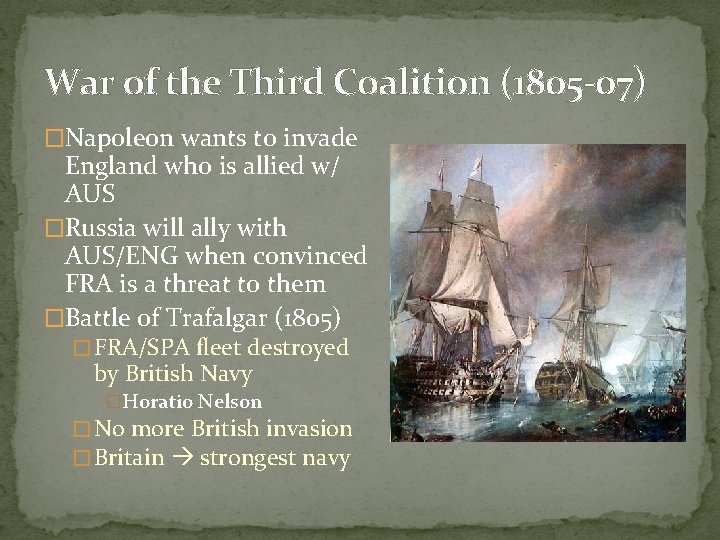
War of the Third Coalition (1805 -07) �Napoleon wants to invade England who is allied w/ AUS �Russia will ally with AUS/ENG when convinced FRA is a threat to them �Battle of Trafalgar (1805) � FRA/SPA fleet destroyed by British Navy �Horatio Nelson � No more British invasion � Britain strongest navy
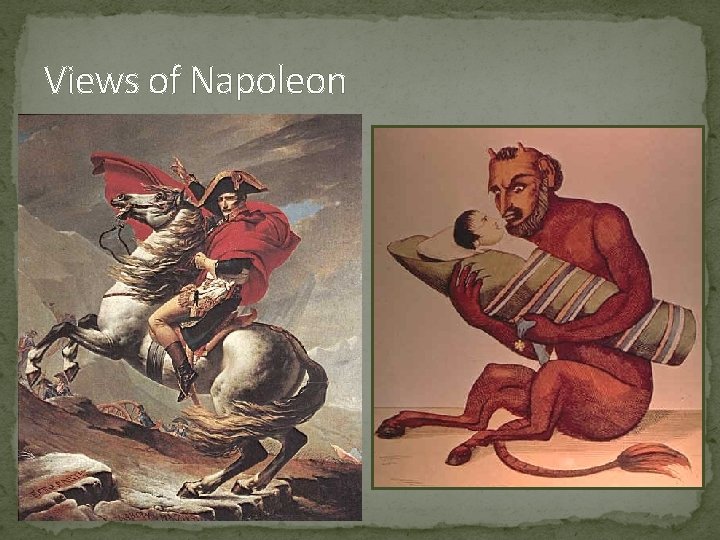
Views of Napoleon
Fall from Power
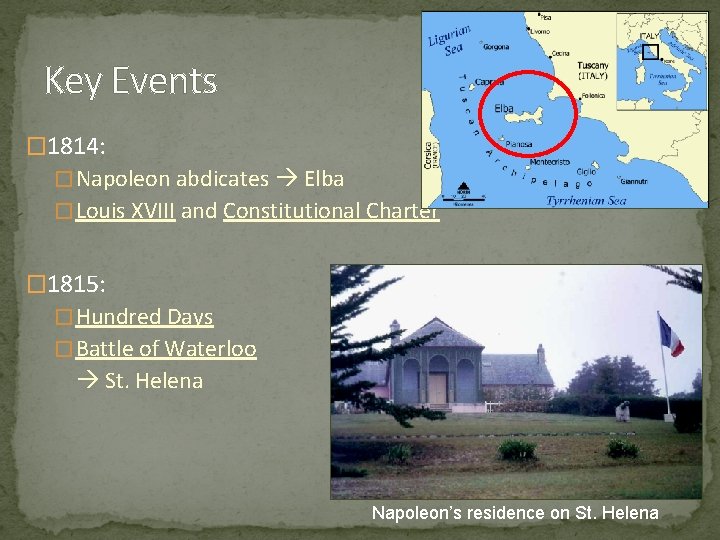
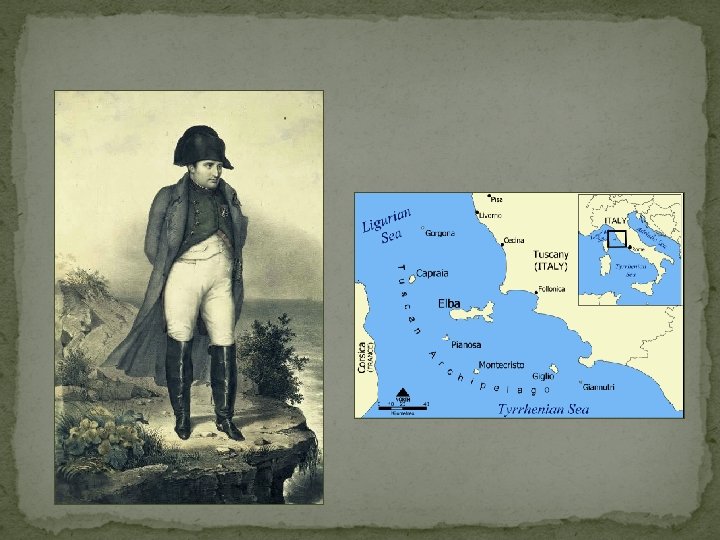
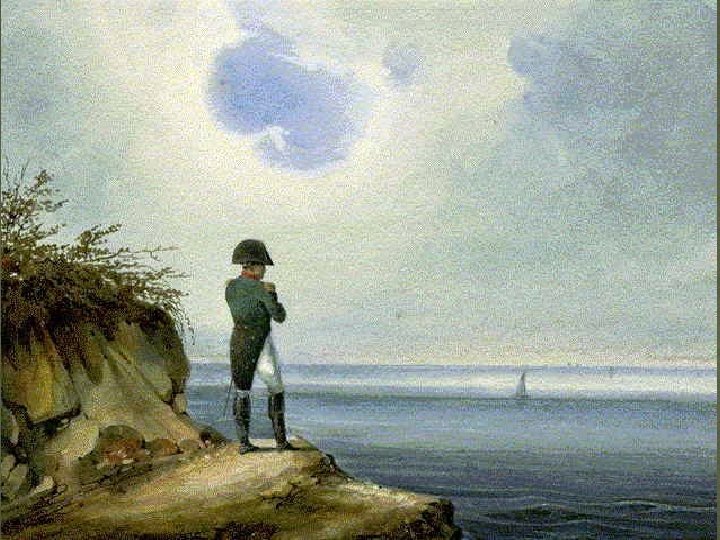
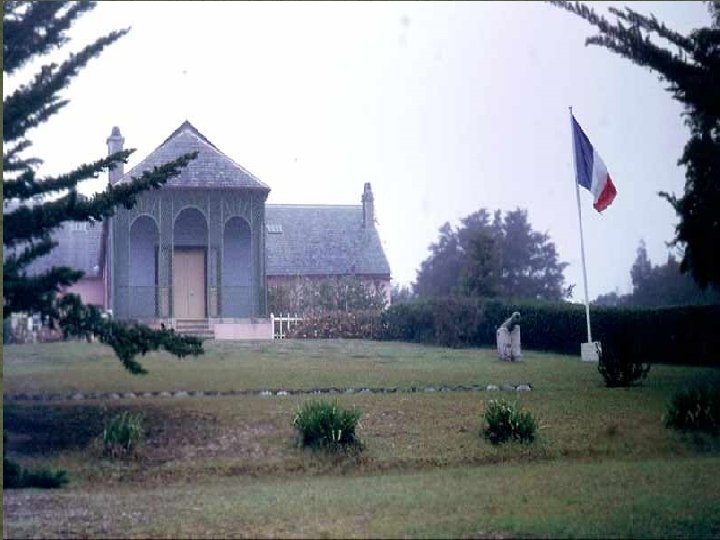
Key Events � 1814: � Napoleon abdicates Elba � Louis XVIII and Constitutional Charter � 1815: � Hundred Days � Battle of Waterloo St. Helena Napoleon’s residence on St. Helena
Napoleon & culture
Neoclassical Architecture Temple to the Glory of the Great Army, commissioned 1806
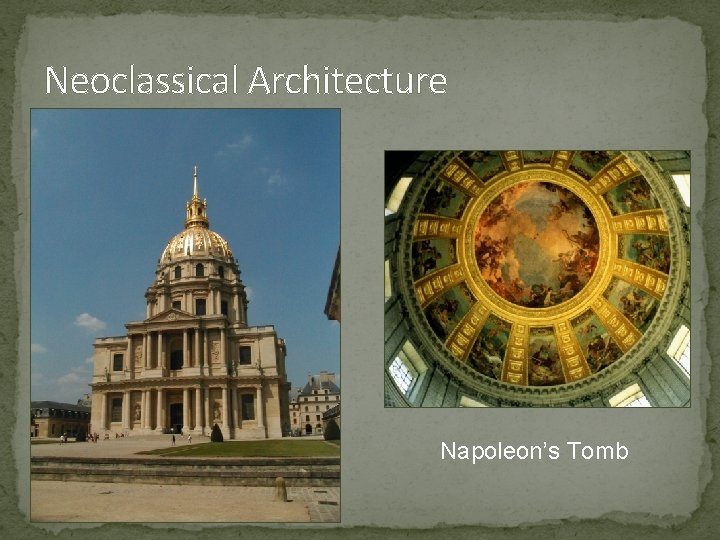
Neoclassical Architecture Napoleon’s Tomb
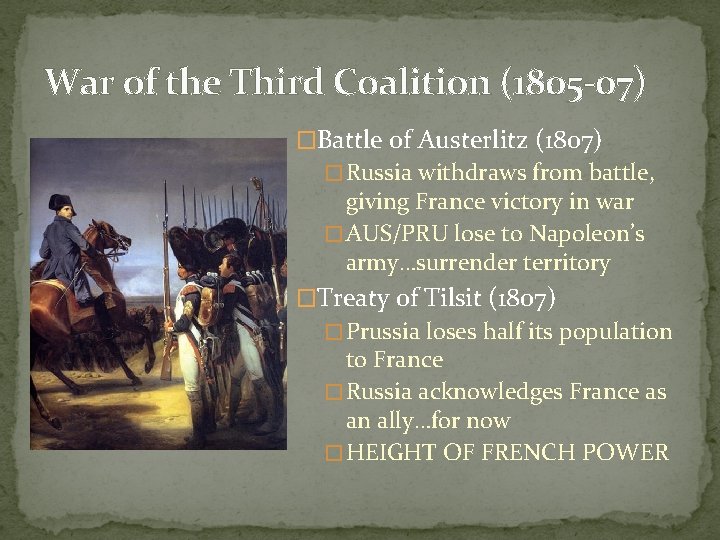
War of the Third Coalition (1805 -07) �Battle of Austerlitz (1807) � Russia withdraws from battle, giving France victory in war � AUS/PRU lose to Napoleon’s army…surrender territory �Treaty of Tilsit (1807) � Prussia loses half its population to France � Russia acknowledges France as an ally…for now � HEIGHT OF FRENCH POWER
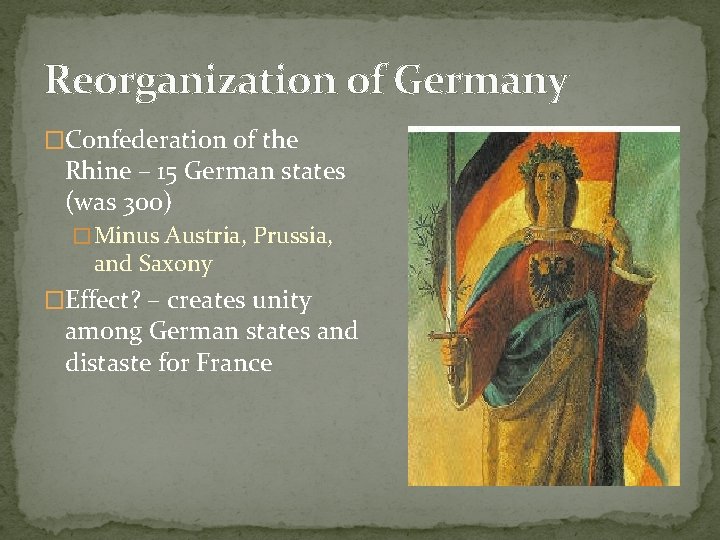
Reorganization of Germany �Confederation of the Rhine – 15 German states (was 300) � Minus Austria, Prussia, and Saxony �Effect? – creates unity among German states and distaste for France
DOWNFALL OF NAPOLEON
Continental System �GOAL to isolate Britain and defeat them in economic warfare � Berlin Decrees (1806) � European ports closed to British commerce � “Order in Council” (1806) � Britain stated any ship would be seized if it did NOT stop in GB on its way to Europe. � Milan Decree (1807) � Napoleon proclaimed any ship stopping in Britain would be seized when it entered the Continent. � These edicts eventually led to USA declaring war on Britain WAR OF 1812.
Continental System CONTINENTAL SYSTEM FAILURE
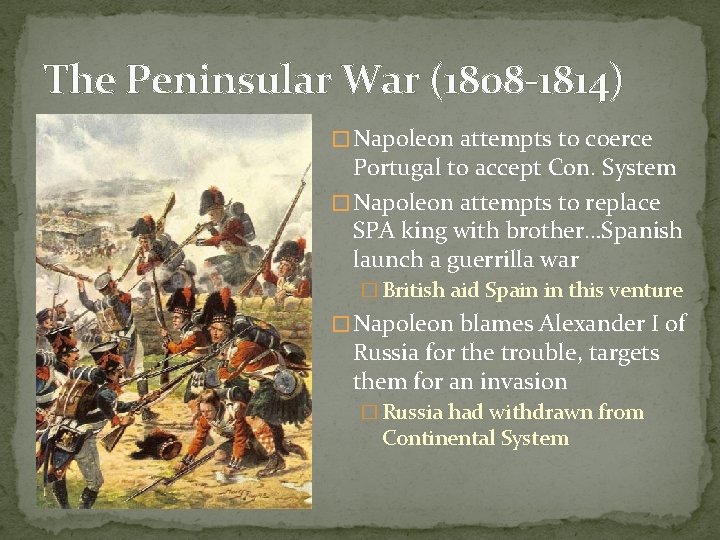
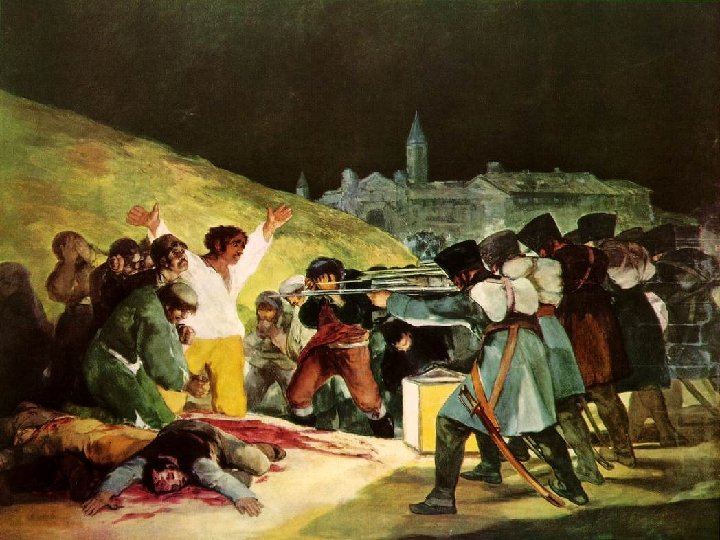
The Peninsular War (1808 -1814) � Napoleon attempts to coerce Portugal to accept Con. System � Napoleon attempts to replace SPA king with brother…Spanish launch a guerrilla war � British aid Spain in this venture � Napoleon blames Alexander I of Russia for the trouble, targets them for an invasion � Russia had withdrawn from Continental System
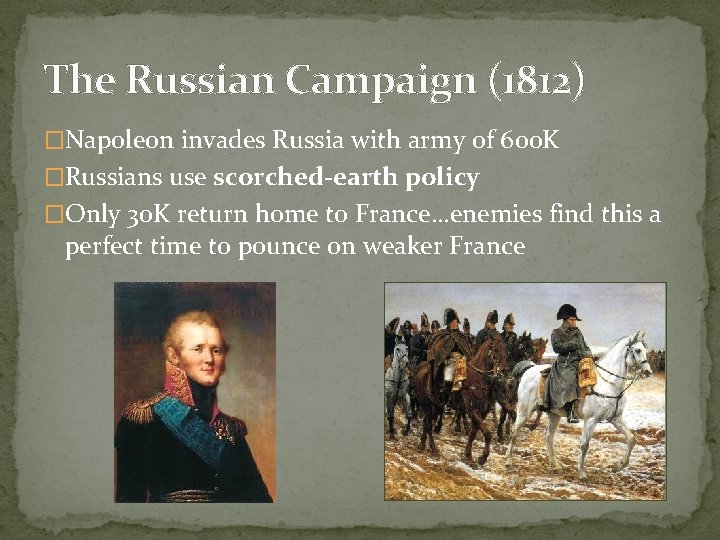
The Russian Campaign (1812) �Napoleon invades Russia with army of 600 K �Russians use scorched-earth policy �Only 30 K return home to France…enemies find this a perfect time to pounce on weaker France
THE END OF NAPOLEON
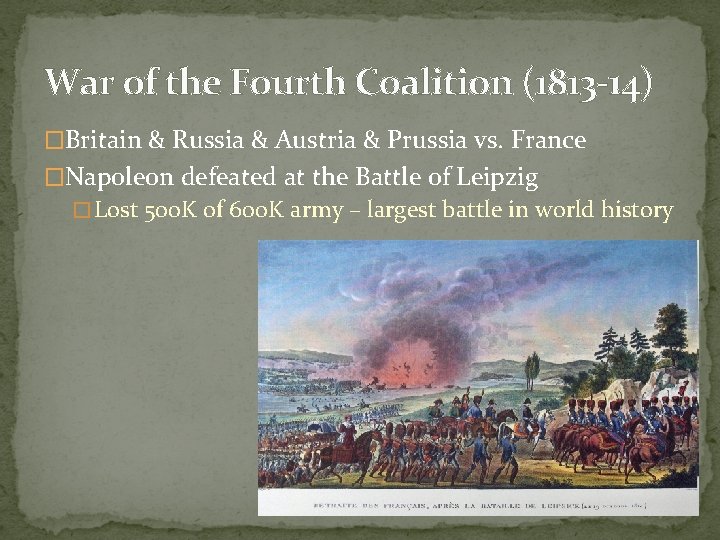
War of the Fourth Coalition (1813 -14) �Britain & Russia & Austria & Prussia vs. France �Napoleon defeated at the Battle of Leipzig � Lost 500 K of 600 K army – largest battle in world history
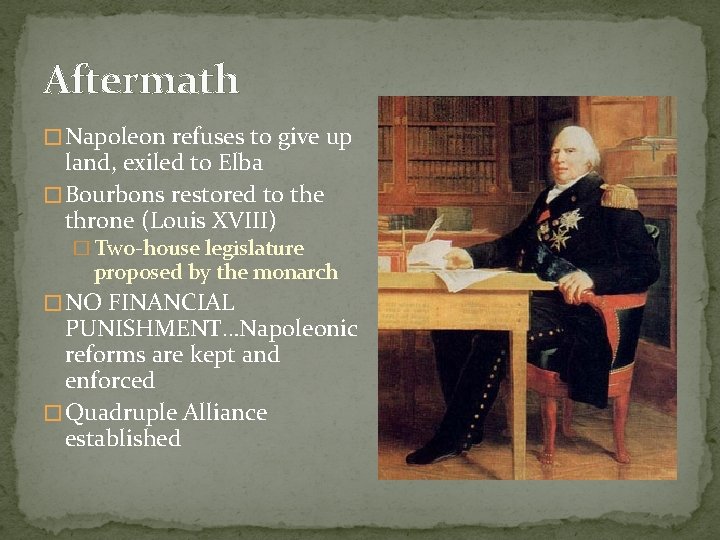
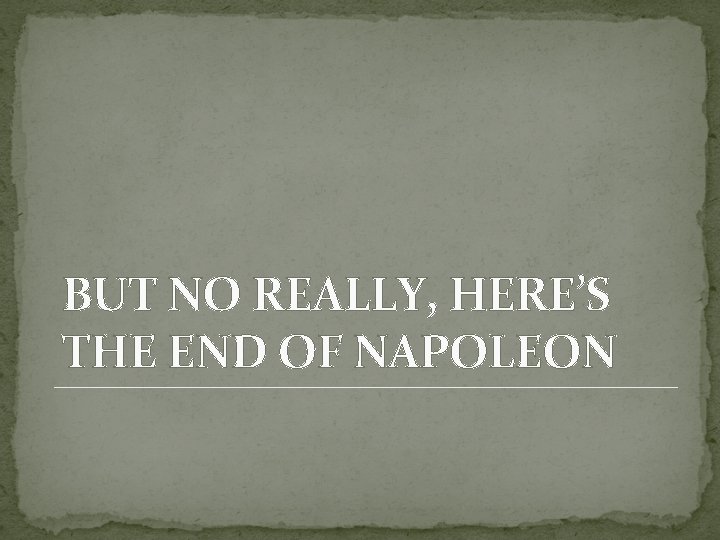
Aftermath � Napoleon refuses to give up land, exiled to Elba � Bourbons restored to the throne (Louis XVIII) � Two-house legislature proposed by the monarch � NO FINANCIAL PUNISHMENT…Napoleonic reforms are kept and enforced � Quadruple Alliance established
BUT NO REALLY, HERE’S THE END OF NAPOLEON
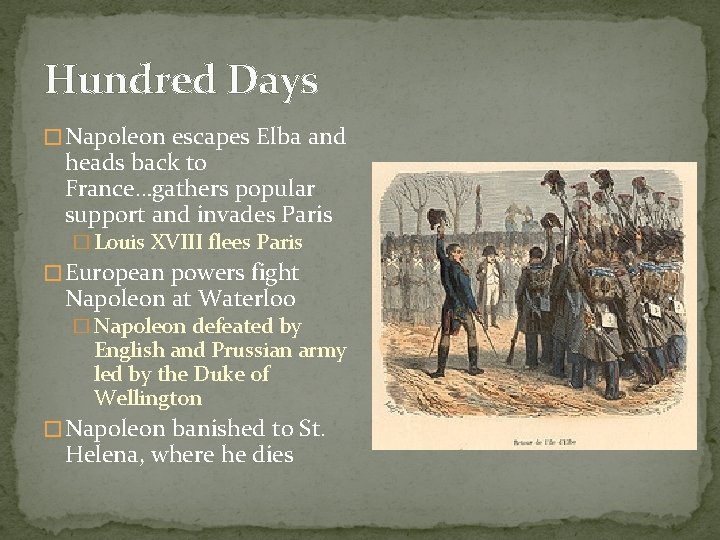
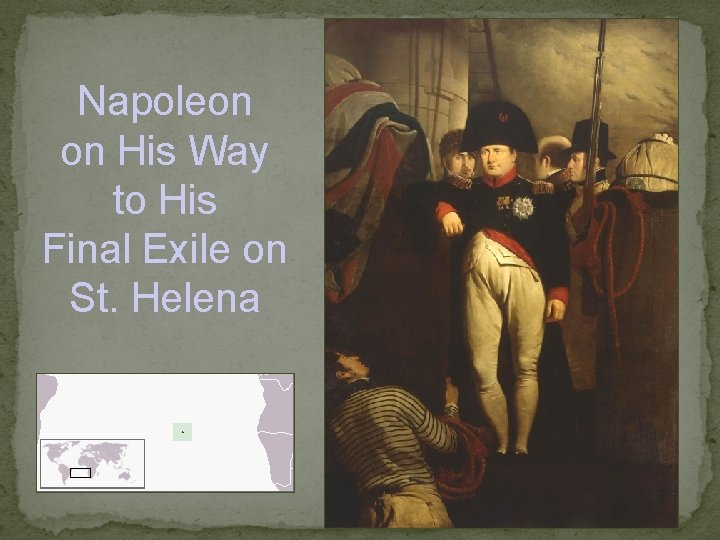
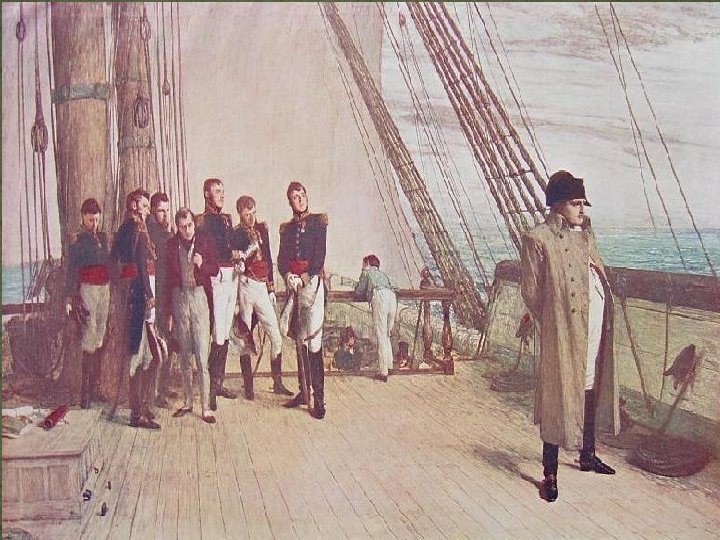
Hundred Days � Napoleon escapes Elba and heads back to France…gathers popular support and invades Paris � Louis XVIII flees Paris � European powers fight Napoleon at Waterloo � Napoleon defeated by English and Prussian army led by the Duke of Wellington � Napoleon banished to St. Helena, where he dies
Napoleon on His Way to His Final Exile on St. Helena
Evaluation of Napoleon’s Rule �First egalitarian dictatorship of modern times �Positives � Centralized French government with unified law code � Lasting settlement with the Church � Spread positive achievements of the FR through Europe �Negatives � Repressed individual liberties � Oppressed conquered people throughout Europe � Caused suffering due to war