
NAPA EHS Programs Striving for EHS Excellence Protecting




- Slides: 31
NAPA EH&S Programs: Striving for EH&S Excellence Protecting industry employees and the environment • Regulatory advocacy with Congress and Agencies • EH&S compliance assistance (e. g. , SDS, Silica, SPCC, Ho. S) • Science-based classifications • Community (health) concerns • Online training programs • Diamond Achievement: selfassessing for improvement • Environ. Product Declaration
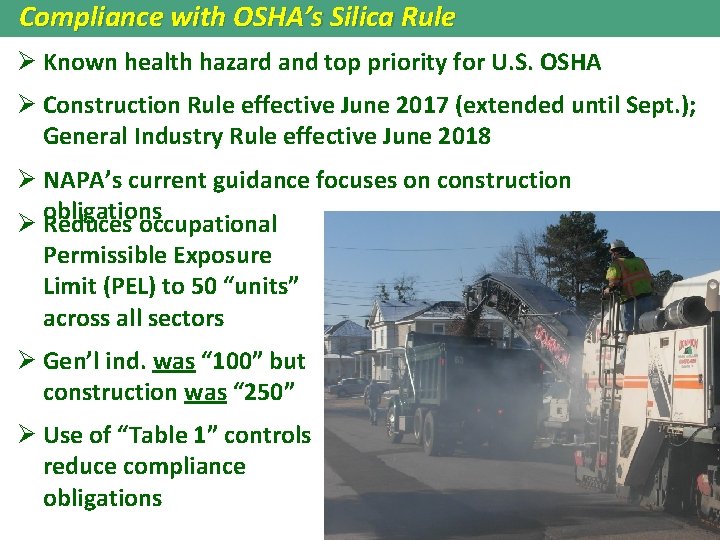
Compliance with OSHA’s Silica Rule Ø Known health hazard and top priority for U. S. OSHA Ø Construction Rule effective June 2017 (extended until Sept. ); General Industry Rule effective June 2018 Ø NAPA’s current guidance focuses on construction Ø obligations Reduces occupational Permissible Exposure Limit (PEL) to 50 “units” across all sectors Ø Gen’l ind. was “ 100” but construction was “ 250” Ø Use of “Table 1” controls reduce compliance obligations
Rule’s compliance obligations: big picture Ø Employers must ensure exposure below PEL for all activities Ø Basic premise of rule: specific engineering controls identified for many jobs/tasks/activities in “Table 1” – Construction only Ø Other major obligations (guidance @ www. asphaltpavement. org/silica) ü Document exposure if not following Table 1 ü Designate a “Competent Person” (construction only) ü Develop a written Exposure Control Plan ü Update Hazard Communication ü Maintain all appropriate records
Table 1 entries – Controls identified for Construction • Stationary masonry saws • Handheld power saws for fiber cement board • Walk-behind saws • Drivable saws • Rig-mounted core saws or drills • Handheld / stand-mounted drills • Dowel drilling rigs for concrete • Vehicle-mounted drilling rigs for rock and concrete • Jackhammers and handheld powered chipping tools • Handheld grinders for mortar removal (tuckpointing) • Handheld grinders for other than mortar removal • Walk-behind milling machines and floor grinders • Small drivable milling machines • Large drivable milling machines • Crushing machines • Heavy equipment and utility vehicles to abrade or fracture silica materials • Heavy equipment and utility vehicles for grading and excavating
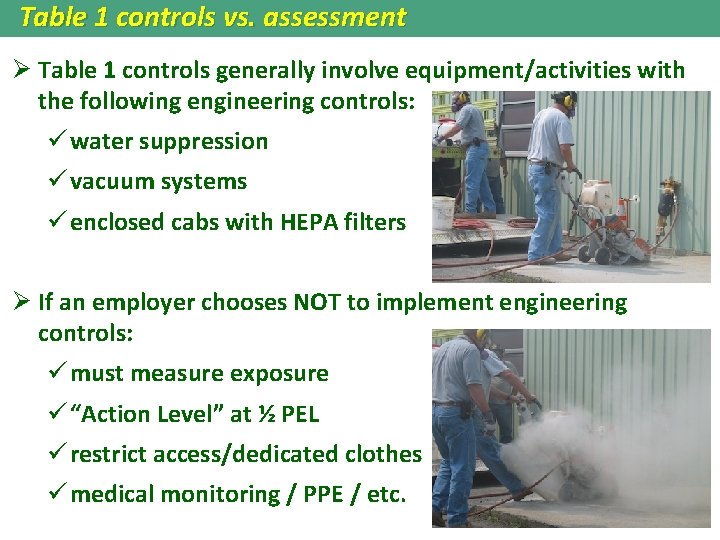
Table 1 controls vs. assessment Ø Table 1 controls generally involve equipment/activities with the following engineering controls: ü water suppression ü vacuum systems ü enclosed cabs with HEPA filters Ø If an employer chooses NOT to implement engineering controls: ü must measure exposure ü “Action Level” at ½ PEL ü restrict access/dedicated clothes ü medical monitoring / PPE / etc.
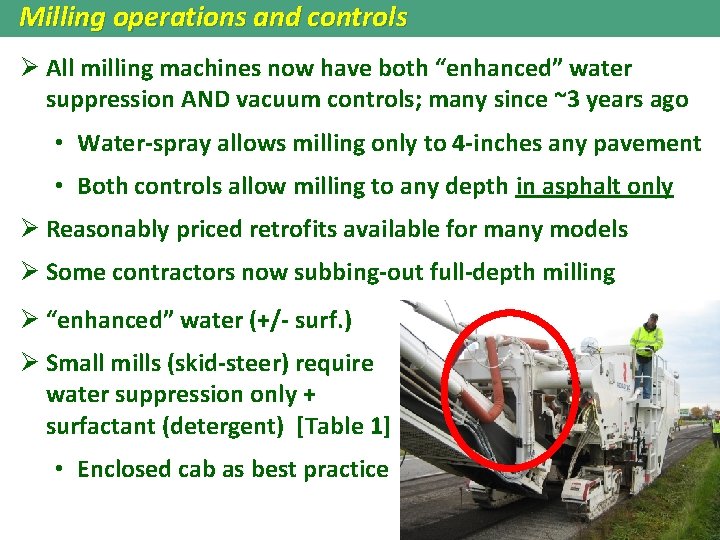
Milling operations and controls Ø All milling machines now have both “enhanced” water suppression AND vacuum controls; many since ~3 years ago • Water-spray allows milling only to 4 -inches any pavement • Both controls allow milling to any depth in asphalt only Ø Reasonably priced retrofits available for many models Ø Some contractors now subbing-out full-depth milling Ø “enhanced” water (+/- surf. ) Ø Small mills (skid-steer) require water suppression only + surfactant (detergent) [Table 1] • Enclosed cab as best practice
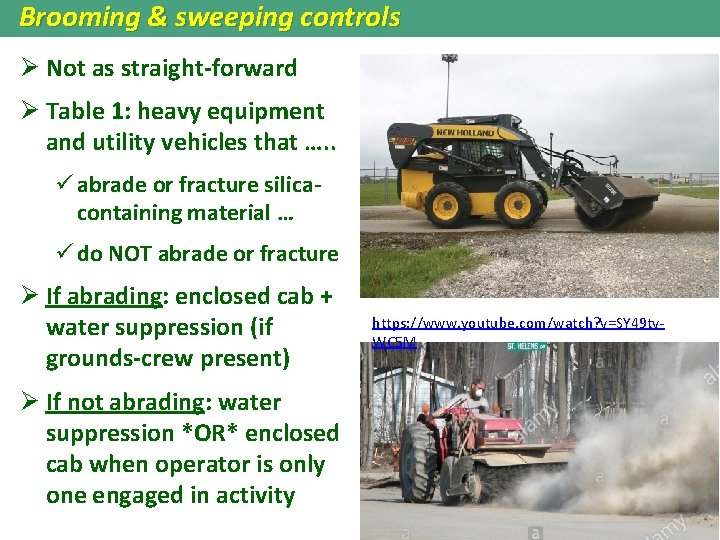
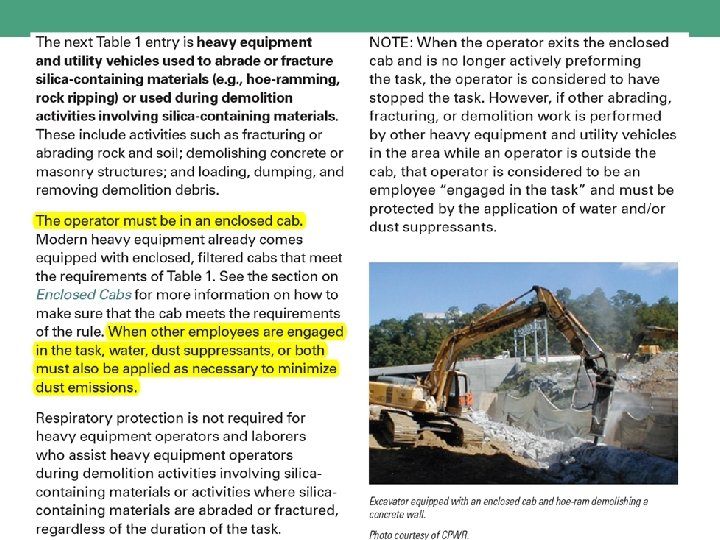
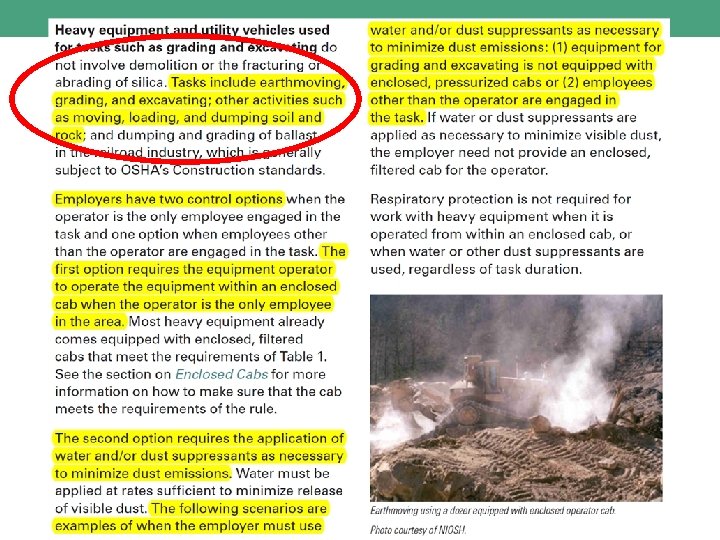
Brooming & sweeping controls Ø Not as straight-forward Ø Table 1: heavy equipment and utility vehicles that …. . ü abrade or fracture silicacontaining material … ü do NOT abrade or fracture Ø If abrading: enclosed cab + water suppression (if grounds-crew present) Ø If not abrading: water suppression *OR* enclosed cab when operator is only one engaged in activity https: //www. youtube. com/watch? v=SY 49 tv. WC 5 M
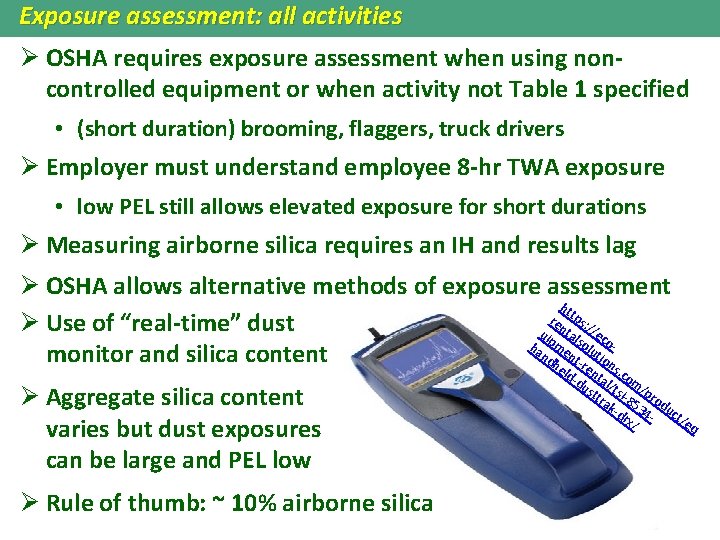
Exposure assessment: all activities Ø OSHA requires exposure assessment when using noncontrolled equipment or when activity not Table 1 specified • (short duration) brooming, flaggers, truck drivers Ø Employer must understand employee 8 -hr TWA exposure • low PEL still allows elevated exposure for short durations Ø Measuring airborne silica requires an IH and results lag Ø OSHA allows alternative methods of exposure assessment ht re tps: / Ø Use of “real-time” dust uip ntal /ec ha me solu ond nt tio monitor and silica content he -re ns. Ø Aggregate silica content varies but dust exposures can be large and PEL low Ø Rule of thumb: ~ 10% airborne silica ld- n c du tal/ om/ stt tsi- pr ra 85 od k-d 34 uc t/e rx/ - q
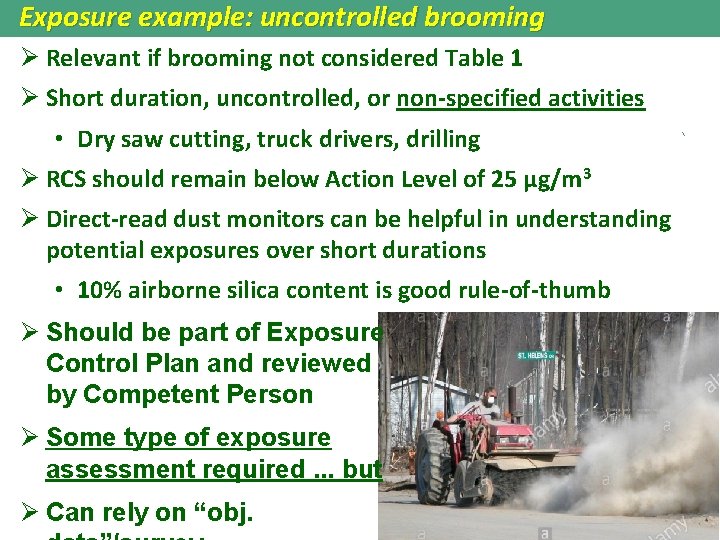
Exposure example: uncontrolled brooming Ø Relevant if brooming not considered Table 1 Ø Short duration, uncontrolled, or non-specified activities • Dry saw cutting, truck drivers, drilling Ø RCS should remain below Action Level of 25 µg/m 3 Ø Direct-read dust monitors can be helpful in understanding potential exposures over short durations • 10% airborne silica content is good rule-of-thumb Ø Should be part of Exposure Control Plan and reviewed by Competent Person Ø Some type of exposure assessment required. . . but Ø Can rely on “obj.
Competent Person; Haz. Com; Recordkeeping Ø Designate a Competent Person who “can identify existing and foreseeable respirable … silica hazards; is authorized to promptly eliminate or minimize silica hazards; [and] has the knowledge and ability to implement the written exposure control plan” Ø CP duties include regular job site/equipment inspections; Ø CP doesn’t need to remain on jobsite but does need authority to take prompt corrective action; recommend a crew chief, foreprsn Ø Comply with OSHA’s Haz. Com Standard: train workers on activities/tasks resulting in exposure, workplace protections, etc. Ø Maintain records for 30 + years per Standard (29 CFR 1910. 1200) • Air monitoring & objective data, medical records, MSDS, etc. • Procedures used to restrict access, when necessary to limit exposures (employee rotation/scheduling, signage)
Develop a Written Exposure Control Plan Ø Employer must develop an exposure control plan that can be implemented by the Competent Person • can be generic (not project-specific) Ø Plan must contain the following information: ü Description of tasks involving exposure to respirable silica ü Engineering controls, work practices, and respiratory protection for each task (e. g. , water spray while brooming) ü Housekeeping measures used to limit exposure ü Procedures used to restrict access, when necessary to limit exposures (employee rotation/scheduling, signage) Ø NAPA guidance/examples at www. asphaltpavement. org/silica
“Construction” Silica Rule Summary Ø Compliance for construction activities are now enforceable Ø Compliance activities are the employer’s responsibility; rely on common sense; understand/oversee role of consultant Ø Requires employer identification of job-task exposure Ø Milling Partnership successful: eliminated need for respirators • Mills will require controls (new or retrofit @ ~ $12 -15 k) • Small mills (skid-steer) only require water suppression Ø Power brooms will likely need water suppression/enclosed cab • If Table 1 applicable or exposure assessed • NAPA working to provide control information to OSHA Ø Identify company’s “competent person(s)” … crew foreperson Ø Develop an Exposure Control Plan for all activities
General Industry Silica Rule Ø Compliance for asphalt plants by June 2018 Ø Requirements identical to Construction Rule except: • No “Table 1” for industrial activities Ø Requires employer identification of job-task exposure • Exposure assessment and documentation of control • Chipping drum flights, baghouse maintenance, crushing / moving aggregate and RAP, QA lab aggregate screening, cleaning plant equip, sweeping/brooming, haul roads Ø NAPA will solicit industry for task-specific exposure info • Individual facilities can still rely on “objective data” / survey Ø Use of real-time dust monitors will be helpful
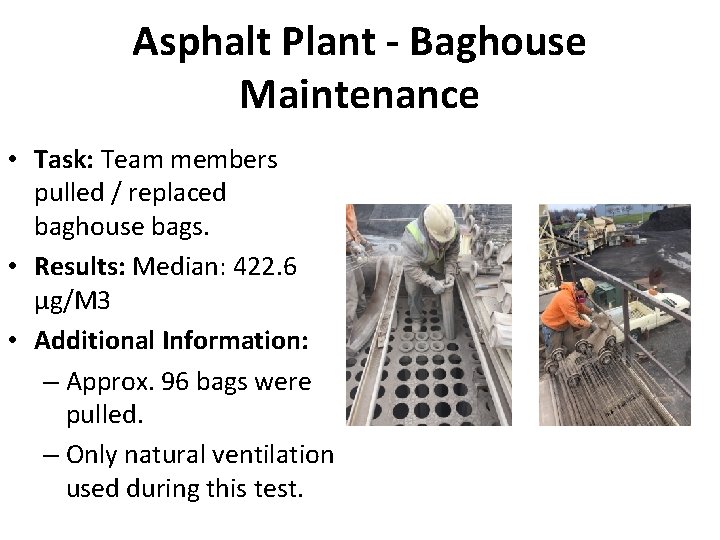
Asphalt Plant - Baghouse Maintenance • Task: Team members pulled / replaced baghouse bags. • Results: Median: 422. 6 µg/M 3 • Additional Information: – Approx. 96 bags were pulled. – Only natural ventilation used during this test.
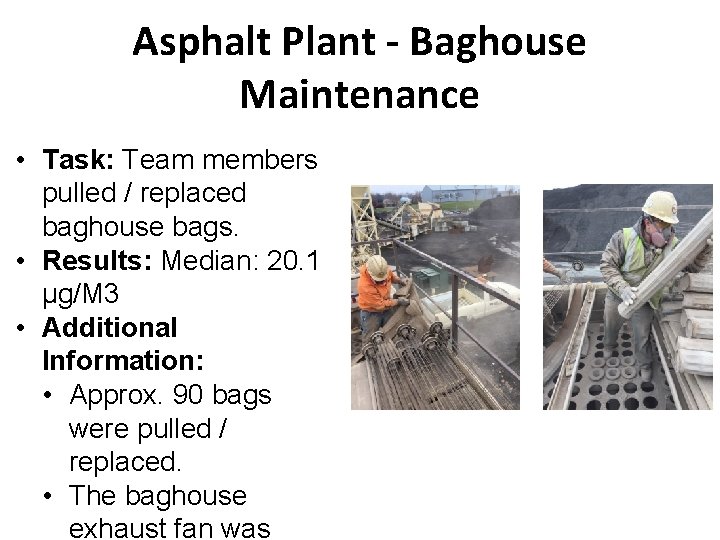
Asphalt Plant - Baghouse Maintenance • Task: Team members pulled / replaced baghouse bags. • Results: Median: 20. 1 µg/M 3 • Additional Information: • Approx. 90 bags were pulled / replaced. • The baghouse exhaust fan was
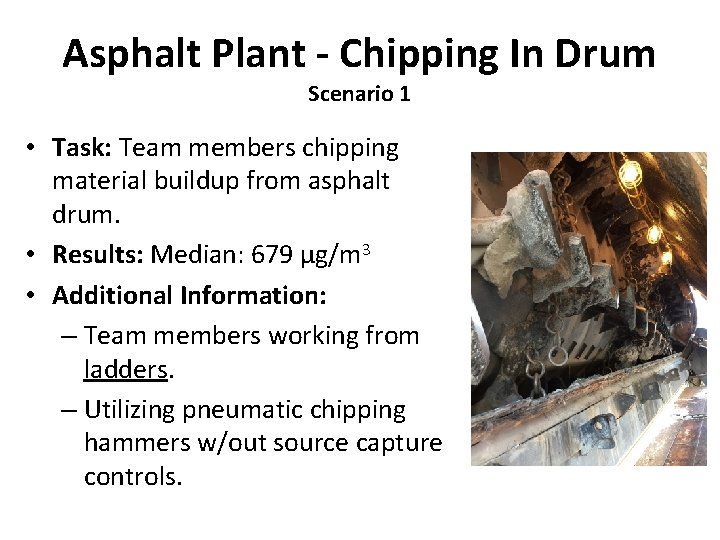
Asphalt Plant - Chipping In Drum Scenario 1 • Task: Team members chipping material buildup from asphalt drum. • Results: Median: 679 µg/m 3 • Additional Information: – Team members working from ladders. – Utilizing pneumatic chipping hammers w/out source capture controls.
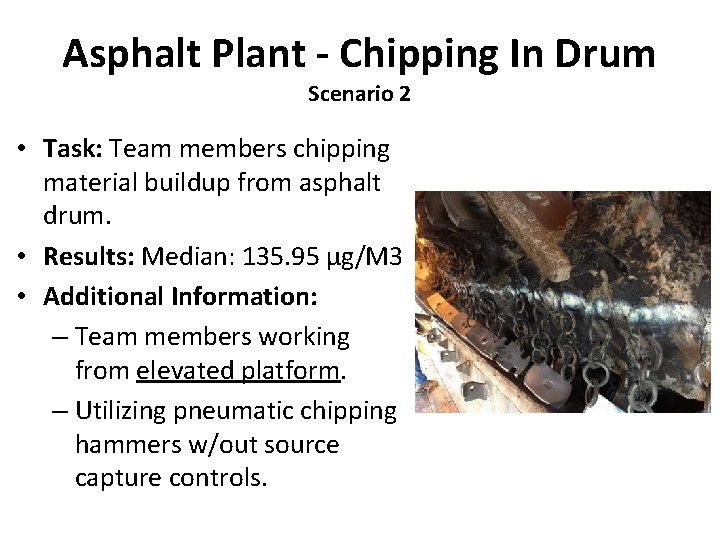
Asphalt Plant - Chipping In Drum Scenario 2 • Task: Team members chipping material buildup from asphalt drum. • Results: Median: 135. 95 µg/M 3 • Additional Information: – Team members working from elevated platform. – Utilizing pneumatic chipping hammers w/out source capture controls.
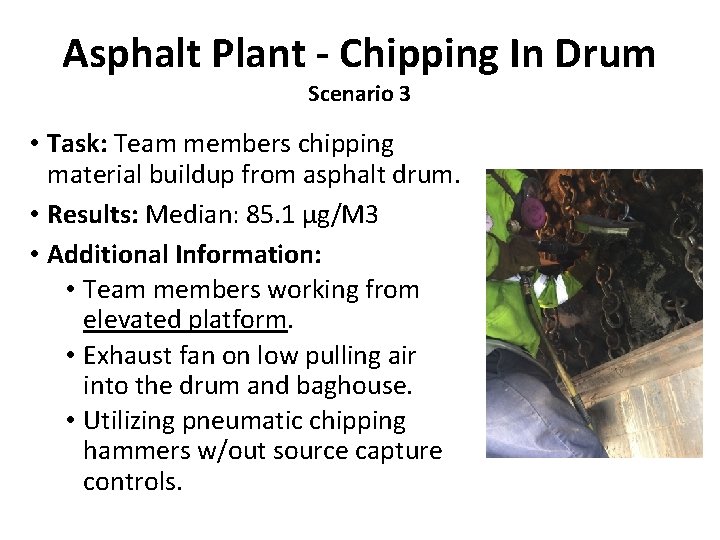
Asphalt Plant - Chipping In Drum Scenario 3 • Task: Team members chipping material buildup from asphalt drum. • Results: Median: 85. 1 µg/M 3 • Additional Information: • Team members working from elevated platform. • Exhaust fan on low pulling air into the drum and baghouse. • Utilizing pneumatic chipping hammers w/out source capture controls.
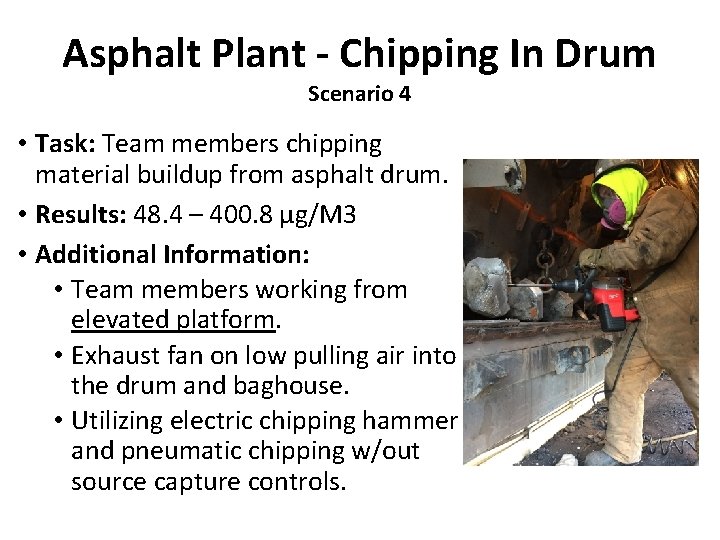
Asphalt Plant - Chipping In Drum Scenario 4 • Task: Team members chipping material buildup from asphalt drum. • Results: 48. 4 – 400. 8 µg/M 3 • Additional Information: • Team members working from elevated platform. • Exhaust fan on low pulling air into the drum and baghouse. • Utilizing electric chipping hammer and pneumatic chipping w/out source capture controls.
OSHA’s Electronic Reporting of Injury Logs Ø Requires electronic submittal of injury logs for certain sized (25 / 250) and risk-classified “establishments” • “High Risk” includes construction and manufacturing (NAICS) • 2016 data collection site closed on Dec. 31 Ø Determining allocation of employees to “establishment” is key
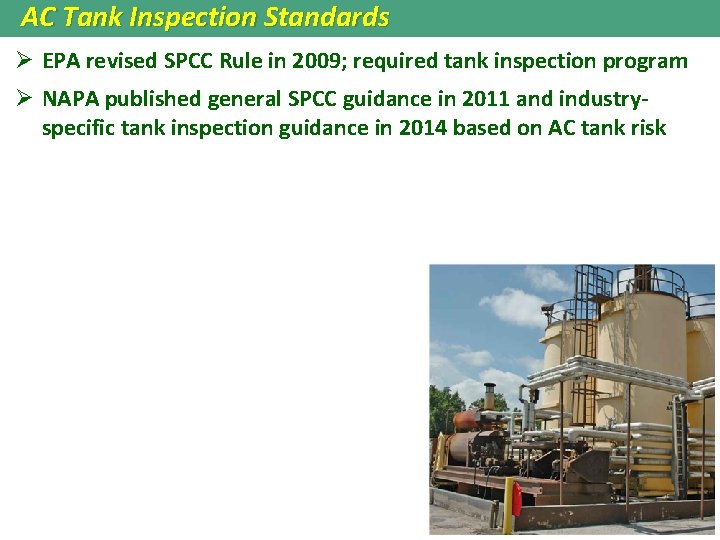
AC Tank Inspection Standards Ø EPA revised SPCC Rule in 2009; required tank inspection program Ø NAPA published general SPCC guidance in 2011 and industryspecific tank inspection guidance in 2014 based on AC tank risk
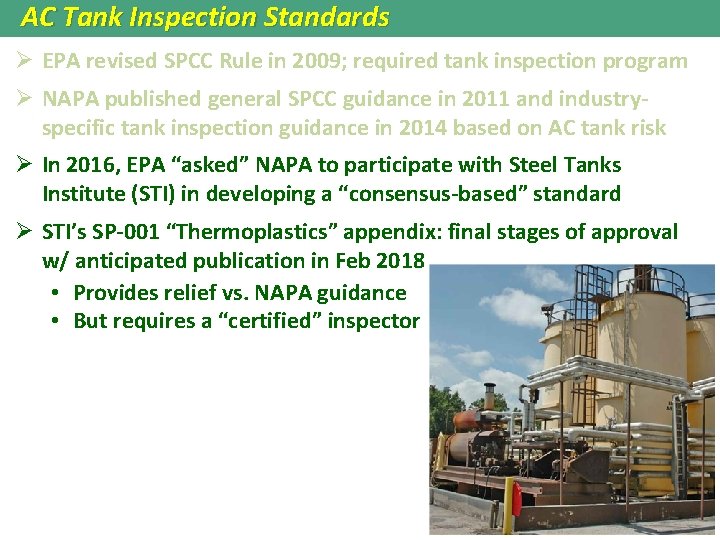
AC Tank Inspection Standards Ø EPA revised SPCC Rule in 2009; required tank inspection program Ø NAPA published general SPCC guidance in 2011 and industryspecific tank inspection guidance in 2014 based on AC tank risk Ø In 2016, EPA “asked” NAPA to participate with Steel Tanks Institute (STI) in developing a “consensus-based” standard Ø STI’s SP-001 “Thermoplastics” appendix: final stages of approval w/ anticipated publication in Feb 2018 • Provides relief vs. NAPA guidance • But requires a “certified” inspector
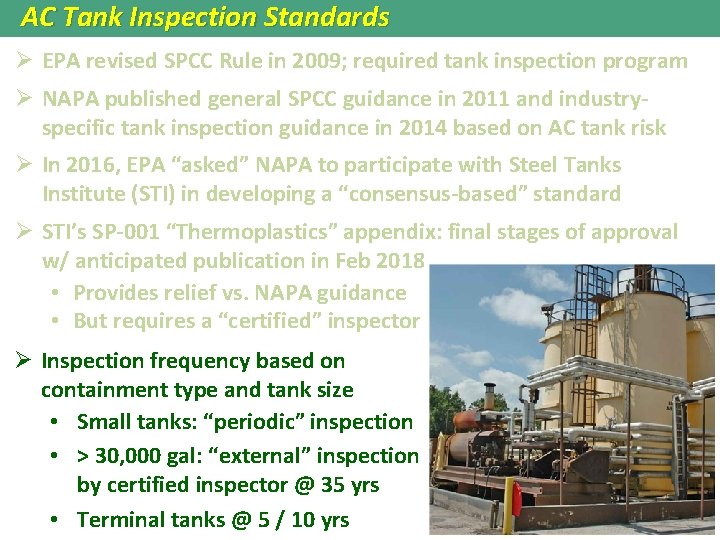
AC Tank Inspection Standards Ø EPA revised SPCC Rule in 2009; required tank inspection program Ø NAPA published general SPCC guidance in 2011 and industryspecific tank inspection guidance in 2014 based on AC tank risk Ø In 2016, EPA “asked” NAPA to participate with Steel Tanks Institute (STI) in developing a “consensus-based” standard Ø STI’s SP-001 “Thermoplastics” appendix: final stages of approval w/ anticipated publication in Feb 2018 • Provides relief vs. NAPA guidance • But requires a “certified” inspector Ø Inspection frequency based on containment type and tank size • Small tanks: “periodic” inspection • > 30, 000 gal: “external” inspection by certified inspector @ 35 yrs • Terminal tanks @ 5 / 10 yrs
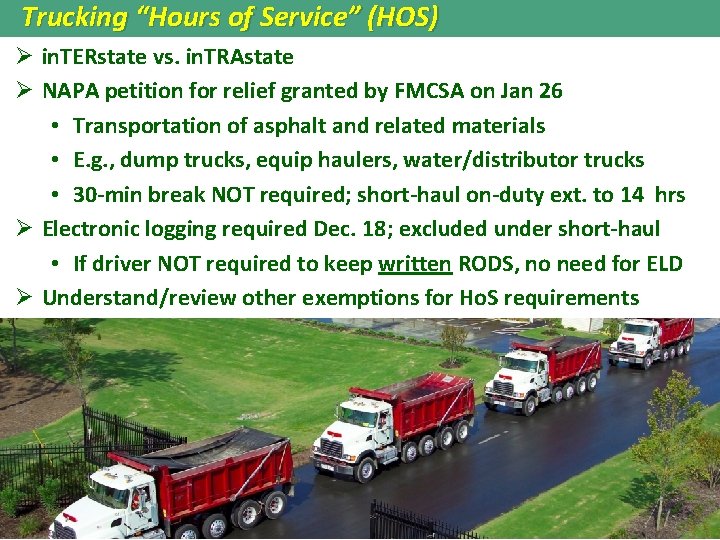
Trucking “Hours of Service” (HOS) Ø in. TERstate vs. in. TRAstate Ø NAPA petition for relief granted by FMCSA on Jan 26 • Transportation of asphalt and related materials • E. g. , dump trucks, equip haulers, water/distributor trucks • 30 -min break NOT required; short-haul on-duty ext. to 14 hrs Ø Electronic logging required Dec. 18; excluded under short-haul • If driver NOT required to keep written RODS, no need for ELD Ø Understand/review other exemptions for Ho. S requirements
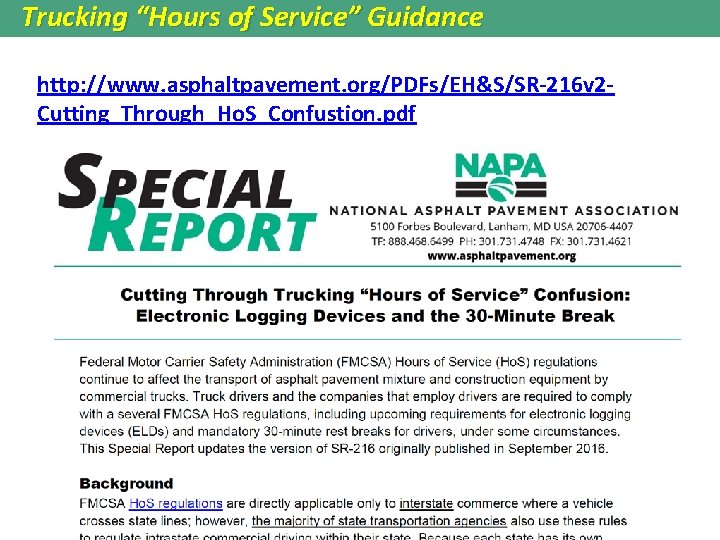
Trucking “Hours of Service” Guidance http: //www. asphaltpavement. org/PDFs/EH&S/SR-216 v 2 Cutting_Through_Ho. S_Confustion. pdf
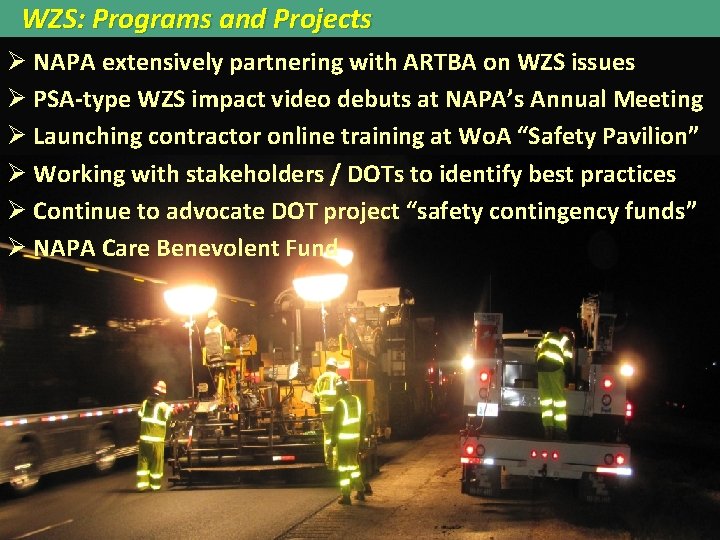
WZS: Programs and Projects Ø NAPA extensively partnering with ARTBA on WZS issues Ø PSA-type WZS impact video debuts at NAPA’s Annual Meeting Ø Launching contractor online training at Wo. A “Safety Pavilion” Ø Working with stakeholders / DOTs to identify best practices Ø Continue to advocate DOT project “safety contingency funds” Ø NAPA Care Benevolent Fund
Thank-you / Questions? www. asphaltpavement. org HMarks@asphaltpavement. org