
NAP 6 Perioperative Anaphylaxis Chlorhexidine Tomaz Garcez Consultant

- Slides: 11
NAP 6: Perioperative Anaphylaxis Chlorhexidine Tomaz Garcez Consultant Immunology
NAP 6: Perioperative Anaphylaxis What we already know (1) • Chlorhexidine is widely used in healthcare and the community (see appendix in report) • A “hidden allergen” responsible for a significant number of cases of perioperative anaphylaxis • Geographical variation – Under-recognition – Differential practice / use of decontamination / testing for allergy • Highly effective antiseptic
NAP 6: Perioperative Anaphylaxis What we already know (2) • Uses include: – – Skin decontamination Lubricating gels Coated catheters (CVC) Dental • Commonly there are features of a prior reaction in those subsequently confirmed with allergy • Investigation for allergy not standardised (timing or tests) • Positive tests to other potential culprits reported
NAP 6: Perioperative Anaphylaxis Key Findings (1) • 3 rd of the “big four” – 18 cases (9%) – 16 males – 6 urology surgery; 3 cardiac; 3 orthopaedics • 0. 78 events per 100, 000 exposures (possible overestimate) • 1 fatal case – Not investigated by specific Ig. E to chlorhexidine
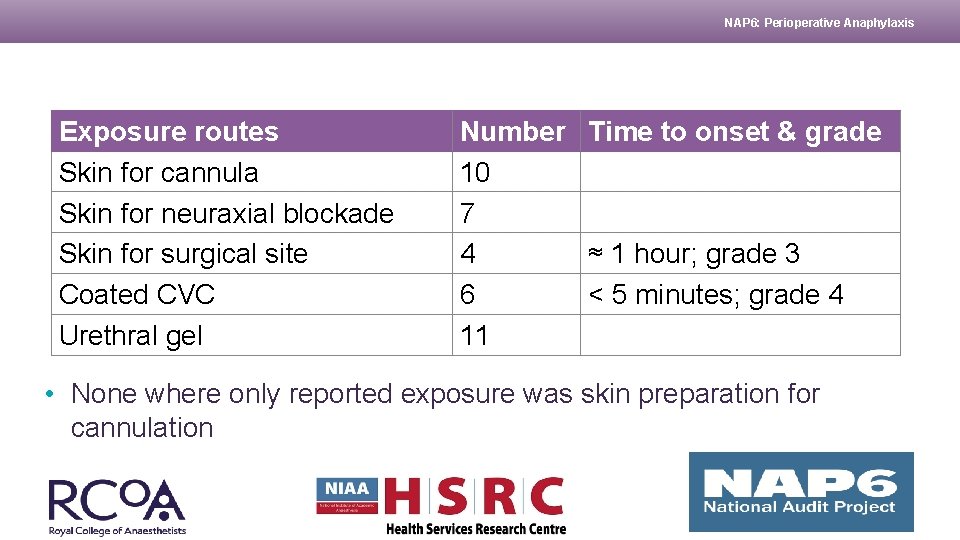
NAP 6: Perioperative Anaphylaxis Exposure routes Skin for cannula Skin for neuraxial blockade Skin for surgical site Coated CVC Urethral gel Number Time to onset & grade 10 7 4 ≈ 1 hour; grade 3 6 < 5 minutes; grade 4 11 • None where only reported exposure was skin preparation for cannulation
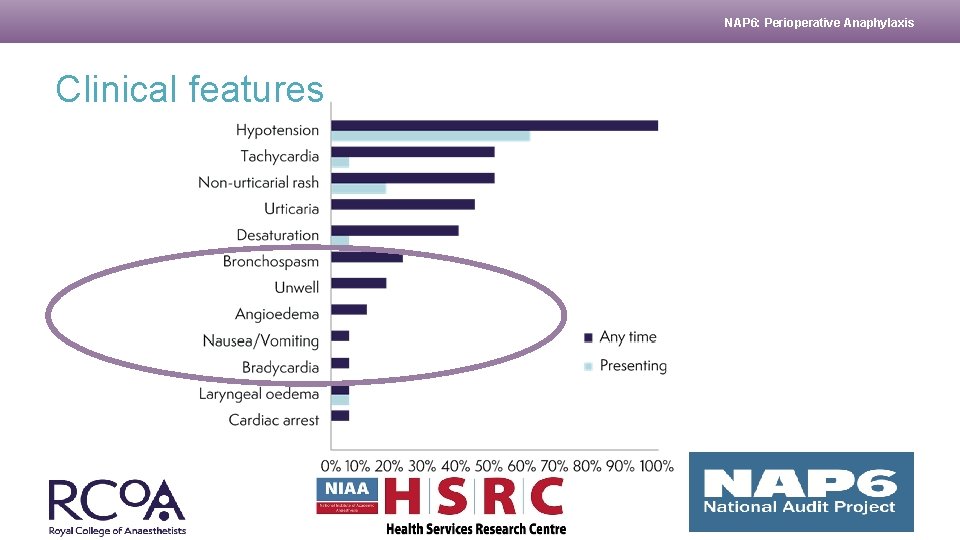
NAP 6: Perioperative Anaphylaxis Clinical features
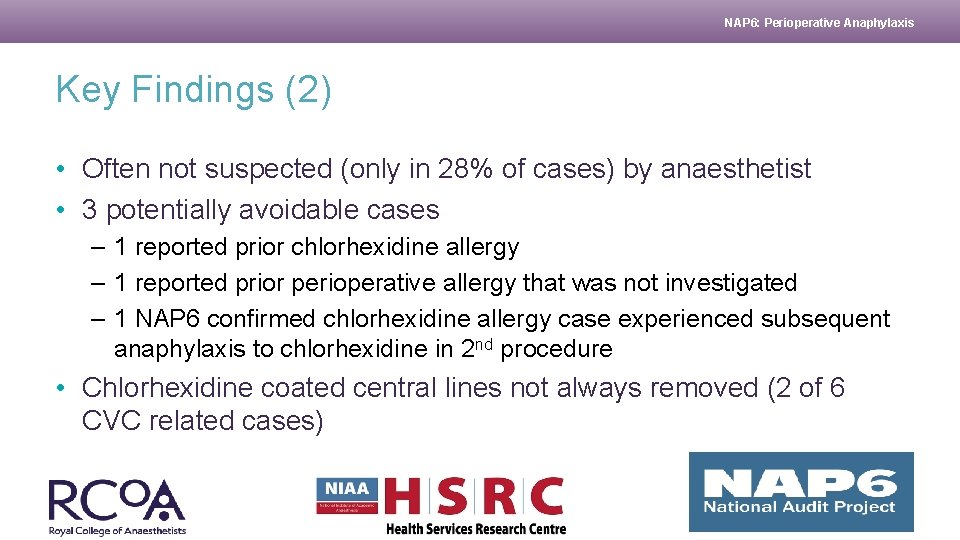
NAP 6: Perioperative Anaphylaxis Key Findings (2) • Often not suspected (only in 28% of cases) by anaesthetist • 3 potentially avoidable cases – 1 reported prior chlorhexidine allergy – 1 reported prior perioperative allergy that was not investigated – 1 NAP 6 confirmed chlorhexidine allergy case experienced subsequent anaphylaxis to chlorhexidine in 2 nd procedure • Chlorhexidine coated central lines not always removed (2 of 6 CVC related cases)
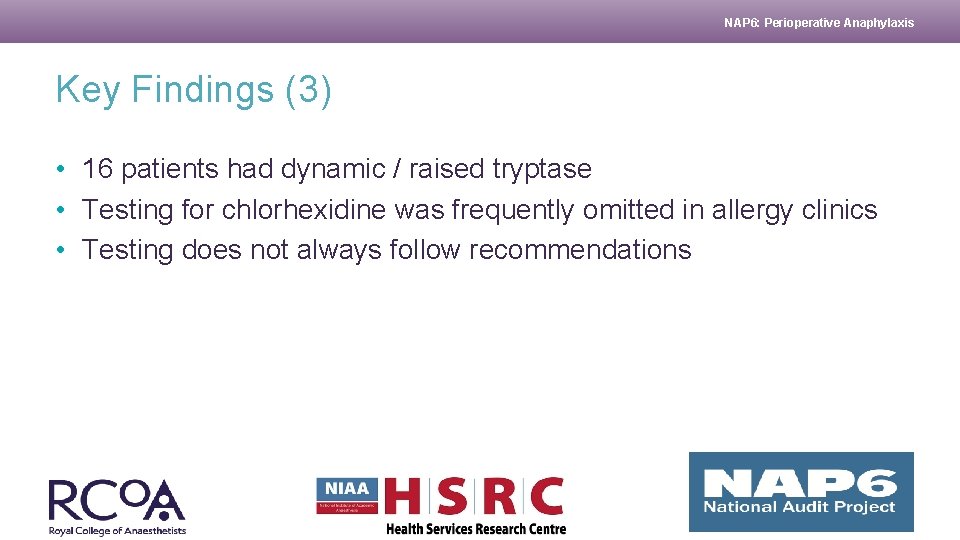
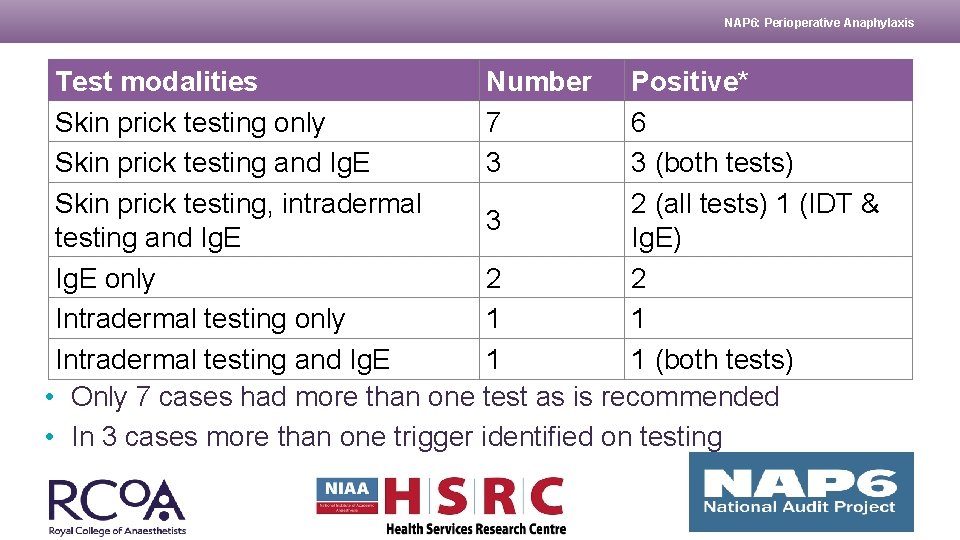
NAP 6: Perioperative Anaphylaxis Key Findings (3) • 16 patients had dynamic / raised tryptase • Testing for chlorhexidine was frequently omitted in allergy clinics • Testing does not always follow recommendations
NAP 6: Perioperative Anaphylaxis Test modalities Number Positive* Skin prick testing only 7 6 Skin prick testing and Ig. E 3 3 (both tests) Skin prick testing, intradermal 2 (all tests) 1 (IDT & 3 testing and Ig. E) Ig. E only 2 2 Intradermal testing only 1 1 Intradermal testing and Ig. E 1 1 (both tests) • Only 7 cases had more than one test as is recommended • In 3 cases more than one trigger identified on testing
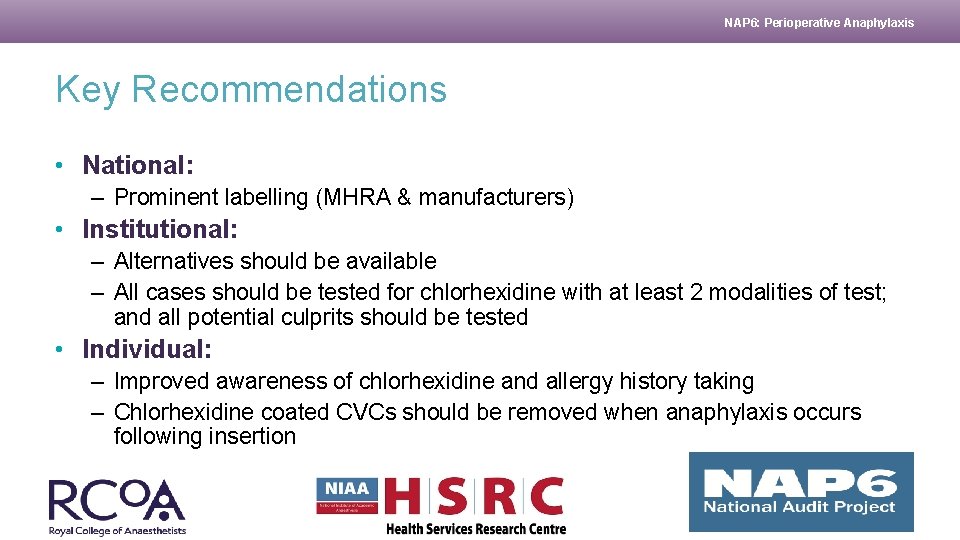
NAP 6: Perioperative Anaphylaxis Key Recommendations • National: – Prominent labelling (MHRA & manufacturers) • Institutional: – Alternatives should be available – All cases should be tested for chlorhexidine with at least 2 modalities of test; and all potential culprits should be tested • Individual: – Improved awareness of chlorhexidine and allergy history taking – Chlorhexidine coated CVCs should be removed when anaphylaxis occurs following insertion
NAP 6: Perioperative Anaphylaxis Thank you