
Nanoparticles from Wulff to Winterbottom and Beyond Subtitle
Nanoparticles: from Wulff to Winterbottom and Beyond Subtitle Something old, something new, a lot borrowed, a lot purple http: //www. numis. northwestern. edu/Presentations
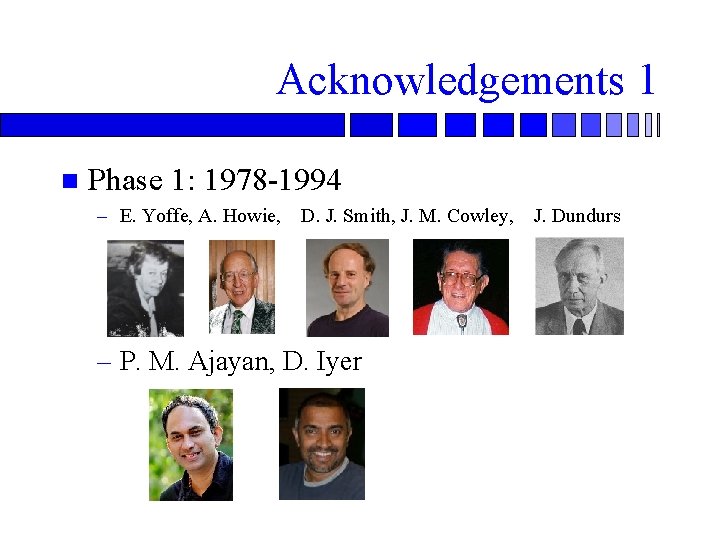
Acknowledgements 1 n Phase 1: 1978 -1994 – E. Yoffe, A. Howie, D. J. Smith, J. M. Cowley, J. Dundurs – P. M. Ajayan, D. Iyer
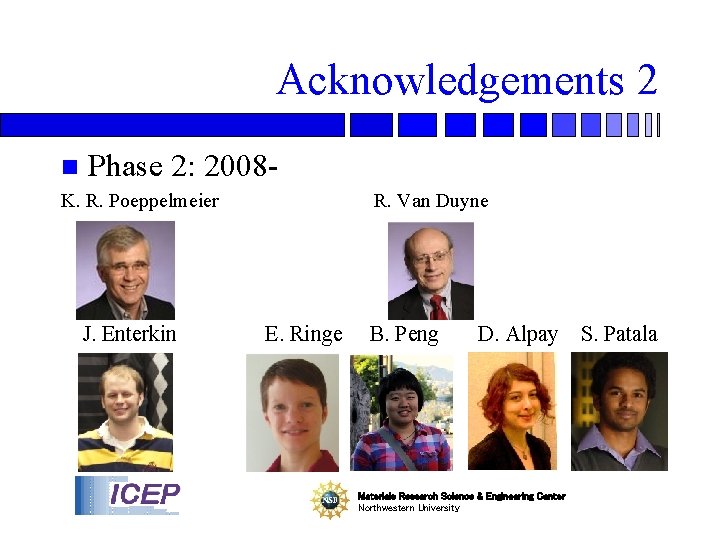
Acknowledgements 2 n Phase 2: 2008 - K. R. Poeppelmeier R. Van Duyne J. Enterkin E. Ringe B. Peng D. Alpay S. Patala Materials Research Science & Engineering Center Northwestern University
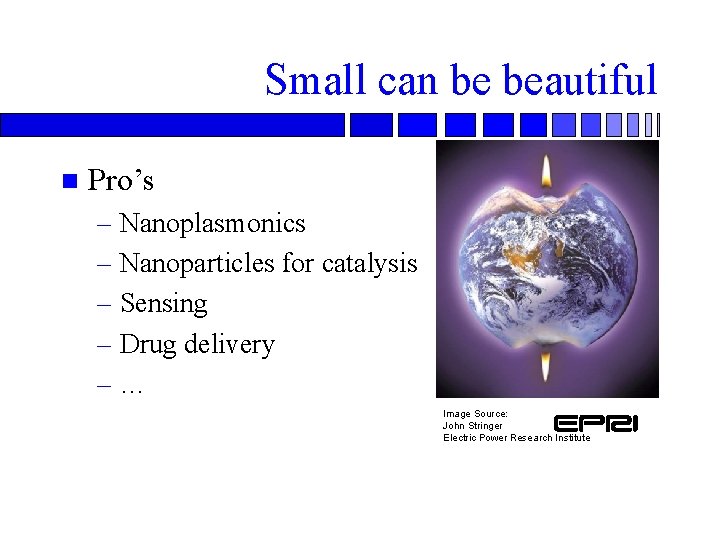
Small can be beautiful n Pro’s – Nanoplasmonics – Nanoparticles for catalysis – Sensing – Drug delivery –… Image Source: John Stringer Electric Power Research Institute
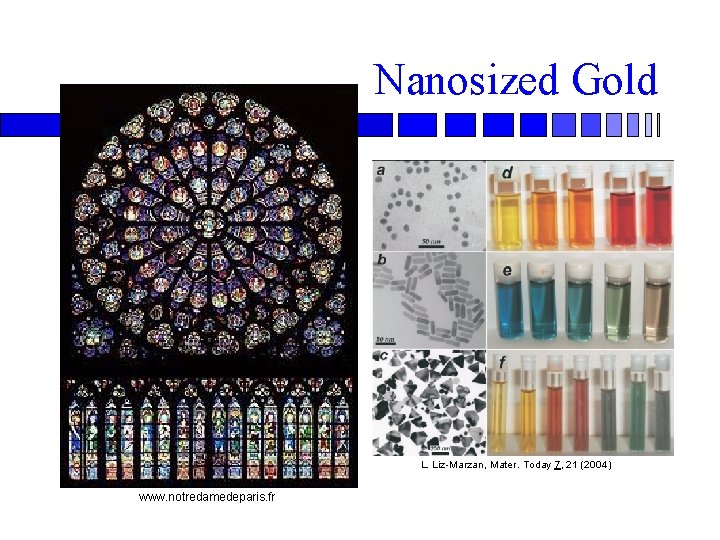
Nanosized Gold L. Liz-Marzan, Mater. Today 7, 21 (2004) www. notredamedeparis. fr
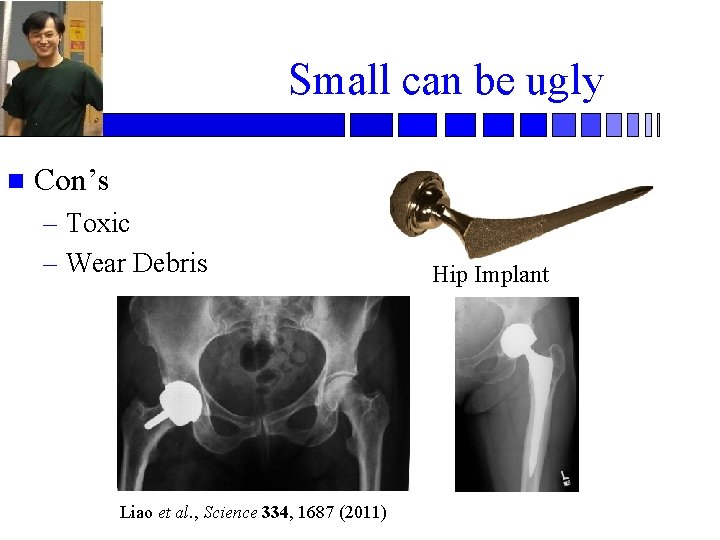
Small can be ugly n Con’s – Toxic – Wear Debris Liao et al. , Science 334, 1687 (2011) Hip Implant
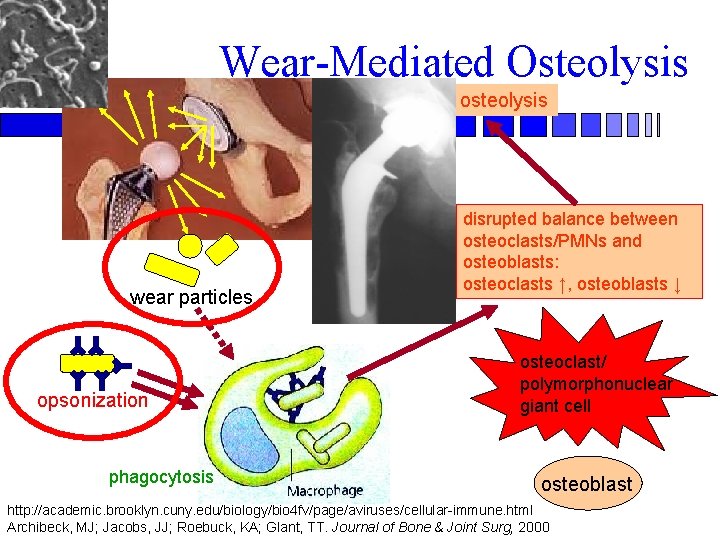
Wear-Mediated Osteolysis osteolysis wear particles opsonization phagocytosis disrupted balance between osteoclasts/PMNs and osteoblasts: osteoclasts ↑, osteoblasts ↓ osteoclast/ polymorphonuclear giant cell osteoblast http: //academic. brooklyn. cuny. edu/biology/bio 4 fv/page/aviruses/cellular-immune. html Archibeck, MJ; Jacobs, JJ; Roebuck, KA; Glant, TT. Journal of Bone & Joint Surg, 2000
Nanoparticle Crystallography from 100 nm down n Some basics that everyone should know – Wulff, Winterbottom and friends n Some basics that most do not know or get wrong – The artifact of some particle size effects – There are two Wulff constructions n Some new basics – Segregation in nanoparticles and with strain n One application – catalysts by design
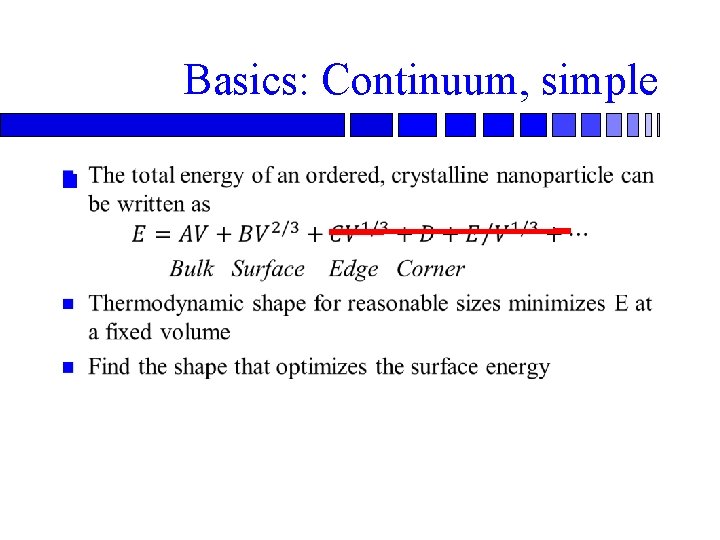
Basics: Continuum, simple n

Max Von Laue Wulff Construction n G. Z. Wulff, Kristallogr. Mineral 34, 4490 (1901); M. Z. Von Laue, Kristallogr. 105, 124 (1943); A. Z. Dinghas, A. Z. Kristallogr. 105, 304 (1944)
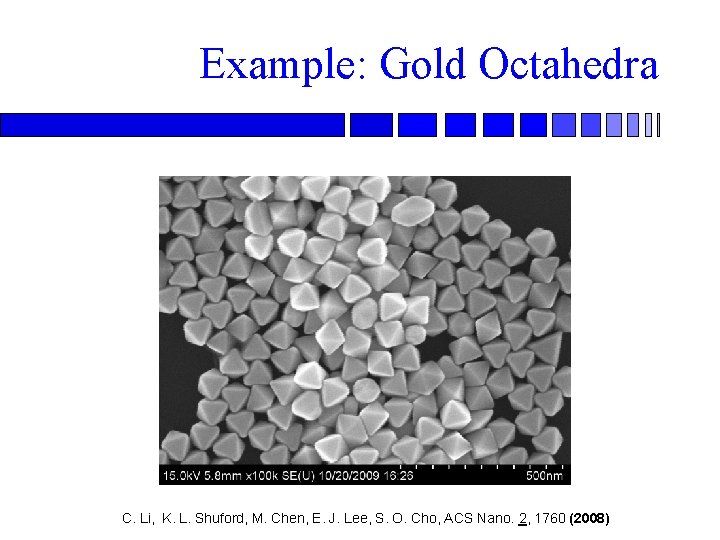
Example: Gold Octahedra C. Li, K. L. Shuford, M. Chen, E. J. Lee, S. O. Cho, ACS Nano. 2, 1760 (2008)
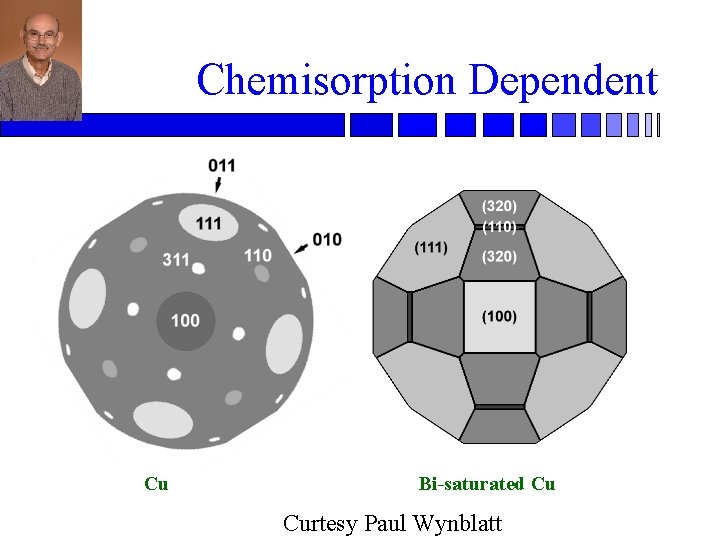
Chemisorption Dependent Cu Bi-saturated Cu Curtesy Paul Wynblatt

Winterbottom Construction Include the effect of a nanoparticle sitting on a substrate g. Int N. B. , Kaischew may be a better source, unclear
![Wulff & Winterbottom 001 100 Projection down [010] γInt – γSub = γPt Increasing](http://slidetodoc.com/presentation_image_h/963b7ca0e0d8af04c878d97399001b27/image-14.jpg "Wulff & Winterbottom 001 100 Projection down [010] γInt – γSub = γPt Increasing")
Wulff & Winterbottom 001 100 Projection down [010] γInt – γSub = γPt Increasing γint 110 45° rotation around [100] γ 111 0 < γInt – γSub < γPt γ 100 γInt – γSub = 0 Projection down [110] γ 111 -γPt < γInt – γSub < 0 γInt – γSub ≤ -γPt Increasing γsub Increasing γPt J. A. Enterkin, K. R. Poeppelmeier, L. D. Marks, Nano Lett. 11, 993 (2011); G. Z. Wulff, Kristallogr. Mineral 14 34, 4490 (1901); W. L. Winterbottom, Acta Metallurgica 15, 303 (1967)
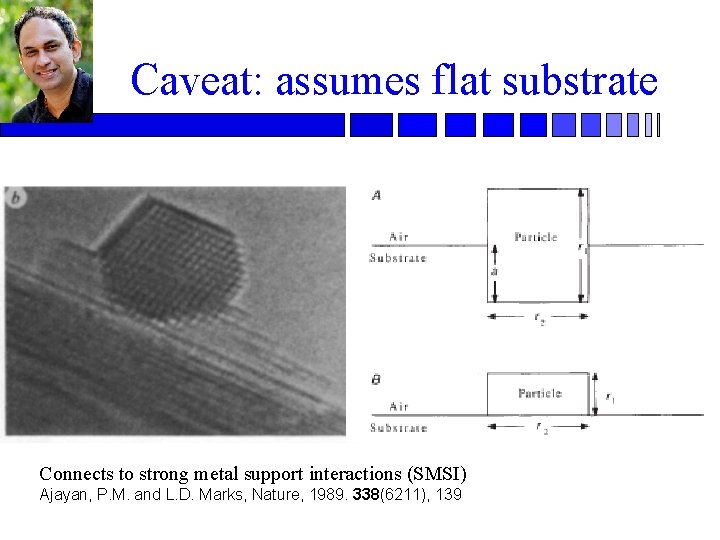
Caveat: assumes flat substrate Connects to strong metal support interactions (SMSI) Ajayan, P. M. and L. D. Marks, Nature, 1989. 338(6211), 139
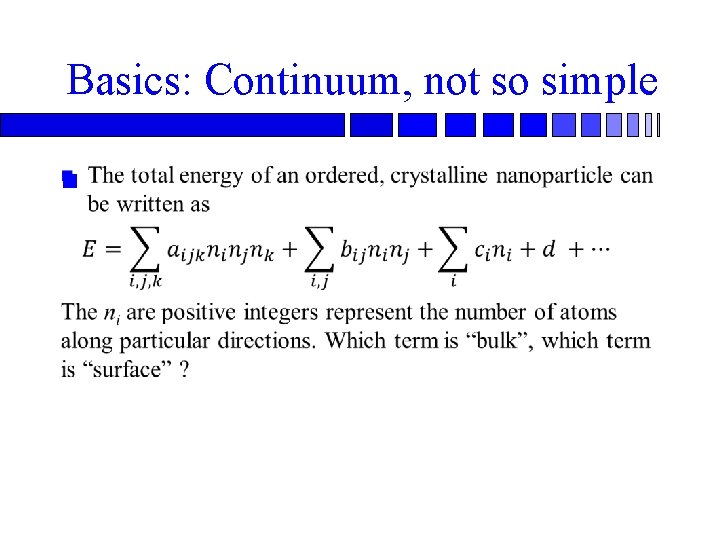
Basics: Continuum, not so simple n
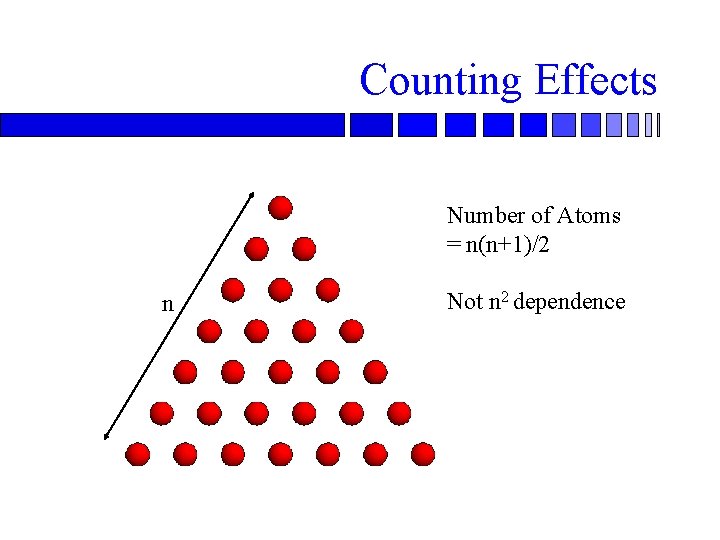
Counting Effects Number of Atoms = n(n+1)/2 n Not n 2 dependence
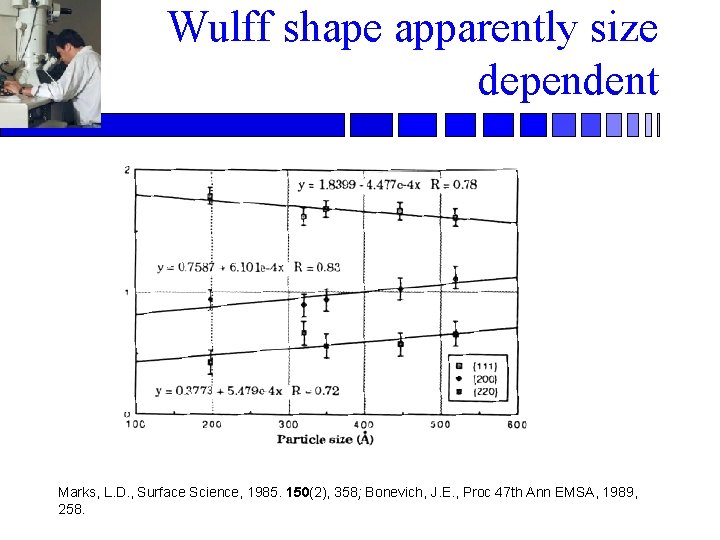
Wulff shape apparently size dependent Marks, L. D. , Surface Science, 1985. 150(2), 358; Bonevich, J. E. , Proc 47 th Ann EMSA, 1989, 258.
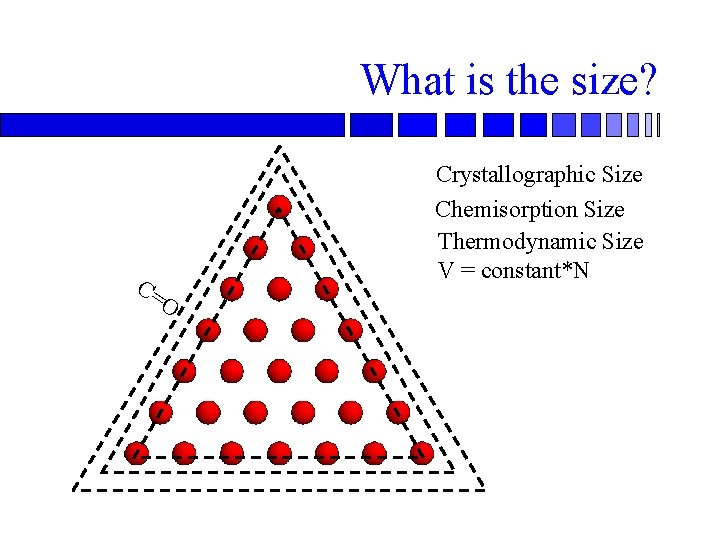
What is the size? C= Crystallographic Size Chemisorption Size Thermodynamic Size V = constant*N O
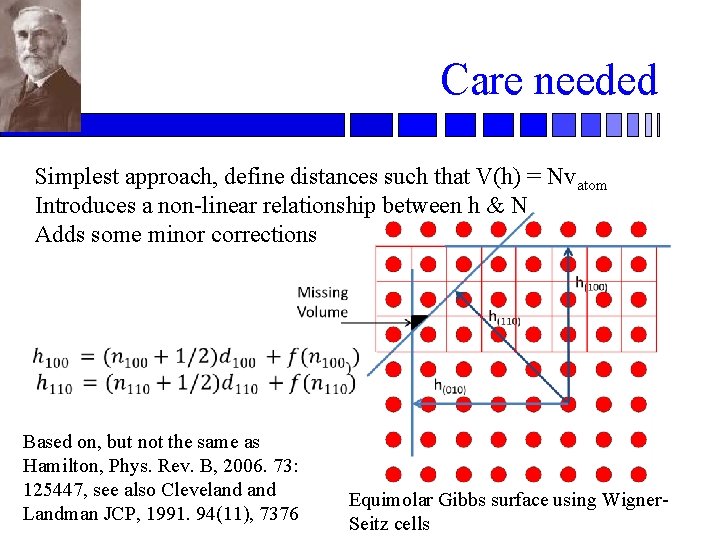
Care needed Simplest approach, define distances such that V(h) = Nvatom Introduces a non-linear relationship between h & N Adds some minor corrections Based on, but not the same as Hamilton, Phys. Rev. B, 2006. 73: 125447, see also Cleveland Landman JCP, 1991. 94(11), 7376 Equimolar Gibbs surface using Wigner. Seitz cells
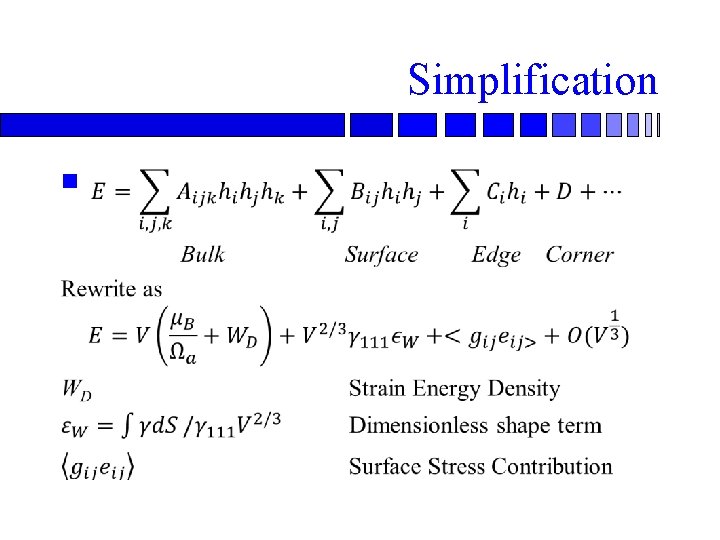
Simplification n
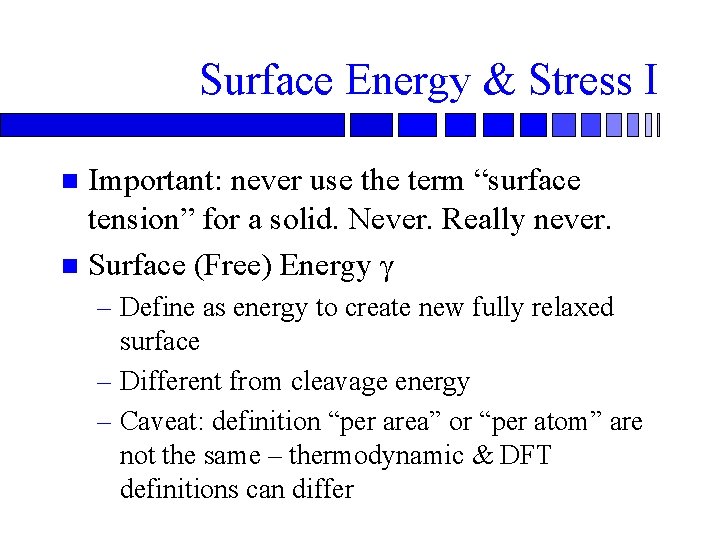
Surface Energy & Stress I Important: never use the term “surface tension” for a solid. Never. Really never. n Surface (Free) Energy γ n – Define as energy to create new fully relaxed surface – Different from cleavage energy – Caveat: definition “per area” or “per atom” are not the same – thermodynamic & DFT definitions can differ
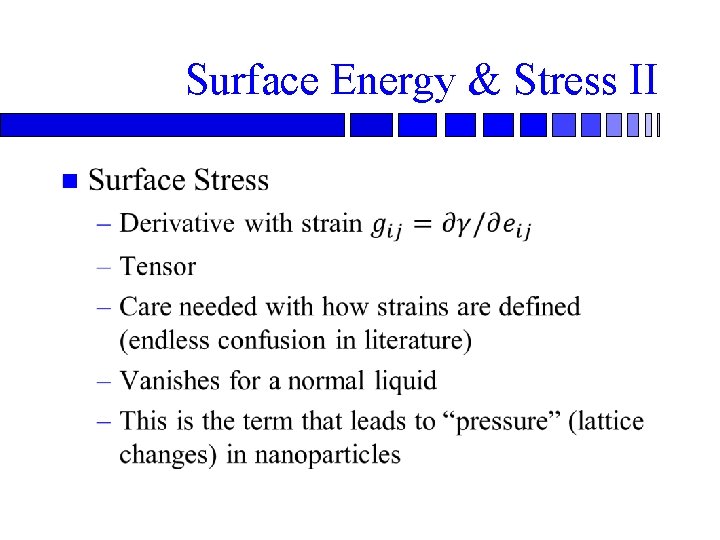
Surface Energy & Stress II n
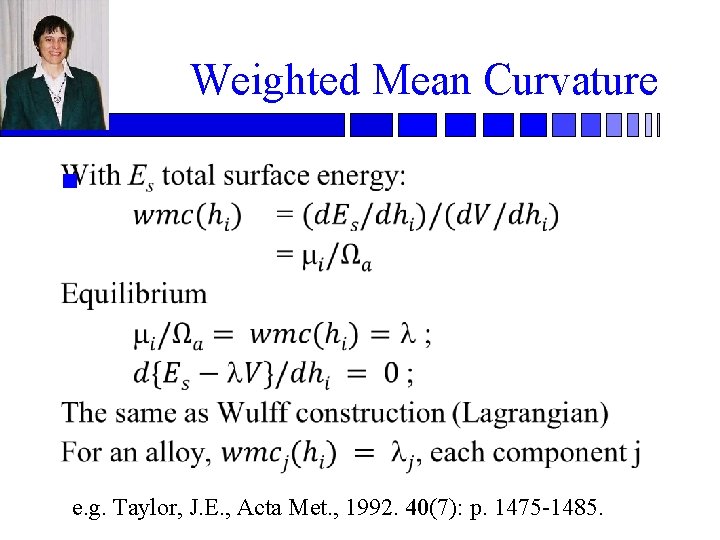
Weighted Mean Curvature n e. g. Taylor, J. E. , Acta Met. , 1992. 40(7): p. 1475 -1485.
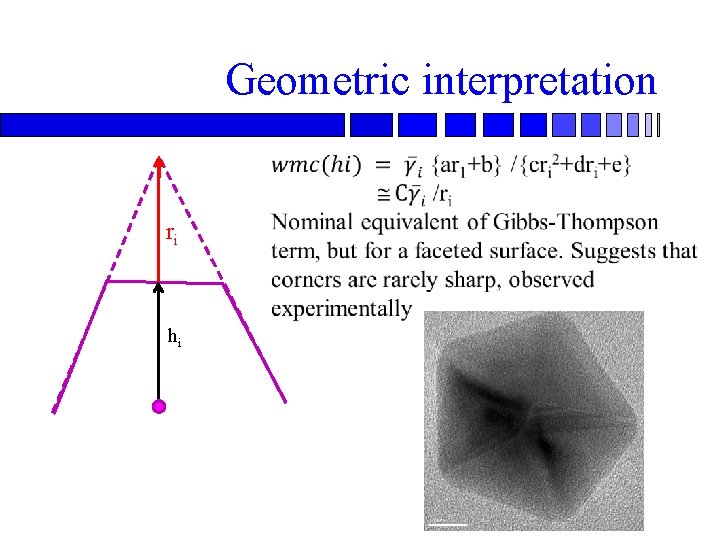
Geometric interpretation ri hi
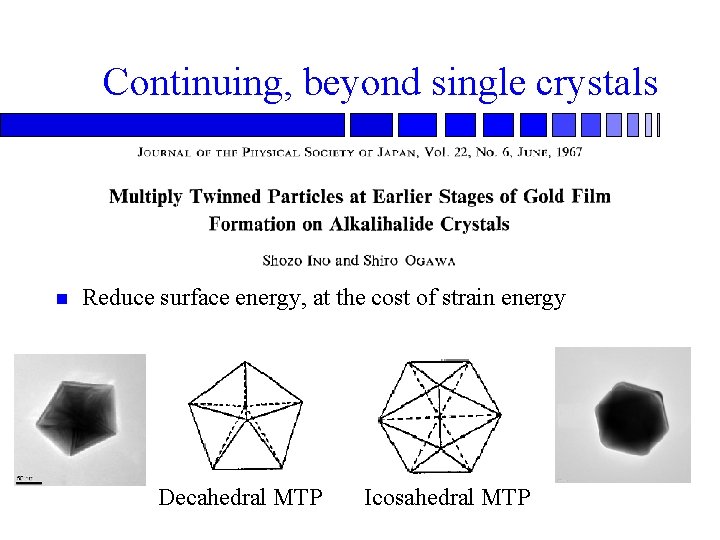
Continuing, beyond single crystals n Reduce surface energy, at the cost of strain energy Decahedral MTP Icosahedral MTP
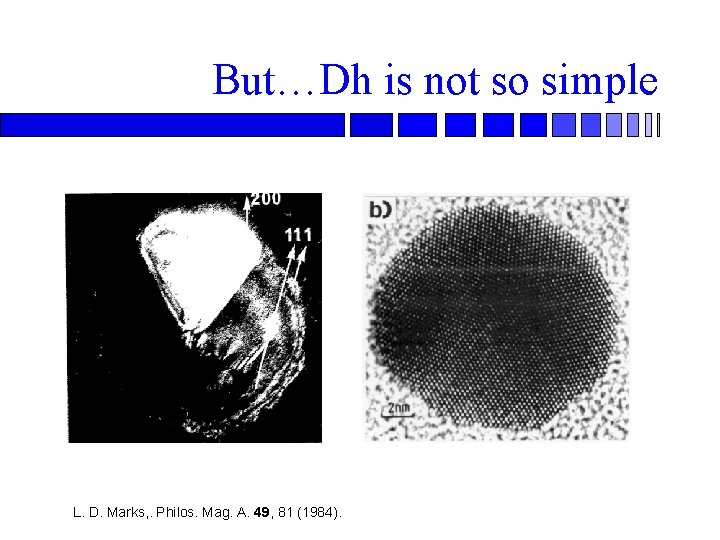
But…Dh is not so simple L. D. Marks, . Philos. Mag. A. 49, 81 (1984).

Modified Wulff Construction L. D. Marks, . Philos. Mag. A. 49, 81 (1984).
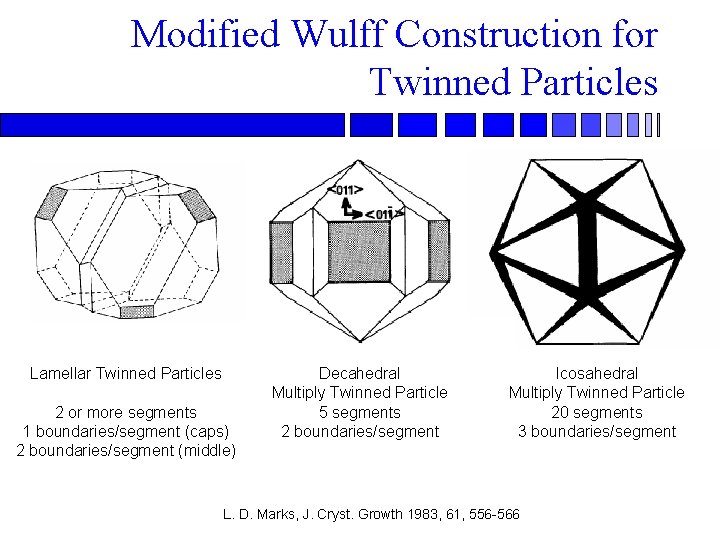
Modified Wulff Construction for Twinned Particles Lamellar Twinned Particles 2 or more segments 1 boundaries/segment (caps) 2 boundaries/segment (middle) Decahedral Multiply Twinned Particle 5 segments 2 boundaries/segment Icosahedral Multiply Twinned Particle 20 segments 3 boundaries/segment L. D. Marks, J. Cryst. Growth 1983, 61, 556 -566
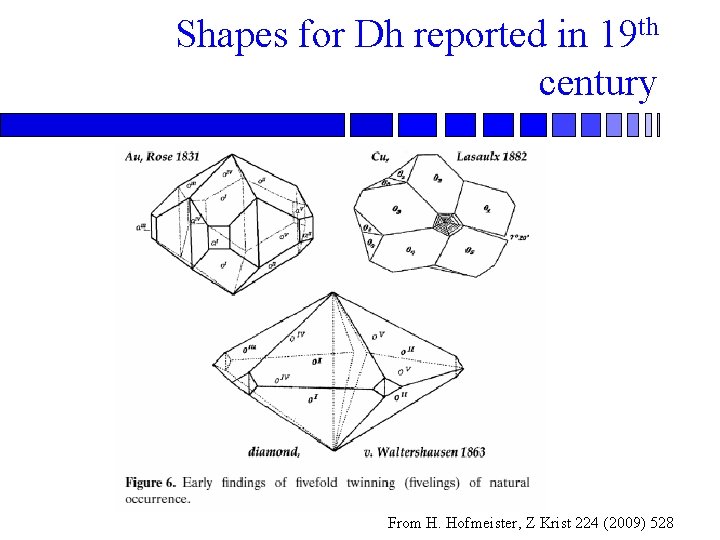
Shapes for Dh reported in 19 th century From H. Hofmeister, Z Krist 224 (2009) 528
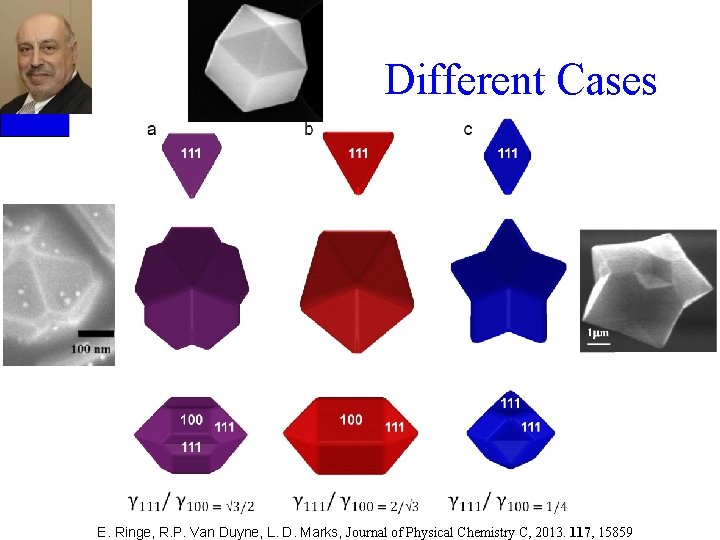
Different Cases E. Ringe, R. P. Van Duyne, L. D. Marks, Journal of Physical Chemistry C, 2013. 117, 15859
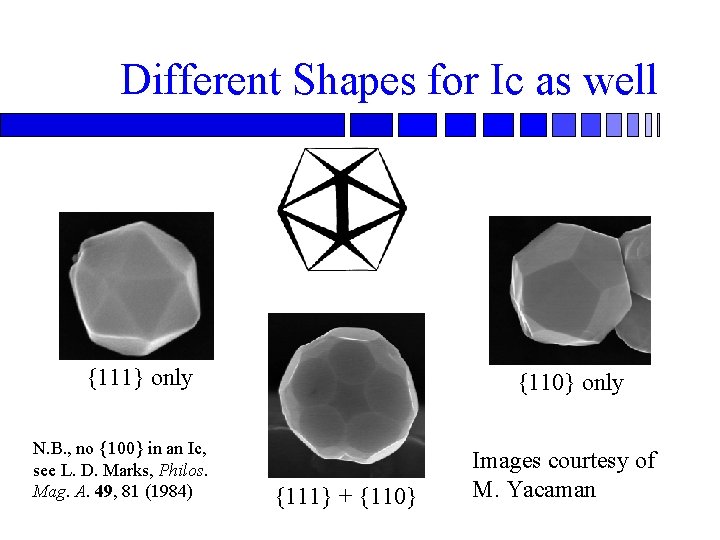
Different Shapes for Ic as well {111} only N. B. , no {100} in an Ic, see L. D. Marks, Philos. Mag. A. 49, 81 (1984) {110} only {111} + {110} Images courtesy of M. Yacaman
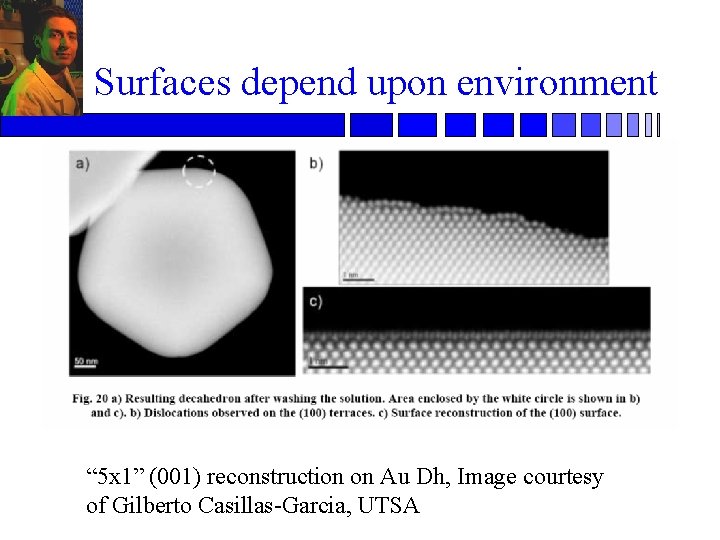
Surfaces depend upon environment “ 5 x 1” (001) reconstruction on Au Dh, Image courtesy of Gilberto Casillas-Garcia, UTSA
MTP Energetics n Three Terms – Strain, fcc units do not fit together without it – Difference in total surface free energy – Difference in total surface stress terms N. B. , twin boundary energy negligable
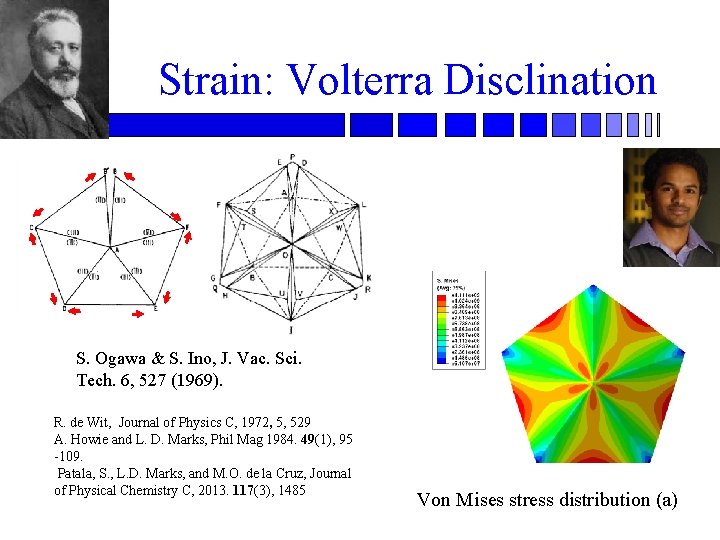
Strain: Volterra Disclination S. Ogawa & S. Ino, J. Vac. Sci. Tech. 6, 527 (1969). R. de Wit, Journal of Physics C, 1972, 5, 529 A. Howie and L. D. Marks, Phil Mag 1984. 49(1), 95 -109. Patala, S. , L. D. Marks, and M. O. de la Cruz, Journal of Physical Chemistry C, 2013. 117(3), 1485 Von Mises stress distribution (a)

MTPs have less of the Wulff shape Segment for Dh Twin boundaries restrict which surfaces are exposed L. D. Marks, . Philos. Mag. A. 49, 81 (1984).
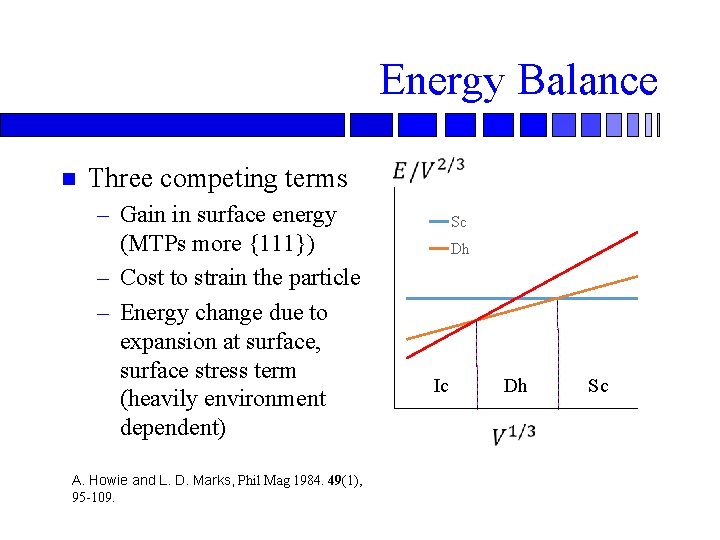
Energy Balance n Three competing terms – Gain in surface energy (MTPs more {111}) – Cost to strain the particle – Energy change due to expansion at surface, surface stress term (heavily environment dependent) A. Howie and L. D. Marks, Phil Mag 1984. 49(1), 95 -109. Sc Dh Ic Dh Sc
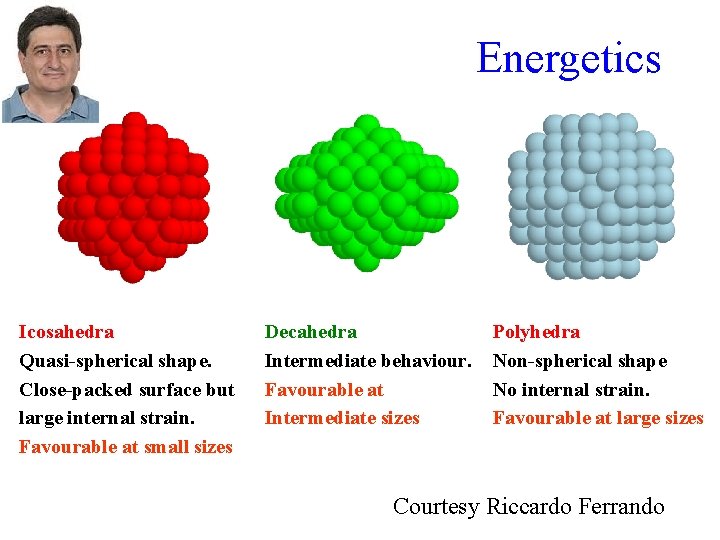
Energetics Icosahedra Quasi-spherical shape. Close-packed surface but large internal strain. Favourable at small sizes Decahedra Intermediate behaviour. Favourable at Intermediate sizes Polyhedra Non-spherical shape No internal strain. Favourable at large sizes Courtesy Riccardo Ferrando
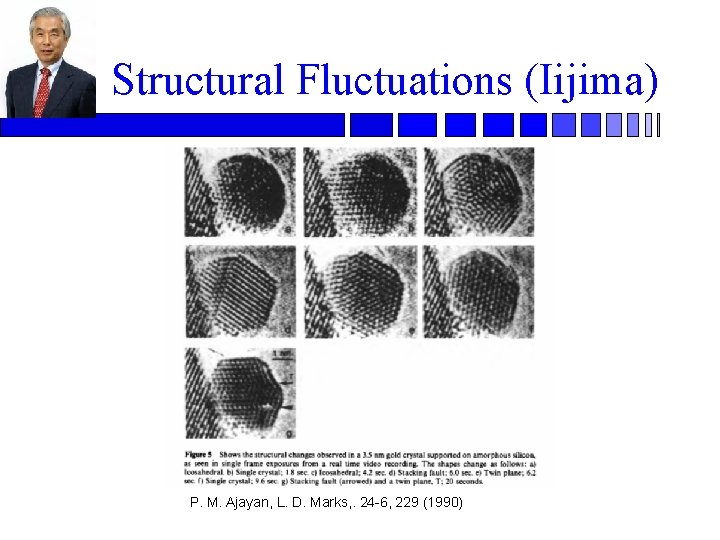
Structural Fluctuations (Iijima) P. M. Ajayan, L. D. Marks, . 24 -6, 229 (1990)
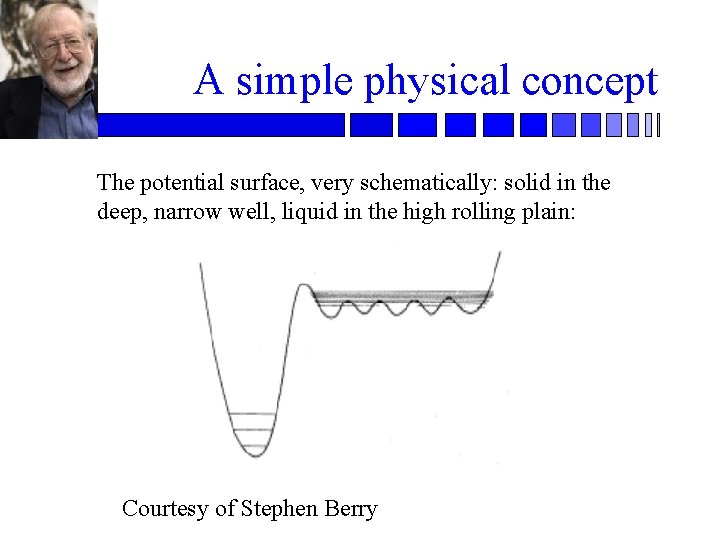
A simple physical concept The potential surface, very schematically: solid in the deep, narrow well, liquid in the high rolling plain: Courtesy of Stephen Berry
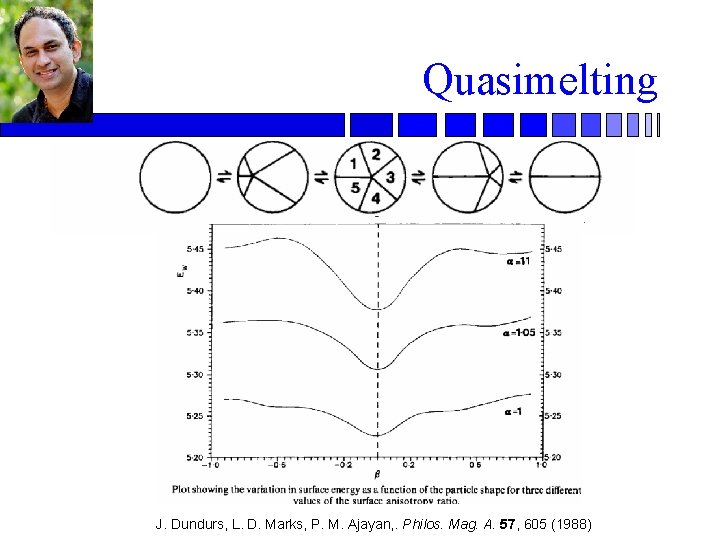
Quasimelting J. Dundurs, L. D. Marks, P. M. Ajayan, . Philos. Mag. A. 57, 605 (1988)
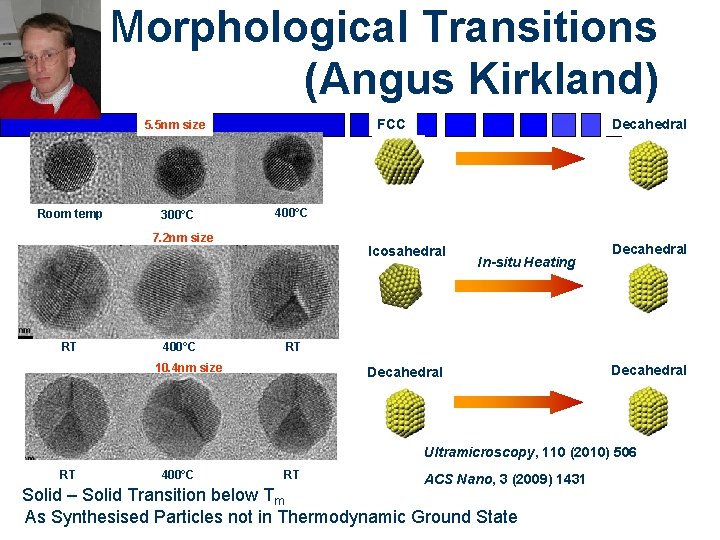
Morphological Transitions (Angus Kirkland) Room temp 300°C 400°C 7. 2 nm size RT 400°C Decahedral FCC 5. 5 nm size Icosahedral In-situ Heating Decahedral RT 10. 4 nm size Decahedral Ultramicroscopy, 110 (2010) 506 RT 400°C RT ACS Nano, 3 (2009) 1431 Solid – Solid Transition below Tm As Synthesised Particles not in Thermodynamic Ground State
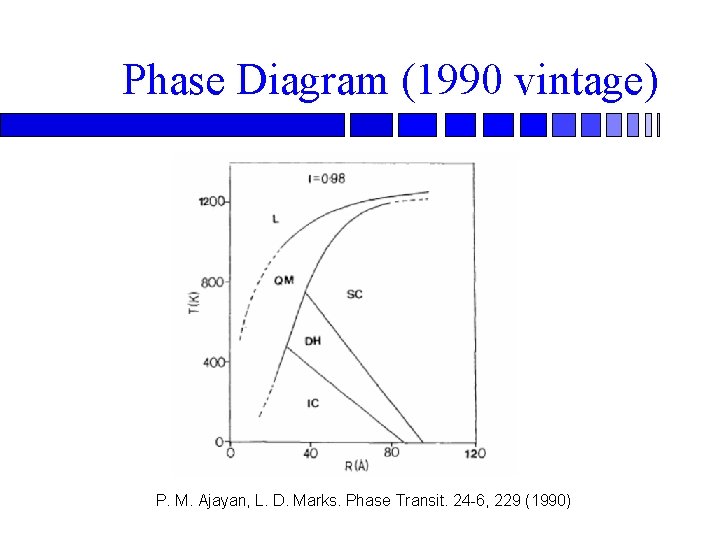
Phase Diagram (1990 vintage) P. M. Ajayan, L. D. Marks. Phase Transit. 24 -6, 229 (1990)
The Two Wulff Constructions n Just to make life more fun – Is every Wulff shape thermodynamic? – No, and probably the original paper was not a thermodynamic case!
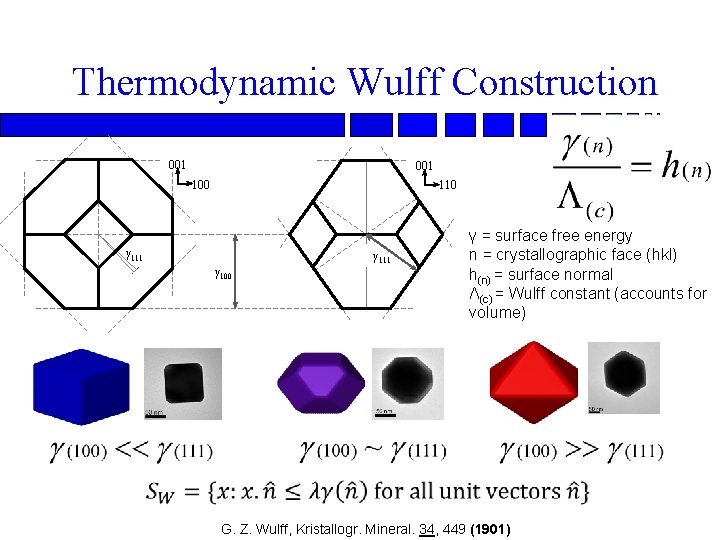
Thermodynamic Wulff Construction 001 100 110 γ 111 γ 100 γ = surface free energy n = crystallographic face (hkl) h(n) = surface normal Λ(c) = Wulff constant (accounts for volume) G. Z. Wulff, Kristallogr. Mineral. 34, 449 (1901)
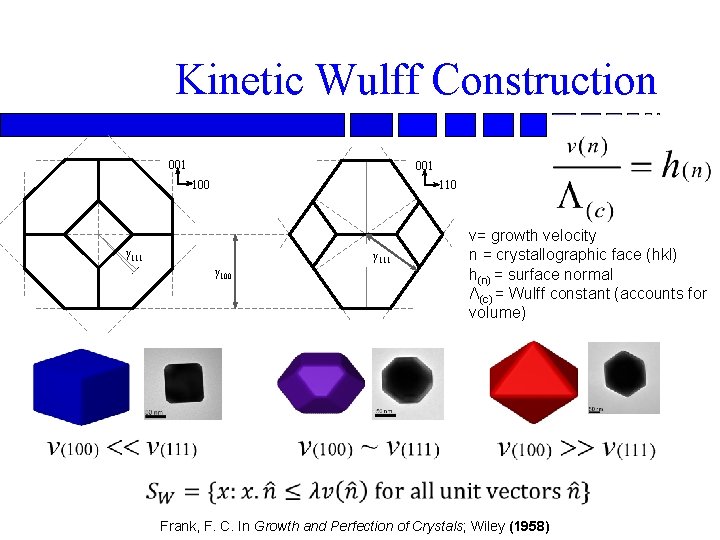
Kinetic Wulff Construction 001 100 110 γ 111 γ 100 v= growth velocity n = crystallographic face (hkl) h(n) = surface normal Λ(c) = Wulff constant (accounts for volume) Frank, F. C. In Growth and Perfection of Crystals; Wiley (1958)
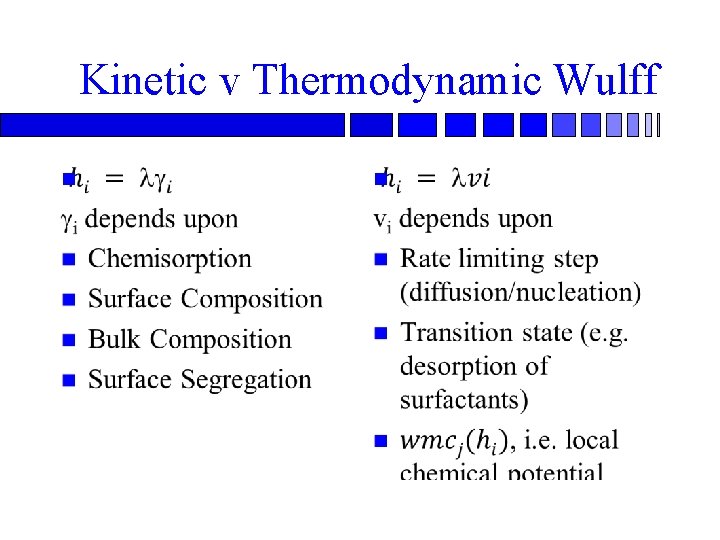
Kinetic v Thermodynamic Wulff n n
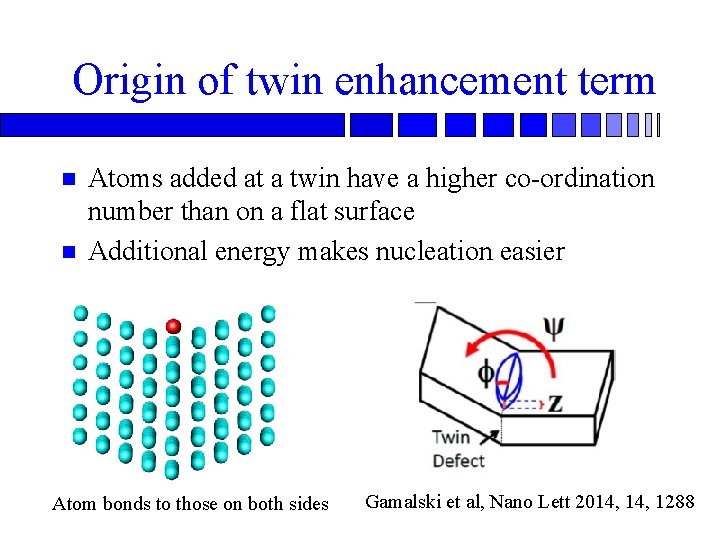
Origin of twin enhancement term n n Atoms added at a twin have a higher co-ordination number than on a flat surface Additional energy makes nucleation easier Atom bonds to those on both sides Gamalski et al, Nano Lett 2014, 1288
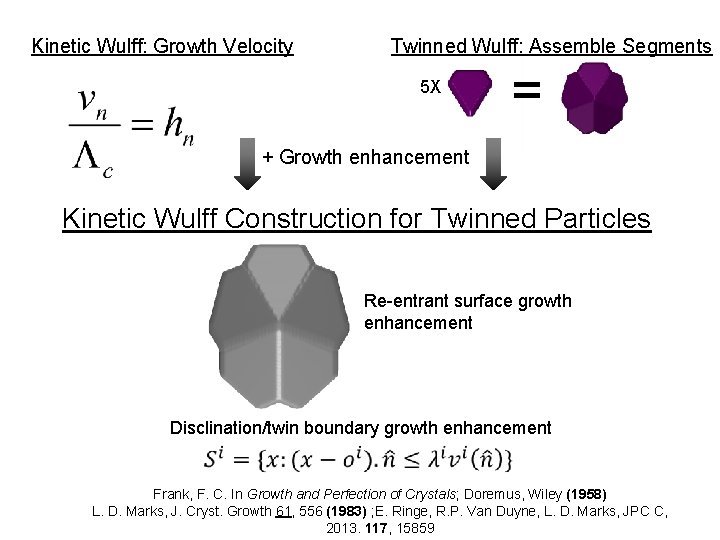
Kinetic Wulff: Growth Velocity Twinned Wulff: Assemble Segments 5 X = + Growth enhancement Kinetic Wulff Construction for Twinned Particles Re-entrant surface growth enhancement Disclination/twin boundary growth enhancement Frank, F. C. In Growth and Perfection of Crystals; Doremus, Wiley (1958) L. D. Marks, J. Cryst. Growth 61, 556 (1983) ; E. Ringe, R. P. Van Duyne, L. D. Marks, JPC C, 2013. 117, 15859
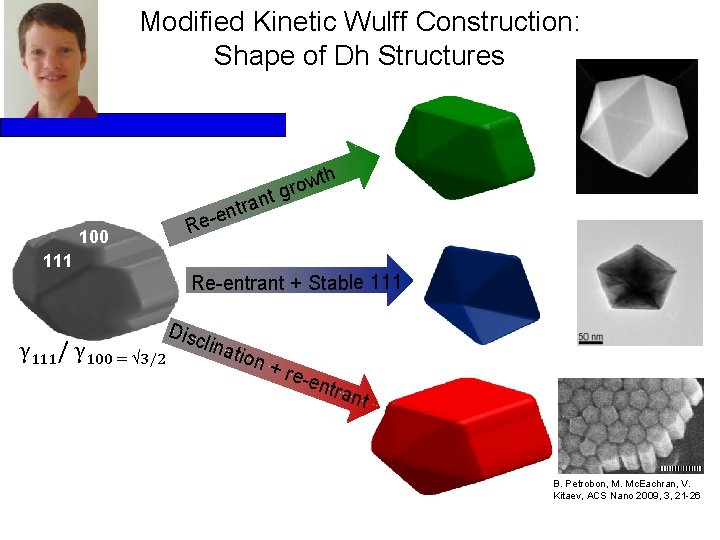
Modified Kinetic Wulff Construction: Shape of Dh Structures wth o r tg n a tr n 100 e Re- 111 Re-entrant + Stable 111 γ 111/ γ 100 = 3/2 Disc lina tion + re -ent rant B. Petrobon, M. Mc. Eachran, V. 100 nm Kitaev, ACS Nano 2009, 3, 21 -26
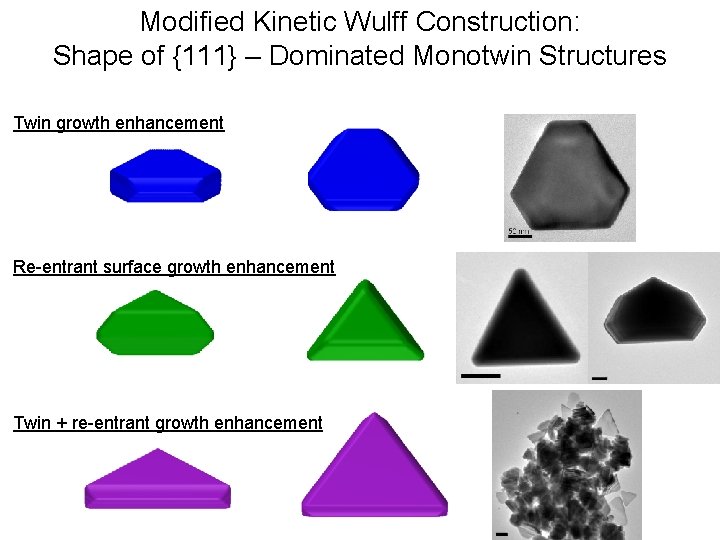
Modified Kinetic Wulff Construction: Shape of {111} – Dominated Monotwin Structures Twin growth enhancement Re-entrant surface growth enhancement Twin + re-entrant growth enhancement
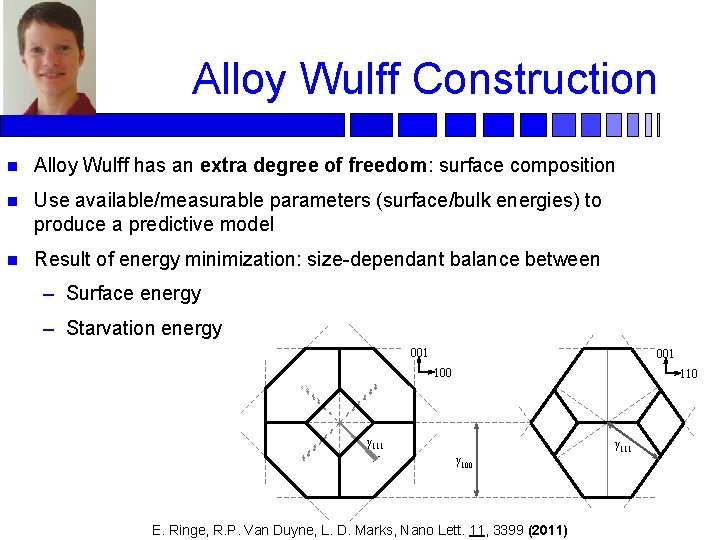
Alloy Wulff Construction n Alloy Wulff has an extra degree of freedom: surface composition n Use available/measurable parameters (surface/bulk energies) to produce a predictive model n Result of energy minimization: size-dependant balance between – Surface energy – Starvation energy 001 100 110 γ 111 γ 100 E. Ringe, R. P. Van Duyne, L. D. Marks, Nano Lett. 11, 3399 (2011)

Alloy Wulff Construction: Minimization of Energy via Lagrangian Multipliers Conventional Wulff Size Independent Alloy Wulff h(110) h(100) γ = surface free energy n = crystallographic face hn = surface normal Λc = Wulff constant (accounts for volume) Size Dependent: Starvation γ = surface free energy n = crystallographic face CSi = surface concentration of element i CVi = bulk concentration G = bulk free energy Λ = Wulff constant (accounts for volume) hn = surface normal
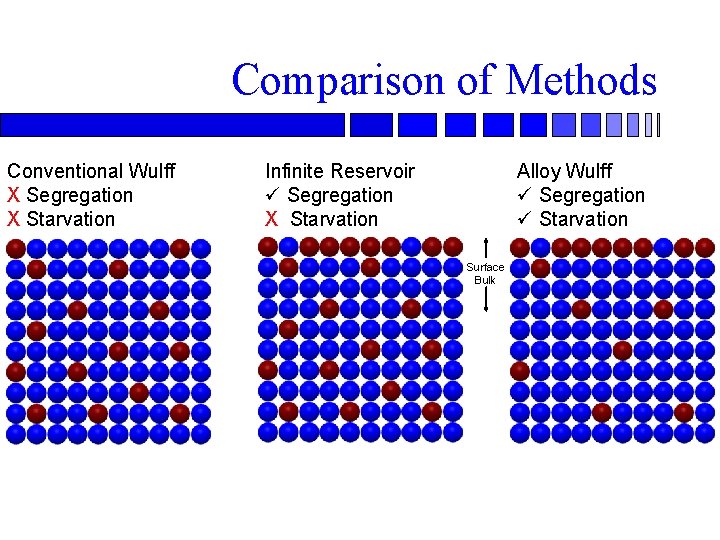
Comparison of Methods Conventional Wulff X Segregation X Starvation Infinite Reservoir ü Segregation X Starvation Alloy Wulff ü Segregation ü Starvation Surface Bulk
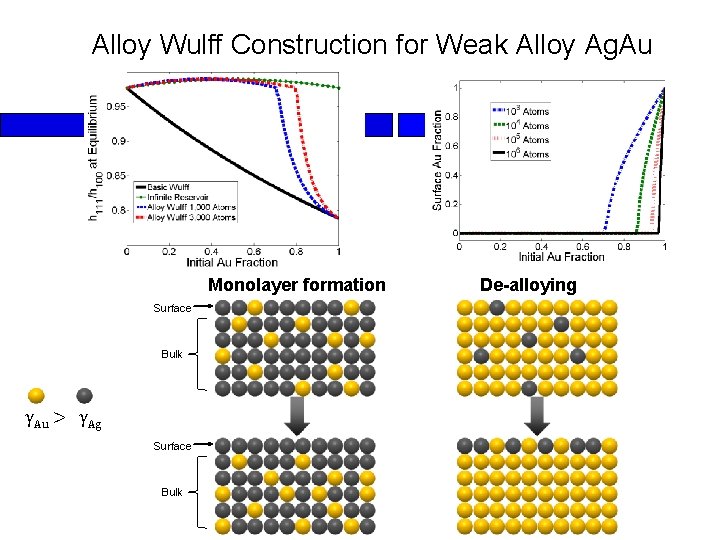
Alloy Wulff Construction for Weak Alloy Ag. Au Monolayer formation Surface Bulk γAu > γAg Surface Bulk De-alloying

3 Regimes in Cu. Au Alloy Wulff Construction 1 2 3 γAu < γCu 1: De-alloying 2: Bulk/surface equilibrium 3: Monolayer formation
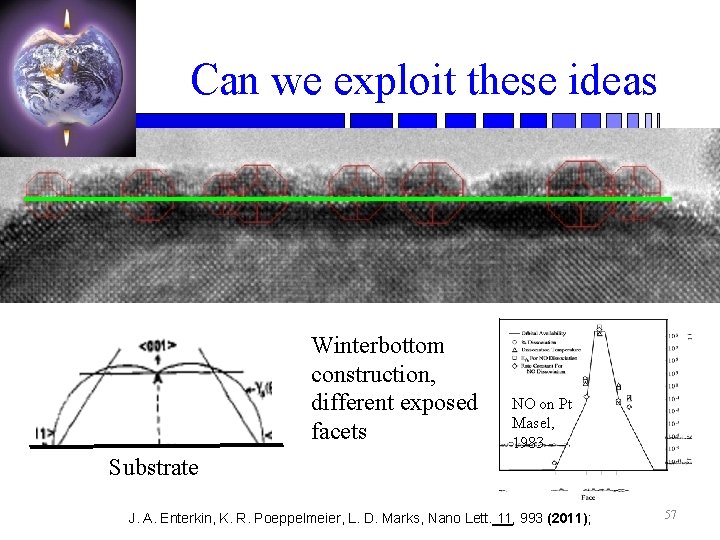
Can we exploit these ideas Winterbottom construction, different exposed facets NO on Pt Masel, 1983 Substrate J. A. Enterkin, K. R. Poeppelmeier, L. D. Marks, Nano Lett. 11, 993 (2011); 57
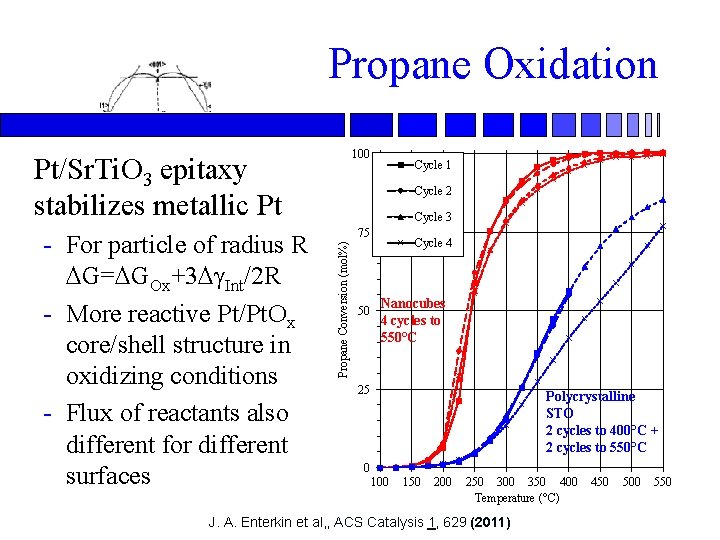
Propane Oxidation 100 Pt/Sr. Ti. O 3 epitaxy stabilizes metallic Pt Cycle 2 Cycle 3 75 Propane Conversion (mol%) - For particle of radius R DG=DGOx+3 Dg. Int/2 R - More reactive Pt/Pt. Ox core/shell structure in oxidizing conditions - Flux of reactants also different for different surfaces Cycle 1 50 Cycle 4 Nanocubes 4 cycles to 550°C 25 Polycrystalline STO 2 cycles to 400°C + 2 cycles to 550°C 0 100 150 200 250 300 350 400 Temperature (°C) J. A. Enterkin et al, , ACS Catalysis 1, 629 (2011) 450 500 550
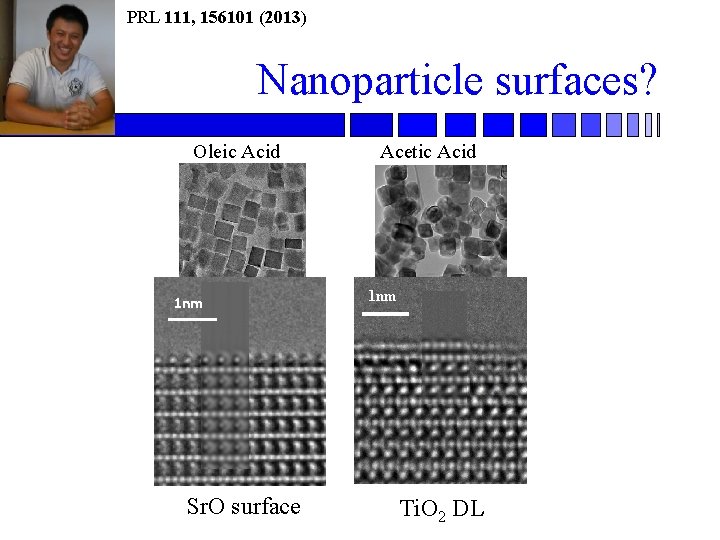
PRL 111, 156101 (2013) Nanoparticle surfaces? Oleic Acid Acetic Acid 1 nm Sr. O surface 1 nm Ti. O 2 DL
Summary While we know at lot from old work (even back to Gibbs) n Care is needed (many errors in literature) n – Being precise with size matters Nanoalloys has some new possibilities n Still some things that are not fully understood n
But All details how surface structure & segregation couples to nanoparticle structure not clear yet n Everthing becomes richer (but manageable) when chemisorption is included n Often there are no precise measurements of structure to match to models n And how this couples to rates/selectivity… n

Questions ? Research is to see what everybody else has seen, and to think what nobody else has thought Albert Szent-Györgi
- Slides: 62