
Nanoparticle Mediated Genetic Transformation in Plants PBIO 45005500
Nanoparticle Mediated Genetic Transformation in Plants PBIO 4500/5500 BIOTECHNOLOGY AND GENETIC ENGINEERING v Presented by : ISHA SHRIVASTAVA

How small is a nano? A nanometer is one billionth of a meter The thickness of an individual page is 100, 000 nms A fine human hair is 10, 000 nms Our finger nails grow at the rate of 1 nm per second Source: http: //www. umt. edu/ethics/Debating%20 Science%20 Program/ODC/Nano. ODC/Intro/Properties/Size. aspx
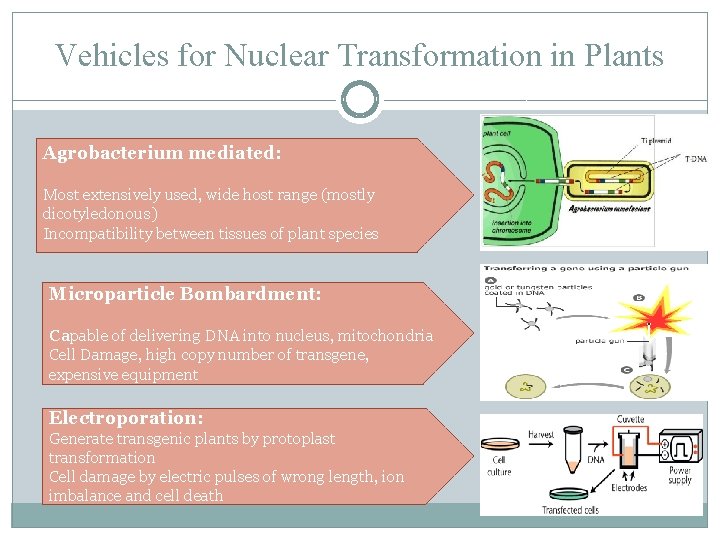
Vehicles for Nuclear Transformation in Plants Agrobacterium mediated: Most extensively used, wide host range (mostly dicotyledonous) Incompatibility between tissues of plant species Microparticle Bombardment: Capable of delivering DNA into nucleus, mitochondria Cell Damage, high copy number of transgene, expensive equipment Electroporation: Generate transgenic plants by protoplast transformation Cell damage by electric pulses of wrong length, ion imbalance and cell death
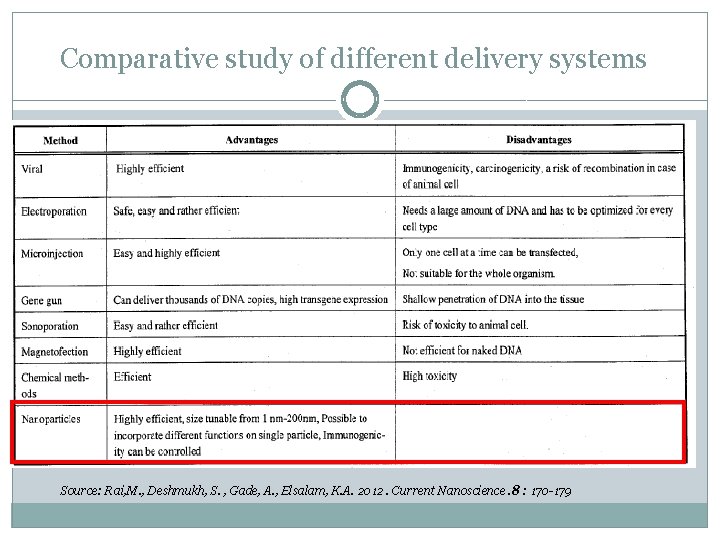
Comparative study of different delivery systems Source: Rai, M. , Deshmukh, S. , Gade, A. , Elsalam, K. A. 2012. Current Nanoscience. 8 : 170 -179
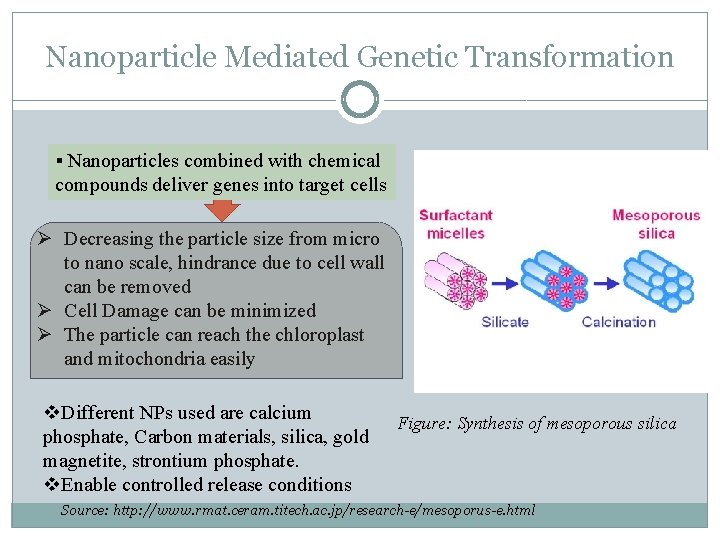
Nanoparticle Mediated Genetic Transformation § Nanoparticles combined with chemical compounds deliver genes into target cells Ø Decreasing the particle size from micro to nano scale, hindrance due to cell wall can be removed Ø Cell Damage can be minimized Ø The particle can reach the chloroplast and mitochondria easily v. Different NPs used are calcium phosphate, Carbon materials, silica, gold magnetite, strontium phosphate. v. Enable controlled release conditions Figure: Synthesis of mesoporous silica Source: http: //www. rmat. ceram. titech. ac. jp/research-e/mesoporus-e. html
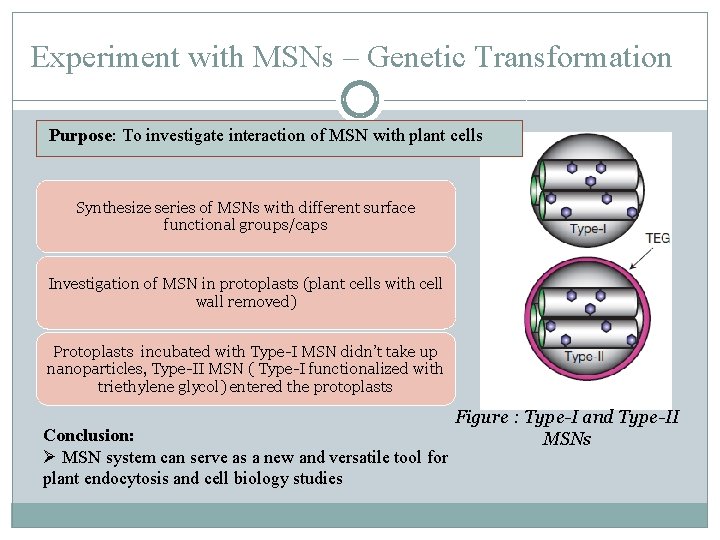
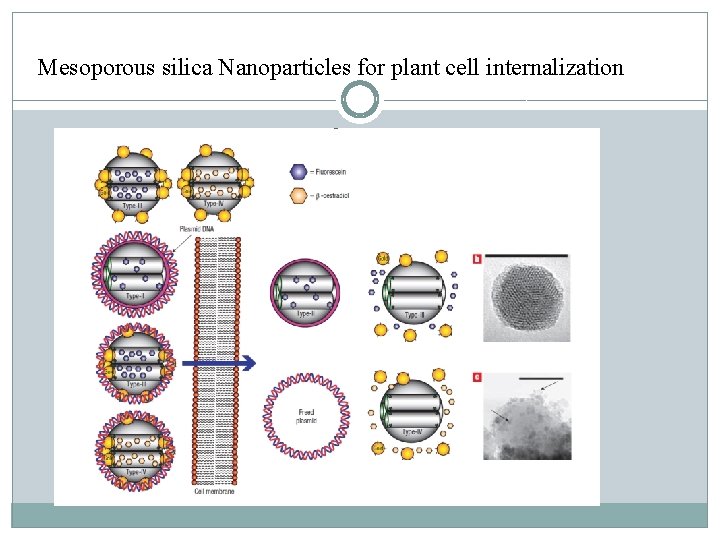
Experiment with MSNs – Genetic Transformation Purpose: To investigate interaction of MSN with plant cells Synthesize series of MSNs with different surface functional groups/caps Investigation of MSN in protoplasts (plant cells with cell wall removed) Protoplasts incubated with Type-I MSN didn’t take up nanoparticles, Type-II MSN ( Type-I functionalized with triethylene glycol) entered the protoplasts Conclusion: Ø MSN system can serve as a new and versatile tool for plant endocytosis and cell biology studies Figure : Type-I and Type-II MSNs
Purpose: To prove MSNs can function as DNA delivery agents Plasmid containing a green fluorescent protein (GFP) gene under the control of constitutive promoter is used Optimal coating ratio for DNA/Type-II MSNs was 1/10 Type-II MSN bound DNA not digested by restriction enzyme Transient GFP expression observed 36 hr after protoplasts were incubated with DNA coated Type-II MSN Conclusion: Ø Type-II MSN system can serve as efficient delivery system for protoplasts and make DNA accessible to transcription machinery
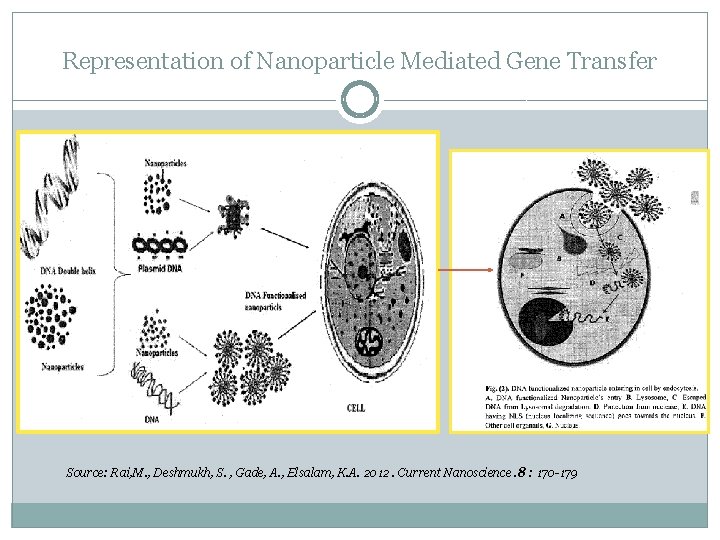
Representation of Nanoparticle Mediated Gene Transfer Source: Rai, M. , Deshmukh, S. , Gade, A. , Elsalam, K. A. 2012. Current Nanoscience. 8 : 170 -179

Purpose: To introduce MSN into plants with gene gun system • Attempts to bombard Type-I and Type –II MSNs didn’t lead to successful transformation • Use of Type-III MSNs, where mesopores are capped by surface functionalized gold nanoparticles • In comparison to traditional system, allows to load biogenic moeitiesincluding chemicals that are membrane impermeable or incompatible with cell growth media into pores Figure: Gene gun system for bombarding micro/nano particles Source: http: //swineflucaretips. blogspot. com/2012/06/dna-vaccines-and-gene-gun. html
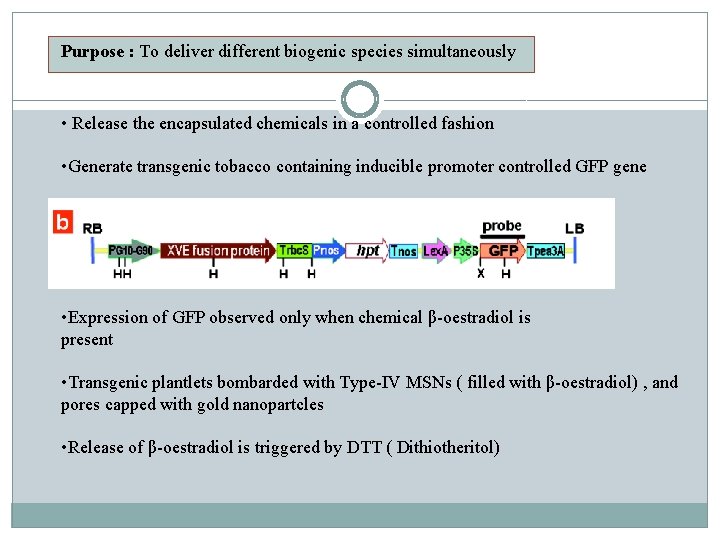
Purpose : To deliver different biogenic species simultaneously • Release the encapsulated chemicals in a controlled fashion • Generate transgenic tobacco containing inducible promoter controlled GFP gene • Expression of GFP observed only when chemical β-oestradiol is present • Transgenic plantlets bombarded with Type-IV MSNs ( filled with β-oestradiol) , and pores capped with gold nanopartcles • Release of β-oestradiol is triggered by DTT ( Dithiotheritol)
Mesoporous silica Nanoparticles for plant cell internalization
Conclusion � Nanobiotechnology could take the genetic engineering of agriculture to the next level down – atomic engineering � Further developments such as pore enlargement and multifunctionalization of these MSNs may offer new possibilites in target specific delivery of proteins, nucleotides and chemicals. � Opposition is mounting from civil society, unions and world leading scientists who point to ecological, health and socioeconomic risks associated with nanogenetics.
References: � Husaini, A. M. , Abdin, M. Z. , Parray, G. A. , Sanghera, G. S. , Murtaza, I. , Alam, T. , Srivastava, D. K. , Farooqi, H. , and Khan, H. N. 2010. Vehicles and ways for efficient nuclear transformation in plants. Landes Bioscience. 1(5) : 276 -287 � Nair, R. , Varghese, S. H. , Nair, B. G. , Maekawa , T. , Yoshida , Y. , and Kumar , D. S. 2010. Nanoparticulate material delivery to plants. Plant Science. 179 : 154 -163 � Rai, M. , Deshmukh, S. , Gade, A. , Elsalam, K. A. 2012. Current Nanoscience. 8 : 170 -179 � Torney, F. , Trewyn, B. G. , Lin, V. S. , and Wang, K. 2007. Mesoporous silica nanoparticles deliver DNA and chemicals into plants. Nature Nanotechnology. 2 : 295 -300
- Slides: 13